Cryo EM for Drug Discovery Market Size, Trend, Revenue Report 2026 to 2035
What is Cryo EM for Drug Discovery Market Size?
Cryo EM for Drug Discovery Market is estimated to grow with a 11.0% CAGR during the forecast period for 2026 to 2035.
Cryo EM for Drug Discovery Market Size, Share & Trends Analysis Distribution by Modality (Single Particle Analysis, Cryo-Electron Tomography, Micro-Electron Diffraction, Cryo-Correlative Light & Electron Microscopy, Time-Resolved Cryo-EM), By Component / Offering (Hardware: 300 kV Cryo-TEM Systems, Hardware: 200 kV Cryo-TEM Systems, Hardware: 120 kV Screening Cryo-TEM, Hardware: Direct Electron Detectors, Hardware: Energy Filters & Phase Plates, Hardware: Sample-Prep & Vitrification, Hardware: Cryo-FIB-SEM Systems, Hardware: Consumables & Accessories, Software: Acquisition & Live-Processing Stacks, Software: Reconstruction & Modelling, Software: AI/ML Add-Ons, Services: Sample-to-Structure CRO Pipelines, Services: Integrated Protein Production + Cryo-EM, Services: GMP-Compliant Modality QC, Services: Consortium / Shared-Facility Membership Access), By Drug Discovery Workflow Stage (Target Identification & Validation, Hit Identification & Fragment-Based Drug Discovery, Hit-to-Lead & Lead Optimisation, Mechanism of Action, Resistance & Polymorph Elucidation, Biologics Structural QC, Drug Delivery & Modality QC), By Target Class, By End-User, By Deployment Model and Segment Forecasts, 2026 to 2035
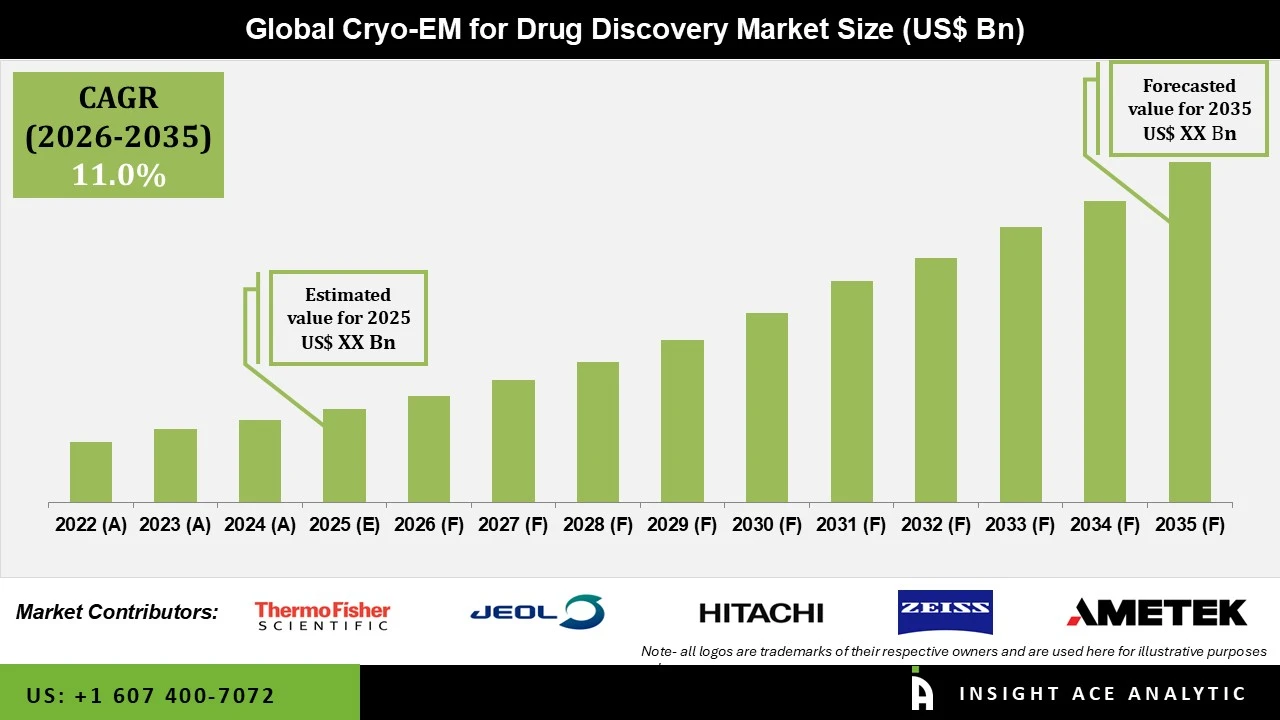
Cryo-Electron Microscopy (Cryo-EM) has become a vital technology in modern drug discovery, enabling researchers to visualize proteins, viruses, and complex biomolecules at near-atomic resolution without the need for crystallization. The technology provides detailed structural insights into challenging biological targets such as membrane proteins, GPCRs, and macromolecular complexes, supporting target identification, lead optimization, biologics development, and vaccine research. Growing adoption of structure-based drug discovery, advancements in imaging systems and artificial intelligence, and increasing demand for precision medicine are driving market growth. As pharmaceutical and biotechnology companies continue to invest in advanced structural biology capabilities, Cryo-EM is playing an increasingly important role in accelerating drug development and improving therapeutic innovation.
The Cryo-EM for Drug Discovery market is witnessing significant growth due to the increasing adoption of structure-based drug discovery and the rising demand for precision medicines, biologics, antibody therapies, and RNA-based therapeutics. Cryo-electron microscopy enables high-resolution visualization of complex biological targets, including membrane proteins, GPCRs, ion channels, and macromolecular complexes, making it an essential tool in modern pharmaceutical research. Technological advancements in direct electron detectors, cryo-electron tomography, automated sample preparation, and AI-powered image analysis have improved the speed, accuracy, and scalability of Cryo-EM workflows, expanding its applications across drug discovery and development.
The market is further supported by growing investments from pharmaceutical companies, biotechnology firms, and research institutions in Cryo-EM infrastructure and structural biology capabilities. Increasing use of outsourced Cryo-EM services through CROs and shared research facilities is also improving accessibility for smaller organizations. Although high equipment costs, specialized expertise requirements, and significant computational demands remain key challenges, continued innovations in automation, artificial intelligence, and computational drug design are expected to drive long-term market growth. As drug developers focus on complex therapeutic targets and next-generation biologics, Cryo-EM is becoming an increasingly important technology for accelerating pharmaceutical innovation and improving drug development success rates.
Competitive Landscape
Which are the Leading Players in the Cryo-EM for Drug Discovery Market?
• Thermo Fisher Scientific
• JEOL Ltd.
• Hitachi High-Tech Corporation
• Carl Zeiss AG
• Gatan, Inc.
• AMETEK
• Direct Electron, LP
• TVIPS GmbH
• SPT Labtech Ltd.
• Delmic B.V.
• Leica Microsystems
• Danaher
• MiTeGen, LLC
• Quantifoil Micro Tools GmbH
• Protochips, Inc.
• Structura Biotechnology Inc.
• MRC Laboratory of Molecular Biology
• Google DeepMind
• University of Washington
• Schrödinger, Inc.
• OpenEye Scientific
• Cadence Molecular Sciences
• NanoImaging Services, Inc.
• Ampersand Capital Partners
• Proteos, Inc.
• Proteros Biostructures GmbH
• Charles River Laboratories
• WuXi AppTec
• ChemPartner
• Domainex Ltd.
• ZoBio B.V.
• Sygnature Discovery
• Cube Biotech GmbH
• TEMPoS
• Twist Bioscience Corporation
• Birkbeck College ISMB EM Service
• Pfizer Inc.
• Genentech
• F. Hoffmann-La Roche AG
• AstraZeneca PLC
• GlaxoSmithKline plc
• Merck & Co., Inc.
• Novartis
• Eli Lilly and Company
• Bristol Myers Squibb
• AbbVie Inc.
• Johnson & Johnson Innovative Medicine
• UCB S.A.
• Astex Pharmaceuticals
• Otsuka Holdings
• Nxera Pharma
• Boehringer Ingelheim
• Sanofi S.A.
• Takeda Pharmaceutical Company
• Bayer AG
• Vertex Pharmaceuticals
Market Dynamics
Driver
Rising Demand for Structure-Based Drug Discovery and Complex Biologics Research
The major drivers accelerating the growth of the Cryo-EM for drug discovery market is the increasing adoption of structure-based drug discovery across the pharmaceutical and biotechnology industries. Drug developers are increasingly focusing on complex biological targets, such as membrane proteins, GPCRs, ion channels, antibody complexes, and large macromolecular structures, which are difficult to analyse using traditional structural biology methods. Cryo-EM enables researchers to visualise these targets at near-atomic resolution without the need for crystallisation, significantly improving understanding of molecular interactions and therapeutic mechanisms. The growing demand for biologics, precision medicine, RNA therapeutics, vaccines, and next-generation antibody therapies is further increasing the importance of high-resolution structural analysis technologies. In addition, advances in direct electron detectors, AI-powered image reconstruction, automated vitrification systems, and high-performance computing are improving workflow efficiency and accelerating drug development timelines. As pharmaceutical companies continue investing in faster, more accurate, and data-driven drug discovery platforms, Cryo-EM is becoming a critical technology supporting modern therapeutic research and innovation.
Restrain/Challenge
High Capital Investment and Operational Complexity
The challenges limiting the broader adoption of Cryo-EM technologies is the extremely high cost and operational complexity associated with advanced Cryo-EM infrastructure. High-end Cryo-TEM systems, direct electron detectors, cryo-FIB-SEM platforms, energy filters, and associated computational infrastructure require substantial capital investment, often reaching several million dollars per installation. In addition to equipment costs, organisations must invest heavily in specialised facilities, cryogenic sample-preparation environments, high-performance data-storage systems, and highly trained technical personnel capable of operating and maintaining sophisticated imaging workflows. Sample preparation, vitrification consistency, image reconstruction, and large-scale data processing remain technically demanding and time-intensive processes that require advanced expertise in structural biology, microscopy, and computational analysis. These challenges can limit accessibility for smaller biotechnology companies, emerging research organisations, and institutions with limited infrastructure budgets. Furthermore, ongoing maintenance costs, rapid technological upgrades, and the need for continuous software and AI integration create additional operational pressures for market participants.
The Single Particle Analysis Segment is Expected to Drive the Cryo-EM for Drug Discovery Market
The Single Particle Analysis (SPA) segment is expected to play a major role in driving the Cryo-EM for Drug Discovery Market, as it enables near-atomic-resolution structural analysis of complex biological molecules without requiring crystallisation. SPA has become one of the most widely adopted Cryo-EM modalities in pharmaceutical and biotechnology research, particularly for studying membrane proteins, G-protein-coupled receptors (GPCRs), ion channels, antibody complexes, and large macromolecular assemblies. The technology enables researchers to capture detailed structural information that supports target identification, hit discovery, lead optimisation, and biologics development. Continuous improvements in direct electron detectors, image reconstruction software, AI-powered particle picking, and automated data acquisition are significantly improving throughput, accuracy, and workflow efficiency. In addition, the growing focus on precision medicine, biologics, and structure-based drug discovery is increasing the demand for high-resolution molecular imaging platforms. As pharmaceutical companies continue to invest in advanced structural biology capabilities, the SPA segment is expected to remain a key growth driver of the Cryo-EM for Drug Discovery Market.
The Direct Electron Detectors Segment is Expected to Drive the Cryo-EM for Drug Discovery Market
The Direct Electron Detectors segment is emerging as a major growth driver in the Cryo-EM for Drug Discovery Market, as it plays a critical role in improving image quality, resolution, sensitivity, and data-acquisition speed. Direct electron detectors have significantly transformed Cryo-EM workflows by enabling researchers to capture high-resolution molecular structures with greater accuracy and lower noise compared to traditional imaging technologies. These detectors are widely used in advanced Cryo-TEM systems for pharmaceutical research, structural biology, vaccine development, and biologics discovery applications. The increasing adoption of AI-driven image reconstruction, automated single-particle analysis, and high-throughput structural analysis is further accelerating demand for next-generation detector technologies. In addition, pharmaceutical companies and research institutes are increasingly upgrading to advanced detector systems to improve productivity and reduce drug discovery timelines. The growing need for rapid, accurate structural analysis of complex proteins, antibody complexes, and therapeutic targets is expected to continue driving strong growth in the Direct Electron Detectors segment over the coming years.
Why North America Led the Cryo-EM for Drug Discovery Market?
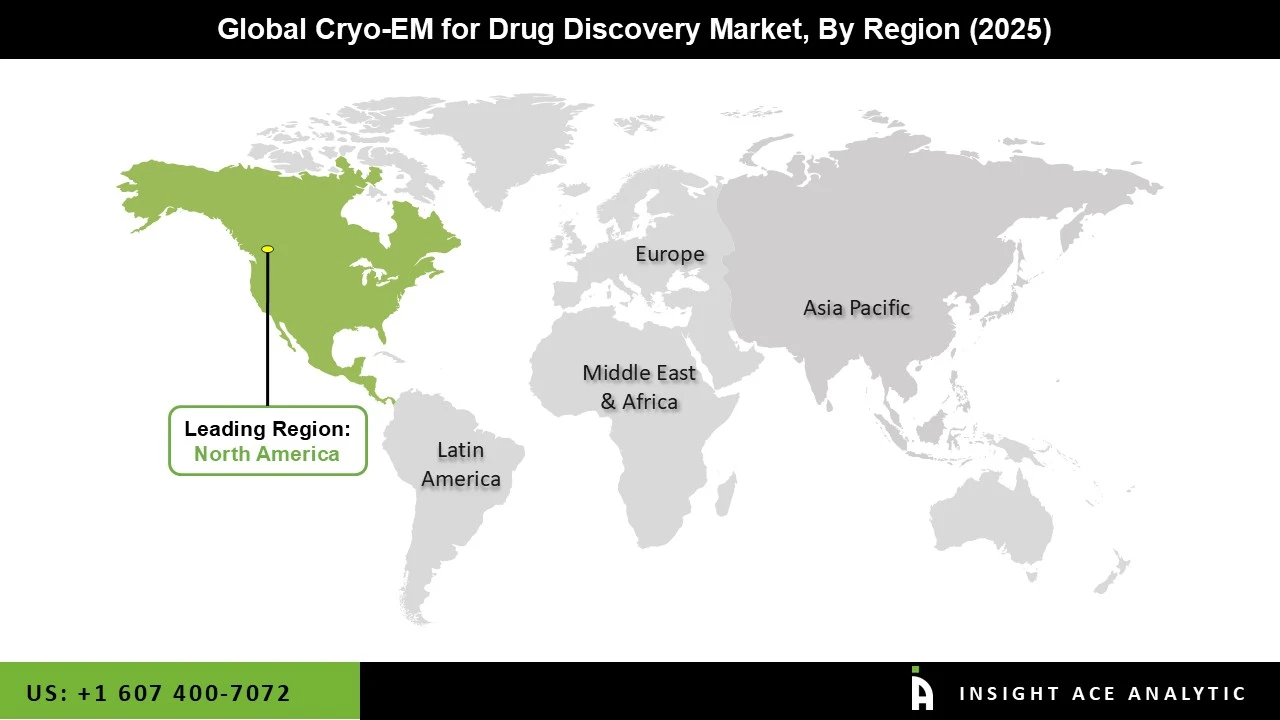
North America dominated the Cryo-EM for Drug Discovery market, driven by its advanced pharmaceutical research infrastructure, strong biotechnology sector, and early adoption of cutting-edge structural biology technologies. The region hosts numerous leading pharmaceutical companies, biotech firms, research institutions, and Cryo-EM facilities that actively utilize the technology to support drug discovery across oncology, immunology, neuroscience, infectious diseases, and biologics development. Growing investments in artificial intelligence, automation, high-performance computing, and molecular modeling have further enhanced Cryo-EM capabilities and research efficiency. Additionally, strong government funding, academic-industry collaborations, and a well-established CRO ecosystem have improved access to advanced Cryo-EM services, reinforcing North America's position as the leading regional market.
Key Developments
• In February 2026, Thermo Fisher Scientific expanded its Cryo-EM Drug Discovery Center (CDDC) in South San Francisco with advanced Krios 5 and Selectris X platforms, strengthening high-throughput structure-based drug discovery workflows for pharmaceutical and biotech clients.
Cryo-EM for Drug Discovery Market Report Scope:
| Report Attribute | Specifications |
| Growth Rate CAGR | CAGR of 11.0% from 2026 to 2035 |
| Quantitative Units | Representation of revenue in US$ Bn and CAGR from 2026 to 2035 |
| Historic Year | 2021 to 2025 |
| Forecast Year | 2026-2035 |
| Report Coverage | The forecast of revenue, the position of the company, the competitive market structure, growth prospects, and trends |
| Segments Covered | Modality, Component / Offering, Drug Discovery Workflow Stage, Target Class, Deployment Model, End Use Industry and By Region |
| Regional Scope | North America; Europe; Asia Pacific; Latin America; Middle East & Africa |
| Country Scope | U.S.; Canada; U.K.; Germany; China; India; Japan; Brazil; Mexico; The UK; France; Italy; Spain; China; Japan; India; South Korea; Southeast Asia; South Korea; Southeast Asia |
| Competitive Landscape | Thermo Fisher Scientific, JEOL Ltd., Hitachi High-Tech Corporation, Carl Zeiss AG, Gatan, Inc., AMETEK, Direct Electron, LP, TVIPS GmbH, SPT Labtech Ltd., Delmic B.V., Leica Microsystems, Danaher, MiTeGen, LLC, Quantifoil Micro Tools GmbH, Protochips, Inc., Structura Biotechnology Inc., MRC Laboratory of Molecular Biology, Google DeepMind, University of Washington, Schrödinger, Inc., OpenEye Scientific, Cadence Molecular Sciences, NanoImaging Services, Inc., Ampersand Capital Partners, Proteos, Inc., Proteros Biostructures GmbH, Charles River Laboratories, WuXi AppTec, ChemPartner, Domainex Ltd., ZoBio B.V., Sygnature Discovery, Cube Biotech GmbH, TEMPoS, Twist Bioscience Corporation, Birkbeck College ISMB EM Service, Pfizer Inc., Genentech, F. Hoffmann-La Roche AG, AstraZeneca PLC, GlaxoSmithKline plc, Merck & Co., Inc., Novartis, Eli Lilly and Company, Bristol Myers Squibb, AbbVie Inc., Johnson & Johnson Innovative Medicine, UCB S.A., Astex Pharmaceuticals, Otsuka Holdings, Nxera Pharma, Boehringer Ingelheim, Sanofi S.A., Takeda Pharmaceutical Company, Bayer AG, Vertex Pharmaceuticals |
| Customization Scope | Free customisation report with the procurement of the report, Modifications to the regional and segment scope. Geographic competitive landscape. |
| Pricing and Available Payment Methods | Explore pricing alternatives that are customised to your particular study requirements. |
Market Segmentation:
Cryo-EM for Drug Discovery Market By Modality-
• Single Particle Analysis
• Cryo-Electron Tomography
• Micro-Electron Diffraction
• Cryo-Correlative Light & Electron Microscopy
• Time-Resolved Cryo-EM
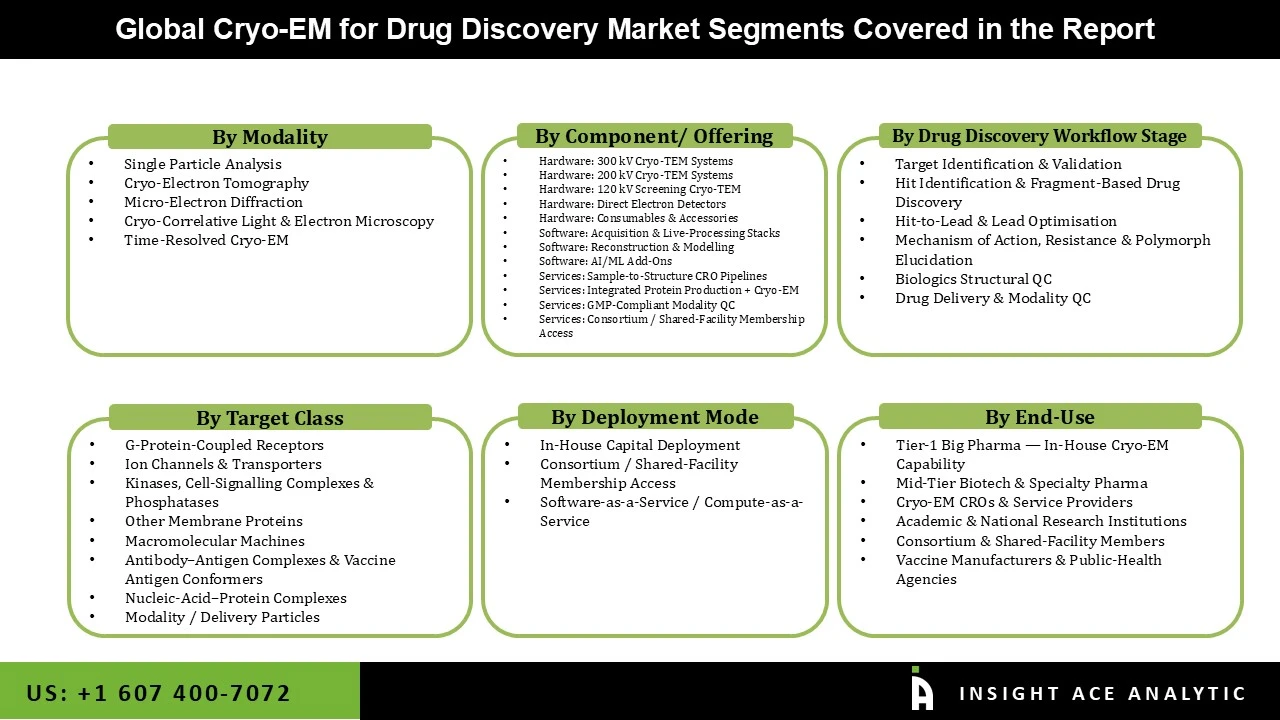
Cryo-EM for Drug Discovery Market By Component / Offering-
• Hardware: 300 kV Cryo-TEM Systems
• Hardware: 200 kV Cryo-TEM Systems
• Hardware: 120 kV Screening Cryo-TEM
• Hardware: Direct Electron Detectors
• Hardware: Energy Filters & Phase Plates
• Hardware: Sample-Prep & Vitrification
• Hardware: Cryo-FIB-SEM Systems
• Hardware: Consumables & Accessories
• Software: Acquisition & Live-Processing Stacks
• Software: Reconstruction & Modelling
• Software: AI/ML Add-Ons
• Services: Sample-to-Structure CRO Pipelines
• Services: Integrated Protein Production + Cryo-EM
• Services: GMP-Compliant Modality QC
• Services: Consortium / Shared-Facility Membership Access
Cryo-EM for Drug Discovery Market By Drug Discovery Workflow Stage-
• Target Identification & Validation
• Hit Identification & Fragment-Based Drug Discovery
• Hit-to-Lead & Lead Optimisation
• Mechanism of Action, Resistance & Polymorph Elucidation
• Biologics Structural QC
• Drug Delivery & Modality QC
Cryo-EM for Drug Discovery Market By Target Class-
• G-Protein-Coupled Receptors
• Ion Channels & Transporters
• Kinases, Cell-Signalling Complexes & Phosphatases
• Other Membrane Proteins
• Macromolecular Machines
• Antibody–Antigen Complexes & Vaccine Antigen Conformers
• Nucleic-Acid–Protein Complexes
• Modality / Delivery Particles
Cryo-EM for Drug Discovery Market By End-User-
• Tier-1 Big Pharma
• Mid-Tier Biotech & Specialty Pharma
• Cryo-EM CROs & Service Providers
• Academic & National Research Institutions
• Consortium & Shared-Facility Members
• Vaccine Manufacturers & Public-Health Agencies
Cryo-EM for Drug Discovery Market By Deployment Model-
• In-House Capital Deployment
• CRO / Outsourced Service Contracts
• Consortium / Shared-Facility Membership Access
• Software-as-a-Service / Compute-as-a-Service
Cryo-EM for Drug Discovery Market by Region-
North America-
• The US
• Canada
• Mexico
• Rest of North America
Europe-
• Austria
• Belgium
• Denmark
• France
• Germany
• Ireland
• Italy
• Netherlands
• Norway
• Russia
• Spain
• Sweden
• Switzerland
• UK
• Rest of Europe
Asia-Pacific-
• Australia
• China
• India
• Japan
• New-Zealand
• Singapore
• South Korea
• Rest of Asia-Pacific
Middle East and North Africa (MENA)-
• Egypt
• Iran
• Iraq
• Israel
• Kuwait
• Saudi Arabia
• UAE
• Rest of MENA
Latin America-
• Brazil
• Chile
• Colombia
• Venezuela
• Rest of Latin America
• Rest of the World
Research Design and Approach
This study employed a multi-step, mixed-method research approach that integrates:
- Secondary research
- Primary research
- Data triangulation
- Hybrid top-down and bottom-up modelling
- Forecasting and scenario analysis
This approach ensures a balanced and validated understanding of both macro- and micro-level market factors influencing the market.
Secondary Research
Secondary research for this study involved the collection, review, and analysis of publicly available and paid data sources to build the initial fact base, understand historical market behaviour, identify data gaps, and refine the hypotheses for primary research.
Sources Consulted
Secondary data for the market study was gathered from multiple credible sources, including:
- Government databases, regulatory bodies, and public institutions
- International organizations (WHO, OECD, IMF, World Bank, etc.)
- Commercial and paid databases
- Industry associations, trade publications, and technical journals
- Company annual reports, investor presentations, press releases, and SEC filings
- Academic research papers, patents, and scientific literature
- Previous market research publications and syndicated reports
These sources were used to compile historical data, market volumes/prices, industry trends, technological developments, and competitive insights.

Primary Research
Primary research was conducted to validate secondary data, understand real-time market dynamics, capture price points and adoption trends, and verify the assumptions used in the market modelling.
Stakeholders Interviewed
Primary interviews for this study involved:
- Manufacturers and suppliers in the market value chain
- Distributors, channel partners, and integrators
- End-users / customers (e.g., hospitals, labs, enterprises, consumers, etc., depending on the market)
- Industry experts, technology specialists, consultants, and regulatory professionals
- Senior executives (CEOs, CTOs, VPs, Directors) and product managers
Interview Process
Interviews were conducted via:
- Structured and semi-structured questionnaires
- Telephonic and video interactions
- Email correspondences
- Expert consultation sessions
Primary insights were incorporated into demand modelling, pricing analysis, technology evaluation, and market share estimation.
Data Processing, Normalization, and Validation
All collected data were processed and normalized to ensure consistency and comparability across regions and time frames.
The data validation process included:
- Standardization of units (currency conversions, volume units, inflation adjustments)
- Cross-verification of data points across multiple secondary sources
- Normalization of inconsistent datasets
- Identification and resolution of data gaps
- Outlier detection and removal through algorithmic and manual checks
- Plausibility and coherence checks across segments and geographies
This ensured that the dataset used for modelling was clean, robust, and reliable.
Market Size Estimation and Data Triangulation
Bottom-Up Approach
The bottom-up approach involved aggregating segment-level data, such as:
- Company revenues
- Product-level sales
- Installed base/usage volumes
- Adoption and penetration rates
- Pricing analysis
This method was primarily used when detailed micro-level market data were available.

Top-Down Approach
The top-down approach used macro-level indicators:
- Parent market benchmarks
- Global/regional industry trends
- Economic indicators (GDP, demographics, spending patterns)
- Penetration and usage ratios
This approach was used for segments where granular data were limited or inconsistent.
Hybrid Triangulation Approach
To ensure accuracy, a triangulated hybrid model was used. This included:
- Reconciling top-down and bottom-up estimates
- Cross-checking revenues, volumes, and pricing assumptions
- Incorporating expert insights to validate segment splits and adoption rates
This multi-angle validation yielded the final market size.
Forecasting Framework and Scenario Modelling
Market forecasts were developed using a combination of time-series modelling, adoption curve analysis, and driver-based forecasting tools.
Forecasting Methods
- Time-series modelling
- S-curve and diffusion models (for emerging technologies)
- Driver-based forecasting (GDP, disposable income, adoption rates, regulatory changes)
- Price elasticity models
- Market maturity and lifecycle-based projections
Scenario Analysis
Given inherent uncertainties, three scenarios were constructed:
- Base-Case Scenario: Expected trajectory under current conditions
- Optimistic Scenario: High adoption, favourable regulation, strong economic tailwinds
- Conservative Scenario: Slow adoption, regulatory delays, economic constraints
Sensitivity testing was conducted on key variables, including pricing, demand elasticity, and regional adoption.
Request Customization
Add countries, segments, company profiles, or extend forecast — free 10% customization with purchase.
Customize This Report →Enquire Before Buying
Speak with our analyst team about scope, methodology, pricing, or deliverable formats.
Enquire Now →Frequently Asked Questions
Cryo EM for Drug Discovery Market is estimated to grow with a 11.0% CAGR during the forecast period for 2026 to 2035.
Thermo Fisher Scientific, JEOL Ltd., Hitachi High-Tech Corporation, Carl Zeiss AG, Gatan, Inc., AMETEK, Direct Electron, LP, TVIPS GmbH, SPT Labtech Ltd., Delmic B.V., Leica Microsystems, Danaher, MiTeGen, LLC, Quantifoil Micro Tools GmbH, Protochips, Inc., Structura Biotechnology Inc., MRC Laboratory of Molecular Biology, Google DeepMind, University of Washington, Schrödinger, Inc., OpenEye Scientific, Cadence Molecular Sciences, NanoImaging Services, Inc., Ampersand Capital Partners, Proteos, Inc., Proteros Biostructures GmbH, Charles River Laboratories, WuXi AppTec, ChemPartner, Domainex Ltd., ZoBio B.V., Sygnature Discovery, Cube Biotech GmbH, TEMPoS, Twist Bioscience Corporation, Birkbeck College ISMB EM Service, Pfizer Inc., Genentech, F. Hoffmann-La Roche AG, AstraZeneca PLC, GlaxoSmithKline plc, Merck & Co., Inc., Novartis, Eli Lilly and Company, Bristol Myers Squibb, AbbVie Inc., Johnson & Johnson Innovative Medicine, UCB S.A., Astex Pharmaceuticals, Otsuka Holdings, Nxera Pharma, Boehringer Ingelheim, Sanofi S.A., Takeda Pharmaceutical Company, Bayer AG, Vertex Pharmaceuticals
Cryo EM for Drug Discovery Market is segmented into Modality, Component / Offering, Drug Discovery Workflow Stage, Target Class, Deployment Model, End Use Industry and By Region
North America region is leading the Cryo EM for Drug Discovery Market.