Multi-Dose Pen Injectors for Cardiometabolic Therapies Market Size, Trend, Revenue Report 2026 to 2035
What is Multi-Dose Pen Injectors for Cardiometabolic Therapies Market?
Global Multi-Dose Pen Injectors for Cardiometabolic Therapies Market is estimated to grow with the CAGR of 14.5% during the forecast period for 2026 to 2035.
Multi-Dose Pen Injectors for Cardiometabolic Therapies Market Size, Share & Trends Analysis Distribution by Device Architecture (Disposable Prefilled Multi-Dose Pens, Manual Dial-and-Dose Pens, Automatic / Spring-Assisted Multi-Fixed-Dose Pens, Reusable Cartridge-Based Pens (Mechanical), Insulin Cartridge Pens, Incretin and Multi-Strength Cartridge Pens, Connected (Smart) Pens and Dose-Capture Modules, Integrated Connected Reusable Pens, Add-On Smart Caps and Dose-Capture Modules), by Dosing Mechanism, by Therapy Class Delivered, by Device Sourcing and Commercial Model, by Cartridge / Reservoir Capacity and Segment Forecasts, 2026 to 2035.
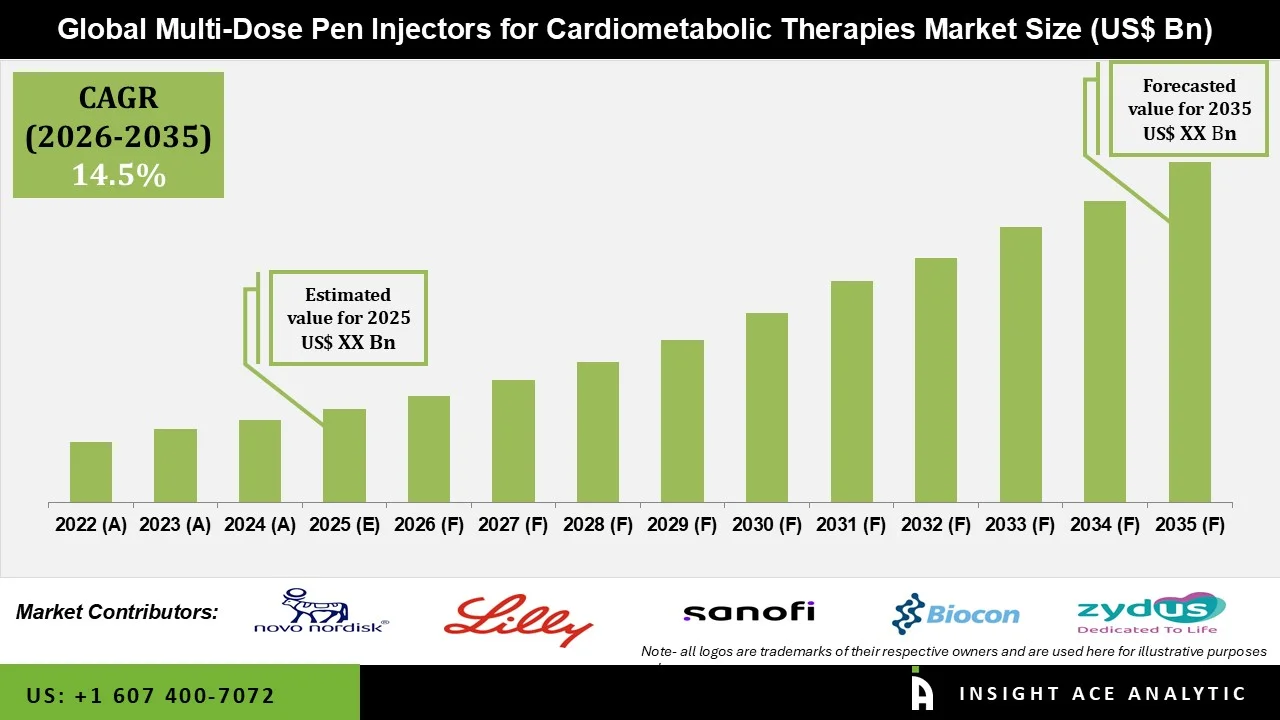
As more patients require long-term treatment with insulin, GLP-1 receptor agonists, and other injectable therapies, there is growing demand for delivery devices that are convenient, accurate, and easy to use. Multi-dose pen injectors allow patients to administer several doses from the same device, reducing the need to handle individual syringes and making routine treatment more convenient. The multi-dose pen injectors for cardiometabolic therapies market is gaining momentum as the prevalence of diabetes, obesity, and other cardiometabolic conditions continues to increase worldwide.
The market includes disposable prefilled pens, reusable cartridge-based pens, manual and automatic dosing systems, connected smart pens, and dose-capture solutions. Increasing focus on patient convenience, treatment adherence, accurate dosing, and self-administration is encouraging pharmaceutical companies and medical-device manufacturers to invest in improved pen-injector technologies. New technology and product design are driving the development of multi-dose pen injectors for cardiometabolic therapies. Companies are creating pens with adjustable doses, fixed-dose systems for multiple uses, preset-dose pens, and cartridge-based devices to meet different treatment needs. Smart pens that can record doses and connect to digital tools are also becoming more popular. By linking with smartphones, health apps, and dose-tracking software, these devices help patients and doctors keep better track of medication use and improve care. Improvements in spring mechanisms, dose-setting, ergonomic design, cartridge technology, and safety features are also making these devices easier and safer to use.
There are also several challenges in this market. Making a multi-dose pen that delivers accurate and consistent doses every time takes careful design, strict quality checks, and meeting regulatory standards. Manufacturers need to make sure the pen, cartridge, reservoir, and drug all work well together. High production costs, patent issues, regulatory approvals, and the need for thorough testing can slow down development. For smart pens, concerns like cybersecurity, data privacy, software reliability, and working with other digital health systems add extra complexity. Patients may prefer different types of devices, injection methods, sizes, and how easy they are to use. Competition between drug companies and device makers also pushes manufacturers to create unique and affordable products.
Despite these challenges, the long-term outlook for the multi-dose pen injectors for cardiometabolic therapies market remains positive. The continued growth of diabetes and obesity, increasing use of injectable cardiometabolic therapies, and greater emphasis on patient-friendly drug delivery are expected to support market expansion. Growing adoption of once-weekly GLP-1 therapies, dual and multi-receptor incretin treatments, insulin combinations, and emerging cardiometabolic therapies could create additional demand for specialised multi-dose delivery platforms. Connected pens and dose-capture technologies may also become more important as healthcare moves toward more personalised and digitally supported treatment. As pharmaceutical companies continue to introduce new injectable therapies and patients increasingly manage chronic conditions at home, multi-dose pen injectors are expected to play an increasingly important role in improving convenience, dosing accuracy, and treatment adherence.
Competitive Landscape
Which are the Leading Players in the Multi-Dose Pen Injectors for Cardiometabolic Therapies Market?
- Novo Nordisk A/S
- Eli Lilly and Company
- Sanofi S.A.
- Biocon Limited
- Zydus Lifesciences Limited
- Sun Pharmaceutical Industries Ltd.
- Dr. Reddy's Laboratories Ltd.
- Alkem Laboratories Ltd.
- Lupin Limited
- Apotex Inc.
- Gan & Lee Pharmaceuticals
- Tonghua Dongbao Pharmaceutical Co., Ltd.
- Wockhardt Limited
- Viatris Inc.
- Sandoz Group AG
- Hikma Pharmaceuticals PLC
- Ypsomed Holding AG
- SHL Medical AG
- Stevanato Group S.p.A.
- medmix AG (Haselmeier)
- Becton, Dickinson and Company
- Nemera
- Phillips-Medisize (Molex)
- Owen Mumford Pharmaceutical Services
- MiniMed Group, Inc.
- Emperra GmbH E-Health Technologies
- Pendiq GmbH
Market Dynamics
Driver
Growing Shift Toward Advanced Self-Administration and Home-Based Care
The market for multi-dose pen injectors in cardiometabolic therapies is growing as more patients choose home-based care and self-administration. People with diabetes, obesity, and other chronic conditions now prefer devices they can use on their own, without needing to visit healthcare facilities often. Multi-dose pens help by combining medication storage and delivery in one device. Better ergonomic designs, clearer dose displays, easier injection mechanisms, and improved feedback features are making these pens simpler for many patients, including older adults and those with limited hand movement. As remote healthcare and virtual monitoring expand, manufacturers are focusing on devices that work well in home settings.
Restraint / Challenge
Drug–Device Compatibility and Manufacturing Qualification Requirements
One of the main challenges in this market is making sure the pen injector works well with the drug, cartridge, stopper, needle, and other key parts. Differences in how thick the drug is, its concentration, how stable it is, and how it is stored can all affect how the device delivers doses and performs. Because of this, manufacturers must do thorough compatibility tests, mechanical checks, stability studies, and quality control before launching a product. If a device platform changes, it may need extra regulatory review, which can add time and cost to development. Keeping performance consistent during large-scale manufacturing is also difficult, especially since these devices have many precise parts that must work reliably for the product’s entire life.
Connected Smart Pens and Dose-Capture Modules Segment is Expected to Drive the Multi-Dose Pen Injectors for Cardiometabolic Therapies Market
The connected smart pens and dose-capture modules segment is expected to grow as healthcare relies more on data for managing chronic diseases. These smart pens and add-ons can track when injections happen, record dose history, and note missed doses, helping patients and healthcare providers understand treatment habits. Connecting these devices to mobile apps and digital health platforms can remind patients to take their medication and make it easier to track how well they stick to their treatment. Pharmaceutical companies are also looking at connected device systems to support patients alongside drug therapies. As remote monitoring becomes more common, having connected features may become a key way for pen injectors to stand out.
Fixed-Dose Multi-Use Pens Segment is Expected to Drive the Multi-Dose Pen Injectors for Cardiometabolic Therapies Market
The fixed-dose multi-use pens segment is likely to grow as more therapies use standard doses. These pens make injections simpler by reducing the choices patients need to make about dosing. This is especially helpful for treatments that follow a regular schedule, like some incretin-based therapies. Manufacturers are also adding features that provide clear tactile and audible feedback during injections, so users know the dose was given correctly. Ongoing work to make these pens smaller and easier to use should help more people adopt them.
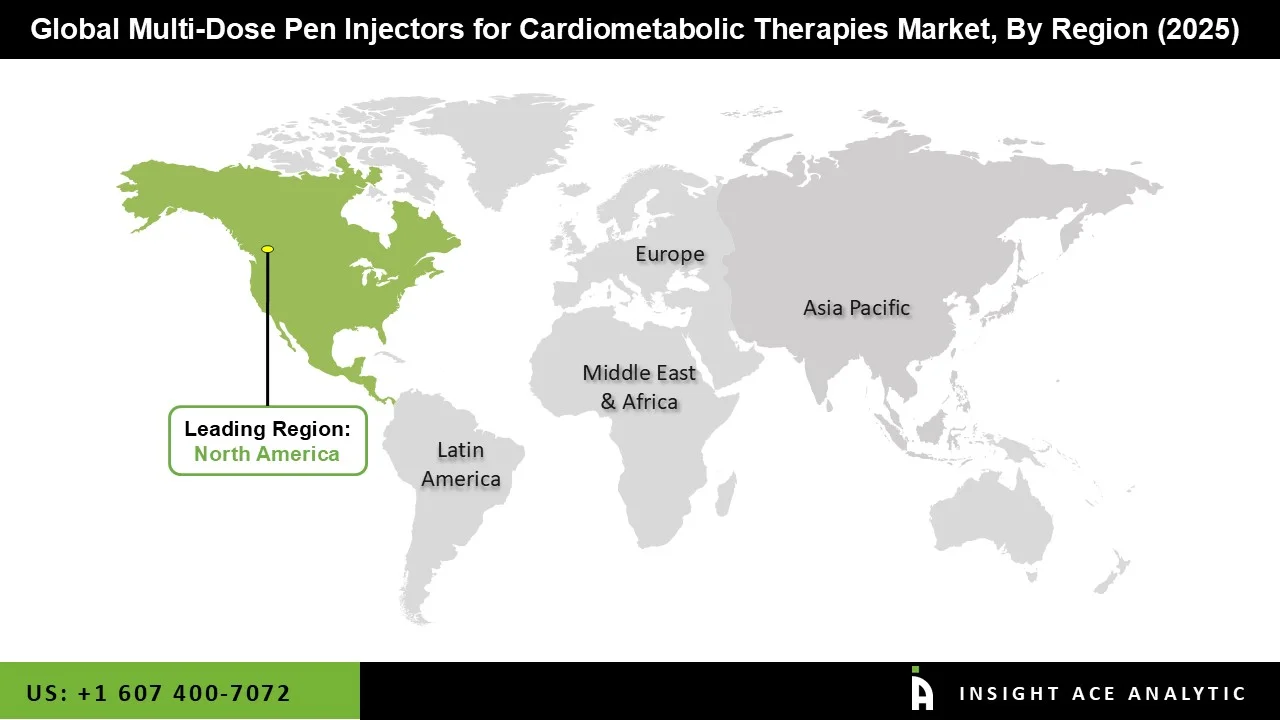
Why North America Leads the Multi-Dose Pen Injectors for Cardiometabolic Therapies Market?
North America is expected to remain a leading market for multi-dose pen injectors due to its strong adoption of advanced drug-delivery technologies, an established pharmaceutical industry, and growing demand for self-managed cardiometabolic treatment. The region has a mature ecosystem covering drug developers, medical-device manufacturers, contract manufacturing organisations, digital-health companies, and speciality pharmacies.
Increasing use of remote patient monitoring and digital treatment-support programs is also creating opportunities for connected injection devices. In addition, strong investment in product development and human-factor engineering is encouraging manufacturers to focus on devices that improve usability and reduce errors during self-administration.
Key Developments-
• In January 2025, Novo Nordisk A/S expanded its focus on next-generation drug-delivery solutions for its growing portfolio of injectable cardiometabolic therapies, supporting continued development of convenient pen-based systems for insulin and incretin treatments. The company's ongoing device innovation is aimed at improving dose delivery, usability, and patient convenience as demand for self-administered diabetes and obesity therapies increases.
Multi-Dose Pen Injectors for Cardiometabolic Therapies Market Report Scope:
| Report Attribute | Specifications |
| Growth Rate CAGR | CAGR of 14.5% from 2026 to 2035 |
| Quantitative Units | Representation of revenue in US$ Bn and CAGR from 2026 to 2035 |
| Historic Year | 2021 to 2025 |
| Forecast Year | 2026-2035 |
| Report Coverage | The forecast of revenue, the position of the company, the competitive market structure, growth prospects, and trends |
| Segments Covered | Equipment / Test-System Category, Test Insertion / Process Stage, Deployment Phase, End User / Customer Type and By Region |
| Regional Scope | North America; Europe; Asia Pacific; Latin America; Middle East & Africa |
| Country Scope | U.S.; Canada; U.K.; Germany; China; India; Japan; Brazil; Mexico; France; Italy; Spain; South Korea; Southeast Asia |
| Competitive Landscape | Novo Nordisk A/S, Eli Lilly and Company, Sanofi S.A., Biocon Limited, Zydus Lifesciences Limited, Sun Pharmaceutical Industries Ltd., Dr. Reddy's Laboratories Ltd., Alkem Laboratories Ltd., Lupin Limited, Apotex Inc., Gan & Lee Pharmaceuticals, Tonghua Dongbao Pharmaceutical Co., Ltd., Wockhardt Limited, Viatris Inc., Sandoz Group AG, Hikma Pharmaceuticals PLC, Ypsomed Holding AG, SHL Medical AG, Stevanato Group S.p.A., medmix AG (Haselmeier), Becton, Dickinson and Company, Nemera, Phillips-Medisize (Molex), Owen Mumford Pharmaceutical Services, MiniMed Group, Inc., Emperra GmbH E-Health Technologies, Pendiq GmbH. |
| Customization Scope | Free customisation report with the procurement of the report, Modifications to the regional and segment scope. Geographic competitive landscape. |
| Pricing and Available Payment Methods | Explore pricing alternatives that are customized to your particular study requirements. |
Segmentations Multi-Dose Pen Injectors for Cardiometabolic Therapies Market:
Multi-Dose Pen Injectors for Cardiometabolic Therapies Market by Device Architecture -
- Disposable Prefilled Multi-Dose Pens
- Manual Dial-and-Dose Pens
- Automatic / Spring-Assisted Multi-Fixed-Dose Pens
- Reusable Cartridge-Based Pens (Mechanical)
- Insulin Cartridge Pens
- Incretin and Multi-Strength Cartridge Pens
- Connected (Smart) Pens and Dose-Capture Modules
- Integrated Connected Reusable Pens
- Add-On Smart Caps and Dose-Capture Modules
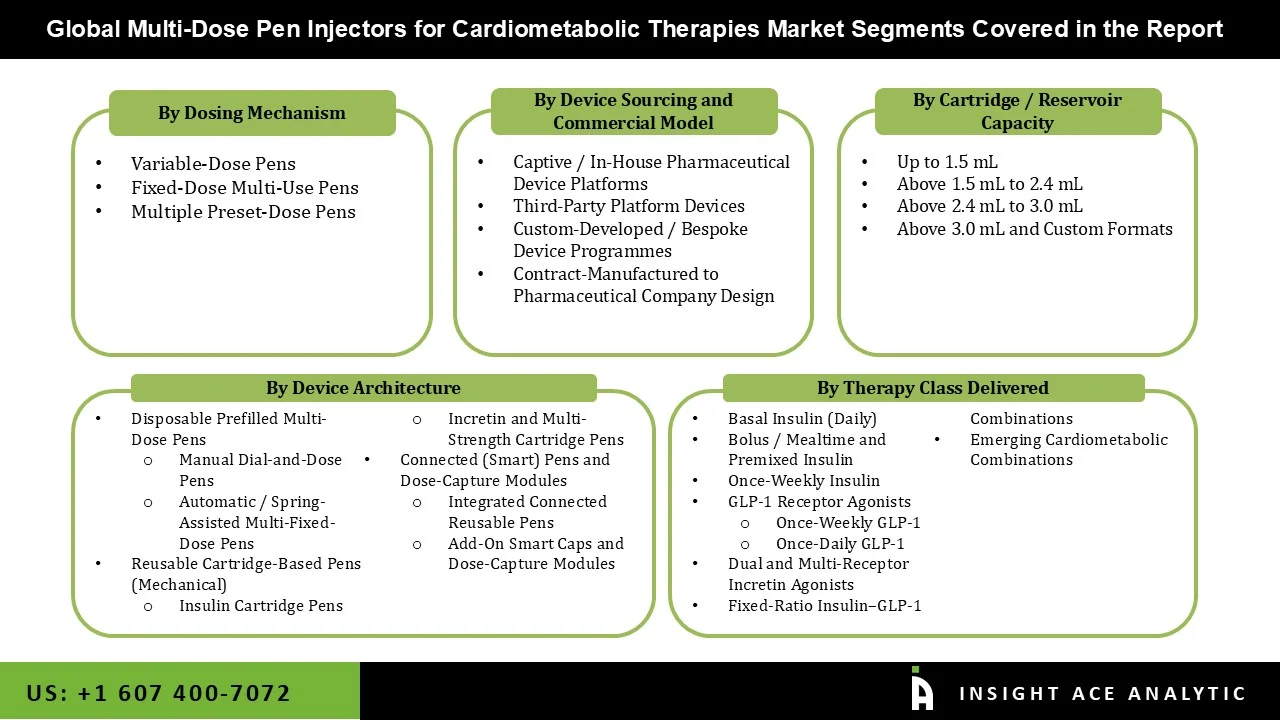
Multi-Dose Pen Injectors for Cardiometabolic Therapies Market by Dosing Mechanism -
- Variable-Dose Pens
- Fixed-Dose Multi-Use Pens
- Multiple Preset-Dose Pens
Multi-Dose Pen Injectors for Cardiometabolic Therapies Market by Therapy Class Delivered -
- Basal Insulin (Daily)
- Bolus / Mealtime and Premixed Insulin
- Once-Weekly Insulin
- GLP-1 Receptor Agonists
- Once-Weekly GLP-1
- Once-Daily GLP-1
- Dual and Multi-Receptor Incretin Agonists
- Fixed-Ratio Insulin–GLP-1 Combinations
- Emerging Cardiometabolic Combinations
Multi-Dose Pen Injectors for Cardiometabolic Therapies Market by Device Sourcing and Commercial Model-
- Captive / In-House Pharmaceutical Device Platforms
- Third-Party Platform Devices
- Custom-Developed / Bespoke Device Programmes
- Contract-Manufactured to Pharmaceutical Company Design
Multi-Dose Pen Injectors for Cardiometabolic Therapies Market by Cartridge / Reservoir Capacity-
- Up to 1.5 mL
- Above 1.5 mL to 2.4 mL
- Above 2.4 mL to 3.0 mL
- Above 3.0 mL and Custom Formats
Multi-Dose Pen Injectors for Cardiometabolic Therapies Market by Region-
Research Design and Approach
This study employed a multi-step, mixed-method research approach that integrates:
- Secondary research
- Primary research
- Data triangulation
- Hybrid top-down and bottom-up modelling
- Forecasting and scenario analysis
This approach ensures a balanced and validated understanding of both macro- and micro-level market factors influencing the market.
Secondary Research
Secondary research for this study involved the collection, review, and analysis of publicly available and paid data sources to build the initial fact base, understand historical market behaviour, identify data gaps, and refine the hypotheses for primary research.
Sources Consulted
Secondary data for the market study was gathered from multiple credible sources, including:
- Government databases, regulatory bodies, and public institutions
- International organizations (WHO, OECD, IMF, World Bank, etc.)
- Commercial and paid databases
- Industry associations, trade publications, and technical journals
- Company annual reports, investor presentations, press releases, and SEC filings
- Academic research papers, patents, and scientific literature
- Previous market research publications and syndicated reports
These sources were used to compile historical data, market volumes/prices, industry trends, technological developments, and competitive insights.

Primary Research
Primary research was conducted to validate secondary data, understand real-time market dynamics, capture price points and adoption trends, and verify the assumptions used in the market modelling.
Stakeholders Interviewed
Primary interviews for this study involved:
- Manufacturers and suppliers in the market value chain
- Distributors, channel partners, and integrators
- End-users / customers (e.g., hospitals, labs, enterprises, consumers, etc., depending on the market)
- Industry experts, technology specialists, consultants, and regulatory professionals
- Senior executives (CEOs, CTOs, VPs, Directors) and product managers
Interview Process
Interviews were conducted via:
- Structured and semi-structured questionnaires
- Telephonic and video interactions
- Email correspondences
- Expert consultation sessions
Primary insights were incorporated into demand modelling, pricing analysis, technology evaluation, and market share estimation.
Data Processing, Normalization, and Validation
All collected data were processed and normalized to ensure consistency and comparability across regions and time frames.
The data validation process included:
- Standardization of units (currency conversions, volume units, inflation adjustments)
- Cross-verification of data points across multiple secondary sources
- Normalization of inconsistent datasets
- Identification and resolution of data gaps
- Outlier detection and removal through algorithmic and manual checks
- Plausibility and coherence checks across segments and geographies
This ensured that the dataset used for modelling was clean, robust, and reliable.
Market Size Estimation and Data Triangulation
Bottom-Up Approach
The bottom-up approach involved aggregating segment-level data, such as:
- Company revenues
- Product-level sales
- Installed base/usage volumes
- Adoption and penetration rates
- Pricing analysis
This method was primarily used when detailed micro-level market data were available.

Top-Down Approach
The top-down approach used macro-level indicators:
- Parent market benchmarks
- Global/regional industry trends
- Economic indicators (GDP, demographics, spending patterns)
- Penetration and usage ratios
This approach was used for segments where granular data were limited or inconsistent.
Hybrid Triangulation Approach
To ensure accuracy, a triangulated hybrid model was used. This included:
- Reconciling top-down and bottom-up estimates
- Cross-checking revenues, volumes, and pricing assumptions
- Incorporating expert insights to validate segment splits and adoption rates
This multi-angle validation yielded the final market size.
Forecasting Framework and Scenario Modelling
Market forecasts were developed using a combination of time-series modelling, adoption curve analysis, and driver-based forecasting tools.
Forecasting Methods
- Time-series modelling
- S-curve and diffusion models (for emerging technologies)
- Driver-based forecasting (GDP, disposable income, adoption rates, regulatory changes)
- Price elasticity models
- Market maturity and lifecycle-based projections
Scenario Analysis
Given inherent uncertainties, three scenarios were constructed:
- Base-Case Scenario: Expected trajectory under current conditions
- Optimistic Scenario: High adoption, favourable regulation, strong economic tailwinds
- Conservative Scenario: Slow adoption, regulatory delays, economic constraints
Sensitivity testing was conducted on key variables, including pricing, demand elasticity, and regional adoption.
Request Customization
Add countries, segments, company profiles, or extend forecast — free 10% customization with purchase.
Customize This Report →Enquire Before Buying
Speak with our analyst team about scope, methodology, pricing, or deliverable formats.
Enquire Now →Frequently Asked Questions
Multi-Dose Pen Injectors for Cardiometabolic Therapies Market is estimated to grow with the CAGR of 14.5% during the forecast period for 2026 to 2035.
Novo Nordisk A/S, Eli Lilly and Company, Sanofi S.A., Biocon Limited, Zydus Lifesciences Limited, Sun Pharmaceutical Industries Ltd., Dr. Reddy\'s Laboratories Ltd., Alkem Laboratories Ltd., Lupin Limited, Apotex Inc., Gan & Lee Pharmaceuticals, Tonghua Dongbao Pharmaceutical Co., Ltd., Wockhardt Limited, Viatris Inc., Sandoz Group AG, Hikma Pharmaceuticals PLC, Ypsomed Holding AG, SHL Medical AG, Stevanato Group S.p.A., medmix AG (Haselmeier), Becton, Dickinson and Company, Nemera, Phillips-Medisize (Molex), Owen Mumford Pharmaceutical Services, MiniMed Group, Inc., Emperra GmbH E-Health Technologies, Pendiq GmbH and others.
Multi-Dose Pen Injectors for Cardiometabolic Therapies Market is segmented into Equipment / Test-System Category, Test Insertion / Process Stage, Deployment Phase, End User / Customer Type and Other.
North America region is leading the Multi-Dose Pen Injectors for Cardiometabolic Therapies Market.