Blue Foods and Climate Smart Nutrition Market Size, Share, Scope Report 2026 to 2035
What is Blue Foods and Climate Smart Nutrition Market Size?
Blue Foods and Climate Smart Nutrition Market Size is predicted to grow at a 6.9% CAGR during the forecast period for 2026 to 2035.
Blue Foods and Climate-Smart Nutrition Market Size, Share & Trends Analysis Distribution by Product Type (Aquaculture Products (Farmed Seafood), Wild-Catch & Processed Seafood, Seaweed & Macroalgae, Microalgae & Spirulina Products, Marine-Derived Ingredients & Nutraceuticals, Blue Food-Tech & Novel Blue Proteins), By Application (Human Nutrition & Dietary Consumption, Functional Foods & Beverages, Nutraceuticals & Dietary Supplements, Alternative Protein & Sustainable Food Systems, Clinical & Medical Nutrition, Food Processing & Ingredient Applications), By Distribution Channel (Retail & Supermarkets, Food Service & HoReCa, Online Retail & Direct-to-Consumer, Specialty Health & Nutrition Stores, B2B Ingredient Supply, Pharmaceutical & Nutraceutical Channels) By End User (Food & Beverage Manufacturers, Nutraceutical Companies, Dietary Supplement Brands, Alternative Protein Companies, Pharmaceutical & Clinical Nutrition Companies, Foodservice Providers) and Segment Forecasts, 2026 to 2035
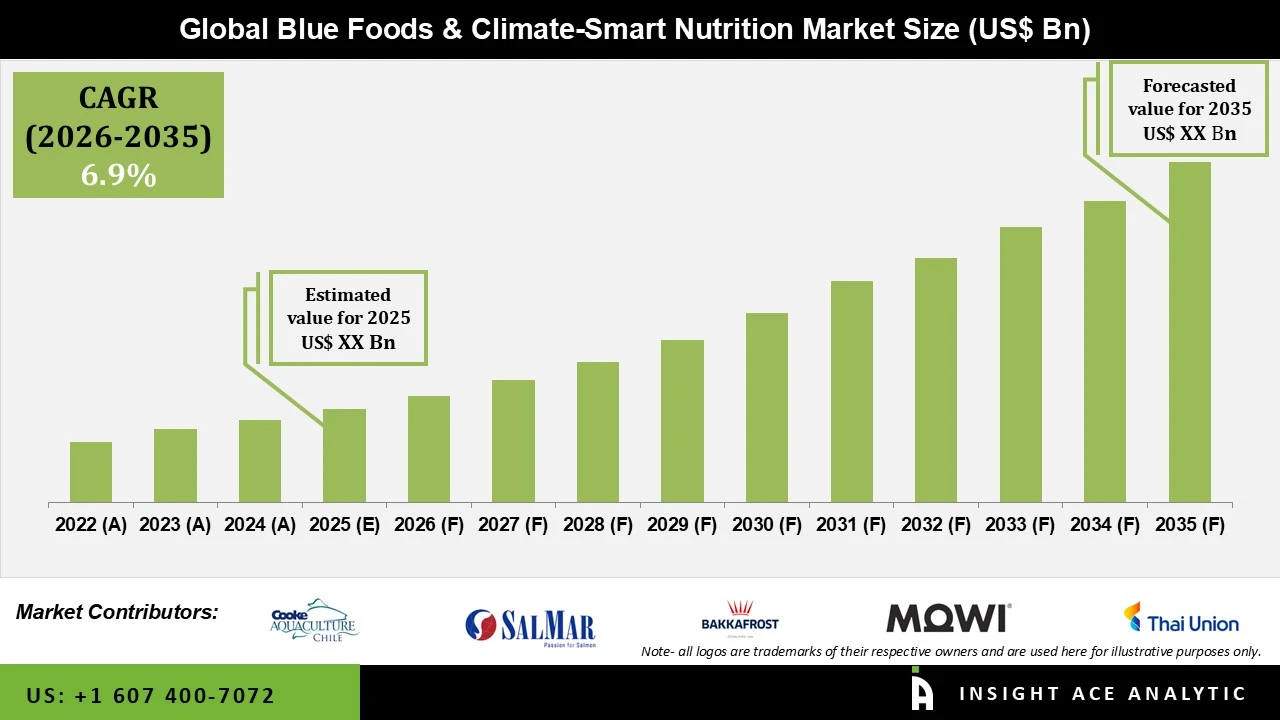
The blue foods and climate smart nutrition market refers to the global market of all food products and innovations that are sourced and produced in aquatic ecosystems, including marine, freshwater, and coastal ecosystems, to support improved nutrition while minimizing environmental impacts. Blue foods include wild-caught fish and other seafood, aquaculture products such as farm-raised fish and shellfish, algae and seaweeds, as well as aquatic plants and microorganisms. Blue foods are important in the diets of people all over the world because they are good sources of high-quality protein, omega-3 fatty acids, and other important micronutrients such as zinc, iodine, and vitamin D that are important in maintaining healthy diets and lifestyles. On the other hand, the concept of climate smart nutrition is a set of dietary patterns and innovations that support improved nutrition, greenhouse gas emissions reductions, and improved food security and sustainability in general.
The market is gaining traction due to rising health awareness and increasing consumer demand for nutrient-dense, sustainable food options that support heart health, immunity, and overall wellness. Blue foods are widely used in direct human consumption, functional foods and nutraceuticals (such as omega-3 supplements), food fortification initiatives, and culinary applications across retail and food service sectors. Applications extend to healthcare and wellness industries as well as sustainable aquaculture technologies, including advanced feed systems and production innovations. However, market growth faces constraints such as overfishing, habitat degradation, and water pollution, which threaten the long-term sustainability and supply stability of aquatic food resources.
Competitive Landscape
Which are the Leading Players in the Blue Foods & Climate-Smart Nutrition Market?
Aquaculture & Seafood
• Mowi ASA
• SalMar ASA
• Lerøy Seafood Group
• Bakkafrost
• Cooke Aquaculture
• Thai Union Group
• Charoen Pokphand Foods
• Grieg Seafood
• Atlantic Sapphire
• AquaChile
Seaweed & Macroalgae
• Cargill Incorporated
• IFF (Danisco)
• CP Kelco
• Acadian Seaplants
• Algaia SA
• Gelymar
• Olmix Group
• Sea6 Energy
• Qingdao Bright Moon Seaweed
Microalgae & Nutrition
• DSM-Firmenich
• Corbion N.V.
• Cyanotech Corporation
• Fermentalg
• Roquette Frères
• AlgaEnergy
• Euglena Co., Ltd.
• Parry Nutraceuticals
Marine Nutraceuticals
• BASF SE
• Aker BioMarine
• GELITA AG
• Darling Ingredients (Rousselot)
• Nordic Naturals
• KD Pharma Group
• GC Rieber Oils
Blue Food-Tech & Novel Proteins
• BlueNalu
• Wildtype Foods
• Shiok Meats
• Finless Foods
• Avant Meats
• Sophie’s BioNutrients
• Umami Bioworks
• Aqua Cultured Foods
• Bluu Seafood
Market Dynamics
Driver
Rising Demand for Sustainable and Nutrient-Dense Diets
The main driver for the blue foods & climate-smart nutrition market is the growing need for sustainable food solutions that provide high-quality nutrients to the world’s population. This need is being driven by the growing health awareness of consumers. In addition to this, climate change has also impacted the need for sustainable foods. Governments and manufacturers have been actively seeking high-quality protein sources, vitamins, minerals, omega-3 fatty acids, as well as lower greenhouse gas emissions and lower demands on land and freshwater resources. Blue foods like fish, shellfish, and algae meet the growing need for sustainable foods that provide high-quality nutrition for consumers with their heart health, immunity, and wellness benefits.
Restrain/Challenge
Environmental and Supply Sustainability Challenges
The major restraining factor in the blue foods & climate-smart nutrition market is the increasing alarm about environmental degradation and sustainability in supply. The consequences of overfishing, habitat destruction, water pollution, and climate change have been detrimental to the sustainability of aquatic resources. In addition to that, the sustainability of aquaculture requires considerable investment in technology and regulatory compliance. Such investments can drive up costs in aquaculture production.
Aquaculture Products (Farmed Seafood) Segment is Expected to Drive the Blue Foods & Climate-Smart Nutrition Market
Aquaculture products (farmed seafood) are expected to drive the blue foods & climate-smart nutrition market due to their scalability, controlled production systems, and capacity to meet rising global protein demand without further straining wild fish stocks. Farmed seafood ensures a stable and predictable supply while supporting traceability and sustainable production practices aligned with climate-smart goals. Continuous advancements in feed optimization, water management, breeding technologies, and disease control are improving efficiency and lowering environmental impact, making this segment the most commercially dominant and growth-oriented within the market.
CBD (Cannabidiol) Segment is Growing at the Highest Rate in the Blue Foods & Climate-Smart Nutrition Market
The alternative protein & sustainable food systems segment is projected to grow at the highest rate within the blue foods & climate-smart nutrition market. This is because of the increased global interest in low-carbon and resource-efficient protein options as consumers increasingly move towards more sustainable diets. Higher investments in algae-based protein, cultured seafood, fermentation-based marine ingredients, and emerging blue food technologies are fueling the development and commercialization of alternative protein and sustainable food systems. Strong policy support and increased environmental awareness among young consumers are also driving the rapid growth of this market compared to traditional nutrition and processing applications.
Why Asia-Pacific Led the Blue Foods & Climate-Smart Nutrition Market?
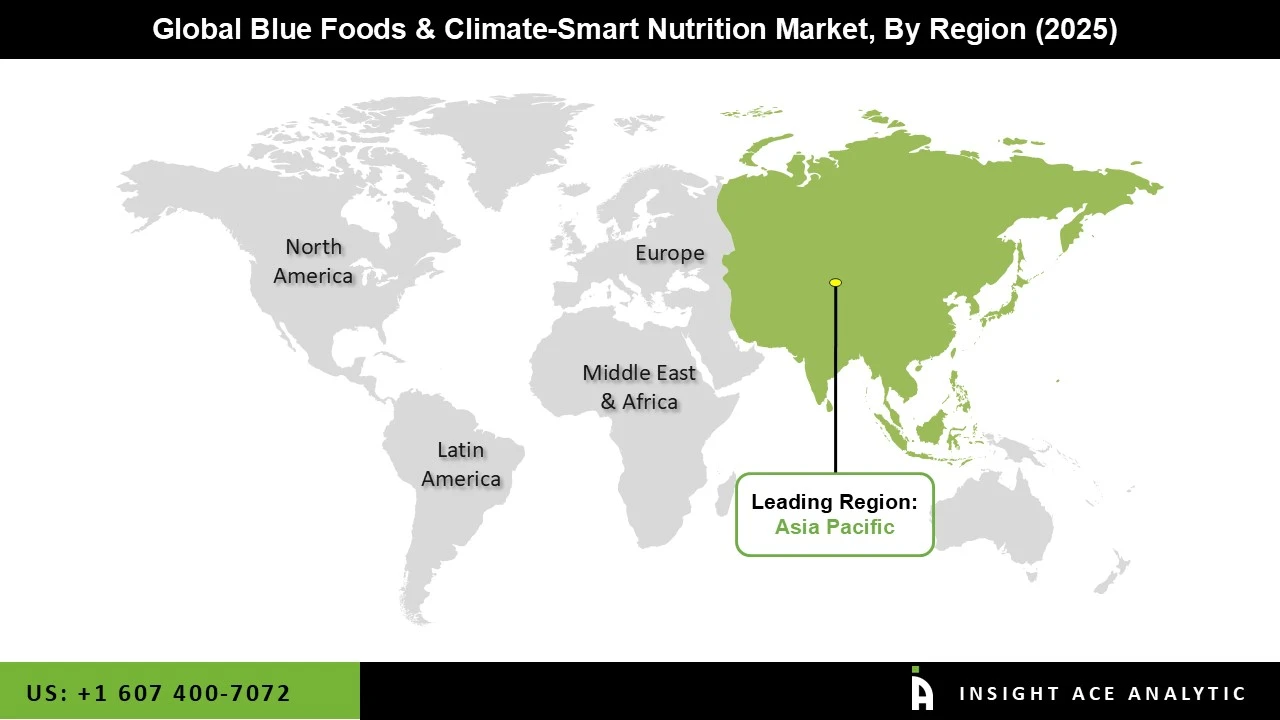
Asia-Pacific dominates the blue foods & climate-smart nutrition market, driven by its strong aquaculture sector, high seafood consumption, and established marine food supply chains. The Asia-Pacific region, which includes countries such as China, Indonesia, Vietnam, India, and Japan, is home to some of the world’s largest aquaculture-producing and seafood-consuming nations, with large coastal areas and government-supported aquaculture development initiatives. The Asia-Pacific region has the advantage of low-cost aquaculture, advances in fish farming technology, and a long history of preference for seafood-based diets. Moreover, the rise in investment in sustainable aquaculture practices, seaweed farming, and algae-based nutrition products has further consolidated the Asia-Pacific region’s leading position in the world market.
Key Development
• March 2026: Ghana National Chamber of Aquaculture launched the Blue Food Innovation Hub in collaboration with the World Economic Forum to strengthen productivity and sustainability in Ghana’s fisheries and aquaculture sector. The centre was designed to connect startups, researchers, investors, and industry stakeholders to address high input costs, climate risks, and market access challenges limiting growth in inland aquaculture and marine fishing.
Blue Foods & Climate-Smart Nutrition Market Report Scope:
| Report Attribute | Specifications |
| Growth Rate CAGR | CAGR of 6.9% from 2026 to 2035 |
| Quantitative Units | Representation of revenue in US$ Bn and CAGR from 2026 to 2035 |
| Historic Year | 2021 to 2025 |
| Forecast Year | 2026-2035 |
| Report Coverage | The forecast of revenue, the position of the company, the competitive market structure, growth prospects, and trends |
| Segments Covered | Product Type, Application Distribution Channel, End-User and By Region |
| Regional Scope | North America; Europe; Asia Pacific; Latin America; Middle East & Africa |
| Country Scope | U.S.; Canada; U.K.; Germany; China; India; Japan; Brazil; Mexico; The UK; France; Italy; Spain; China; Japan; India; South Korea; Southeast Asia; South Korea; Southeast Asia |
| Competitive Landscape | Mowi ASA, SalMar ASA, Lerøy Seafood Group, Bakkafrost, Cooke Aquaculture, Thai Union Group, Charoen Pokphand Foods, Grieg Seafood, Atlantic Sapphire, AquaChile, Cargill Incorporated, IFF (Danisco), CP Kelco, Acadian Seaplants, Algaia SA, Gelymar, Olmix Group, Sea6 Energy, Qingdao Bright Moon Seaweed, DSM-Firmenich, Corbion N.V., Cyanotech Corporation, Fermentalg, Roquette Frères, AlgaEnergy, Euglena Co., Ltd., Parry Nutraceuticals, BASF SE, Aker BioMarine, GELITA AG, Darling Ingredients (Rousselot), Nordic Naturals, KD Pharma Group, GC Rieber Oils, Wildtype Foods, Shiok Meats, Finless Foods, Avant Meats, Sophie’s BioNutrients, Umami Bioworks, Aqua Cultured Foods, Bluu Seafood |
| Customization Scope | Free customization report with the procurement of the report, Modifications to the regional and segment scope. Geographic competitive landscape. |
| Pricing and Available Payment Methods | Explore pricing alternatives that are customized to your particular study requirements. |
Market Segmentation:
Blue Foods & Climate-Smart Nutrition Market by Product Type -
• Aquaculture Products (Farmed Seafood)
o Farmed Finfish
o Farmed Crustaceans
o Farmed Shellfish & Bivalves
o Recirculating Aquaculture System (RAS) Seafood
o Offshore & Land-Based Aquaculture Production
• Wild-Catch & Processed Seafood
o Wild-Caught Finfish
o Wild Shellfish & Crustaceans
o Frozen Seafood Products
o Canned Seafood
o Smoked, Dried & Fermented Seafood
o Value-Added Ready-to-Cook Seafood
• Seaweed & Macroalgae
o Edible Seaweed
o Seaweed Snacks & Functional Foods
o Agar
o Carrageenan
o Alginate
o Seaweed-Based Food Ingredients
• Microalgae & Spirulina Products
o Spirulina Ingredients & Supplements
o Chlorella Products
o Algal DHA & EPA Omega-3 Oils
o Astaxanthin from Microalgae
o Microalgae Protein Ingredients
o Microalgae Functional Nutrition Products
• Marine-Derived Ingredients & Nutraceuticals
o Fish Oil Omega-3 Supplements
o Krill Oil Products
o Marine Collagen Peptides
o Fish Protein Hydrolysates
o Chitosan & Marine Biopolymers
o Marine Bioactive Peptides & Minerals
• Blue Food-Tech & Novel Blue Proteins
o Cell-Cultivated Seafood
o Precision-Fermented Marine Proteins
o Algae-Based Alternative Proteins
o 3D-Printed Seafood Products
o Next-Generation Blue Protein Ingredients
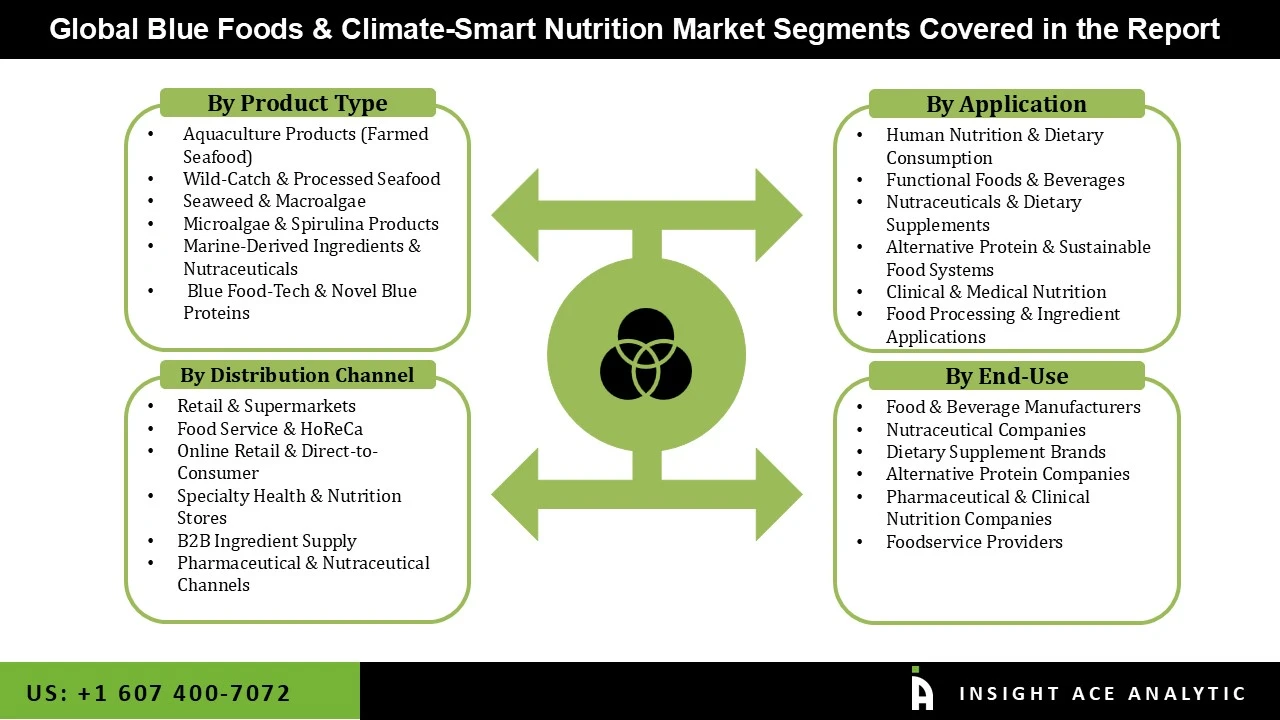
Blue Foods & Climate-Smart Nutrition Market by Application -
• Human Nutrition & Dietary Consumption
• Functional Foods & Beverages
• Nutraceuticals & Dietary Supplements
• Alternative Protein & Sustainable Food Systems
• Clinical & Medical Nutrition
• Food Processing & Ingredient Applications
Blue Foods & Climate-Smart Nutrition Market by Distribution Channel-
• Retail & Supermarkets
• Food Service & HoReCa
• Online Retail & Direct-to-Consumer
• Specialty Health & Nutrition Stores
• B2B Ingredient Supply
• Pharmaceutical & Nutraceutical Channels
Blue Foods & Climate-Smart Nutrition Market by End User-
• Food & Beverage Manufacturers
• Nutraceutical Companies
• Dietary Supplement Brands
• Alternative Protein Companies
• Pharmaceutical & Clinical Nutrition Companies
• Foodservice Providers
Blue Foods & Climate-Smart Nutrition Market by Region-
North America-
• The US
• Canada
Europe-
• Germany
• The UK
• France
• Italy
• Spain
• Rest of Europe
Asia-Pacific-
• China
• Japan
• India
• South Korea
• South East Asia
• Rest of Asia Pacific
Latin America-
• Brazil
• Argentina
• Mexico
• Rest of Latin America
Middle East & Africa-
• GCC Countries
• South Africa
• Rest of Middle East and Africa
Research Design and Approach
This study employed a multi-step, mixed-method research approach that integrates:
- Secondary research
- Primary research
- Data triangulation
- Hybrid top-down and bottom-up modelling
- Forecasting and scenario analysis
This approach ensures a balanced and validated understanding of both macro- and micro-level market factors influencing the market.
Secondary Research
Secondary research for this study involved the collection, review, and analysis of publicly available and paid data sources to build the initial fact base, understand historical market behaviour, identify data gaps, and refine the hypotheses for primary research.
Sources Consulted
Secondary data for the market study was gathered from multiple credible sources, including:
- Government databases, regulatory bodies, and public institutions
- International organizations (WHO, OECD, IMF, World Bank, etc.)
- Commercial and paid databases
- Industry associations, trade publications, and technical journals
- Company annual reports, investor presentations, press releases, and SEC filings
- Academic research papers, patents, and scientific literature
- Previous market research publications and syndicated reports
These sources were used to compile historical data, market volumes/prices, industry trends, technological developments, and competitive insights.

Primary Research
Primary research was conducted to validate secondary data, understand real-time market dynamics, capture price points and adoption trends, and verify the assumptions used in the market modelling.
Stakeholders Interviewed
Primary interviews for this study involved:
- Manufacturers and suppliers in the market value chain
- Distributors, channel partners, and integrators
- End-users / customers (e.g., hospitals, labs, enterprises, consumers, etc., depending on the market)
- Industry experts, technology specialists, consultants, and regulatory professionals
- Senior executives (CEOs, CTOs, VPs, Directors) and product managers
Interview Process
Interviews were conducted via:
- Structured and semi-structured questionnaires
- Telephonic and video interactions
- Email correspondences
- Expert consultation sessions
Primary insights were incorporated into demand modelling, pricing analysis, technology evaluation, and market share estimation.
Data Processing, Normalization, and Validation
All collected data were processed and normalized to ensure consistency and comparability across regions and time frames.
The data validation process included:
- Standardization of units (currency conversions, volume units, inflation adjustments)
- Cross-verification of data points across multiple secondary sources
- Normalization of inconsistent datasets
- Identification and resolution of data gaps
- Outlier detection and removal through algorithmic and manual checks
- Plausibility and coherence checks across segments and geographies
This ensured that the dataset used for modelling was clean, robust, and reliable.
Market Size Estimation and Data Triangulation
Bottom-Up Approach
The bottom-up approach involved aggregating segment-level data, such as:
- Company revenues
- Product-level sales
- Installed base/usage volumes
- Adoption and penetration rates
- Pricing analysis
This method was primarily used when detailed micro-level market data were available.

Top-Down Approach
The top-down approach used macro-level indicators:
- Parent market benchmarks
- Global/regional industry trends
- Economic indicators (GDP, demographics, spending patterns)
- Penetration and usage ratios
This approach was used for segments where granular data were limited or inconsistent.
Hybrid Triangulation Approach
To ensure accuracy, a triangulated hybrid model was used. This included:
- Reconciling top-down and bottom-up estimates
- Cross-checking revenues, volumes, and pricing assumptions
- Incorporating expert insights to validate segment splits and adoption rates
This multi-angle validation yielded the final market size.
Forecasting Framework and Scenario Modelling
Market forecasts were developed using a combination of time-series modelling, adoption curve analysis, and driver-based forecasting tools.
Forecasting Methods
- Time-series modelling
- S-curve and diffusion models (for emerging technologies)
- Driver-based forecasting (GDP, disposable income, adoption rates, regulatory changes)
- Price elasticity models
- Market maturity and lifecycle-based projections
Scenario Analysis
Given inherent uncertainties, three scenarios were constructed:
- Base-Case Scenario: Expected trajectory under current conditions
- Optimistic Scenario: High adoption, favourable regulation, strong economic tailwinds
- Conservative Scenario: Slow adoption, regulatory delays, economic constraints
Sensitivity testing was conducted on key variables, including pricing, demand elasticity, and regional adoption.
Request Customization
Add countries, segments, company profiles, or extend forecast — free 10% customization with purchase.
Customize This Report →Enquire Before Buying
Speak with our analyst team about scope, methodology, pricing, or deliverable formats.
Enquire Now →Frequently Asked Questions
Blue Foods and Climate Smart Nutrition Market Size is predicted to grow at a 6.9% CAGR during the forecast period for 2026 to 2035.
Mowi ASA, SalMar ASA, Lerøy Seafood Group, Bakkafrost, Cooke Aquaculture, Thai Union Group, Charoen Pokphand Foods, Grieg Seafood, Atlantic Sapphire, AquaChile, Cargill Incorporated, IFF (Danisco), CP Kelco, Acadian Seaplants, Algaia SA, Gelymar, Olmix Group, Sea6 Energy, Qingdao Bright Moon Seaweed, DSM-Firmenich, Corbion N.V., Cyanotech Corporation, Fermentalg, Roquette Frères, AlgaEnergy, Euglena Co., Ltd., Parry Nutraceuticals, BASF SE, Aker BioMarine, GELITA AG, Darling Ingredients (Rousselot), Nordic Naturals, KD Pharma Group, GC Rieber Oils, Wildtype Foods, Shiok Meats, Finless Foods, Avant Meats, Sophie’s BioNutrients, Umami Bioworks, Aqua Cultured Foods, Bluu Seafood
Blue Foods and Climate Smart Nutrition Market is segmented into Product Type, Application Distribution Channel, End-User and By Region
Asia Pacific region is leading the Blue Foods and Climate Smart Nutrition Market.