Gene Therapy Market Size, Revenue, Forecast Report 2026 to 2035
What is Gene Therapy Market Size?
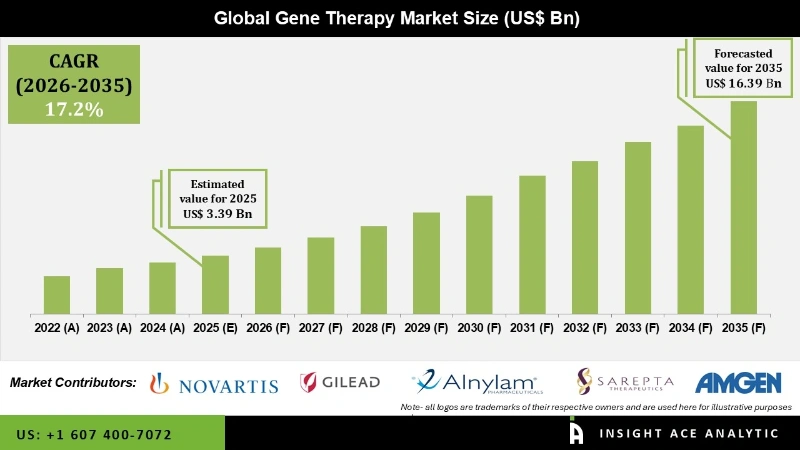
Gene Therapy Market Size is valued at USD 3.39 Bn in 2025 and is predicted to reach USD 16.39 Bn by the year 2035 at a 17.2% CAGR during the forecast period for 2026 to 2035
Gene Therapy Market Size, Share & Trends Analysis Report By Type (Gene silencing, Cell replacement, Gene augmentation, Other therapies), By Vector (Viral vectors (Retroviral Vectors, Adeno-Associated Viral Vectors, Other Viral Vectors), Non-Viral Vectors) By Therapeutic area, By Delivery method, By Route Of Administration, By Region, And By Segment Forecasts, 2026 to 2035.
Gene Therapy Market Key Takeaways:
|
Gene therapy is a therapeutic approach that targets the fundamental genetic problem in order to treat or prevent diseases. Gene therapy offers an alternative to medications or surgery, enabling doctors to address a condition by modifying an individual's genetic makeup. Gene therapy is now able to treat a limited number of conditions, such as Leber congenital amaurosis, an eye condition, spinal muscular atrophy, a muscle condition. Several alternative gene therapies are being investigated to ensure their efficacy and safety. Medical professionals aim to apply the promising genome editing technique soon to cure human illnesses.
The development of the gene therapy market is due to the increasing occurrence of genetic disorders and rare diseases. These conditions, previously considered incurable, are now being targeted with innovative gene therapies that offer potential cures or significant symptom alleviation. Additionally, biotechnology and molecular biology advancements have improved our understanding of gene function and regulation, enabling the advancement of more precise and effective therapies. The gene therapy market has witnessed substantial growth and advancements in recent years, signifying a transformative era in medical treatment.
However, the high cost of gene therapy products presents a challenge in the gene therapy market. These cutting-edge treatments offer promising solutions for genetic disorders and diseases, but their prohibitive prices can limit patient access and strain healthcare systems. Striking a balance between affordability and rewarding innovation is critical. Regulatory agencies, healthcare providers, and pharmaceutical companies must collaborate to develop pricing models that ensure equitable access to gene therapies while incentivizing further research and development in this transformative field.
Competitive Landscape
Some Major Key Players In The Gene Therapy Market:
- Novartis Ag
- Biogen Inc.
- Gilead Sciences, Inc.
- Bristol-Myers Squibb
- Alnylam Pharmaceuticals, Inc.
- Sarepta Therapeutics, Inc.
- Amgen, Inc.
- Orchard Therapeutics Plc
- Hoffmann-La Roche Ag
- Jazz Pharmaceuticals Plc
- Uniqure N.V.
- Johnson & Johnson
- Bluebird Bio, Inc.
- Biomarin Pharmaceutical Inc.
- Krystal Biotech, Inc.
- Shanghai Sunway Biotech Co. Ltd.
- Sibiono Genetech Co. Ltd.
- Ferring B.V.
- Vertex Pharmaceuticals Incorporated
- Pfizer, Inc.
- Sangamo Therapeutics, Inc.
- Regenxbio
- Ultragenyx Pharmaceutical Inc.
- Meiragtx Holdings Plc
- Anges, Inc.
- Others
Market Segmentation:
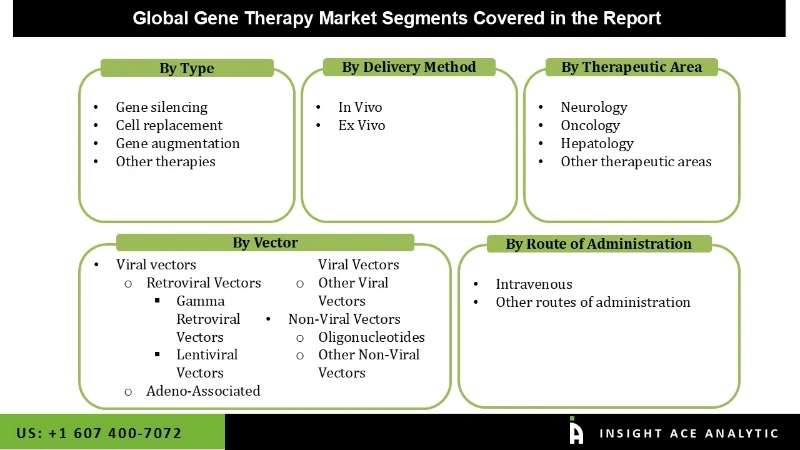
The Gene therapy market segmentation is based on type, Vector, therapeutic area, delivery method, and route of administration. Based on type, the market is segmented into gene silencing, cell replacement, gene augmentation, and other therapies. As per the therapeutic areas, the market is segmented into neurology, oncology, hepatology, and other therapeutic areas. According to vectors, the market is segmented into Viral vectors (Retroviral Vectors (Gamma Retroviral Vectors, Lentiviral Vectors), Adeno-Associated Viral Vectors, Other Viral Vectors), Non-Viral Vectors (Oligonucleotides, and Other Non-Viral Vectors). As per the the delivery method, the market is segmented as in Vivo and Ex Vivo. The route of administration segment includes intravenous other routes of administration.
Based On Type, Gene Slicing The Segment Is Accounted As A Major Contributor In The Gene Therapy Market.
Gene slicing is a vital technique within the gene therapy market, allowing for the precise modification of genetic material. This technology's driving force lies in its potential to treat genetic disorders, including inherited diseases, by replacing or repairing faulty genes. As gene therapy advances, the ability to accurately splice genes becomes crucial for developing targeted and effective treatments. This innovative approach holds promise for improved patient outcomes and has the potential to transform the healthcare landscape by providing personalized solutions for genetic conditions.
The Neurology Segment Witnessed Growth At A Rapid Rate.
The neurology gene therapy market is driven by the potential to treat previously untreatable neurological disorders through genetic interventions. Advancements in gene therapy techniques offer hope for conditions like Parkinson's disease and ALS. This evolving field leverages innovative technologies to target the genetic root causes of neurological ailments, with promising results in preclinical and clinical trials. As the understanding of neurogenetics deepens and the safety and efficacy of gene therapies improve, the market is poised to grow, offering new therapeutic options for patients with challenging neurological conditions.
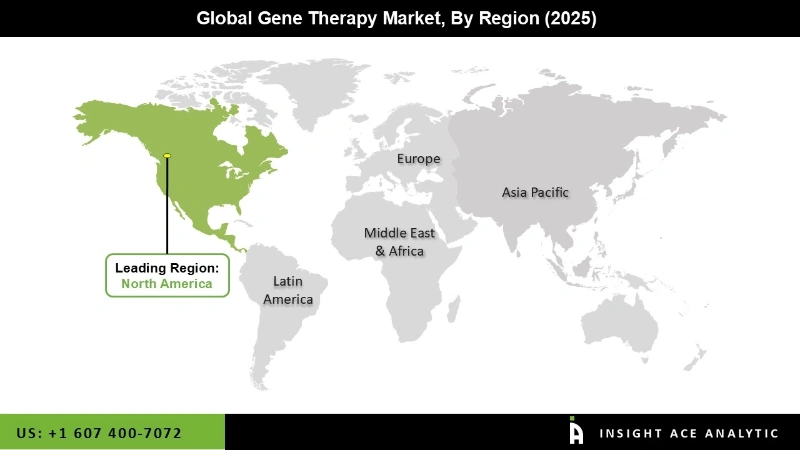
In The Region, The North American Gene Therapy Market Holds A Significant Revenue Share.
The North American gene therapy market is driven by several factors, with one prominent driver being robust research and development initiatives. The region's advanced healthcare infrastructure, substantial investment in biotechnology, and supportive regulatory frameworks encourage innovation and the development of cutting-edge gene therapies. This fosters collaboration between academic institutions, pharmaceutical companies, and startups, creating a dynamic landscape for gene therapy advancements.
Additionally, the increasing prevalence of genetic disorders and the demand for personalized medicine contribute to the market's growth, making North America a hub for gene therapy research and adoption. In addition, Asia Pacific is estimated to grow rapidly in the global gene therapy market due to its large population with unmet medical requirements and increasing demand for novel technologies to treat rare but increasingly prevalent diseases.
Recent Developments:
- In May 2023, Novartis acquired a candidate gene therapy from Avrobio, a company experiencing financial challenges. Novartis made an unprecedented advance payment of $87.5 million for the clinical-phase asset, with no stipulations regarding future payments. The agreement encompassed AVR-RD-04, a hematopoietic stem cell gene therapy program under investigation designed to treat the uncommon genetic disorder cystinosis.
- In April 2023, Bristol-Myers Squibb expanded its global cell therapy manufacturing network. This expansion will enable in-house viral vector production via a manufacturing facility in the United States and its activities in Libertyville, Illinois. To make this happen, the business has signed an arrangement with Novartis. The facility and its operations could generate viral vectors for both of Bristol Myers Squibb's CAR T cell treatments. This advancement furthered the company's long-term goals in cell therapy.
Gene Therapy Market Report Scope
| Report Attribute | Specifications |
| Market Size Value In 2025 | USD 3.39 Bn |
| Revenue Forecast In 2035 | USD 16.39 Bn |
| Growth Rate CAGR | CAGR of 17.2% from 2026 to 2035 |
| Quantitative Units | Representation of revenue in US$ Million and CAGR from 2026 to 2035 |
| Historic Year | 2022 to 2025 |
| Forecast Year | 2026-2035 |
| Report Coverage | The forecast of revenue, the position of the company, the competitive market structure, growth prospects, and trends |
| Segments Covered | By Type, By Therapeutic area, By Delivery method, By Route Of Administration |
| Regional Scope | North America; Europe; Asia Pacific; Latin America; Middle East & Africa |
| Country Scope | U.S.; Canada; U.K.; Germany; China; India; Japan; Brazil; Mexico; France; Italy; Spain; South East Asia; South Korea |
| Competitive Landscape | Novartis Ag, Biogen Inc., Gilead Sciences, Inc., Bristol-Myers Squibb, Alnylam Pharmaceuticals, Inc., Sarepta Therapeutics, Inc., Amgen, Inc., Orchard Therapeutics Plc, F. Hoffmann-La Roche Ag, Jazz Pharmaceuticals Plc, Uniqure N.V., Johnson & Johnson, Bluebird Bio, Inc., Biomarin Pharmaceutical Inc., Krystal Biotech, Inc., Shanghai Sunway Biotech Co. Ltd., Sibiono Genetech Co. Ltd., Ferring B.V., Vertex Pharmaceuticals Incorporated, Pfizer, Inc., Sangamo Therapeutics, Inc., egenxbio, Ultragenyx Pharmaceutical Inc., Meiragtx Holdings Plc, Anges, Inc. |
| Customization Scope | Free customization report with the procurement of the report and modifications to the regional and segment scope. Particular Geographic competitive landscape. |
| Pricing And Available Payment Methods | Explore pricing alternatives that are customized to your particular study requirements. |
Segmentation Of Gene Therapy Market -
Gene Therapy Market By Type
- Gene silencing
- Cell replacement
- Gene augmentation
- Other therapies
Gene Therapy Market By Vector
- Viral vectors
- Retroviral Vectors
- Gamma Retroviral Vectors
- Lentiviral Vectors
- Adeno-Associated Viral Vectors
- Other Viral Vectors
- Retroviral Vectors
- Non-Viral Vectors
- Oligonucleotides
- Other Non-Viral Vectors
Gene Therapy Market By Therapeutic area
- Neurology
- Oncology
- Hepatology
- Other therapeutic areas
Gene Therapy Market By Delivery method
- In Vivo
- Ex Vivo
Gene Therapy Market By Route of administration
- Intravenous
- Other routes of administration
By Region-
North America-
- The US
- Canada
- Mexico
Europe-
- Germany
- The UK
- France
- Italy
- Spain
- Rest of Europe
Asia-Pacific-
- China
- Japan
- India
- South Korea
- South East Asia
- Rest of Asia Pacific
Latin America-
- Brazil
- Argentina
- Rest of Latin America
Middle East & Africa-
- GCC Countries
- South Africa
- Rest of Middle East and Africa
Research Design and Approach
This study employed a multi-step, mixed-method research approach that integrates:
- Secondary research
- Primary research
- Data triangulation
- Hybrid top-down and bottom-up modelling
- Forecasting and scenario analysis
This approach ensures a balanced and validated understanding of both macro- and micro-level market factors influencing the market.
Secondary Research
Secondary research for this study involved the collection, review, and analysis of publicly available and paid data sources to build the initial fact base, understand historical market behaviour, identify data gaps, and refine the hypotheses for primary research.
Sources Consulted
Secondary data for the market study was gathered from multiple credible sources, including:
- Government databases, regulatory bodies, and public institutions
- International organizations (WHO, OECD, IMF, World Bank, etc.)
- Commercial and paid databases
- Industry associations, trade publications, and technical journals
- Company annual reports, investor presentations, press releases, and SEC filings
- Academic research papers, patents, and scientific literature
- Previous market research publications and syndicated reports
These sources were used to compile historical data, market volumes/prices, industry trends, technological developments, and competitive insights.

Primary Research
Primary research was conducted to validate secondary data, understand real-time market dynamics, capture price points and adoption trends, and verify the assumptions used in the market modelling.
Stakeholders Interviewed
Primary interviews for this study involved:
- Manufacturers and suppliers in the market value chain
- Distributors, channel partners, and integrators
- End-users / customers (e.g., hospitals, labs, enterprises, consumers, etc., depending on the market)
- Industry experts, technology specialists, consultants, and regulatory professionals
- Senior executives (CEOs, CTOs, VPs, Directors) and product managers
Interview Process
Interviews were conducted via:
- Structured and semi-structured questionnaires
- Telephonic and video interactions
- Email correspondences
- Expert consultation sessions
Primary insights were incorporated into demand modelling, pricing analysis, technology evaluation, and market share estimation.
Data Processing, Normalization, and Validation
All collected data were processed and normalized to ensure consistency and comparability across regions and time frames.
The data validation process included:
- Standardization of units (currency conversions, volume units, inflation adjustments)
- Cross-verification of data points across multiple secondary sources
- Normalization of inconsistent datasets
- Identification and resolution of data gaps
- Outlier detection and removal through algorithmic and manual checks
- Plausibility and coherence checks across segments and geographies
This ensured that the dataset used for modelling was clean, robust, and reliable.
Market Size Estimation and Data Triangulation
Bottom-Up Approach
The bottom-up approach involved aggregating segment-level data, such as:
- Company revenues
- Product-level sales
- Installed base/usage volumes
- Adoption and penetration rates
- Pricing analysis
This method was primarily used when detailed micro-level market data were available.

Top-Down Approach
The top-down approach used macro-level indicators:
- Parent market benchmarks
- Global/regional industry trends
- Economic indicators (GDP, demographics, spending patterns)
- Penetration and usage ratios
This approach was used for segments where granular data were limited or inconsistent.
Hybrid Triangulation Approach
To ensure accuracy, a triangulated hybrid model was used. This included:
- Reconciling top-down and bottom-up estimates
- Cross-checking revenues, volumes, and pricing assumptions
- Incorporating expert insights to validate segment splits and adoption rates
This multi-angle validation yielded the final market size.
Forecasting Framework and Scenario Modelling
Market forecasts were developed using a combination of time-series modelling, adoption curve analysis, and driver-based forecasting tools.
Forecasting Methods
- Time-series modelling
- S-curve and diffusion models (for emerging technologies)
- Driver-based forecasting (GDP, disposable income, adoption rates, regulatory changes)
- Price elasticity models
- Market maturity and lifecycle-based projections
Scenario Analysis
Given inherent uncertainties, three scenarios were constructed:
- Base-Case Scenario: Expected trajectory under current conditions
- Optimistic Scenario: High adoption, favourable regulation, strong economic tailwinds
- Conservative Scenario: Slow adoption, regulatory delays, economic constraints
Sensitivity testing was conducted on key variables, including pricing, demand elasticity, and regional adoption.
Request Customization
Add countries, segments, company profiles, or extend forecast — free 10% customization with purchase.
Customize This Report →Enquire Before Buying
Speak with our analyst team about scope, methodology, pricing, or deliverable formats.
Enquire Now →Frequently Asked Questions
Gene Therapy Market Size is valued at USD 3.39 Bn in 2025 and is predicted to reach USD 16.39 Bn by the year 2035.
Gene Therapy Market expected to grow at a 17.2% CAGR during the forecast period for 2026-2035.
Pfizer, Inc., Sangamo Therapeutics, Inc., egenxbio, Ultragenyx Pharmaceutical Inc., Meiragtx Holdings Plc, Anges, Inc.
Gene therapy market segmentation is based on type, Vector, therapeutic area, delivery method, and route of administration, gene silencing, cell replacement, gene augmentation, and other therapies.
North American region is leading the Gene Therapy Market.