Alternative Fats and Synthetic Butter Market Size, Revenue, Trend Report 2026 to 2035
What is Alternative Fats and Synthetic Butter Market Size?
Global Alternative Fats and Synthetic Butter Market is estimated to grow with a 16.5% CAGR during the forecast period for 2026 to 2035.
Alternative Fats and Synthetic Butter Market Size, Share & Trends Analysis Distribution By Production Technology (Precision Fermentation (Microbial /Oleaginous Yeast), Cell-Cultivated / Cellular Agriculture (Animal Adipocyte-Derived), Thermochemical CO₂-to-Fat (Power-to-Fat / Synthetic Lipids), Microalgae-Derived Lipids (Heterotrophic & Autotrophic), Plant-Oil Restructuring (Oleogels, Emulsions, Structured Lipids), Enzymatic Interesterification & Modified Tropical Oils), by Product Type (Synthetic Butter & Dairy-Fat Replacements (anhydrous milk fat analogs, butter, ghee equivalents), Animal Fat Replacements (tallow, lard, schmaltz, suet equivalents), Tropical Oil Replacements (palm oil, palm kernel oil, coconut oil substitutes), Specialty Confectionery Fats (cocoa butter equivalents/replacers, CBE/CBR/CBS analogs), Designer Specialty Lipids (sub-1% inclusion, flavor- and aroma-active fats), Liquid Cooking Oils & Frying Oils), by Application / End-Use Industry, by Sales Channel & Business Model and Segment Forecasts, 2026 to 2035.
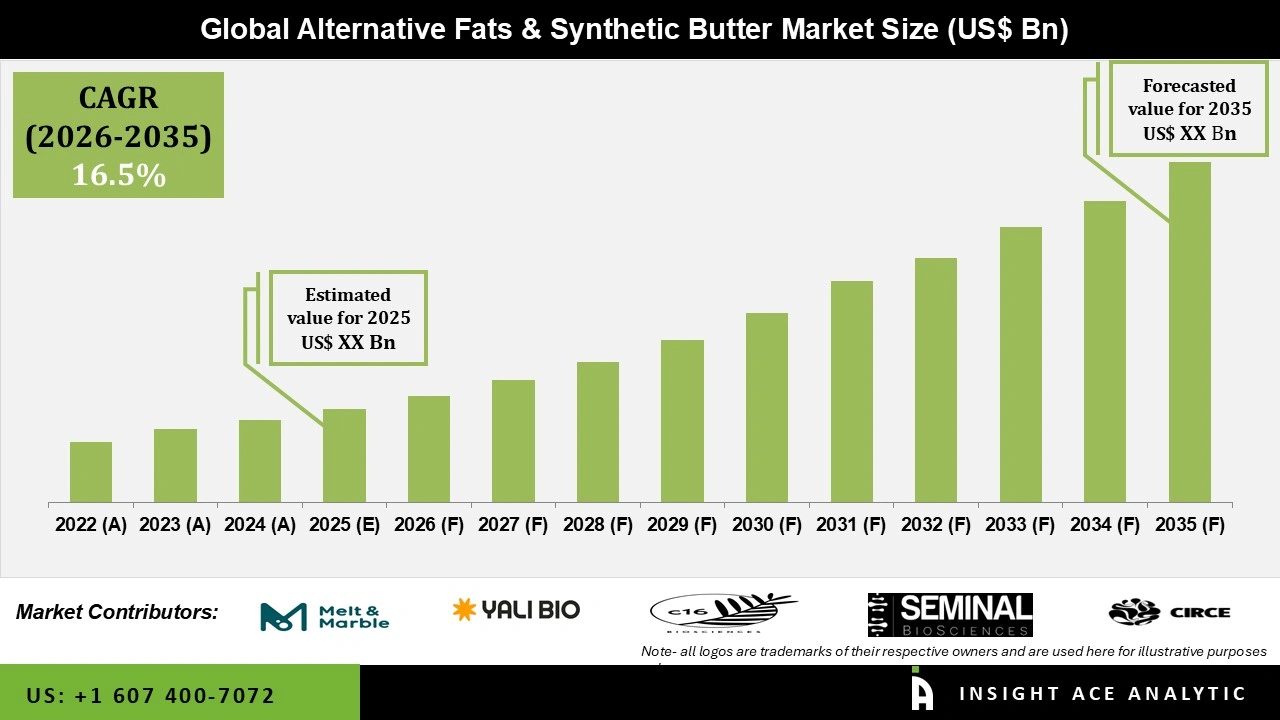
Alternative fats and synthetic butter are an emerging class of ingredients developed to replace traditional animal-based and tropical fats in food production. Unlike conventional fats sourced from dairy, livestock, or palm oil, these alternatives are created using innovative processes such as precision fermentation, enzymatic conversion, and advanced lipid structuring. The goal is to produce fats that closely match the taste, texture, and performance of butter, lard, or palm oil while offering greater consistency, scalability, and reduced environmental impact. These ingredients are finding growing use across bakery, confectionery, plant-based dairy, meat analogs, and prepared foods, where traditional fat sources are increasingly scrutinized for sustainability and supply chain reasons.
One of the major advantages of alternative fats is their ability to deliver sensory and functional properties similar to those of conventional fats, such as butter, lard, or palm oil, while addressing critical sustainability and supply chain volatility challenges. These solutions allow manufacturers to optimise product formulations without compromising quality, making them particularly valuable in applications such as bakery, confectionery, dairy alternatives, and processed foods. In addition, advancements in formulation technologies, including oleogels and structured lipids, are enabling better control over melting profiles, mouthfeel, and stability, further enhancing their commercial appeal.
The market is also benefiting from the rapid growth of plant-based and hybrid food products, where fats play a crucial role in delivering flavour and texture. As demand for dairy alternatives, meat substitutes, and clean-label products continues to rise, the need for high-performance fat solutions is growing. At the same time, food companies are seeking alternatives to palm oil due to environmental concerns, creating significant opportunities for innovative fat technologies such as microbial oils and synthetic lipids. Another important driver is the growing focus on health and nutrition.
Consumers are becoming more conscious of fat composition, pushing manufacturers to develop products with improved fatty acid profiles, reduced saturated fats, and enhanced functional benefits. This has led to increased interest in designer lipids and customised fat solutions tailored for specific applications, including infant nutrition, nutraceuticals, and specialised food products. Despite strong growth potential, the market does face certain challenges. High production costs, scalability limitations, and regulatory complexities can slow widespread adoption, particularly for newer technologies such as cellular agriculture and precision fermentation. Additionally, achieving cost parity with conventional fats remains a key hurdle for many emerging players. However, ongoing investments, technological advancements, and strategic partnerships across the value chain are expected to gradually address these barriers. Overall, the Alternative Fats and Synthetic Butter Market is positioned as a critical enabler of the future food ecosystem. By combining sustainability, functionality, and innovation, it helps food manufacturers meet evolving consumer expectations while building more resilient, environmentally responsible supply chains.
Competitive Landscape
Which are the Leading Players in the Alternative Fats and Synthetic Butter Market?
- MeltandMarble
- Nourish Ingredients
- Yali Bio
- C16 Biosciences
- ÄIO
- Seminal Bio
- Circe Bioscience
- NoPalm Ingredients
- Zero Acre Farms
- Clean Food Group
- Checkerspot
- Hoxton Farms
- Mission Barns
- Mosa Meat
- Genuine Taste
- Steakholder Foods
- Believer Meats
- Savor
- Orca Sciences
- Solar Foods
- Lypid
- Motif FoodWorks
- Shiru
- Fattastic Technologies
- Cubiq Foods
- PerFat
- Cargill
- Bunge Limited
- ADM
- AAK AB
- IOI Loders Croklaan
- DSM-Firmenich
- Fonterra
- Cabio Biotech
- Upfield
- Miyoko's Creamery
- Melt Organic
- Naturli' Foods
- Conagra Brands
- Land O'Lakes
- Califia Farms
- Kite Hill
- Fora Foods
- Wesson
- Willicroft
Market Dynamics
Driver
Rising Demand for Sustainable and High-Performance Fat Alternatives
The key drivers of the Alternative Fats and Synthetic Butter Market is the growing demand for more sustainable and efficient fat solutions across the food industry. Food manufacturers today are under increasing pressure to reduce their environmental footprint while maintaining product quality, taste, and functionality. Traditional fat sources such as palm oil and animal fats are facing scrutiny due to environmental concerns, supply chain volatility, and ethical considerations. Alternative fats are gaining strong traction as they offer a more sustainable and scalable solution. Advanced technologies such as precision fermentation, plant-based structuring, and lipid engineering enable companies to create fats that closely replicate conventional products while reducing environmental impact. These innovations help improve consistency, reduce dependency on traditional raw materials, and support cleaner supply chains. At the same time, the rapid growth of plant-based and hybrid food products is increasing demand for high-performance fat ingredients that deliver the desired texture, flavour, and mouthfeel. As a result, food companies are increasingly adopting alternative fats to enhance product quality while meeting evolving consumer expectations. This growing need for sustainability, functionality, and efficiency is a major factor driving market expansion.
Restrain/Challenge
High Production Costs and Scalability Challenges
Despite strong growth potential, the market faces challenges related to high production costs and scalability limitations. Many next-generation fat technologies, such as precision fermentation and cellular agriculture, require significant investment in infrastructure, specialised equipment, and technical expertise. For emerging companies and smaller players, these costs can act as a barrier to large-scale adoption. In addition to cost, scaling up production while maintaining consistent quality remains a complex process. Unlike traditional fats, alternative fat solutions often involve new manufacturing methods that require optimisation and validation at each stage. Ensuring stability, functionality, and regulatory compliance across different markets adds further complexity. Another challenge lies in achieving cost competitiveness with conventional fats. While alternative fats offer long-term sustainability and performance benefits, price sensitivity in the food industry can slow down adoption. As a result, companies need to balance innovation with affordability and invest in process improvements to make these solutions commercially viable at scale.
Precision Fermentation Segment is Expected to Drive the Alternative Fats and Synthetic Butter Market.
Precision fermentation is emerging as one of the fastest-growing and most transformative sub-segments in the alternative fats and synthetic butter market. This technology uses microbial systems, such as oleaginous yeast, to produce tailored fats with specific functional properties, including controlled melting behaviour, improved texture, and enhanced flavour. Unlike traditional fat sources, precision fermentation offers high consistency and customisation, making it particularly suitable for applications that require close replication of dairy and animal fats. Another key advantage of this approach is its scalability and sustainability. It reduces dependence on conventional raw materials such as palm oil and animal fats while offering a more controlled, efficient production process. As investment in food technology continues to grow, precision fermentation is gaining strong commercial traction, with both startups and established companies actively expanding their capabilities. This positions the segment as a critical driver of innovation and long-term market growth.
Dairy Alternatives Segment is Expected to Drive the Alternative Fats and Synthetic Butter Market
The dairy alternatives segment is witnessing rapid growth and is becoming a major demand driver in the alternative fats and synthetic butter market. As consumer preferences shift toward plant-based, lactose-free, and sustainable food options, the demand for high-quality alternatives to traditional dairy products continues to rise. Products such as plant-based butter, cheese, cream, and spreads require advanced fat solutions to replicate the taste, texture, and mouthfeel of conventional dairy. Fats play a central role in delivering the richness and sensory experience expected from dairy products, making them a key focus area for innovation. This has led to increased adoption of alternative fat ingredients that can meet both functional and nutritional requirements. In addition, growing awareness around health and environmental concerns is encouraging manufacturers to reformulate their products using more sustainable fat sources. As a result, the dairy alternatives segment is expected to remain a strong contributor to market growth, driving both product development and wider adoption of alternative fats.
Why North America Led the Alternative Fats and Synthetic Butter Market?
North America has emerged as a leading region in the Alternative Fats and Synthetic Butter Market, supported by a strong ecosystem of food innovation, advanced technology adoption, and increasing consumer awareness. The region is home to several leading food manufacturers, startups, and ingredient companies that are actively investing in next-generation fat technologies to improve sustainability and product performance. A key factor behind this leadership is the early adoption of innovative solutions such as precision fermentation, plant-based fats, and synthetic lipids. Companies in North America are quick to integrate new technologies into their product development processes, enabling them to stay ahead in a highly competitive market. In addition, the region benefits from well-established infrastructure, access to funding, and a strong research and development ecosystem.
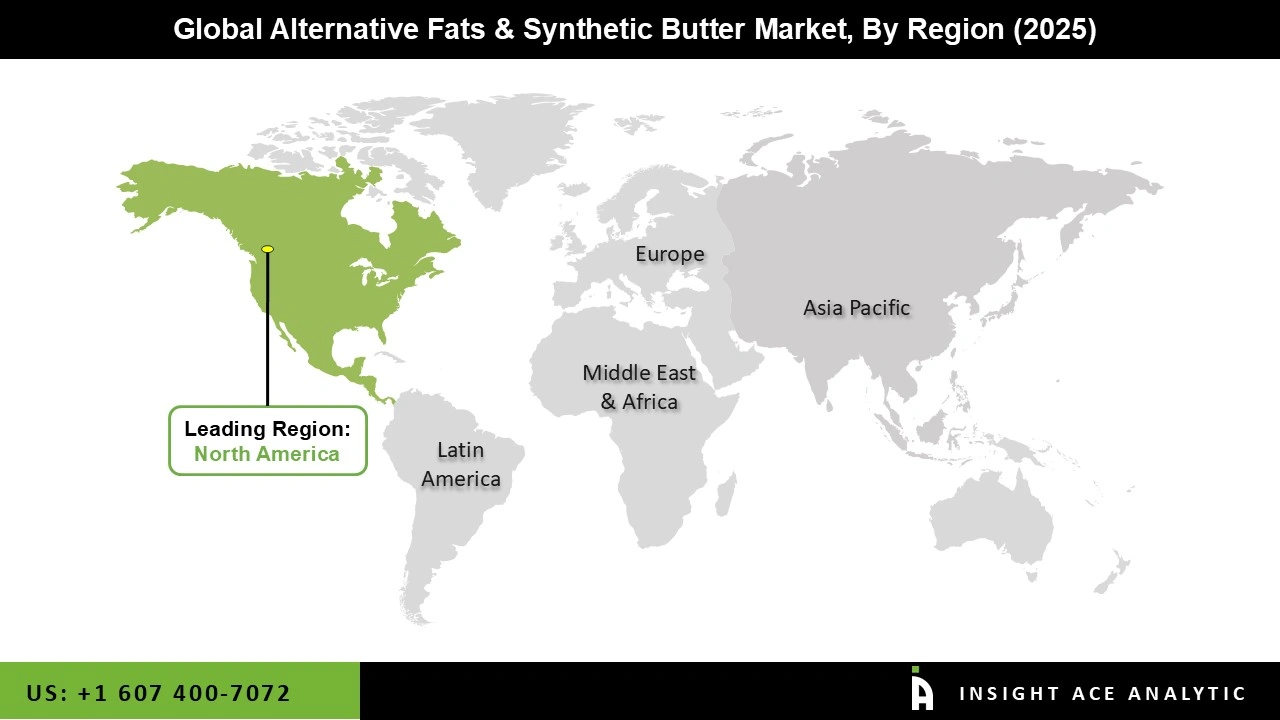
The presence of skilled professionals and collaboration between food tech companies and research institutions further support innovation and commercialisation. Consumer demand also plays a significant role. There is a growing preference for sustainable, plant-based, and clean-label products, encouraging manufacturers to adopt alternative fat solutions. At the same time, increasing awareness around environmental issues, particularly related to palm oil and animal fats, is driving the shift toward more responsible alternatives. Overall, the combination of technological advancement, strong industry presence, supportive ecosystem, and evolving consumer preferences has positioned North America as a key leader in the Alternative Fats and Synthetic Butter Market.
Key Developments:
- In October 2025, DSM-Firmenich announced advancements in precision fermentation capabilities for lipid development, enabling the production of customised fat ingredients with improved functionality and nutritional profiles. This highlights the growing role of biotechnology in next-generation fat production.
Alternative Fats and Synthetic Butter Market Report Scope :
| Report Attribute | Specifications |
| Growth Rate CAGR | CAGR of 16.5% from 2026 to 2035 |
| Quantitative Units | Representation of revenue in US$ Bn and CAGR from 2026 to 2035 |
| Historic Year | 2021 to 2025 |
| Forecast Year | 2026-2035 |
| Report Coverage | The forecast of revenue, the position of the company, the competitive market structure, growth prospects, and trends |
| Segments Covered | Production Technology, Product Type, Application / End-Use Industry, Sales Channel and Business Model and By Region |
| Regional Scope | North America; Europe; Asia Pacific; Latin America; Middle East and Africa |
| Country Scope | U.S.; Canada; U.K.; Germany; China; India; Japan; Brazil; Mexico; The UK; France; Italy; Spain; China; Japan; India; South Korea; Southeast Asia; South Korea; Southeast Asia |
| Competitive Landscape | MeltandMarble, Nourish Ingredients, Yali Bio, C16 Biosciences, ÄIO, Seminal Bio, Circe Bioscience, NoPalm Ingredients, Zero Acre Farms, Clean Food Group, Checkerspot, Hoxton Farms, Mission Barns, Mosa Meat, Genuine Taste, Steakholder Foods, Believer Meats, Savor, Orca Sciences, Solar Foods, Lypid, Motif FoodWorks, Shiru, Fattastic Technologies, Cubiq Foods, PerFat, Cargill, Bunge Limited, ADM, AAK AB, IOI Loders Croklaan, DSM-Firmenich, Fonterra, Cabio Biotech, Upfield, Miyoko's Creamery, Melt Organic, Naturli' Foods, Conagra Brands, Land O'Lakes, Califia Farms, Kite Hill, Fora Foods, Wesson, Willicroft. |
| Customization Scope | Free customization report with the procurement of the report, Modifications to the regional and segment scope. Geographic competitive landscape. |
| Pricing and Available Payment Methods | Explore pricing alternatives that are customized to your particular study requirements. |
Segmentations of Alternative Fats and Synthetic Butter Market :
Alternative Fats and Synthetic Butter Market, by Production Technology -
- Precision Fermentation (Microbial / Oleaginous Yeast)
- Cell-Cultivated / Cellular Agriculture (Animal Adipocyte-Derived)
- Thermochemical CO2-to-Fat (Power-to-Fat / Synthetic Lipids)
- Microalgae-Derived Lipids (Heterotrophic and Autotrophic)
- Plant-Oil Restructuring (Oleogels, Emulsions, Structured Lipids)
- Enzymatic Interesterification and Modified Tropical Oils
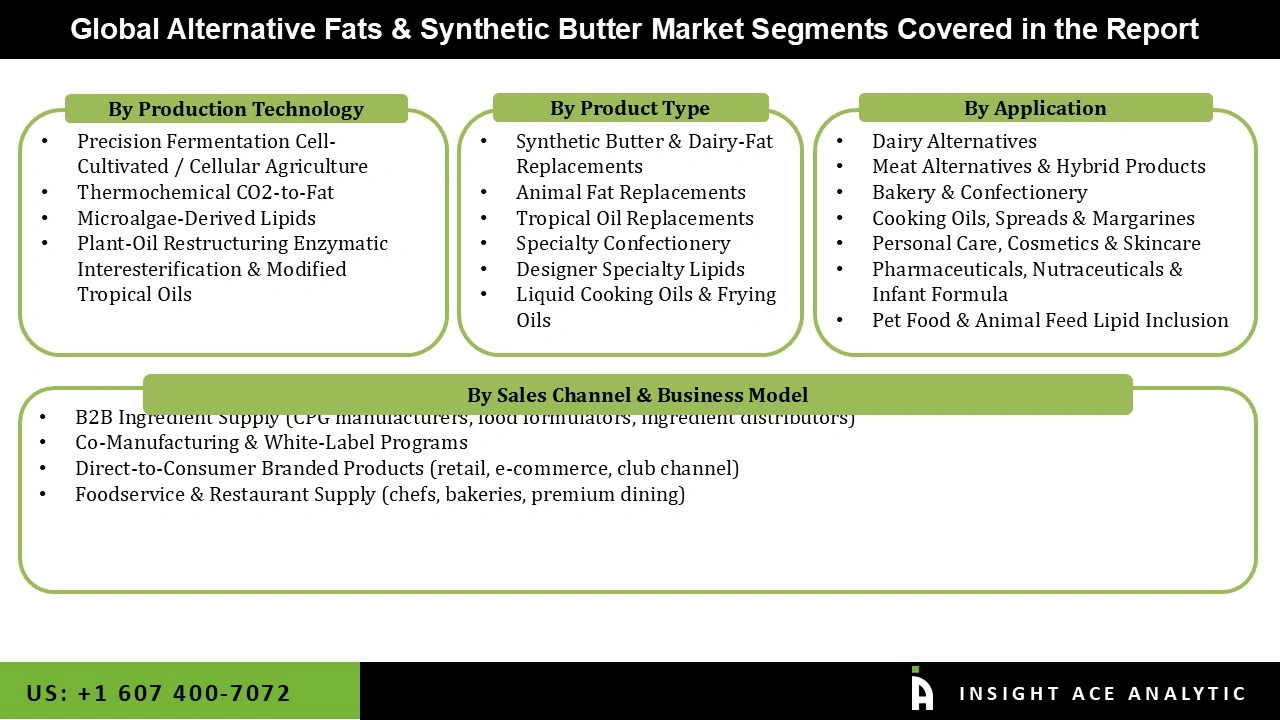
Alternative Fats and Synthetic Butter Market, by Product Type-
- Synthetic Butter and Dairy-Fat Replacements (anhydrous milk fat analogs, butter, ghee equivalents)
- Animal Fat Replacements (tallow, lard, schmaltz, suet equivalents)
- Tropical Oil Replacements (palm oil, palm kernel oil, coconut oil substitutes)
- Specialty Confectionery Fats (cocoa butter equivalents/replacers, CBE/CBR/CBS analogs)
- Designer Specialty Lipids (sub-1% inclusion, flavor- and aroma-active fats)
- Liquid Cooking Oils and Frying Oils
Alternative Fats and Synthetic Butter Market, by Application / End-Use Industry -
- Dairy Alternatives (butter, cheese, ice cream, cream, yogurt)
- Meat Alternatives and Hybrid Products (plant-based meat, cultivated–plant hybrids, charcuterie)
- Bakery and Confectionery (chocolate, baked goods, pastry, viennoiserie)
- Cooking Oils, Spreads and Margarines (retail and foodservice)
- Personal Care, Cosmetics and Skincare (emollients, structuring fats, butters)
- Pharmaceuticals, Nutraceuticals and Infant Formula
- Pet Food and Animal Feed Lipid Inclusion
Alternative Fats and Synthetic Butter Market, by Sales Channel and Business Model -
- B2B Ingredient Supply (CPG manufacturers, food formulators, ingredient distributors)
- Co-Manufacturing and White-Label Programs
- Direct-to-Consumer Branded Products (retail, e-commerce, club channel)
- Foodservice and Restaurant Supply (chefs, bakeries, premium dining)
Alternative Fats and Synthetic Butter Market, by Region-
- North America-
- The US
- Canada
- Europe-
- Germany
- The UK
- France
- Italy
- Spain
- Rest of Europe
- Asia-Pacific-
- China
- Japan
- India
- South Korea
- South East Asia
- Rest of Asia Pacific
- Latin America-
- Brazil
- Argentina
- Mexico
- Rest of Latin America
- Middle East and Africa-
- GCC Countries
- South Africa
- Rest of Middle East and Africa
Research Design and Approach
This study employed a multi-step, mixed-method research approach that integrates:
- Secondary research
- Primary research
- Data triangulation
- Hybrid top-down and bottom-up modelling
- Forecasting and scenario analysis
This approach ensures a balanced and validated understanding of both macro- and micro-level market factors influencing the market.
Secondary Research
Secondary research for this study involved the collection, review, and analysis of publicly available and paid data sources to build the initial fact base, understand historical market behaviour, identify data gaps, and refine the hypotheses for primary research.
Sources Consulted
Secondary data for the market study was gathered from multiple credible sources, including:
- Government databases, regulatory bodies, and public institutions
- International organizations (WHO, OECD, IMF, World Bank, etc.)
- Commercial and paid databases
- Industry associations, trade publications, and technical journals
- Company annual reports, investor presentations, press releases, and SEC filings
- Academic research papers, patents, and scientific literature
- Previous market research publications and syndicated reports
These sources were used to compile historical data, market volumes/prices, industry trends, technological developments, and competitive insights.

Primary Research
Primary research was conducted to validate secondary data, understand real-time market dynamics, capture price points and adoption trends, and verify the assumptions used in the market modelling.
Stakeholders Interviewed
Primary interviews for this study involved:
- Manufacturers and suppliers in the market value chain
- Distributors, channel partners, and integrators
- End-users / customers (e.g., hospitals, labs, enterprises, consumers, etc., depending on the market)
- Industry experts, technology specialists, consultants, and regulatory professionals
- Senior executives (CEOs, CTOs, VPs, Directors) and product managers
Interview Process
Interviews were conducted via:
- Structured and semi-structured questionnaires
- Telephonic and video interactions
- Email correspondences
- Expert consultation sessions
Primary insights were incorporated into demand modelling, pricing analysis, technology evaluation, and market share estimation.
Data Processing, Normalization, and Validation
All collected data were processed and normalized to ensure consistency and comparability across regions and time frames.
The data validation process included:
- Standardization of units (currency conversions, volume units, inflation adjustments)
- Cross-verification of data points across multiple secondary sources
- Normalization of inconsistent datasets
- Identification and resolution of data gaps
- Outlier detection and removal through algorithmic and manual checks
- Plausibility and coherence checks across segments and geographies
This ensured that the dataset used for modelling was clean, robust, and reliable.
Market Size Estimation and Data Triangulation
Bottom-Up Approach
The bottom-up approach involved aggregating segment-level data, such as:
- Company revenues
- Product-level sales
- Installed base/usage volumes
- Adoption and penetration rates
- Pricing analysis
This method was primarily used when detailed micro-level market data were available.

Top-Down Approach
The top-down approach used macro-level indicators:
- Parent market benchmarks
- Global/regional industry trends
- Economic indicators (GDP, demographics, spending patterns)
- Penetration and usage ratios
This approach was used for segments where granular data were limited or inconsistent.
Hybrid Triangulation Approach
To ensure accuracy, a triangulated hybrid model was used. This included:
- Reconciling top-down and bottom-up estimates
- Cross-checking revenues, volumes, and pricing assumptions
- Incorporating expert insights to validate segment splits and adoption rates
This multi-angle validation yielded the final market size.
Forecasting Framework and Scenario Modelling
Market forecasts were developed using a combination of time-series modelling, adoption curve analysis, and driver-based forecasting tools.
Forecasting Methods
- Time-series modelling
- S-curve and diffusion models (for emerging technologies)
- Driver-based forecasting (GDP, disposable income, adoption rates, regulatory changes)
- Price elasticity models
- Market maturity and lifecycle-based projections
Scenario Analysis
Given inherent uncertainties, three scenarios were constructed:
- Base-Case Scenario: Expected trajectory under current conditions
- Optimistic Scenario: High adoption, favourable regulation, strong economic tailwinds
- Conservative Scenario: Slow adoption, regulatory delays, economic constraints
Sensitivity testing was conducted on key variables, including pricing, demand elasticity, and regional adoption.
Request Customization
Add countries, segments, company profiles, or extend forecast — free 10% customization with purchase.
Customize This Report →Enquire Before Buying
Speak with our analyst team about scope, methodology, pricing, or deliverable formats.
Enquire Now →Frequently Asked Questions
Alternative Fats and Synthetic Butter Market is estimated to grow with a 16.5% CAGR during the forecast period for 2026 to 2035.
North America region is leading the Alternative Fats and Synthetic Butter Market.
MeltandMarble, Nourish Ingredients, Yali Bio, C16 Biosciences, ÄIO, Seminal Bio, Circe Bioscience, NoPalm Ingredients, Zero Acre Farms, Clean Food Group, Checkerspot, Hoxton Farms, Mission Barns, Mosa Meat, Genuine Taste, Steakholder Foods, Believer Meats, Savor, Orca Sciences, Solar Foods, Lypid, Motif FoodWorks, Shiru, Fattastic Technologies, Cubiq Foods, PerFat, Cargill, Bunge Limited, ADM, AAK AB, IOI Loders Croklaan, DSM-Firmenich, Fonterra, Cabio Biotech, Upfield, Miyoko\'s Creamery, Melt Organic, Naturli\' Foods, Conagra Brands, Land O\'Lakes, Califia Farms, Kite Hill, Fora Foods, Wesson, Willicroft. and Other.
Alternative Fats and Synthetic Butter Market is segmented into Production Technology, Product Type, Application / End-Use Industry, Sales Channel and Business Model and Other.