GLP 1 Companion Nutrition Market Size, Share, Scope, Forecast Report 2026 to 2035
What is GLP 1 Companion Nutrition Market Size?
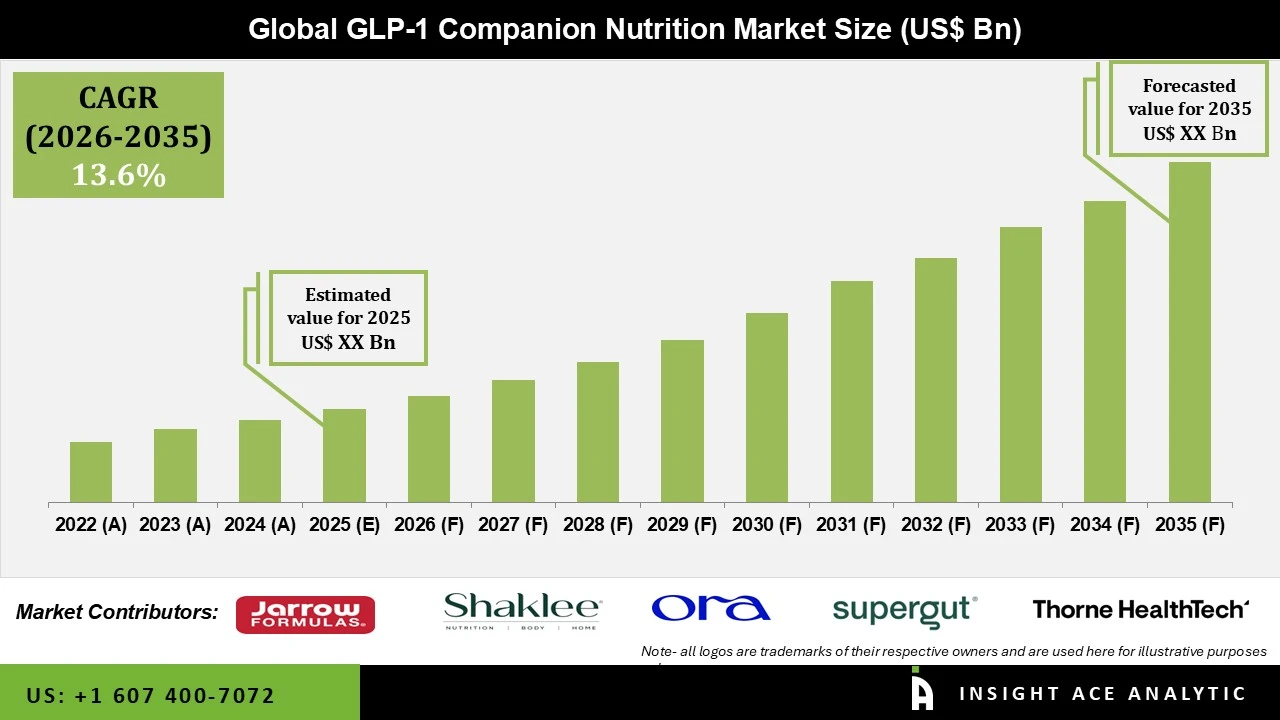
GLP 1 Companion Nutrition Market is expected to grow at a 13.6% CAGR during the forecast period for 2026 to 2035.
GLP 1 Companion Nutrition Market Size, Share & Trends Analysis Distribution By Product Category (Protein Powders & Drink Mixes, Ready-to-Drink (RTD) Protein Shakes, Meal Replacement & Complete Nutrition Shakes, High-Protein Nutrition Bars & Snack Bars, Muscle Preservation & Lean Mass Supplements, Vitamins, Minerals & Multivitamin Formulations, Electrolyte & Hydration Supplements, Digestive Health, Fiber & Probiotic Supplements, Collagen & Beauty-from-Within Products, Prebiotic Fiber & Natural GLP-1 Support Supplements, Broths, Bone Broths & Liquid Nutrition), By Protein Source (Dairy-Based (Whey Protein Concentrate, Whey Protein Isolate, Whey Protein Hydrolysate, Micellar Casein, Milk Protein Concentrate & Isolate), Plant-Based (Pea Protein Isolate, Soy Protein Isolate, Rice & Brown Rice Protein, Hemp, Chia & Algal Protein, Fava, Mung Bean & Pulse Proteins), Collagen Peptides (Bovine, Marine, Chicken), Egg White Protein, Blended Protein Systems (Dairy + Plant), by Functional Ingredient, by Formulation / Delivery Format, by Consumer Use Stage, by Price Tier, by Distribution Channel, by End Users and Segment Forecasts, 2026 to 2035
GLP-1 Companion Nutrition is an emerging category of dietary products created to support people using GLP-1 receptor agonist drugs—like semaglutide and tirzepatide—for obesity, weight management, or type 2 diabetes. These medications work by reducing hunger, slowing stomach emptying, and altering food preferences, which can lead to lower calorie intake and, in some cases, unintended side effects such as nausea, constipation, and loss of lean muscle mass.
Companion nutrition products are specifically formulated to address these challenges. They include high-protein shakes and bars to help preserve muscle during rapid weight loss, small-portion meals that are nutrient-dense yet easy to digest, fiber-rich options to support gut health, and hydration solutions with electrolytes to counteract fluid imbalances. The goal is not to replace the medication but to complement it—ensuring that individuals receive adequate protein, vitamins, and minerals while managing side effects and maintaining energy levels.
The market is also benefiting from increasing awareness around obesity and metabolic disorders, along with a growing focus on preventive healthcare and lifestyle management. Consumers are becoming more proactive about combining medical treatments with proper nutrition to achieve better outcomes. This has encouraged both established nutrition brands and new entrants to invest in research and product innovation, particularly in high-protein formulations, clean-label ingredients, and functional nutrition tailored to metabolic health. In addition, the rise of direct-to-consumer channels, digital health platforms, and personalized nutrition plans is making these products more accessible. Healthcare providers, including dietitians and weight management specialists, are also playing a key role in recommending companion nutrition as part of a structured treatment approach.
However, the market faces challenges, including the need for stronger clinical validation, varying patient responses, and the importance of clear guidance on proper use alongside GLP-1 therapies. Despite these hurdles, the outlook for the GLP-1 companion nutrition market remains highly positive. Continuous innovation, increasing collaboration between pharmaceutical and nutrition companies, and a growing emphasis on integrated care are expected to drive long-term growth. Overall, this market is becoming an essential extension of GLP-1 therapy, helping patients achieve more balanced, sustainable, and effective health outcomes.
Competitive Landscape
Which are the Leading Players in the GLP-1 Companion Nutrition Market?
• Youtheory
• Shaklee Corporation
• Ora Organic
• Supergut
• Lemme
• Ritual
• Thorne HealthTech
• Designs for Health
• Lumen
• Needed
• Glanbia plc
• Abbott Laboratories
• Nestlé Health Science
• Danone S.A.
• BellRing Brands
• The Simply Good Foods Company
• Herbalife
• GNC Holdings
• Iovate Health Sciences
• Huel
• Kodiak Cakes
• Reckitt
• FrieslandCampina Ingredients
• Arla Foods Ingredients
• Valio Ltd.
• Fonterra
• Glanbia Nutritionals
• Kerry Group
• dsm-firmenich
• Archer Daniels Midland
• Roquette
• Ingredion Incorporated
• Tate & Lyle
• Beneo
• Ajinomoto
• CJ CheilJedang
• Evonik Industries
• Cargill
• Nutricia
• Perrigo
• Prolacta Bioscience
• Hormel Health Labs
• Seed Health
• Pendulum Therapeutics
• Kenvue
• Olipop
• PepsiCo
• LMNT
• Unilever
• DripDrop
• Ultima Replenisher
Market Dynamics
Driver
Growing Need for Nutritional Support Alongside GLP-1 Therapies
The key drivers of the GLP-1 companion nutrition market is the increasing use of GLP-1–based treatments for weight management and metabolic health. While these therapies are highly effective, they often lead to reduced appetite, lower calorie intake, and potential nutrient gaps. As a result, there is a growing need for targeted nutrition to help individuals maintain muscle mass, energy levels, and overall health during treatment. Companion nutrition products are designed to address these specific needs simply and conveniently. Options such as protein powders, ready-to-drink shakes, meal replacements, and electrolyte supplements make it easier for patients to meet their daily nutritional requirements without relying on large meals. This is particularly valuable for individuals undergoing long-term therapy or managing chronic conditions. As awareness grows among both patients and healthcare providers, companion nutrition is increasingly becoming an essential part of the overall treatment journey rather than an optional add-on.
Restrain/Challenge
Lack of Standardization and Individual Variability in Nutritional Needs
Despite strong growth potential, the market faces challenges related to variability in patient needs and the lack of standardized nutritional guidelines. Individuals using GLP-1 therapies may experience different levels of appetite suppression, digestive changes, and metabolic responses, making it difficult to design a one-size-fits-all nutrition solution. Additionally, while there is growing interest in companion nutrition, clinical validation for many products is still evolving. Consumers may also feel overwhelmed by the wide range of available options, from protein supplements and vitamins to probiotics and functional foods, without clear guidance on what works best for their specific stage of treatment. This creates a need for better education, personalization, and stronger alignment between healthcare providers and nutrition brands.
Ready-to-Drink (RTD) Protein Shakes Subsegment is Driving the GLP-1 Companion Nutrition Market
The ready-to-drink (RTD) protein shakes subsegment is emerging as one of the strongest drivers in the GLP-1 companion nutrition market, driven by unmatched convenience and ease of consumption. Individuals undergoing GLP-1 therapy often experience reduced appetite, making it difficult to prepare or consume full meals. RTD shakes address this challenge by offering a quick, nutritionally balanced option that requires no preparation and can be consumed anytime, anywhere. These products are especially effective in helping users maintain adequate protein intake, which is critical for preserving muscle mass during weight loss. In addition, many RTD shakes are now being formulated with added vitamins, minerals, and functional ingredients to support overall health, energy levels, and metabolic balance. Their availability across retail stores, pharmacies, and online platforms further boosts accessibility. As a result, the combination of convenience, targeted nutrition, and growing consumer preference for on-the-go solutions makes RTD protein shakes a key growth driver in the market.
Prebiotic Fiber & Digestive Health Supplements Subsegment is Driving the GLP-1 Companion Nutrition Market
The prebiotic fiber and digestive health supplements subsegment is also playing a crucial role in driving the GLP-1 companion nutrition market. GLP-1 therapies can sometimes cause digestive changes, such as slowed gastric emptying, bloating, or discomfort. This has increased the demand for products that support gut health and improve digestion during treatment. Prebiotic fibers, probiotics, and digestive enzymes help maintain a healthy gut environment, improve nutrient absorption, and enhance overall comfort for users. These supplements are particularly valuable for ensuring that reduced food intake does not negatively impact digestive function or long-term health. In addition, growing awareness around the importance of gut health and its connection to metabolism and immunity is further accelerating demand. With more brands focusing on clean-label, scientifically backed formulations, this subsegment is gaining strong consumer trust. Its ability to directly address a common pain point of GLP-1 users makes it an important contributor to market growth and product innovation.
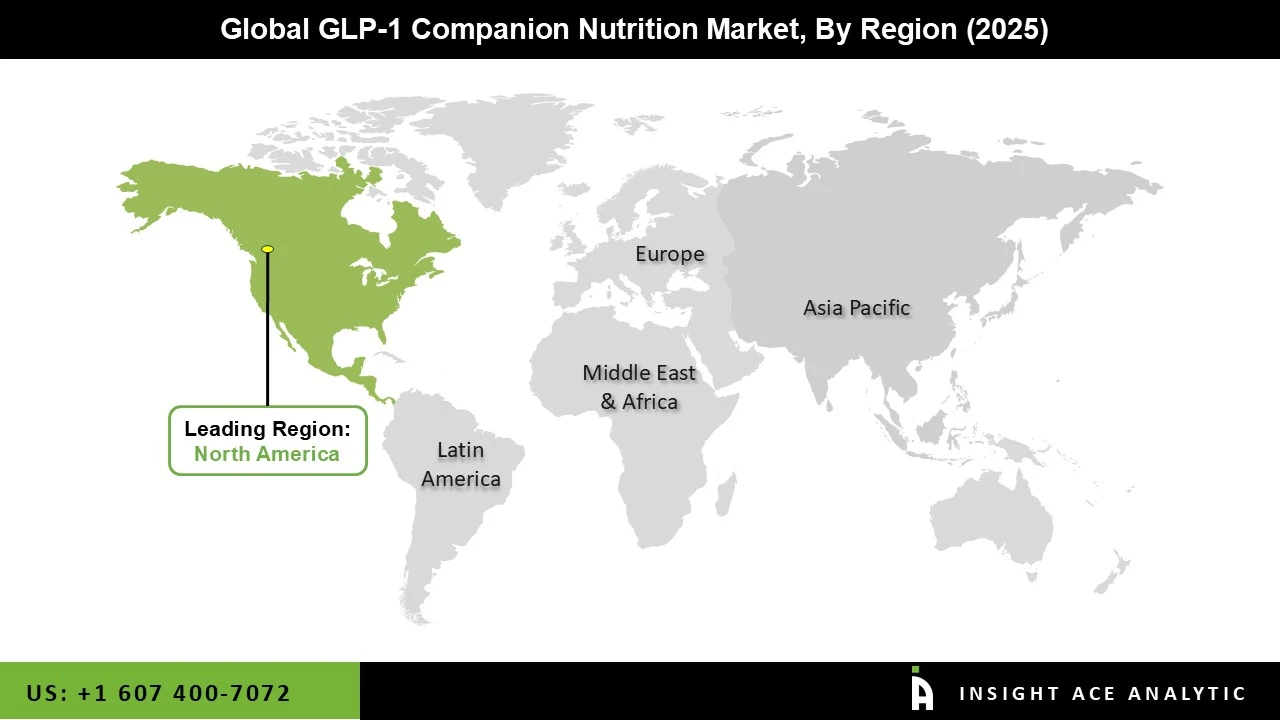
Why North America Led the GLP-1 Companion Nutrition Market?
North America leads the GLP-1 companion nutrition market due to a combination of strong healthcare infrastructure, high adoption of GLP-1 therapies, and a well-developed nutrition industry. The United States, in particular, has seen rapid growth in the use of these therapies, creating a parallel demand for supportive nutrition solutions. The region benefits from high consumer awareness, a strong culture of health and wellness, and easy access to a wide range of products through both retail and digital channels. Additionally, the presence of leading nutrition brands, advanced research capabilities, and active involvement from healthcare providers contributes to faster innovation and adoption. The rise of telehealth platforms and personalized treatment programs has further strengthened the market, as many providers now offer bundled solutions that include both medication and nutrition support. Overall, North America’s leadership is driven by the right mix of consumer demand, innovation, accessibility, and integrated healthcare approaches.
Key Developments
• In March 2025, Nestlé Health Science expanded its medical nutrition portfolio with targeted high-protein and metabolic health solutions aimed at supporting individuals on weight management therapies, strengthening its position in the GLP-1 companion nutrition space.
• In February 2025, Abbott Laboratories introduced advanced nutrition formulations under its adult nutrition segment, focusing on muscle preservation and balanced nutrition for patients undergoing metabolic and weight-loss treatments.
GLP-1 Companion Nutrition Market Report Scope:
| Report Attribute | Specifications |
| Growth Rate CAGR | CAGR of 13.6% from 2026 to 2035 |
| Quantitative Units | Representation of revenue in US$ Bn and CAGR from 2026 to 2035 |
| Historic Year | 2021 to 2025 |
| Forecast Year | 2026-2035 |
| Report Coverage | The forecast of revenue, the position of the company, the competitive market structure, growth prospects, and trends |
| Segments Covered | Product Category, Protein Source, Functional Ingredient, Formulation/Delivery Format, Consumer Use Stage, Price Tier, Distribution Channel, End User and By Region |
| Regional Scope | North America; Europe; Asia Pacific; Latin America; Middle East & Africa |
| Country Scope | U.S.; Canada; U.K.; Germany; China; India; Japan; Brazil; Mexico; The UK; France; Italy; Spain; China; Japan; India; South Korea; Southeast Asia; South Korea; Southeast Asia |
| Competitive Landscape | Youtheory, Shaklee Corporation, Ora Organic, Supergut, Lemme, Ritual, Thorne HealthTech, Designs for Health, Lumen Nutrition, Needed, Glanbia plc, Abbott Laboratories, Nestlé Health Science, Danone S.A., BellRing Brands, The Simply Good Foods Company, Herbalife Nutrition, GNC Holdings, Iovate Health Sciences, Huel Ltd., Kodiak Cakes, Reckitt, FrieslandCampina Ingredients, Arla Foods Ingredients, Valio Ltd., Fonterra Co-operative Group, Glanbia Nutritionals, Kerry Group plc, dsm-firmenich, Archer Daniels Midland (ADM), Roquette Frères, Ingredion Incorporated, Tate & Lyle PLC, Beneo GmbH, Ajinomoto Co., Inc., CJ CheilJedang, Evonik Industries AG, Cargill Incorporated, Abbott Nutrition, Nestlé Health Science, Nutricia, Perrigo Company plc, Prolacta Bioscience, Hormel Health Labs, Supergut, Seed Health, Pendulum Therapeutics, Culturelle, Olipop, Poppi, Abbott, LMNT, Liquid I.V., DripDrop ORS, Nuun Hydration, Ultima Replenisher |
| Customization Scope | Free customization report with the procurement of the report, Modifications to the regional and segment scope. Geographic competitive landscape. |
| Pricing and Available Payment Methods | Explore pricing alternatives that are customized to your particular study requirements. |
Market Segmentation:
GLP-1 Companion Nutrition Market by Product Category -
• Protein Powders & Drink Mixes
• Ready-to-Drink (RTD) Protein Shakes
• Meal Replacement & Complete Nutrition Shakes
• High-Protein Nutrition Bars & Snack Bars
• Muscle Preservation & Lean Mass Supplements
• Vitamins, Minerals & Multivitamin Formulations
• Electrolyte & Hydration Supplements
• Digestive Health, Fiber & Probiotic Supplements
• Collagen & Beauty-from-Within Products
• Prebiotic Fiber & Natural GLP-1 Support Supplements
• Broths, Bone Broths & Liquid Nutrition
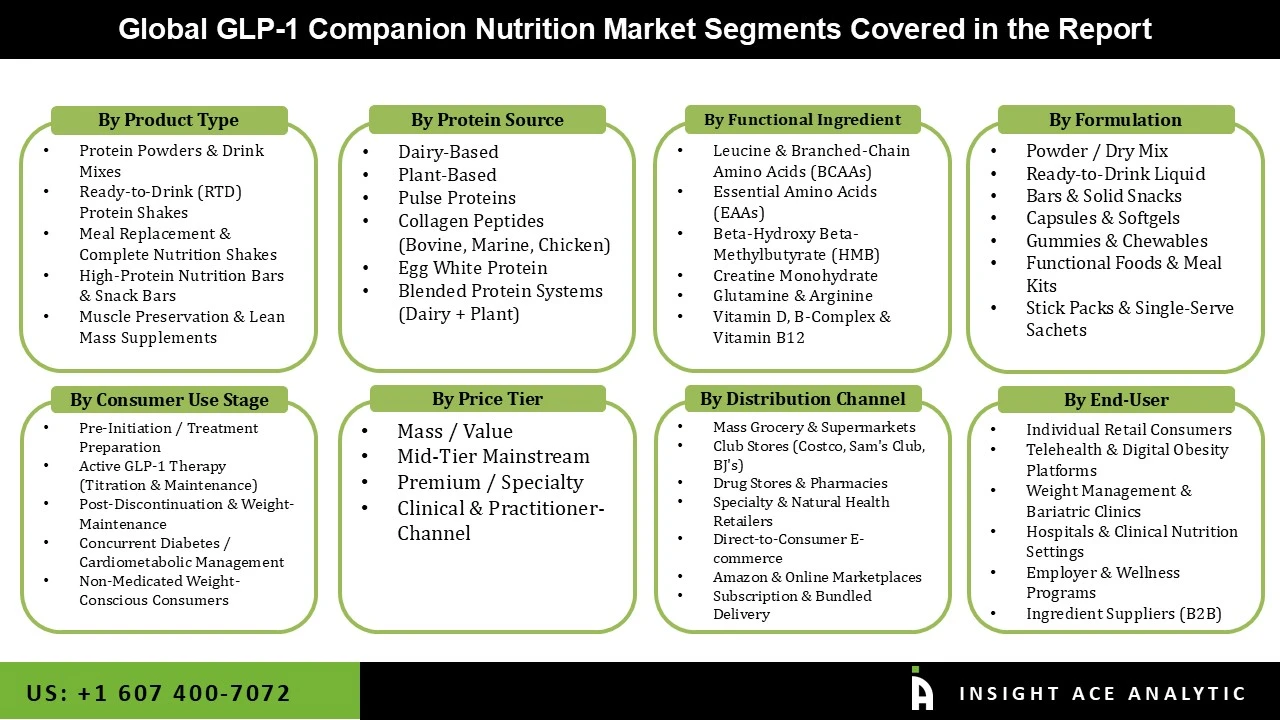
GLP-1 Companion Nutrition Market by Protein Source-
• Dairy-Based
o Whey Protein Concentrate
o Whey Protein Isolate
o Whey Protein Hydrolysate
o Micellar Casein
o Milk Protein Concentrate & Isolate
• Plant-Based
o Pea Protein Isolate
o Soy Protein Isolate
o Rice & Brown Rice Protein
o Hemp, Chia & Algal Protein
o Fava, Mung Bean & Pulse Proteins
• Collagen Peptides (Bovine, Marine, Chicken)
• Egg White Protein
• Blended Protein Systems (Dairy + Plant)
GLP-1 Companion Nutrition Market by Functional Ingredient -
• Leucine & Branched-Chain Amino Acids (BCAAs)
• Essential Amino Acids (EAAs)
• Beta-Hydroxy Beta-Methylbutyrate (HMB)
• Creatine Monohydrate
• Glutamine & Arginine
• Vitamin D, B-Complex & Vitamin B12
• Iron, Magnesium, Zinc & Potassium
• Electrolyte Blends (Sodium, Potassium, Magnesium)
• Prebiotic Fibers (Inulin, Resistant Starch, Beta-Glucan)
• Probiotics & Postbiotics
• Digestive Enzymes (Lipase, Protease, Amylase)
• Omega-3 & Essential Fatty Acids
GLP-1 Companion Nutrition Market by Formulation / Delivery Format -
• Powder / Dry Mix
• Ready-to-Drink Liquid
• Bars & Solid Snacks
• Capsules & Softgels
• Gummies & Chewable
• Functional Foods & Meal Kits
• Stick Packs & Single-Serve Sachets
GLP-1 Companion Nutrition Market by Consumer Use Stage–
• Pre-Initiation / Treatment Preparation
• Active GLP-1 Therapy (Titration & Maintenance)
• Post-Discontinuation & Weight-Maintenance
• Concurrent Diabetes / Cardiometabolic Management
• Non-Medicated Weight-Conscious Consumers (Adjacent)
GLP-1 Companion Nutrition Market by Price Tier–
• Mass / Value
• Mid-Tier Mainstream
• Premium / Specialty
• Clinical & Practitioner-Channel
GLP-1 Companion Nutrition Market by Distribution Channel–
• Mass Grocery & Supermarkets
• Club Stores (Costco, Sam's Club, BJ's)
• Drug Stores & Pharmacies
• Specialty & Natural Health Retailers
• Direct-to-Consumer E-commerce
• Amazon & Online Marketplaces
• Subscription & Bundled Delivery
• Telehealth / GLP-1 Platform Bundling
• Medical & Practitioner Channel
GLP-1 Companion Nutrition Market by End Users-
• Individual Retail Consumers
• Telehealth & Digital Obesity Platforms
• Weight Management & Bariatric Clinics
• Hospitals & Clinical Nutrition Settings
• Employer & Wellness Programs
• Ingredient Suppliers (B2B)
GLP-1 Companion Nutrition Market by Region-
North America-
• The US
• Canada
• Mexico
Europe-
• Germany
• The UK
• France
• Italy
• Spain
• Nordics
• Netherlands
• Rest of Europe
Asia-Pacific-
• China
• Japan
• India
• Australia
• South Korea
• South East Asia
• Rest of Asia Pacific
Latin America-
• Brazil
• Argentina
• Rest of Latin America
Middle East & Africa-
• GCC Countries
• South Africa
• Rest of Middle East and Africa
Research Design and Approach
This study employed a multi-step, mixed-method research approach that integrates:
- Secondary research
- Primary research
- Data triangulation
- Hybrid top-down and bottom-up modelling
- Forecasting and scenario analysis
This approach ensures a balanced and validated understanding of both macro- and micro-level market factors influencing the market.
Secondary Research
Secondary research for this study involved the collection, review, and analysis of publicly available and paid data sources to build the initial fact base, understand historical market behaviour, identify data gaps, and refine the hypotheses for primary research.
Sources Consulted
Secondary data for the market study was gathered from multiple credible sources, including:
- Government databases, regulatory bodies, and public institutions
- International organizations (WHO, OECD, IMF, World Bank, etc.)
- Commercial and paid databases
- Industry associations, trade publications, and technical journals
- Company annual reports, investor presentations, press releases, and SEC filings
- Academic research papers, patents, and scientific literature
- Previous market research publications and syndicated reports
These sources were used to compile historical data, market volumes/prices, industry trends, technological developments, and competitive insights.

Primary Research
Primary research was conducted to validate secondary data, understand real-time market dynamics, capture price points and adoption trends, and verify the assumptions used in the market modelling.
Stakeholders Interviewed
Primary interviews for this study involved:
- Manufacturers and suppliers in the market value chain
- Distributors, channel partners, and integrators
- End-users / customers (e.g., hospitals, labs, enterprises, consumers, etc., depending on the market)
- Industry experts, technology specialists, consultants, and regulatory professionals
- Senior executives (CEOs, CTOs, VPs, Directors) and product managers
Interview Process
Interviews were conducted via:
- Structured and semi-structured questionnaires
- Telephonic and video interactions
- Email correspondences
- Expert consultation sessions
Primary insights were incorporated into demand modelling, pricing analysis, technology evaluation, and market share estimation.
Data Processing, Normalization, and Validation
All collected data were processed and normalized to ensure consistency and comparability across regions and time frames.
The data validation process included:
- Standardization of units (currency conversions, volume units, inflation adjustments)
- Cross-verification of data points across multiple secondary sources
- Normalization of inconsistent datasets
- Identification and resolution of data gaps
- Outlier detection and removal through algorithmic and manual checks
- Plausibility and coherence checks across segments and geographies
This ensured that the dataset used for modelling was clean, robust, and reliable.
Market Size Estimation and Data Triangulation
Bottom-Up Approach
The bottom-up approach involved aggregating segment-level data, such as:
- Company revenues
- Product-level sales
- Installed base/usage volumes
- Adoption and penetration rates
- Pricing analysis
This method was primarily used when detailed micro-level market data were available.

Top-Down Approach
The top-down approach used macro-level indicators:
- Parent market benchmarks
- Global/regional industry trends
- Economic indicators (GDP, demographics, spending patterns)
- Penetration and usage ratios
This approach was used for segments where granular data were limited or inconsistent.
Hybrid Triangulation Approach
To ensure accuracy, a triangulated hybrid model was used. This included:
- Reconciling top-down and bottom-up estimates
- Cross-checking revenues, volumes, and pricing assumptions
- Incorporating expert insights to validate segment splits and adoption rates
This multi-angle validation yielded the final market size.
Forecasting Framework and Scenario Modelling
Market forecasts were developed using a combination of time-series modelling, adoption curve analysis, and driver-based forecasting tools.
Forecasting Methods
- Time-series modelling
- S-curve and diffusion models (for emerging technologies)
- Driver-based forecasting (GDP, disposable income, adoption rates, regulatory changes)
- Price elasticity models
- Market maturity and lifecycle-based projections
Scenario Analysis
Given inherent uncertainties, three scenarios were constructed:
- Base-Case Scenario: Expected trajectory under current conditions
- Optimistic Scenario: High adoption, favourable regulation, strong economic tailwinds
- Conservative Scenario: Slow adoption, regulatory delays, economic constraints
Sensitivity testing was conducted on key variables, including pricing, demand elasticity, and regional adoption.
Request Customization
Add countries, segments, company profiles, or extend forecast — free 10% customization with purchase.
Customize This Report →Enquire Before Buying
Speak with our analyst team about scope, methodology, pricing, or deliverable formats.
Enquire Now →Frequently Asked Questions
GLP 1 Companion Nutrition Market is expected to grow at a 13.6% CAGR during the forecast period for 2026 to 2035.
Youtheory, Shaklee Corporation, Ora Organic, Supergut, Lemme, Ritual, Thorne HealthTech, Designs for Health, Lumen Nutrition, Needed, Glanbia plc, Abbott Laboratories, Nestlé Health Science, Danone S.A., BellRing Brands, The Simply Good Foods Company, Herbalife Nutrition, GNC Holdings, Iovate Health Sciences, Huel Ltd., Kodiak Cakes, Reckitt, FrieslandCampina Ingredients, Arla Foods Ingredients, Valio Ltd., Fonterra Co-operative Group, Glanbia Nutritionals, Kerry Group plc, dsm-firmenich, Archer Daniels Midland (ADM), Roquette Frères, Ingredion Incorporated, Tate & Lyle PLC, Beneo GmbH, Ajinomoto Co., Inc., CJ CheilJedang, Evonik Industries AG, Cargill Incorporated, Abbott Nutrition, Nestlé Health Science, Nutricia, Perrigo Company plc, Prolacta Bioscience, Hormel Health Labs, Supergut, Seed Health, Pendulum Therapeutics, Culturelle, Olipop, Poppi, Abbott, LMNT, Liquid I.V., DripDrop ORS, Nuun Hydration, Ultima Replenisher
GLP 1 Companion Nutrition Market is segmented into Product Category, Protein Source, Functional Ingredient, Formulation/Delivery Format, Consumer Use Stage, Price Tier, Distribution Channel, End User and By Region
North America region is leading the GLP 1 Companion Nutrition Market.