Ultrasound-Guided Regional Anesthesia Market Size, Scope, Revenue Report 2026 to 2035
What is Ultrasound-Guided Regional Anesthesia Market Size?
Global Ultrasound-Guided Regional Anesthesia Market Size is valued at USD 1.38 Bn in 2025 and is predicted to reach USD 3.17 Bn by the year 2035 at a 9.0% CAGR during the forecast period for 2026 to 2035.
Ultrasound-Guided Regional Anesthesia Market Size, Share & Trends Analysis Distribution by Type (Linear Probe, Curved Array Probe), Technology (Interscalene, Supraclavicular, Femoral, Transversus Abdominis Plane, Others), End-user (Hospitals, Ambulatory Surgical Centers, Others), and Segment Forecasts, 2026 to 2035.
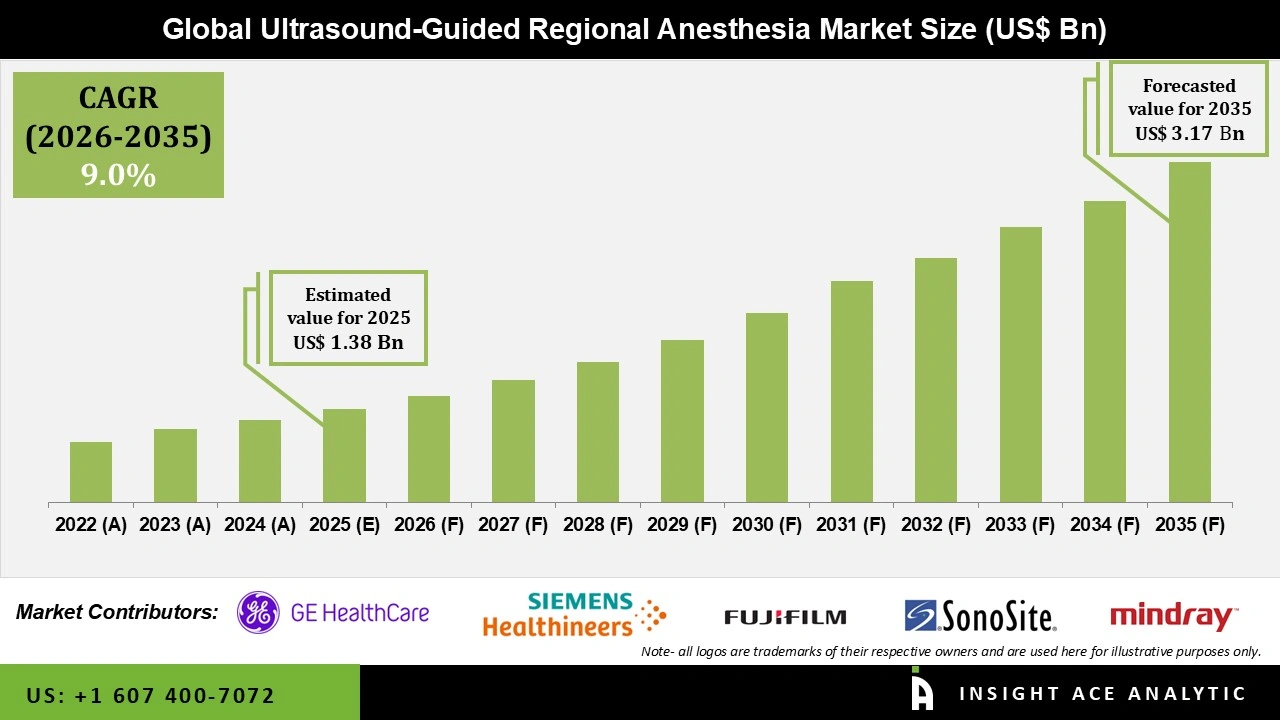
Ultrasound-guided regional anesthesia (UGRA) is a procedure that blocks sensation in a selected location of the body by precisely delivering local anesthetic close to certain nerves, nerve plexuses, or fascial planes using real-time ultrasound imaging. Clinicians can precisely insert the needle and track the anesthetic's distribution by viewing anatomical structures such as nerves, blood vessels, muscles, and surrounding tissues. This enhances the procedure's safety and efficacy. It frequently calls for lower anesthetic dosages and lowers the chance of problems like unintentional arterial puncture or nerve damage. The growing demand for minimally invasive operations, improvements in ultrasound imaging technology, and the growing number of elderly patients in need of surgical procedures are the main factors propelling the ultrasound-guided regional anesthesia market's expansion.
The growing use of minimally invasive treatments and the advantages of ultrasound-guided regional anesthesia in improving accuracy and patient safety during regional anesthesia are the main factors propelling the ultrasound-guided regional anesthesia market's growth. The need for sophisticated ultrasound technology intended for regional anesthesia is growing as medical professionals place a greater emphasis on better patient outcomes and fewer complications. Additionally, the technological developments in ultrasonic probes and imaging software, which result in more complex and user-friendly equipment, support the ultrasound-guided regional anesthesia market's strong growth. This invention reduces the hazards connected with conventional nerve stimulation methods and blind injections by directly addressing the requirement for improved vision of anatomical structures, nerve identification, and needle tip tracking.
In addition, the shift toward opioid-sparing pain therapy is a significant trend influencing the ultrasound-guided regional anesthesia market. Healthcare professionals are aggressively implementing targeted alternatives such as ultrasound-guided regional anesthesia (UGRA) in response to growing public health concerns about opiate abuse. Moreover, there is a significant chance for expansion when ultrasound-guided regional anesthesia is incorporated into national healthcare guidelines and pain treatment regimens. An atmosphere that is conducive to widespread adoption is being created by governments and health organisations supporting evidence-based, opioid-minimising alternatives. Furthermore, investments in point-of-care ultrasound (POCUS) infrastructure in hospitals and outpatient settings are making modern anesthetic procedures more widely accessible, especially in emerging economies. However, a major obstacle to the widespread use of ultrasound-guided regional anesthesia is workforce competency and training deficits.
Competitive Landscape
Which are the Leading Players in Ultrasound-Guided Regional Anesthesia Market?
- Philips Healthcare
- Canon Medical Systems Corporation
- Siemens Healthineers
- Fujifilm Holdings Corporation
- GE Healthcare
- Mindray Medical International Limited
- Samsung Medison Co., Ltd.
- Hitachi, Ltd.
Market Dynamics
Driver
Growing Preference for Regional Anesthesia
A key factor driving the growth of the ultrasound-guided regional anesthesia market is the growing preference for regional anesthesia over general anesthesia. By enhancing the visibility of nerves, arteries, and surrounding structures, ultrasound-guided nerve blocks lower the risk of complications like vascular punctures or nerve injuries and increase the success rate of block procedures. When compared to landmark or nerve stimulator procedures, studies indexed by the National Center for Biotechnology Information (NCBI) show that ultrasound-guided regional anesthesia improves first-pass success, reduces local anesthetic volume, and shortens block performance time. The use of ultrasound-guided blocks for orthopedic, obstetric, and abdominal procedures has been shown in regional anesthetic literature to significantly lower post-operative pain scores and narcotic usage. Moreover, anesthesiology departments are investing more in specialized ultrasound platforms for peripheral nerve blocks and neuraxial procedures as opioid-sparing techniques and enhanced recovery after surgery (ERAS) routes become commonplace in large health systems.
Restrain/Challenge
High Initial Investment Costs and Financial Restraints
The ultrasound-guided regional anesthesia’s high capital and lifecycle costs continue to be a major obstacle to its broader implementation, especially in small hospitals and developing nations. High-end ultrasound systems with many probes, sophisticated imaging, and specialist software are expensive up front and compete with other capital needs like surgical instruments, ventilators, and monitoring. Furthermore, institutions must account for service agreements, software updates, transducer replacements, and consumables such as sterile probe covers in addition to the purchase price, all of which add up to a higher overall cost of ownership. Despite clear therapeutic benefits, procurement may be delayed due to limited reimbursement environments and budgetary constraints in public hospitals. The transition from landmark approaches to image-guided methods is slowed in some countries due to inadequate procedure-specific reimbursement for ultrasound-guided blocks, which reduces the financial incentive for institutions to upgrade.
Market Segmentation
The ultrasound-guided regional anaesthesia market is categorised based on three primary dimensions: type, technology, and end-user. By type, the market includes linear probes and curved-array probes, each designed to provide effective imaging at different anatomical depths and clinical requirements, supporting accurate nerve localisation. By technology, the market is categorised into interscalene, supraclavicular, femoral, transversus abdominis plane, and other techniques, reflecting the range of nerve block procedures used for various surgical applications. By end-user, the market comprises hospitals, ambulatory surgical centers, and others, emphasising the different healthcare settings where these procedures are performed, influenced by factors such as patient volume, infrastructure, and availability of skilled anesthesiologists.
Linear Probe Segment Expected to Drive the Ultrasound-Guided Regional Anaesthesia Market
The linear probe segment held the largest share in the ultrasound-guided regional anaesthesia market in 2025, driven by its superior ability to provide high-resolution imaging of superficial anatomical structures, including peripheral nerves. Its widespread preference among anesthesiologists is attributed to its accuracy in needle visualization, which enhances the success rate of nerve block procedures while minimizing complications. Linear probes are particularly effective for commonly performed blocks such as upper extremity and vascular access procedures, further strengthening their clinical adoption. Additionally, advancements in probe design, improved ergonomics, and compatibility with portable ultrasound systems have increased their usage across hospitals, ambulatory surgical centers, and point-of-care settings. The growing emphasis on patient safety, precision-based anesthesia, and the rising number of surgical interventions continue to support the sustained demand for linear probes in regional anesthesia practices.
Interscalene Segment Exhibits Highest Growth Rate in the Ultrasound-Guided Regional Anaesthesia Market
In 2025, the interscalene segment has the largest share in the ultrasound-guided regional anesthesia market due to its wide acceptance in shoulder and upper arm surgeries, where precise nerve targeting is important. Anesthesiologists like this method because it gives good pain relief while lowering the need for general anesthesia and opioid drugs, which leads to better results for patients. The rising number of bone and joint surgeries, such as shoulder replacements and rotator cuff repairs, has increased their use. At the same time, better ultrasound images and needle guidance have made interscalene blocks safer and more dependable. With more focus on less invasive treatments and quicker recovery, this segment keeps growing.
Why North America Led the Ultrasound-Guided Regional Anesthesia Market?
The ultrasound-guided regional anesthesia market was dominated by North America region in 2025 ascribed to various factors, including an increased knowledge of the advantages of regional anesthesia over general anesthesia, a high prevalence of chronic pain problems, and a sophisticated healthcare infrastructure. Additionally, this region's adoption of novel procedural approaches is facilitated by substantial expenditures in healthcare technology and supporting regulatory frameworks.
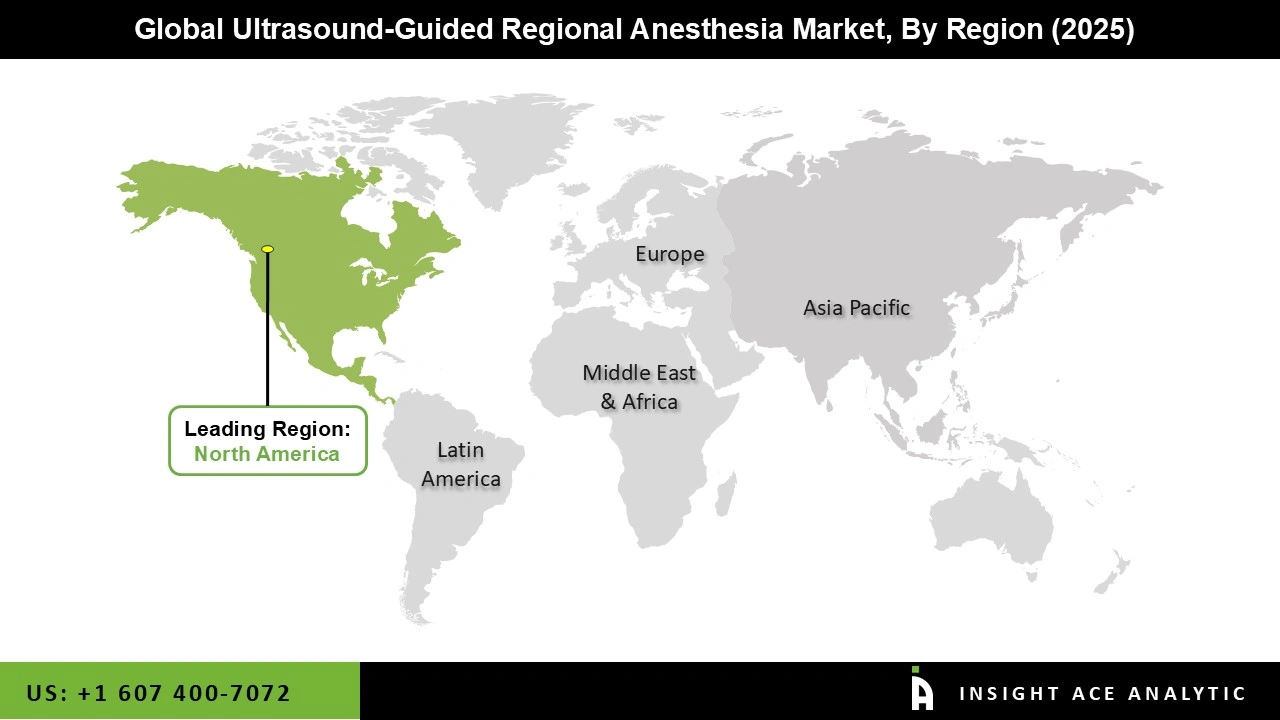
The adoption of ultrasound-guided regional anesthesia has been spearheaded by the United States in particular, due to strong training initiatives and advantageous reimbursement regulations. Canada also makes a substantial contribution to regional development through its growing investments in pain treatment programs and healthcare modernization. Moreover, North America's ultrasound-guided regional anesthesia market dominance is also aided by the existence of top equipment makers, strong reimbursement systems, and the extensive use of minimally invasive surgical methods.
Key Development:
- October 2025: The most recent development in GE HealthCare's Venue line of point-of-care ultrasound (POCUS) systems was the addition of new digital and artificial intelligence (AI)-enabled capabilities intended to boost workflow efficiency and clinician trust. Nerveblox, an AI-enabled function that automatically classifies anatomical features in ultrasound pictures, was one of the new tools. This functionality was created to help clinicians perform peripheral nerve block operations by improving accuracy and streamlining the process in general.
- March 2024: To improve patient safety and comfort during surgical procedures, Philips Healthcare announced a collaboration with a top anesthesia provider to provide cutting-edge ultrasound-guided regional anesthetic solutions.
- August 2023: In order to guide regional anesthesia, GE Healthcare introduced its newest ultrasound system with cutting-edge imaging technology. The improved visualization capabilities and intuitive interface of this new system are noteworthy. This occurrence is significant because it gives clinicians more accuracy and efficiency, which may lower the frequency of issues related to regional anesthetic treatments. With this introduction, GE Healthcare not only solidifies its position as the industry leader but also encourages rivals to improve or reinvent their product lines.
Ultrasound-Guided Regional Anesthesia Market Report Scope :
| Report Attribute | Specifications |
| Market size value in 2025 | USD 1.38 Bn |
| Revenue forecast in 2035 | USD 3.17 Bn |
| Growth Rate CAGR | CAGR of 9.0% from 2026 to 2035 |
| Quantitative Units | Representation of revenue in US$ Bn and CAGR from 2026 to 2035 |
| Historic Year | 2022 to 2025 |
| Forecast Year | 2026 to 2035 |
| Report Coverage | The forecast of revenue, the position of the company, the competitive market structure, growth prospects, and trends |
| Segments Covered | Type, Technology, End-user, and By Region |
| Regional Scope | North America; Europe; Asia Pacific; Latin America; Middle East & Africa |
| Country Scope | U.S.; Canada; U.K.; Germany; China; India; Japan; Brazil; Mexico; The UK; France; Italy; Spain; China; Japan; India; South Korea; Southeast Asia; South Korea; Southeast Asia |
| Competitive Landscape | Philips Healthcare, Canon Medical Systems Corporation, Siemens Healthineers, Fujifilm Holdings Corporation, GE Healthcare, Mindray Medical International Limited, Samsung Medison Co., Ltd., and Hitachi, Ltd. |
| Customization Scope | Free customization report with the procurement of the report, Modifications to the regional and segment scope. Geographic competitive landscape. |
| Pricing and Available Payment Methods | Explore pricing alternatives that are customized to your particular study requirements. |
Chapter 1. Methodology and Scope
1.1. Research Methodology
1.2. Research Scope & Assumptions
Chapter 2. Executive Summary
Chapter 3. Global Ultrasound-Guided Regional Anesthesia Market Snapshot
Chapter 4. Global Ultrasound-Guided Regional Anesthesia Market Variables, Trends & Scope
4.1. Market Segmentation & Scope
4.2. Drivers
4.3. Challenges
4.4. Trends
4.5. Investment and Funding Analysis
4.6. Porter’s Five Forces Analysis
4.7. Incremental Opportunity Analysis (US$ MN), 2026-2035
4.8. Global Ultrasound-Guided Regional Anesthesia Market Penetration & Growth Prospect Mapping (US$ Mn), 2025-2035
4.9. Competitive Landscape & Market Share Analysis, By Key Player (2025)
4.10. Procedure adoption & utilization benchmarking
4.11. Probe technology & imaging resolution comparison
4.12. Clinical workflow integration & training requirements
4.13. Reimbursement & procedure economics analysis
4.14. Use/impact of AI on Ultrasound-Guided Regional Anesthesia Market Industry Trends
Chapter 5. Ultrasound-Guided Regional Anesthesia Market Segmentation 1: By Type, Estimates & Trend Analysis
5.1. Market Share by Type, 2025 & 2035
5.2. Market Size (Value US$ Mn) & Forecasts and Trend Analyses, 2022 to 2035 for the following Type:
5.2.1. Linear Probe
5.2.2. Curved Array Probe
Chapter 6. Ultrasound-Guided Regional Anesthesia Market Segmentation 2: By Technology, Estimates & Trend Analysis
6.1. Market Share by Technology, 2025 & 2035
6.2. Market Size (Value US$ Mn) & Forecasts and Trend Analyses, 2022 to 2035 for the following Technology:
6.2.1. Interscalene
6.2.2. Supraclavicular
6.2.3. Femoral
6.2.4. Transversus Abdominis Plane
6.2.5. Others
Chapter 7. Ultrasound-Guided Regional Anesthesia Market Segmentation 3: By End-user, Estimates & Trend Analysis
7.1. Market Share by End-user, 2025 & 2035
7.2. Market Size (Value US$ Mn) & Forecasts and Trend Analyses, 2022 to 2035 for the following End-user:
7.2.1. Hospitals
7.2.2. Ambulatory Surgical Centers
7.2.3. Others
Chapter 8. Ultrasound-Guided Regional Anesthesia Market Segmentation 4: Regional Estimates & Trend Analysis
8.1. Global Ultrasound-Guided Regional Anesthesia Market, Regional Snapshot 2025 & 2035
8.2. North America
8.2.1. North America Ultrasound-Guided Regional Anesthesia Market Revenue (US$ Million) Estimates and Forecasts by Country, 2022-2035
8.2.1.1. US
8.2.1.2. Canada
8.2.2. North America Ultrasound-Guided Regional Anesthesia Market Revenue (US$ Million) Estimates and Forecasts by Type, 2022-2035
8.2.3. North America Ultrasound-Guided Regional Anesthesia Market Revenue (US$ Million) Estimates and Forecasts by Technology, 2022-2035
8.2.4. North America Ultrasound-Guided Regional Anesthesia Market Revenue (US$ Million) Estimates and Forecasts by End-user, 2022-2035
8.3. Europe
8.3.1. Europe Ultrasound-Guided Regional Anesthesia Market Revenue (US$ Million) Estimates and Forecasts by Country, 2022-2035
8.3.1.1. Germany
8.3.1.2. U.K.
8.3.1.3. France
8.3.1.4. Italy
8.3.1.5. Spain
8.3.1.6. Rest of Europe
8.3.2. Europe Ultrasound-Guided Regional Anesthesia Market Revenue (US$ Million) Estimates and Forecasts by Type, 2022-2035
8.3.3. Europe Ultrasound-Guided Regional Anesthesia Market Revenue (US$ Million) Estimates and Forecasts by Technology, 2022-2035
8.3.4. Europe Ultrasound-Guided Regional Anesthesia Market Revenue (US$ Million) Estimates and Forecasts by End-user, 2022-2035
8.4. Asia Pacific
8.4.1. Asia Pacific Ultrasound-Guided Regional Anesthesia Market Revenue (US$ Million) Estimates and Forecasts by Country, 2022-2035
8.4.1.1. India
8.4.1.2. China
8.4.1.3. Japan
8.4.1.4. Australia
8.4.1.5. South Korea
8.4.1.6. Hong Kong
8.4.1.7. Southeast Asia
8.4.1.8. Rest of Asia Pacific
8.4.2. Asia Pacific Ultrasound-Guided Regional Anesthesia Market Revenue (US$ Million) Estimates and Forecasts by Type, 2022-2035
8.4.3. Asia Pacific Ultrasound-Guided Regional Anesthesia Market Revenue (US$ Million) Estimates and Forecasts by Technology, 2022-2035
8.4.4. Asia Pacific Ultrasound-Guided Regional Anesthesia Market Revenue (US$ Million) Estimates and Forecasts by End-user, 2022-2035
8.5. Latin America
8.5.1. Latin America Ultrasound-Guided Regional Anesthesia Market Revenue (US$ Million) Estimates and Forecasts by Country, 2022-2035
8.5.1.1. Brazil
8.5.1.2. Mexico
8.5.1.3. Rest of Latin America
8.5.2. Latin America Ultrasound-Guided Regional Anesthesia Market Revenue (US$ Million) Estimates and Forecasts by Type, 2022-2035
8.5.3. Latin America Ultrasound-Guided Regional Anesthesia Market Revenue (US$ Million) Estimates and Forecasts by Technology, 2022-2035
8.5.4. Latin America Ultrasound-Guided Regional Anesthesia Market Revenue (US$ Million) Estimates and Forecasts by End-user, 2022-2035
8.6. Middle East & Africa
8.6.1. Middle East & Africa Ultrasound-Guided Regional Anesthesia Market Revenue (US$ Million) Estimates and Forecasts by country, 2022-2035
8.6.1.1. GCC Countries
8.6.1.2. Israel
8.6.1.3. South Africa
8.6.1.4. Rest of Middle East and Africa
8.6.2. Middle East & Africa Ultrasound-Guided Regional Anesthesia Market Revenue (US$ Million) Estimates and Forecasts by Type, 2022-2035
8.6.3. Middle East & Africa Ultrasound-Guided Regional Anesthesia Market Revenue (US$ Million) Estimates and Forecasts by Technology, 2022-2035
8.6.4. Middle East & Africa Ultrasound-Guided Regional Anesthesia Market Revenue (US$ Million) Estimates and Forecasts by End-user, 2022-2035
Chapter 9. Competitive Landscape
9.1. Major Mergers and Acquisitions/Strategic Alliances
9.2. Company Profiles
9.2.1. Philips Healthcare
9.2.1.1. Business Overview
9.2.1.2. Key Product/Service
9.2.1.3. Financial Performance
9.2.1.4. Geographical Presence
9.2.1.5. Recent Developments with Business Strategy
9.2.2. Canon Medical Systems Corporation
9.2.3. Siemens Healthineers
9.2.4. Fujifilm Holdings Corporation
9.2.5. GE Healthcare
9.2.6. Mindray Medical International Limited
9.2.7. Samsung Medison Co., Ltd.
9.2.8. Hitachi, Ltd.
9.2.9. Other Prominent Players
Research Design and Approach
This study employed a multi-step, mixed-method research approach that integrates:
- Secondary research
- Primary research
- Data triangulation
- Hybrid top-down and bottom-up modelling
- Forecasting and scenario analysis
This approach ensures a balanced and validated understanding of both macro- and micro-level market factors influencing the market.
Secondary Research
Secondary research for this study involved the collection, review, and analysis of publicly available and paid data sources to build the initial fact base, understand historical market behaviour, identify data gaps, and refine the hypotheses for primary research.
Sources Consulted
Secondary data for the market study was gathered from multiple credible sources, including:
- Government databases, regulatory bodies, and public institutions
- International organizations (WHO, OECD, IMF, World Bank, etc.)
- Commercial and paid databases
- Industry associations, trade publications, and technical journals
- Company annual reports, investor presentations, press releases, and SEC filings
- Academic research papers, patents, and scientific literature
- Previous market research publications and syndicated reports
These sources were used to compile historical data, market volumes/prices, industry trends, technological developments, and competitive insights.

Primary Research
Primary research was conducted to validate secondary data, understand real-time market dynamics, capture price points and adoption trends, and verify the assumptions used in the market modelling.
Stakeholders Interviewed
Primary interviews for this study involved:
- Manufacturers and suppliers in the market value chain
- Distributors, channel partners, and integrators
- End-users / customers (e.g., hospitals, labs, enterprises, consumers, etc., depending on the market)
- Industry experts, technology specialists, consultants, and regulatory professionals
- Senior executives (CEOs, CTOs, VPs, Directors) and product managers
Interview Process
Interviews were conducted via:
- Structured and semi-structured questionnaires
- Telephonic and video interactions
- Email correspondences
- Expert consultation sessions
Primary insights were incorporated into demand modelling, pricing analysis, technology evaluation, and market share estimation.
Data Processing, Normalization, and Validation
All collected data were processed and normalized to ensure consistency and comparability across regions and time frames.
The data validation process included:
- Standardization of units (currency conversions, volume units, inflation adjustments)
- Cross-verification of data points across multiple secondary sources
- Normalization of inconsistent datasets
- Identification and resolution of data gaps
- Outlier detection and removal through algorithmic and manual checks
- Plausibility and coherence checks across segments and geographies
This ensured that the dataset used for modelling was clean, robust, and reliable.
Market Size Estimation and Data Triangulation
Bottom-Up Approach
The bottom-up approach involved aggregating segment-level data, such as:
- Company revenues
- Product-level sales
- Installed base/usage volumes
- Adoption and penetration rates
- Pricing analysis
This method was primarily used when detailed micro-level market data were available.

Top-Down Approach
The top-down approach used macro-level indicators:
- Parent market benchmarks
- Global/regional industry trends
- Economic indicators (GDP, demographics, spending patterns)
- Penetration and usage ratios
This approach was used for segments where granular data were limited or inconsistent.
Hybrid Triangulation Approach
To ensure accuracy, a triangulated hybrid model was used. This included:
- Reconciling top-down and bottom-up estimates
- Cross-checking revenues, volumes, and pricing assumptions
- Incorporating expert insights to validate segment splits and adoption rates
This multi-angle validation yielded the final market size.
Forecasting Framework and Scenario Modelling
Market forecasts were developed using a combination of time-series modelling, adoption curve analysis, and driver-based forecasting tools.
Forecasting Methods
- Time-series modelling
- S-curve and diffusion models (for emerging technologies)
- Driver-based forecasting (GDP, disposable income, adoption rates, regulatory changes)
- Price elasticity models
- Market maturity and lifecycle-based projections
Scenario Analysis
Given inherent uncertainties, three scenarios were constructed:
- Base-Case Scenario: Expected trajectory under current conditions
- Optimistic Scenario: High adoption, favourable regulation, strong economic tailwinds
- Conservative Scenario: Slow adoption, regulatory delays, economic constraints
Sensitivity testing was conducted on key variables, including pricing, demand elasticity, and regional adoption.
Request Customization
Add countries, segments, company profiles, or extend forecast — free 10% customization with purchase.
Customize This Report →Enquire Before Buying
Speak with our analyst team about scope, methodology, pricing, or deliverable formats.
Enquire Now →Frequently Asked Questions
Ultrasound-Guided Regional Anesthesia Market Size is valued at USD 1.38 Bn in 2025 and is predicted to reach USD 3.17 Bn by the year 2035
The Ultrasound-Guided Regional Anesthesia Market is expected to grow at a 9.0% CAGR during the forecast period for 2026 to 2035
Philips Healthcare, Canon Medical Systems Corporation, Siemens Healthineers, Fujifilm Holdings Corporation, GE Healthcare, Mindray Medical International Limited, Samsung Medison Co., Ltd., Hitachi, Ltd. and Others.
Ultrasound-Guided Regional Anesthesia Market is segmented into Type, Technology, End-user, and Other.
North America region is leading the Ultrasound-Guided Regional Anesthesia Market.