Transrectal Ultrasound Market Research Report with Forecast 2026 to 2035
What is Transrectal Ultrasound Market Size?
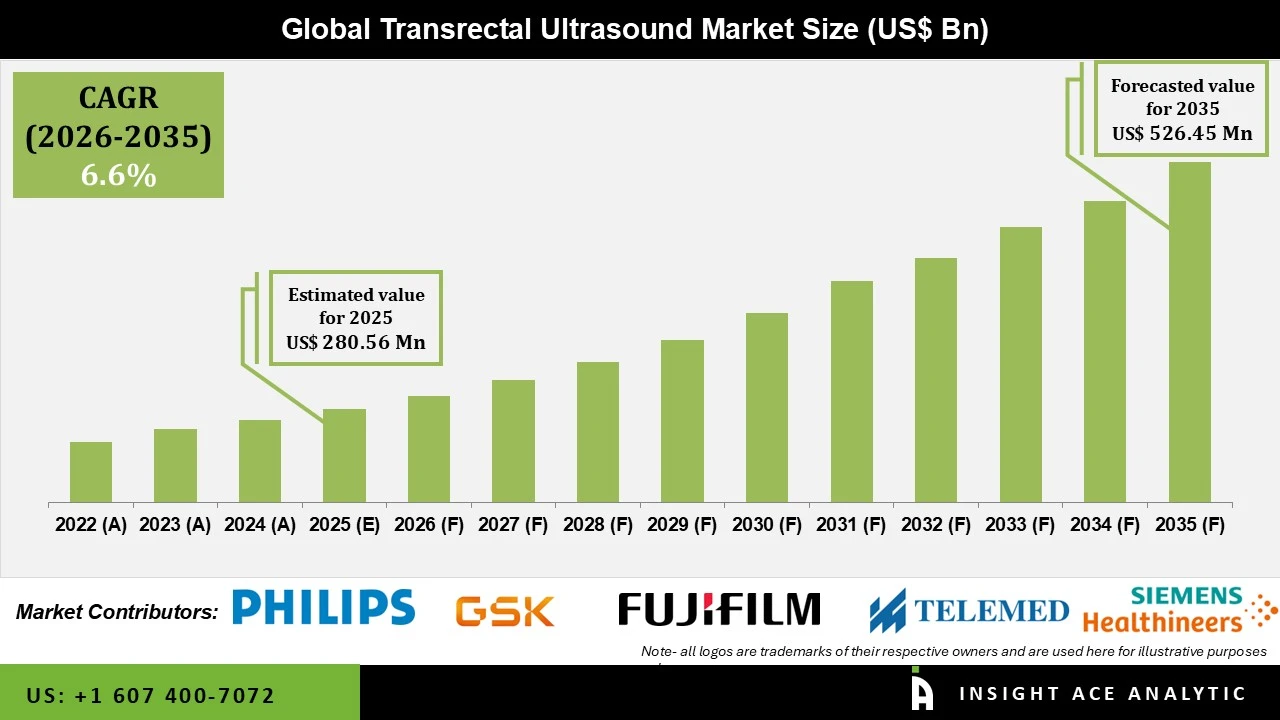
Transrectal Ultrasound Market Size is valued at USD 280.56 Mn in 2025 and is predicted to reach USD 526.45 Mn by the year 2035 at a 6.6% CAGR during the forecast period for 2026 to 2035.
Transrectal Ultrasound Market Size, Share & Trends Analysis Distribution by Product Type (Portable and Cart / Trolley-based), Technology (2D Ultrasound, 3D Ultrasound, 4D Ultrasound, and Others), Application (Diagnostic [Benign Prostatic Hyperplasia, Prostate Cancer Diagnosis, Others] and Image-guided Biopsy), End-user (Hospitals, Specialty Clinics, Diagnostic Imaging Centers, and Others), and Segment Forecasts, 2026 to 2035
Transrectal Ultrasound Market Key Takeaways:
|
A diagnostic tool called transrectal ultrasound is used to identify male prostatic disorders, such as benign prostatic hyperplasia, prostatitis, and prostate cancer. It's a minimally invasive method that uses sound waves to create prostate pictures. A small probe is placed inside the rectum during a transrectal ultrasound technique, and sound waves are emitted that reflect off the surrounding tissues. The wave patterns, called echoes, that reflect off the organs are analyzed by a computer and transformed into an image that a physician can see on a television screen. One of the key factors driving the growth of the transrectal ultrasound market globally is the rising incidence of prostate cancer.
Furthermore, improvements in TRUS devices and increased government funding for the development of innovative treatments are anticipated to propel the transrectal ultrasound market expansion throughout the forecast period. For instance, the Prostate Cancer Research Program (PCRP) received funding from the Defense Appropriations Act in March 2023 to carry out high-impact prostate cancer research and create novel treatments. Additionally, methods for diagnosing prostate cancer that combine high-resolution ultrasound scanning, real-time elastography, MRI-US fusion biopsies, and systems with enhanced and effective imaging capabilities are being widely implemented. In order to diagnose prostate cancer, these systems are propelling the transition from traditional to sophisticated diagnostic methods.
Additionally, the adoption of transrectal ultrasound equipment is being accelerated by the vast and aging population base in developing nations like China and India as well as the growing healthcare infrastructure in these nations. Furthermore, the global transrectal ultrasound market is expanding due to the growing use of various tactics by major players in the industry, such as product launches and collaborations. The transrectal ultrasound market is expected to grow over the projected period due to an increase in research and development efforts by major players like GE Healthcare, Esaote SpA, and Exact Imaging to create novel and cutting-edge technologies. However, the expensive price of transrectal ultrasound equipment and transducers hinders market expansion.
Competitive Landscape
Which are the Leading Players in Transrectal Ultrasound Market?
• Siemens Healthineers AG
• GE Healthcare
• KOELIS
• FUJIFILM Corporation
• Telemed Medical Systems
• Exact Imaging
• Koninklijke Philips N.V.
• Mindray Medical International Limited
• Hitachi Medical Systems
• Strata Imaging
• Others
Market Dynamics
Driver
Rise in Awareness of Prostate Health
The global transrectal ultrasound market has been greatly impacted by the noticeable rise in awareness of prostate health in recent years. More men are seeking diagnostic treatments as a result of educational efforts and activities promoting prostate cancer screening. Since early discovery of prostate problems might result in improved treatment outcomes, this increased awareness is essential. As a result, more patients are choosing to have transrectal ultrasound exams performed, according to medical professionals. With projections indicating that the number of operations carried out annually may rise by 10% in the upcoming years, the market is anticipated to grow as more people realize the value of routine screenings. This pattern emphasizes how important prostate health is becoming to men's health.
Restrain/Challenge
Increasing Demand for Sophisticated Alternative Imaging Modalities
The increasing demand for sophisticated alternative imaging modalities, especially multiparametric magnetic resonance imaging (mpMRI), for prostate cancer detection and assessment is a significant barrier to the transrectal ultrasound market. Compared to traditional TRUS, mpMRI provides better soft tissue contrast and increased precision in detecting clinically relevant prostate lesions, minimizing needless biopsies and boosting diagnostic confidence. Reliance on stand-alone TRUS procedures may decrease if medical professionals use MRI-guided or MRI-ultrasound fusion biopsy techniques more frequently. Additionally, clinicians are investigating transperineal and alternative image-guided techniques due to worries about TRUS-guided biopsy consequences include infection, bleeding, and patient discomfort.
2D Ultrasound Segment is Expected to Drive the Transrectal Ultrasound Market
The 2D Ultrasound category held the largest share in the Transrectal Ultrasound market in 2025 because of its regular clinical use in prostate assessment, accessibility, and price. Small hospitals, diagnostic facilities, and urology clinics generally like them since they are far less costly and simpler to run, especially in healthcare environments when money is tight. 2D ultrasound is frequently used by doctors to quantify prostate size, guide the positioning of the needle during biopsies, and track benign prostatic hyperplasia and other urological disorders. Additionally, growing awareness of prostate screening and developing countries' expanding healthcare infrastructure are pushing healthcare providers to start with dependable entry-level systems, which will support the 2D ultrasound category's growth and ongoing demand within the transrectal ultrasound market.
Hospitals Segment is Growing at the Highest Rate in the Transrectal Ultrasound Market
In 2025, the hospitals category dominated the Transrectal Ultrasound market due to the growing number of diagnostic and interventional procedures linked to the prostate that are carried out in hospital settings. For prostate cancer screening, biopsy, and treatment planning, hospitals are usually the main locations. TRUS is frequently utilized in these settings for therapy monitoring, prostate volume assessment, and needle guiding during biopsies. Increased patient traffic to urology departments due to the growing worldwide incidence of prostate cancer and the aging male population is increasing demand for TRUS equipment. Furthermore, hospitals have the financial means to purchase integrated imaging technologies, fusion biopsy systems, and sophisticated ultrasound platforms, all of which increase adoption.
Why North America Led the Transrectal Ultrasound Market?
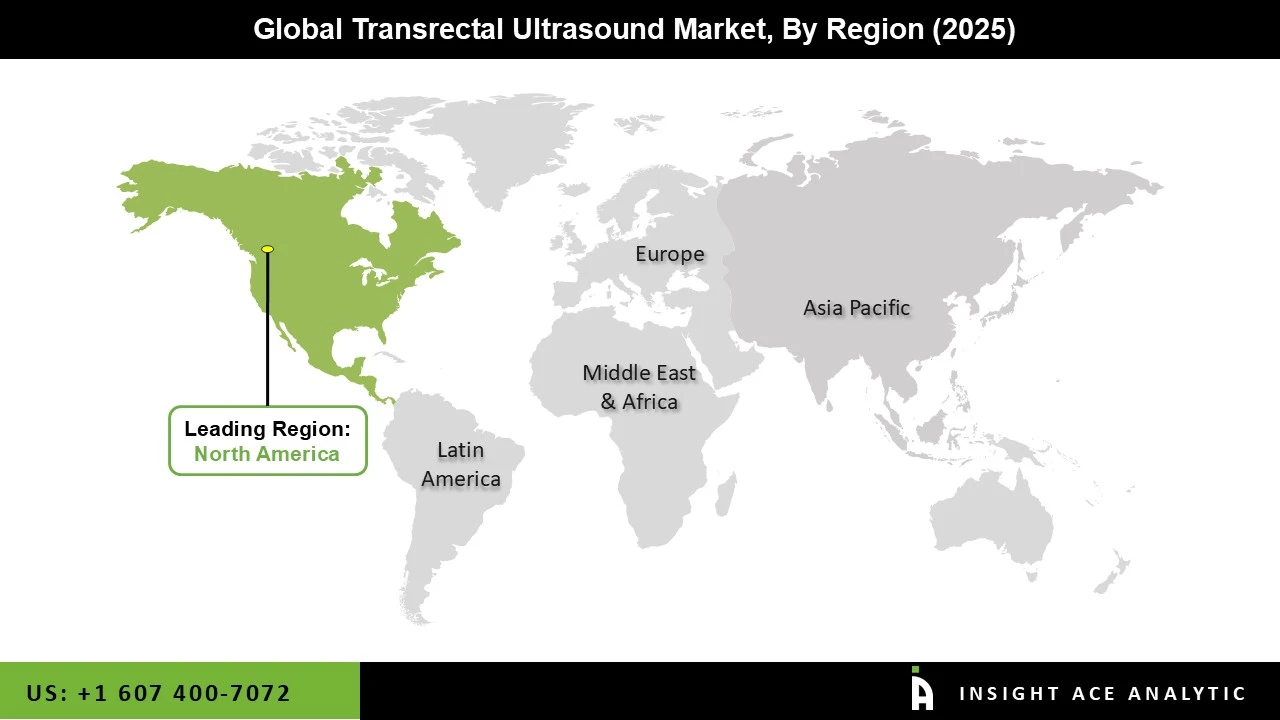
The Transrectal Ultrasound market was dominated by North America region in 2025. The growing awareness of early diagnosis, the incidence of prostate-related disorders, and sophisticated healthcare infrastructure are the main drivers of the region's growth. In order to guarantee the availability of state-of-the-art technologies and gadgets, regulatory support from organizations such as the FDA further stimulates market expansion. Canada makes a substantial contribution to the North American market, which is led by the United States. Additionally, the continuous improvements in ultrasound technology, which improve patient outcomes and diagnostic accuracy, define the competitive landscape. The adoption of these technologies is facilitated by the existence of well-established healthcare systems, guaranteeing the transrectal ultrasound market’s continued expansion in this region.
Transrectal Ultrasound Market Report Scope:
| Report Attribute | Specifications |
| Market size value in 2025 | USD 280.56 Mn |
| Revenue forecast in 2035 | USD 526.45 Mn |
| Growth Rate CAGR | CAGR of 6.6% from 2026 to 2035 |
| Quantitative Units | Representation of revenue in US$ Bn and CAGR from 2026 to 2035 |
| Historic Year | 2022 to 2025 |
| Forecast Year | 2026-2035 |
| Report Coverage | The forecast of revenue, the position of the company, the competitive market structure, growth prospects, and trends |
| Segments Covered | Product Type, Technology, Application, End-user, and By Region |
| Regional Scope | North America; Europe; Asia Pacific; Latin America; Middle East & Africa |
| Country Scope | U.S.; Canada; U.K.; Germany; China; India; Japan; Brazil; Mexico; The UK; France; Italy; Spain; China; Japan; India; South Korea; Southeast Asia; South Korea; Southeast Asia |
| Competitive Landscape | Siemens Healthineers AG, GE Healthcare, KOELIS, FUJIFILM Corporation, Telemed Medical Systems, Exact Imaging, Koninklijke Philips N.V., Mindray Medical International Limited, Hitachi Medical Systems, Strata Imaging, and Others |
| Customization Scope | Free customization report with the procurement of the report, Modifications to the regional and segment scope. Geographic competitive landscape. |
| Pricing and Available Payment Methods | Explore pricing alternatives that are customized to your particular study requirements. |
Market Segmentation:
Transrectal Ultrasound Market by Product Type-
• Portable
• Cart / Trolley-based
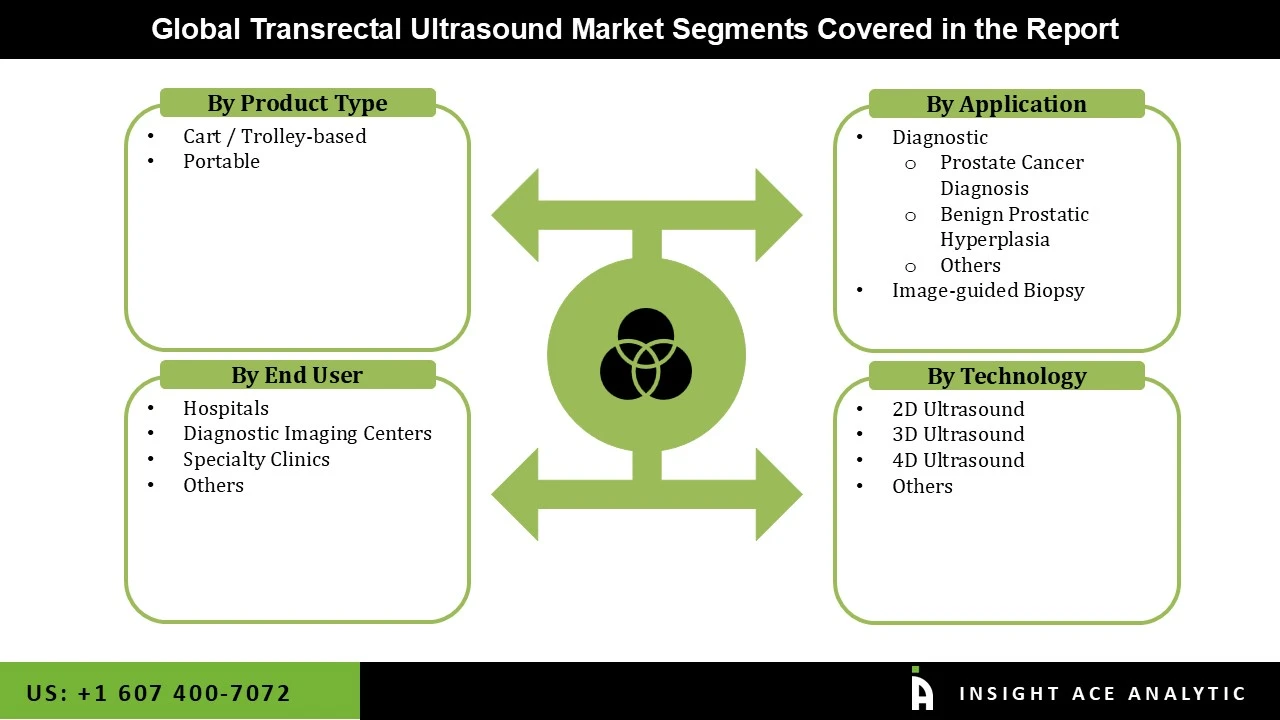
Transrectal Ultrasound Market by Technology-
• 2D Ultrasound
• 3D Ultrasound
• 4D Ultrasound
• Others
Transrectal Ultrasound Market by Application-
• Diagnostic
o Benign Prostatic Hyperplasia
o Prostate Cancer Diagnosis
o Others
• Image-guided Biopsy
Transrectal Ultrasound Market by End-user-
• Hospitals
• Specialty Clinics
• Diagnostic Imaging Centers
• Others
Research Design and Approach
This study employed a multi-step, mixed-method research approach that integrates:
- Secondary research
- Primary research
- Data triangulation
- Hybrid top-down and bottom-up modelling
- Forecasting and scenario analysis
This approach ensures a balanced and validated understanding of both macro- and micro-level market factors influencing the market.
Secondary Research
Secondary research for this study involved the collection, review, and analysis of publicly available and paid data sources to build the initial fact base, understand historical market behaviour, identify data gaps, and refine the hypotheses for primary research.
Sources Consulted
Secondary data for the market study was gathered from multiple credible sources, including:
- Government databases, regulatory bodies, and public institutions
- International organizations (WHO, OECD, IMF, World Bank, etc.)
- Commercial and paid databases
- Industry associations, trade publications, and technical journals
- Company annual reports, investor presentations, press releases, and SEC filings
- Academic research papers, patents, and scientific literature
- Previous market research publications and syndicated reports
These sources were used to compile historical data, market volumes/prices, industry trends, technological developments, and competitive insights.

Primary Research
Primary research was conducted to validate secondary data, understand real-time market dynamics, capture price points and adoption trends, and verify the assumptions used in the market modelling.
Stakeholders Interviewed
Primary interviews for this study involved:
- Manufacturers and suppliers in the market value chain
- Distributors, channel partners, and integrators
- End-users / customers (e.g., hospitals, labs, enterprises, consumers, etc., depending on the market)
- Industry experts, technology specialists, consultants, and regulatory professionals
- Senior executives (CEOs, CTOs, VPs, Directors) and product managers
Interview Process
Interviews were conducted via:
- Structured and semi-structured questionnaires
- Telephonic and video interactions
- Email correspondences
- Expert consultation sessions
Primary insights were incorporated into demand modelling, pricing analysis, technology evaluation, and market share estimation.
Data Processing, Normalization, and Validation
All collected data were processed and normalized to ensure consistency and comparability across regions and time frames.
The data validation process included:
- Standardization of units (currency conversions, volume units, inflation adjustments)
- Cross-verification of data points across multiple secondary sources
- Normalization of inconsistent datasets
- Identification and resolution of data gaps
- Outlier detection and removal through algorithmic and manual checks
- Plausibility and coherence checks across segments and geographies
This ensured that the dataset used for modelling was clean, robust, and reliable.
Market Size Estimation and Data Triangulation
Bottom-Up Approach
The bottom-up approach involved aggregating segment-level data, such as:
- Company revenues
- Product-level sales
- Installed base/usage volumes
- Adoption and penetration rates
- Pricing analysis
This method was primarily used when detailed micro-level market data were available.

Top-Down Approach
The top-down approach used macro-level indicators:
- Parent market benchmarks
- Global/regional industry trends
- Economic indicators (GDP, demographics, spending patterns)
- Penetration and usage ratios
This approach was used for segments where granular data were limited or inconsistent.
Hybrid Triangulation Approach
To ensure accuracy, a triangulated hybrid model was used. This included:
- Reconciling top-down and bottom-up estimates
- Cross-checking revenues, volumes, and pricing assumptions
- Incorporating expert insights to validate segment splits and adoption rates
This multi-angle validation yielded the final market size.
Forecasting Framework and Scenario Modelling
Market forecasts were developed using a combination of time-series modelling, adoption curve analysis, and driver-based forecasting tools.
Forecasting Methods
- Time-series modelling
- S-curve and diffusion models (for emerging technologies)
- Driver-based forecasting (GDP, disposable income, adoption rates, regulatory changes)
- Price elasticity models
- Market maturity and lifecycle-based projections
Scenario Analysis
Given inherent uncertainties, three scenarios were constructed:
- Base-Case Scenario: Expected trajectory under current conditions
- Optimistic Scenario: High adoption, favourable regulation, strong economic tailwinds
- Conservative Scenario: Slow adoption, regulatory delays, economic constraints
Sensitivity testing was conducted on key variables, including pricing, demand elasticity, and regional adoption.
Request Customization
Add countries, segments, company profiles, or extend forecast — free 10% customization with purchase.
Customize This Report →Enquire Before Buying
Speak with our analyst team about scope, methodology, pricing, or deliverable formats.
Enquire Now →Frequently Asked Questions
Transrectal Ultrasound Market Size is valued at USD 280.56 Mn in 2025 and is predicted to reach USD 526.45 Mn by the year 2035
Transrectal Ultrasound Market is expected to grow at a 6.6% CAGR during the forecast period for 2026 to 2035.
Siemens Healthineers AG, GE Healthcare, KOELIS, FUJIFILM Corporation, Telemed Medical Systems, Exact Imaging, Koninklijke Philips N.V., Mindray Medical International Limited, Hitachi Medical Systems, Strata Imaging, and Others
Transrectal Ultrasound Market is segmented into by Product Type, Technology, Application, End-user, and By Region
North America region is leading the Transrectal Ultrasound Market.