Smart Electrogastrogram Recorder Market Size, Trend, Revenue Report 2026 to 2035
What is Smart Electrogastrogram Recorder Market Size?
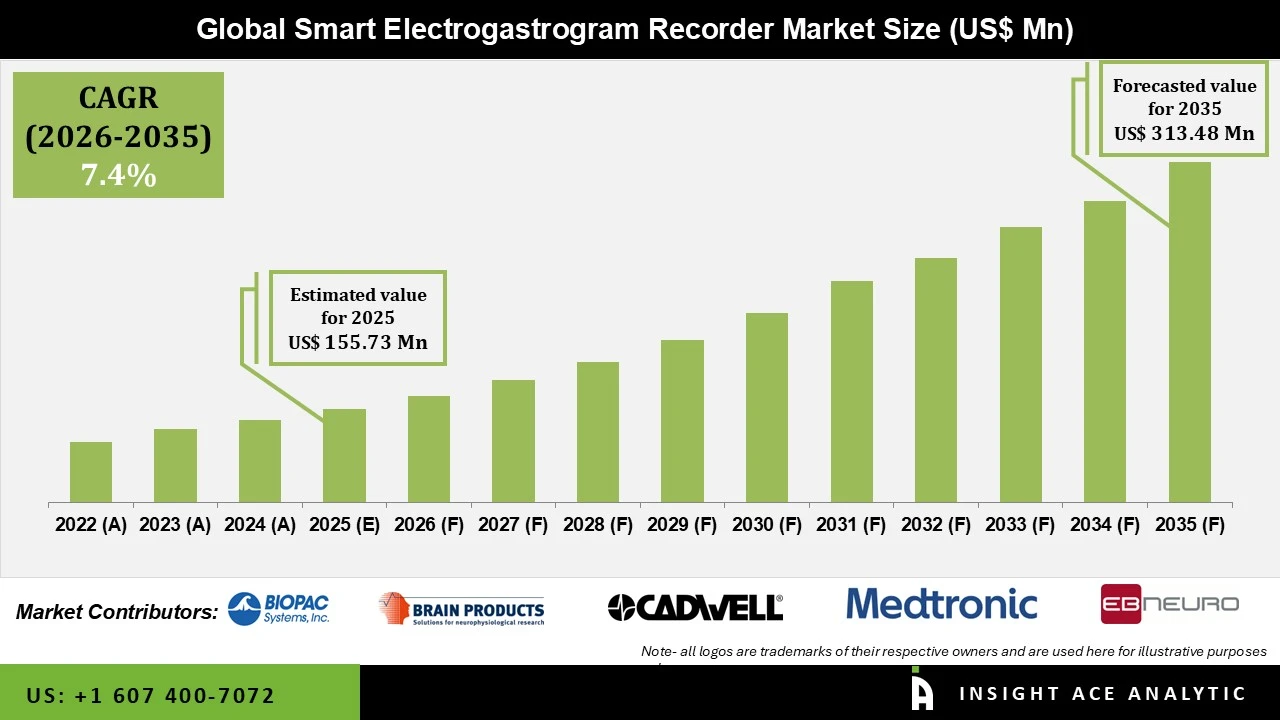
Smart Electrogastrogram Recorder Market Size is valued at USD 155.73 Mn in 2025 and is predicted to reach USD 313.48 Mn by the year 2035 at a 7.4% CAGR during the forecast period for 2026 to 2035.
Smart Electrogastrogram Recorder Market Size, Share & Trends Analysis Distribution by Product Type (Desktop Electrogastrogram Recorder, Portable Electrogastrogram Recorder, Wearable Electrogastrogram Recorder, and Others), Application (Hospitals, Clinics, Research Institutes, and Others), and Segment Forecasts, 2026 to 2035
A smart electrogastrogram (EGG) recorder is a sophisticated, non-invasive medical device that uses electrodes applied to the skin across the belly to measure and track the electrical activity of the stomach (gastric myoelectrical signals). In contrast to traditional EGG systems, smart EGG recorders use digital sensors, wireless connectivity (such as Bluetooth or Wi-Fi), and sophisticated data-processing algorithms to allow for the tracking, storing, and analysis of stomach rhythms in real time. Healthcare professionals can remotely evaluate gastric motility problems such as gastroparesis, functional dyspepsia, and chronic nausea by using these devices in conjunction with mobile apps or clinical software platforms. The smart electrogastrogram recorder market is driven by telemedicine and remote monitoring trends, the growing demand for non-invasive diagnostics, and the increasing prevalence of pertinent ailments.
The smart electrogastrogram recorder market is expanding due to the rise in gastrointestinal disorders, the increased recognition of the significance of gastrointestinal health, and advancements in medical technology. Additionally, as gastrointestinal illnesses, including irritable bowel syndrome, gastrointestinal reflux disease, and other functional gastrointestinal diseases, become more common, there is a greater demand for accurate diagnostic tools, which is propelling the smart electrogastrogram recorder market's growth. Moreover, interest in smart electrogastrogram recorders has grown due to the incorporation of digital health solutions and portable technologies into patients' daily lives. These gadgets allow for ongoing observation and offer useful information that enhances patient care.
Furthermore, many nations now have better regulations, which facilitate the adoption of new technologies. The encouragement of innovation in the healthcare industry and the backing of health authorities are other important factors that assist the smart electrogastrogram recorder market's expansion. It is anticipated that the trend toward digitalization in healthcare will pick up speed in the upcoming years, which will accelerate the adoption and expansion of smart electrogastrogram recorders. However, the high cost of creating and producing Smart Electrogastrogram Recorders may have an impact on price and, consequently, market acceptability. Businesses must figure out how to provide affordable solutions to remain competitive. This is expected to restrict the smart electrogastrogram recorder market expansion throughout the projection period.
Competitive Landscape
Which are the Leading Players in Smart Electrogastrogram Recorder Market?
• BioPac Systems Inc
• Medtronic
• Compumedics Limited
• EB Neuro S.p.A.
• Noraxon USA Inc
• GE Healthcare
• Natus Medical Incorporated
• Brain Products GmbH
• Cadwell Industries
• Philips Healthcare
• RDS Medical
• Neurosoft
• Schiller AG
• NIHON KOHDEN
• Others
Market Dynamics
Driver
Growing Need for Non-Invasive Digestive Diagnostics
The growing demand for non-invasive diagnostic methods in gastroenterology is one of the biggest factors propelling the smart electrogastrogram recorder market. Endoscopy and gastric emptying studies are examples of traditional approaches for assessing stomach motility that can be invasive, time-consuming, and painful for patients. Smart electrogastrogram recorders, on the other hand, are ideal for frequent or prolonged monitoring since they employ surface electrodes to record gastrointestinal electrical activity without generating discomfort. Patients and medical professionals are looking for safer and more practical diagnostic options as the prevalence of chronic digestive problems rises. Furthermore, wearable technological improvements and their connection with digital health platforms have made these devices more accessible and user-friendly, which has accelerated their acceptance in both home-care and clinical settings.
Restrain/Challenge
Increasing Difficulties with Signal Reliability and Interpretation
The difficulty of accurately interpreting gastric electrical activity and signal dependability is a major barrier to the smart electrogastrogram recorder market. Electrogastrogram signals are frequently weak and prone to interference from outside sources such as breathing, abdominal muscle movements, and inconsistent electrode positioning. If this noise is not appropriately filtered, it can degrade the quality of the data and produce inconsistent or deceptive results. Furthermore, because conventional diagnostic criteria are still developing, interpreting EGG data calls for specific knowledge. This technology's normal clinical application is limited because many healthcare providers lack enough training or experience with it. In situations where sophisticated signal-processing tools or professional assistance are not easily accessible, these technological and knowledge-related obstacles lower clinician confidence and impede adoption.
Wearable Electrogastrogram Recorder Segment is Expected to Drive the Smart Electrogastrogram Recorder Market
The Wearable Electrogastrogram Recorder category held the largest share in the Smart Electrogastrogram Recorder market in 2025 because of the general trend toward ongoing, patient-focused monitoring and digital health solutions. These devices, which are usually made as lightweight patches or belt-based systems, allow stomach electrical activity to be recorded for an extended period of time in real-world situations as opposed to restricted hospital settings. For the diagnosis of sporadic gastrointestinal conditions that could go undetected during brief hospital stays, this capacity is especially helpful. Easy data collection, remote monitoring, and prompt clinical intervention are made possible by the combination of Bluetooth connectivity, smartphone apps, and cloud-based analytics. Additionally, the adoption is also being accelerated by growing consumer acceptance of wearable health technology, telemedicine, and home-based care.
Hospitals Segment is Growing at the Highest Rate in the Smart Electrogastrogram Recorder Market
In 2025, the hospitals category dominated the Smart Electrogastrogram Recorder market because of the growing dependence on specialist-led care and sophisticated diagnostic infrastructure for gastrointestinal illnesses. Hospitals are the main locations for the diagnosis and treatment of complicated illnesses such as chronic dyspepsia and gastroparesis, where a precise evaluation of stomach motility is crucial. The efficient use of smart electrogastrogram recorders in clinical workflows is made possible by the availability of qualified gastroenterologists, supporting diagnostic tools, and integrated healthcare systems. Hospitals are also early adopters of cutting-edge medical technology, such as linked monitoring systems and AI-enabled diagnostic tools. This market is growing due to an increase in hospital admissions for digestive problems, as well as investments in cutting-edge diagnostic tools and expanding healthcare infrastructure.
Why North America Led the Smart Electrogastrogram Recorder Market?
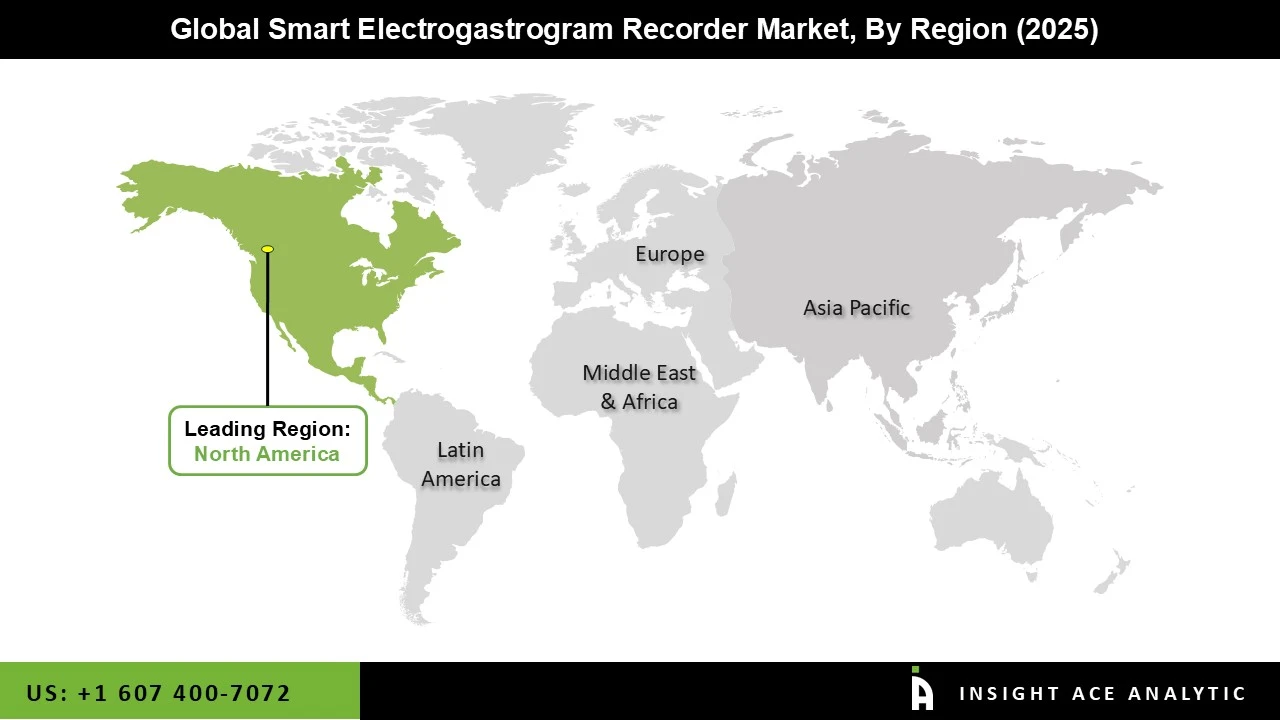
The Smart Electrogastrogram Recorder market was dominated by North America region in 2025 fueled by a high rate of gastrointestinal disorders and sophisticated medical facilities. Initiatives such as the Patient-Centered Outcomes Research Institute (PCORI) encourage the use of new technologies and support creative healthcare solutions. Additionally, North America is home to the top gastroenterology departments, research facilities, and medical facilities that are totally dedicated to the early identification and accurate diagnosis of gastrointestinal problems, such as functional dyspepsia, persistent nausea, and gastroparesis. Furthermore, the region has a highly advanced healthcare delivery infrastructure and a well-established leadership in gastroenterology, which necessitates the use of high-quality diagnostic equipment that complies with clinical performance and evidence-based practice requirements.
Smart Electrogastrogram Recorder Market Report Scope:
| Report Attribute | Specifications |
| Market size value in 2025 | USD 155.73 Mn |
| Revenue forecast in 2035 | USD 313.48 Mn |
| Growth Rate CAGR | CAGR of 7.4% from 2026 to 2035 |
| Quantitative Units | Representation of revenue in US$ Mn and CAGR from 2026 to 2035 |
| Historic Year | 2022 to 2025 |
| Forecast Year | 2026-2035 |
| Report Coverage | The forecast of revenue, the position of the company, the competitive market structure, growth prospects, and trends |
| Segments Covered | Product Type, Application, and By Region |
| Regional Scope | North America; Europe; Asia Pacific; Latin America; Middle East & Africa |
| Country Scope | U.S.; Canada; U.K.; Germany; China; India; Japan; Brazil; Mexico; The UK; France; Italy; Spain; China; Japan; India; South Korea; Southeast Asia; South Korea; Southeast Asia |
| Competitive Landscape | BioPac Systems Inc, Medtronic, Compumedics Limited, EB Neuro S.p.A., Noraxon USA Inc, GE Healthcare, Natus Medical Incorporated, Brain Products GmbH, Cadwell Industries, Philips Healthcare, RDS Medical, Neurosoft, Schiller AG, NIHON KOHDEN, and Others. |
| Customization Scope | Free customization report with the procurement of the report, Modifications to the regional and segment scope. Geographic competitive landscape. |
| Pricing and Available Payment Methods | Explore pricing alternatives that are customized to your particular study requirements. |
Market Segmentation:
Smart Electrogastrogram Recorder Market by Product Type-
• Desktop Electrogastrogram Recorder
• Portable Electrogastrogram Recorder
• Wearable Electrogastrogram Recorder
• Others
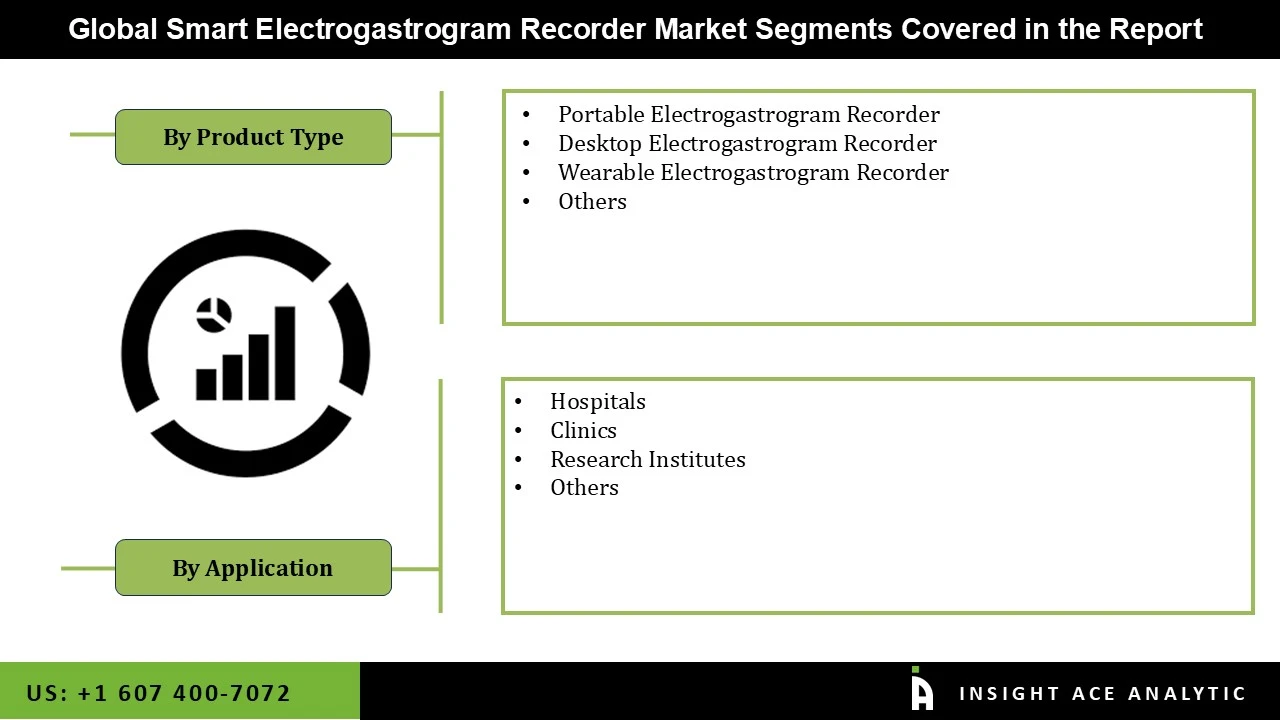
Smart Electrogastrogram Recorder Market by Application-
• Hospitals
• Clinics
• Research Institutes
• Others
Smart Electrogastrogram Recorder Market By Region-
North America-
• The US
• Canada
Europe-
• Germany
• The UK
• France
• Italy
• Spain
• Rest of Europe
Asia-Pacific-
• China
• Japan
• India
• South Korea
• South East Asia
• Rest of Asia Pacific
Latin America-
• Brazil
• Argentina
• Mexico
• Rest of Latin America
Middle East & Africa-
• GCC Countries
• South Africa
• Rest of Middle East and Africa
Research Design and Approach
This study employed a multi-step, mixed-method research approach that integrates:
- Secondary research
- Primary research
- Data triangulation
- Hybrid top-down and bottom-up modelling
- Forecasting and scenario analysis
This approach ensures a balanced and validated understanding of both macro- and micro-level market factors influencing the market.
Secondary Research
Secondary research for this study involved the collection, review, and analysis of publicly available and paid data sources to build the initial fact base, understand historical market behaviour, identify data gaps, and refine the hypotheses for primary research.
Sources Consulted
Secondary data for the market study was gathered from multiple credible sources, including:
- Government databases, regulatory bodies, and public institutions
- International organizations (WHO, OECD, IMF, World Bank, etc.)
- Commercial and paid databases
- Industry associations, trade publications, and technical journals
- Company annual reports, investor presentations, press releases, and SEC filings
- Academic research papers, patents, and scientific literature
- Previous market research publications and syndicated reports
These sources were used to compile historical data, market volumes/prices, industry trends, technological developments, and competitive insights.
Primary Research
Primary research was conducted to validate secondary data, understand real-time market dynamics, capture price points and adoption trends, and verify the assumptions used in the market modelling.
Stakeholders Interviewed
Primary interviews for this study involved:
- Manufacturers and suppliers in the market value chain
- Distributors, channel partners, and integrators
- End-users / customers (e.g., hospitals, labs, enterprises, consumers, etc., depending on the market)
- Industry experts, technology specialists, consultants, and regulatory professionals
- Senior executives (CEOs, CTOs, VPs, Directors) and product managers
Interview Process
Interviews were conducted via:
- Structured and semi-structured questionnaires
- Telephonic and video interactions
- Email correspondences
- Expert consultation sessions
Primary insights were incorporated into demand modelling, pricing analysis, technology evaluation, and market share estimation.
Data Processing, Normalization, and Validation
All collected data were processed and normalized to ensure consistency and comparability across regions and time frames.
The data validation process included:
- Standardization of units (currency conversions, volume units, inflation adjustments)
- Cross-verification of data points across multiple secondary sources
- Normalization of inconsistent datasets
- Identification and resolution of data gaps
- Outlier detection and removal through algorithmic and manual checks
- Plausibility and coherence checks across segments and geographies
This ensured that the dataset used for modelling was clean, robust, and reliable.
Market Size Estimation and Data Triangulation
Bottom-Up Approach
The bottom-up approach involved aggregating segment-level data, such as:
- Company revenues
- Product-level sales
- Installed base/usage volumes
- Adoption and penetration rates
- Pricing analysis
This method was primarily used when detailed micro-level market data were available.
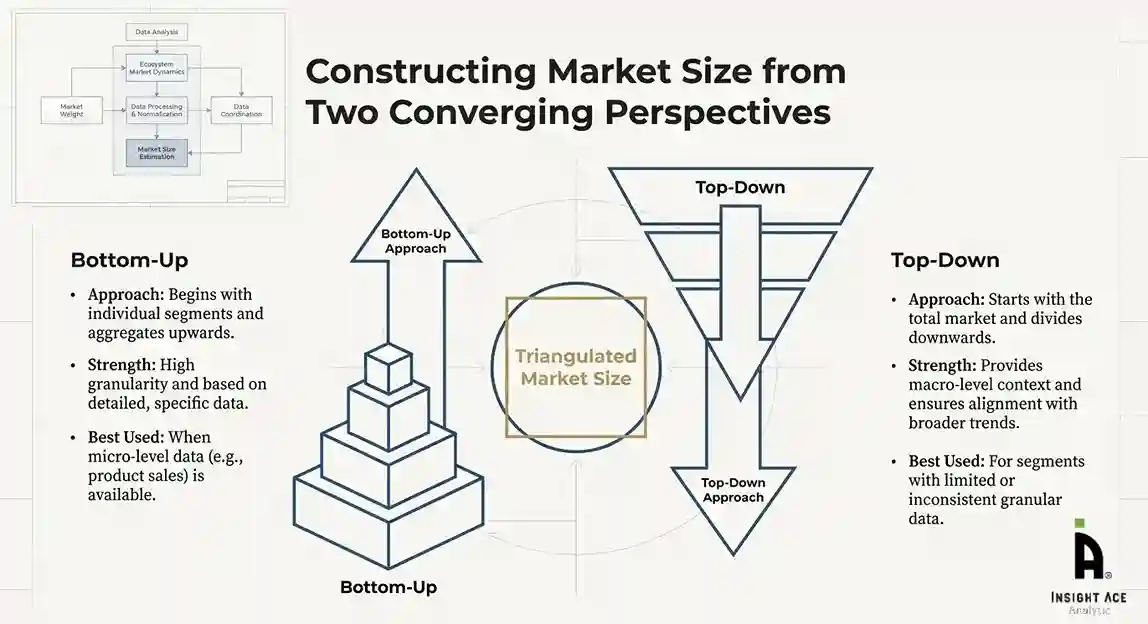
Top-Down Approach
The top-down approach used macro-level indicators:
- Parent market benchmarks
- Global/regional industry trends
- Economic indicators (GDP, demographics, spending patterns)
- Penetration and usage ratios
This approach was used for segments where granular data were limited or inconsistent.
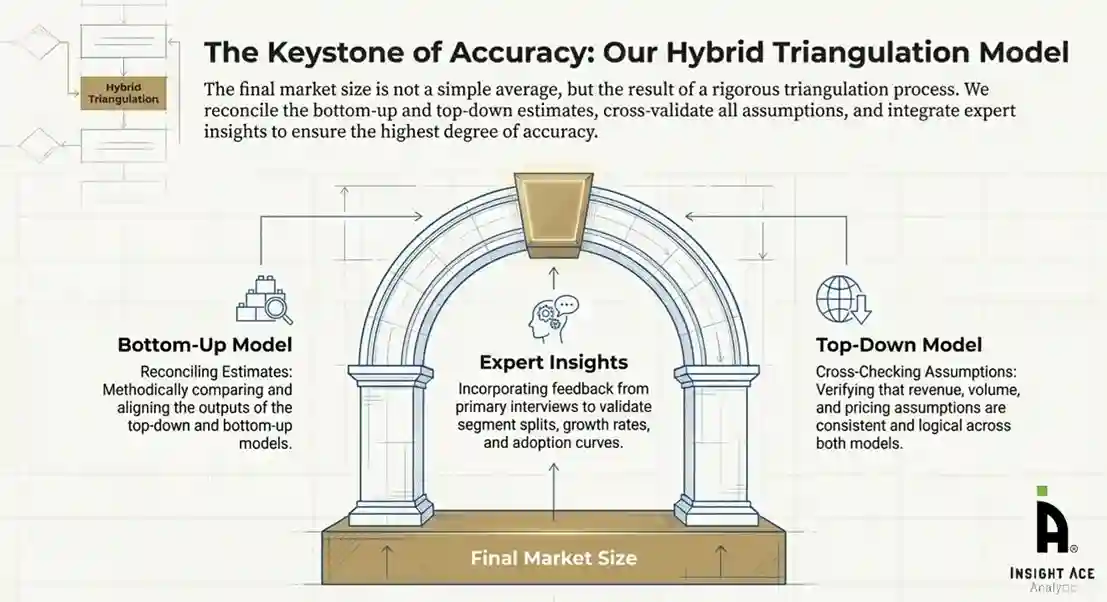
Hybrid Triangulation Approach
To ensure accuracy, a triangulated hybrid model was used. This included:
- Reconciling top-down and bottom-up estimates
- Cross-checking revenues, volumes, and pricing assumptions
- Incorporating expert insights to validate segment splits and adoption rates
This multi-angle validation yielded the final market size.
Forecasting Framework and Scenario Modelling
Market forecasts were developed using a combination of time-series modelling, adoption curve analysis, and driver-based forecasting tools.
Forecasting Methods
- Time-series modelling
- S-curve and diffusion models (for emerging technologies)
- Driver-based forecasting (GDP, disposable income, adoption rates, regulatory changes)
- Price elasticity models
- Market maturity and lifecycle-based projections
Scenario Analysis
Given inherent uncertainties, three scenarios were constructed:
- Base-Case Scenario: Expected trajectory under current conditions
- Optimistic Scenario: High adoption, favourable regulation, strong economic tailwinds
- Conservative Scenario: Slow adoption, regulatory delays, economic constraints
Sensitivity testing was conducted on key variables, including pricing, demand elasticity, and regional adoption.
Request Customization
Add countries, segments, company profiles, or extend forecast — free 10% customization with purchase.
Customize This Report →Enquire Before Buying
Speak with our analyst team about scope, methodology, pricing, or deliverable formats.
Enquire Now →Frequently Asked Questions
Smart Electrogastrogram Recorder Market Size is valued at USD 155.73 Mn in 2025 and is predicted to reach USD 313.48 Mn by the year 2035 at a 7.4% CAGR during the forecast period for 2026 to 2035.
Smart Electrogastrogram Recorder Market Growth is predicted to be at a 7.4% CAGR during the forecast period for 2026 to 2035.
BioPac Systems Inc, Medtronic, Compumedics Limited, EB Neuro S.p.A., Noraxon USA Inc, GE Healthcare, Natus Medical Incorporated, Brain Products GmbH, Cadwell Industries, Philips Healthcare, RDS Medical, Neurosoft, Schiller AG, NIHON KOHDEN, and Others.
Smart Electrogastrogram Recorder Market is segmented into Product Type, Application, and By Region
North America region is leading the Smart Electrogastrogram Recorder Market.