Single-use Chromatography Systems Market Size, Share, Trend, Forecast Report 2026 to 2035
What is Single-use Chromatography Systems Market Size?
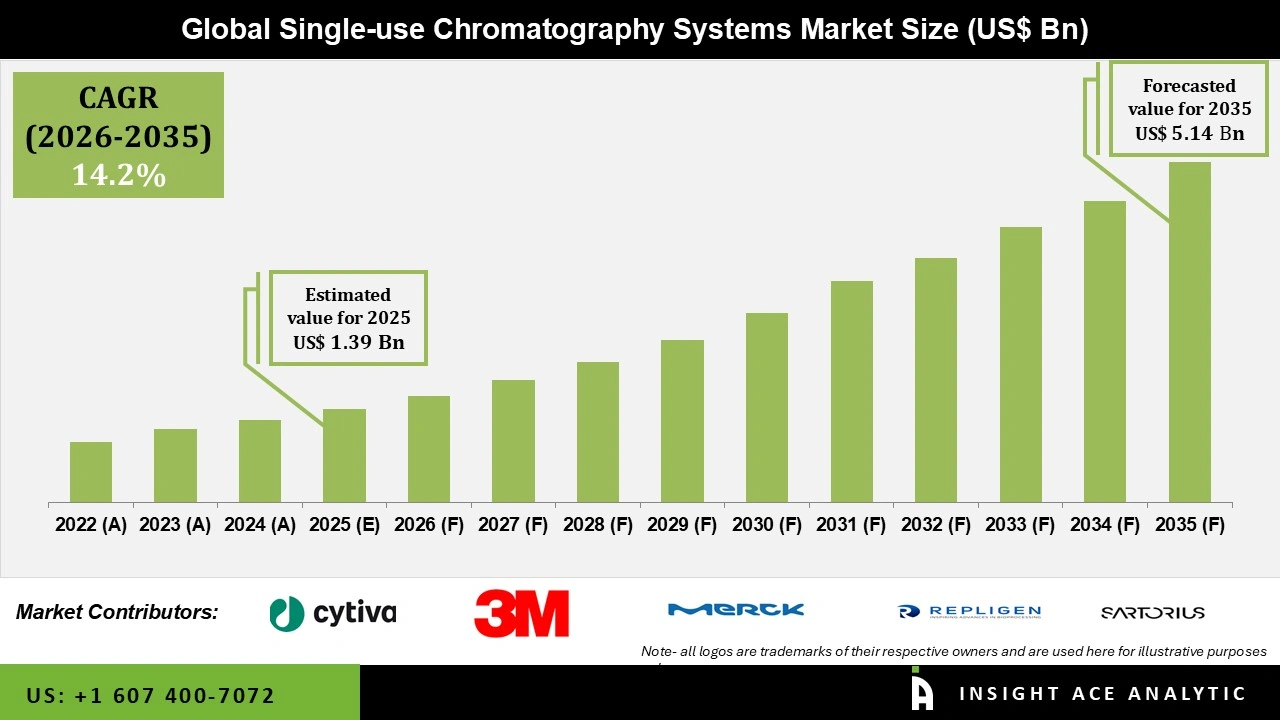
Global Single-use Chromatography Systems Market Size is valued at USD 1.39 Bn in 2025 and is predicted to reach USD 5.14 Bn by the year 2035 at a 14.2% CAGR during the forecast period for 2026 to 2035.
Single-use Chromatography Systems Market Size, Share & Trends Analysis by Scale of Operation (Preclinical and Clinical, and Commercial), End User (Pharma and Biopharmaceutical Companies, CROs and CMOs, and Other End Users)), and Segment Forecasts, 2026 to 2035.
The term single-use chromatography systems defines disposable downstream processing technologies utilized in separation, purification, and concentration of biological products. Examples of the latter include, but are not limited to, monoclonal antibodies, vaccines, recombinant proteins, viral vectors, and various advanced biologicals. As opposed to traditional steel chromatography systems, which contain fixed process paths including tubing, valves, and other hardware, single-use platforms involve use of disposables. This eliminates cleaning, validation, and changeover needs associated with switching between batches. Single-use chromatography platforms are widely implemented today in downstream biopharmaceutical manufacturing owing to increased flexibility of multiproduct plants along with accelerated process development and scale-up. Flexibility of manufacturing, biologics production increase, and adoption of single-use technology are the main drivers for the single-use chromatography systems market growth. As an illustration, the Resolute Flowdrive SU platform offered by Sartorius is designed for clinical as well as commercial-scale manufacturing with a wide range of configurations for diverse flow rates and chromatography modes.
Moreover, the growing need in flexible manufacturing, increase in biologics, biosimilars, vaccines, as well as cell and gene therapy production resulted in the expansion of the single-use chromatography systems market. Today more and more biopharmaceutical manufacturers and contract development and manufacturing organizations are seeking for technologies, which will enable them to switch between different products without any considerable changes in their facilities. Single-use chromatography systems meet this need through decreasing cleaning requirements and accelerating changeover times. Single-use chromatography is suitable for facilities, producing a variety of products in relatively small or medium-sized batches.
At the same time, the transition to process intensification leads to changes in design of downstream purification. Companies are shifting from packed-bed batch mode to such new technologies as membrane chromatography, pre-packed columns, monoliths and multi-columns approach. For instance, the Sartorius BioSMB platform, which is designed for single-use multi-column capture, allows reduction of resin amounts and supports higher capacity. Therefore, the single-use chromatography market gradually moves from disposable components into integrated automation.
Competitive Landscape
Which are the Leading Players in Single-use Chromatography Systems Market?
- Danaher (Cytiva and Pall)
- Sartorius
- Thermo Fisher Scientific
- Merck KGaA
- Repligen
- Bio-Rad Laboratories
- Tosoh Bioscience
- 3M
- Purolite
- Agilent Technologies
- Avantor
- Eppendorf
- KNAUER Wissenschaftliche Geräte
- YMC
- Natrix Separations
Market Dynamics
Driver
Growing Adoption of Flexible and Modular Biopharmaceutical Manufacturing
Market growth of the single-use chromatography systems is expected owing to the ongoing adoption of flexible manufacturing by biopharmaceutical companies. Traditional stainless steel chromatography systems are difficult to clean, clean validate and prepare prior to use in production campaigns. Since single-use technologies make it easier to replace components involved in direct contact with the process fluid, they provide an appealing option for multiproduct sites and CDMOs which have to switch products from time to time.
This trend will be amplified further by the trend towards small-scale, flexible manufacturing facilities, allowing single-use to minimize demands on substantial fixed infrastructure, making it possible for manufacturers to configure their systems in accordance with the specifics of particular processes. Sartorius claims that its Resolute Flowdrive SU system offers flexibility as its modular design allows for clinical and commercial-scale manufacturing using various flow kits, columns, membranes, and monoliths.
Other important factor is the emergence of complex biologic drugs. Monoclonal antibodies have been dominant but such therapeutic classes as viral vectors, vaccines, bispecific antibodies, antibody-drug conjugates and many others have to be purified through a process that can be optimized in relation to product's specificities.
Restrain/Challenge
High Consumable Costs and Waste Management Requirements
Among the major issues surrounding the growth of the single-use chromatography systems market worldwide is the cost involved with disposables. While systems made of stainless steel can be re-used for a series of campaigns, single-use systems demand fresh flow paths and other process contact disposables after use, making this solution expensive and thus impacting operating costs, especially where there is a high volume commercial manufacturing.
Secondly, there is also an issue of waste disposal. The waste of bags, tubing, filters, flow paths and other plastic components will have to be dealt with. In view of the growing need for sustainability among biopharmaceutical companies, suppliers are expected to come up with low material-intensity disposable systems and recycling solutions.
Thus, while it might appear economical to use single-use chromatography systems due to reduction in the cost of cleanups and the lower demands that such systems have in terms of facility needs, the economic value will still depend on the manufacturing paradigm.
Production-scale Segment is Expected to Drive the Single-use Chromatography Systems Market
It is anticipated that production-scale systems will make up a significant percentage of single-use chromatography systems due to increased commercial biologics production. Production-scale systems offer the appropriate flow rate, pressure control, and process capability required for both clinical and commercial purification processes.
The trend towards higher-titer biologicals is also increasing the need for capacity in downstream processing equipment. The companies will need to have chromatography systems capable of handling larger processing volumes in order to prevent purification bottlenecks. The production single-use systems allow the companies to have more flexibility without the infrastructure associated with traditional stainless-steel systems.
Biopharmaceutical Manufacturing Segment is Growing at the Highest Rate in the Single-use Chromatography Systems Market
The biopharmaceutical manufacturing segment will continue to dominate the market due to the importance of chromatography in the downstream process. Biologics like monoclonal antibodies, recombinant proteins, vaccines, viral vectors, etc. need many purification steps in order to ensure the necessary product purity and quality.
The growing number of biologics in clinical development makes it necessary to have scalable systems for purification. In clinical development, single-use chromatography can prove to be very helpful as the production specifications may change during optimization process. A disposable system can make it much easier to transfer technology and prepare equipment for a particular product.
Why Europe Led the Single-use Chromatography Systems Market?
According to the current industry estimates, Europe will hold a key position within the single use batch chromatography systems market due to its strong manufacturing industry, significant presence of the biotech companies, well-established CDMOs, and adoption of the downstream technologies.
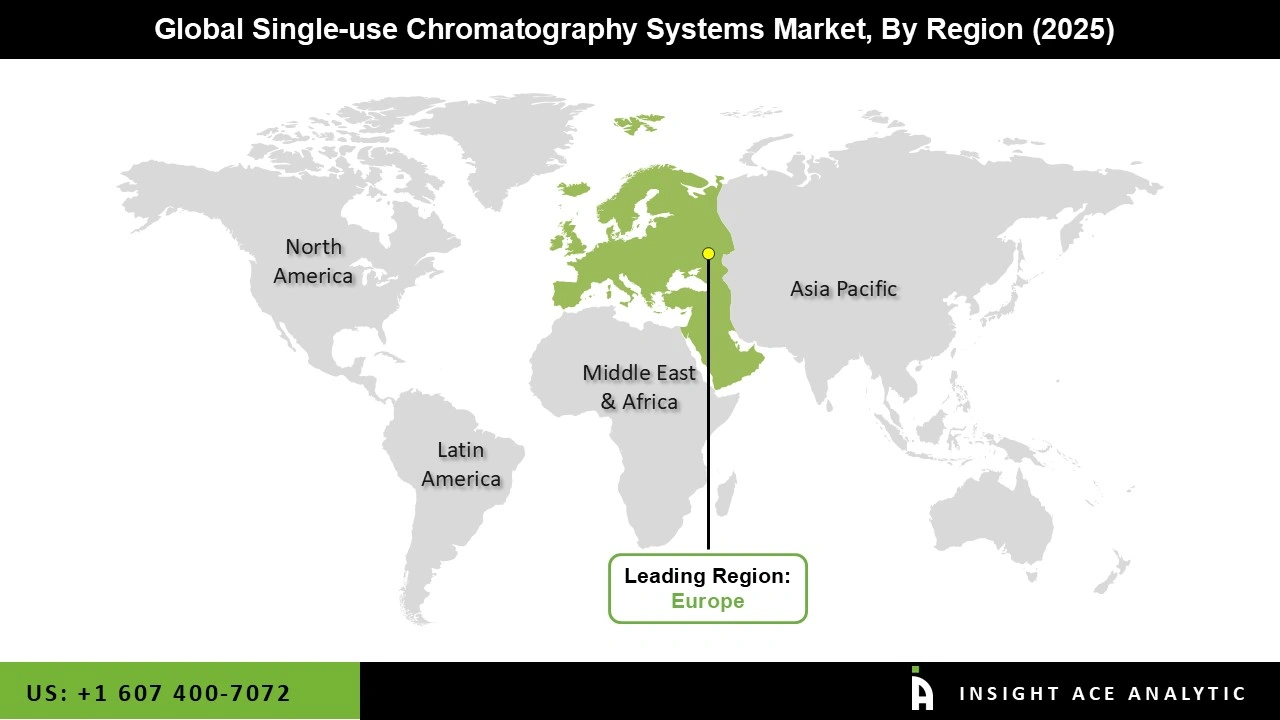
The second key geographical market is Asia Pacific because of its well-established infrastructure of the pharmaceuticals manufacturing plants and significant presence of significant players.
Single-use Chromatography Systems Market Report Scope:
| Report Attribute | Specifications |
| Market size value in 2025 | USD 1.39 Bn |
| Revenue forecast in 2035 | USD 5.14 Bn |
| Growth Rate CAGR | CAGR of 14.2% from 2026 to 2035 |
| Quantitative Units | Representation of revenue in US$ Bn and CAGR from 2026 to 2035 |
| Historic Year | 2022 to 2025 |
| Forecast Year | 2026-2035 |
| Report Coverage | The forecast of revenue, the position of the company, the competitive market structure, growth prospects, and trends |
| Segments Covered | Scale of Operation, End-User, and By Region |
| Regional Scope | North America; Europe; Asia Pacific; Latin America; Middle East & Africa |
| Country Scope | U.S.; Canada; U.K.; Germany; China; India; Japan; Brazil; Mexico; France; Italy; Spain; South Korea; Southeast Asia |
| Competitive Landscape | Danaher (Cytiva and Pall), Sartorius, Thermo Fisher Scientific, Merck KGaA, Repligen, Bio-Rad Laboratories, Tosoh Bioscience, 3M, Purolite, Agilent Technologies, Avantor, Eppendorf, KNAUER Wissenschaftliche Geräte, YMC, and Natrix Separations.. |
| Customization Scope | Free customization report with the procurement of the report, Modifications to the regional and segment scope. Geographic competitive landscape. |
| Pricing and Available Payment Methods | Explore pricing alternatives that are customized to your particular study requirements. |
Segmentations of Single-use Chromatography Systems Market:
Single-use Chromatography Systems Market by Scale of Operation -
- Preclinical and Clinical
- Commercial
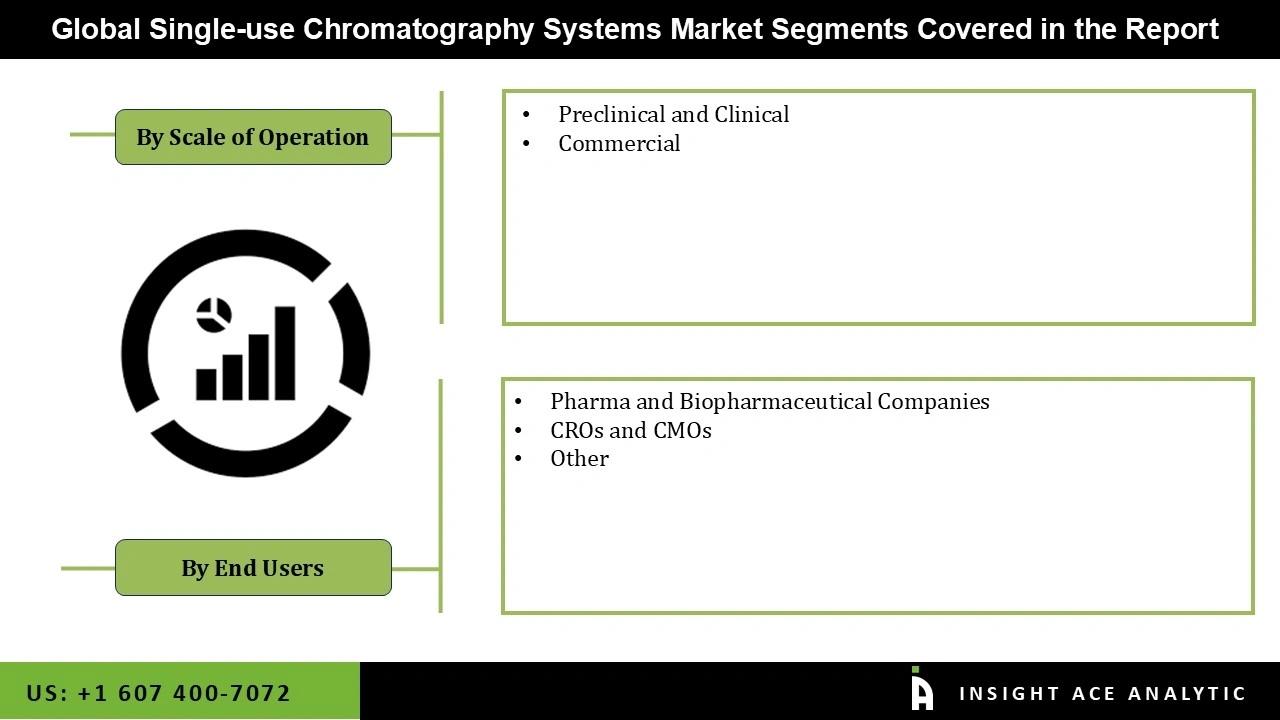
Single-use Chromatography Systems Market by End-user-
- Pharma and Biopharmaceutical Companies
- CROs and CMOs
- Other End Users
Single-use Chromatography Systems Market by Region-
- North America-
- The US
- Canada
- Europe-
- Germany
- The UK
- France
- Italy
- Spain
- Rest of Europe
- Asia-Pacific-
- China
- Japan
- India
- South Korea
- South East Asia
- Rest of Asia Pacific
- Latin America-
- Brazil
- Argentina
- Mexico
- Rest of Latin America
- Middle East and Africa-
- GCC Countries
- South Africa
- Rest of Middle East and Africa
Research Design and Approach
This study employed a multi-step, mixed-method research approach that integrates:
- Secondary research
- Primary research
- Data triangulation
- Hybrid top-down and bottom-up modelling
- Forecasting and scenario analysis
This approach ensures a balanced and validated understanding of both macro- and micro-level market factors influencing the market.
Secondary Research
Secondary research for this study involved the collection, review, and analysis of publicly available and paid data sources to build the initial fact base, understand historical market behaviour, identify data gaps, and refine the hypotheses for primary research.
Sources Consulted
Secondary data for the market study was gathered from multiple credible sources, including:
- Government databases, regulatory bodies, and public institutions
- International organizations (WHO, OECD, IMF, World Bank, etc.)
- Commercial and paid databases
- Industry associations, trade publications, and technical journals
- Company annual reports, investor presentations, press releases, and SEC filings
- Academic research papers, patents, and scientific literature
- Previous market research publications and syndicated reports
These sources were used to compile historical data, market volumes/prices, industry trends, technological developments, and competitive insights.

Primary Research
Primary research was conducted to validate secondary data, understand real-time market dynamics, capture price points and adoption trends, and verify the assumptions used in the market modelling.
Stakeholders Interviewed
Primary interviews for this study involved:
- Manufacturers and suppliers in the market value chain
- Distributors, channel partners, and integrators
- End-users / customers (e.g., hospitals, labs, enterprises, consumers, etc., depending on the market)
- Industry experts, technology specialists, consultants, and regulatory professionals
- Senior executives (CEOs, CTOs, VPs, Directors) and product managers
Interview Process
Interviews were conducted via:
- Structured and semi-structured questionnaires
- Telephonic and video interactions
- Email correspondences
- Expert consultation sessions
Primary insights were incorporated into demand modelling, pricing analysis, technology evaluation, and market share estimation.
Data Processing, Normalization, and Validation
All collected data were processed and normalized to ensure consistency and comparability across regions and time frames.
The data validation process included:
- Standardization of units (currency conversions, volume units, inflation adjustments)
- Cross-verification of data points across multiple secondary sources
- Normalization of inconsistent datasets
- Identification and resolution of data gaps
- Outlier detection and removal through algorithmic and manual checks
- Plausibility and coherence checks across segments and geographies
This ensured that the dataset used for modelling was clean, robust, and reliable.
Market Size Estimation and Data Triangulation
Bottom-Up Approach
The bottom-up approach involved aggregating segment-level data, such as:
- Company revenues
- Product-level sales
- Installed base/usage volumes
- Adoption and penetration rates
- Pricing analysis
This method was primarily used when detailed micro-level market data were available.

Top-Down Approach
The top-down approach used macro-level indicators:
- Parent market benchmarks
- Global/regional industry trends
- Economic indicators (GDP, demographics, spending patterns)
- Penetration and usage ratios
This approach was used for segments where granular data were limited or inconsistent.
Hybrid Triangulation Approach
To ensure accuracy, a triangulated hybrid model was used. This included:
- Reconciling top-down and bottom-up estimates
- Cross-checking revenues, volumes, and pricing assumptions
- Incorporating expert insights to validate segment splits and adoption rates
This multi-angle validation yielded the final market size.
Forecasting Framework and Scenario Modelling
Market forecasts were developed using a combination of time-series modelling, adoption curve analysis, and driver-based forecasting tools.
Forecasting Methods
- Time-series modelling
- S-curve and diffusion models (for emerging technologies)
- Driver-based forecasting (GDP, disposable income, adoption rates, regulatory changes)
- Price elasticity models
- Market maturity and lifecycle-based projections
Scenario Analysis
Given inherent uncertainties, three scenarios were constructed:
- Base-Case Scenario: Expected trajectory under current conditions
- Optimistic Scenario: High adoption, favourable regulation, strong economic tailwinds
- Conservative Scenario: Slow adoption, regulatory delays, economic constraints
Sensitivity testing was conducted on key variables, including pricing, demand elasticity, and regional adoption.
Request Customization
Add countries, segments, company profiles, or extend forecast — free 10% customization with purchase.
Customize This Report →Enquire Before Buying
Speak with our analyst team about scope, methodology, pricing, or deliverable formats.
Enquire Now →Frequently Asked Questions
Single-use Chromatography Systems Market Size is valued at USD 1.39 Bn in 2025 and is predicted to reach USD 5.14 Bn by the year 2035
The Single-use Chromatography Systems Market is expected to grow at a 14.2% CAGR during the forecast period for 2026 to 2035
Danaher (Cytiva and Pall), Sartorius, Thermo Fisher Scientific, Merck KGaA, Repligen, Bio-Rad Laboratories, Tosoh Bioscience, 3M, Purolite, Agilent Technologies, Avantor, Eppendorf, KNAUER Wissenschaftliche Geräte, YMC, Natrix Separations and Others.
Single-use Chromatography Systems Market is segmented into Scale of Operation, End-User, and Other.
Europe region is leading the Single-use Chromatography Systems Market.