Second-Hand Home and Furniture Retail Market Size, Share and Trends Analysis 2026 to 2035
Global Second-Hand Home and Furniture Retail Market Size is developed at a 18.3% CAGR during the forecast period for 2026 to 2035.
Second-Hand Home and Furniture Retail Market Size, Share & Trends Analysis Distribution by Product Type (Living Room Furniture, Bedroom Furniture, Dining & Kitchen Furniture, Home Office Furniture, Outdoor Furniture, Home Décor, Refurbished Furniture), by Sales Channel (Offline Retail Stores, Online Retail Platforms, Omnichannel Retail) and Segment Forecasts, 2026 to 2035.
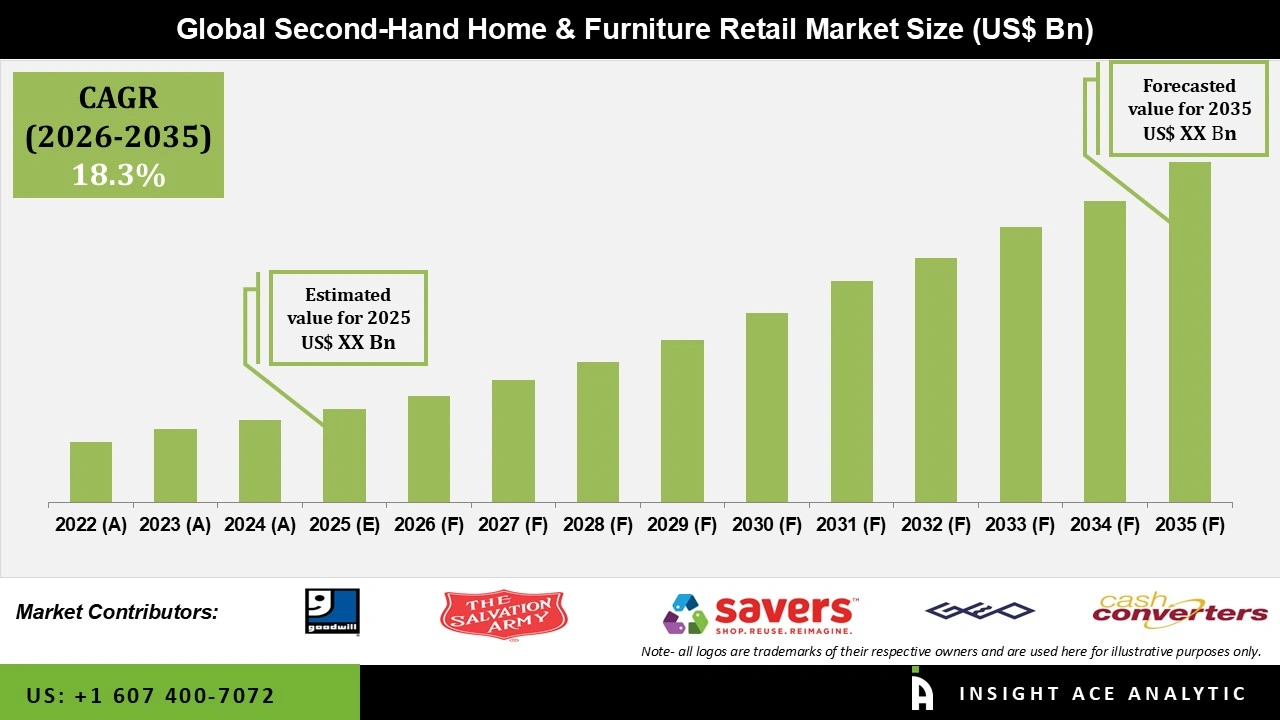
The second-hand home and furniture retail market refers to the buying and selling of pre-owned household furniture and home décor items through physical stores, online platforms, and omnichannel retail models. This market includes a wide range of products such as living room, bedroom, dining, home office, outdoor furniture, décor accessories, and refurbished or restored pieces that are resold in usable or like-new condition. These offerings appeal to value-conscious consumers seeking affordable, stylish, and sustainable home solutions while extending the lifecycle of furniture and reducing waste. Second-hand home and furniture retail plays an important role in promoting sustainability, cost savings, and circular economy practices. Consumers increasingly choose pre-owned furniture to furnish homes at lower prices, access unique or vintage designs, and reduce the environmental impact associated with new furniture production. Retailers in this space often add value through refurbishment, quality checks, delivery services, and flexible buying options, improving customer trust and overall shopping experience.
The second-hand home and furniture retail market growth is further being driven by rising awareness of sustainability, increasing urbanization, growth in rental housing, and the rapid expansion of online resale platforms and marketplaces. Younger consumers, in particular, are embracing second-hand furniture as a smart and eco-friendly alternative. However, the market faces challenges such as inconsistent product quality, limited standardization, logistics and storage costs for bulky items, and lower consumer confidence in unorganized resale channels. Despite these constraints, continuous digital innovation, better refurbishment practices, and organized retail participation are expected to strengthen the market’s long-term growth potential during the forecast period.
Competitive Landscape
Which are the Leading Players in the Second-Hand Home and Furniture Retail Market?
- Offline retail
- Goodwill
- Salvation Army
- Savers
- Geo Holdings
- Cash Converters
- BHF Furniture
- Emmaüs
- Online-first retail
- ThredUp (limited furniture)
- The RealReal (luxury furniture)
- Kaiyo
- AptDeco
- Chairish
- 1stDibs
- Omnichannel
- IKEA Buy Back and Resell
- Savers online + stores
- Goodwill online + stores
Market Dynamics
Driver
Rising Sustainability Awareness and Shifting Consumer Preference Toward Second-Hand Furniture
Rising awareness of sustainability is the primary driver shaping the second-hand home and furniture retail market. Consumers are becoming more environmentally responsible and are actively looking for ways to reduce waste and lower their carbon footprint. Purchasing pre-owned furniture is increasingly viewed as a practical and meaningful step toward sustainable living, as it extends product lifecycles and reduces the demand for new manufacturing. In addition to environmental benefits, second-hand furniture offers strong value for money, making it attractive to budget-conscious households and younger consumers. Urban buyers, in particular, appreciate the combination of affordability, functionality, and eco-conscious choice. This growing shift in consumer mindset continues to fuel market demand and long-term growth.
Restrain/Challenge
Inconsistent Product Quality and Lack of Standardization
Inconsistent product quality and the lack of standardization remain major challenges for the second-hand home and furniture retail market. Unlike new furniture, pre-owned items vary widely in condition, usage history, and remaining lifespan, making it difficult for buyers to judge quality with confidence. Differences in grading, refurbishment practices, and pricing across sellers further add to confusion and hesitation among consumers. This challenge is especially prominent in unorganized and peer-to-peer resale channels, where limited quality checks and unclear return policies reduce trust. For retailers, the absence of standardized evaluation and certification processes increases operational complexity and can lead to higher return rates and customer dissatisfaction. As a result, inconsistent quality directly impacts consumer confidence, slowing market adoption despite growing demand for sustainable and affordable furniture options.
Living Room Furniture Segment is Expected to Drive the Second-Hand Home and Furniture Retail Market
The Living room furniture represents the most influential and revenue-generating segment in the second-hand home and furniture retail market. This category includes sofas, couches, coffee tables, TV units, cabinets, and seating solutions that are central to everyday home use and interior aesthetics. Because the living room is the most visible and frequently used space in a home, consumers are more willing to invest in upgrading or replacing these items, even when choosing second-hand options.
Demand for pre-owned living room furniture is especially strong among urban households, renters, students, and young professionals who seek affordable yet stylish furnishing solutions. These items are often well-maintained, durable, and easier to refurbish, making them attractive for resale. In addition, online platforms and organized retailers have improved quality checks, refurbishment, and delivery services for bulky living room items, increasing buyer confidence. As a result, this segment continues to drive market growth by combining high demand, strong resale value, and wide consumer appeal.
Online Retail Platforms Segment is Growing at the Highest Rate in the Second-Hand Home and Furniture Retail Market.
Online retail platforms have become the most influential sales channel in the second-hand home and furniture retail market, largely because they make buying and selling used furniture simple, fast, and convenient. Customers can browse a wide variety of products from the comfort of their homes, compare prices easily, and access detailed photos, condition descriptions, and seller ratings before making a decision. This transparency helps build trust, which is especially important in the second-hand space. For sellers and organized retailers, online platforms reduce the need for large physical store networks while expanding reach across cities and regions. Value-added services such as refurbishment, quality checks, doorstep pickup, and delivery have further improved the customer experience. As digital adoption continues to rise, online channels are playing a central role in driving sales and shaping the market’s future growth.
Why Asia-Pacific Led the Second-Hand Home and Furniture Retail Market?
Asia-Pacific dominated the second-hand home and furniture retail market due to a combination of economic practicality, demographic scale, and strong digital adoption. The region’s large population base, coupled with rising urbanization and a growing middle-class segment, has increased demand for affordable home furnishing solutions. Many consumers prefer second-hand furniture as a cost-effective option, especially in fast-growing cities where relocation for jobs or education is common. Smaller living spaces in densely populated urban areas further encourage the purchase of functional, budget-friendly, and easily replaceable furniture rather than expensive new items. In addition, long-standing cultural practices around reuse, repair, and resale of household goods have made consumers more comfortable with buying pre-owned furniture.
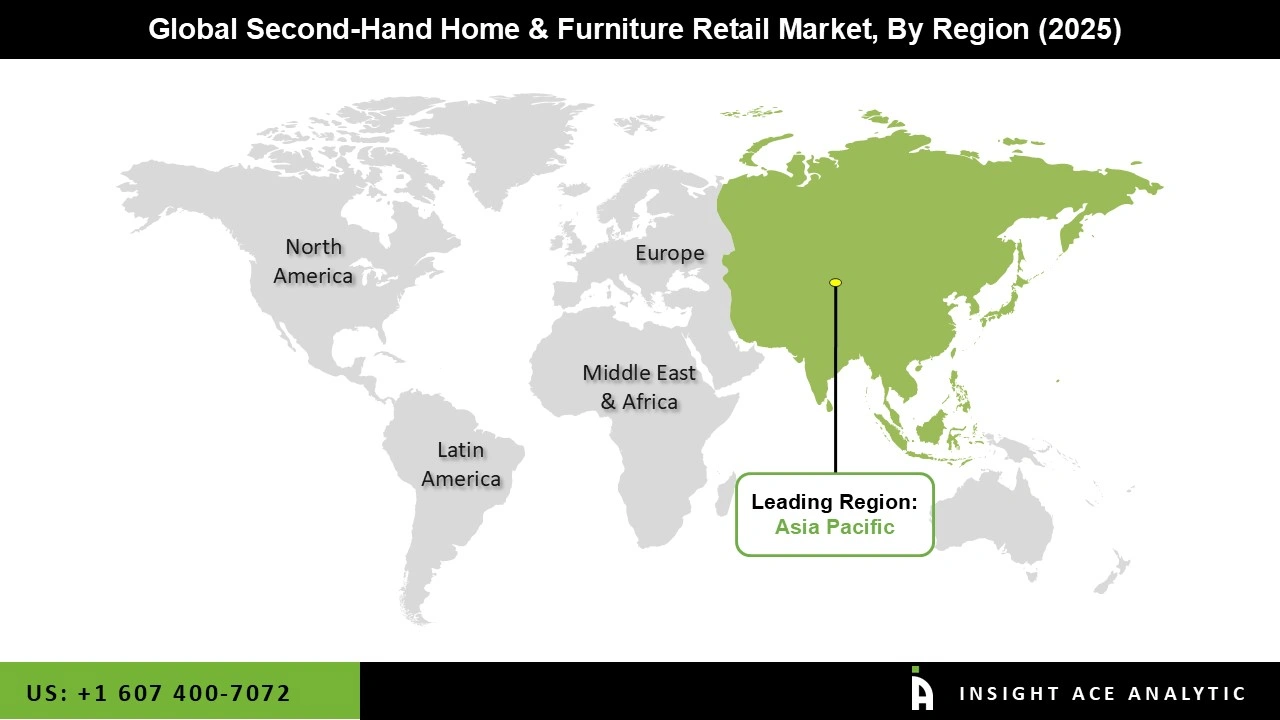
The rapid growth of e-commerce, mobile apps, and social commerce platforms has significantly improved accessibility, price transparency, and trust in second-hand furniture transactions. Organized players offering refurbishment, quality assurance, logistics, and doorstep delivery have enhanced customer confidence and professionalized the market. Rising awareness of sustainability, waste reduction, and circular economy principles has also supported demand, positioning Asia-Pacific as the leading and fastest-growing region in the global second-hand home and furniture retail market.
Key Developments :
• In March 2025, Salvation Army thrift operations benefited from the broader second-hand retail boom, supported by increased consumer interest in value-driven and sustainable shopping. The organization experienced higher donation volumes and improved in-store foot traffic as economic caution and circular consumption trends influenced purchasing behavior.
Second-Hand Home and Furniture Retail Market Report Scope :
| Report Attribute | Specifications |
| Growth Rate CAGR | CAGR of 18.3% from 2026 to 2035 |
| Quantitative Units | Representation of revenue in US$ Bn and CAGR from 2026 to 2035 |
| Historic Year | 2022 to 2025 |
| Forecast Year | 2026-2035 |
| Report Coverage | The forecast of revenue, the position of the company, the competitive market structure, growth prospects, and trends |
| Segments Covered | By Product Type, Sales Channel and By Region |
| Regional Scope | North America; Europe; Asia Pacific; Latin America; Middle East and Africa |
| Country Scope | U.S.; Canada; U.K.; Germany; China; India; Japan; Brazil; Mexico; The UK; France; Italy; Spain; China; Japan; India; South Korea; Southeast Asia; South Korea; Southeast Asia |
| Competitive Landscape | Goodwill, Salvation Army, Savers, Geo Holdings, Cash Converters, BHF Furniture, Emmaüs, ThredUp (limited furniture), The RealReal (luxury furniture), Kaiyo, AptDeco, Chairish, 1stDibs, IKEA Buy Back and Resell, Savers (online + stores), Goodwill (online + stores) |
| Customization Scope | Free customization report with the procurement of the report, Modifications to the regional and segment scope. Geographic competitive landscape. |
| Pricing and Available Payment Methods | Explore pricing alternatives that are customized to your particular study requirements. |
Segmentation of Second-Hand Home and Furniture Retail Market :
Second-Hand Home and Furniture Retail Market, By Product Type -
- Living Room Furniture
- Bedroom Furniture
- Dining and Kitchen Furniture
- Home Office Furniture
- Outdoor Furniture
- Home Décor
- Refurbished Furniture
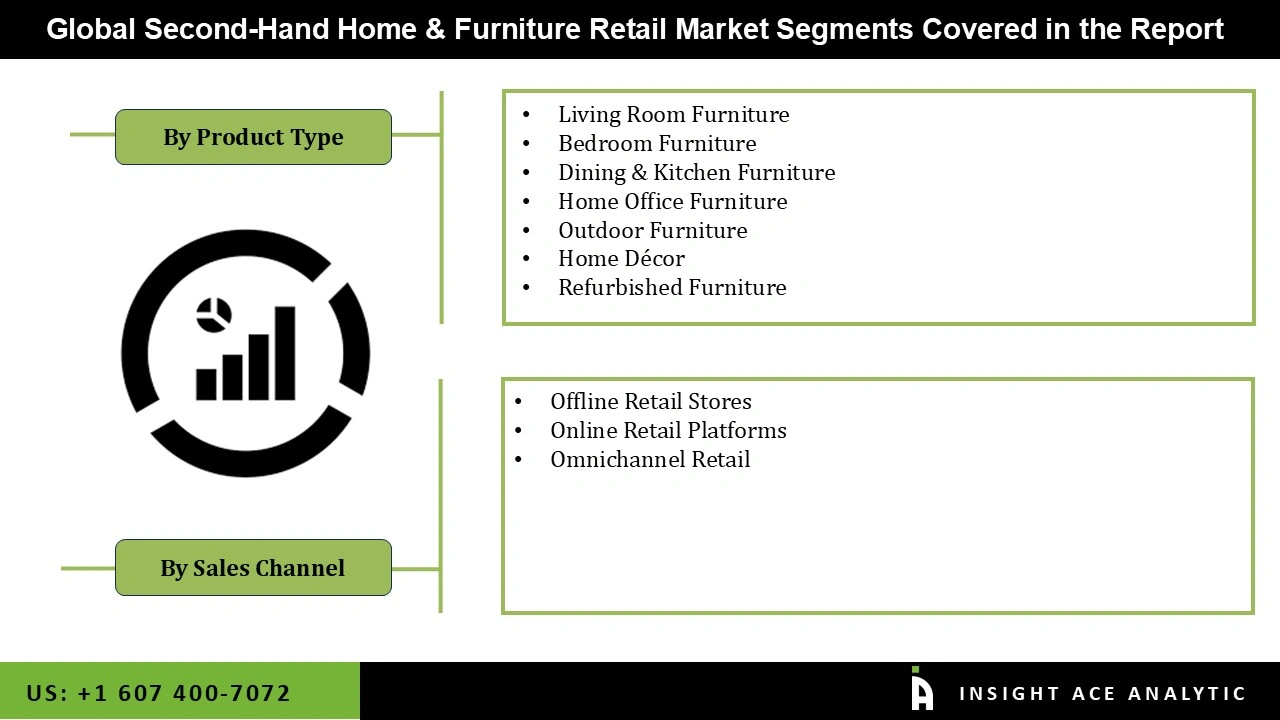
Second-Hand Home and Furniture Retail Market, By Sales Channel-
- Offline Retail Stores
- Online Retail Platforms
- Omnichannel Retail
Second-Hand Home and Furniture Retail Market, By Region-
- North America-
- The US
- Canada
- Europe-
- Germany
- The UK
- France
- Italy
- Spain
- Rest of Europe
- Asia-Pacific-
- China
- Japan
- India
- South Korea
- South East Asia
- Rest of Asia Pacific
- Latin America-
- Brazil
- Argentina
- Mexico
- Rest of Latin America
- Middle East & Africa-
- GCC Countries
- South Africa
- Rest of Middle East and Africa
Research Design and Approach
This study employed a multi-step, mixed-method research approach that integrates:
- Secondary research
- Primary research
- Data triangulation
- Hybrid top-down and bottom-up modelling
- Forecasting and scenario analysis
This approach ensures a balanced and validated understanding of both macro- and micro-level market factors influencing the market.
Secondary Research
Secondary research for this study involved the collection, review, and analysis of publicly available and paid data sources to build the initial fact base, understand historical market behaviour, identify data gaps, and refine the hypotheses for primary research.
Sources Consulted
Secondary data for the market study was gathered from multiple credible sources, including:
- Government databases, regulatory bodies, and public institutions
- International organizations (WHO, OECD, IMF, World Bank, etc.)
- Commercial and paid databases
- Industry associations, trade publications, and technical journals
- Company annual reports, investor presentations, press releases, and SEC filings
- Academic research papers, patents, and scientific literature
- Previous market research publications and syndicated reports
These sources were used to compile historical data, market volumes/prices, industry trends, technological developments, and competitive insights.

Primary Research
Primary research was conducted to validate secondary data, understand real-time market dynamics, capture price points and adoption trends, and verify the assumptions used in the market modelling.
Stakeholders Interviewed
Primary interviews for this study involved:
- Manufacturers and suppliers in the market value chain
- Distributors, channel partners, and integrators
- End-users / customers (e.g., hospitals, labs, enterprises, consumers, etc., depending on the market)
- Industry experts, technology specialists, consultants, and regulatory professionals
- Senior executives (CEOs, CTOs, VPs, Directors) and product managers
Interview Process
Interviews were conducted via:
- Structured and semi-structured questionnaires
- Telephonic and video interactions
- Email correspondences
- Expert consultation sessions
Primary insights were incorporated into demand modelling, pricing analysis, technology evaluation, and market share estimation.
Data Processing, Normalization, and Validation
All collected data were processed and normalized to ensure consistency and comparability across regions and time frames.
The data validation process included:
- Standardization of units (currency conversions, volume units, inflation adjustments)
- Cross-verification of data points across multiple secondary sources
- Normalization of inconsistent datasets
- Identification and resolution of data gaps
- Outlier detection and removal through algorithmic and manual checks
- Plausibility and coherence checks across segments and geographies
This ensured that the dataset used for modelling was clean, robust, and reliable.
Market Size Estimation and Data Triangulation
Bottom-Up Approach
The bottom-up approach involved aggregating segment-level data, such as:
- Company revenues
- Product-level sales
- Installed base/usage volumes
- Adoption and penetration rates
- Pricing analysis
This method was primarily used when detailed micro-level market data were available.

Top-Down Approach
The top-down approach used macro-level indicators:
- Parent market benchmarks
- Global/regional industry trends
- Economic indicators (GDP, demographics, spending patterns)
- Penetration and usage ratios
This approach was used for segments where granular data were limited or inconsistent.
Hybrid Triangulation Approach
To ensure accuracy, a triangulated hybrid model was used. This included:
- Reconciling top-down and bottom-up estimates
- Cross-checking revenues, volumes, and pricing assumptions
- Incorporating expert insights to validate segment splits and adoption rates
This multi-angle validation yielded the final market size.
Forecasting Framework and Scenario Modelling
Market forecasts were developed using a combination of time-series modelling, adoption curve analysis, and driver-based forecasting tools.
Forecasting Methods
- Time-series modelling
- S-curve and diffusion models (for emerging technologies)
- Driver-based forecasting (GDP, disposable income, adoption rates, regulatory changes)
- Price elasticity models
- Market maturity and lifecycle-based projections
Scenario Analysis
Given inherent uncertainties, three scenarios were constructed:
- Base-Case Scenario: Expected trajectory under current conditions
- Optimistic Scenario: High adoption, favourable regulation, strong economic tailwinds
- Conservative Scenario: Slow adoption, regulatory delays, economic constraints
Sensitivity testing was conducted on key variables, including pricing, demand elasticity, and regional adoption.
Request Customization
Add countries, segments, company profiles, or extend forecast — free 10% customization with purchase.
Customize This Report →Enquire Before Buying
Speak with our analyst team about scope, methodology, pricing, or deliverable formats.
Enquire Now →Frequently Asked Questions
Second-Hand Home and Furniture Retail Market is expected to grow at a 18.3% CAGR during the forecast period for 2026 to 2035
Goodwill, Salvation Army, Savers, Geo Holdings, Cash Converters, BHF Furniture, Emmaüs, ThredUp (limited furniture), The RealReal (luxury furniture), Kaiyo, AptDeco, Chairish, 1stDibs, IKEA Buy Back and Resell, Savers (online + stores), Goodwill (online + stores) and Others.
Second-Hand Home and Furniture Retail Market is segmented in Product Type (Living Room Furniture, Bedroom Furniture, Dining & Kitchen Furniture, Home Office Furniture, Outdoor Furniture, Home Décor, Refurbished Furniture), by Sales Channel (Offline Retail Stores, Online Retail Platforms, Omnichannel Retail) and other.
North America region is leading the Second-Hand Home and Furniture Retail Market.