Photodynamic Therapy Market Size, Trend, Forecast Report 2026 to 2035
What is Photodynamic Therapy Market Size?
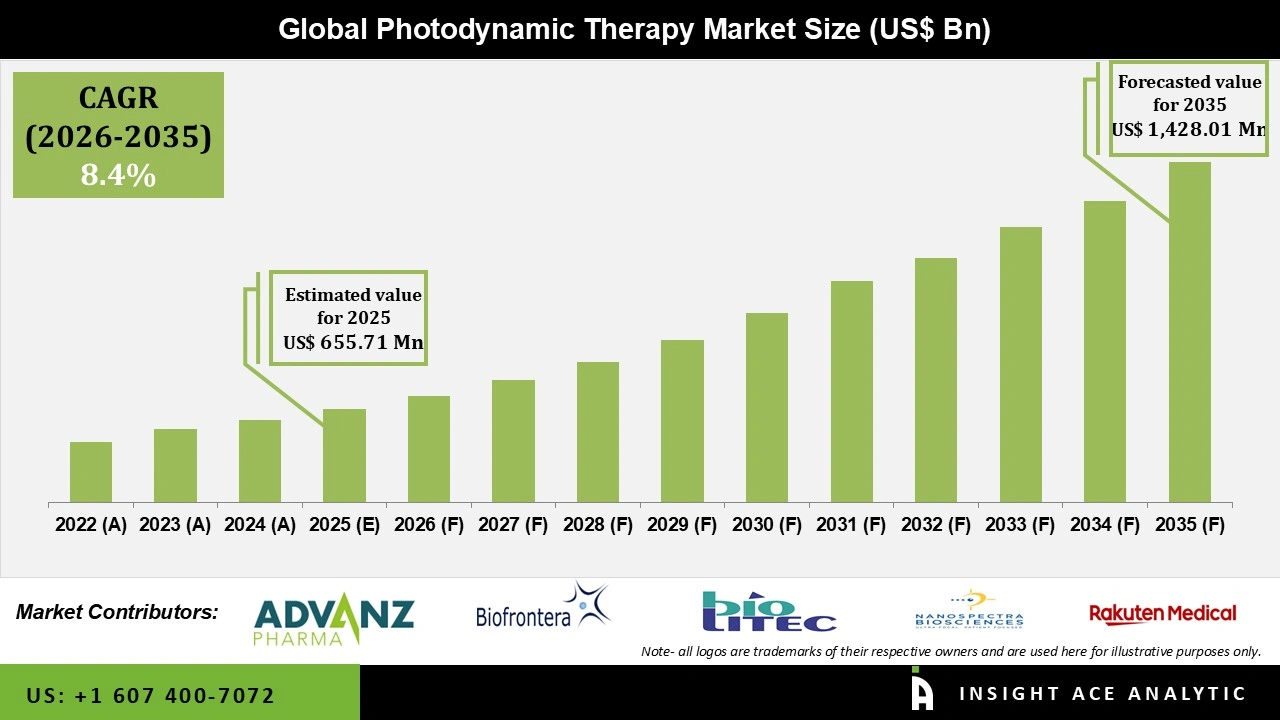
Global Photodynamic Therapy Market Size is valued at USD 655.71 Mn in 2025 and is predicted to reach USD 1,428.02 Bn by the year 2035 at a 8.4% CAGR during the forecast period for 2026 to 2035.
Photodynamic Therapy Market Size, Share & Trends Analysis Distribution By Target Indication (Actinic Keratosis, Prostate Cancer, Age-related Macular Degeneration, Head and Neck Squamous Cell Carcinoma, Basal Cell Carcinoma, Port Wine Stain, Barrett’s Esophagus, Esophageal Cancer, Endobronchial Cancer, Lung Cancer, Bowen’s Disease, Brain Cancer, Bladder Cancer, T-cell Lymphoma, Urothelial Cancer), By Therapeutic Area (Oncological Disorders, Dermatological Disorders, Ophthalmic Disorders) and Segment Forecasts, 2026 to 2035.
Photodynamic therapy (PDT) is attracting considerable interest owing to growing adoption of minimally invasive techniques for treating various forms of cancers, skin diseases, and eye diseases by healthcare institutions. The procedure entails the use of a photosensitizer drug together with a source of light that kills disease-causing cells without harming healthy tissue. As a result, it has been seen as a solution to managing such medical conditions as actinic keratosis, basal cell carcinoma, cancers of the head and neck, Barrett’s esophagus, bladder cancer, age-related macular degeneration, and others. As healthcare institutions strive to improve their patients’ well-being while minimizing side effects, more applications of PDT can be anticipated going forward. Among the factors that could contribute to the expansion of the market is the growing incidence of cancer and chronic skin conditions around the world. Increased emphasis on the need for early diagnosis and treatment, combined with a greater inclination towards adopting non-invasive approaches in therapy, is spurring the use of photodynamic therapy. In comparison to traditional methods of treatment like surgery, chemotherapy, and radiation therapy, PDT has several benefits, including minimal scarring, quick recovery time, possibility of re-treatment, and better quality of life.
Further advances in technology are also driving market growth. There are investments in the creation of the next generation photosensitizers, more effective light delivery systems, lasers, fiber optics, and imaging guided treatment systems that increase the effectiveness of treatments. Scientists are studying novel photosensitizers that will offer higher selectivity towards tumors, greater depth of tissue penetration and fewer adverse effects. This is extending the list of possible applications of photodynamic therapy. An important driver of growth will be research and development activity. Clinical trials are being conducted by pharmaceutical and biotechnology companies and hospitals to study the use of PDT for treating cancers and other diseases. There are collaborations between pharmaceutical companies, medical device companies and research organizations that are fostering innovation.
In spite of its bright prospects, this sector will be confronted with certain obstacles. Photodynamic therapy's efficiency can be affected by various issues including penetration depth of the light source, position of the tumor, photosensitive responses, and complication of treatment procedure, among others. Equipment and healthcare specialists trained in conducting such therapies are necessary for effective and safe delivery of PDT, which is another issue affecting widespread introduction of photodynamic therapy in healthcare. In addition, there is a number of other factors such as reimbursement rates, regulations and costs that may hinder more extensive market penetration. However, the market's long-term outlook is expected to be very bright. Growing number of patients with oncological diseases, increasing tendency toward minimally invasive procedures, innovative developments in technology and expanding scope of application areas are likely to continue boosting photodynamic therapy market development in the future.
Competitive Landscape
Which are the Leading Players in the Photodynamic Therapy Market?
- ADVANZ PHARMA
- Biofrontera
- biolitec Pharma
- Luzitin
- Nanospectra Biosciences
- photoatomic
- Rakuten Medical
- Impact Biotech
- Theralase
- Cetuximab Sarotalocan
- Alacare
- Ameluz
- Aminolevulinic Acid
- Foscan (Temoporfin)
- FuMeiDa (Hemoporfin)
- Levulan Kerastick
- Metvixia (Metvix)
- Photofrin
- Verteporfin (Visudyne)
Market Dynamics
Driver
Rising Demand for Minimally Invasive Cancer and Dermatology Treatments
One of the main factors that drives the growth of photodynamic therapy (PDT) market includes the rising trend towards minimally invasive treatment methods. Both doctors and patients prefer treatments that are effective in providing disease management, while being minimally damaging to the patient’s healthy tissues and allowing faster recovery and better outcomes for their health. Due to the mechanism of action and safety of PDT, it becomes increasingly popular as a means of treating different types of cancer, skin diseases, and ophthalmic diseases. The increasing incidences of diseases like actinic keratosis, basal cell carcinoma, head and neck cancer, bladder cancer, Barrett’s esophagus, and age-related macular degeneration also support the development of the market. Moreover, improvements made in photosensitizers, lasers, and light delivery devices increase the effectiveness of the procedure and allow using it for new indications.
Restrain/Challenge
Limited Treatment Penetration and Specialized Infrastructure Requirements
While PDT does have its clinical advantages, there are a number of difficulties associated with it that are likely to impede widespread uptake of the modality. Among these, the need for specialized equipment, expertise, and specific treatment methodologies stands out as one of the most important. The success of photodynamic therapy depends not only on the use of an appropriate photosensitizer but also on effective control over treatment procedures. Moreover, in some cases, the efficiency of photodynamic therapy might depend on specific features of lesions, including their depth and location, as well as the overall characteristics of individual patients. Finally, in some cases, photosensitivity reactions may occur as a side effect of treatment and thus require additional attention on the part of patients and clinicians.
Actinic Keratosis Segment is Expected to Drive the Photodynamic Therapy Market
The segment of actinic keratosis is anticipated to provide a significant boost to the photodynamic therapy market due to the rising cases of skin damage caused by the sun and the prevalence of pre-cancerous skin lesions across the globe. The adoption of photodynamic therapy for treating actinic keratosis is rising because this treatment helps in targeting several lesions with outstanding aesthetic results when compared with traditional modes of treatment. An increase in the prevalence of skin cancer, increased visits to dermatologists, and a growing preference for less invasive treatment alternatives are some factors driving the growth of this market segment.
Oncological Disorders Segment is Expected to Drive the Photodynamic Therapy Market
The oncological disorders segment is projected to contribute substantially to the total photodynamic therapy market as research on the effectiveness of PDT in oncology continues. Photodynamic therapy has started being used in treating head and neck squamous cell carcinoma, esophageal cancer, endobronchial cancer, lung cancer, bladder cancer, brain cancer, T-cell lymphoma, and urothelial cancer. The selective elimination of tumor cells and preservation of nearby healthy cells makes PDT a preferable treatment choice, especially when surgery is not an option. Clinical studies, increased regulatory approvals, and investment in innovation within oncology are likely to fuel the development of the oncological disorders segment over the forecast period.
Why North America Leads the Photodynamic Therapy Market?
North America leads the photodynamic therapy market due to its advanced healthcare infrastructure, strong oncology and dermatology treatment landscape, and significant investment in medical innovation. The region is home to numerous pharmaceutical companies, biotechnology firms, medical device manufacturers, and research institutions actively involved in developing and commercializing photodynamic therapy products. High awareness of cancer screening and skin disease management, favorable reimbursement frameworks, and strong clinical research activity continue to support market growth.
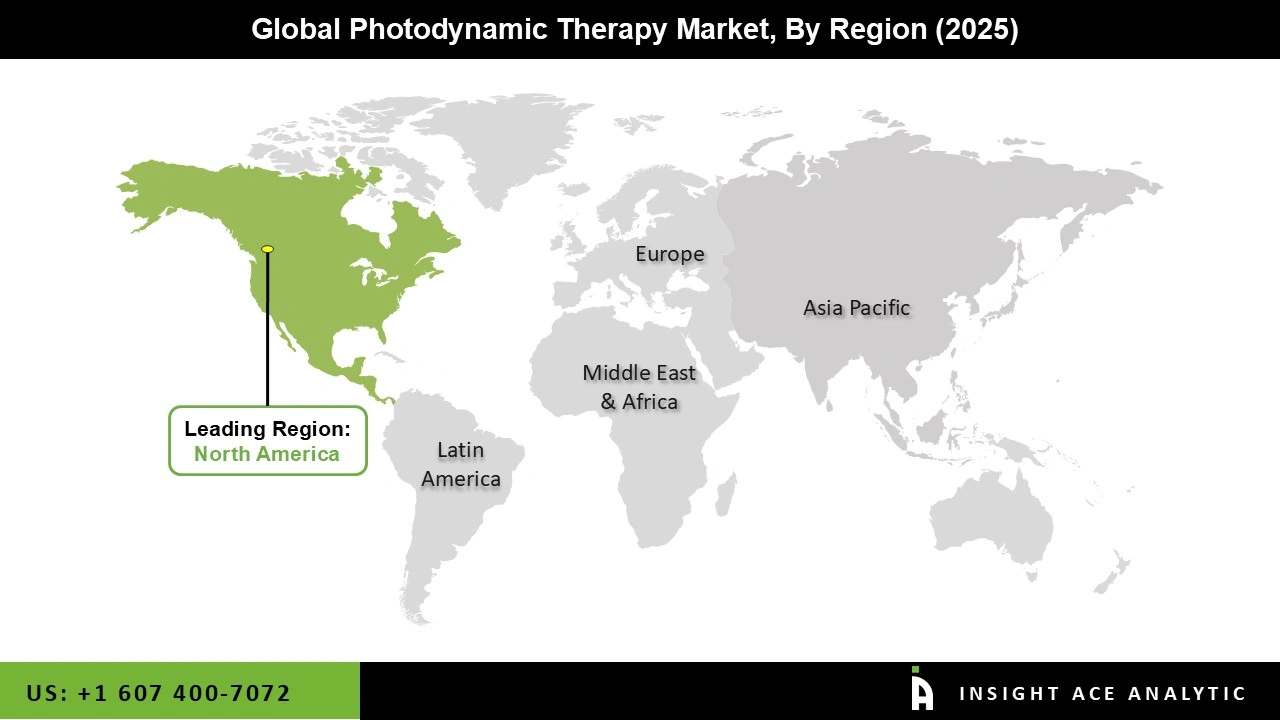
The United States, in particular, has witnessed increasing adoption of PDT for dermatological, oncological, and ophthalmic applications, supported by the availability of advanced treatment technologies and skilled healthcare professionals. In addition, ongoing research into next-generation photosensitizers and targeted light delivery systems is further strengthening the region's market position. With its robust healthcare ecosystem and continued investment in innovative treatment approaches, North America is expected to maintain its leadership in the global photodynamic therapy market.
Key Developments-
• In March 2025, Rakuten Medical continued advancing the commercialization and clinical expansion of its photoimmunotherapy platform based on Cetuximab Sarotalocan, strengthening its presence in targeted cancer treatment and expanding research activities across multiple oncology indications.
• In January 2025, Biofrontera reported ongoing efforts to expand the clinical adoption of its photodynamic therapy portfolio, including Ameluz®, through increased physician outreach, market expansion initiatives, and continued development of dermatological treatment applications.
Photodynamic Therapy Market Report Scope:
| Report Attribute | Specifications |
| Market size value in 2025 | USD 655.71 Mn |
| Revenue forecast in 2035 | USD 1,428.02 Mn |
| Growth Rate CAGR | CAGR of 8.4% from 2026 to 2035 |
| Quantitative Units | Representation of revenue in US$ Bn and CAGR from 2026 to 2035 |
| Historic Year | 2022 to 2025 |
| Forecast Year | 2026-2035 |
| Report Coverage | The forecast of revenue, the position of the company, the competitive market structure, growth prospects, and trends |
| Segments Covered | Target Indication, Therapeutic Area and By Region |
| Regional Scope | North America; Europe; Asia Pacific; Latin America; Middle East & Africa |
| Country Scope | U.S.; Canada; U.K.; Germany; China; India; Japan; Brazil; Mexico; The UK; France; Italy; Spain; China; Japan; India; South Korea; Southeast Asia; South Korea; Southeast Asia |
| Competitive Landscape | ADVANZ PHARMA, Biofrontera, biolitec Pharma, Luzitin, Nanospectra Biosciences, photoatomic, Rakuten Medical, Impact Biotech, Theralase, Cetuximab Sarotalocan, Alacare, Ameluz, Aminolevulinic Acid, Foscan (Temoporfin), FuMeiDa (Hemoporfin), Levulan Kerastick, Metvixia (Metvix), Photofrin, Verteporfin (Visudyne) |
| Customization Scope | Free customization report with the procurement of the report, Modifications to the regional and segment scope. Geographic competitive landscape. |
| Pricing and Available Payment Methods | Explore pricing alternatives that are customized to your particular study requirements. |
Segmentations of Photodynamic Therapy Market :
Photodynamic Therapy Market by Target Indication -
- Actinic Keratosis
- Prostate Cancer
- Age-related Macular Degeneration
- Head and Neck Squamous Cell Carcinoma
- Basal Cell Carcinoma
- Port Wine Stain
- Barrett’s Esophagus
- Esophageal Cancer
- Endobronchial Cancer
- Lung Cancer
- Bowen’s Disease
- Brain Cancer
- Bladder Cancer
- T-cell Lymphoma
- Urothelial Cancer
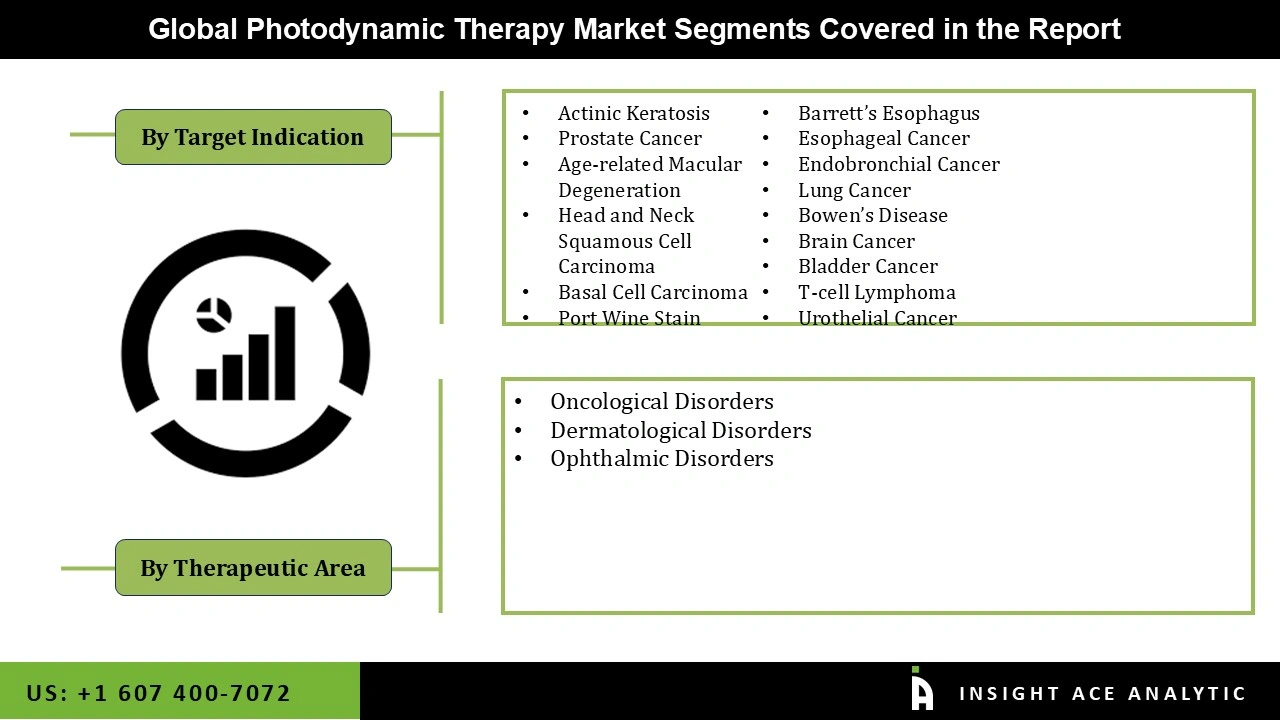
Photodynamic Therapy Market by Therapeutic Area -
- Oncological Disorders
- Dermatological Disorders
- Ophthalmic Disorders
Photodynamic Therapy Market by Region-
- North America-
- The US
- Canada
- Europe-
- Germany
- The UK
- France
- Italy
- Spain
- Rest of Europe
- Asia-Pacific-
- China
- Japan
- India
- South Korea
- South East Asia
- Rest of Asia Pacific
- Latin America-
- Brazil
- Argentina
- Mexico
- Rest of Latin America
- Middle East and Africa-
- GCC Countries
- South Africa
- Rest of Middle East and Africa
Research Design and Approach
This study employed a multi-step, mixed-method research approach that integrates:
- Secondary research
- Primary research
- Data triangulation
- Hybrid top-down and bottom-up modelling
- Forecasting and scenario analysis
This approach ensures a balanced and validated understanding of both macro- and micro-level market factors influencing the market.
Secondary Research
Secondary research for this study involved the collection, review, and analysis of publicly available and paid data sources to build the initial fact base, understand historical market behaviour, identify data gaps, and refine the hypotheses for primary research.
Sources Consulted
Secondary data for the market study was gathered from multiple credible sources, including:
- Government databases, regulatory bodies, and public institutions
- International organizations (WHO, OECD, IMF, World Bank, etc.)
- Commercial and paid databases
- Industry associations, trade publications, and technical journals
- Company annual reports, investor presentations, press releases, and SEC filings
- Academic research papers, patents, and scientific literature
- Previous market research publications and syndicated reports
These sources were used to compile historical data, market volumes/prices, industry trends, technological developments, and competitive insights.

Primary Research
Primary research was conducted to validate secondary data, understand real-time market dynamics, capture price points and adoption trends, and verify the assumptions used in the market modelling.
Stakeholders Interviewed
Primary interviews for this study involved:
- Manufacturers and suppliers in the market value chain
- Distributors, channel partners, and integrators
- End-users / customers (e.g., hospitals, labs, enterprises, consumers, etc., depending on the market)
- Industry experts, technology specialists, consultants, and regulatory professionals
- Senior executives (CEOs, CTOs, VPs, Directors) and product managers
Interview Process
Interviews were conducted via:
- Structured and semi-structured questionnaires
- Telephonic and video interactions
- Email correspondences
- Expert consultation sessions
Primary insights were incorporated into demand modelling, pricing analysis, technology evaluation, and market share estimation.
Data Processing, Normalization, and Validation
All collected data were processed and normalized to ensure consistency and comparability across regions and time frames.
The data validation process included:
- Standardization of units (currency conversions, volume units, inflation adjustments)
- Cross-verification of data points across multiple secondary sources
- Normalization of inconsistent datasets
- Identification and resolution of data gaps
- Outlier detection and removal through algorithmic and manual checks
- Plausibility and coherence checks across segments and geographies
This ensured that the dataset used for modelling was clean, robust, and reliable.
Market Size Estimation and Data Triangulation
Bottom-Up Approach
The bottom-up approach involved aggregating segment-level data, such as:
- Company revenues
- Product-level sales
- Installed base/usage volumes
- Adoption and penetration rates
- Pricing analysis
This method was primarily used when detailed micro-level market data were available.

Top-Down Approach
The top-down approach used macro-level indicators:
- Parent market benchmarks
- Global/regional industry trends
- Economic indicators (GDP, demographics, spending patterns)
- Penetration and usage ratios
This approach was used for segments where granular data were limited or inconsistent.
Hybrid Triangulation Approach
To ensure accuracy, a triangulated hybrid model was used. This included:
- Reconciling top-down and bottom-up estimates
- Cross-checking revenues, volumes, and pricing assumptions
- Incorporating expert insights to validate segment splits and adoption rates
This multi-angle validation yielded the final market size.
Forecasting Framework and Scenario Modelling
Market forecasts were developed using a combination of time-series modelling, adoption curve analysis, and driver-based forecasting tools.
Forecasting Methods
- Time-series modelling
- S-curve and diffusion models (for emerging technologies)
- Driver-based forecasting (GDP, disposable income, adoption rates, regulatory changes)
- Price elasticity models
- Market maturity and lifecycle-based projections
Scenario Analysis
Given inherent uncertainties, three scenarios were constructed:
- Base-Case Scenario: Expected trajectory under current conditions
- Optimistic Scenario: High adoption, favourable regulation, strong economic tailwinds
- Conservative Scenario: Slow adoption, regulatory delays, economic constraints
Sensitivity testing was conducted on key variables, including pricing, demand elasticity, and regional adoption.
Request Customization
Add countries, segments, company profiles, or extend forecast — free 10% customization with purchase.
Customize This Report →Enquire Before Buying
Speak with our analyst team about scope, methodology, pricing, or deliverable formats.
Enquire Now →Frequently Asked Questions
Photodynamic Therapy Market Size is valued at USD 655.71 Mn in 2025 and is predicted to reach USD 1,428.02 Bn by the year 2035
The Photodynamic Therapy Market is expected to grow at a 8.4% CAGR during the forecast period for 2026 to 2035
ADVANZ PHARMA, Biofrontera, biolitec Pharma, Luzitin, Nanospectra Biosciences, photoatomic, Rakuten Medical, Impact Biotech, Theralase, Cetuximab Sarotalocan, Alacare, Ameluz, Aminolevulinic Acid, Foscan (Temoporfin), FuMeiDa (Hemoporfin), Levulan Kerastick, Metvixia (Metvix), Photofrin, Verteporfin (Visudyne) and others.
Photodynamic Therapy Market is segmented into Target Indication, Therapeutic Area and other.
North America region is leading the Photodynamic Therapy Market.