Pheromone Based Biological Pest Control Market Size, Share, Trend, Revenue Report 2026 to 2035
What is Pheromone Based Biological Pest Control Market Size?
Pheromone Based Biological Pest Control Market Size is predicted grow at a 9.5% CAGR during the forecast period for 2026 to 2035.
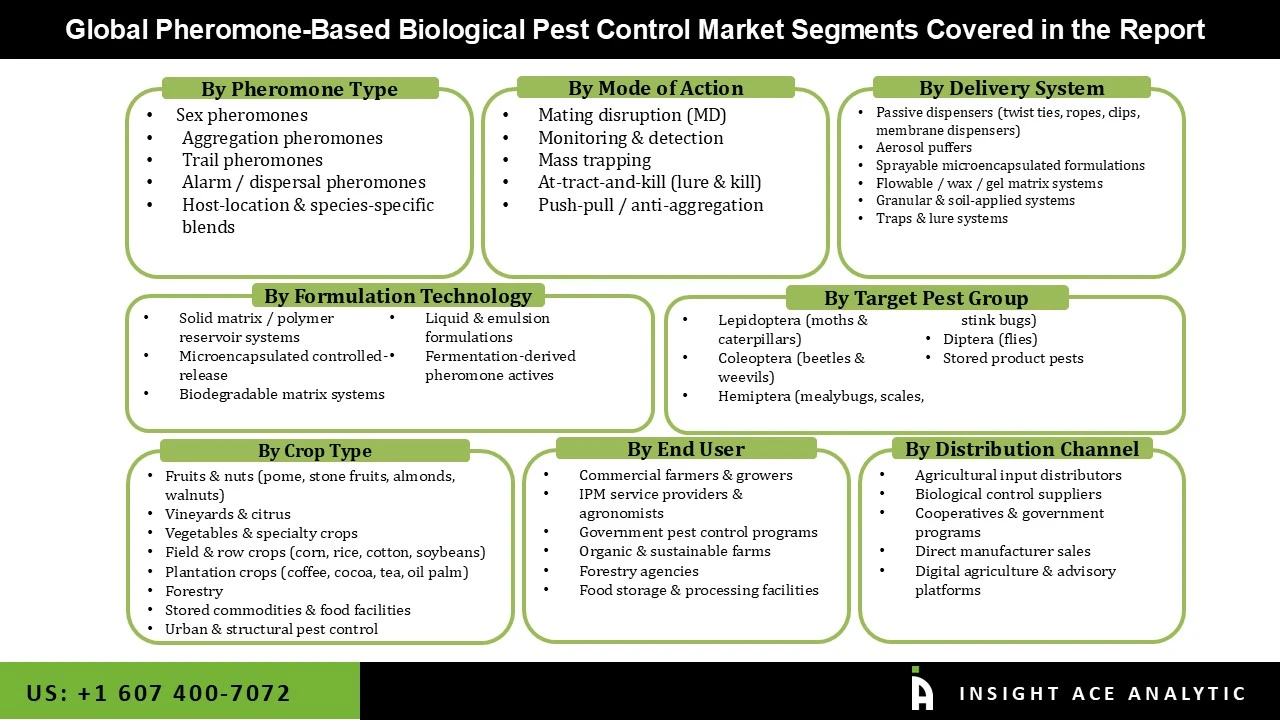
Pheromone Based Biological Pest Control Market Size, Share & Trends Analysis Distribution by Pheromone Type (Sex pheromones, Aggregation pheromones, Trail pheromones, Alarm / dispersal pheromone, Host-location & species-specific blends), By Mode of Action (Mating disruption (MD), Monitoring & detection, Mass trapping, At-tract-and-kill (lure & kill), Push-pull / anti-aggregation), By Delivery System / Application Technology (Passive dispensers (twist ties, ropes, clips, membrane dispensers), Aerosol puffers, Sprayable microencapsulated formulations, Flowable / wax / gel matrix systems, Granular & soil-applied systems, Traps & lure systems), By Formulation Technology (Solid matrix / polymer reservoir systems, Microencapsulated controlled-release, Biodegradable matrix systems, Liquid & emulsion formulations, Fermentation-derived pheromone actives), By Target Pest Group (Lepidoptera (moths & caterpillars), Coleoptera (beetles & weevils), Hemiptera (mealybugs, scales, stink bugs), Diptera (flies), Stored product pests), By Crop Type / Application Sector, By Plantation crops, By End User, By Distribution Channel and Segment Forecasts, 2026 to 2035
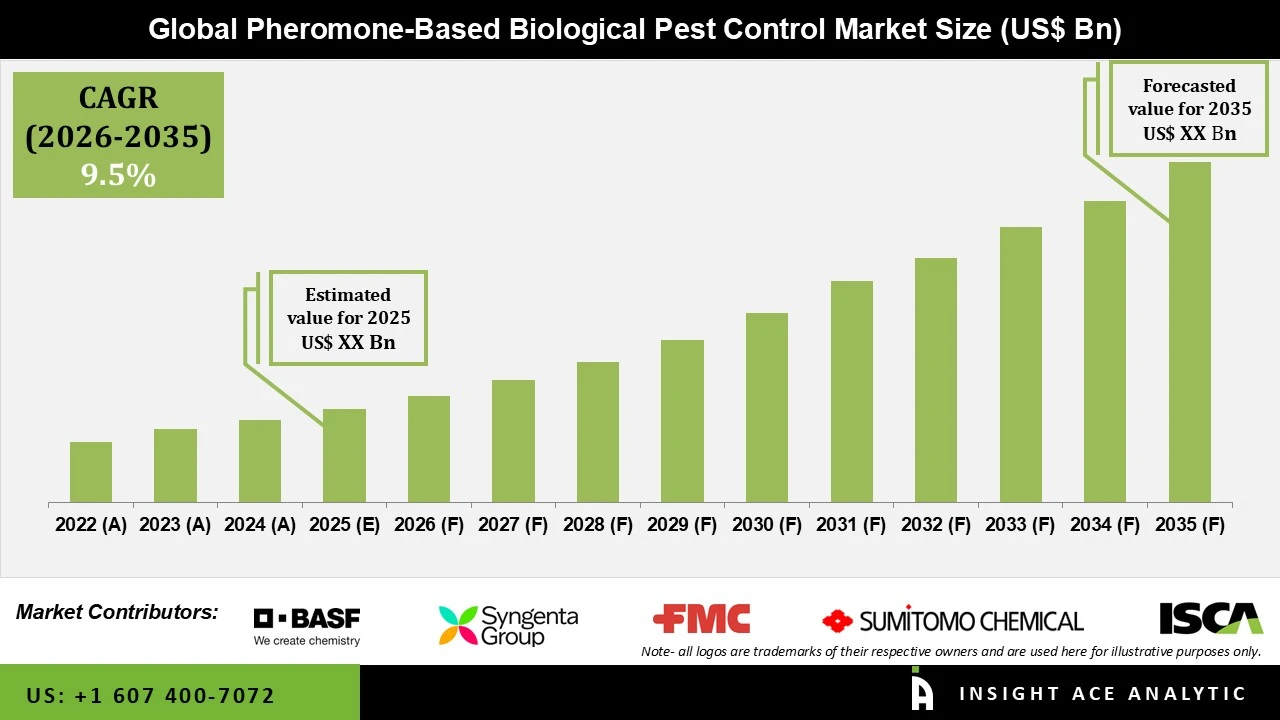
Pheromone-based biological pest control is a sustainable, species-specific method within integrated pest management (IPM) that utilizes synthetic insect pheromones primarily sex attractants to disrupt mating, monitor populations, or trap pests. The pheromone-based biological pest control market has turned out to be an important sub-market in the overall agricultural and crop protection sector, owing to the increasing need for sustainable and eco-friendly approaches to pest control. Pheromone-based biological pest control utilizes the natural chemical signals, or pheromones, of organisms to track, confuse, or control insect pest populations.
These species-specific molecules are produced and used to capture pests for tracking or large-scale removal, confuse mating patterns through confusion methods, or attract insects away from agricultural crops, thus reducing damage without harming beneficial organisms. Unlike traditional chemical pesticides, which tend to target non-target species and leave toxic residues, pheromone-based approaches are precise, residue-free, and environmentally safe pest control. Pheromones have been found to be more specific, easier to apply in the field, and more compatible with integrated pest management (IPM) programs compared to other biological approaches, such as predatory insects or microbial agents.
Pheromone-related products have numerous uses in agriculture (fruits, vegetables, and grains), horticulture, viticulture for high-value crops, forestry plantations, greenhouse farming, and pest surveillance programs that aid in IPM strategies. Market development is mainly fueled by the growing demand for residue-free produce, the adoption of sustainable agricultural practices, and government regulations that restrict the use of synthetic pesticides due to environmental and health hazards. Nevertheless, factors such as higher setup costs, ineffectiveness for some pest types, and the need for technical expertise in application may impede the development of the market. The market is poised for growth as the global agricultural sector moves towards precision and sustainable pest control methods.
Competitive Landscape
Which are the Leading Players in the Pheromone-Based Biological Pest Control Market?
• BASF SE
• Bayer CropScience
• Syngenta Group
• FMC Corporation
• Sumitomo Chemical Co., Ltd.
• Shin-Etsu Chemical Co., Ltd.
• Suterra LLC
• ISCA Technologies
• Provivi Inc.
• Trécé, Inc.
• Russell IPM Ltd.
• M2i Life Sciences
• Pacific Biocontrol
• Scentry Biologicals
• Pherobank B.V.
• Bedoukian Research Inc.
• Koppert Biological Systems
• Biobest Group NV
• AgriSense-BCS Ltd.
• Syngenta Bioline
• CBC (Europe) S.r.l.
• BioPhero (FMC subsidiary)
• PheroSyn Ltd.
• Ecophero
• Novagrica Hellas SA
• Crop IQ Technology Ltd.
Market Dynamics
Driver
Growing Demand for Sustainable and Residue-Free Agriculture
The key factor propelling the pheromone-based biological pest control market is the growing demand for sustainable and residue-free farming practices across the globe. The rising awareness level of consumers regarding food safety, along with the strict government regulations against the use of synthetic pesticides, which are harmful to the environment and human health, has led to a significant rise in the demand for eco-friendly pest control methods. Farmers are increasingly turning to pheromone-based pest control products due to their species-specific nature, lack of toxic residues, low chances of pest resistance, and effective integration with IPM strategies, making them a safe and reliable alternative to chemical pesticides.
Restrain/Challenge
High Initial Cost and Limited Awareness
The most significant factor that hinders the growth of the pheromone-based biological pest control market is the higher initial investment associated with products and a lack of awareness among small and medium-scale farmers. Compared to traditional chemical pesticides, pheromone-based products may involve higher initial investment in dispensers, traps, and monitoring systems, which may act as a deterrent to adoption, especially in cost-sensitive markets. In addition to this, the implementation of these products also requires technical knowledge and awareness of proper implementation in Integrated Pest Management (IPM) programs, which may not be adequate among farmers.
Sex Pheromones Segment is Expected to Drive the Pheromone-Based Biological Pest Control Market
Sex pheromones are anticipated to propel the pheromone-based biological pest control market, as they currently possess the largest market share and are most widely used. Sex pheromones are widely employed in mating disruption and monitoring strategies to manage key agricultural pests such as moths and borers of fruits, vegetables, and field crops. Their high species specificity, established efficacy in the field, and strong IPM system integration make them more commercially attractive than aggregation, trail, alarm/dispersal pheromones, and host-location pheromone blends, which have been used on a relatively smaller scale. Thus, their wide applicability and support for eco-friendly approaches to pest control make sex pheromones the most prominent and rapidly expanding segment of the market.
Attract-and-Kill (Lure & Kill) Segment is Growing at the Highest Rate in the Pheromone-Based Biological Pest Control Market
Attract-and-Kill (Lure & Kill) is anticipated to register the highest growth rate in the pheromone-based biological pest control market, as it leverages the species-specific attraction of pheromones along with a specific control agent to efficiently suppress pest populations while using a minimal amount of chemicals. Compared to conventional mating disruption and monitoring strategies, this strategy uses lower amounts of pheromones, provides faster and more visible outcomes, and is more easily adoptable by farmers. Increasing interest in precision agriculture, reduced pesticide use, and eco-friendly pest control practices is further fueling the adoption of this strategy, making the attract-and-kill segment the fastest-growing in the market.
Why North America Led the Pheromone-Based Biological Pest Control Market?
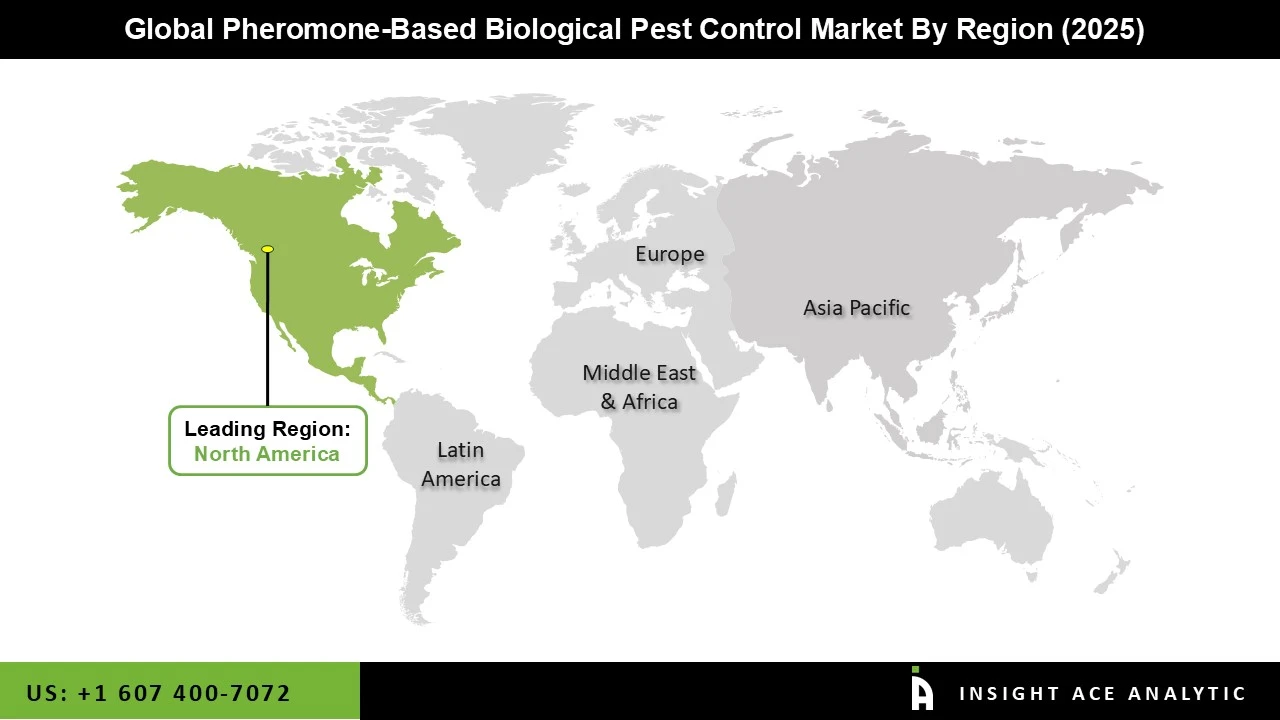
North America is currently driving the pheromone-based biological pest control market, mainly because of its highly developed agricultural systems, widespread adoption of Integrated Pest Management (IPM) strategies, and strict government regulations against the use of chemical pesticides. North America, especially the United States, has a well-developed commercial agricultural system for high-value crops like fruits, vegetables, and nuts, where pheromone-based mating disruption and monitoring technologies are already widely adopted. Moreover, the region’s highly developed R&D infrastructure, presence of major market players, favorable government policies for sustainable agriculture, and high awareness among farmers about the production of residue-free food products are also responsible for the leading market share of North America.
Key Development
November 2025: Provivi and Andermatt Group partnered to develop and commercialize pheromone-based pest control solutions in East Africa. The collaboration targets Fall Armyworm in corn and False Codling Moth in avocado, peppers, citrus, and cut flowers across Kenya, Tanzania, Uganda, Rwanda, Djibouti, and Burundi.
Pheromone-Based Biological Pest Control Market Report Scope:
| Report Attribute | Specifications |
| Market size value in 2025 | USD XX Bn |
| Revenue forecast in 2035 | USD XX Bn |
| Growth Rate CAGR | CAGR of XX% from 2026 to 2035 |
| Quantitative Units | Representation of revenue in US$ Bn and CAGR from 2026 to 2035 |
| Historic Year | 2021 to 2025 |
| Forecast Year | 2026-2035 |
| Report Coverage | The forecast of revenue, the position of the company, the competitive market structure, growth prospects, and trends |
| Segments Covered | Pheromone Type, Mode of Action, Delivery System / Application Technology, Formulation Technology, Target Pest Group, Crop Type / Application Sector, End User, Distribution Channel and By Region |
| Regional Scope | North America; Europe; Asia Pacific; Latin America; Middle East & Africa |
| Country Scope | U.S.; Canada; U.K.; Germany; China; India; Japan; Brazil; Mexico; The UK; France; Italy; Spain; China; Japan; India; South Korea; Southeast Asia; South Korea; Southeast Asia |
| Competitive Landscape | BASF SE, Bayer CropScience, Syngenta Group, FMC Corporation, Sumitomo Chemical Co., Ltd., Shin-Etsu Chemical Co., Ltd., Suterra LLC, ISCA Technologies, Provivi Inc., Trécé, Inc., Russell IPM Ltd., M2i Life Sciences, Pacific Biocontrol, Scentry Biologicals, Pherobank B.V., Bedoukian Research Inc., Koppert Biological Systems, Biobest Group NV, AgriSense-BCS Ltd. |
| Customization Scope | Free customization report with the procurement of the report, Modifications to the regional and segment scope. Geographic competitive landscape. |
| Pricing and Available Payment Methods | Explore pricing alternatives that are customized to your particular study requirements. |
Market Segmentation:
Pheromone-Based Biological Pest Control Market by Pheromone Type -
• Sex pheromones
• Aggregation pheromones
• Trail pheromones
• Alarm / dispersal pheromones
• Host-location & species-specific blends
Pheromone-Based Biological Pest Control Market by Mode of Action -
• Mating disruption (MD)
• Monitoring & detection
• Mass trapping
• At-tract-and-kill (lure & kill)
• Push-pull / anti-aggregation
Pheromone-Based Biological Pest Control Market by Delivery System / Application Technology -
• Passive dispensers (twist ties, ropes, clips, membrane dispensers)
• Aerosol puffers
• Sprayable microencapsulated formulations
• Flowable / wax / gel matrix systems
• Granular & soil-applied systems
• Traps & lure systems
Pheromone-Based Biological Pest Control Market by Formulation Technology -
• Solid matrix / polymer reservoir systems
• Microencapsulated controlled-release
• Biodegradable matrix systems
• Liquid & emulsion formulations
• Fermentation-derived pheromone actives
Pheromone-Based Biological Pest Control Market by Target Pest Group -
• Lepidoptera (moths & caterpillars)
• Coleoptera (beetles & weevils)
• Hemiptera (mealybugs, scales, stink bugs)
• Diptera (flies)
• Stored product pests
Pheromone-Based Biological Pest Control Market by Crop Type / Application Sector -
• Fruits & nuts (pome, stone fruits, almonds, walnuts)
• Vineyards & citrus
• Vegetables & specialty crops
• Field & row crops (corn, rice, cotton, soybeans)
• Plantation crops (coffee, cocoa, tea, oil palm)
• Forestry
• Stored commodities & food facilities
• Urban & structural pest control
Pheromone-Based Biological Pest Control Market by End User -
• Commercial farmers & growers
• IPM service providers & agronomists
• Government pest control programs
• Organic & sustainable farms
• Forestry agencies
• Food storage & processing facilities
Pheromone-Based Biological Pest Control Market by Distribution Channel -
• Agricultural input distributors
• Biological control suppliers
• Cooperatives & government programs
• Direct manufacturer sales
• Digital agriculture & advisory platforms
Pheromone-Based Biological Pest Control Market by Region-
North America-
• The US
• Canada
Europe-
• Germany
• The UK
• France
• Italy
• Spain
• Rest of Europe
Asia-Pacific-
• China
• Japan
• India
• South Korea
• South East Asia
• Rest of Asia Pacific
Latin America-
• Brazil
• Argentina
• Mexico
• Rest of Latin America
Middle East & Africa-
• GCC Countries
• South Africa
• Rest of Middle East and Africa
Research Design and Approach
This study employed a multi-step, mixed-method research approach that integrates:
- Secondary research
- Primary research
- Data triangulation
- Hybrid top-down and bottom-up modelling
- Forecasting and scenario analysis
This approach ensures a balanced and validated understanding of both macro- and micro-level market factors influencing the market.
Secondary Research
Secondary research for this study involved the collection, review, and analysis of publicly available and paid data sources to build the initial fact base, understand historical market behaviour, identify data gaps, and refine the hypotheses for primary research.
Sources Consulted
Secondary data for the market study was gathered from multiple credible sources, including:
- Government databases, regulatory bodies, and public institutions
- International organizations (WHO, OECD, IMF, World Bank, etc.)
- Commercial and paid databases
- Industry associations, trade publications, and technical journals
- Company annual reports, investor presentations, press releases, and SEC filings
- Academic research papers, patents, and scientific literature
- Previous market research publications and syndicated reports
These sources were used to compile historical data, market volumes/prices, industry trends, technological developments, and competitive insights.

Primary Research
Primary research was conducted to validate secondary data, understand real-time market dynamics, capture price points and adoption trends, and verify the assumptions used in the market modelling.
Stakeholders Interviewed
Primary interviews for this study involved:
- Manufacturers and suppliers in the market value chain
- Distributors, channel partners, and integrators
- End-users / customers (e.g., hospitals, labs, enterprises, consumers, etc., depending on the market)
- Industry experts, technology specialists, consultants, and regulatory professionals
- Senior executives (CEOs, CTOs, VPs, Directors) and product managers
Interview Process
Interviews were conducted via:
- Structured and semi-structured questionnaires
- Telephonic and video interactions
- Email correspondences
- Expert consultation sessions
Primary insights were incorporated into demand modelling, pricing analysis, technology evaluation, and market share estimation.
Data Processing, Normalization, and Validation
All collected data were processed and normalized to ensure consistency and comparability across regions and time frames.
The data validation process included:
- Standardization of units (currency conversions, volume units, inflation adjustments)
- Cross-verification of data points across multiple secondary sources
- Normalization of inconsistent datasets
- Identification and resolution of data gaps
- Outlier detection and removal through algorithmic and manual checks
- Plausibility and coherence checks across segments and geographies
This ensured that the dataset used for modelling was clean, robust, and reliable.
Market Size Estimation and Data Triangulation
Bottom-Up Approach
The bottom-up approach involved aggregating segment-level data, such as:
- Company revenues
- Product-level sales
- Installed base/usage volumes
- Adoption and penetration rates
- Pricing analysis
This method was primarily used when detailed micro-level market data were available.

Top-Down Approach
The top-down approach used macro-level indicators:
- Parent market benchmarks
- Global/regional industry trends
- Economic indicators (GDP, demographics, spending patterns)
- Penetration and usage ratios
This approach was used for segments where granular data were limited or inconsistent.
Hybrid Triangulation Approach
To ensure accuracy, a triangulated hybrid model was used. This included:
- Reconciling top-down and bottom-up estimates
- Cross-checking revenues, volumes, and pricing assumptions
- Incorporating expert insights to validate segment splits and adoption rates
This multi-angle validation yielded the final market size.
Forecasting Framework and Scenario Modelling
Market forecasts were developed using a combination of time-series modelling, adoption curve analysis, and driver-based forecasting tools.
Forecasting Methods
- Time-series modelling
- S-curve and diffusion models (for emerging technologies)
- Driver-based forecasting (GDP, disposable income, adoption rates, regulatory changes)
- Price elasticity models
- Market maturity and lifecycle-based projections
Scenario Analysis
Given inherent uncertainties, three scenarios were constructed:
- Base-Case Scenario: Expected trajectory under current conditions
- Optimistic Scenario: High adoption, favourable regulation, strong economic tailwinds
- Conservative Scenario: Slow adoption, regulatory delays, economic constraints
Sensitivity testing was conducted on key variables, including pricing, demand elasticity, and regional adoption.
Request Customization
Add countries, segments, company profiles, or extend forecast — free 10% customization with purchase.
Customize This Report →Enquire Before Buying
Speak with our analyst team about scope, methodology, pricing, or deliverable formats.
Enquire Now →Frequently Asked Questions
Pheromone Based Biological Pest Control Market Size is predicted grow at a 9.5% CAGR during the forecast period for 2026 to 2035.
Pheromone Based Biological Pest Control Market is segmented into Pheromone Type, Mode of Action, Delivery System / Application Technology, Formulation Technology, Target Pest Group, Crop Type / Application Sector, End User, Distribution Channel and By Region
BASF SE, Bayer CropScience, Syngenta Group, FMC Corporation, Sumitomo Chemical Co., Ltd., Shin-Etsu Chemical Co., Ltd., Suterra LLC, ISCA Technologies, Provivi Inc., Trécé, Inc., Russell IPM Ltd., M2i Life Sciences, Pacific Biocontrol, Scentry Biologicals, Pherobank B.V., Bedoukian Research Inc., Koppert Biological Systems, Biobest Group NV, AgriSense-BCS Ltd.
North America region is leading the Pheromone Based Biological Pest Control Market.