Oral Testosterone Replacement Therapy Market Size, Share, Scope Report 2026 to 2035
What is Oral Testosterone Replacement Therapy Market Size?
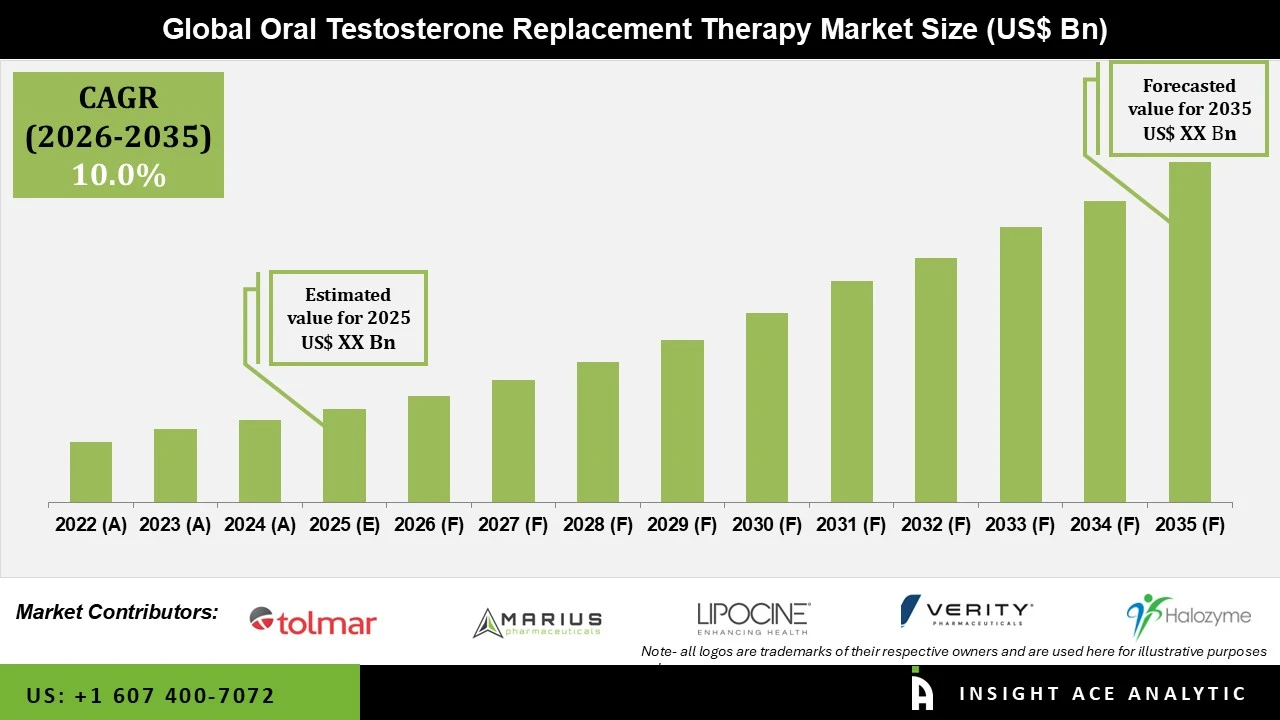
Oral Testosterone Replacement Therapy Market is expected to grow at a 10.0% CAGR during the forecast period for 2026 to 2035.
Oral Testosterone Replacement Therapy Market Size, Share & Trends Analysis Distribution by Product / Brand (JATENZO (Tolmar), TLANDO (Lipocine / Verity Pharmaceuticals), KYZATREX (Marius Pharmaceuticals), Andriol / Andriol Testocaps (Legacy International), Other Branded & Generic Oral Testosterone Undecanoate Products), By Indication, By Distribution Channel, By Prescriber Specialty and Segment Forecasts, 2026 to 2035
Oral testosterone replacement therapy (TRT) refers to prescription medications administered orally to restore testosterone levels in adult men diagnosed with clinically confirmed testosterone deficiency (hypogonadism). Most commercially available oral therapies are based on testosterone undecanoate, a formulation designed for lymphatic absorption to minimize first-pass hepatic metabolism and achieve effective systemic testosterone delivery.
Unlike injectable, transdermal, or implantable testosterone therapies, oral TRT provides a convenient, non-invasive treatment option that simplifies administration while supporting long-term treatment adherence. These therapies are prescribed following biochemical confirmation of low testosterone levels accompanied by symptoms such as reduced libido, fatigue, decreased muscle mass, diminished bone density, mood disturbances, and impaired sexual function.
The oral testosterone replacement therapy market comprises the research, development, manufacturing, commercialization, and distribution of branded and generic oral testosterone formulations for the treatment of primary hypogonadism, hypogonadotropic hypogonadism, and other medically confirmed testosterone deficiencies. The market includes pharmaceutical manufacturers, specialty pharmaceutical companies, retail and specialty pharmacies, telehealth platforms, and healthcare providers involved in prescribing and dispensing oral TRT products. Oral testosterone therapies are widely used across hospitals, specialty clinics, men's health centers, and outpatient settings, with increasing integration into digital healthcare and online pharmacy channels that improve patient access and treatment continuity. The market also encompasses ongoing clinical research, lifecycle management of approved products, and regional expansion of oral testosterone therapies aimed at enhancing patient outcomes, convenience, and the overall management of men's health disorders.
Competitive Landscape
Which are the Leading Players in the Oral Testosterone Replacement Therapy Market?
• Tolmar, Inc.
• Marius Pharmaceuticals, Inc.
• Lipocine Inc.
• Verity Pharmaceuticals
• Halozyme Therapeutics / Antares Pharma (Legacy)
• Organon & Co. / Merck Sharp & Dohme
• Besins Healthcare
• Sun Pharmaceutical Industries Ltd.
• Abbott Laboratories (India)
• Hikma Pharmaceuticals plc
• Cipla Limited
• Viatris Inc.
• Amneal Pharmaceuticals, Inc.
• Hims & Hers Health, Inc.
Market Dynamics
Driver
Growing Diagnosis of Hypogonadism and Preference for Oral Testosterone Therapies
The rise in male hypogonadism diagnoses is due to aging populations, obesity, diabetes, metabolic disorders, and a greater awareness of testosterone deficiency. This trend is significantly increasing the number of patients who qualify for testosterone replacement therapy. At the same time, both patients and healthcare providers prefer oral testosterone formulations over injectable and transdermal options. This preference stems from the non-invasive administration, greater convenience, and better adherence to treatment. The introduction of newer FDA-approved oral testosterone undecanoate products, which have improved safety and pharmacokinetic profiles, has boosted physician confidence and sped up the use of oral TRT in clinical practice.
Restrain/Challenge
Stringent Safety Monitoring and Regulatory Scrutiny of Testosterone Therapy
Oral testosterone replacement therapies need regular monitoring because of risks like cardiovascular events, high blood pressure, polycythemia, prostate issues, and liver function concerns. Regulatory agencies require detailed safety warnings, post-marketing surveillance, and ongoing patient monitoring. This can make doctors hesitant to prescribe these therapies and complicate long-term treatment. These safety and regulatory requirements continue to pose challenges for the wider use of oral testosterone replacement therapies.
JATENZO (Tolmar) Segment is Expected to Drive the Oral Testosterone Replacement Therapy Market
The JATENZO (Tolmar) segment leads the oral testosterone replacement therapy market. It is the first FDA-approved oral testosterone undecanoate for adult men with specific types of hypogonadism in the U.S. Its early entry into the market, strong awareness among doctors, established prescribing habits, wide availability through retail and specialty pharmacies, and increasing use in men’s health clinics have all strengthened its market position. Furthermore, solid clinical evidence supports its effectiveness in restoring testosterone levels, and its strong commercial presence continues to boost prescription volumes and revenue growth.
Other Medically Confirmed Testosterone Deficiency Segment is Growing at the Highest Rate in the Oral Testosterone Replacement Therapy Market
The other medically confirmed testosterone deficiency segment is expected to grow the most during the forecast period. This growth is driven by more diagnoses of testosterone deficiency linked to aging, obesity, type 2 diabetes, metabolic syndrome, cancer treatments, and other medical issues. Increased awareness among doctors, more testosterone screenings, and updated clinical guidelines are expanding the patient population beyond traditional hypogonadism. Meanwhile, the availability of convenient oral testosterone replacement therapies is speeding up treatment adoption in this segment.
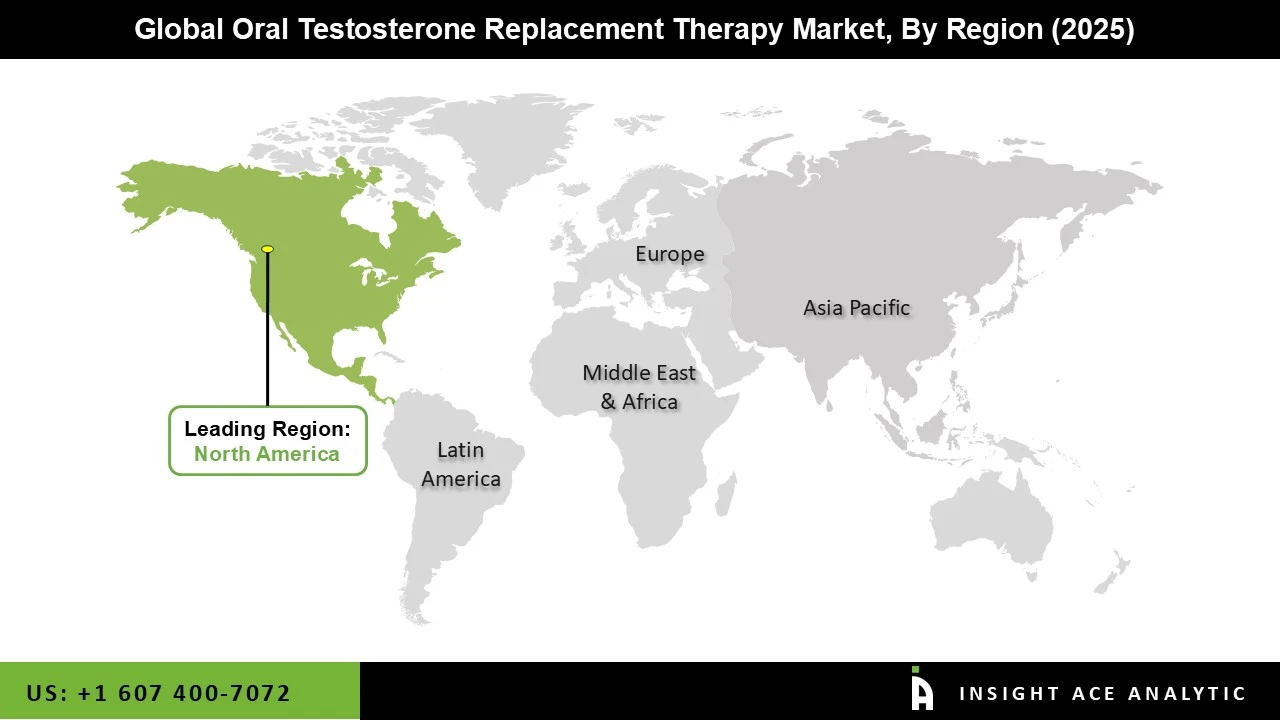
Why North America Led the Oral Testosterone Replacement Therapy Market?
North America leads the oral testosterone replacement therapy market because of its well-established IT infrastructure, high use of hybrid and multi-cloud setups, and a large number of companies managing complex multi-vendor technology systems. Organizations in sectors like BFSI, healthcare, telecommunications, manufacturing, and government depend on various hardware, software, networking, and data center assets from multiple OEMs. This creates a strong demand for centralized support services. The region is also home to major IT service providers and technology vendors, making advanced multi-vendor support solutions widely available. Additionally, significant investments in digital transformation, data center upgrades, managed IT services, and AI-driven infrastructure management, along with the growing need to improve IT asset performance and maintain business continuity, solidify North America's top position in the market.
Key Development
• In May 2026, Hikma Pharmaceuticals entered a licensing agreement with Marius Pharmaceuticals to commercialize and distribute KYZATREX® (oral testosterone undecanoate) in Canada. Under the agreement, Hikma will manage regulatory filings, commercialization, and distribution, expanding access to oral testosterone replacement therapy in the Canadian market.
Oral Testosterone Replacement Therapy Market Report Scope:
| Report Attribute | Specifications |
| Growth Rate CAGR | CAGR of 10.0% from 2026 to 2035 |
| Quantitative Units | Representation of revenue in US$ Bn and CAGR from 2026 to 2035 |
| Historic Year | 2022 to 2025 |
| Forecast Year | 2026-2035 |
| Report Coverage | The forecast of revenue, the position of the company, the competitive market structure, growth prospects, and trends |
| Segments Covered | Product / Brand, Indication, Distribution Channel, Prescriber Specialty and By Region |
| Regional Scope | North America; Europe; Asia Pacific; Latin America; Middle East & Africa |
| Country Scope | U.S.; Canada; U.K.; Germany; China; India; Japan; Brazil; Mexico; France; Italy; Spain; South Korea; Southeast Asia |
| Competitive Landscape | Tolmar, Inc., Marius Pharmaceuticals, Inc., Lipocine Inc., Verity Pharmaceuticals, Halozyme Therapeutics / Antares Pharma (Legacy), Organon & Co. / Merck Sharp & Dohme, Besins Healthcare, Sun Pharmaceutical Industries Ltd., Abbott Laboratories (India), Hikma Pharmaceuticals plc, Cipla Limited, Viatris Inc., Amneal Pharmaceuticals, Inc., Hims & Hers Health, Inc. |
| Customization Scope | Free customization report with the procurement of the report, Modifications to the regional and segment scope. Geographic competitive landscape. |
| Pricing and Available Payment Methods | Explore pricing alternatives that are customized to your particular study requirements. |
Market Segmentation:
Oral Testosterone Replacement Therapy Market by Product / Brand -
• JATENZO (Tolmar)
• TLANDO (Lipocine / Verity Pharmaceuticals)
• KYZATREX (Marius Pharmaceuticals)
• Andriol / Andriol Testocaps (Legacy International)
• Other Branded & Generic Oral Testosterone Undecanoate Products
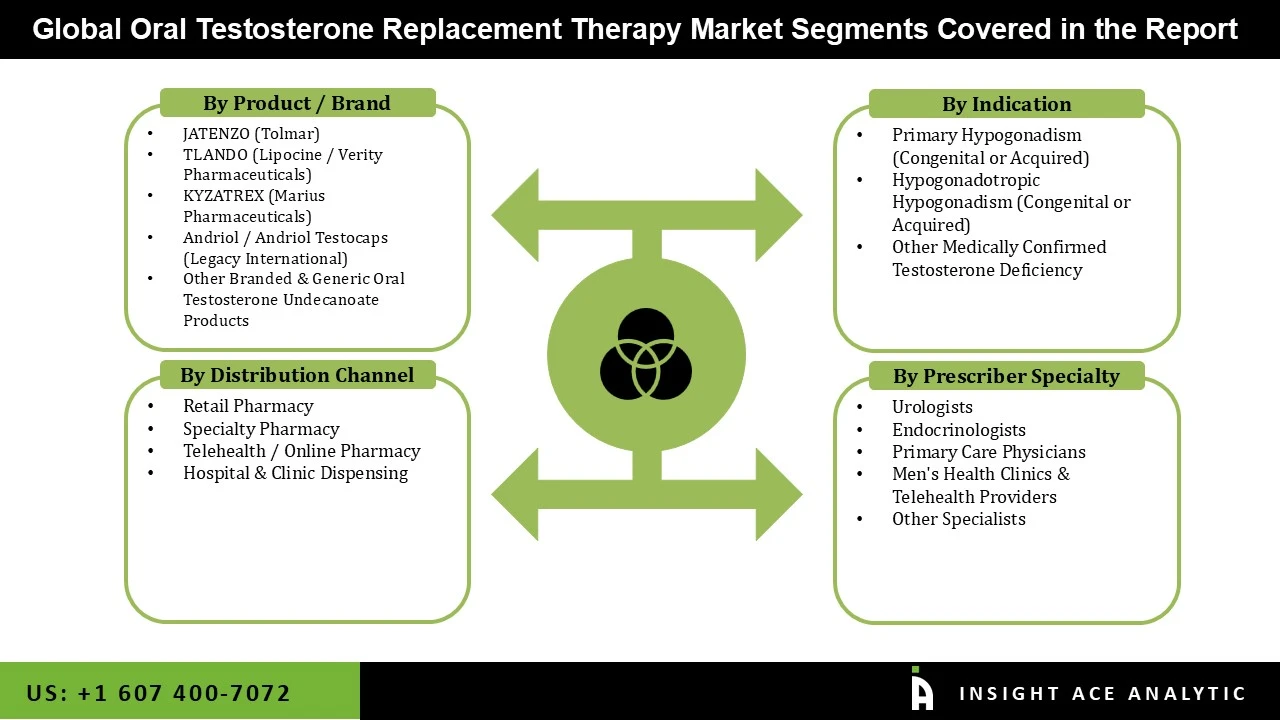
Oral Testosterone Replacement Therapy Market by Indication -
• Primary Hypogonadism (Congenital or Acquired)
• Hypogonadotropic Hypogonadism (Congenital or Acquired)
• Other Medically Confirmed Testosterone Deficiency
Oral Testosterone Replacement Therapy Market by Distribution Channel -
• Retail Pharmacy
• Specialty Pharmacy
• Telehealth / Online Pharmacy
• Hospital & Clinic Dispensing
Oral Testosterone Replacement Therapy Market by Prescriber Specialty -
• Urologists
• Endocrinologists
• Primary Care Physicians
• Men's Health Clinics & Telehealth Providers
• Other Specialists
Oral Testosterone Replacement Therapy Market by Region-
North America-
• The US
• Canada
• Mexico
Europe-
• Germany
• The UK
• France
• Italy
• Spain
• Rest of Europe
Asia-Pacific-
• China
• Japan
• India
• South Korea
• South East Asia
• Rest of Asia Pacific
Latin America-
• Brazil
• Argentina
• Rest of Latin America
Middle East & Africa-
• GCC Countries
• South Africa
• Rest of Middle East and Africa
Research Design and Approach
This study employed a multi-step, mixed-method research approach that integrates:
- Secondary research
- Primary research
- Data triangulation
- Hybrid top-down and bottom-up modelling
- Forecasting and scenario analysis
This approach ensures a balanced and validated understanding of both macro- and micro-level market factors influencing the market.
Secondary Research
Secondary research for this study involved the collection, review, and analysis of publicly available and paid data sources to build the initial fact base, understand historical market behaviour, identify data gaps, and refine the hypotheses for primary research.
Sources Consulted
Secondary data for the market study was gathered from multiple credible sources, including:
- Government databases, regulatory bodies, and public institutions
- International organizations (WHO, OECD, IMF, World Bank, etc.)
- Commercial and paid databases
- Industry associations, trade publications, and technical journals
- Company annual reports, investor presentations, press releases, and SEC filings
- Academic research papers, patents, and scientific literature
- Previous market research publications and syndicated reports
These sources were used to compile historical data, market volumes/prices, industry trends, technological developments, and competitive insights.

Primary Research
Primary research was conducted to validate secondary data, understand real-time market dynamics, capture price points and adoption trends, and verify the assumptions used in the market modelling.
Stakeholders Interviewed
Primary interviews for this study involved:
- Manufacturers and suppliers in the market value chain
- Distributors, channel partners, and integrators
- End-users / customers (e.g., hospitals, labs, enterprises, consumers, etc., depending on the market)
- Industry experts, technology specialists, consultants, and regulatory professionals
- Senior executives (CEOs, CTOs, VPs, Directors) and product managers
Interview Process
Interviews were conducted via:
- Structured and semi-structured questionnaires
- Telephonic and video interactions
- Email correspondences
- Expert consultation sessions
Primary insights were incorporated into demand modelling, pricing analysis, technology evaluation, and market share estimation.
Data Processing, Normalization, and Validation
All collected data were processed and normalized to ensure consistency and comparability across regions and time frames.
The data validation process included:
- Standardization of units (currency conversions, volume units, inflation adjustments)
- Cross-verification of data points across multiple secondary sources
- Normalization of inconsistent datasets
- Identification and resolution of data gaps
- Outlier detection and removal through algorithmic and manual checks
- Plausibility and coherence checks across segments and geographies
This ensured that the dataset used for modelling was clean, robust, and reliable.
Market Size Estimation and Data Triangulation
Bottom-Up Approach
The bottom-up approach involved aggregating segment-level data, such as:
- Company revenues
- Product-level sales
- Installed base/usage volumes
- Adoption and penetration rates
- Pricing analysis
This method was primarily used when detailed micro-level market data were available.

Top-Down Approach
The top-down approach used macro-level indicators:
- Parent market benchmarks
- Global/regional industry trends
- Economic indicators (GDP, demographics, spending patterns)
- Penetration and usage ratios
This approach was used for segments where granular data were limited or inconsistent.
Hybrid Triangulation Approach
To ensure accuracy, a triangulated hybrid model was used. This included:
- Reconciling top-down and bottom-up estimates
- Cross-checking revenues, volumes, and pricing assumptions
- Incorporating expert insights to validate segment splits and adoption rates
This multi-angle validation yielded the final market size.
Forecasting Framework and Scenario Modelling
Market forecasts were developed using a combination of time-series modelling, adoption curve analysis, and driver-based forecasting tools.
Forecasting Methods
- Time-series modelling
- S-curve and diffusion models (for emerging technologies)
- Driver-based forecasting (GDP, disposable income, adoption rates, regulatory changes)
- Price elasticity models
- Market maturity and lifecycle-based projections
Scenario Analysis
Given inherent uncertainties, three scenarios were constructed:
- Base-Case Scenario: Expected trajectory under current conditions
- Optimistic Scenario: High adoption, favourable regulation, strong economic tailwinds
- Conservative Scenario: Slow adoption, regulatory delays, economic constraints
Sensitivity testing was conducted on key variables, including pricing, demand elasticity, and regional adoption.
Request Customization
Add countries, segments, company profiles, or extend forecast — free 10% customization with purchase.
Customize This Report →Enquire Before Buying
Speak with our analyst team about scope, methodology, pricing, or deliverable formats.
Enquire Now →Frequently Asked Questions
Oral Testosterone Replacement Therapy Market is expected to grow at a 10.0% CAGR during the forecast period for 2026 to 2035.
Oral Testosterone Replacement Therapy Market is expected to grow at a 10.0% CAGR during the forecast period for 2026 to 2035.
Tolmar, Inc., Marius Pharmaceuticals, Inc., Lipocine Inc., Verity Pharmaceuticals, Halozyme Therapeutics / Antares Pharma (Legacy), Organon & Co. / Merck Sharp & Dohme, Besins Healthcare, Sun Pharmaceutical Industries Ltd., Abbott Laboratories (India), Hikma Pharmaceuticals plc, Cipla Limited, Viatris Inc., Amneal Pharmaceuticals, Inc., Hims & Hers Health, Inc.
Oral Testosterone Replacement Therapy Market is segmented into Product / Brand, Indication, Distribution Channel, Prescriber Specialty and By Region
North America region is leading the Oral Testosterone Replacement Therapy Market.