Oral Non Peptide GLP 1 Receptor Agonists Market Size, Share, Forecast Report 2026 to 2035
What is Oral Non Peptide GLP 1 Receptor Agonist Market Size?
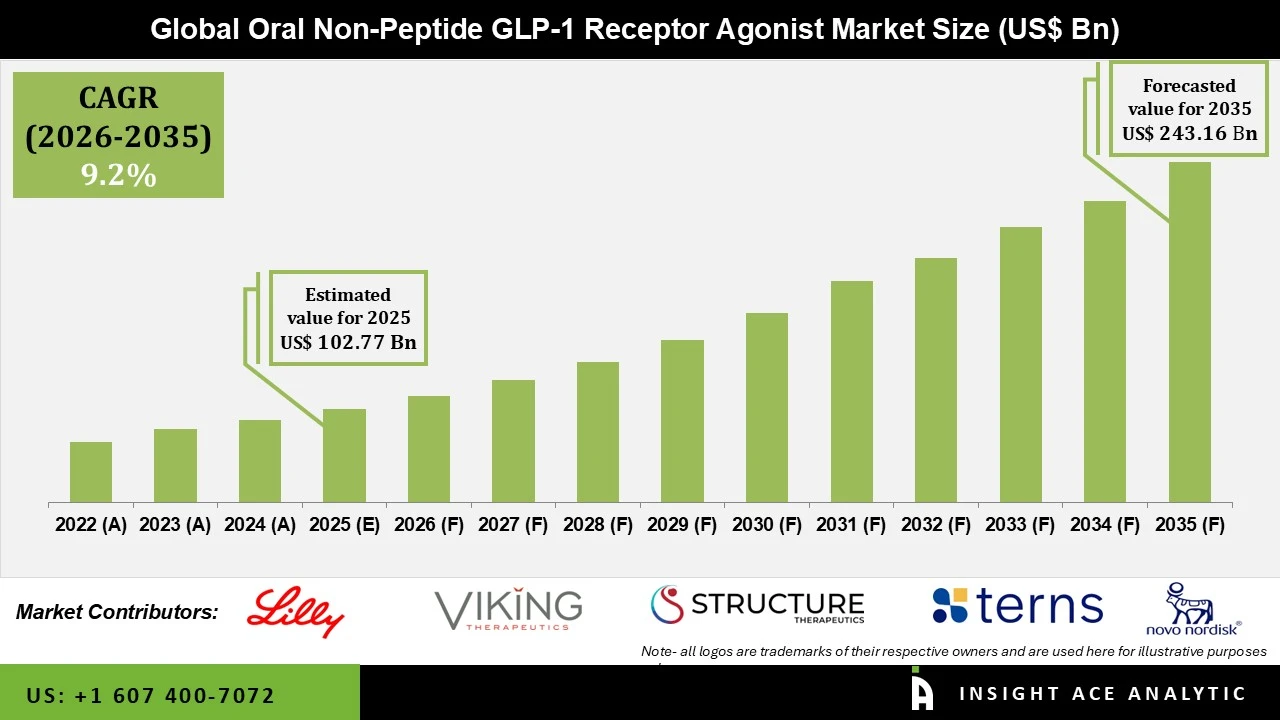
Global Oral Non Peptide GLP 1 Receptor Agonist Market Size is valued at USD 102.77 Bn in 2025 and is predicted to reach USD 243.16 Bn by the year 2035 at a 9.2% CAGR during the forecast period for 2026 to 2035.
Oral Non Peptide GLP 1 Receptor Agonist Market Size, Share & Trends Analysis by Type (Small Molecule GLP-1 Agonists, Peptide-Based Oral Formulations, Combination GLP-1 Therapies), by Application (Obesity & Weight Management, Type 2 Diabetes, Cardiovascular Risk Reduction, Non-Alcoholic Steatohepatitis (NASH)), by Distribution Channel (Retail Pharmacy, Telehealth & Direct-to-Patient, Hospital & Clinic), and Segment Forecasts, 2026 to 2035
Non-peptide oral GLP-1 receptor agonists refer to small molecules of drugs, which have the capability of activating the receptors of GLP-1 without the use of peptides as active compounds. The main area of application of these drugs is treating various metabolic disorders, such as type 2 diabetes, obesity, and other metabolic diseases. Due to their ability to stimulate the secretion of insulin, inhibit the release of glucagon, and increase satiety, non-peptide GLP-1 receptor agonists prove to be very effective and convenient for patients in terms of treatment.
One of the drivers for the growth of the oral non-peptide GLP-1 receptor agonist market is the growing prevalence of diabetes and obesity throughout the world. There is an alarming rate at which the number of people suffering from metabolic diseases increases, and thus, there arises the need for the development of novel therapies. Furthermore, the rising patient preference for oral drugs, advancement in drug discovery technology of small molecules, and awareness among the population regarding health issues have led to the accelerated uptake of market offerings. Pharmaceutical firms are conducting intensive R&D for introducing new generation oral GLP-1 receptor agonists in the market.
In addition to this, positive results in clinical trials, increased partnerships between biotech companies and pharma companies, and enhanced investment in obesity management treatments will further drive the growth of the market. The market is also being positively impacted by the developments in artificial intelligence-based drug discovery tools that aid in the discovery and optimization of new GLP-1 receptor agonists. As there is an emphasis on preventive medicine in the healthcare industry and the treatment of metabolic diseases, demand for these oral medications will keep on increasing in the forecast period.
Competitive Landscape
Which are the Leading Players in Oral Non-Peptide GLP-1 Receptor Agonist Market?
• Novo Nordisk A/S
• Eli Lilly and Company
• Pfizer Inc.
• Roche Holding AG
• Structure Therapeutics Inc.
• Amgen Inc.
• Viking Therapeutics Inc.
• AstraZeneca PLC
• Boehringer Ingelheim
• Merck & Co., Inc.
• Carmot Therapeutics
• Sciwind Biosciences
• Hanmi Pharmaceutical
• Metsera Inc.
• Regor Therapeutics Group
• Chugai Pharmaceutical Co., Ltd.
• Zealand Pharma A/S
• Altimmune Inc.
• Innovent Biologics Inc.
• Jiangsu Hengrui Pharmaceuticals
Market Dynamics
Driver
Rising Demand for Convenient Obesity and Diabetes Therapies
The rising number of cases of obesity and type 2 diabetes will contribute significantly to the market's expansion within the forecast period. Patients and healthcare practitioners are looking for therapies that can be effective while making life convenient and easy at the same time. Oral drugs do away with several of the drawbacks that are associated with injectable drugs, such as needle fear and difficulties with administration. Moreover, awareness about obesity as a disease and the rising adoption of obesity management programs have created immense potential for market expansion. Drug manufacturers are focusing on developing more oral GLP-1 receptor agonists to meet patients' needs. Clinical evidence suggests that there are good results when it comes to treating patients with these drugs.
Restrain/Challenge
High Development Costs and Regulatory Complexities
The main challenge that oral non-peptide GLP-1 receptor agonists will face in this market would be the difficulty in developing highly efficacious formulations that are able to offer similar therapeutic benefits to those offered by injectables. Considerable expenditure will be necessary for research and development, formulation development, clinical trials, and gaining regulatory approval. Furthermore, proving long-term efficacy and safety is essential for regulatory approval. The presence of competing products based on GLP-1 injection and other obesity treatment solutions could pose additional difficulties during product commercialization. In some healthcare systems, there could be limitations due to pricing and reimbursement considerations.
Obesity & Weight Management Segment is Expected to Drive the Oral Non-Peptide GLP-1 Receptor Agonist Market
Obesity & Weight Management was another segment which had an important share in the global market for oral non-peptide GLP-1 receptor agonists in 2025. With the rise in the number of obese people in the world and increased awareness about health issues linked to obesity, there has been an increase in demand for solutions that can help manage weight. The introduction of oral GLP-1 receptor agonists has offered patients a convenient way to effectively manage their weight and adhere to the medication regimen.
Small Molecule GLP-1 Receptor Agonists Segment is Growing at the Highest Rate in the Oral Non-Peptide GLP-1 Receptor Agonist Market
The market for the small molecule GLP-1 receptor agonists category was dominant in 2025 due to the numerous developments made in medicinal chemistry and the drug discovery industry. This category is poised to benefit from increased stability, convenience, and easy scalability of production relative to other categories. Positive trial outcomes coupled with significant funding into research and development will contribute towards the swift growth of this category in the coming years.
Why North America Led the Oral Non-Peptide GLP-1 Receptor Agonist Market?
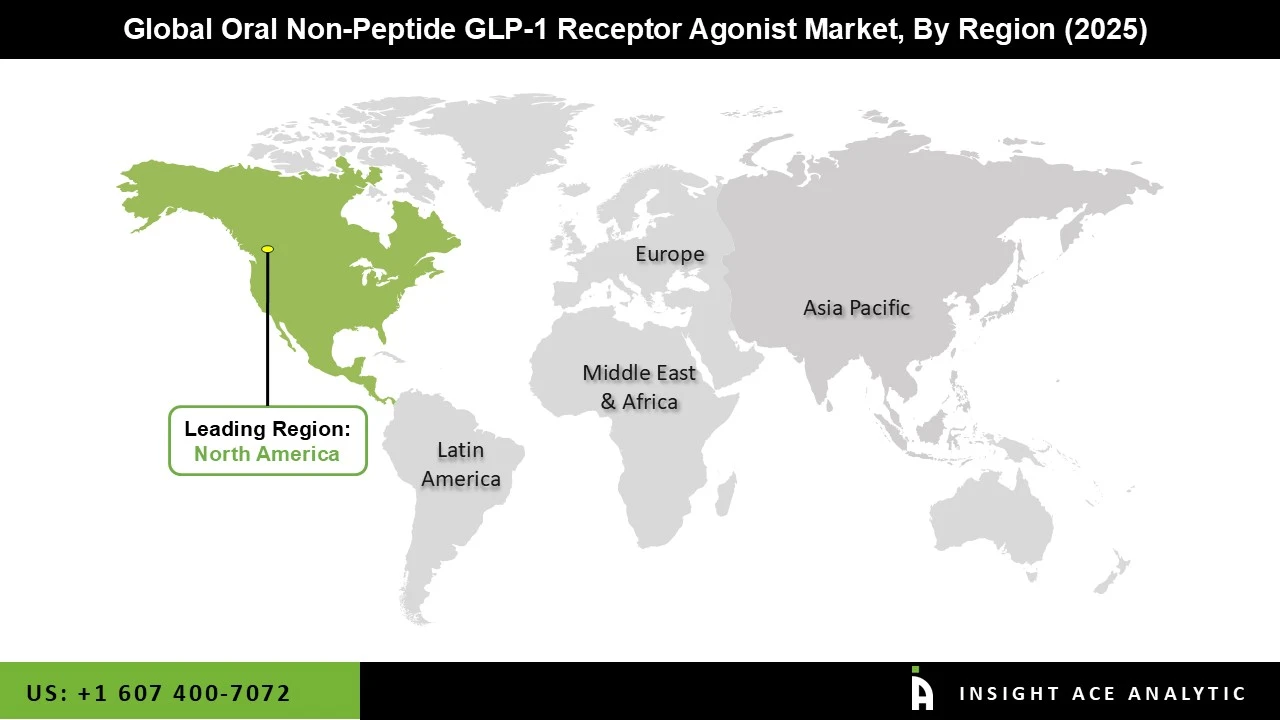
The oral non-peptide GLP-1 receptor agonist market was dominated by North America in 2025 due to the high prevalence of obesity and diabetes, strong pharmaceutical research capabilities, and widespread adoption of innovative therapeutics. The presence of leading pharmaceutical and biotechnology companies, favorable reimbursement policies, and significant investments in metabolic disease management contribute to regional market leadership.
Additionally, increasing healthcare expenditure and strong regulatory support for innovative treatments continue to create a favorable environment for market growth. Rising patient awareness regarding obesity treatment and personalized healthcare solutions is further supporting adoption across the region.
Oral Non-Peptide GLP-1 Receptor Agonist Market Report Scope:
| Report Attribute | Specifications |
| Market size value in 2025 | USD 102.77 Bn |
| Revenue forecast in 2035 | USD 243.16 Bn |
| Growth Rate CAGR | CAGR of 9.2% from 2026 to 2035 |
| Quantitative Units | Representation of revenue in US$ Bn and CAGR from 2026 to 2035 |
| Historic Year | 2022 to 2025 |
| Forecast Year | 2026-2035 |
| Report Coverage | The forecast of revenue, the position of the company, the competitive market structure, growth prospects, and trends |
| Segments Covered | Type, Application, Distribution Channel, and By Region |
| Regional Scope | North America; Europe; Asia Pacific; Latin America; Middle East & Africa |
| Country Scope | U.S.; Canada; U.K.; Germany; China; India; Japan; Brazil; Mexico; The UK; France; Italy; Spain; China; Japan; India; South Korea; Southeast Asia; South Korea; Southeast Asia |
| Competitive Landscape | Novo Nordisk A/S, Eli Lilly and Company, Pfizer Inc., Roche Holding AG, Structure Therapeutics Inc., Amgen Inc., Viking Therapeutics Inc., AstraZeneca PLC, Boehringer Ingelheim, Merck & Co., Inc., Carmot Therapeutics, Sciwind Biosciences, Hanmi Pharmaceutical, Metsera Inc., Regor Therapeutics Group, Chugai Pharmaceutical Co., Ltd., Zealand Pharma A/S, Altimmune Inc., Innovent Biologics Inc., and Jiangsu Hengrui Pharmaceuticals. |
| Customization Scope | Free customization report with the procurement of the report, Modifications to the regional and segment scope. Geographic competitive landscape. |
| Pricing and Available Payment Methods | Explore pricing alternatives that are customized to your particular study requirements. |
Market Segmentation:
Oral Non-Peptide GLP-1 Receptor Agonist Market by Type-
• Small Molecule GLP-1 Agonists
• Peptide-Based Oral Formulations
• Combination GLP-1 Therapies
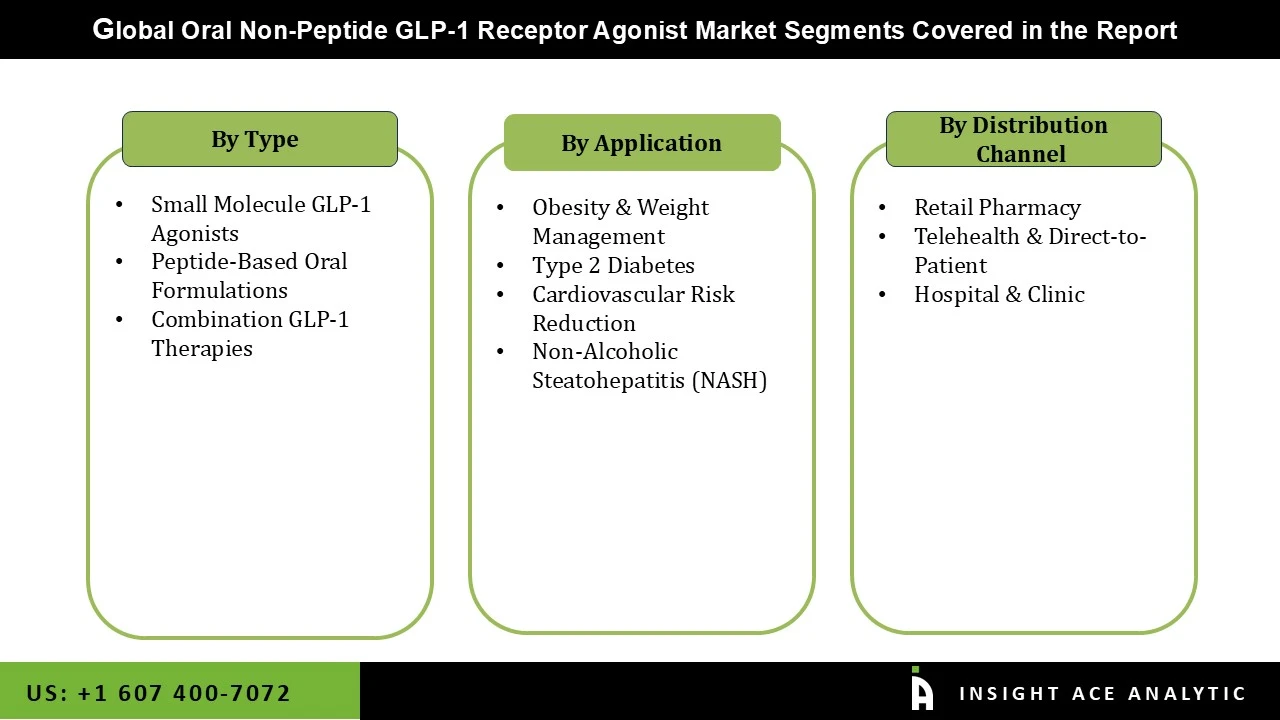
Oral Non-Peptide GLP-1 Receptor Agonist Market by Application-
• Obesity & Weight Management
• Type 2 Diabetes
• Cardiovascular Risk Reduction
• Non-Alcoholic Steatohepatitis (NASH)
Oral Non-Peptide GLP-1 Receptor Agonist Market by Distribution Channel -
• Retail Pharmacy
• Telehealth & Direct-to-Patient
• Hospital & Clinic
Research Design and Approach
This study employed a multi-step, mixed-method research approach that integrates:
- Secondary research
- Primary research
- Data triangulation
- Hybrid top-down and bottom-up modelling
- Forecasting and scenario analysis
This approach ensures a balanced and validated understanding of both macro- and micro-level market factors influencing the market.
Secondary Research
Secondary research for this study involved the collection, review, and analysis of publicly available and paid data sources to build the initial fact base, understand historical market behaviour, identify data gaps, and refine the hypotheses for primary research.
Sources Consulted
Secondary data for the market study was gathered from multiple credible sources, including:
- Government databases, regulatory bodies, and public institutions
- International organizations (WHO, OECD, IMF, World Bank, etc.)
- Commercial and paid databases
- Industry associations, trade publications, and technical journals
- Company annual reports, investor presentations, press releases, and SEC filings
- Academic research papers, patents, and scientific literature
- Previous market research publications and syndicated reports
These sources were used to compile historical data, market volumes/prices, industry trends, technological developments, and competitive insights.

Primary Research
Primary research was conducted to validate secondary data, understand real-time market dynamics, capture price points and adoption trends, and verify the assumptions used in the market modelling.
Stakeholders Interviewed
Primary interviews for this study involved:
- Manufacturers and suppliers in the market value chain
- Distributors, channel partners, and integrators
- End-users / customers (e.g., hospitals, labs, enterprises, consumers, etc., depending on the market)
- Industry experts, technology specialists, consultants, and regulatory professionals
- Senior executives (CEOs, CTOs, VPs, Directors) and product managers
Interview Process
Interviews were conducted via:
- Structured and semi-structured questionnaires
- Telephonic and video interactions
- Email correspondences
- Expert consultation sessions
Primary insights were incorporated into demand modelling, pricing analysis, technology evaluation, and market share estimation.
Data Processing, Normalization, and Validation
All collected data were processed and normalized to ensure consistency and comparability across regions and time frames.
The data validation process included:
- Standardization of units (currency conversions, volume units, inflation adjustments)
- Cross-verification of data points across multiple secondary sources
- Normalization of inconsistent datasets
- Identification and resolution of data gaps
- Outlier detection and removal through algorithmic and manual checks
- Plausibility and coherence checks across segments and geographies
This ensured that the dataset used for modelling was clean, robust, and reliable.
Market Size Estimation and Data Triangulation
Bottom-Up Approach
The bottom-up approach involved aggregating segment-level data, such as:
- Company revenues
- Product-level sales
- Installed base/usage volumes
- Adoption and penetration rates
- Pricing analysis
This method was primarily used when detailed micro-level market data were available.

Top-Down Approach
The top-down approach used macro-level indicators:
- Parent market benchmarks
- Global/regional industry trends
- Economic indicators (GDP, demographics, spending patterns)
- Penetration and usage ratios
This approach was used for segments where granular data were limited or inconsistent.
Hybrid Triangulation Approach
To ensure accuracy, a triangulated hybrid model was used. This included:
- Reconciling top-down and bottom-up estimates
- Cross-checking revenues, volumes, and pricing assumptions
- Incorporating expert insights to validate segment splits and adoption rates
This multi-angle validation yielded the final market size.
Forecasting Framework and Scenario Modelling
Market forecasts were developed using a combination of time-series modelling, adoption curve analysis, and driver-based forecasting tools.
Forecasting Methods
- Time-series modelling
- S-curve and diffusion models (for emerging technologies)
- Driver-based forecasting (GDP, disposable income, adoption rates, regulatory changes)
- Price elasticity models
- Market maturity and lifecycle-based projections
Scenario Analysis
Given inherent uncertainties, three scenarios were constructed:
- Base-Case Scenario: Expected trajectory under current conditions
- Optimistic Scenario: High adoption, favourable regulation, strong economic tailwinds
- Conservative Scenario: Slow adoption, regulatory delays, economic constraints
Sensitivity testing was conducted on key variables, including pricing, demand elasticity, and regional adoption.
Request Customization
Add countries, segments, company profiles, or extend forecast — free 10% customization with purchase.
Customize This Report →Enquire Before Buying
Speak with our analyst team about scope, methodology, pricing, or deliverable formats.
Enquire Now →Frequently Asked Questions
Oral Non Peptide GLP 1 Receptor Agonist Market Size is valued at USD 102.77 Bn in 2025 and is predicted to reach USD 243.16 Bn by the year 2035
Oral Non Peptide GLP 1 Receptor Agonist Market is expected to grow at a 9.2% CAGR during the forecast period for 2026 to 2035.
Oral Non Peptide GLP 1 Receptor Agonist Market is segmented into Type, Application, Distribution Channel, and By Region
Novo Nordisk A/S, Eli Lilly and Company, Pfizer Inc., Roche Holding AG, Structure Therapeutics Inc., Amgen Inc., Viking Therapeutics Inc., AstraZeneca PLC, Boehringer Ingelheim, Merck & Co., Inc., Carmot Therapeutics, Sciwind Biosciences, Hanmi Pharmaceutical, Metsera Inc., Regor Therapeutics Group, Chugai Pharmaceutical Co., Ltd., Zealand Pharma A/S, Altimmune Inc., Innovent Biologics Inc., and Jiangsu Hengrui Pharmaceuticals.
North America region is leading the Oral Non Peptide GLP 1 Receptor Agonist Market.