Ocular Inflammation Treatment Market Size, Trend, Revenue Report 2026 to 2035
What is Ocular Inflammation Treatment Market Size?
Ocular Inflammation Treatment Market Size is valued at USD 487.01 Mn in 2025 and is predicted to reach USD 914.17 Mn by the year 2035 at a 6.9% CAGR during the forecast period for 2026 to 2035.
Ocular Inflammation Treatment Market Size, Share & Trends Analysis Report By Treatment Type (Corticosteroids, Antibiotics, Monoclonal Antibodies, Immunosppressant, Cycloplegic Agents, Antivirals, Antifungal, Analgesics), By Disease Type, By Mode of Administration, By Distribution Channel, By Region, And By Segment Forecasts, 2026-2035.
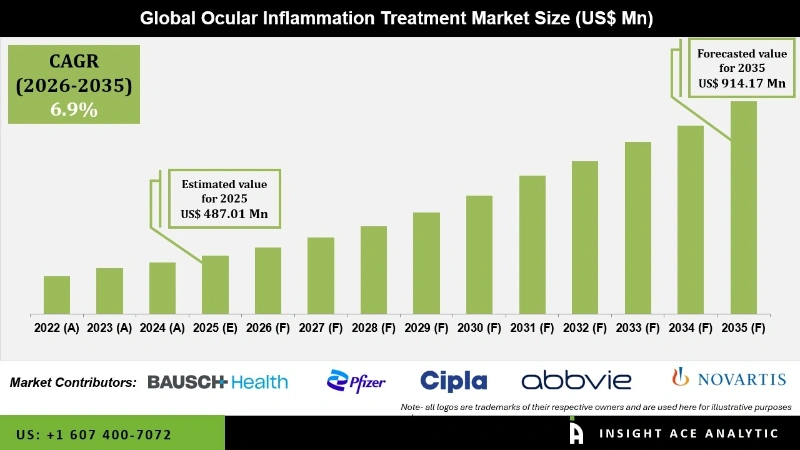
Ocular Inflammation Treatment Market Key Takeaways:
Get Free Sample Report
This FREE sample includes market data points, ranging from trend analyses to market estimates & forecasts. See for yourself.
|
Ocular inflammation, often known as Uveitis, is managed with antibiotic eye drops, tablets, or immunosuppressive medications. The therapy of ocular inflammation focuses on lowering inflammation, relieving pain, and preventing damage to the tissues. Treatment options encompass the use of corticosteroids (applied topically, taken orally, or administered by injection) to diminish inflammation, nonsteroidal anti-inflammatory medications (NSAIDs) to alleviate both inflammation and discomfort, and immunosuppressive medicines for more severe instances. Air pollution, allergies, hazardous gas releases into the environment, and ultraviolet (UV) radiation exposure can increase ocular inflammation. The distribution and concentration of allergens can be impacted by changes in climatic patterns, which could increase the frequency of allergic reactions and ocular inflammation. Furthermore, the incidence of Uveitis and growing patient awareness are expected to fuel the growth of the ocular inflammation market, as will the usage of innovative treatments.
However, the market growth is hampered by the lack of awareness criteria for the safety and health of the ocular inflammation treatment market and the product's inability to prevent fog in environments with dramatic temperature fluctuations or high ocular inflammation treatment because of the high expense of treatment, the ignorance of ocular inflammation, and the unfavorable side effects of therapies are among the issues that are anticipated to hinder market growth. The worldwide market has been impacted by the COVID-19 pandemic, which resulted in multiple facilities closing to prevent virus transmission to their employees. As a result, the industry's growth may be impeded.
Competitive Landscape
Some Major Key Players In The Ocular Inflammation Treatment Market:
- Bausch Health Companies, Inc.
- Pfizer Inc.
- Novartis AG
- AbbVie, Inc.
- Cipla Inc.
- EyeGate
- Alimera Sciences
- EyePoint Pharmaceuticals, Inc.
- Ocular Therapeutix, Inc.
- Santen Pharmaceutical Co., Ltd.
- Akron Pharma Inc
- Sanofi S.A.
- GlaxoSmithKline plc
- Intas Pharmaceuticals Ltd
- Johnson & Johnson Services Inc.
- Macleods Pharmaceuticals Ltd.
- Merck & Co. Inc.
- Tarsier Pharma
- Other Prominent Players
Market Segmentation:
The ocular inflammation treatment market is segmented based on treatment type, disease type, mode of administration, and distribution channel. The treatment type segment includes corticosteroids, antibiotics, monoclonal antibodies, immunosuppressants, cycloplegic agents, antivirals, antifungals, and analgesics. By disease type, the market is segmented into anterior Uveitis, posterior Uveitis, pan uveitis, intermediate Uveitis, and episcleritis/scleritis. The mode of administration segment comprises topical, injectable, oral, and others. The distribution channel categorises the market into hospital pharmacies, online pharmacies, retail pharmacies, drug stores.
Based On The Treatment Type, The Immunosuppressants Segment Is Accounted As A Major Contributor To The Ocular Inflammation Treatment Market
The immunosuppressant ocular inflammation treatment market is expected to hold a major global market share. Immunosuppressants lower immune function, stopping the body from attacking its own tissues. Due to their remarkable efficacy in treating ocular inflammation associated with autoimmune illnesses, these drugs are often combined with other treatments for better outcomes.
Anterior Uveitis Segment To Witness Growth At A Rapid Rate.
The anterior uveitis sector is significant because to the high occurrence of the ailment among both adults and young individuals. Furthermore, burgeoning research in this domain underscores the correlation between the progression of this particular ailment and the advancing years of an individual. Anterior Uveitis, the most common form of the ailment, is characterized by inflammation of the ocular surface, specifically the iris and the adjacent ciliary body tissue.
In The Region, The North American Ocular Inflammation Treatment Market Holds A Significant Revenue Share.
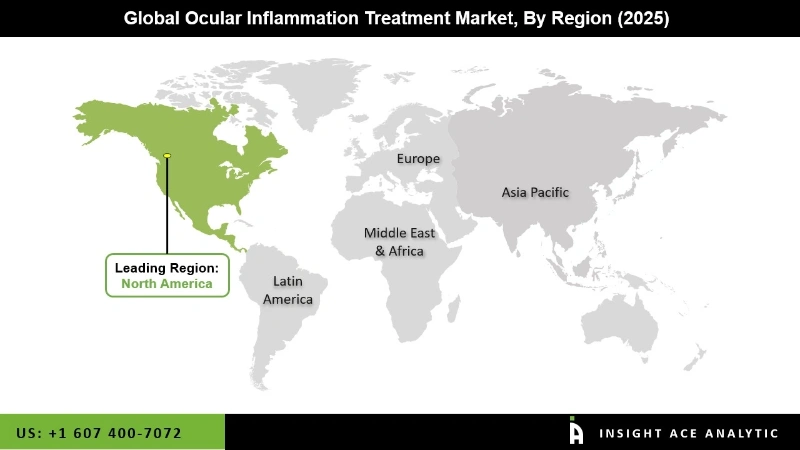
The North American ocular inflammation treatment market is expected to record the maximum market revenue share in the near future. It can be attributed to the larger target population, the rise in uveitis treatment use, early illness detection, and the abundance of qualified medical personnel. In addition, Asia Pacific is projected to grow rapidly in the global ocular inflammation treatment market due to the increase in uveitis treatment product usage and awareness of uveitis treatment. Additionally, the market growth is rising due to technological developments in the healthcare sector, an increase in the target population, improved healthcare infrastructure, a growing R&D sector, and an increase in healthcare reforms.
Recent Developments:
- In January 2024, Tarsier Pharma received FDA approval through the Special Protocol Assessment (SPA) for the Tarsier-04 Phase 3 Trial of TRS01 Ophthalmic Solution. This study seeks to assess the effectiveness of the treatment of non-infectious veitis, which includes Uveitic glaucoma.
- In Sept 2023, Novartis successfully sold its ophthalmology assets related to the front of the eye to Bausch + Lomb, a multinational corporation specializing in eye health. The transaction was estimated to be worth USD 2.5 billion, consisting of an initial cash payment of 1.75 billion and the possibility of future milestone payments.
Ocular Inflammation Treatment Market Report Scope
| Report Attribute | Specifications |
| Market Size Value In 2025 | USD 487.01 Mn |
| Revenue Forecast In 2035 | USD 914.17 Mn |
| Growth Rate CAGR | CAGR of 6.9 % from 2026 to 2035 |
| Quantitative Units | Representation of revenue in US$ Mn and CAGR from 2026 to 2035 |
| Historic Year | 2022 to 2024 |
| Forecast Year | 2026-2035 |
| Report Coverage | The forecast of revenue, the position of the company, the competitive market structure, growth prospects, and trends |
| Segments Covered | By Treatment Type, Disease Type, Mode Of Administration, And Distribution Channel |
| Regional Scope | North America; Europe; Asia Pacific; Latin America; Middle East & Africa |
| Country Scope | U.S.; Canada; U.K.; Germany; China; India; Japan; Brazil; Mexico; France; Italy; Spain; Southeast Asia; South Korea |
| Competitive Landscape | Bausch Health Companies, Inc., Pfizer Inc., Novartis AG, AbbVie, Inc., Cipla Inc., EyeGate, Alimera Sciences, EyePoint Pharmaceuticals, Inc. Ocular Therapeutix, Inc., Santen Pharmaceutical Co., Ltd., Akron Pharma Inc., Sanofi S.A., GlaxoSmithKline plc, Intas Pharmaceuticals Ltd, Johnson & Johnson Services Inc., Macleods Pharmaceuticals Ltd., Merck & Co. Inc., Tarsier Pharma and Other Market Players. |
| Customization Scope | Free customization report with the procurement of the report and modifications to the regional and segment scope. Particular Geographic competitive landscape. |
| Pricing And Available Payment Methods | Explore pricing alternatives that are customized to your particular study requirements. |
Segmentation of Ocular Inflammation Treatment Market-
Ocular Inflammation Treatment Market By Treatment Type-
- Corticosteroids
- Antibiotics
- Monoclonal Antibodies
- Immunosppressant
- Cycloplegic Agents
- Antivirals
- Antifungal
- Analgesics
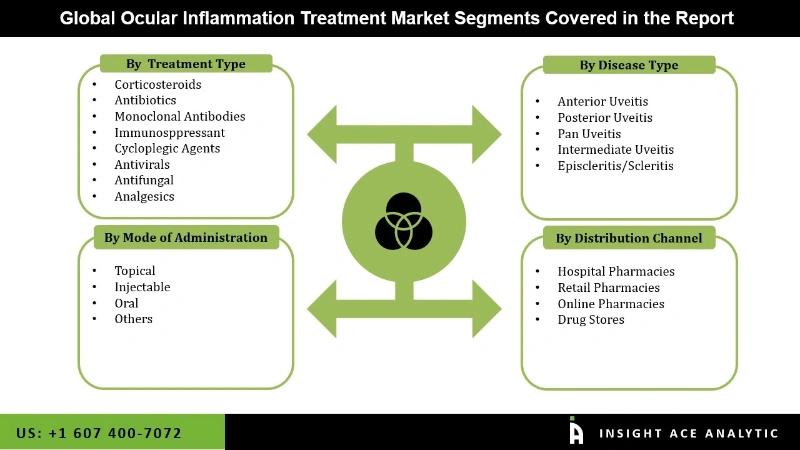
Ocular Inflammation Treatment Market By Disease Type-
- Anterior Uveitis
- Posterior Uveitis
- Pan Uveitis
- Intermediate Uveitis
- Episcleritis/Scleritis
Ocular Inflammation Treatment Market By Mode of Administration-
- Topical
- Injectable
- Oral
- Others
Ocular Inflammation Treatment Market By Distribution Channel-
- Hospital Pharmacies
- Retail Pharmacies
- Online Pharmacies
- Drug Stores
Ocular Inflammation Treatment Market By Region-
North America-
- The US
- Canada
- Mexico
Europe-
- Germany
- The UK
- France
- Italy
- Spain
- Rest of Europe
Asia-Pacific-
- China
- Japan
- India
- South Korea
- South East Asia
- Rest of Asia Pacific
Latin America-
- Brazil
- Argentina
- Rest of Latin America
Middle East & Africa-
- GCC Countries
- South Africa
- Rest of the Middle East and Africa
Research Design and Approach
This study employed a multi-step, mixed-method research approach that integrates:
- Secondary research
- Primary research
- Data triangulation
- Hybrid top-down and bottom-up modelling
- Forecasting and scenario analysis
This approach ensures a balanced and validated understanding of both macro- and micro-level market factors influencing the market.
Secondary Research
Secondary research for this study involved the collection, review, and analysis of publicly available and paid data sources to build the initial fact base, understand historical market behaviour, identify data gaps, and refine the hypotheses for primary research.
Sources Consulted
Secondary data for the market study was gathered from multiple credible sources, including:
- Government databases, regulatory bodies, and public institutions
- International organizations (WHO, OECD, IMF, World Bank, etc.)
- Commercial and paid databases
- Industry associations, trade publications, and technical journals
- Company annual reports, investor presentations, press releases, and SEC filings
- Academic research papers, patents, and scientific literature
- Previous market research publications and syndicated reports
These sources were used to compile historical data, market volumes/prices, industry trends, technological developments, and competitive insights.
Primary Research
Primary research was conducted to validate secondary data, understand real-time market dynamics, capture price points and adoption trends, and verify the assumptions used in the market modelling.
Stakeholders Interviewed
Primary interviews for this study involved:
- Manufacturers and suppliers in the market value chain
- Distributors, channel partners, and integrators
- End-users / customers (e.g., hospitals, labs, enterprises, consumers, etc., depending on the market)
- Industry experts, technology specialists, consultants, and regulatory professionals
- Senior executives (CEOs, CTOs, VPs, Directors) and product managers
Interview Process
Interviews were conducted via:
- Structured and semi-structured questionnaires
- Telephonic and video interactions
- Email correspondences
- Expert consultation sessions
Primary insights were incorporated into demand modelling, pricing analysis, technology evaluation, and market share estimation.
Data Processing, Normalization, and Validation
All collected data were processed and normalized to ensure consistency and comparability across regions and time frames.
The data validation process included:
- Standardization of units (currency conversions, volume units, inflation adjustments)
- Cross-verification of data points across multiple secondary sources
- Normalization of inconsistent datasets
- Identification and resolution of data gaps
- Outlier detection and removal through algorithmic and manual checks
- Plausibility and coherence checks across segments and geographies
This ensured that the dataset used for modelling was clean, robust, and reliable.
Market Size Estimation and Data Triangulation
Bottom-Up Approach
The bottom-up approach involved aggregating segment-level data, such as:
- Company revenues
- Product-level sales
- Installed base/usage volumes
- Adoption and penetration rates
- Pricing analysis
This method was primarily used when detailed micro-level market data were available.
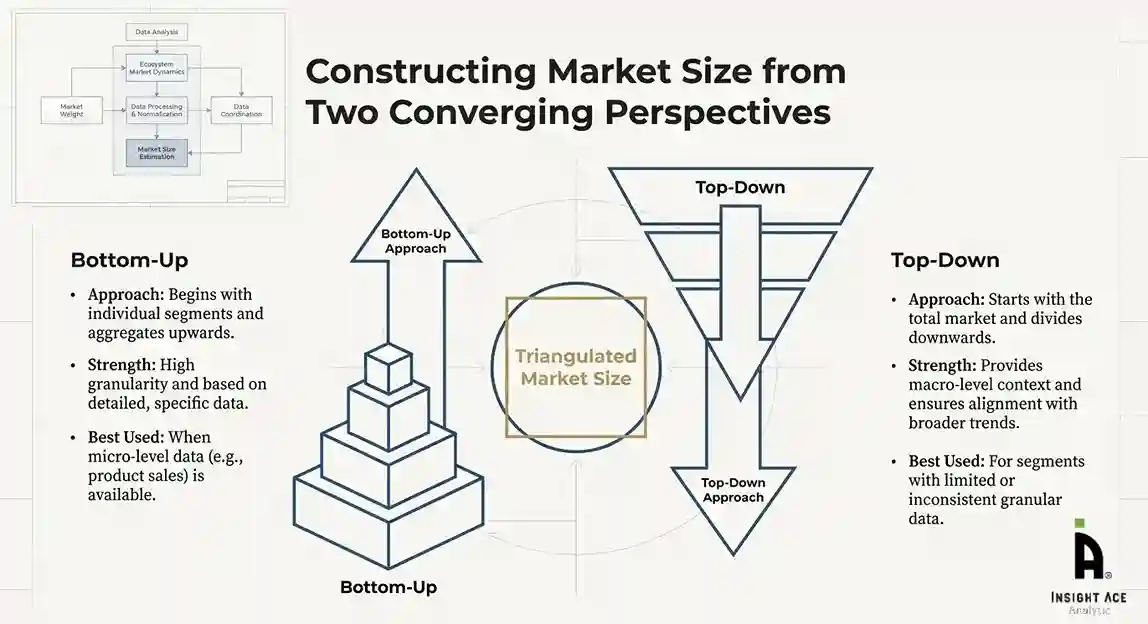
Top-Down Approach
The top-down approach used macro-level indicators:
- Parent market benchmarks
- Global/regional industry trends
- Economic indicators (GDP, demographics, spending patterns)
- Penetration and usage ratios
This approach was used for segments where granular data were limited or inconsistent.
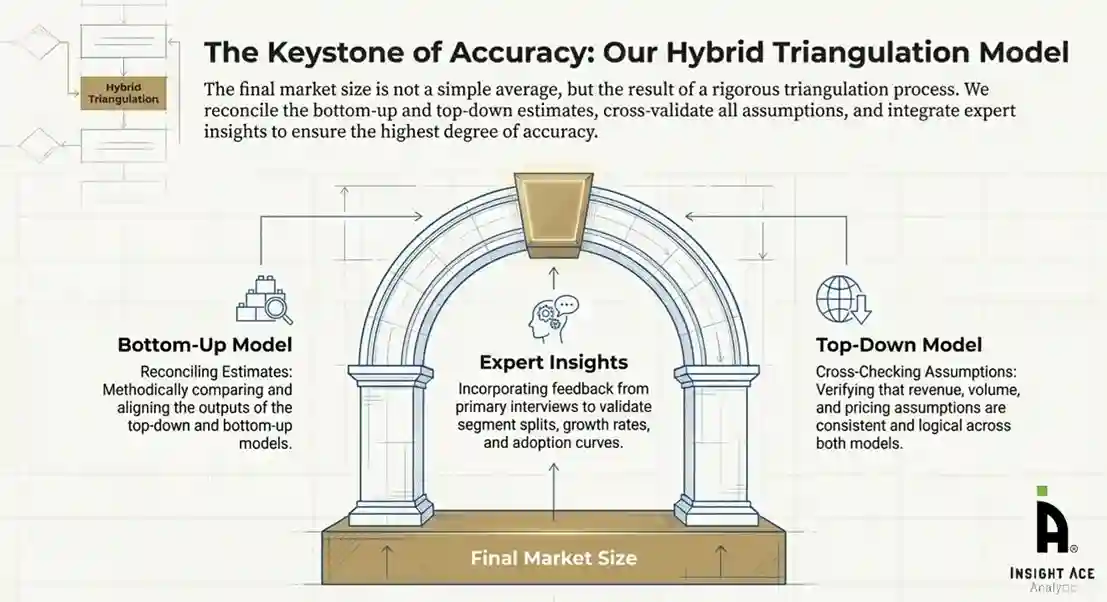
Hybrid Triangulation Approach
To ensure accuracy, a triangulated hybrid model was used. This included:
- Reconciling top-down and bottom-up estimates
- Cross-checking revenues, volumes, and pricing assumptions
- Incorporating expert insights to validate segment splits and adoption rates
This multi-angle validation yielded the final market size.
Forecasting Framework and Scenario Modelling
Market forecasts were developed using a combination of time-series modelling, adoption curve analysis, and driver-based forecasting tools.
Forecasting Methods
- Time-series modelling
- S-curve and diffusion models (for emerging technologies)
- Driver-based forecasting (GDP, disposable income, adoption rates, regulatory changes)
- Price elasticity models
- Market maturity and lifecycle-based projections
Scenario Analysis
Given inherent uncertainties, three scenarios were constructed:
- Base-Case Scenario: Expected trajectory under current conditions
- Optimistic Scenario: High adoption, favourable regulation, strong economic tailwinds
- Conservative Scenario: Slow adoption, regulatory delays, economic constraints
Sensitivity testing was conducted on key variables, including pricing, demand elasticity, and regional adoption.
Request Customization
Add countries, segments, company profiles, or extend forecast — free 10% customization with purchase.
Customize This Report →Enquire Before Buying
Speak with our analyst team about scope, methodology, pricing, or deliverable formats.
Enquire Now →Frequently Asked Questions
Ocular Inflammation Treatment Market Size is valued at USD 487.01 Mn in 2025 and is predicted to reach USD 914.17 Mn by the year 2035.
Ocular Inflammation Treatment Market is expected to grow at a 6.9% CAGR during the forecast period for 2026-2035.
GlaxoSmithKline plc, Intas Pharmaceuticals Ltd, Johnson & Johnson Services Inc., Macleods Pharmaceuticals Ltd., Merck & Co. Inc., Tarsier Pharma and O
Ocular inflammation treatment market is segmented based on treatment type, disease type, mode of administration, and distribution channel.
North American region is leading the Ocular inflammation treatment market.