Noninvasive MASH Diagnostic Tests Market Size, Trend, Forecast Report 2026 to 2035
What is Noninvasive MASH Diagnostic Tests Market Size?
Global Noninvasive MASH Diagnostic Tests Market is estimated to grow at a 16.0% CAGR during the forecast period for 2026 to 2035.
Noninvasive MASH Diagnostic Tests Market Size, Share & Trends Analysis Distribution by Test Modality (Blood-Based Biomarker Tests, Proprietary Multi-Analyte Algorithmic Panels, Defined-Biomarker IVD Assays, Ultrasound-Based Tests, Vibration-Controlled Transient Elastography, 2D Shear-Wave & Quantitative Ultrasound, MRI-Based Tests, Magnetic Resonance Elastography, Multiparametric & Quantitative MRI, Routine-Data Algorithmic Tests), by Clinical Application / Intended Use (Steatosis Detection & Quantification, At-Risk (Fibrotic) MASH Identification, Fibrosis Staging, Disease Monitoring & Treatment, Prognosis & Risk Stratification, Clinical-Trial Enrichment & Surrogate Endpoints), by Regulatory / Commercialisation Pathway, by End User) and Segment Forecasts, 2026 to 2035.
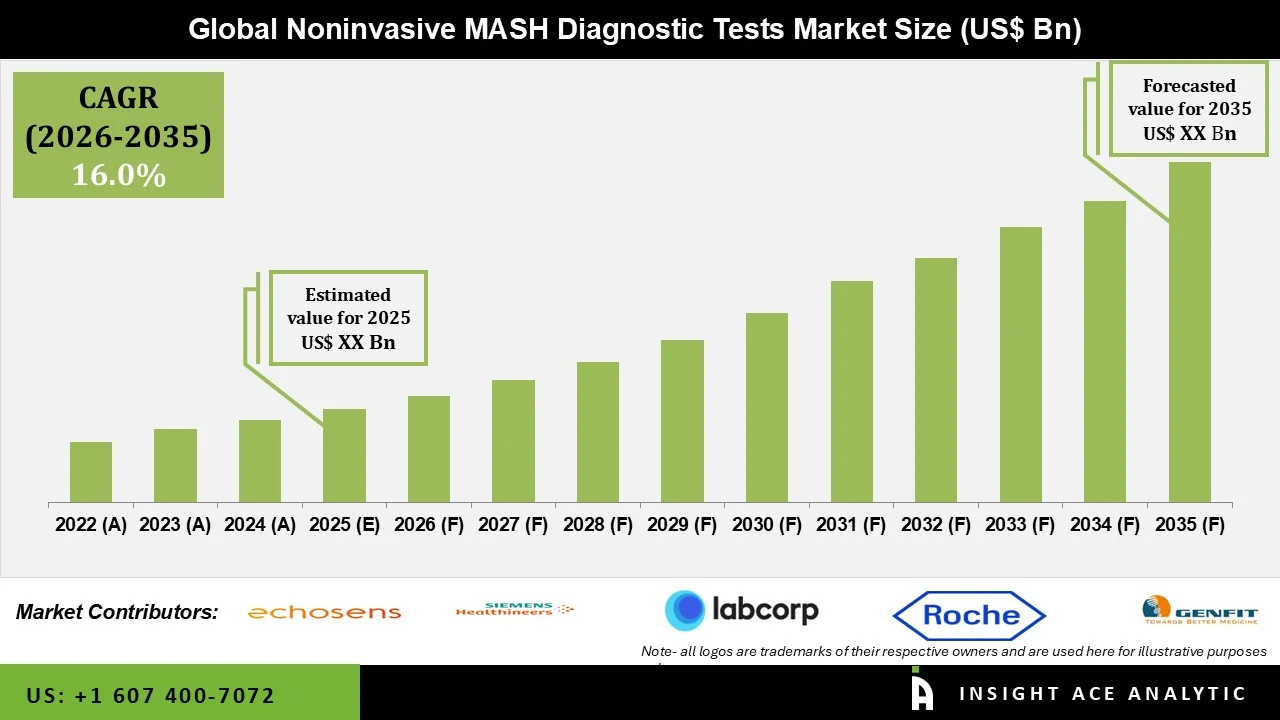
Noninvasive MASH diagnostic tests are diagnostic approaches designed to evaluate metabolic dysfunction-associated steatohepatitis (MASH) and its underlying liver abnormalities without the need for invasive liver biopsy. These technologies provide information on key disease characteristics, including hepatic steatosis and fibrosis, and can also help assess the likelihood of clinically significant or progressive liver disease. Depending on the technology, assessment may be based on circulating biomarkers, imaging measurements, liver stiffness, or combinations of clinical and laboratory parameters.
A range of diagnostic approaches is being used to support noninvasive assessment of MASH. These include multi-analyte biomarker panels, in vitro diagnostic assays, vibration-controlled transient elastography (VCTE), two-dimensional shear-wave and quantitative ultrasound, magnetic resonance elastography (MRE), multiparametric magnetic resonance imaging (MRI), and algorithm-based assessments using routine clinical and laboratory data. These methods provide different types and levels of information, ranging from liver fat and stiffness measurements to broader assessments of fibrosis risk and disease severity.
The Noninvasive MASH Diagnostic Tests Market encompasses technologies and services used for the development, validation, commercialization, and clinical application of these diagnostic approaches. They are utilized across hospitals, specialty clinics, diagnostic laboratories, primary care settings, imaging centres, and pharmaceutical and biotechnology companies. Depending on their intended application, noninvasive tests can support the identification and assessment of steatosis, detection of patients at risk of fibrotic MASH, fibrosis staging, longitudinal disease monitoring, outcome assessment, and selection of appropriate participants for clinical trials.
The market includes diagnostic developers, biomarker and laboratory testing companies, medical imaging and elastography technology providers, and developers of algorithm-based and AI-enabled diagnostic solutions. Commercially available tests coexist with emerging biomarker, imaging, and computational technologies that are undergoing clinical evaluation and regulatory development. Increasing efforts to combine multiple biomarkers, imaging parameters, and clinical variables are also contributing to the development of more comprehensive approaches for noninvasive liver assessment.
The growing clinical relevance of noninvasive testing reflects the need for repeatable, scalable, and less invasive methods of evaluating MASH and fibrosis across different points in the patient journey. These technologies are increasingly being incorporated into diagnostic workflows and clinical research programs, providing alternatives or complementary approaches to biopsy-based assessment while supporting broader evaluation and monitoring of patients with metabolic dysfunction-associated liver disease.
Competitive Landscape
Which are the Leading Players in the Noninvasive MASH Diagnostic Tests Market?
- Echosens
- Siemens Healthineers
- Laboratory Corporation of America (Labcorp)
- Roche Diagnostics
- GENFIT S.A.
- Perspectum Ltd.
- Resoundant, Inc.
- Prometheus Laboratories Inc.
- BioPredictive
- Nordic Bioscience
- Quest Diagnostics
- Fibronostics
- Rubió Metabolomics / CIMA Sciences (OWLiver)
- Canon Medical Systems
- Sonic Incytes Medical Corp.
- E-Scopics
- Resonance Health Ltd.
- Hepta (cfDNA Methylation + AI)
- Wuxi Hisky Medical Technologies
- Mindray Medical
- Proteomic & Multi-Omic MASH Signatures
- Academic-Origin AI/ML Fibrosis Algorithms in Commercialisation
- GE HealthCare
- Philips
- Samsung Medison
- HistoIndex
- PathAI
- Madrigal Pharmaceuticals
- Novo Nordisk
- Eli Lilly
- Boehringer Ingelheim
Market Dynamics
Driver
Growing Prevalence of MASH and Increasing Demand for Noninvasive Liver Disease Assessment
As metabolic dysfunction-associated steatohepatitis (MASH) becomes more common due to rising obesity, type 2 diabetes, and other metabolic disorders, there is a greater need for early and accurate liver disease diagnosis. Traditional liver biopsy is invasive, comes with risks, and is not ideal for repeated assessments. This has led healthcare providers to look for noninvasive diagnostic options. Blood-based biomarker tests, ultrasound elastography, and MRI technologies help clinicians assess liver steatosis and fibrosis more easily and allow for ongoing disease monitoring without repeated invasive procedures. The focus on finding patients at risk for fibrotic MASH and the growth of treatment options are also driving demand for reliable diagnostic tools, which is helping the market grow in hospitals, specialty clinics, and diagnostic labs.
Restrain/Challenge
Variability in Diagnostic Accuracy and Limited Standardisation Across Noninvasive Testing Methods
One of the main challenges in the noninvasive MASH diagnostic tests market is that test performance can vary depending on the method, patient group, and stage of liver disease. Blood-based biomarker panels and algorithmic tests may give different results based on the biomarkers, clinical factors, and validation groups used. Ultrasound and MRI-based technologies can be affected by the operator’s skill, equipment, and patient factors. Differences in diagnostic thresholds and how well tests distinguish between steatosis, inflammation, and advanced fibrosis can also make results harder to interpret. More clinical validation, standardised diagnostic pathways, and better integration into routine care are needed, especially in healthcare settings with limited resources.
Ultrasound-Based Tests Segment is Expected to Drive the Noninvasive MASH Diagnostic Tests Market
Ultrasound-based tests are expected to make up a large part of the noninvasive MASH diagnostic tests market because elastography is already widely used to measure liver stiffness and assess fibrosis. Vibration-controlled transient elastography and 2D shear-wave ultrasound offer noninvasive ways to evaluate liver disease without needing tissue samples. These tests are supported by established imaging platforms, are less complex than MRI-based assessments, and are being adopted more in hospitals and specialty clinics. More use of elastography to find patients who need further testing and to track changes in liver stiffness is also increasing demand for ultrasound-based solutions.
Blood-Based Biomarker Tests Segment is Growing at the Highest Rate in the Noninvasive MASH Diagnostic Tests Market
Blood-based biomarker tests are expected to grow the fastest, driven by the need for diagnostic solutions that are easy to use, scalable, and repeatable. Proprietary multi-analyte panels and defined-biomarker IVD assays allow liver disease to be assessed with blood samples and fit into current lab workflows. These tests are especially useful in primary care and routine clinical settings, where they help with initial risk assessment and can identify patients who may need more imaging or specialist care. Research into new biomarkers, multi-omics, and AI-based diagnostic algorithms is expanding what blood-based tests can do for fibrosis assessment, disease monitoring, and patient stratification. As more MASH treatments become available, the need for scalable diagnostics is helping these tests reach the market.
Why North America Led the Noninvasive MASH Diagnostic Tests Market?
North America is expected to lead the noninvasive MASH diagnostic tests market because of its high rates of metabolic disorders, strong healthcare infrastructure, and growing use of advanced diagnostics. The region has top diagnostic labs, biomarker developers, imaging companies, and research organizations that help develop and commercialize noninvasive liver assessment tools.
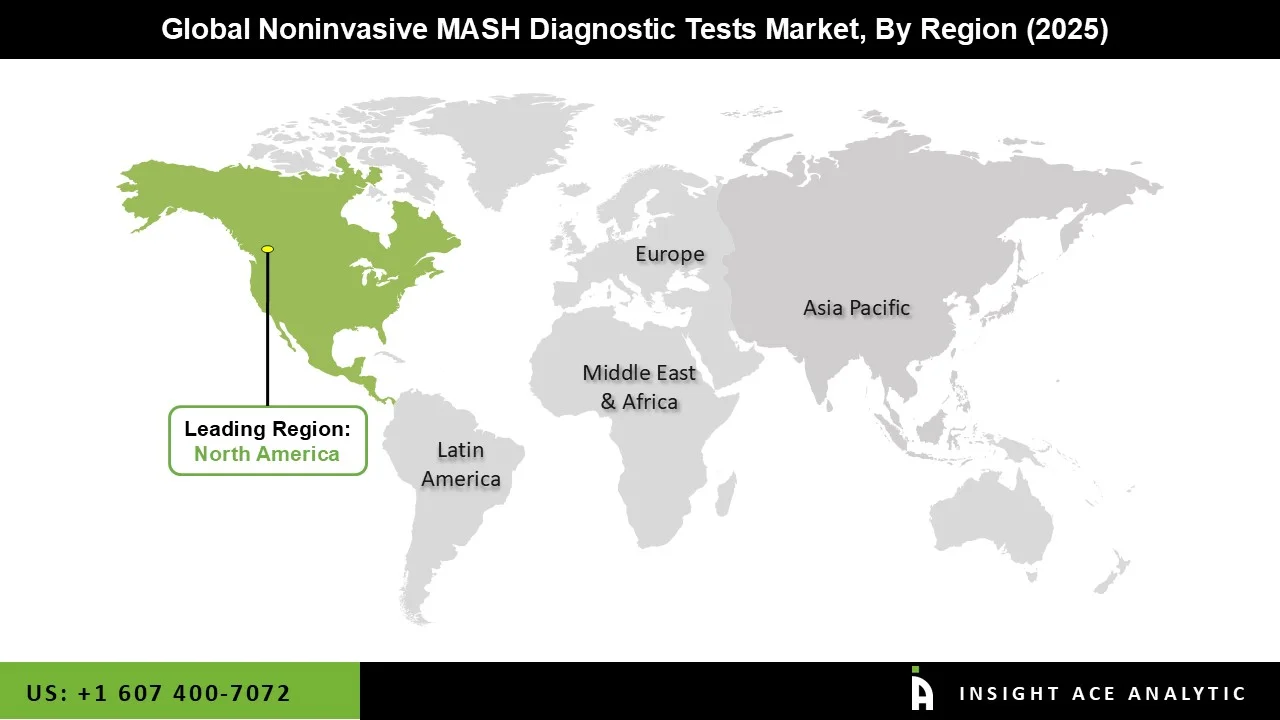
Companies like Echosens, Labcorp, Quest Diagnostics, and Resoundant are making elastography, lab-based tests, and advanced imaging more available. More focus on early detection of at-risk MASH patients, increased investment in liver disease research, and new MASH treatments are encouraging providers to use more thorough diagnostic and monitoring methods. Well-established reimbursement systems and ongoing clinical validation of new diagnostic technologies also strengthen the region’s market position.
Key Development:
• In June 2026, GENFIT S.A. and Labcorp expanded access to NASHnext®, a blood-based diagnostic test powered by GENFIT’s NIS4® technology, through Labcorp OnDemand. The physician-directed offering is designed to help identify patients with at-risk MASH and make noninvasive testing more accessible to a wider population.
• In June 2026, Labcorp reported findings from two peer-reviewed studies highlighting the potential of its Metabolic Vulnerability Index (MVX) and NIS2+ blood test. The research indicated that these tools may help predict liver disease progression and mortality and identify patients at risk of MASH and significant fibrosis, reinforcing the growing role of blood-based biomarkers in disease risk assessment.
Noninvasive MASH Diagnostic Tests Market Report Scope:
| Report Attribute | Specifications |
| Market size value in 2025 | USD XX Bn |
| Revenue forecast in 2035 | USD XX Bn |
| Growth Rate CAGR | CAGR of 16.0% from 2026 to 2035 |
| Quantitative Units | Representation of revenue in US$ Bn and CAGR from 2026 to 2035 |
| Historic Year | 2022 to 2025 |
| Forecast Year | 2026-2035 |
| Report Coverage | The forecast of revenue, the position of the company, the competitive market structure, growth prospects, and trends |
| Segments Covered | Test Modality,Clinical Application / Intended Use, Regulatory / Commercialisation Pathway, End User and By Region |
| Regional Scope | North America; Europe; Asia Pacific; Latin America; Middle East & Africa |
| Country Scope | U.S.; Canada; U.K.; Germany; China; India; Japan; Brazil; Mexico; France; Italy; Spain; South Korea; Southeast Asia |
| Competitive Landscape | Echosens, Siemens Healthineers, Laboratory Corporation of America (Labcorp), Roche Diagnostics, GENFIT S.A., Perspectum Ltd., Resoundant, Inc., Prometheus Laboratories Inc., BioPredictive, Nordic Bioscience, Quest Diagnostics, Fibronostics, Rubió Metabolomics / CIMA Sciences (OWLiver), Canon Medical Systems, Sonic Incytes Medical Corp., E-Scopics, Resonance Health Ltd., Hepta (cfDNA Methylation + AI), Wuxi Hisky Medical Technologies, Mindray Medical, Proteomic & Multi-Omic MASH Signatures, Academic-Origin AI/ML Fibrosis Algorithms in Commercialisation, GE HealthCare, Philips, Samsung Medison, HistoIndex, PathAI, Madrigal Pharmaceuticals, Novo Nordisk, Eli Lilly, Boehringer Ingelheim. |
| Customization Scope | Free customization report with the procurement of the report, Modifications to the regional and segment scope. Geographic competitive landscape. |
| Pricing and Available Payment Methods | Explore pricing alternatives that are customized to your particular study requirements. |
Segmentations Noninvasive MASH Diagnostic Tests Market:
Noninvasive MASH Diagnostic Tests Market by Test Modality -
- Blood-Based Biomarker Tests
- Proprietary Multi-Analyte Algorithmic Panels
- Defined-Biomarker IVD Assays
- Ultrasound-Based Tests
- Vibration-Controlled Transient Elastography
- 2D Shear-Wave & Quantitative Ultrasound
- MRI-Based Tests
- Magnetic Resonance Elastography
- Multiparametric & Quantitative MRI
- Routine-Data Algorithmic Tests
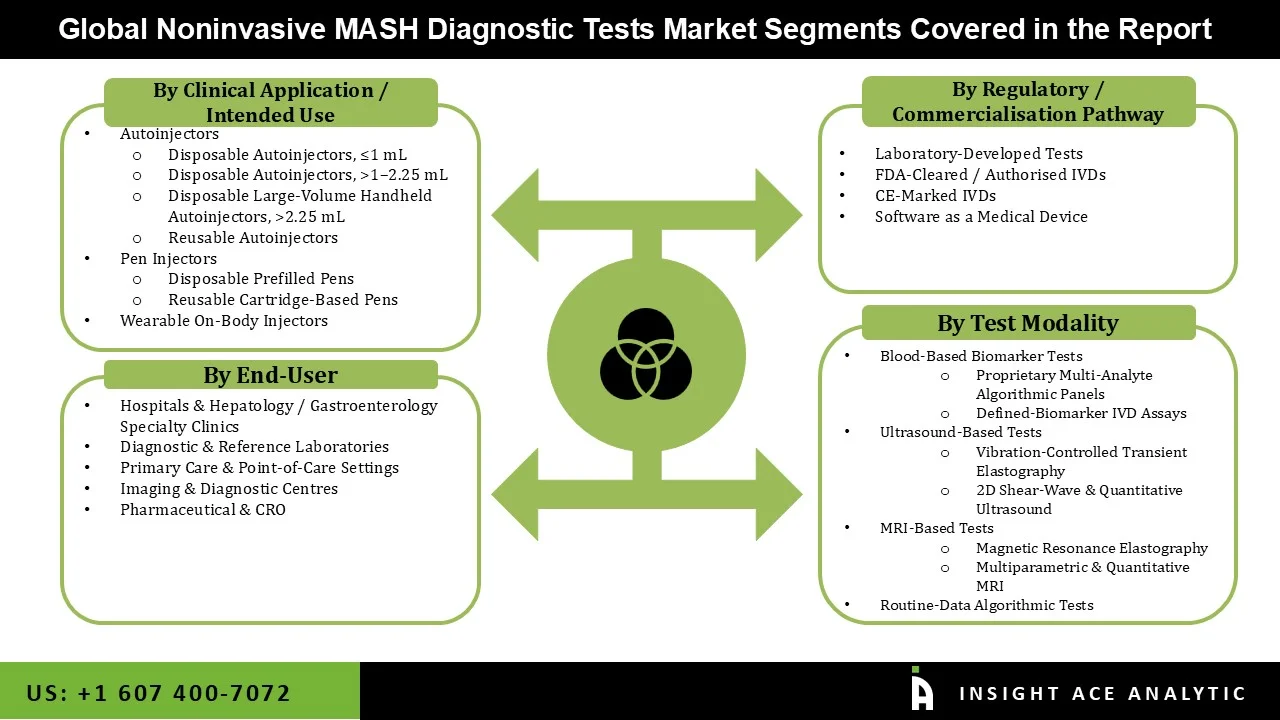
Noninvasive MASH Diagnostic Tests Market by Clinical Application / Intended Use -
- Steatosis Detection & Quantification
- At-Risk (Fibrotic) MASH Identification
- Fibrosis Staging
- Disease Monitoring & Treatment
- Prognosis & Risk Stratification
- Clinical-Trial Enrichment & Surrogate Endpoints
Noninvasive MASH Diagnostic Tests Market by Regulatory / Commercialisation Pathway-
- Laboratory-Developed Tests
- FDA-Cleared / Authorised IVDs
- CE-Marked IVDs
- Software as a Medical Device
Noninvasive MASH Diagnostic Tests Market by End User -
- Hospitals & Hepatology / Gastroenterology Specialty Clinics
- Diagnostic & Reference Laboratories
- Primary Care & Point-of-Care Settings
- Imaging & Diagnostic Centres
- Pharmaceutical & CRO
Noninvasive MASH Diagnostic Tests Market by Region-
- North America-
- The US
- Canada
- Europe-
- Germany
- The UK
- France
- Italy
- Spain
- Rest of Europe
- Asia-Pacific-
- China
- Japan
- India
- South Korea
- South East Asia
- Rest of Asia Pacific
- Latin America-
- Brazil
- Argentina
- Mexico
- Rest of Latin America
- Middle East and Africa-
- GCC Countries
- South Africa
- Rest of Middle East and Africa
Research Design and Approach
This study employed a multi-step, mixed-method research approach that integrates:
- Secondary research
- Primary research
- Data triangulation
- Hybrid top-down and bottom-up modelling
- Forecasting and scenario analysis
This approach ensures a balanced and validated understanding of both macro- and micro-level market factors influencing the market.
Secondary Research
Secondary research for this study involved the collection, review, and analysis of publicly available and paid data sources to build the initial fact base, understand historical market behaviour, identify data gaps, and refine the hypotheses for primary research.
Sources Consulted
Secondary data for the market study was gathered from multiple credible sources, including:
- Government databases, regulatory bodies, and public institutions
- International organizations (WHO, OECD, IMF, World Bank, etc.)
- Commercial and paid databases
- Industry associations, trade publications, and technical journals
- Company annual reports, investor presentations, press releases, and SEC filings
- Academic research papers, patents, and scientific literature
- Previous market research publications and syndicated reports
These sources were used to compile historical data, market volumes/prices, industry trends, technological developments, and competitive insights.
Primary Research
Primary research was conducted to validate secondary data, understand real-time market dynamics, capture price points and adoption trends, and verify the assumptions used in the market modelling.
Stakeholders Interviewed
Primary interviews for this study involved:
- Manufacturers and suppliers in the market value chain
- Distributors, channel partners, and integrators
- End-users / customers (e.g., hospitals, labs, enterprises, consumers, etc., depending on the market)
- Industry experts, technology specialists, consultants, and regulatory professionals
- Senior executives (CEOs, CTOs, VPs, Directors) and product managers
Interview Process
Interviews were conducted via:
- Structured and semi-structured questionnaires
- Telephonic and video interactions
- Email correspondences
- Expert consultation sessions
Primary insights were incorporated into demand modelling, pricing analysis, technology evaluation, and market share estimation.
Data Processing, Normalization, and Validation
All collected data were processed and normalized to ensure consistency and comparability across regions and time frames.
The data validation process included:
- Standardization of units (currency conversions, volume units, inflation adjustments)
- Cross-verification of data points across multiple secondary sources
- Normalization of inconsistent datasets
- Identification and resolution of data gaps
- Outlier detection and removal through algorithmic and manual checks
- Plausibility and coherence checks across segments and geographies
This ensured that the dataset used for modelling was clean, robust, and reliable.
Market Size Estimation and Data Triangulation
Bottom-Up Approach
The bottom-up approach involved aggregating segment-level data, such as:
- Company revenues
- Product-level sales
- Installed base/usage volumes
- Adoption and penetration rates
- Pricing analysis
This method was primarily used when detailed micro-level market data were available.

Top-Down Approach
The top-down approach used macro-level indicators:
- Parent market benchmarks
- Global/regional industry trends
- Economic indicators (GDP, demographics, spending patterns)
- Penetration and usage ratios
This approach was used for segments where granular data were limited or inconsistent.
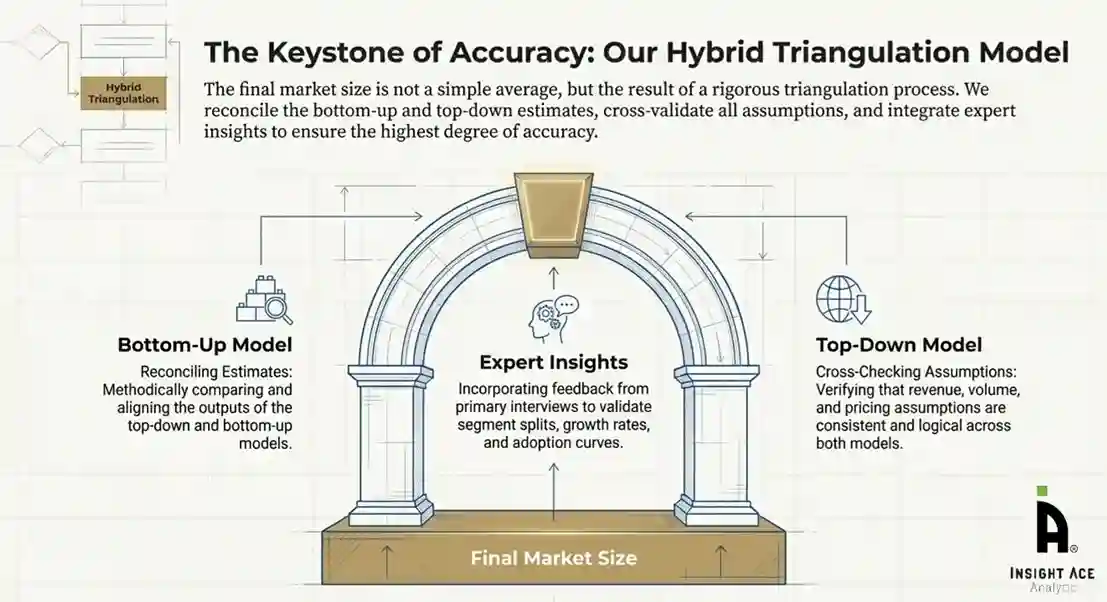
Hybrid Triangulation Approach
To ensure accuracy, a triangulated hybrid model was used. This included:
- Reconciling top-down and bottom-up estimates
- Cross-checking revenues, volumes, and pricing assumptions
- Incorporating expert insights to validate segment splits and adoption rates
This multi-angle validation yielded the final market size.
Forecasting Framework and Scenario Modelling
Market forecasts were developed using a combination of time-series modelling, adoption curve analysis, and driver-based forecasting tools.
Forecasting Methods
- Time-series modelling
- S-curve and diffusion models (for emerging technologies)
- Driver-based forecasting (GDP, disposable income, adoption rates, regulatory changes)
- Price elasticity models
- Market maturity and lifecycle-based projections
Scenario Analysis
Given inherent uncertainties, three scenarios were constructed:
- Base-Case Scenario: Expected trajectory under current conditions
- Optimistic Scenario: High adoption, favourable regulation, strong economic tailwinds
- Conservative Scenario: Slow adoption, regulatory delays, economic constraints
Sensitivity testing was conducted on key variables, including pricing, demand elasticity, and regional adoption.
Request Customization
Add countries, segments, company profiles, or extend forecast — free 10% customization with purchase.
Customize This Report →Enquire Before Buying
Speak with our analyst team about scope, methodology, pricing, or deliverable formats.
Enquire Now →Frequently Asked Questions
Noninvasive MASH Diagnostic Tests Market is estimated to grow at a 16.0% CAGR during the forecast period for 2026 to 2035.
Echosens, Siemens Healthineers, Laboratory Corporation of America (Labcorp), Roche Diagnostics, GENFIT S.A., Perspectum Ltd., Resoundant, Inc., Prometheus Laboratories Inc., BioPredictive, Nordic Bioscience, Quest Diagnostics, Fibronostics, Rubió Metabolomics / CIMA Sciences (OWLiver), Canon Medical Systems, Sonic Incytes Medical Corp., E-Scopics, Resonance Health Ltd., Hepta (cfDNA Methylation + AI), Wuxi Hisky Medical Technologies, Mindray Medical, Proteomic & Multi-Omic MASH Signatures, Academic-Origin AI/ML Fibrosis Algorithms in Commercialisation, GE HealthCare, Philips, Samsung Medison, HistoIndex, PathAI, Madrigal Pharmaceuticals, Novo Nordisk, Eli Lilly, Boehringer Ingelheim and Other.
Noninvasive MASH Diagnostic Tests Market is segmented into Test Modality,Clinical Application / Intended Use, Regulatory / Commercialisation Pathway, End User and Other.
North America region is leading the Noninvasive MASH Diagnostic Tests Market.