Nasal Drug Delivery CDMO Market Size, Share, Scope, Forecast Report 2026 to 2035
What is Nasal Drug Delivery CDMO Market Size?
Global Nasal Drug Delivery CDMO Market Size is predicted to grow at a 10.5% CAGR during the forecast period for 2026 to 2035.
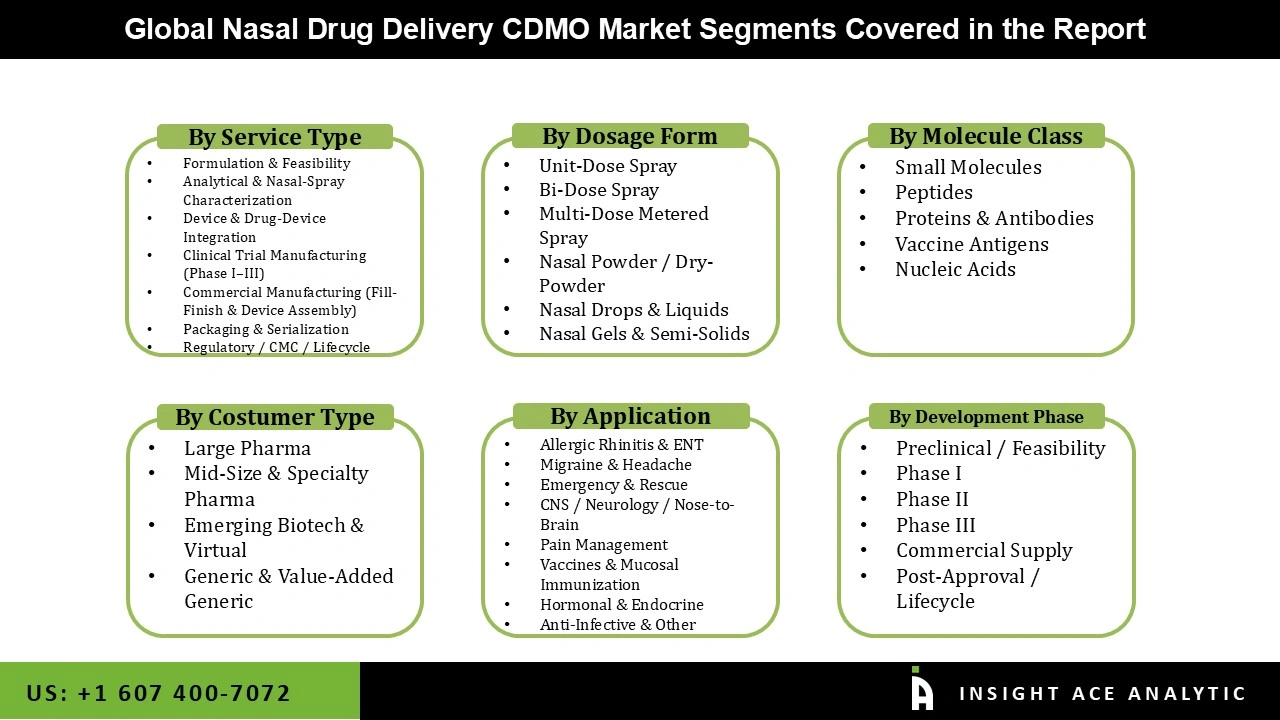
Nasal Drug Delivery CDMO Market Size, Share & Trends Analysis Distribution by Service Type (Formulation & Feasibility, Analytical & Nasal-Spray Characterization, Device & Drug-Device Integration, Clinical Trial Manufacturing (Phase I–III), Commercial Manufacturing (Fill-Finish & Device Assembly), Packaging & Serialization, Regulatory / CMC / Lifecycle, by Dosage Form (Unit-Dose Spray, Bi-Dose Spray, Multi-Dose Metered Spray, Nasal Powder / Dry-Powder, Nasal Drops & Liquids, Nasal Gels & Semi-Solids), by Molecule Class (Small Molecules, Peptides, Proteins & Antibodies, Vaccine Antigens, Nucleic Acids (mRNA / Oligonucleotides), by Application (Allergic Rhinitis & ENT, Migraine & Headache, Emergency & Rescue, CNS / Neurology / Nose-to-Brain, Pain Management, Vaccines & Mucosal Immunization, Hormonal & Endocrine, Anti-Infective & Other), by Customer Type, by Development Phase and Segment Forecasts, 2026 to 2035,
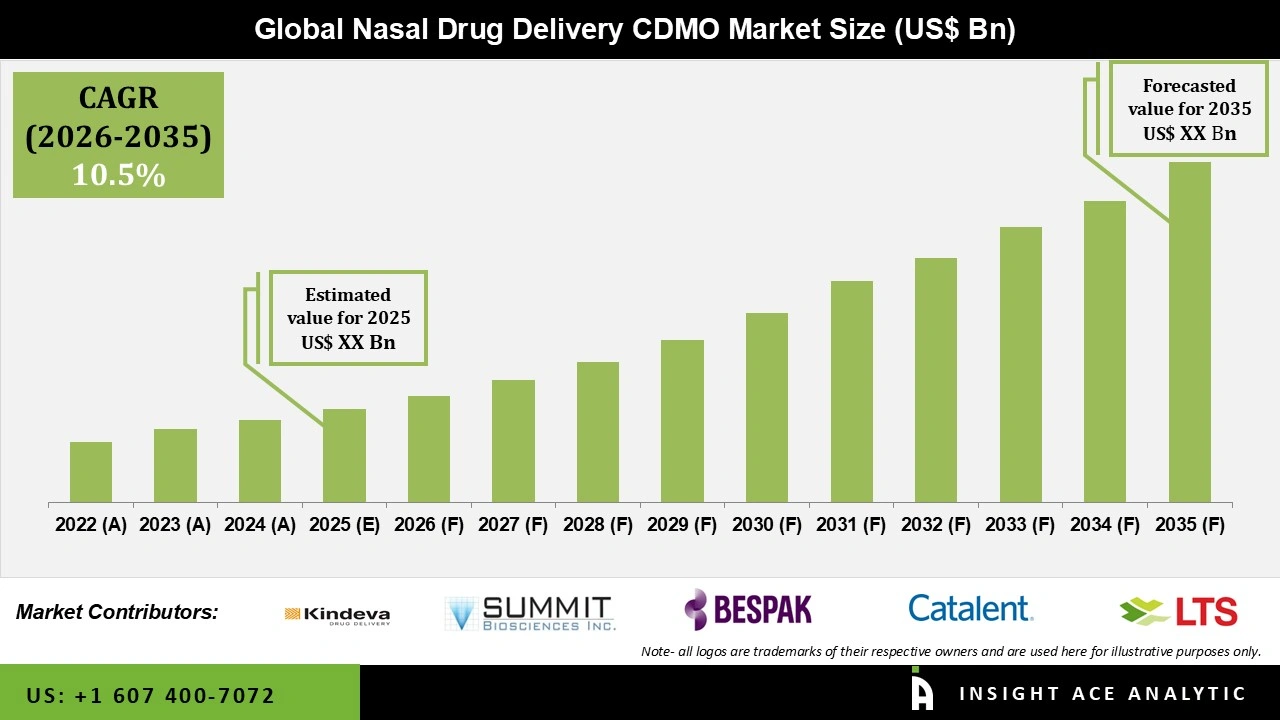
Nasal drug delivery means giving medicines through the nose to treat local issues, reach the whole body, or target the brain directly. In recent years, this method has grown from just allergy and decongestant products to a platform capable of handling complex biologics, emergency treatments, vaccines, peptides, central nervous system drugs, and fast-acting therapies. Using the nasal route offers several key benefits, including rapid absorption, non-invasive administration, greater patient convenience, avoidance of first-pass metabolism, and the ability to deliver drugs directly to the brain. As drug companies seek more patient-friendly, fast-acting treatments, nasal drug delivery is becoming increasingly important across many areas. The market for nasal drug delivery CDMOs is growing quickly as more pharmaceutical and biotech companies choose to outsource tasks like formulation development, testing, device integration, manufacturing, and regulatory support to specialized partners. Making nasal drug-device products requires specialised skills in formulation, spray testing, device matching, particle engineering, sterility, and regulatory compliance. Because of this, many drug makers work with experienced CDMOs to accelerate development, streamline operations, and scale up manufacturing.
The need for fast-acting, non-invasive treatments is driving market growth. More often, intranasal delivery is used for migraines, seizure rescue, reversing opioid overdoses, pain relief, allergies, hormone therapies, and emergency care because it works quickly and is easy to use. There is also more research into delivering drugs from the nose to the brain for conditions like Parkinson’s, Alzheimer’s, epilepsy, depression, and other brain disorders. This is opening up new opportunities for specialized nasal drug delivery platforms and CDMO services. Another major trend shaping the market is the growing development of biologics, peptides, proteins, vaccines, and nucleic acid-based therapies for intranasal administration.
Pharmaceutical companies are exploring. Another key trend is the rise of biologics, peptides, proteins, vaccines, and nucleic acid therapies for nasal delivery. Drug companies see nasal delivery as a good option for mucosal immunization, needle-free vaccines, and targeted brain treatments. This is driving demand for advanced formulation methods, powder technology, preservative-free systems, nanoparticle delivery, and better device integration. CDMOs are investing in testing platforms, nasal spray analysis, sterile manufacturing, and automated filling to handle more complex products.h-powered devices, and dry-powder nasal platforms are improving dosing accuracy, ease of use, portability, and patient compliance. Regulatory agencies are placing greater emphasis on human factor engineering, device performance validation, and product consistency, encouraging pharmaceutical companies to work with CDMOs that offer integrated drug-device development expertise.
Technological advancements in spray characterisation, droplet analysis, particle deposition modelling, device engineering, and aseptic manufacturing are further improving product performance. New technologies in spray testing, droplet analysis, particle modelling, device design, and sterile manufacturing are making products work better and manufacturing more efficient. CDMOs are using more automated filling, digital quality checks, advanced labs, and scalable production to keep up with global demand. Partnerships between drug companies, device makers, and specialised CDMOs are also accelerating innovation and bringing new nasal drug-delivery products to market.Even with strong growth, the market still faces challenges.
Nasal drug products often need complex formulations, must meet strict regulations, and require careful device matching and testing. It can be hard to get consistent spray performance, dose accuracy, stability, and bioavailability, especially for biologics, peptides, and drugs targeting the brain. High development costs, changing regulations, and the need for special manufacturing setups can also make it hard for some companies to enter the market. Still, ongoing progress in drug-device combinations, biologic drugs, nose-to-brain treatments, and emergency medicines should help the market grow over time. As drug companies focus more on fast delivery, patient convenience, targeted treatments, and non-invasive options, nasal drug delivery CDMOs will continue to play a key role in developing, manufacturing, and launching new intranasal therapies worldwide.
Competitive Landscape
Which are the Leading Players in the Nasal Drug Delivery CDMO Market?
- Kindeva Drug Delivery
- Summit Biosciences
- Bespak
- Catalent
- LTS Lohmann Therapie-Systeme
- Renaissance Lakewood
- Recipharm
- Unither Pharmaceuticals
- Grünenthal PRO
- Delpharm
- Aptar Pharma
- Lonza
- Hovione
- Biodeal Pharmaceuticals
- Aurigene Pharmaceutical Services
- Douglas CDMO
Market Dynamics
Driver
Growing Demand for Rapid-Acting and Non-Invasive Drug Delivery Solutions
A key driver of the nasal drug delivery CDMO Market is the rising demand for fast-acting, non-invasive drug delivery systems across many therapeutic areas. Nasal drug delivery offers several benefits, including rapid absorption, ease of use, improved patient comfort, and avoidance of first-pass metabolism. These advantages make it a good choice for emergency treatments, migraines, CNS disorders, pain relief, and hormone therapies. There is also more research into nose-to-brain drug delivery for neurological conditions like Parkinson’s disease, epilepsy, and Alzheimer’s disease, which is boosting interest in advanced nasal formulations. As a result, pharmaceutical and biotech companies are working more closely with specialised CDMOs to support formulation, device integration, testing, and large-scale production of complex nasal drug products.
Restrain/Challenge
Complex Regulatory Requirements and Technical Development Challenges
A major challenge in the nasal drug delivery CDMO Market is the technical complexity and strict regulations for nasal drug-device combination products. Nasal formulations require careful control of spray performance, droplet size, dose consistency, stability, sterility, and device fit to ensure they are safe and effective. Regulators require detailed testing, human factor studies, and device checks, which makes development slow and costly. Developing biologics, peptides, and nose-to-brain therapies for nasal delivery is also difficult due to stability and bioavailability issues. CDMOs need to keep investing in advanced testing tools, specialised manufacturing, and regulatory know-how to keep up with industry standards and client needs.
Commercial Manufacturing (Fill-Finish & Device Assembly) Segment is Expected to Drive the Nasal Drug Delivery CDMO Market
The nasal drug delivery CDMO market will be driven by the Commercial Manufacturing segment. This segment includes activities such as fill-finish and device assembly. The reason for this is that more and more nasal sprays and other products are being sold in the market. As new treatments for things like allergies and migraines become available big pharmaceutical companies are looking for help with making these products on a scale. The Nasal Drug Delivery CDMO Market is where they go for this help. To make these products, you need specialised equipment and careful checks to ensure they are safe. There is also a growing need for preservative-free products and devices that can deliver the medicine dose. Because of this companies are investing in ways to make these products. The Nasal Drug Delivery CDMO Market helps pharmaceutical companies develop their products more efficiently and at lower cost.
Multi-Dose Metered Spray Segment is Expected to Drive the Nasal Drug Delivery CDMO Market
The nasal drug delivery CDMO market will also be driven by the Multi-Dose Metered Spray segment. This segment is important because it is used for both term and long-term treatments. People like these sprays because they are easy to use and deliver the medicine dose. The Nasal Drug Delivery CDMO Market is used to treat a lot of things like allergies and migraines. Pharmaceutical companies want to make it easier for patients to take their medicine so they are looking for better ways to do this. The Nasal Drug Delivery CDMO Market is helping make this happen by working with device manufacturers and pharmaceutical companies to ensure products work well and are manufactured at scale. The Multi-Dose Metered Spray segment is growing due to technologies such as breath-powered devices and preservative-free systems. The Nasal Drug Delivery CDMO Market is expected to continue growing as pharmaceutical companies partner with Nasal Drug Delivery CDMOs to develop better products.
Why North America Led the Nasal Drug Delivery CDMO Market?
North America leads the nasal drug delivery CDMO market thanks to its strong pharmaceutical and biotech sectors, advanced healthcare systems, and focus on new drug-delivery technologies. The United States is especially important, as it hosts many top pharmaceutical companies, biotech firms, CDMOs, and nasal drug-device developers. Demand for intranasal therapies is rising in areas like allergic rhinitis, migraine treatment, emergency rescue medicines, CNS disorders, pain management, and vaccines. North America’s leadership is also driven by more investment in biologics, peptide-based drugs, and nose-to-brain therapies. Companies in the region are developing advanced nasal formulations that provide fast drug absorption, greater patient convenience, and non-invasive use. More people are also learning about emergency rescue nasal sprays, like those for opioid overdose and seizures, which is boosting demand for nasal drug delivery products. Advanced manufacturing facilities and strong regulatory know-how also make the
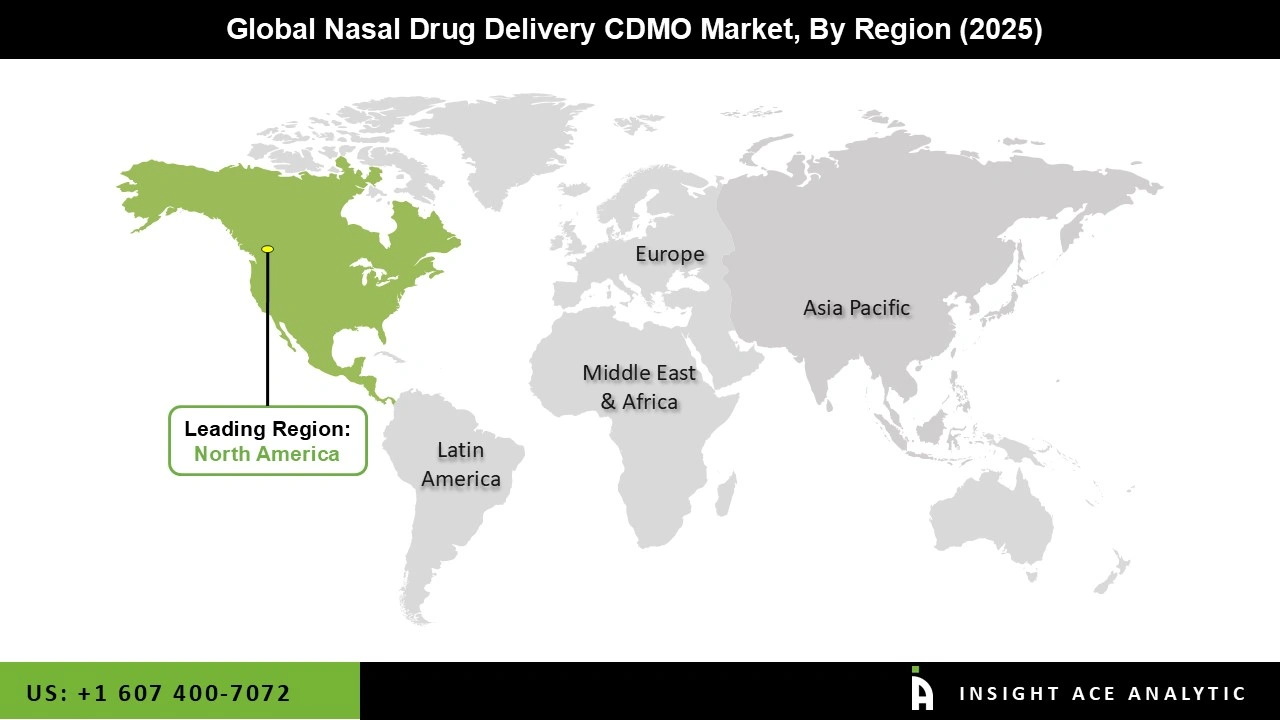
North American market stronger. CDMOs in the region are investing in formulation development, analytical testing, spray technology, aseptic fill-finish systems, and device integration to support more complex nasal drug-device products. Partnerships between pharmaceutical companies, biotech firms, and device makers are speeding up innovation and bringing new products to market faster. Government support for pharmaceutical innovation, more clinical research, and higher healthcare spending are also helping the market grow. More companies are investing in intranasal therapies as patient-friendly, fast-acting drug delivery systems become more popular. Thanks to strong research, advanced manufacturing, and rising demand for new nasal drug delivery solutions, North America remains the leader in the global Nasal Drug Delivery CDMO Market.
Key Developments:
• In January 2026, Summit Biosciences strengthened its sterile nasal spray manufacturing infrastructure by enhancing analytical testing, formulation development, and commercial-scale fill-finish services for pharmaceutical partners.
• In January 2026, Unither Pharmaceuticals strengthened sterile blow-fill-seal manufacturing capabilities for nasal drug products to support high-volume pharmaceutical outsourcing requirements.
Nasal Drug Delivery CDMO Market Report Scope :
| Report Attribute | Specifications |
| Growth Rate CAGR | CAGR of 10.5% from 2026 to 2035 |
| Quantitative Units | Representation of revenue in US$ Bn and CAGR from 2026 to 2035 |
| Historic Year | 2022 to 2025 |
| Forecast Year | 2026-2035 |
| Report Coverage | The forecast of revenue, the position of the company, the competitive market structure, growth prospects, and trends |
| Segments Covered | By Service Type, Dosage Form, Molecule Class, Application, Customer Type, Development Phase, and By Region |
| Regional Scope | North America; Europe; Asia Pacific; Latin America; Middle East & Africa |
| Country Scope | U.S.; Canada; U.K.; Germany; China; India; Japan; Brazil; Mexico; The UK; France; Italy; Spain; China; Japan; India; South Korea; Southeast Asia; South Korea; Southeast Asia |
| Competitive Landscape | Kindeva Drug Delivery, Summit Biosciences, Bespak, Catalent, LTS Lohmann Therapie-Systeme, Renaissance Lakewood, Recipharm, Unither Pharmaceuticals, Grünenthal PRO, Delpharm, Aptar Pharma, Lonza, Hovione, Biodeal Pharmaceuticals, Aurigene Pharmaceutical Services, Douglas CDMO |
| Customization Scope | Free customisation report with the procurement of the report, Modifications to the regional and segment scope. Geographic competitive landscape. |
| Pricing and Available Payment Methods | Explore pricing alternatives that are customised to your particular study requirements. |
Segmentations of Nasal Drug Delivery CDMO Market :
Nasal Drug Delivery CDMO Market by Service Type-
- Formulation & Feasibility
- Analytical & Nasal-Spray Characterization
- Device & Drug-Device Integration
- Clinical Trial Manufacturing (Phase I–III)
- Commercial Manufacturing (Fill-Finish & Device Assembly)
- Packaging & Serialization
- Regulatory / CMC / Lifecycle
Nasal Drug Delivery CDMO Market by Dosage Form-
- Unit-Dose Spray
- Bi-Dose Spray
- Multi-Dose Metered Spray
- Nasal Powder / Dry-Powder
- Nasal Drops & Liquids
- Nasal Gels & Semi-Solids
Nasal Drug Delivery CDMO Market by Molecule Class-
- Small Molecules
- Peptides
- Proteins & Antibodies
- Vaccine Antigens
- Nucleic Acids (mRNA / Oligonucleotides)
Nasal Drug Delivery CDMO Market by Application-
- Allergic Rhinitis & ENT
- Migraine & Headache
- Emergency & Rescue
- CNS / Neurology / Nose-to-Brain
- Pain Management
- Vaccines & Mucosal Immunization
- Hormonal & Endocrine
- Anti-Infective & Other
Nasal Drug Delivery CDMO Market by Customer Type-
- Large Pharma
- Mid-Size & Specialty Pharma
- Emerging Biotech & Virtual
- Generic & Value-Added Generic
Nasal Drug Delivery CDMO Market by Development Phase-
- Preclinical / Feasibility
- Phase I
- Phase II
- Phase III
- Commercial Supply
- Post-Approval / Lifecycle
Nasal Drug Delivery CDMO Market by Region-
- North America-
- The US
- Canada
- Europe-
- Germany
- The UK
- France
- Italy
- Spain
- Rest of Europe
- Asia-Pacific-
- China
- Japan
- India
- South Korea
- South East Asia
- Rest of Asia Pacific
- Latin America-
- Brazil
- Argentina
- Mexico
- Rest of Latin America
- Middle East and Africa-
- GCC Countries
- South Africa
- Rest of Middle East and Africa
Research Design and Approach
This study employed a multi-step, mixed-method research approach that integrates:
- Secondary research
- Primary research
- Data triangulation
- Hybrid top-down and bottom-up modelling
- Forecasting and scenario analysis
This approach ensures a balanced and validated understanding of both macro- and micro-level market factors influencing the market.
Secondary Research
Secondary research for this study involved the collection, review, and analysis of publicly available and paid data sources to build the initial fact base, understand historical market behaviour, identify data gaps, and refine the hypotheses for primary research.
Sources Consulted
Secondary data for the market study was gathered from multiple credible sources, including:
- Government databases, regulatory bodies, and public institutions
- International organizations (WHO, OECD, IMF, World Bank, etc.)
- Commercial and paid databases
- Industry associations, trade publications, and technical journals
- Company annual reports, investor presentations, press releases, and SEC filings
- Academic research papers, patents, and scientific literature
- Previous market research publications and syndicated reports
These sources were used to compile historical data, market volumes/prices, industry trends, technological developments, and competitive insights.

Primary Research
Primary research was conducted to validate secondary data, understand real-time market dynamics, capture price points and adoption trends, and verify the assumptions used in the market modelling.
Stakeholders Interviewed
Primary interviews for this study involved:
- Manufacturers and suppliers in the market value chain
- Distributors, channel partners, and integrators
- End-users / customers (e.g., hospitals, labs, enterprises, consumers, etc., depending on the market)
- Industry experts, technology specialists, consultants, and regulatory professionals
- Senior executives (CEOs, CTOs, VPs, Directors) and product managers
Interview Process
Interviews were conducted via:
- Structured and semi-structured questionnaires
- Telephonic and video interactions
- Email correspondences
- Expert consultation sessions
Primary insights were incorporated into demand modelling, pricing analysis, technology evaluation, and market share estimation.
Data Processing, Normalization, and Validation
All collected data were processed and normalized to ensure consistency and comparability across regions and time frames.
The data validation process included:
- Standardization of units (currency conversions, volume units, inflation adjustments)
- Cross-verification of data points across multiple secondary sources
- Normalization of inconsistent datasets
- Identification and resolution of data gaps
- Outlier detection and removal through algorithmic and manual checks
- Plausibility and coherence checks across segments and geographies
This ensured that the dataset used for modelling was clean, robust, and reliable.
Market Size Estimation and Data Triangulation
Bottom-Up Approach
The bottom-up approach involved aggregating segment-level data, such as:
- Company revenues
- Product-level sales
- Installed base/usage volumes
- Adoption and penetration rates
- Pricing analysis
This method was primarily used when detailed micro-level market data were available.

Top-Down Approach
The top-down approach used macro-level indicators:
- Parent market benchmarks
- Global/regional industry trends
- Economic indicators (GDP, demographics, spending patterns)
- Penetration and usage ratios
This approach was used for segments where granular data were limited or inconsistent.
Hybrid Triangulation Approach
To ensure accuracy, a triangulated hybrid model was used. This included:
- Reconciling top-down and bottom-up estimates
- Cross-checking revenues, volumes, and pricing assumptions
- Incorporating expert insights to validate segment splits and adoption rates
This multi-angle validation yielded the final market size.
Forecasting Framework and Scenario Modelling
Market forecasts were developed using a combination of time-series modelling, adoption curve analysis, and driver-based forecasting tools.
Forecasting Methods
- Time-series modelling
- S-curve and diffusion models (for emerging technologies)
- Driver-based forecasting (GDP, disposable income, adoption rates, regulatory changes)
- Price elasticity models
- Market maturity and lifecycle-based projections
Scenario Analysis
Given inherent uncertainties, three scenarios were constructed:
- Base-Case Scenario: Expected trajectory under current conditions
- Optimistic Scenario: High adoption, favourable regulation, strong economic tailwinds
- Conservative Scenario: Slow adoption, regulatory delays, economic constraints
Sensitivity testing was conducted on key variables, including pricing, demand elasticity, and regional adoption.
Request Customization
Add countries, segments, company profiles, or extend forecast — free 10% customization with purchase.
Customize This Report →Enquire Before Buying
Speak with our analyst team about scope, methodology, pricing, or deliverable formats.
Enquire Now →Frequently Asked Questions
Nasal Drug Delivery CDMO Market Size is predicted to grow at a 10.5% CAGR during the forecast period for 2026 to 2035.
Kindeva Drug Delivery, Summit Biosciences, Bespak, Catalent, LTS Lohmann Therapie-Systeme, Renaissance Lakewood, Recipharm, Unither Pharmaceuticals, Grünenthal PRO, Delpharm, Aptar Pharma, Lonza, Hovione, Biodeal Pharmaceuticals, Aurigene Pharmaceutical Services, Douglas CDMO and Others.
Nasal Drug Delivery CDMO Market is segmented into Service Type, Dosage Form, Molecule Class, Application, Customer Type, Development Phase and Other.
North America region is leading the Nasal Drug Delivery CDMO Market.