Carrier Screening Market Size, Scope, Revenue Report 2026 to 2035
What is Carrier Screening Market Size ?
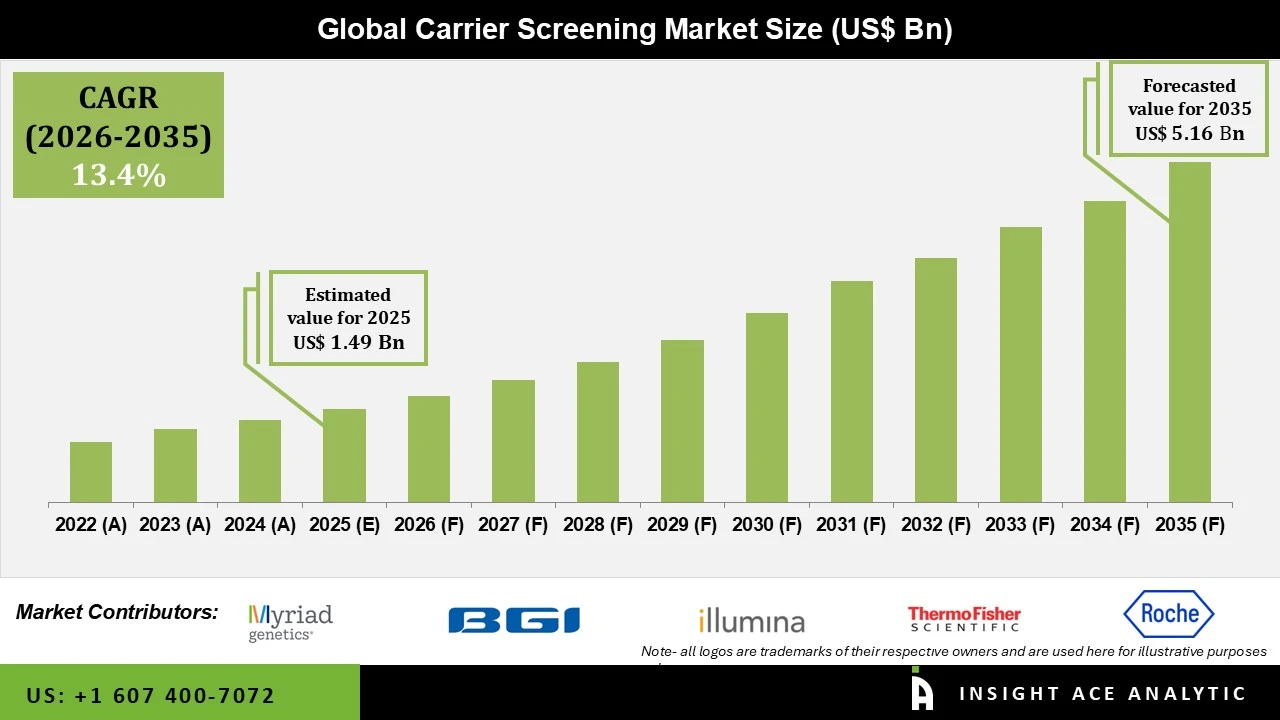
Carrier Screening Market Size is valued at USD 1.49 Bn in 2025 and is predicted to reach USD 5.16 Bn by the year 2035 at a 13.4% CAGR during the forecast period for 2026 to 2035.
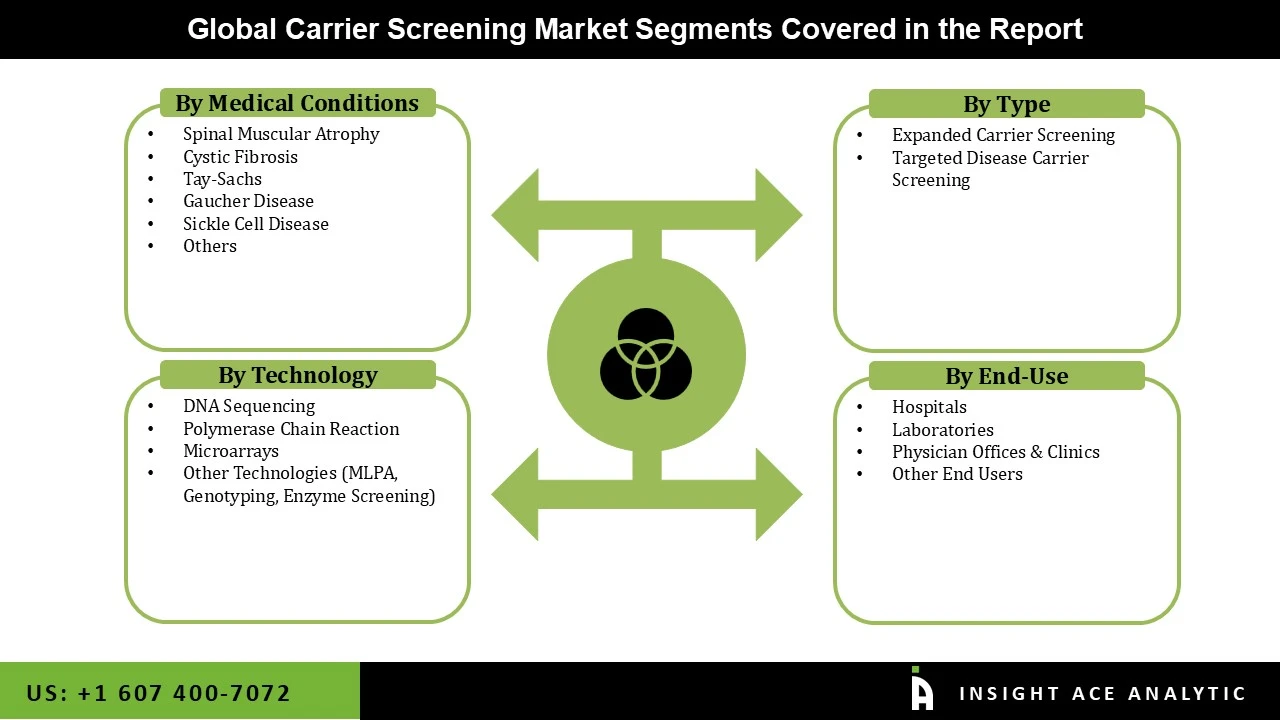
Carrier Screening Market Size, Share & Trends Analysis Distribution by Medical Conditions (Spinal Muscular Atrophy, Cystic Fibrosis, Tay-Sachs, Gaucher Disease, Sickle Cell Disease, Others), By Type (Expanded Carrier Screening, Targeted Disease Carrier Screening), By Technology (DNA Sequencing, Polymerase Chain Reaction, Microarrays, Other Technologies (MLPA, Genotyping, Enzyme Screening)), by End-User and Segment Forecasts, 2026 to 2035
Carrier screening is an approach of genetic testing aimed at detecting individuals that have one copy of a genetic mutation causing a particular disease but do not show any symptoms of the disease themselves. It can help determine if there is a possibility of the transfer of genetic diseases to the children by the couple because they both have these mutations. Carrier screening can be conducted before pregnancy or during pregnancy. Carrier screening has evolved from ethnicity-based tests for some diseases to expanded carrier screening (ECS), which involves the examination of hundreds of genes regardless of individual’s ancestry.
The carrier screening market is composed of genetic tests, diagnostics technologies, software platforms, and laboratory testing services offered to diagnose the carrier status of hereditary genetic disorders. The market includes carrier screening of specified diseases and extended panels of carrier screening, which analyze various genetic conditions in one test. End-users for the carrier screening market include hospitals diagnostics laboratories, fertility centers, and genetic counseling centers. The developments of new genetic technologies, introduction of precision medicine to reproductive healthcare, increased implementation of mass-screening programs, and the expansion of genetic services have led to the conversion of carrier screening from an exotic diagnostics method to an essential part of family planning and prenatal care.
Automation, along with artificial intelligence-based variant interpretation and cloud computing technology are some of the key technologies that are aiding the development of comprehensive and standardized genetic testing services. Partnerships between diagnostics companies, hospitals, and research organizations are making efforts towards expanding the availability of carrier screening services. Moreover, the use of carrier screening for fertility treatments and donor screenings is enhancing the scope of this technique in various clinical settings. With the advancements in genomics and an increased focus on preventive care in the field of healthcare, carrier screening is fast becoming a basic service offered by all reproductive healthcare services worldwide.
Competitive Landscape
Which are the Leading Players in the Carrier Screening Market?
• Myriad Genetics, Inc.
• Natera, Inc.
• Laboratory Corporation of America Holdings / Labcorp
• Quest Diagnostics Incorporated
• BGI Genomics Co., Ltd.
• CENTOGENE GmbH
• MedGenome Labs Ltd.
• GeneDx
• Fulgent Genetics, Inc.
• Thermo Fisher Scientific Inc.
• Illumina, Inc.
• CooperSurgical / CooperGenomics
• Invitae / Labcorp
• Otogenetics Corporation
• ATS GeneTech Pvt. Ltd.
• Other Emerging Players
Market Dynamics
Driver
Growing Adoption of Expanded Carrier Screening and Reproductive Genetic Testing
The increase in adoption of ECS and awareness about reproductive genetic testing are the major factors driving the carrier screening market. There is an increased recommendation of carrier screening in the pre-conception and prenatal period by healthcare professionals to identify any genetic diseases and make informed choices about reproduction. The shift from ethnicity-based testing to ECS using NGS technology has helped in enhancing the efficiency, cost-effectiveness, and accuracy of screening several genetic diseases at a time. Moreover, the increasing use of ART, provision of genetic counseling, and inclusion of carrier screening in prenatal and pre-conception tests have been boosting the adoption of carrier screening.
Restrain/Challenge
Limited Access to Genetic Counseling and Interpretation of Complex Test Results
One of the major challenges facing the carrier screening market is the limited availability of genetic counseling and the complexity of interpreting genetic test results. In the case of expanded carrier screening, a lot of genetic variants, even those of unknown significance, are usually revealed, and therefore need to be correctly interpreted and communicated to the patient so that they could assess their reproductive risks. The scarcity of skilled genetic counselors, especially in less wealthy areas, may hinder the interpretation process and lower the usefulness of the testing. In addition, the variability in the genetic testing panel, insurance issues, and ethical aspects of screening add to the complexity of its implementation.
Spinal Muscular Atrophy Segment is Expected to Drive the Carrier Screening Market
The spinal muscular atrophy (SMA) portion is the largest part of the carrier screening market owing to the large carrier frequency in different populations and being a part of preconception and prenatal screening protocols. Professional associations such as American College of Obstetricians and Gynecologists and American College of Medical Genetics and Genomics advocate providing SMA carrier screening to those who plan to get pregnant or are already pregnant. This screening test is one of the most popular types of carrier screenings owing to that reason. The availability of disease-modifying therapies makes it even more relevant to detect carriers in time, thus creating the demand for SMA screening. Moreover, the implementation of SMA in expanded carrier screening (ECS) and increasing awareness about reproductive genetics make it the leading screening option on the market.
Expanded Carrier Screening Segment is Growing at the Highest Rate in the Carrier Screening Market
The Expanded Carrier Screening (ECS) segment is anticipated to witness the fastest CAGR during the forecast period owing to the capability of this test to screen for a broad range of diseases at once without being limited by the patient’s background or ethnicity. The increasing utilization of next-generation sequencing (NGS) technology, increased preference for comprehensive reproductive risk assessment, and changing clinical guidelines supporting pan-ethnic screening have fueled the transition from the targeted disease approach to the expanded one. Furthermore, growing use of assisted reproductive technologies (ART), availability of genetic counseling, and declining sequencing costs make ECS more attractive for patients and healthcare professionals, thus becoming the fastest-growing segment.
Why North America Led the Carrier Screening Market?
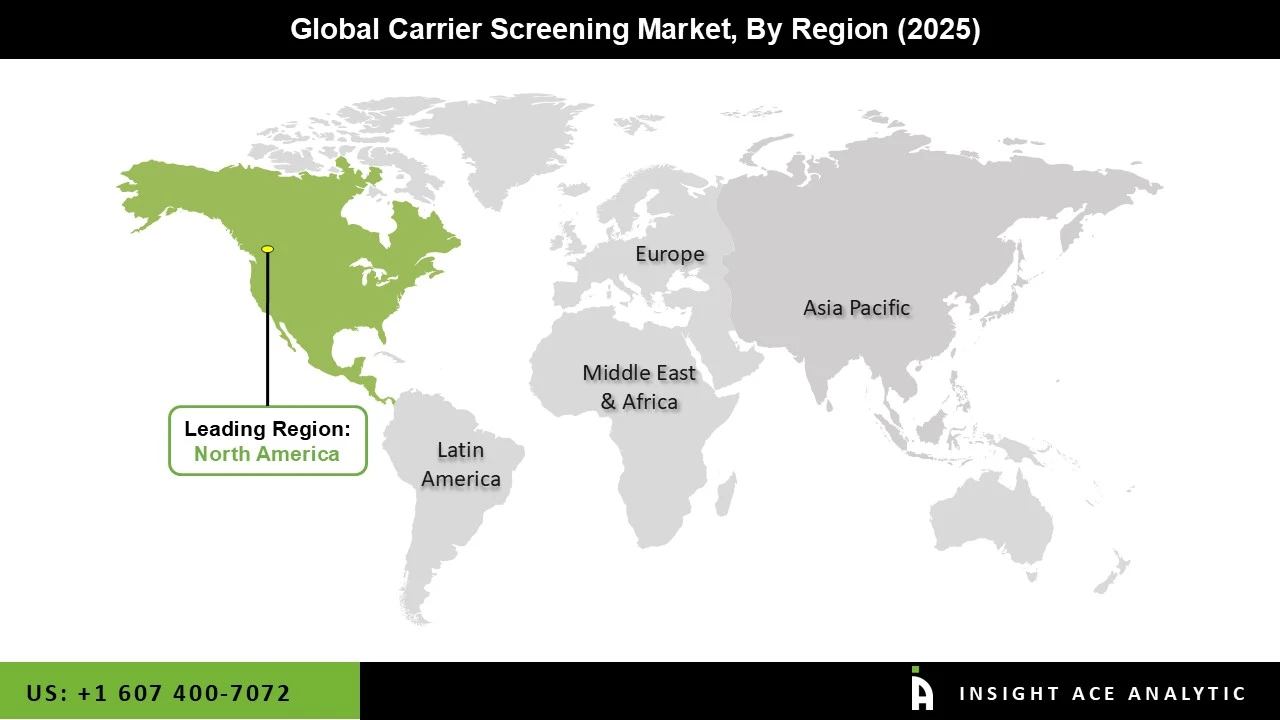
North America is at the forefront of the carrier screening market due to its pioneering adoption of genetic technology tools and inclusion of carrier screening into reproductive medicine. The region boasts of having an established healthcare system with abundant access to modern molecular diagnostics techniques, genetic testing facilities, and genetic counseling services, thus making it possible to widely adopt carrier screening. The high awareness of healthcare practitioners as well as future parents about inherited genetic conditions has promoted the application of preconception and prenatal screening programs. Furthermore, the rising application of assisted reproductive technology (ART), good reimbursement policies for genetic testing procedures, steady developments in next-generation sequencing (NGS), and the involvement of key market players developing expanded carrier screening tools have added up to North America's dominance in the global carrier screening market.
Key Development
• In May 2025, CENTOGENE launched its Reproductive Genetics Portfolio, introducing Preimplantation Genetic Testing for Aneuploidy (PGT-A) and CentoScreen carrier screening. The portfolio leverages CENTOGENE's genomic database to deliver high diagnostic accuracy, rapid turnaround for IVF embryos, and comprehensive carrier screening with ≥99% coverage across 332 genes.
Carrier Screening Market Report Scope:
| Report Attribute | Specifications |
| Market size value in 2025 | USD 1.49 Bn |
| Revenue forecast in 2035 | USD 5.16 Bn |
| Growth Rate CAGR | CAGR of 13.4% from 2026 to 2035 |
| Quantitative Units | Representation of revenue in US$ Bn and CAGR from 2026 to 2035 |
| Historic Year | 2022 to 2025 |
| Forecast Year | 2026-2035 |
| Report Coverage | The forecast of revenue, the position of the company, the competitive market structure, growth prospects, and trends |
| Segments Covered | Medical Conditions, Type, Technology, End-Use and By Region |
| Regional Scope | North America; Europe; Asia Pacific; Latin America; Middle East & Africa |
| Country Scope | U.S.; Canada; U.K.; Germany; China; India; Japan; Brazil; Mexico; The UK; France; Italy; Spain; China; Japan; India; South Korea; Southeast Asia; South Korea; Southeast Asia |
| Competitive Landscape | Myriad Genetics, Inc., BGI Genomics, Illumina, Inc., Thermo Fisher Scientific, Inc, F. Hoffmann-La Roche Ltd, Laboratory Corporation of America Holdings (LabCorp), Otogenetics Corporation, MedGenome, GeneTech (ATS Genetech Pvt Ltd), CENTOGENE GmbH |
| Customization Scope | Free customization report with the procurement of the report, Modifications to the regional and segment scope. Geographic competitive landscape. |
| Pricing and Available Payment Methods | Explore pricing alternatives that are customized to your particular study requirements. |
Market Segmentation:
Carrier Screening Market by Medical Conditions -
• Spinal Muscular Atrophy
• Cystic Fibrosis
• Tay-Sachs
• Gaucher Disease
• Sickle Cell Disease
• Others
Carrier Screening Market by Type -
• Expanded Carrier Screening
• Targeted Disease Carrier Screening
Carrier Screening Market by Technology -
• DNA Sequencing
• Polymerase Chain Reaction
• Microarrays
• Other Technologies (MLPA, Genotyping, Enzyme Screening)
Carrier Screening Market by End Use-
• Hospitals
• Laboratories
• Physician Offices & Clinics
• Other End Users
Carrier Screening Market by Region-
North America-
• The US
• Canada
• Mexico
Europe-
• Germany
• The UK
• France
• Italy
• Spain
• Rest of Europe
Asia-Pacific-
• China
• Japan
• India
• South Korea
• South East Asia
• Rest of Asia Pacific
Latin America-
• Brazil
• Argentina
• Rest of Latin America
Middle East & Africa-
• GCC Countries
• South Africa
• Rest of Middle East and Africa
Research Design and Approach
This study employed a multi-step, mixed-method research approach that integrates:
- Secondary research
- Primary research
- Data triangulation
- Hybrid top-down and bottom-up modelling
- Forecasting and scenario analysis
This approach ensures a balanced and validated understanding of both macro- and micro-level market factors influencing the market.
Secondary Research
Secondary research for this study involved the collection, review, and analysis of publicly available and paid data sources to build the initial fact base, understand historical market behaviour, identify data gaps, and refine the hypotheses for primary research.
Sources Consulted
Secondary data for the market study was gathered from multiple credible sources, including:
- Government databases, regulatory bodies, and public institutions
- International organizations (WHO, OECD, IMF, World Bank, etc.)
- Commercial and paid databases
- Industry associations, trade publications, and technical journals
- Company annual reports, investor presentations, press releases, and SEC filings
- Academic research papers, patents, and scientific literature
- Previous market research publications and syndicated reports
These sources were used to compile historical data, market volumes/prices, industry trends, technological developments, and competitive insights.

Primary Research
Primary research was conducted to validate secondary data, understand real-time market dynamics, capture price points and adoption trends, and verify the assumptions used in the market modelling.
Stakeholders Interviewed
Primary interviews for this study involved:
- Manufacturers and suppliers in the market value chain
- Distributors, channel partners, and integrators
- End-users / customers (e.g., hospitals, labs, enterprises, consumers, etc., depending on the market)
- Industry experts, technology specialists, consultants, and regulatory professionals
- Senior executives (CEOs, CTOs, VPs, Directors) and product managers
Interview Process
Interviews were conducted via:
- Structured and semi-structured questionnaires
- Telephonic and video interactions
- Email correspondences
- Expert consultation sessions
Primary insights were incorporated into demand modelling, pricing analysis, technology evaluation, and market share estimation.
Data Processing, Normalization, and Validation
All collected data were processed and normalized to ensure consistency and comparability across regions and time frames.
The data validation process included:
- Standardization of units (currency conversions, volume units, inflation adjustments)
- Cross-verification of data points across multiple secondary sources
- Normalization of inconsistent datasets
- Identification and resolution of data gaps
- Outlier detection and removal through algorithmic and manual checks
- Plausibility and coherence checks across segments and geographies
This ensured that the dataset used for modelling was clean, robust, and reliable.
Market Size Estimation and Data Triangulation
Bottom-Up Approach
The bottom-up approach involved aggregating segment-level data, such as:
- Company revenues
- Product-level sales
- Installed base/usage volumes
- Adoption and penetration rates
- Pricing analysis
This method was primarily used when detailed micro-level market data were available.

Top-Down Approach
The top-down approach used macro-level indicators:
- Parent market benchmarks
- Global/regional industry trends
- Economic indicators (GDP, demographics, spending patterns)
- Penetration and usage ratios
This approach was used for segments where granular data were limited or inconsistent.
Hybrid Triangulation Approach
To ensure accuracy, a triangulated hybrid model was used. This included:
- Reconciling top-down and bottom-up estimates
- Cross-checking revenues, volumes, and pricing assumptions
- Incorporating expert insights to validate segment splits and adoption rates
This multi-angle validation yielded the final market size.
Forecasting Framework and Scenario Modelling
Market forecasts were developed using a combination of time-series modelling, adoption curve analysis, and driver-based forecasting tools.
Forecasting Methods
- Time-series modelling
- S-curve and diffusion models (for emerging technologies)
- Driver-based forecasting (GDP, disposable income, adoption rates, regulatory changes)
- Price elasticity models
- Market maturity and lifecycle-based projections
Scenario Analysis
Given inherent uncertainties, three scenarios were constructed:
- Base-Case Scenario: Expected trajectory under current conditions
- Optimistic Scenario: High adoption, favourable regulation, strong economic tailwinds
- Conservative Scenario: Slow adoption, regulatory delays, economic constraints
Sensitivity testing was conducted on key variables, including pricing, demand elasticity, and regional adoption.
Request Customization
Add countries, segments, company profiles, or extend forecast — free 10% customization with purchase.
Customize This Report →Enquire Before Buying
Speak with our analyst team about scope, methodology, pricing, or deliverable formats.
Enquire Now →Frequently Asked Questions
Carrier Screening Market Size is valued at USD 1.49 Bn in 2025 and is predicted to reach USD 5.16 Bn by the year 2035
Carrier Screening Market is likely to grow with at a 13.4% CAGR during the forecast period for 2026 to 2035.
Myriad Genetics, Inc., BGI Genomics, Illumina, Inc., Thermo Fisher Scientific, Inc, F. Hoffmann-La Roche Ltd, Laboratory Corporation of America Holdings (LabCorp), Otogenetics Corporation, MedGenome, GeneTech (ATS Genetech Pvt Ltd), CENTOGENE GmbH
Carrier Screening Market is segmented into Medical Conditions, Type, Technology, End-Use and By Region
North America region is leading the Carrier Screening Market.