Mouse TNF Kit Market Size, Share, Revenue Report 2026 to 2035
What is Mouse TNF Kit Market Size?
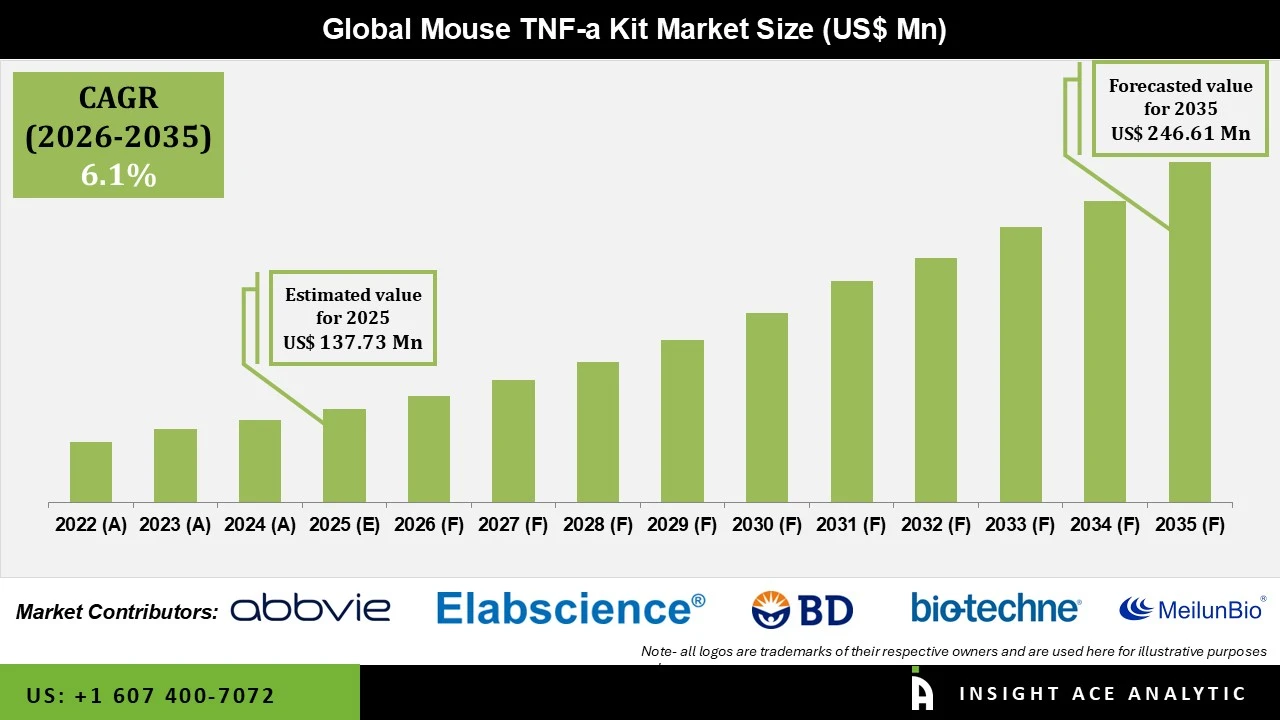
Mouse TNF Kit Market Size is valued at USD 137.73 Mn in 2025 and is predicted to reach USD 246.61 Mn by the year 2035 at a 6.1% CAGR during the forecast period for 2026 to 2035.
Mouse TNF Kit Market Size, Share & Trends Analysis Distribution by Purity (Purity ≥95% and Purity <95%), Application (University and Research Center), and Segment Forecasts, 2026 to 2035
Tumor necrosis factor-alpha (TNF-α) can be found and measured in mouse samples using specific immunoassay instruments called mouse TNF-α ELISA Kits. Research on autoimmune illnesses, cancer, and infectious diseases all heavily relies on TNF-α, a crucial cytokine implicated in immune modulation and systemic inflammation. These kits measure TNF-α concentrations with excellent specificity and sensitivity using enzyme-linked immunosorbent assay (ELISA) technology. Mouse TNF-α kits are frequently used in preclinical research to measure inflammatory responses, evaluate illness models, and test the effectiveness of immunomodulatory or anti-inflammatory medications. The growing applications in pharmaceutical development, an increase in the prevalence of inflammatory illnesses, and an increase in biomedical research activities are the main factors driving the mouse TNF-α kit market expansion.
Since TNF-targeting monoclonal antibodies are highly selective and successful in treating autoimmune disorders, their use has grown in popularity. Antibody engineering advancements have made them more stable and less immunogenic, which makes them better suited for preclinical and clinical studies. The need for mouse models capable of appropriately assessing these biologics is being driven by this trend, which will ultimately speed up the approval and development of new drugs. Additionally, the mouse TNF-α kit market is moving toward more individualized methods, in which mouse models are customized to represent particular genetic and molecular characteristics of diseases. This makes it possible for researchers to comprehend how different people react to TNF-targeted treatments, which results in more efficient and personalized therapy choices.
In addition, the mouse TNF-α kit market is changing due to the integration of technologies like CRISPR gene editing, single-cell sequencing, and high-throughput screening. With the use of these instruments, TNF-related genes may be precisely altered, and cellular immune responses can be thoroughly examined. Furthermore, research into autoimmune and inflammatory diseases involving TNF pathways is being fueled by increased funding from government agencies, private investors, and pharmaceutical corporations. More advanced mouse models that more closely resemble human illness situations are being developed as a result of this investment. Consequently, there is an increase in the creation of novel treatments, broadening the mouse TNF-α kit market and encouraging cooperation between academia and business.
Competitive Landscape
Which are the Leading Players in Mouse TNF-α Kit Market?
• AbbVie
• Cellverse Co., Ltd.
• Dalian Meilun Biotech Co., Ltd.
• BD Biosciences
• Shanghai Yaji Biotechnology Co., Ltd.
• BPS Bioscience, Inc.
• Elabscience
• Scientists Helping Scientists
• Bio-Techne
• Beijing Biocreative Technology Co., Ltd.
• Sino Biological, Inc.
• FUJIFILM Irvine Scientific
• MilliporeSigma
• Thermo Fisher Scientific Inc.
• Others
Market Dynamics
Driver
Increasing Autoimmune Disease Prevalence
The mouse TNF-α kit market is expanding due to the rising incidence of autoimmune illnesses in the world. Since 5–10% of people worldwide suffer from autoimmune disorders, research on TNF-α's involvement in diseases such as psoriasis, inflammatory bowel disease, and rheumatoid arthritis has increased. The mouse models are still essential in research settings for comprehending disease causes and evaluating possible treatments. Additionally, the therapeutic antibodies that target TNF-α are one of the most successful types of biologics, bringing in billions of dollars annually, which further drives the mouse TNF-α kit market. The demand for ELISA kits has been positively impacted by this commercial success, which has bolstered funding for fundamental research requiring TNF-α measurement. These kits are becoming more and more important to pharmaceutical companies for preclinical research, which helps the industry grow.
Restrain/Challenge
Technical Restrictions in Cross-Reactivity
The technical limitations in this technology, especially with regard to antibody cross-reactivity, present difficulties for the mouse TNF-α kit market. Even though it is quite specific, some kits could show cross-reactivity with structurally identical cytokines, which could have an impact on study results. In mouse research, where cytokine networks are intricate and interconnected, this problem is especially pertinent. Furthermore, compared to more recent technologies, TNF's shortcomings in measuring numerous analytes simultaneously have been brought to light by the growing need for multiplex analysis. When working with complicated samples, researchers frequently need to validate using a variety of techniques, which adds to expenses and complicates the process. These technical difficulties can prompt some researchers to investigate different cytokine measuring platforms, which could restrict the expansion of the mouse TNF-α kit market in particular applications.
Purity ≥95% Segment is Expected to Drive the Mouse TNF-α Kit Market
The purity ≥95% category held the largest share in the Mouse TNF-α Kit market in 2025 driven by the vital requirement in advanced research for minimum background interference and great specificity. Research facilities that carry out investigations in immunology, cancer, and inflammation, where measurement precision is crucial, favor these high-purity kits. These kits are crucial for assuring data dependability and reproducibility when examining minute changes in TNF-α expression in illness models in mice. Additionally, high-purity kits are the standard since research facilities frequently need reagents that satisfy strict technical requirements, such as low cross-reactivity and high sensitivity. Furthermore, these kits are used in critical assays where data integrity might impact development decisions by biotech and pharmaceutical businesses involved in drug discovery.
Research Center Segment is Growing at the Highest Rate in the Mouse TNF-α Kit Market
In 2025, the research center category dominated the Mouse TNF-α Kit market. Robust kits for measuring TNF-α are necessary because research centers, both public and private, conduct extensive studies into cytokine biology, inflammatory disease processes, and preclinical testing. These organizations tend to favor premium reagents and kits because they have larger resources, use more sophisticated equipment, and operate high-throughput workflows. TNF-α kits are used more frequently in immunotherapy, autoimmune disorders, and infectious disease studies. Furthermore, research facilities in places like China and Germany are receiving more funding, which makes it possible to boost lab capacity and adopt state-of-the-art equipment.
Why North America Led the Mouse TNF-α Kit Market?
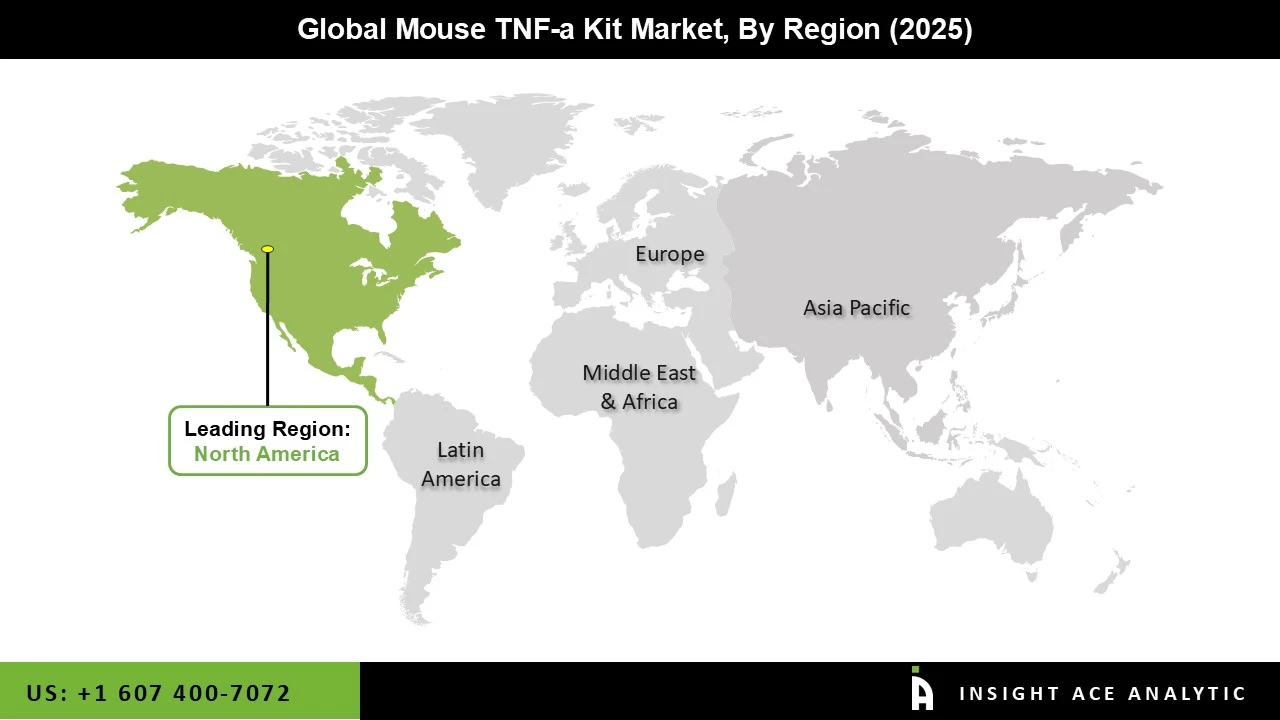
The Mouse TNF-α Kit market was dominated by North America region in 2025 because of a strong infrastructure for biomedical research, large investments in preclinical and translational research, and a concentration of pharmaceutical and biotechnology firms engaged in drug development. Furthermore, the need for sophisticated immunoassay kits, such as those that identify tumor necrosis factor-alpha (TNF-α) in mice, has increased due to the growing incidence of autoimmune and chronic inflammatory illnesses. Additionally, the region benefits from strict FDA standards that guarantee kit quality and dependability, making North American products the favored choice in international research. With more than 60% of the regional market, the United States leads due to well-known academic institutions and pharmaceutical firms that specialize in treatments for inflammation.
Mouse TNF-α Kit Market Report Scope:
| Report Attribute | Specifications |
| Market size value in 2025 | USD 137.73 Bn |
| Revenue forecast in 2035 | USD 246.61 Bn |
| Growth Rate CAGR | CAGR of 6.1% from 2026 to 2035 |
| Quantitative Units | Representation of revenue in US$ Mn and CAGR from 2026 to 2035 |
| Historic Year | 2022 to 2025 |
| Forecast Year | 2026-2035 |
| Report Coverage | The forecast of revenue, the position of the company, the competitive market structure, growth prospects, and trends |
| Segments Covered | Purity, Application, and By Region |
| Regional Scope | North America; Europe; Asia Pacific; Latin America; Middle East & Africa |
| Country Scope | U.S.; Canada; U.K.; Germany; China; India; Japan; Brazil; Mexico; The UK; France; Italy; Spain; China; Japan; India; South Korea; Southeast Asia; South Korea; Southeast Asia |
| Competitive Landscape | AbbVie, Cellverse Co., Ltd., Dalian Meilun Biotech Co., Ltd., BD Biosciences, Shanghai Yaji Biotechnology Co., Ltd., BPS Bioscience, Inc., Elabscience, Scientists Helping Scientists, Bio-Techne, Beijing Biocreative Technology Co., Ltd., Sino Biological, Inc., FUJIFILM Irvine Scientific, MilliporeSigma, Thermo Fisher Scientific Inc., and Others. |
| Customization Scope | Free customization report with the procurement of the report, Modifications to the regional and segment scope. Geographic competitive landscape. |
| Pricing and Available Payment Methods | Explore pricing alternatives that are customized to your particular study requirements. |
Market Segmentation:
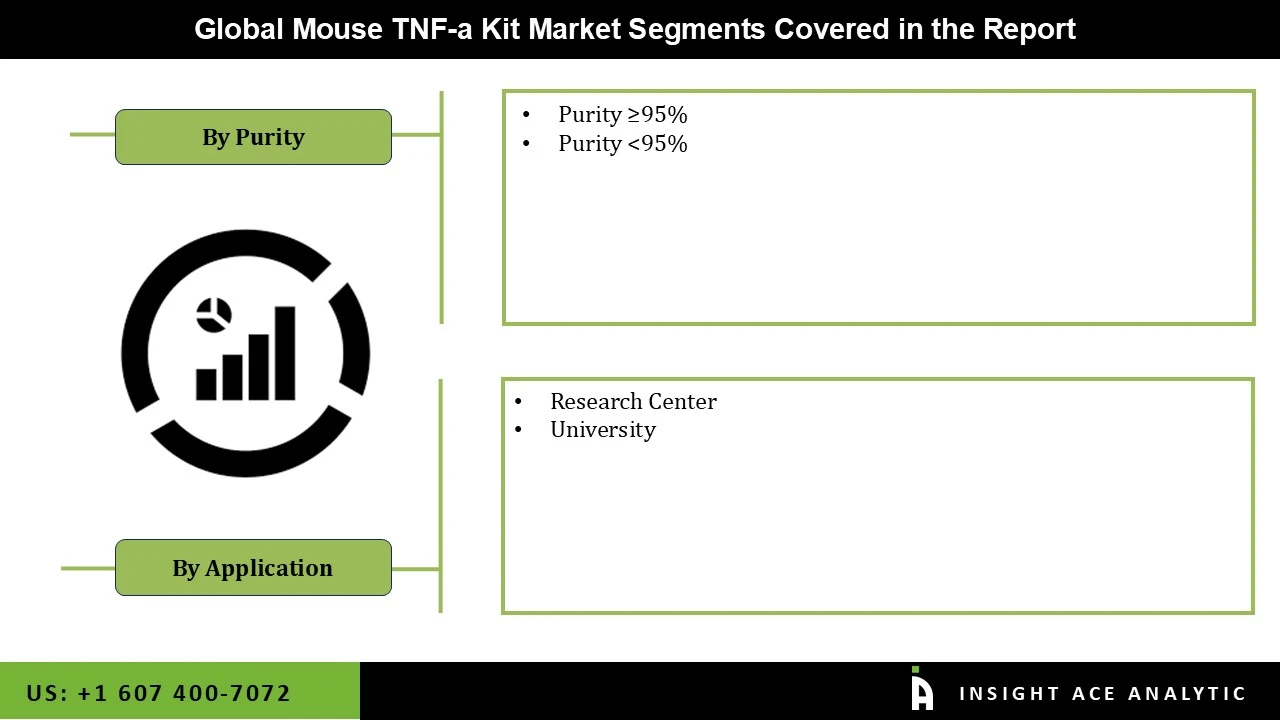
Mouse TNF Kit Market by Purity-
• Purity ≥95%
• Purity <95%
Mouse TNF Kit Market by Application-
• University
• Research Center
Mouse TNF Kit Market By Region-
North America-
• The US
• Canada
Europe-
• Germany
• The UK
• France
• Italy
• Spain
• Rest of Europe
Asia-Pacific-
• China
• Japan
• India
• South Korea
• South East Asia
• Rest of Asia Pacific
Latin America-
• Brazil
• Argentina
• Mexico
• Rest of Latin America
Middle East & Africa-
• GCC Countries
• South Africa
• Rest of Middle East and Africa
Research Design and Approach
This study employed a multi-step, mixed-method research approach that integrates:
- Secondary research
- Primary research
- Data triangulation
- Hybrid top-down and bottom-up modelling
- Forecasting and scenario analysis
This approach ensures a balanced and validated understanding of both macro- and micro-level market factors influencing the market.
Secondary Research
Secondary research for this study involved the collection, review, and analysis of publicly available and paid data sources to build the initial fact base, understand historical market behaviour, identify data gaps, and refine the hypotheses for primary research.
Sources Consulted
Secondary data for the market study was gathered from multiple credible sources, including:
- Government databases, regulatory bodies, and public institutions
- International organizations (WHO, OECD, IMF, World Bank, etc.)
- Commercial and paid databases
- Industry associations, trade publications, and technical journals
- Company annual reports, investor presentations, press releases, and SEC filings
- Academic research papers, patents, and scientific literature
- Previous market research publications and syndicated reports
These sources were used to compile historical data, market volumes/prices, industry trends, technological developments, and competitive insights.

Primary Research
Primary research was conducted to validate secondary data, understand real-time market dynamics, capture price points and adoption trends, and verify the assumptions used in the market modelling.
Stakeholders Interviewed
Primary interviews for this study involved:
- Manufacturers and suppliers in the market value chain
- Distributors, channel partners, and integrators
- End-users / customers (e.g., hospitals, labs, enterprises, consumers, etc., depending on the market)
- Industry experts, technology specialists, consultants, and regulatory professionals
- Senior executives (CEOs, CTOs, VPs, Directors) and product managers
Interview Process
Interviews were conducted via:
- Structured and semi-structured questionnaires
- Telephonic and video interactions
- Email correspondences
- Expert consultation sessions
Primary insights were incorporated into demand modelling, pricing analysis, technology evaluation, and market share estimation.
Data Processing, Normalization, and Validation
All collected data were processed and normalized to ensure consistency and comparability across regions and time frames.
The data validation process included:
- Standardization of units (currency conversions, volume units, inflation adjustments)
- Cross-verification of data points across multiple secondary sources
- Normalization of inconsistent datasets
- Identification and resolution of data gaps
- Outlier detection and removal through algorithmic and manual checks
- Plausibility and coherence checks across segments and geographies
This ensured that the dataset used for modelling was clean, robust, and reliable.
Market Size Estimation and Data Triangulation
Bottom-Up Approach
The bottom-up approach involved aggregating segment-level data, such as:
- Company revenues
- Product-level sales
- Installed base/usage volumes
- Adoption and penetration rates
- Pricing analysis
This method was primarily used when detailed micro-level market data were available.

Top-Down Approach
The top-down approach used macro-level indicators:
- Parent market benchmarks
- Global/regional industry trends
- Economic indicators (GDP, demographics, spending patterns)
- Penetration and usage ratios
This approach was used for segments where granular data were limited or inconsistent.
Hybrid Triangulation Approach
To ensure accuracy, a triangulated hybrid model was used. This included:
- Reconciling top-down and bottom-up estimates
- Cross-checking revenues, volumes, and pricing assumptions
- Incorporating expert insights to validate segment splits and adoption rates
This multi-angle validation yielded the final market size.
Forecasting Framework and Scenario Modelling
Market forecasts were developed using a combination of time-series modelling, adoption curve analysis, and driver-based forecasting tools.
Forecasting Methods
- Time-series modelling
- S-curve and diffusion models (for emerging technologies)
- Driver-based forecasting (GDP, disposable income, adoption rates, regulatory changes)
- Price elasticity models
- Market maturity and lifecycle-based projections
Scenario Analysis
Given inherent uncertainties, three scenarios were constructed:
- Base-Case Scenario: Expected trajectory under current conditions
- Optimistic Scenario: High adoption, favourable regulation, strong economic tailwinds
- Conservative Scenario: Slow adoption, regulatory delays, economic constraints
Sensitivity testing was conducted on key variables, including pricing, demand elasticity, and regional adoption.
Request Customization
Add countries, segments, company profiles, or extend forecast — free 10% customization with purchase.
Customize This Report →Enquire Before Buying
Speak with our analyst team about scope, methodology, pricing, or deliverable formats.
Enquire Now →Frequently Asked Questions
Mouse TNF α Kit Market Size is valued at USD 137.73 Mn in 2025 and is predicted to reach USD 246.61 Mn by the year 2035
Mouse TNF α Kit Market is predicted to grow at a 6.1% CAGR during the forecast period for 2026 to 2035.
AbbVie, Cellverse Co., Ltd., Dalian Meilun Biotech Co., Ltd., BD Biosciences, Shanghai Yaji Biotechnology Co., Ltd., BPS Bioscience, Inc., Elabscience, Scientists Helping Scientists, Bio-Techne, Beijing Biocreative Technology Co., Ltd., Sino Biological, Inc., FUJIFILM Irvine Scientific, MilliporeSigma, Thermo Fisher Scientific Inc., and Others.
Mouse TNF α Kit Market is segmented into Purity, Application, and By Region
North America region is leading the Mouse TNF α Kit Market.