Metagenomic Sequencing Market Size, Share, Forecast Report 2026 to 2035
What is Metagenomic Sequencing Market Size?
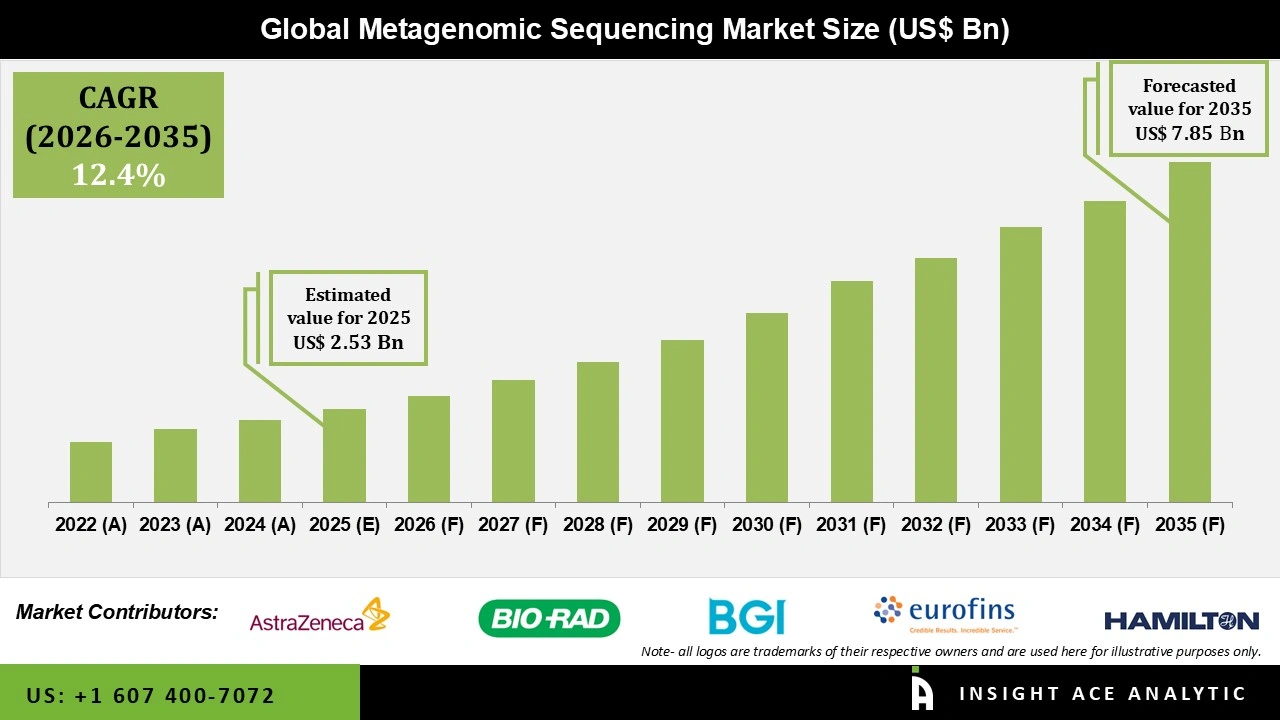
Global Metagenomic Sequencing Market Size is valued at USD 2.53 Bn in 2025 and is predicted to reach USD 7.85 Bn by the year 2035 at a 12.4% CAGR during the forecast period for 2026 to 2035.
Metagenomic Sequencing Market Size, Share & Trends Analysis Distribution by Type of Offering (Reagents and Consumables, Instruments, Sequencing & Data Analytics Services), By Type of Workflow (Data Processing & Analysis, Sequencing, Sample Processing & Library Preparation), By Type of Technology (Shotgun Metagenomics Sequencing, 16S rRNA Sequencing, Whole Genome Sequencing & De Novo Assembly, Metatranscriptomics) By Application Area (Ecological & Environmental Metagenomics, Clinical Diagnostics, Drug Discovery, Biofuel, Industrial Applications), By End User (Pharmaceutical Companies, Research Laboratories, Other End Users) and Segment Forecasts, 2026 to 2035
Metagenomic sequencing stands out as a revolutionary technology in the field of genomics that provides scientists with a means to analyze genetic information obtained from environmental, clinical, agricultural, and industrial samples without the need to culture the microbes isolated from these samples. This technology does not involve culturing of any microorganism before sequencing, and therefore provides a complete picture of the microbes existing in an ecosystem in terms of their taxonomy and potential capabilities. Key technologies in this space include the use of advanced next-generation sequencing (NGS) technologies, long-read sequencing technologies, shotgun metagenomics, and targeted metagenomics approaches.
Metagenomic sequencing market represents a vibrant part of the genomics and life sciences sector, fueled by the increasing utilization of sequencing solutions in various sectors. It is considered indispensable when it comes to studying infectious diseases, investigating microbiomes, monitoring the environment, food safety testing, agriculture research, antimicrobial resistance tracking, and biopharmaceutical development. Due to its unique potential to offer insights into the biological processes taking place in the examined material, metagenomic sequencing has become an asset that can be used for gaining a better insight into the functioning of different types of microbes.
From its initial application as a research tool aimed at analyzing microbes that cannot be cultured in laboratories, metagenomics sequencing has grown to become a versatile platform serving several industries. These include health care, life sciences, public health, and environmental science research. The market's ecosystem consists of sequencing technology companies, bioinformatics software developers, research institutions, health care establishments, and public health institutions collaborating to create standard and efficient workflows. Other emerging trends in the field include the use of artificial intelligence, cloud computing, and multi-omics methodologies to increase the value of metagenomic sequencing. With time, it is anticipated that advances in the field will result in the Metagenomic Sequencing Market playing an even greater role in several applications.
Competitive Landscape
Which are the Leading Players in the Metagenomic Sequencing Market?
- AstraZeneca
- Bio-Rad
- BGI Group
- Eurofins Scientific
- Hamilton Company
- Illumina
- Macrogen
- NuGEN Technologies
- Oxford Nanopore Technologies
- PerkinElmer
- Pacific Biosciences
- Promega
- PSomagen
- QIAGEN
- Swift Biosciences
- Thermo Fisher Scientific
- Zymo Research
- Takara Bio
Market Dynamics
Driver
Rising Adoption of Metagenomic Sequencing in Diagnostics and Research
One of the major contributors to growth in the metagenomic sequencing market is the rising use of metagenomic sequencing in detecting infectious diseases and studying the microbiome. Contrary to the conventional method which involves cultivating the microorganisms before conducting tests, metagenomics sequencing allows users to directly sequence the DNA from a sample and hence get results regarding the types of organisms present. This has made metagenomics sequencing more efficient in areas such as disease diagnosis, pathogen monitoring, and microbiome studies. Moreover, due to the extensive information on the microbes gained from metagenomic sequencing, its uses have extended into other fields including healthcare, life sciences, environmental science, food safety, and agriculture.
Restrain/Challenge
High Complexity of Data Analysis and Interpretation
One of the key challenges that have been confronted by the metagenomic sequencing market include difficulties associated with the processing and interpretation of huge amounts of data generated by metagenomics sequencing. Metagenomics sequences may generate genetic data from several microbial populations. Such processes will require the use of highly sophisticated bioinformatics approaches, considerable computing power, and expertise in order to achieve accurate results. Other issues such as differences in sample handling, data analysis, and the databases used will pose another challenge to the results' consistency and reproducibility.
Reagents & Consumables Segment is Expected to Drive the Metagenomic Sequencing Market
The reagents & consumables sub-segment will contribute significantly to the metagenomic sequencing market on account of the ongoing demand for sample preparation kits, library preparation reagents, extraction kits, sequencing reagents, and quality control reagents that play an important role during the sequencing processes. While instruments are single-use products, reagents & consumables are needed for each sequence and thus create constant sources of revenue for vendors. The rising number of metagenomic research being conducted in clinical diagnostics, microbiomics, environmental monitoring, agriculture, and public health surveillance segments is adding to the consumption of such products.
Data Processing & Analysis Workflow Segment is Growing at the Highest Rate in the Metagenomic Sequencing Market
The data processing & analysis workflow Segment is anticipated to grow at the fastest pace within the metagenomic sequencing market on account of the growing amount of sequencing data that needs to be analyzed in order to draw valuable conclusions regarding the microbes under study. As the use of metagenomic sequencing grows across healthcare, microbiome studies, environmental surveillance, and agriculture, the demand for powerful bioinformatics software applications, cloud computing solutions, artificial intelligence-powered technologies, and sophisticated computational systems will continue to rise in tandem with ongoing technological developments in the field of data analytics.
Why North America Led the Metagenomic Sequencing Market?
The North America region is expected to dominate the market for metagenomic sequencing because of its high-level genomics research infrastructure, widespread adoption of next-generation sequencing techniques, and presence of many leading providers of sequencing technologies, biotech companies, and research organizations.
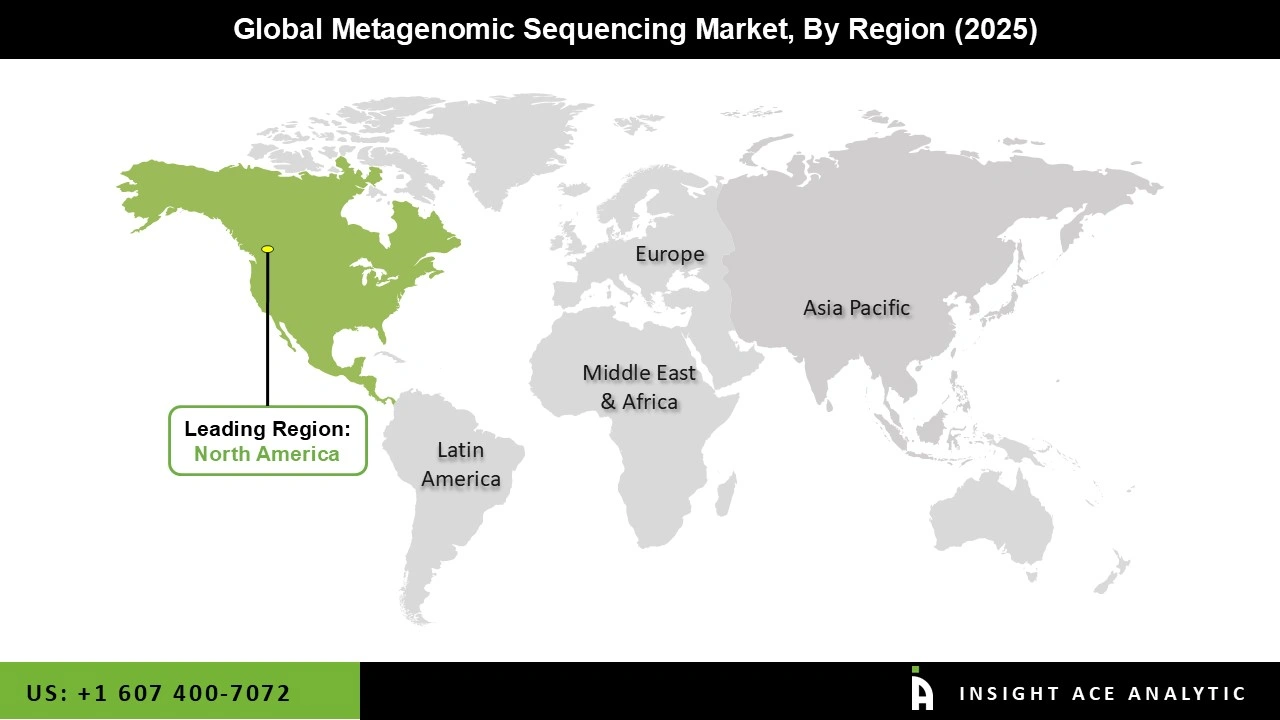
It should be noted that many investments have been made in fields such as precision medicine, microbiome studies, surveillance of infectious diseases, and other public health research projects. Such initiatives have resulted in high demand for metagenomic sequencing technologies in this region. Favorable funding support by government agencies and many genomic research projects conducted by bioinformatics organizations using AI will further reinforce the dominance of the North American market.
Key Development
- May 2025: QIAGEN acquired Genoox, an AI-powered genomics software provider, adding the Franklin cloud-based platform to its QIAGEN Digital Insights portfolio to strengthen clinical genomic data interpretation and genetic testing workflows.
- July 2025: Illumina agreed to acquire SomaLogic from Standard BioTools for up to $425 million, strengthening its proteomics capabilities and advancing its multi-omics strategy to enhance biomarker discovery, disease profiling, and the value of its NovaSeq X platform.
Metagenomic Sequencing Market Report Scope :
| Report Attribute | Specifications |
| Market size value in 2025 | USD 2.53 Bn |
| Revenue forecast in 2035 | USD 7.85 Bn |
| Growth Rate CAGR | CAGR of 12.4% from 2026 to 2035 |
| Quantitative Units | Representation of revenue in US$ Bn and CAGR from 2026 to 2035 |
| Historic Year | 2022 to 2025 |
| Forecast Year | 2026-2035 |
| Report Coverage | The forecast of revenue, the position of the company, the competitive market structure, growth prospects, and trends |
| Segments Covered | Type of Offering, Type of Workflow, Type of Technology, Application Area, End User and By Region |
| Regional Scope | North America; Europe; Asia Pacific; Latin America; Middle East & Africa |
| Country Scope | U.S.; Canada; U.K.; Germany; China; India; Japan; Brazil; Mexico; The UK; France; Italy; Spain; China; Japan; India; South Korea; Southeast Asia; South Korea; Southeast Asia |
| Competitive Landscape | AstraZeneca, Bio-Rad, BGI Group, Eurofins Scientific, Hamilton Company, Illumina, Macrogen, NuGEN Technologies, Oxford Nanopore Technologies, PerkinElmer, Pacific Biosciences, Promega, PSomagen, QIAGEN, Swift Biosciences, Thermo Fisher Scientific, Zymo Research, Takara Bio |
| Customization Scope | Free customization report with the procurement of the report, Modifications to the regional and segment scope. Geographic competitive landscape. |
| Pricing and Available Payment Methods | Explore pricing alternatives that are customized to your particular study requirements. |
Segmentations of Metagenomic Sequencing Market :
Metagenomic Sequencing Market by Type of Offering -
- Reagents and Consumables
- Instruments
- Sequencing & Data Analytics Services
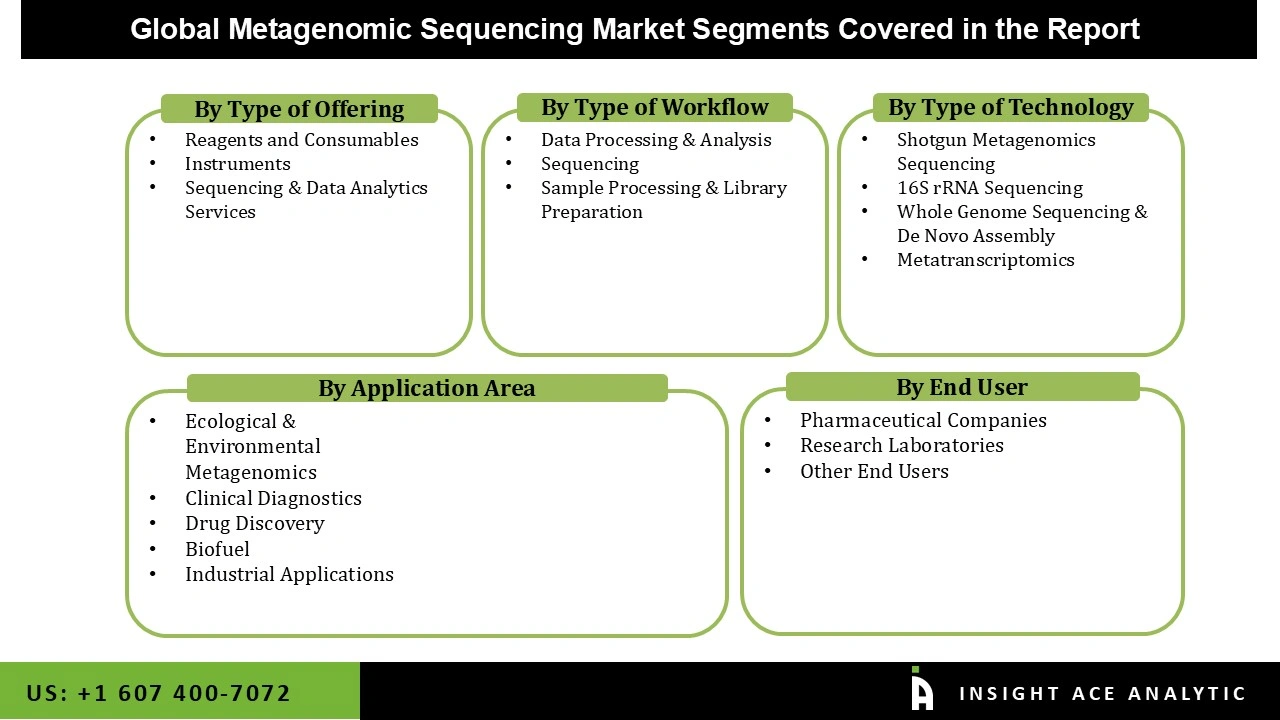
Metagenomic Sequencing Market by Type of Workflow -
- Data Processing & Analysis
- Sequencing
- Sample Processing & Library Preparation
Metagenomic Sequencing Market by Type of Technology -
- Shotgun Metagenomics Sequencing
- 16S rRNA Sequencing
- Whole Genome Sequencing & De Novo Assembly
- Metatranscriptomics
Metagenomic Sequencing Market by Application Area -
- Ecological & Environmental Metagenomics
- Clinical Diagnostics
- Drug Discovery
- Biofuel
- Industrial Applications
Metagenomic Sequencing Market by End User -
- Pharmaceutical Companies
- Research Laboratories
- Other End Users
Metagenomic Sequencing Market by Region-
- North America-
- The US
- Canada
- Europe-
- Germany
- The UK
- France
- Italy
- Spain
- Rest of Europe
- Asia-Pacific-
- China
- Japan
- India
- South Korea
- South East Asia
- Rest of Asia Pacific
- Latin America-
- Brazil
- Argentina
- Mexico
- Rest of Latin America
- Middle East and Africa-
- GCC Countries
- South Africa
- Rest of Middle East and Africa
Research Design and Approach
This study employed a multi-step, mixed-method research approach that integrates:
- Secondary research
- Primary research
- Data triangulation
- Hybrid top-down and bottom-up modelling
- Forecasting and scenario analysis
This approach ensures a balanced and validated understanding of both macro- and micro-level market factors influencing the market.
Secondary Research
Secondary research for this study involved the collection, review, and analysis of publicly available and paid data sources to build the initial fact base, understand historical market behaviour, identify data gaps, and refine the hypotheses for primary research.
Sources Consulted
Secondary data for the market study was gathered from multiple credible sources, including:
- Government databases, regulatory bodies, and public institutions
- International organizations (WHO, OECD, IMF, World Bank, etc.)
- Commercial and paid databases
- Industry associations, trade publications, and technical journals
- Company annual reports, investor presentations, press releases, and SEC filings
- Academic research papers, patents, and scientific literature
- Previous market research publications and syndicated reports
These sources were used to compile historical data, market volumes/prices, industry trends, technological developments, and competitive insights.

Primary Research
Primary research was conducted to validate secondary data, understand real-time market dynamics, capture price points and adoption trends, and verify the assumptions used in the market modelling.
Stakeholders Interviewed
Primary interviews for this study involved:
- Manufacturers and suppliers in the market value chain
- Distributors, channel partners, and integrators
- End-users / customers (e.g., hospitals, labs, enterprises, consumers, etc., depending on the market)
- Industry experts, technology specialists, consultants, and regulatory professionals
- Senior executives (CEOs, CTOs, VPs, Directors) and product managers
Interview Process
Interviews were conducted via:
- Structured and semi-structured questionnaires
- Telephonic and video interactions
- Email correspondences
- Expert consultation sessions
Primary insights were incorporated into demand modelling, pricing analysis, technology evaluation, and market share estimation.
Data Processing, Normalization, and Validation
All collected data were processed and normalized to ensure consistency and comparability across regions and time frames.
The data validation process included:
- Standardization of units (currency conversions, volume units, inflation adjustments)
- Cross-verification of data points across multiple secondary sources
- Normalization of inconsistent datasets
- Identification and resolution of data gaps
- Outlier detection and removal through algorithmic and manual checks
- Plausibility and coherence checks across segments and geographies
This ensured that the dataset used for modelling was clean, robust, and reliable.
Market Size Estimation and Data Triangulation
Bottom-Up Approach
The bottom-up approach involved aggregating segment-level data, such as:
- Company revenues
- Product-level sales
- Installed base/usage volumes
- Adoption and penetration rates
- Pricing analysis
This method was primarily used when detailed micro-level market data were available.

Top-Down Approach
The top-down approach used macro-level indicators:
- Parent market benchmarks
- Global/regional industry trends
- Economic indicators (GDP, demographics, spending patterns)
- Penetration and usage ratios
This approach was used for segments where granular data were limited or inconsistent.
Hybrid Triangulation Approach
To ensure accuracy, a triangulated hybrid model was used. This included:
- Reconciling top-down and bottom-up estimates
- Cross-checking revenues, volumes, and pricing assumptions
- Incorporating expert insights to validate segment splits and adoption rates
This multi-angle validation yielded the final market size.
Forecasting Framework and Scenario Modelling
Market forecasts were developed using a combination of time-series modelling, adoption curve analysis, and driver-based forecasting tools.
Forecasting Methods
- Time-series modelling
- S-curve and diffusion models (for emerging technologies)
- Driver-based forecasting (GDP, disposable income, adoption rates, regulatory changes)
- Price elasticity models
- Market maturity and lifecycle-based projections
Scenario Analysis
Given inherent uncertainties, three scenarios were constructed:
- Base-Case Scenario: Expected trajectory under current conditions
- Optimistic Scenario: High adoption, favourable regulation, strong economic tailwinds
- Conservative Scenario: Slow adoption, regulatory delays, economic constraints
Sensitivity testing was conducted on key variables, including pricing, demand elasticity, and regional adoption.
Request Customization
Add countries, segments, company profiles, or extend forecast — free 10% customization with purchase.
Customize This Report →Enquire Before Buying
Speak with our analyst team about scope, methodology, pricing, or deliverable formats.
Enquire Now →Frequently Asked Questions
Metagenomic Sequencing Market Size is valued at USD 2.53 Bn in 2025 and is predicted to reach USD 7.85 Bn by the year 2035
The Metagenomic Sequencing Market is expected to grow at a 12.4% CAGR during the forecast period for 2026 to 2035
AstraZeneca, Bio-Rad, BGI Group, Eurofins Scientific, Hamilton Company, Illumina, Macrogen, NuGEN Technologies, Oxford Nanopore Technologies, PerkinElmer, Pacific Biosciences, Promega, PSomagen, QIAGEN, Swift Biosciences, Thermo Fisher Scientific, Zymo Research, Takara Bio and Others.
Metagenomic Sequencing Market is segmented into Type of Offering, Type of Workflow, Type of Technology, Application Area, End User and Others.
North America region is leading the Metagenomic Sequencing Market.