Male Menopause Treatment Market Report with Forecast 2026 to 2035
Global Male Menopause Treatment Market Size is valued at USD 1.39 Bn in 2025 and is predicted to reach USD 3.46 Bn by the year 2035 at a 9.7% CAGR during the forecast period for 2026 to 2035.
Male Menopause Treatment Market Size, Share & Trends Analysis Distribution by Alternative Medicine (Acupuncture, Herbal Supplements, and Homeopathy), Hormonal Therapy (Estrogen Therapy, Testosterone Replacement Therapy (TRT), and Combination Treatments), Psychological Counseling (Stress Reduction Programs, Cognitive Behavioral Therapy (CBT), and Support Groups), and Segment Forecasts, 2026 to 2035
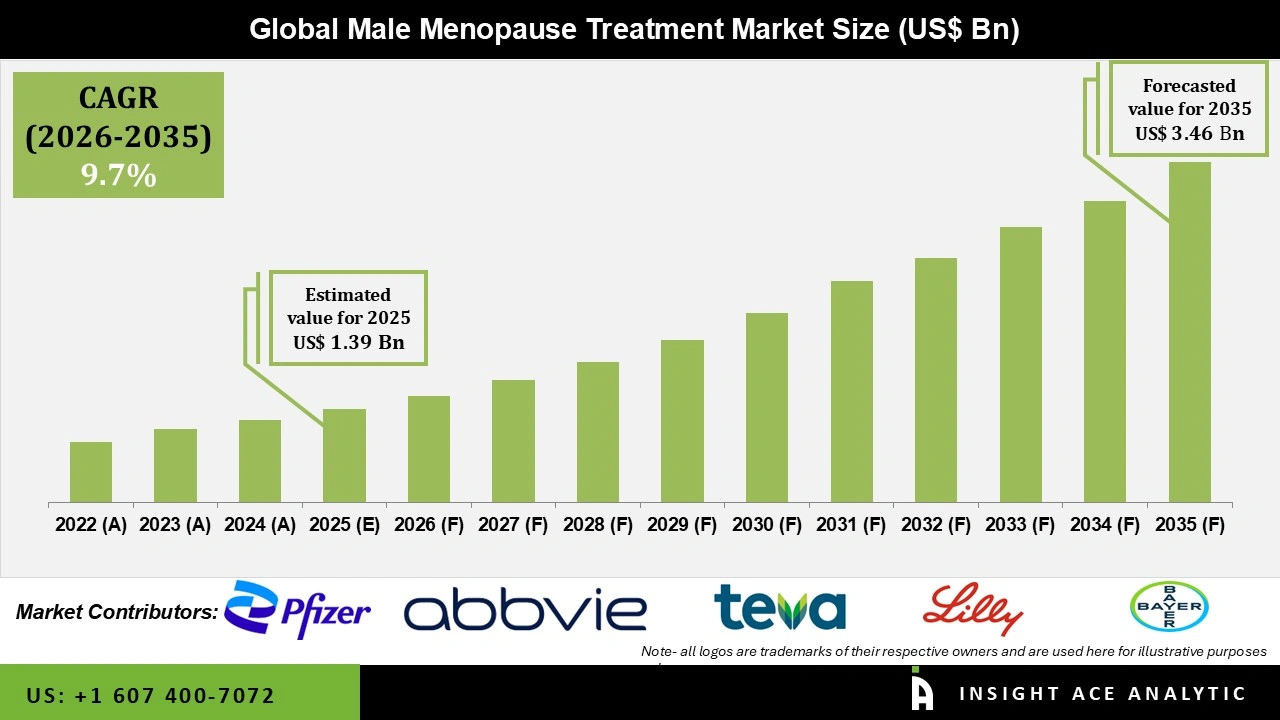
Male menopause treatment, which is frequently linked to the medical condition known as andropause, is the management of symptoms brought on by aging men's gradually declining testosterone levels. This disorder, which progresses more slowly than female menopause, can include mood changes, melancholy, erectile dysfunction, exhaustion, decreased muscle mass, and bone loss. To return hormone levels to a normal range, testosterone replacement therapy (TRT) is the main therapeutic method. TRT can be given as injections, gels, patches, or pellets. The growing awareness of andropause symptoms and their health consequences, combined with improvements in available treatments, is propelling the male menopause treatment market's expansion.
The male menopause treatment market is also growing as a result of the rising incidence of lifestyle-related health problems including diabetes and obesity, which can worsen hormonal imbalances. These disorders frequently result in secondary hypogonadism, which calls for medical treatment. Furthermore, the growing interest in customized medicine, which tailors therapies to each patient's needs and genetic profile for better results, is also influencing the male menopause treatment market. Additionally, the pharmaceutical industry's emphasis on research and development for male health issues is creating a pipeline of novel cures and treatments, which is propelling the male menopause treatment market expansion.
The development of diagnostic technology is also a major factor in the male menopause treatment market expansion. Proactive therapy commencement is encouraged by the earlier and more precise detection of testosterone insufficiency made possible by sophisticated blood testing and biomarker analysis. Additionally, the creation of innovative medication delivery methods, like oral formulations, transdermal patches, and long-acting injectables, is improving patient adherence and treatment effectiveness and fueling the market's growth. Moreover, the development is further fueled by the change in public perceptions of men's health, which has moved away from the stigma associated with hormonal problems. The number of men seeking medical attention and talking about their concerns is growing, which expands the patient base for these therapies.
Competitive Landscape
Which are the Leading Players in Male Menopause Treatment Market?
- Eli Lilly and Company
- Pfizer Inc.
- AbbVie
- Novartis AG
- Merck & Co.
- Bayer AG
- Teva Pharmaceutical Industries
- Mylan N.V.
- Lupin Ltd.
- Ipsen S.A.
- GlaxoSmithkline plc
- Organon & Co.
- Besins Healthcare
- Zydus Lifesciences
- Cipla Limited
Market Dynamics
Driver
Growing Understanding and Awareness of Age-related Testosterone Decrease
The growing clinical understanding and awareness of age-related testosterone decrease, or andropause, is one of the main factors propelling the male menopause treatment market. A greater number of middle-aged and older men are seeking diagnosis and therapy as a result of growing health consciousness and easier access to hormone imbalance diagnostic testing. The stigma associated with men's hormonal health has decreased as a result of media coverage, digital health platforms, and proactive healthcare efforts. This has encouraged candid conversations about symptoms like sadness, exhaustion, low libido, and decreased muscle mass. Furthermore, the need for efficient hormonal treatments is anticipated to fuel the male menopause treatment market growth as the number of aging men worldwide rises, especially in developed and rising nations.
Restrain/Challenge
Concerns About the Long-term Consequences
The male menopause treatment market is significantly hampered by worries about the long-term consequences and safety of testosterone replacement therapy (TRT). Risks like as cardiovascular problems, problems with the prostate, and hormonal abnormalities linked to long-term testosterone usage have been brought to light by clinical research and regulatory cautions. Many nations have tightened their prescribing policies and regulatory control as a result of these worries, which may prevent widespread use. Additionally, continuous monitoring, which includes frequent blood tests and medical supervision, also raises treatment expenses and may deter patients from starting or continuing therapy. Furthermore, inconsistent insurance coverage in some areas and side effect anxiety further limit the male menopause treatment market expansion by decreasing patient compliance and treatment choices' accessibility.
Testosterone Replacement Therapy (TRT) Segment is Expected to Drive the Male Menopause Treatment Market
The Testosterone Replacement Therapy (TRT) category held the largest share in the Male Menopause Treatment market in 2025 driven by a number of overlapping variables that highlight its growing significance in maintaining men's hormone decrease as they age. Clinical usage of TRT is growing as more men seek medical assessment for symptoms like exhaustion, decreased libido, mood swings, and muscle weakness as knowledge of male menopause (andropause) rises. Furthermore, TRT is now more patient-friendly because of advancements in formulation technologies, including gels, patches, long-acting injections, and subcutaneous pellets, which enhance adherence and increase its attractiveness for a wider range of age groups.
Cognitive Behavioral Therapy (CBT) Segment is Growing at the Highest Rate in the Male Menopause Treatment Market
In 2025, the Cognitive Behavioral Therapy (CBT) category dominated the Male Menopause Treatment market because it consistently produces positive outcomes in mood stabilization and cognitive reframing, has robust clinical validation, and uses structured intervention models. Standardized protocols offered by CBT efficiently manage hormonally-related anxiety, irritability, sleep disturbance, and motivation loss. Its widespread acceptability among medical professionals encourages regular rehabilitation and inclusion into established care pathways. Furthermore, the growth of digital mental health services and telehealth platforms has made CBT sessions more accessible and affordable, which has led to its increasing use in this market.
Why North America Led the Male Menopause Treatment Market?
The Male Menopause Treatment market was dominated by North America region in 2025. The area is known for its sophisticated healthcare system, considerable disposable income, and emphasis on men's wellbeing and preventative healthcare. This makes therapies more widely available and more reasonably priced. Along with strong clinical research skills that encourage innovation, North America also boasts a well-established regulatory structure that facilitates the approval and marketing of novel medications.
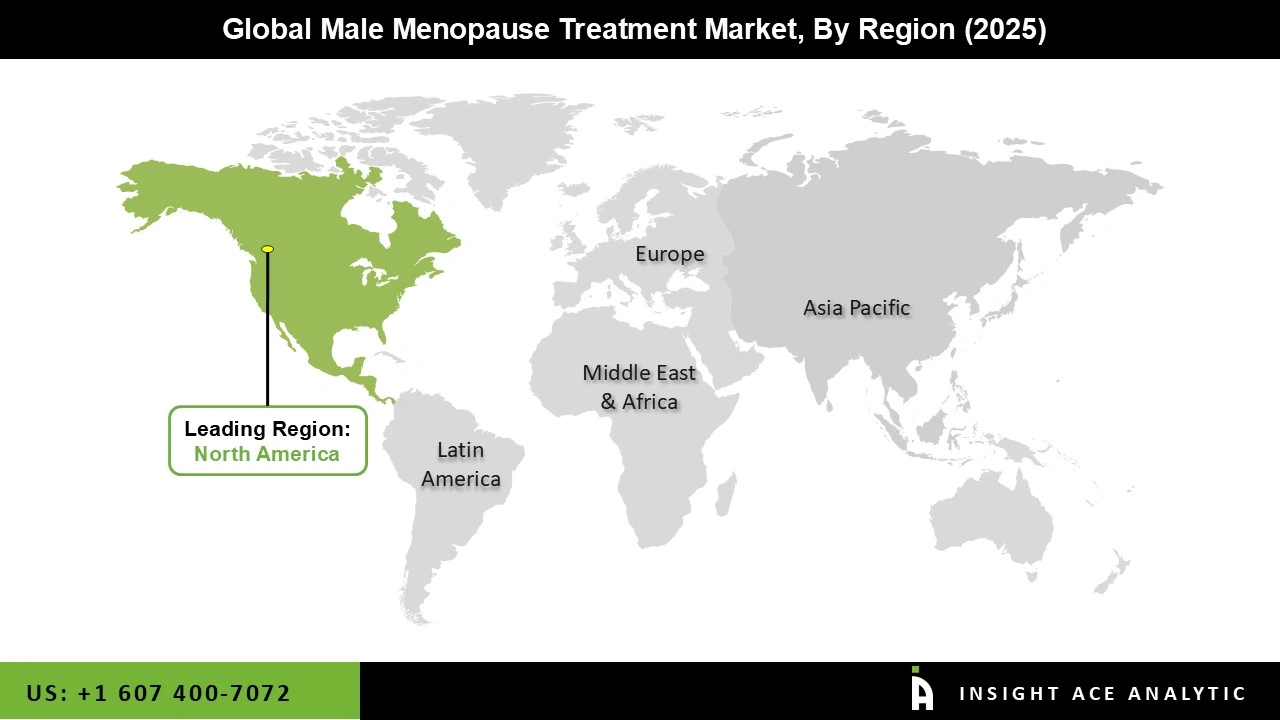
Additionally, the integration of wellness initiatives, mental health services, and endocrinology allows for holistic therapy pathways that address emotional, cognitive, and physical issues. Furthermore, strong reimbursement coverage for counseling, hormone treatments, and digital health services reduces obstacles to access and encourages long-term use by covered groups.
Male Menopause Treatment Market Report Scope :
| Report Attribute | Specifications |
| Market size value in 2025 | USD 1.39 Bn |
| Revenue forecast in 2035 | USD 3.46 Bn |
| Growth Rate CAGR | CAGR of 9.7% from 2026 to 2035 |
| Quantitative Units | Representation of revenue in US$ Bn and CAGR from 2026 to 2035 |
| Historic Year | 2022 to 2025 |
| Forecast Year | 2026-2035 |
| Report Coverage | The forecast of revenue, the position of the company, the competitive market structure, growth prospects, and trends |
| Segments Covered | Alternative Medicine, Hormonal Therapy, Psychological Counseling, and By Region |
| Regional Scope | North America; Europe; Asia Pacific; Latin America; Middle East & Africa |
| Country Scope | U.S.; Canada; U.K.; Germany; China; India; Japan; Brazil; Mexico; The UK; France; Italy; Spain; China; Japan; India; South Korea; Southeast Asia; South Korea; Southeast Asia |
| Competitive Landscape | Eli Lilly and Company, Pfizer Inc., AbbVie, Novartis AG, Merck & Co., Bayer AG, Teva Pharmaceutical Industries, Mylan N.V., Lupin Ltd., Ipsen S.A., GlaxoSmithkline plc, Organon & Co., Besins Healthcare, Zydus Lifesciences, and Cipla Limited |
| Customization Scope | Free customization report with the procurement of the report, Modifications to the regional and segment scope. Geographic competitive landscape. |
| Pricing and Available Payment Methods | Explore pricing alternatives that are customized to your particular study requirements. |
Segmentation of Male Menopause Treatment Market :
Male Menopause Treatment Market, by Alternative Medicine-
- Acupuncture
- Herbal Supplements
- Homeopathy
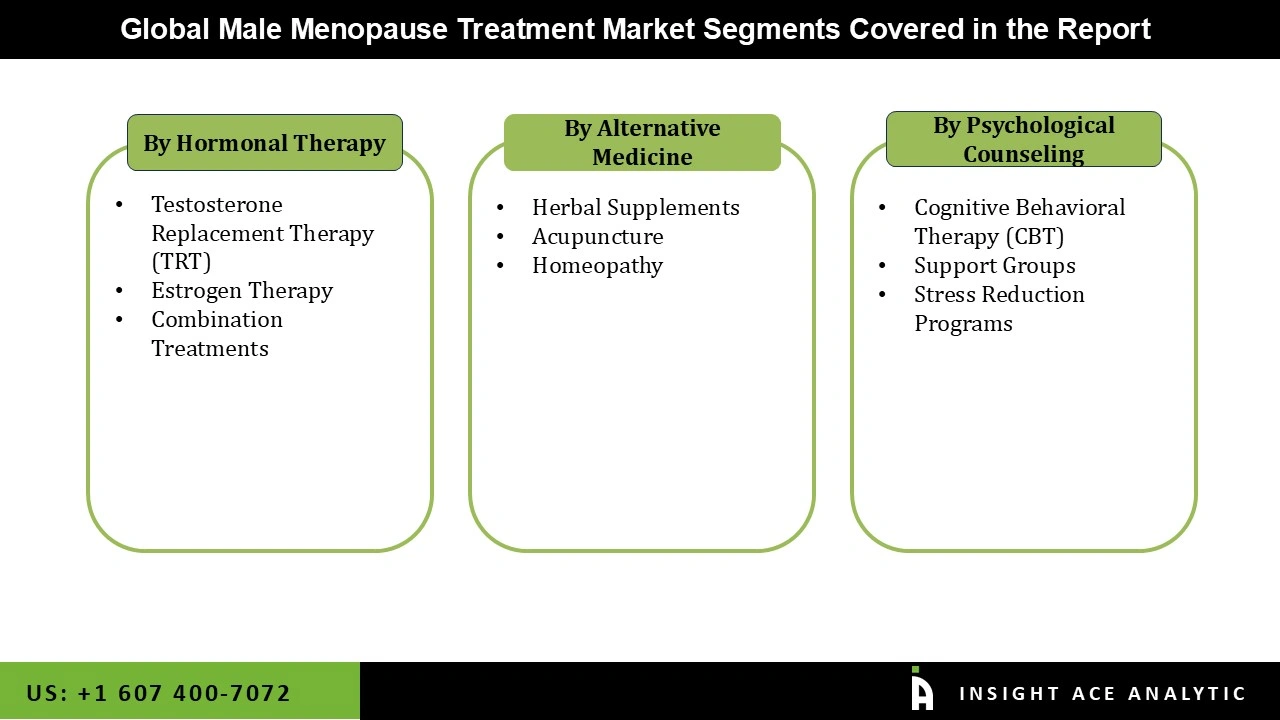
Male Menopause Treatment Market, by Hormonal Therapy-
- Estrogen Therapy
- Testosterone Replacement Therapy (TRT)
- Combination Treatments
Male Menopause Treatment Market, by Psychological Counseling-
- Stress Reduction Programs
- Cognitive Behavioral Therapy (CBT)
- Support Groups
Male Menopause Treatment Market, By Region-
- North America-
- The US
- Canada
- Europe-
- Germany
- The UK
- France
- Italy
- Spain
- Rest of Europe
- Asia-Pacific-
- China
- Japan
- India
- South Korea
- South East Asia
- Rest of Asia Pacific
- Latin America-
- Brazil
- Argentina
- Mexico
- Rest of Latin America
- Middle East & Africa-
- GCC Countries
- South Africa
- Rest of Middle East and Africa
Research Design and Approach
This study employed a multi-step, mixed-method research approach that integrates:
- Secondary research
- Primary research
- Data triangulation
- Hybrid top-down and bottom-up modelling
- Forecasting and scenario analysis
This approach ensures a balanced and validated understanding of both macro- and micro-level market factors influencing the market.
Secondary Research
Secondary research for this study involved the collection, review, and analysis of publicly available and paid data sources to build the initial fact base, understand historical market behaviour, identify data gaps, and refine the hypotheses for primary research.
Sources Consulted
Secondary data for the market study was gathered from multiple credible sources, including:
- Government databases, regulatory bodies, and public institutions
- International organizations (WHO, OECD, IMF, World Bank, etc.)
- Commercial and paid databases
- Industry associations, trade publications, and technical journals
- Company annual reports, investor presentations, press releases, and SEC filings
- Academic research papers, patents, and scientific literature
- Previous market research publications and syndicated reports
These sources were used to compile historical data, market volumes/prices, industry trends, technological developments, and competitive insights.

Primary Research
Primary research was conducted to validate secondary data, understand real-time market dynamics, capture price points and adoption trends, and verify the assumptions used in the market modelling.
Stakeholders Interviewed
Primary interviews for this study involved:
- Manufacturers and suppliers in the market value chain
- Distributors, channel partners, and integrators
- End-users / customers (e.g., hospitals, labs, enterprises, consumers, etc., depending on the market)
- Industry experts, technology specialists, consultants, and regulatory professionals
- Senior executives (CEOs, CTOs, VPs, Directors) and product managers
Interview Process
Interviews were conducted via:
- Structured and semi-structured questionnaires
- Telephonic and video interactions
- Email correspondences
- Expert consultation sessions
Primary insights were incorporated into demand modelling, pricing analysis, technology evaluation, and market share estimation.
Data Processing, Normalization, and Validation
All collected data were processed and normalized to ensure consistency and comparability across regions and time frames.
The data validation process included:
- Standardization of units (currency conversions, volume units, inflation adjustments)
- Cross-verification of data points across multiple secondary sources
- Normalization of inconsistent datasets
- Identification and resolution of data gaps
- Outlier detection and removal through algorithmic and manual checks
- Plausibility and coherence checks across segments and geographies
This ensured that the dataset used for modelling was clean, robust, and reliable.
Market Size Estimation and Data Triangulation
Bottom-Up Approach
The bottom-up approach involved aggregating segment-level data, such as:
- Company revenues
- Product-level sales
- Installed base/usage volumes
- Adoption and penetration rates
- Pricing analysis
This method was primarily used when detailed micro-level market data were available.

Top-Down Approach
The top-down approach used macro-level indicators:
- Parent market benchmarks
- Global/regional industry trends
- Economic indicators (GDP, demographics, spending patterns)
- Penetration and usage ratios
This approach was used for segments where granular data were limited or inconsistent.
Hybrid Triangulation Approach
To ensure accuracy, a triangulated hybrid model was used. This included:
- Reconciling top-down and bottom-up estimates
- Cross-checking revenues, volumes, and pricing assumptions
- Incorporating expert insights to validate segment splits and adoption rates
This multi-angle validation yielded the final market size.
Forecasting Framework and Scenario Modelling
Market forecasts were developed using a combination of time-series modelling, adoption curve analysis, and driver-based forecasting tools.
Forecasting Methods
- Time-series modelling
- S-curve and diffusion models (for emerging technologies)
- Driver-based forecasting (GDP, disposable income, adoption rates, regulatory changes)
- Price elasticity models
- Market maturity and lifecycle-based projections
Scenario Analysis
Given inherent uncertainties, three scenarios were constructed:
- Base-Case Scenario: Expected trajectory under current conditions
- Optimistic Scenario: High adoption, favourable regulation, strong economic tailwinds
- Conservative Scenario: Slow adoption, regulatory delays, economic constraints
Sensitivity testing was conducted on key variables, including pricing, demand elasticity, and regional adoption.
Request Customization
Add countries, segments, company profiles, or extend forecast — free 10% customization with purchase.
Customize This Report →Enquire Before Buying
Speak with our analyst team about scope, methodology, pricing, or deliverable formats.
Enquire Now →Frequently Asked Questions
Male Menopause Treatment Market Size is valued at USD 1.39 Bn in 2025 and is predicted to reach USD 3.46 Bn by the year 2035
The Male Menopause Treatment Market is expected to grow at a 9.7% CAGR during the forecast period for 2026 to 2035
Eli Lilly and Company, Pfizer Inc., AbbVie, Novartis AG, Merck & Co., Bayer AG, Teva Pharmaceutical Industries, Mylan N.V., Lupin Ltd., Ipsen S.A., GlaxoSmithkline plc, Organon & Co., Besins Healthcare, Zydus Lifesciences, and Cipla Limited
Male Menopause Treatment Market is segmented in Distribution by Alternative Medicine (Acupuncture, Herbal Supplements, and Homeopathy), Hormonal Therapy (Estrogen Therapy, Testosterone Replacement Therapy (TRT), and Combination Treatments), Psychological Counseling (Stress Reduction Programs, Cognitive Behavioral Therapy (CBT), Support Groups and Other.
North America region is leading the Male Menopause Treatment Market.