Anabolic Steroids Market Research Report with Forecast 2026 to 2035
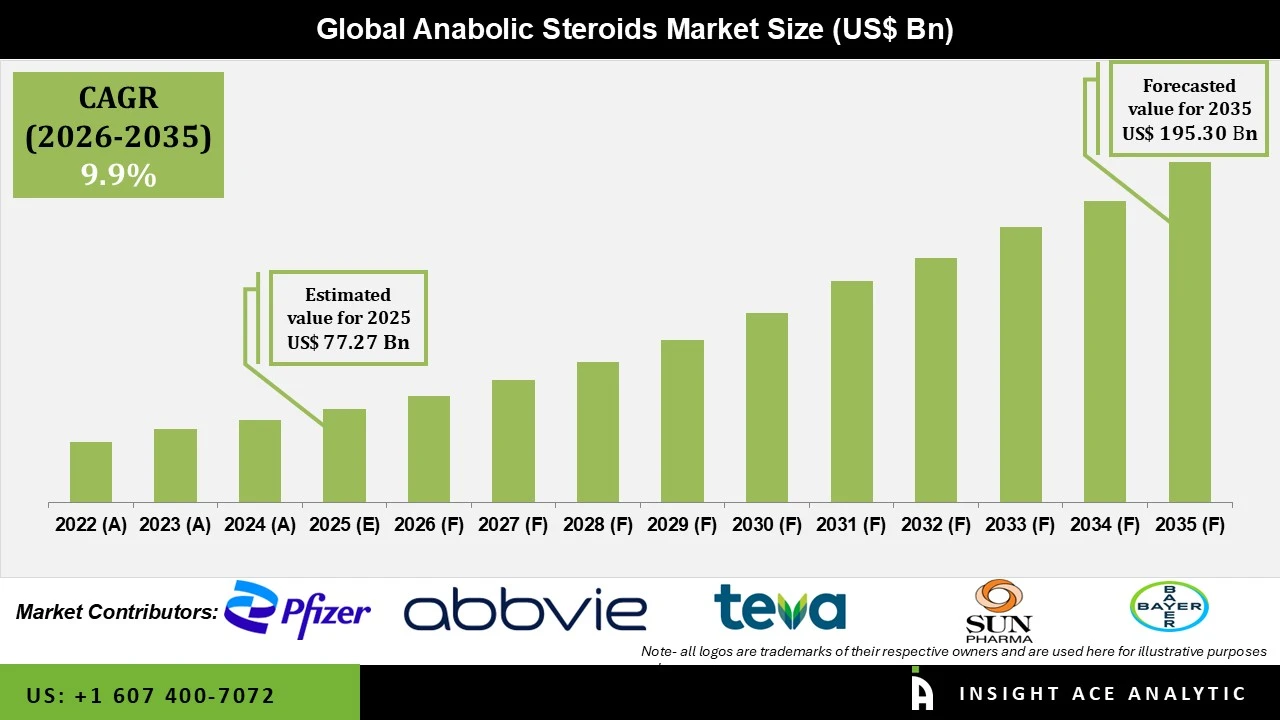
Anabolic Steroids Market Size is valued at USD 77.27 Bn in 2025 and is predicted to reach USD 195.30 Bn by the year 2035 at a 9.9% CAGR during the forecast period for 2026 to 2035.
Anabolic Steroids Market Size, Share & Trends Analysis Distribution by Compound Type (Oxandrolone, Testosterone, Stanozolol / Boldenone, Methyltestosterone, and Others), Route of Administration (Oral, Injectable, Transdermal Delivery Systems, and Others), End-user (Veterinary, Medical, Non-Medical, and Others), and Segment Forecasts, 2026 to 2035
Anabolic steroids are artificial forms of testosterone, a hormone involved in male sex. Among the derivatives of testosterone are norethandrolone, oxymetholone, and methyl testosterone. Because of their dual effects of boosting both male sexual traits (androgenic) and muscle building (anabolic), they are frequently referred to as anabolic-androgenic steroids (AAS). By boosting athletic performance or muscle mass, these substances increase looks. Anabolic steroids are occasionally recommended by doctors to treat ailments like insufficient testosterone, delayed puberty, or disease-related muscle loss. The growing prevalence of illnesses caused by a lack of testosterone is the main factor driving the expansion of the global anabolic steroids market. For older men, anabolic steroids are administered as part of testosterone replacement therapy to enhance their mood and sexual performance.
Moreover, muscular growth is inhibited by hypogonadism, or low testosterone levels. Young people's growing interest in bodybuilding and fitness is fueling the anabolic steroids market growth. Due to the growing popularity of fitness and the need to treat hypogonadism, or low testosterone levels, doctors are increasingly prescribing anabolic steroids to help people gain skeletal muscle. This is anticipated to accelerate market expansion over the course of the forecast period. Additionally, teenagers who experience delayed puberty may benefit from the medical usage of anabolic steroids. Furthermore, they aid in controlling the body's synthesis of cortisol, a hormone that is essential to the body's reaction to stress. In the upcoming years, it is anticipated that these variables would increase the use of anabolic steroids.
The increasing cost of healthcare, which contributes to the development of its infrastructure, is another important element impacting the anabolic steroids market. Additionally, various government agencies are working to enhance the healthcare system by increasing financing, which will have an even greater impact on market dynamics. In addition, pharmaceutical companies have a means to launch safer drugs due to the creation of novel drug delivery technologies and formulations that reduce adverse effects. The access to androgen treatments is expanded by the growing trend of telemedicine, which also creates new channels for prescription and consultation. However, the overuse and abuse of anabolic steroids, particularly in the context of sports and bodybuilding, is one of the main issues facing this market, though. Serious health hazards, such as liver damage, cardiovascular problems, and psychological disorders, may result from this.
Competitive Landscape
Which are the Leading Players in Anabolic Steroids Market?
• Pfizer Inc.
• Sun Pharmaceutical Industries
• Cipla LTA
• Hikma Pharmaceuticals
• Bayer AG
• AbbVie Inc.
• Teva Pharmaceutical Industries
• Ferring Pharmaceuticals
• Endo International
• Lupin LTA
• Zydus Lifesciences
• Perrigo Company
• Mylan
• Aspen Pharmacare
Market Dynamics
Driver
Rising Popularity of Bodybuilding Among Young People
The rising popularity of bodybuilding among young people is one of the main factors propelling the anabolic steroids market. The performance-enhancing drug that is used worldwide is called steroids. The rise in athletic events has led to a significant growth in the demand for steroids, which is good for the worldwide steroid business. Steroids can promote the growth of facial and pubic hair. It deepens the voice in addition to increasing ambition and focus. Therefore, overly feminine hormones benefit from steroids. Additionally, the anabolic steroids market has grown as a result of more government initiatives to improve human services. The rise in male hypogonadism is anticipated to fuel the growth of the global anabolic steroid market. Moreover, it is anticipated that a rise in male impotence brought on by fatigue and weight issues will increase demand for anabolic steroids over the projection period.
Restrain/Challenge
Strict Legal Limits and Regulatory Framework
The strict legal limits and regulatory framework enforced by governments around the world are a major barrier to the anabolic steroids market. Due to their potential for abuse, dependence, and major health risks—such as liver damage, cardiovascular diseases, psychological impacts, and reproductive complications—anabolic steroids are categorized as prohibited substances in many countries. As an example, the Anabolic Steroid Control Act in the United States restricts the production, distribution, and possession of anabolic steroids without a legitimate prescription by classifying them as Schedule III controlled substances. Further impeding market expansion are regulatory bodies like the World Anti-Doping Agency, which enforce stringent prohibitions on non-medical use in professional sports.
Testosterone Segment is Expected to Drive the Anabolic Steroids Market
The Testosterone category held the largest share in the Anabolic Steroids market in 2025. The increasing usage of testosterone for the most acceptable medical applications is the reason for this growth. Healthcare professionals frequently prescribe testosterone to patients with acquired immunodeficiency syndrome (AIDS) or certain types of cancer in order to promote muscle growth and treat male hypogonadism, or low testosterone levels. The demand for testosterone is rising globally as a result of these advantages. Prominent market participants are concentrating on commercializing testosterone products in order to satisfy the heightened demand for these goods.
Injectable Segment is Growing at the Highest Rate in the Anabolic Steroids Market
In 2025, the Injectable category dominated the Anabolic Steroids market. High unmet demand, an increase in bone and joint issues, government awareness campaigns for joint disorders, an increase in the number of obese people due to unhealthy lifestyles, and favorable health insurance coverage are some of the factors driving the injections market. According to the Statistic Brain Research Institute, 50 million people worldwide have been confirmed to have arthritis. Improved steroid injection treatment, rising health consciousness, and rising demand for steroid injections are some of the reasons propelling the global market for steroid injections. This market rise for anabolic steroids is being driven by the increasing demand for steroid injections due to their rapid and effective results.
Why North America Led the Anabolic Steroids Market?
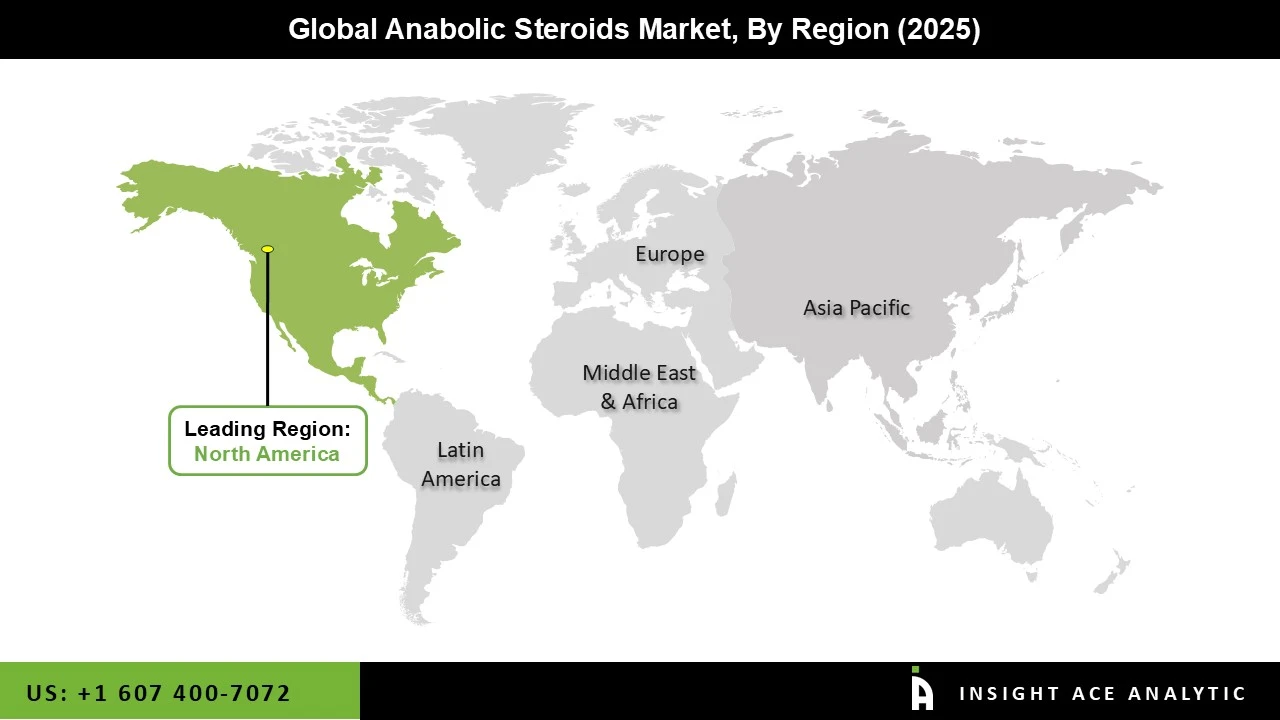
The Anabolic Steroids market was dominated by North America region in 2025. The region has a strong need for testosterone replacement therapy and related treatments due to its sophisticated diagnostic infrastructure and high clinical knowledge of hormonal problems. The availability of regulated anabolic therapy for patients is improved by comprehensive insurance coverage and standardized endocrinologist practice guidelines. Partnerships between the U.S. Department of Veterans Affairs (VA) and private endocrine experts have improved older adult age-related testosterone deficiency screening and treatment programs. These programs have expanded patient populations and facilitated the production of empirical evidence that guides clinical practice. Additionally, there is still a lot of venture capital funding available for digital health platforms that concentrate on hormonal health, which is speeding up the use of remote monitoring tools.
Anabolic Steroids Market Report Scope:
| Report Attribute | Specifications |
| Market size value in 2025 | USD 77.27 Bn |
| Revenue forecast in 2035 | USD 195.30 Bn |
| Growth Rate CAGR | CAGR of 9.9% from 2026 to 2035 |
| Quantitative Units | Representation of revenue in US$ Bn and CAGR from 2026 to 2035 |
| Historic Year | 2022 to 2025 |
| Forecast Year | 2026-2035 |
| Report Coverage | The forecast of revenue, the position of the company, the competitive market structure, growth prospects, and trends |
| Segments Covered | Compound Type, Route of Administration, End-user, and By Region |
| Regional Scope | North America; Europe; Asia Pacific; Latin America; Middle East & Africa |
| Country Scope | U.S.; Canada; U.K.; Germany; China; India; Japan; Brazil; Mexico; The UK; France; Italy; Spain; China; Japan; India; South Korea; Southeast Asia; South Korea; Southeast Asia |
| Competitive Landscape | Pfizer Inc., Sun Pharmaceutical Industries, Cipla LTA, Hikma Pharmaceuticals, Bayer AG, AbbVie Inc., Teva Pharmaceutical Industries, Ferring Pharmaceuticals, Endo International, Lupin LTA, Zydus Lifesciences, Perrigo Company, Mylan, and Aspen Pharmacare |
| Customization Scope | Free customization report with the procurement of the report, Modifications to the regional and segment scope. Geographic competitive landscape. |
| Pricing and Available Payment Methods | Explore pricing alternatives that are customized to your particular study requirements. |
Market Segmentation:
Anabolic Steroids Market by Compound Type-
• Oxandrolone
• Testosterone
• Stanozolol / Boldenone
• Methyltestosterone
• Others
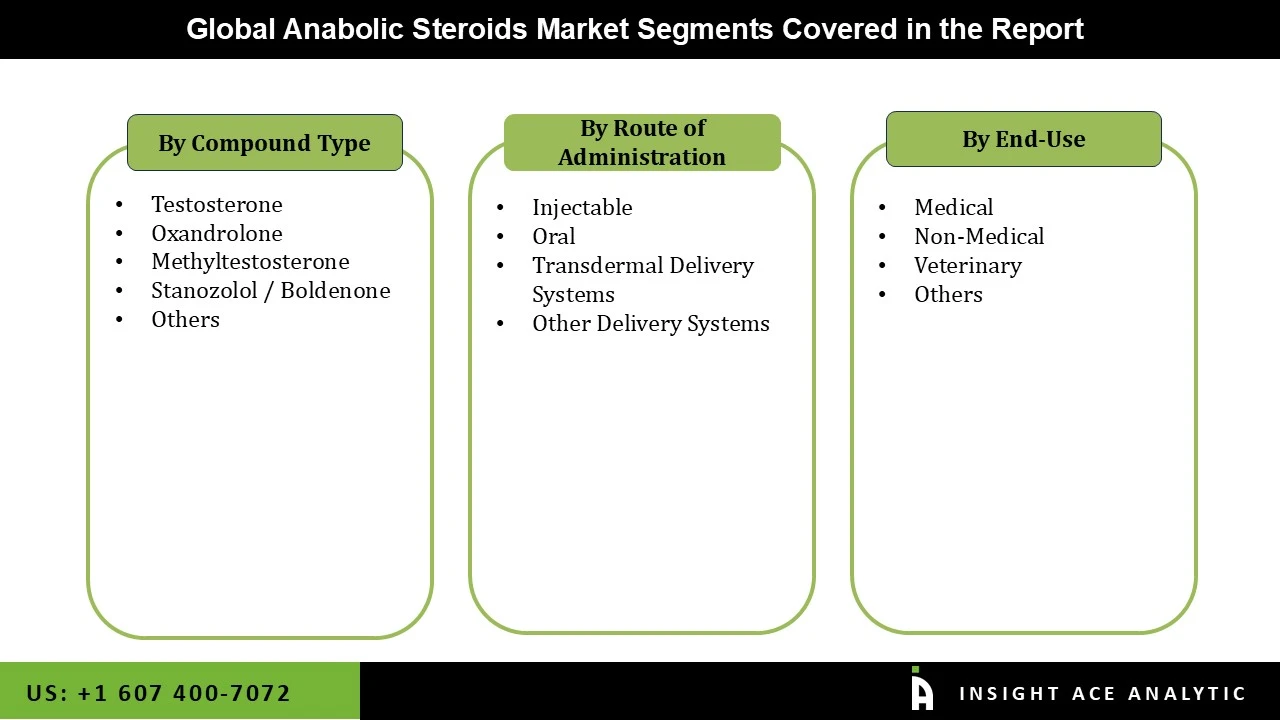
Anabolic Steroids Market by Route of Administration-
• Oral
• Injectable
• Transdermal Delivery Systems
• Others
Anabolic Steroids Market by End-user-
• Veterinary
• Medical
• Non-Medical
• Others
By Region-
North America-
• The US
• Canada
Europe-
• Germany
• The UK
• France
• Italy
• Spain
• Rest of Europe
Asia-Pacific-
• China
• Japan
• India
• South Korea
• South East Asia
• Rest of Asia Pacific
Latin America-
• Brazil
• Argentina
• Mexico
• Rest of Latin America
Middle East & Africa-
• GCC Countries
• South Africa
• Rest of Middle East and Africa
Research Design and Approach
This study employed a multi-step, mixed-method research approach that integrates:
- Secondary research
- Primary research
- Data triangulation
- Hybrid top-down and bottom-up modelling
- Forecasting and scenario analysis
This approach ensures a balanced and validated understanding of both macro- and micro-level market factors influencing the market.
Secondary Research
Secondary research for this study involved the collection, review, and analysis of publicly available and paid data sources to build the initial fact base, understand historical market behaviour, identify data gaps, and refine the hypotheses for primary research.
Sources Consulted
Secondary data for the market study was gathered from multiple credible sources, including:
- Government databases, regulatory bodies, and public institutions
- International organizations (WHO, OECD, IMF, World Bank, etc.)
- Commercial and paid databases
- Industry associations, trade publications, and technical journals
- Company annual reports, investor presentations, press releases, and SEC filings
- Academic research papers, patents, and scientific literature
- Previous market research publications and syndicated reports
These sources were used to compile historical data, market volumes/prices, industry trends, technological developments, and competitive insights.

Primary Research
Primary research was conducted to validate secondary data, understand real-time market dynamics, capture price points and adoption trends, and verify the assumptions used in the market modelling.
Stakeholders Interviewed
Primary interviews for this study involved:
- Manufacturers and suppliers in the market value chain
- Distributors, channel partners, and integrators
- End-users / customers (e.g., hospitals, labs, enterprises, consumers, etc., depending on the market)
- Industry experts, technology specialists, consultants, and regulatory professionals
- Senior executives (CEOs, CTOs, VPs, Directors) and product managers
Interview Process
Interviews were conducted via:
- Structured and semi-structured questionnaires
- Telephonic and video interactions
- Email correspondences
- Expert consultation sessions
Primary insights were incorporated into demand modelling, pricing analysis, technology evaluation, and market share estimation.
Data Processing, Normalization, and Validation
All collected data were processed and normalized to ensure consistency and comparability across regions and time frames.
The data validation process included:
- Standardization of units (currency conversions, volume units, inflation adjustments)
- Cross-verification of data points across multiple secondary sources
- Normalization of inconsistent datasets
- Identification and resolution of data gaps
- Outlier detection and removal through algorithmic and manual checks
- Plausibility and coherence checks across segments and geographies
This ensured that the dataset used for modelling was clean, robust, and reliable.
Market Size Estimation and Data Triangulation
Bottom-Up Approach
The bottom-up approach involved aggregating segment-level data, such as:
- Company revenues
- Product-level sales
- Installed base/usage volumes
- Adoption and penetration rates
- Pricing analysis
This method was primarily used when detailed micro-level market data were available.
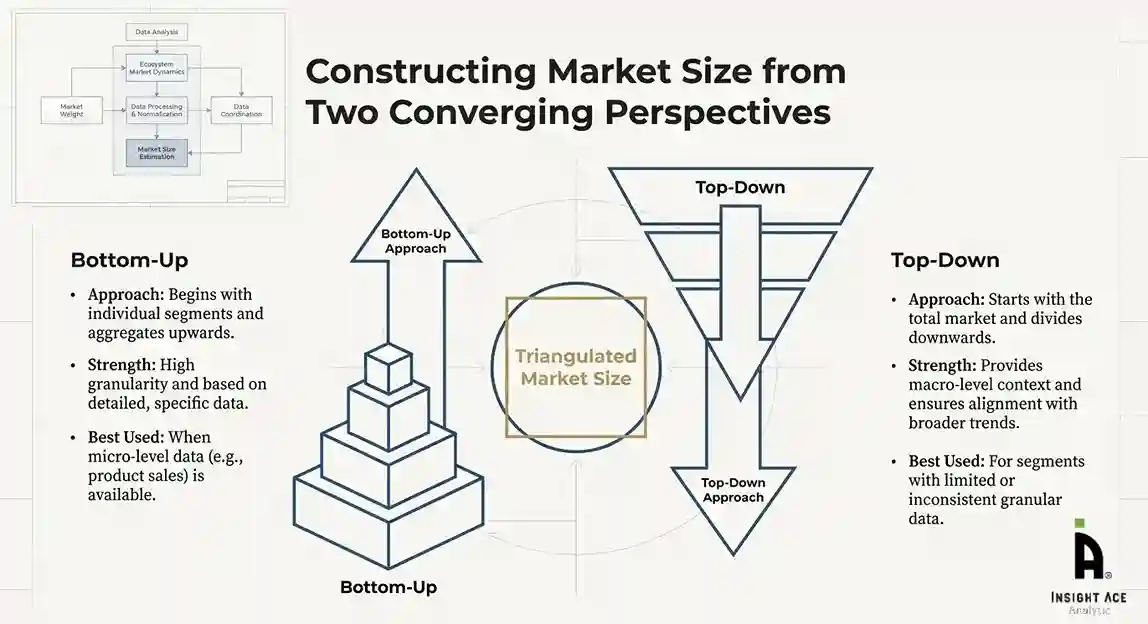
Top-Down Approach
The top-down approach used macro-level indicators:
- Parent market benchmarks
- Global/regional industry trends
- Economic indicators (GDP, demographics, spending patterns)
- Penetration and usage ratios
This approach was used for segments where granular data were limited or inconsistent.
Hybrid Triangulation Approach
To ensure accuracy, a triangulated hybrid model was used. This included:
- Reconciling top-down and bottom-up estimates
- Cross-checking revenues, volumes, and pricing assumptions
- Incorporating expert insights to validate segment splits and adoption rates
This multi-angle validation yielded the final market size.
Forecasting Framework and Scenario Modelling
Market forecasts were developed using a combination of time-series modelling, adoption curve analysis, and driver-based forecasting tools.
Forecasting Methods
- Time-series modelling
- S-curve and diffusion models (for emerging technologies)
- Driver-based forecasting (GDP, disposable income, adoption rates, regulatory changes)
- Price elasticity models
- Market maturity and lifecycle-based projections
Scenario Analysis
Given inherent uncertainties, three scenarios were constructed:
- Base-Case Scenario: Expected trajectory under current conditions
- Optimistic Scenario: High adoption, favourable regulation, strong economic tailwinds
- Conservative Scenario: Slow adoption, regulatory delays, economic constraints
Sensitivity testing was conducted on key variables, including pricing, demand elasticity, and regional adoption.
Request Customization
Add countries, segments, company profiles, or extend forecast — free 10% customization with purchase.
Customize This Report →Enquire Before Buying
Speak with our analyst team about scope, methodology, pricing, or deliverable formats.
Enquire Now →Frequently Asked Questions
Anabolic Steroids Market Size is valued at USD 77.27 Bn in 2025 and is predicted to reach USD 195.30 Bn by the year 2035
Anabolic Steroids Market is expected to grow at a 9.9% CAGR during the forecast period for 2026 to 2035.
Pfizer Inc., Sun Pharmaceutical Industries, Cipla LTA, Hikma Pharmaceuticals, Bayer AG, AbbVie Inc., Teva Pharmaceutical Industries, Ferring Pharmaceuticals, Endo International, Lupin LTA, Zydus Lifesciences, Perrigo Company, Mylan, and Aspen Pharmacare
Anabolic Steroids Market is segmented in Compound Type, Route of Administration, End-user, and By Region.
North America region is leading the Anabolic Steroids Market.