Lupus Nephritis Drugs Market Size, Share and Growth Analysis 2025 to 2034
Lupus Nephritis Drugs Market Size is valued at USD 2.3 Bn in 2025 and is predicted to reach USD 5.6 Bn by the year 2034 at a 10.4% CAGR during the forecast period for 2025 to 2034.
Lupus Nephritis Drugs Market Size, Share & Trends Analysis Distribution by Drug Type (Corticosteroids, Belimumab, and Immunosuppressive (Azathioprine, Mycophenolate, Cyclophosphamide)), Route of Administration (Oral and Parenteral), Distribution Channel (Hospital Pharmacy, Retail Pharmacy, and Online Pharmacy), and Segment Forecasts, 2025 to 2034
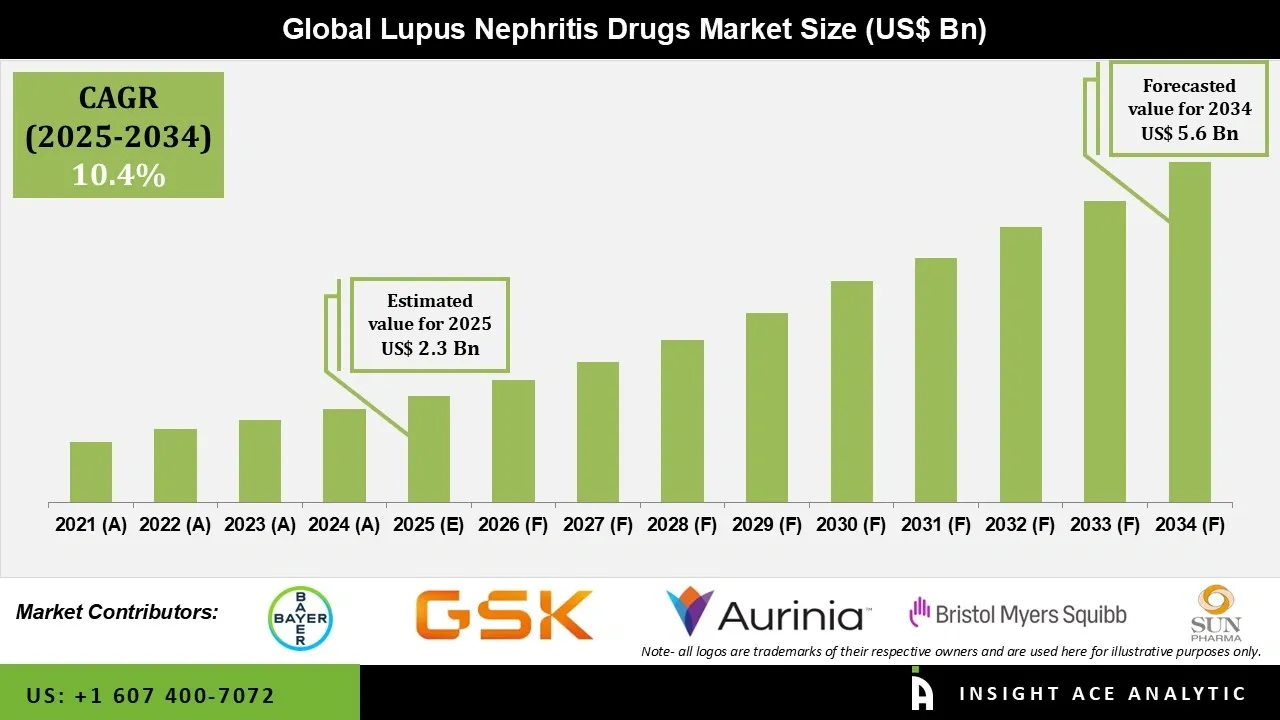
Lupus nephritis drugs are employed to manage kidney inflammation resulting from systemic lupus erythematosus (SLE), an autoimmune disorder characterized by immune-mediated tissue damage. These therapies aim to suppress immunological hyperactivity, reduce inflammation, prevent further renal injury, and preserve kidney function. Commonly used treatments include immunosuppressive agents to mitigate immune-mediated renal damage and corticosteroids for rapid inflammation control.
In recent years, targeted biologic therapies such as voclosporin and belimumab have been introduced to enhance therapeutic efficacy through more precise immune modulation. The expansion of the lupus nephritis drugs market is primarily driven by the increasing prevalence of SLE, advancements in treatment modalities, and supportive government initiatives for individuals with autoimmune diseases.
The growing patient demand for more effective and personalized treatments, such as biologics and targeted therapies, is driving the expansion of the lupus nephritis drugs market. The treatment options are also being improved through ongoing research and clinical trials focused on novel therapeutics, such as NK cell-based therapies and immunoproteasome inhibitors. Moreover, improved healthcare infrastructure and higher healthcare spending are driving growth in the lupus nephritis drugs market, especially in developing nations.
The growth in the lupus nephritis drugs market is also anticipated to be fueled by the launch of innovative drugs and treatments to address unmet needs in the disease. Additionally, the market's upward trajectory is being aided by the emphasis on individualized drug and early diagnosis. The lupus nephritis drugs market is expected to grow significantly as pharmaceutical companies continue to develop treatments, offering patients more efficient and targeted therapeutic options.
The increasing number of drug approvals for lupus nephritis treatment is expected to accelerate the growth of the global lupus nephritis drugs market. For example, in February 2023, GSK plc received the US Food and Drug Administration's (FDA) Orphan Drug Designation (ODD) for Benlysta (belimumab), a monoclonal antibody that inhibits B cells and may be used to treat systemic sclerosis.
Benlysta (belimumab), a B-lymphocyte stimulator (BLyS)-specific inhibitor, binds to soluble BLyS, which is elevated in individuals with systemic autoimmune diseases such as lupus nephritis (LN) and systemic lupus erythematosus (SLE). However, stringent regulatory requirements for drug approval are expected to hinder the expansion of the global lupus nephritis drugs market. Additionally, treatment-related side effects and the high cost of drug development are anticipated to further constrain market growth during the forecast period.
Competitive Landscape
Which are the Leading Players in Lupus Nephritis Drugs Market?
• Abbott
• Roche
• Bayer AG
• Sanofi
• GlaxoSmithKline
• AstraZeneca
• Aurinia Pharmaceuticals Inc.
• Bristol-Myers Squibb
• Eli Lilly and Company
• Johnson & Johnson Private Limited
• Sun Pharmaceutical Industries Ltd
Market Dynamics
Driver
Rising Incidence of SLE Worldwide
The need for efficient management of lupus nephritis has increased due to the rising incidence of SLE worldwide, driving the lupus nephritis drugs market. Up to 60% of SLE patients are thought to develop lupus nephritis at some point in their lives, making it a serious public health issue. Although the precise causes are yet unknown, hormones, the environment, and genetics all play a role. It primarily affects fertile women, with estimates indicating an 8:1 female-to-male ratio. Furthermore, the absolute number of individuals developing lupus nephritis has increased significantly due to the rising frequency of SLE, creating a sizable prospective patient pool. Overall, a growing target audience looking for efficient lupus nephritis drugs and management alternatives is indicated by the disease's rising prevalence and serious renal consequences.
Restrain/Challenge
High Cost of Biologic Medicines
One significant obstacle to the growth potential of the lupus nephritis drugs market is the high cost of biologic medicines. Belimumab and other biologics have transformed the treatment of lupus, but they are quite expensive. For many patients, a year's worth of treatment might cost more than six figures. Due to this financial strain, many patients find it difficult to regularly afford and follow their recommended course of therapy.
Additionally, the prospects for commercial expansion in those regions will likely remain hampered by limited access to novel, targeted biologic treatments. In less developed healthcare markets worldwide, high drug prices continue to be a barrier to both patients and market penetration. To improve economic access to necessary treatments for lupus nephritis, particularly biologics, more funding and work are still required globally.
The Corticosteroids Segment is Expected to Drive the Lupus Nephritis Drugs Market
The Corticosteroids category held the largest share in the Lupus Nephritis Drugs market in 2024 due to its well-established role as a first-line treatment for immune-mediated kidney injury and its ability to rapidly reduce inflammation. Due to their potent immunosuppressive and anti-inflammatory properties, rapid onset of action, and comparatively inexpensive cost when compared to more recent biologics, corticosteroids are frequently used in induction therapy and during disease flare-ups. Additionally, the increasing incidence of systemic lupus erythematosus with renal involvement, particularly in poorer nations where access to cutting-edge treatments may be restricted, supports growth even further.
The Hospital Pharmacy Segment is Growing at the Highest Rate in the Lupus Nephritis Drugs Market
In 2024, the Hospital Pharmacy category dominated the Lupus Nephritis Drugs market, driven primarily by the disease's complexity and severity, which often require expert diagnosis, careful observation, and the use of cutting-edge treatments in hospital settings. Hospital pharmacies are an important distribution channel because patients with lupus nephritis often require immunosuppressive drugs, biologics, and combination therapy, which are usually started and administered under professional supervision. This segment's growth is further supported by the rising frequency of hospital admissions brought on by severe renal problems, flare-ups, and comorbidities related to systemic lupus erythematosus.
Why North America Led the Lupus Nephritis Drugs Market?
The Lupus Nephritis Drugs market was dominated by the North American region in 2024, driven by the high incidence of systemic lupus erythematosus (SLE), sophisticated medical facilities, and growing awareness of lupus nephritis, early detection, and focused therapy. Strong acceptance of biologic and creative treatments, including monoclonal antibodies and new immunosuppressive drugs, is beneficial to the region.
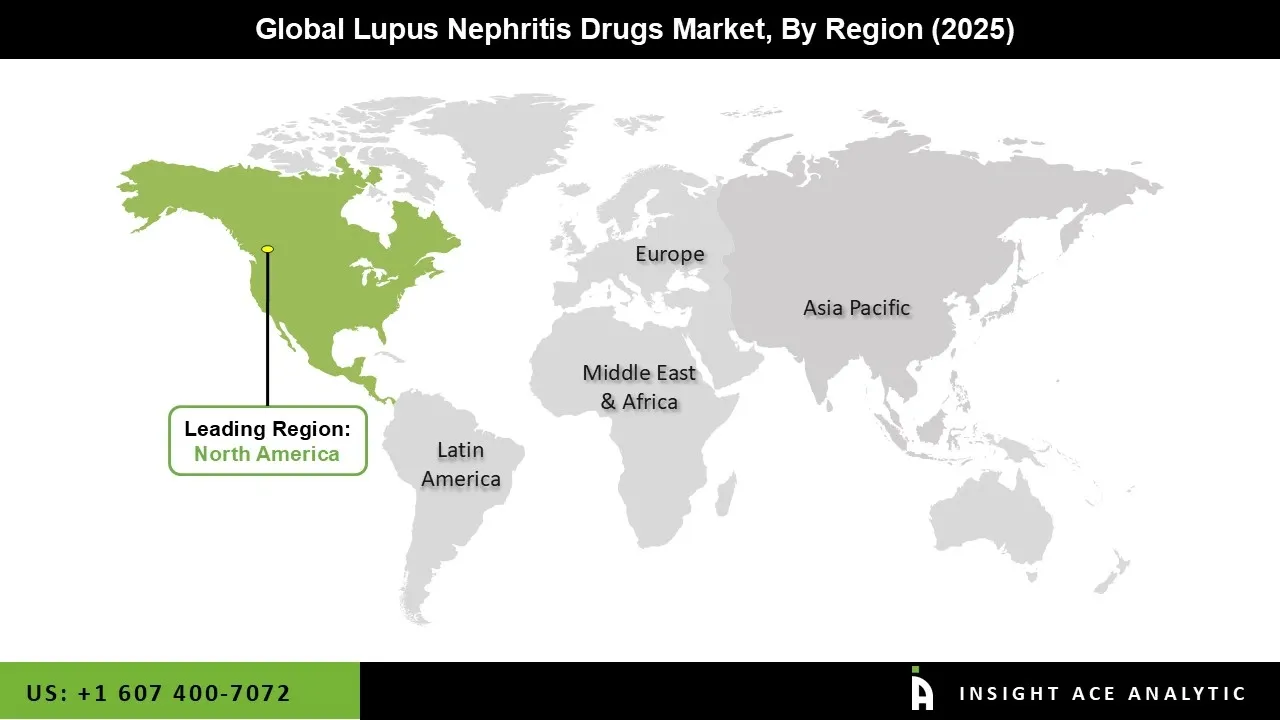
This adoption is bolstered by active clinical research and a supportive regulatory environment, especially in the United States. Additionally, rising healthcare costs, greater access to rheumatology and nephrology specialists, and the availability of insurance coverage for specialized drugs all support the growth of the lupus nephritis drugs market.
Key Development
• March 2024: With a focus on patients with proliferative lupus nephritis, Novartis progressed its monoclonal antibody Ianalumab (VAY736) into Phase III clinical trials. The purpose of the trials is to assess Ianalumab's safety, effectiveness, and tolerability as a supplemental treatment for lupus nephritis and systemic lupus erythematosus (SLE). Participants in the randomized, double-blind, placebo-controlled trials receive either Ianalumab or a placebo in addition to their existing conventional therapies.
• February 2024: Everest Medicines and Kezar Life Sciences, Inc. announced that Kezar's Investigational New Drug (IND) application for the Phase 2b PALIZADE trial of zetomipzomib in Chinese lupus nephritis patients had been approved by the Center for Drug Evaluation (CDE) of China's National Medical Products Administration (NMPA). Zetomipzomib is a novel, selective immunoproteasome inhibitor with great promise for treating a range of autoimmune diseases.
• June 2023: The FDA approved Kyverna Therapeutics, a US-based cell therapy firm, for KYV-101, a treatment for refractory lupus nephritis. The drug depletes B cells, particularly autoreactive B cells, found in patients with this autoimmune disease by a unique anti-CD19 chimeric antigen receptor T-cell (CAR T) therapy.
Lupus Nephritis Drugs Market Report Scope:
| Market size value in 2025 | USD 2.3 Bn |
| Revenue forecast in 2034 | USD 5.6 Bn |
| Growth Rate CAGR | CAGR of 10.4% from 2025 to 2034 |
| Quantitative Units | Representation of revenue in US$ Bn and CAGR from 2025 to 2034 |
| Historic Year | 2021 to 2023 |
| Forecast Year | 2025-2034 |
| Report Coverage | The forecast of revenue, the position of the company, the competitive market structure, growth prospects, and trends |
| Segments Covered | Drug Type, Route of Administration, Distribution Channel, and By Region |
| Regional Scope | North America; Europe; Asia Pacific; Latin America; Middle East & Africa |
| Country Scope | U.S.; Canada; U.K.; Germany; China; India; Japan; Brazil; Mexico; The UK; France; Italy; Spain; China; Japan; India; South Korea; Southeast Asia; South Korea; Southeast Asia |
| Competitive Landscape | Abbott, Roche, Bayer AG, Sanofi, GlaxoSmithKline, AstraZeneca, Aurinia Pharmaceuticals Inc., Bristol-Myers Squibb, Eli Lilly and Company, Johnson & Johnson Private Limited, and Sun Pharmaceutical Industries Ltd |
| Customization Scope | Free customization report with the procurement of the report, Modifications to the regional and segment scope. Geographic competitive landscape. |
| Pricing and Available Payment Methods | Explore pricing alternatives that are customized to your particular study requirements. |
Market Segmentation:
Lupus Nephritis Drugs Market by Drug Type-
• Corticosteroids
• Belimumab
• Immunosuppressive
o Azathioprine
o Mycophenolate
o Cyclophosphamide
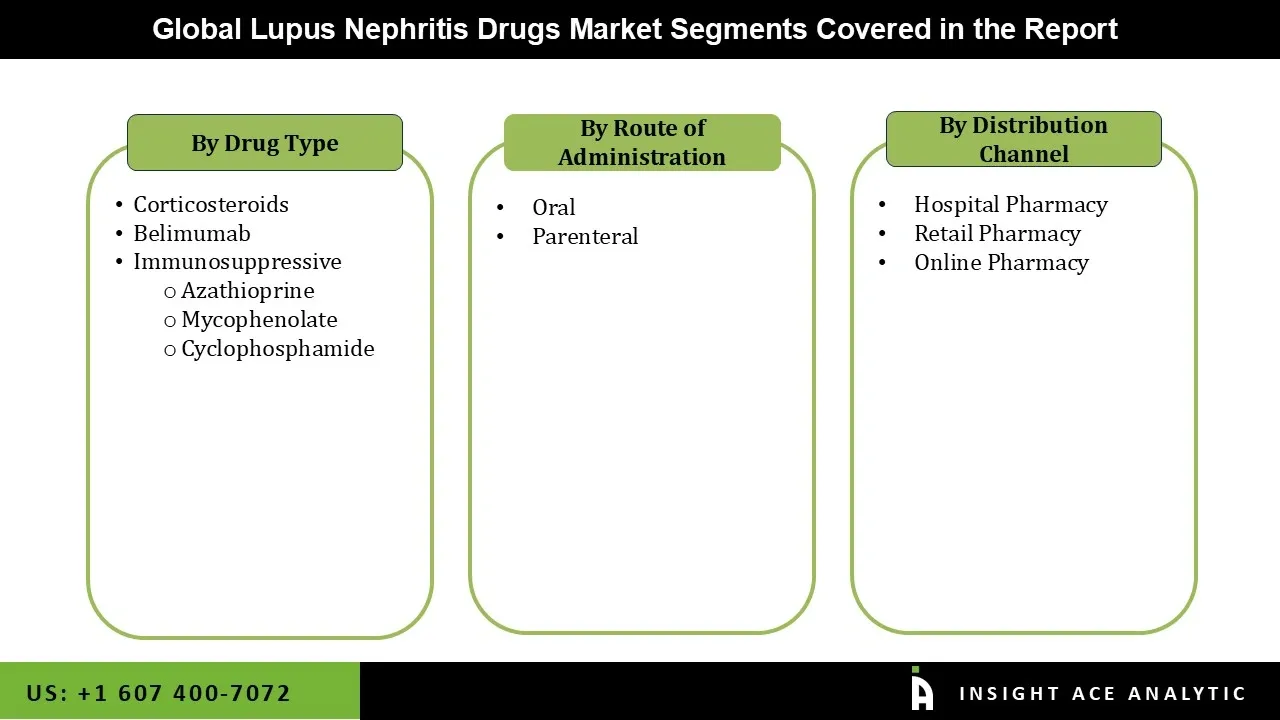
Lupus Nephritis Drugs Market by Route of Administration-
• Oral
• Parenteral
Lupus Nephritis Drugs Market by Distribution Channel-
• Hospital Pharmacy
• Retail Pharmacy
• Online Pharmacy
Lupus Nephritis Drugs Market- By Region
North America-
• The US
• Canada
• Mexico
Europe-
• Germany
• The UK
• France
• Italy
• Spain
• Rest of Europe
Asia-Pacific-
• China
• Japan
• India
• South Korea
• South East Asia
• Rest of Asia Pacific
Latin America-
• Brazil
• Argentina
• Rest of Latin America
Middle East & Africa-
• GCC Countries
• South Africa
• Rest of Middle East and Africa
Research Design and Approach
This study employed a multi-step, mixed-method research approach that integrates:
- Secondary research
- Primary research
- Data triangulation
- Hybrid top-down and bottom-up modelling
- Forecasting and scenario analysis
This approach ensures a balanced and validated understanding of both macro- and micro-level market factors influencing the market.
Secondary Research
Secondary research for this study involved the collection, review, and analysis of publicly available and paid data sources to build the initial fact base, understand historical market behaviour, identify data gaps, and refine the hypotheses for primary research.
Sources Consulted
Secondary data for the market study was gathered from multiple credible sources, including:
- Government databases, regulatory bodies, and public institutions
- International organizations (WHO, OECD, IMF, World Bank, etc.)
- Commercial and paid databases
- Industry associations, trade publications, and technical journals
- Company annual reports, investor presentations, press releases, and SEC filings
- Academic research papers, patents, and scientific literature
- Previous market research publications and syndicated reports
These sources were used to compile historical data, market volumes/prices, industry trends, technological developments, and competitive insights.

Primary Research
Primary research was conducted to validate secondary data, understand real-time market dynamics, capture price points and adoption trends, and verify the assumptions used in the market modelling.
Stakeholders Interviewed
Primary interviews for this study involved:
- Manufacturers and suppliers in the market value chain
- Distributors, channel partners, and integrators
- End-users / customers (e.g., hospitals, labs, enterprises, consumers, etc., depending on the market)
- Industry experts, technology specialists, consultants, and regulatory professionals
- Senior executives (CEOs, CTOs, VPs, Directors) and product managers
Interview Process
Interviews were conducted via:
- Structured and semi-structured questionnaires
- Telephonic and video interactions
- Email correspondences
- Expert consultation sessions
Primary insights were incorporated into demand modelling, pricing analysis, technology evaluation, and market share estimation.
Data Processing, Normalization, and Validation
All collected data were processed and normalized to ensure consistency and comparability across regions and time frames.
The data validation process included:
- Standardization of units (currency conversions, volume units, inflation adjustments)
- Cross-verification of data points across multiple secondary sources
- Normalization of inconsistent datasets
- Identification and resolution of data gaps
- Outlier detection and removal through algorithmic and manual checks
- Plausibility and coherence checks across segments and geographies
This ensured that the dataset used for modelling was clean, robust, and reliable.
Market Size Estimation and Data Triangulation
Bottom-Up Approach
The bottom-up approach involved aggregating segment-level data, such as:
- Company revenues
- Product-level sales
- Installed base/usage volumes
- Adoption and penetration rates
- Pricing analysis
This method was primarily used when detailed micro-level market data were available.

Top-Down Approach
The top-down approach used macro-level indicators:
- Parent market benchmarks
- Global/regional industry trends
- Economic indicators (GDP, demographics, spending patterns)
- Penetration and usage ratios
This approach was used for segments where granular data were limited or inconsistent.
Hybrid Triangulation Approach
To ensure accuracy, a triangulated hybrid model was used. This included:
- Reconciling top-down and bottom-up estimates
- Cross-checking revenues, volumes, and pricing assumptions
- Incorporating expert insights to validate segment splits and adoption rates
This multi-angle validation yielded the final market size.
Forecasting Framework and Scenario Modelling
Market forecasts were developed using a combination of time-series modelling, adoption curve analysis, and driver-based forecasting tools.
Forecasting Methods
- Time-series modelling
- S-curve and diffusion models (for emerging technologies)
- Driver-based forecasting (GDP, disposable income, adoption rates, regulatory changes)
- Price elasticity models
- Market maturity and lifecycle-based projections
Scenario Analysis
Given inherent uncertainties, three scenarios were constructed:
- Base-Case Scenario: Expected trajectory under current conditions
- Optimistic Scenario: High adoption, favourable regulation, strong economic tailwinds
- Conservative Scenario: Slow adoption, regulatory delays, economic constraints
Sensitivity testing was conducted on key variables, including pricing, demand elasticity, and regional adoption.
Request Customization
Add countries, segments, company profiles, or extend forecast — free 10% customization with purchase.
Customize This Report →Enquire Before Buying
Speak with our analyst team about scope, methodology, pricing, or deliverable formats.
Enquire Now →Frequently Asked Questions
Lupus Nephritis Drugs Market Size is valued at USD 2.3 Bn in 2025 and is predicted to reach USD 5.6 Bn by the year 2034 at a 10.4% CAGR during the forecast period for 2025 to 2034.
Abbott, Roche, Bayer AG, Sanofi, GlaxoSmithKline, AstraZeneca, Aurinia Pharmaceuticals Inc., Bristol-Myers Squibb, Eli Lilly and Company, Johnson & Johnson Private Limited, and Sun Pharmaceutical Industries Ltd
Drug Type, Route of Administration, Distribution Channel, and By Region are the key segments of the Lupus Nephritis Drugs Market
North America region is leading the Lupus Nephritis Drugs Market.