Lab-on-Paper Diagnostics Market Size and Revenue Impact Study 2026 to 2035
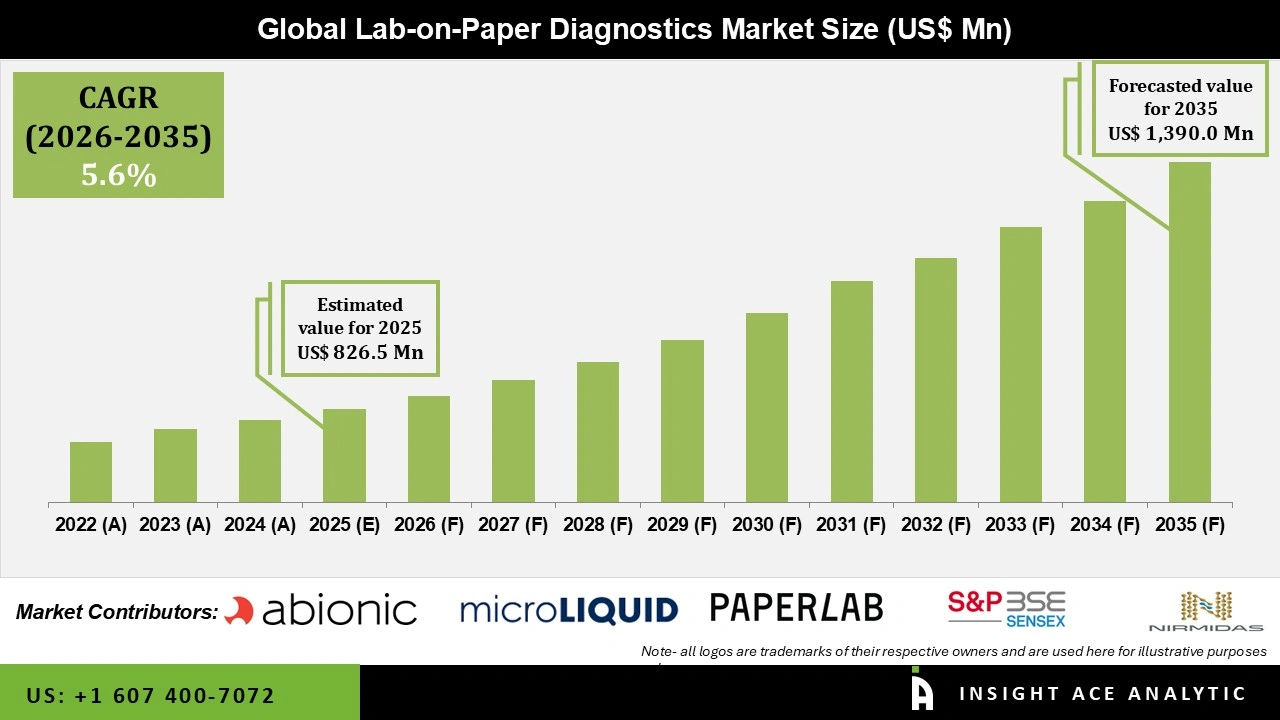
Global Lab-on-Paper Diagnostics Market Size is valued at USD 826.5 Mn in 2025 and is predicted to reach USD 1,390.0 Mn by the year 2035 at a 5.6% CAGR during the forecast period for 2026 to 2035.
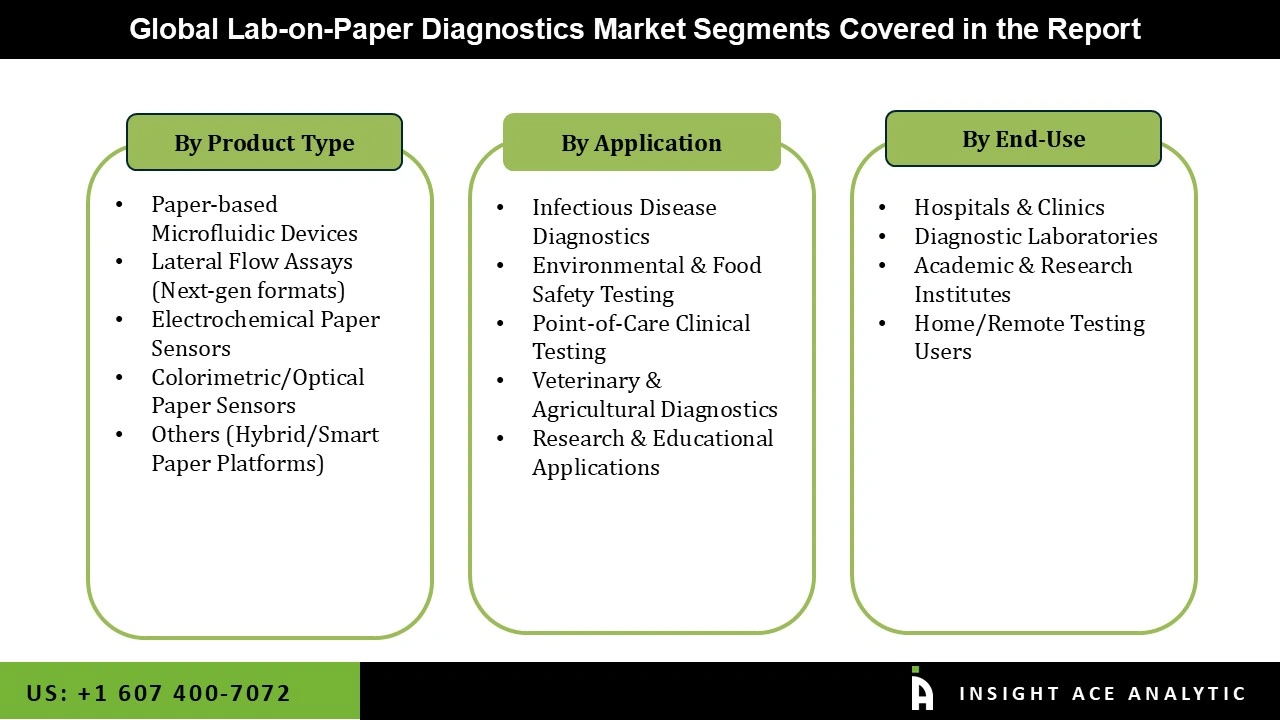
Lab-on-Paper Diagnostics Market Size, Share & Trends Analysis Distribution by Type (Paper-based Microfluidic Devices, Lateral Flow Assays (Next-gen formats), Colorimetric/Optical Paper Sensors, Electrochemical Paper Sensors, and Others), Application (Infectious Disease Diagnostics, Point-of-Care Clinical Testing, Environmental & Food Safety Testing, Research & Educational Applications, and Veterinary & Agricultural Diagnostics), End-user (Hospitals & Clinics, Diagnostic Laboratories, Home/Remote Testing Users, and Academic & Research Institutes), and Segment Forecasts, 2026 to 2035
Lab-on-paper diagnostics are simple, low-cost test devices made mostly from paper that act like mini laboratories. They use the natural wicking action of paper (capillary flow) to move tiny drops of sample — such as blood, urine, saliva or water — through channels printed or cut into the paper. Along the way, the sample meets dried chemicals or biosensors that cause a visible color change, line, or pattern to appear when the target substance (virus, bacteria, hormone, pollutant, etc.) is present. No batteries, pumps, centrifuges or fancy equipment are needed — just add the sample and wait a few minutes for the result.
These paper-based tests are designed to be portable, disposable, and easy enough for almost anyone to use without training. They are especially valuable in places with limited access to laboratories, electricity or trained staff. Common uses include rapid diagnosis of infectious diseases (malaria, dengue, HIV, tuberculosis, COVID), pregnancy testing, checking water quality, food safety screening, environmental pollutant detection, and monitoring chronic conditions. Because they are very cheap (often under $1 per test), lightweight, and stable at room temperature, lab-on-paper diagnostics are growing quickly in global health, field testing, point-of-care clinics, and emergency response settings.
The lab-on-paper diagnostics market is growing at a steady pace as the focus of the healthcare institutions is on developing solutions for effective and rapid decentralized diagnostics at minimal costs. These devices are gaining popularity for their capability of performing lab-scale testing without the use of complex equipment, which is ideal even for point-of-care applications at the personal level. Moreover, the market for lab-on-paper will gain even further thrust as a result of the growing incidence of infectious diseases and chronic disorders, which require urgent diagnostic interventions.
Additionally, the increasing demand for portable, disposable, paper-based devices is being driven by the growing pressure on healthcare institutions to reduce the cost and time for diagnosis. Moreover, overcoming the limitations related to the sensitivity, accuracy, and multiplexing aspects of lab-on-paper-based devices is the increasing focus on paper microfluidics, biosensors, and reagent integration. In addition, the lab-on-paper diagnostics market is moving ahead as a result of various government initiatives launched to improve accessibility related to diagnosis in poorer countries. The lab-on-paper-based devices have a significant number of potential applications in clinical, environmental, and food safety diagnostics.
Competitive Landscape
Which are the Leading Players in Lab-on-Paper Diagnostics Market?
- Abionic SA
- Diagnostics for All
- MicroLIQUID
- Nirmidas Biotech
- SensDx
- Oxia Initiative
- InnovaPrep
- PaperLab
- Others
Market Dynamics
Driver
Increasing Need for Quick and Decentralized Diagnostic Solutions
One of the main factors propelling the growth of the lab-on-paper diagnostics market is the increasing need for quick and decentralized diagnostic solutions. By delivering prompt and accurate results at the point of service, paper diagnostics present an appealing option in a time when timely and accessible healthcare is crucial. The lab-on-paper tests are especially well-suited for implementation in a variety of scenarios, from distant locations with limited access to complex laboratory infrastructure to emergency circumstances where prompt diagnosis is essential, due to their simplicity and affordability. Additionally, lab-on-paper diagnostics play a critical part in fulfilling the needs of the global healthcare scene, which is increasingly emphasizing the significance of early diagnosis and prompt response.
Restrain/Challenge
Growing Sensitivity and Specificity Issues
The lab-on-paper diagnostics market may be constrained by sensitivity and specificity issues. Although lab-on-paper diagnostic tests have benefits, including mobility, cost, and ease of use, concerns about their sensitivity and specificity could prevent them from being widely used. The healthcare professionals and end users may become less confident if lab-on-paper diagnostics show limits in identifying or ruling out specific illnesses. This is because the accuracy of diagnostic data is crucial in healthcare decision-making. Additionally, the intrinsic features of these tests, which may not always match the performance of more sophisticated laboratory techniques, can be blamed for difficulties in reaching high sensitivity and specificity levels.
Paper-based Microfluidic Devices Segment is Expected to Drive the Lab-on-Paper Diagnostics Market
The Paper-based Microfluidic Devices category held the largest share in the Lab-on-Paper Diagnostics market in 2024. The use of microfluidic concepts to lab-on-paper diagnostics is known as paper-based microfluidics. These systems create complex fluidic channels on a microscale by using paper as a substrate. More advanced and multiplexed diagnostic capabilities are made possible by this. The paper-based microfluidic devices allow for the accurate and controlled detection of several analytes at once by controlling the flow of small amounts of liquid. The lab-on-paper diagnostics are becoming more capable due to this technology, particularly when more sophisticated testing is needed.
Hospitals & Clinics Segment is Growing at the Highest Rate in the Lab-on-Paper Diagnostics Market
In 2024, the hospitals & clinics category dominated the Lab-on-Paper Diagnostics market due to the growing need for rapid and precise disease diagnosis. The lab-on-paper diagnostics are inexpensive, user-friendly, and portable tools that can yield results in a matter of minutes without the need for complex machinery or qualified staff. Additionally, these can also be used to identify chronic conditions, including diabetes, heart disease, and cancer, as well as infectious disorders like COVID-19, malaria, dengue, and HIV.
Why North America Led the Lab-on-Paper Diagnostics Market?
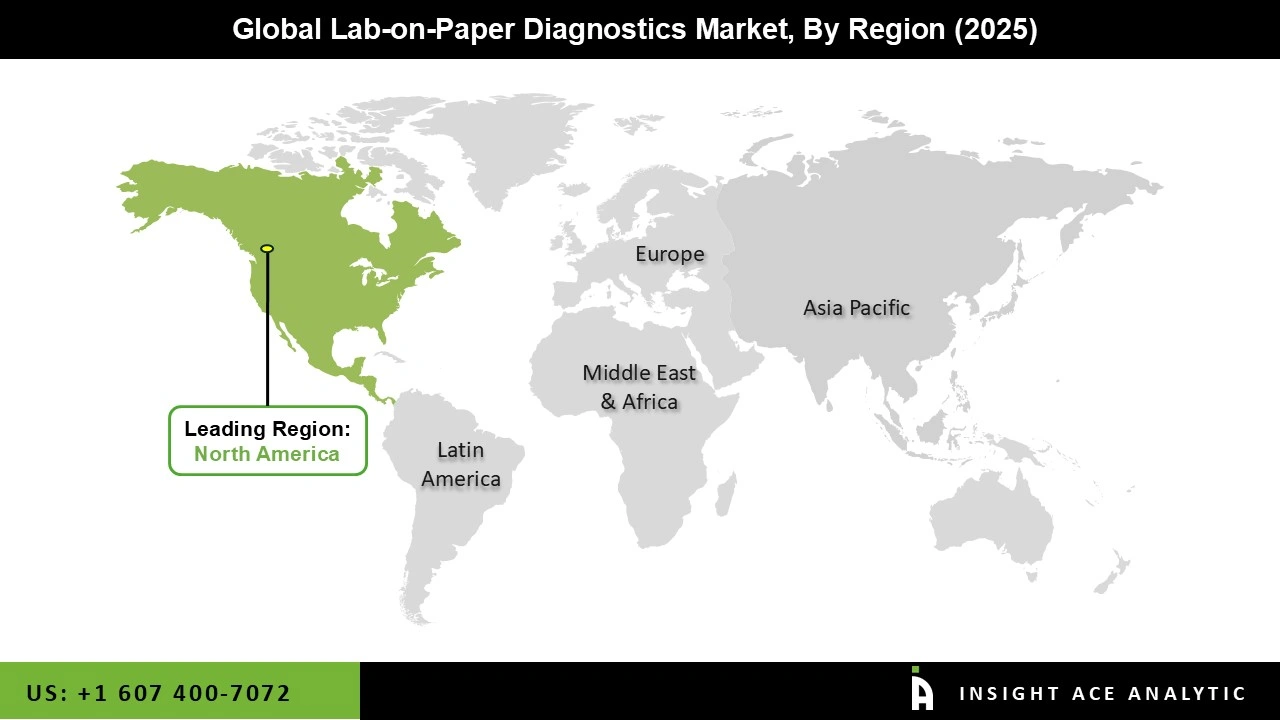
The Lab-on-Paper Diagnostics market was dominated by North America region in 2025 propelled by its substantial investment in R&D and well-established healthcare infrastructure. The region gains from the robust presence of important academic institutions and business players, which promotes ongoing innovation in diagnostic technology.
Additionally, the technological developments in fields like microfluidics, along with a strong desire for quick, easily accessible, and point-of-care diagnostic solutions, further drive the lab-on-paper diagnostics market growth.
Lab-on-Paper Diagnostics Market Report Scope :
| Report Attribute | Specifications |
| Market size value in 2025 | USD 826.5 Mn |
| Revenue forecast in 2035 | USD 1,390.0 Mn |
| Growth Rate CAGR | CAGR of 5.6% from 2026 to 2035 |
| Quantitative Units | Representation of revenue in US$ Bn and CAGR from 2026 to 2035 |
| Historic Year | 2022 to 2024 |
| Forecast Year | 2026-2035 |
| Report Coverage | The forecast of revenue, the position of the company, the competitive market structure, growth prospects, and trends |
| Segments Covered | Type, Application, End-user, and By Region |
| Regional Scope | North America; Europe; Asia Pacific; Latin America; Middle East & Africa |
| Country Scope | U.S.; Canada; U.K.; Germany; China; India; Japan; Brazil; Mexico; The UK; France; Italy; Spain; China; Japan; India; South Korea; Southeast Asia; South Korea; Southeast Asia |
| Competitive Landscape | Abionic SA, Diagnostics for All, MicroLIQUID, Nirmidas Biotech, SensDx, Oxia Initiative, InnovaPrep, PaperLab, and Others. |
| Customization Scope | Free customization report with the procurement of the report, Modifications to the regional and segment scope. Geographic competitive landscape. |
| Pricing and Available Payment Methods | Explore pricing alternatives that are customized to your particular study requirements. |
Segmentation of Lab-on-Paper Diagnostics Market :
Lab-on-Paper Diagnostics Market by Type-
- Paper-based Microfluidic Devices
- Lateral Flow Assays (Next-gen formats)
- Colorimetric/Optical Paper Sensors
- Electrochemical Paper Sensors
- Others
Lab-on-Paper Diagnostics Market by Application-
- Infectious Disease Diagnostics
- Point-of-Care Clinical Testing
- Environmental & Food Safety Testing
- Research & Educational Applications
- Veterinary & Agricultural Diagnostics
Lab-on-Paper Diagnostics Market by End-user-
- Hospitals & Clinics
- Diagnostic Laboratories
- Home/Remote Testing Users
- Academic & Research Institutes
Lab-on-Paper Diagnostics Market by Region-
- North America-
- The US
- Canada
- Europe-
- Germany
- The UK
- France
- Italy
- Spain
- Rest of Europe
- Asia-Pacific-
- China
- Japan
- India
- South Korea
- South East Asia
- Rest of Asia Pacific
- Latin America-
- Brazil
- Argentina
- Mexico
- Rest of Latin America
- Middle East & Africa-
- GCC Countries
- South Africa
- Rest of Middle East and Africa
Research Design and Approach
This study employed a multi-step, mixed-method research approach that integrates:
- Secondary research
- Primary research
- Data triangulation
- Hybrid top-down and bottom-up modelling
- Forecasting and scenario analysis
This approach ensures a balanced and validated understanding of both macro- and micro-level market factors influencing the market.
Secondary Research
Secondary research for this study involved the collection, review, and analysis of publicly available and paid data sources to build the initial fact base, understand historical market behaviour, identify data gaps, and refine the hypotheses for primary research.
Sources Consulted
Secondary data for the market study was gathered from multiple credible sources, including:
- Government databases, regulatory bodies, and public institutions
- International organizations (WHO, OECD, IMF, World Bank, etc.)
- Commercial and paid databases
- Industry associations, trade publications, and technical journals
- Company annual reports, investor presentations, press releases, and SEC filings
- Academic research papers, patents, and scientific literature
- Previous market research publications and syndicated reports
These sources were used to compile historical data, market volumes/prices, industry trends, technological developments, and competitive insights.
Primary Research
Primary research was conducted to validate secondary data, understand real-time market dynamics, capture price points and adoption trends, and verify the assumptions used in the market modelling.
Stakeholders Interviewed
Primary interviews for this study involved:
- Manufacturers and suppliers in the market value chain
- Distributors, channel partners, and integrators
- End-users / customers (e.g., hospitals, labs, enterprises, consumers, etc., depending on the market)
- Industry experts, technology specialists, consultants, and regulatory professionals
- Senior executives (CEOs, CTOs, VPs, Directors) and product managers
Interview Process
Interviews were conducted via:
- Structured and semi-structured questionnaires
- Telephonic and video interactions
- Email correspondences
- Expert consultation sessions
Primary insights were incorporated into demand modelling, pricing analysis, technology evaluation, and market share estimation.
Data Processing, Normalization, and Validation
All collected data were processed and normalized to ensure consistency and comparability across regions and time frames.
The data validation process included:
- Standardization of units (currency conversions, volume units, inflation adjustments)
- Cross-verification of data points across multiple secondary sources
- Normalization of inconsistent datasets
- Identification and resolution of data gaps
- Outlier detection and removal through algorithmic and manual checks
- Plausibility and coherence checks across segments and geographies
This ensured that the dataset used for modelling was clean, robust, and reliable.
Market Size Estimation and Data Triangulation
Bottom-Up Approach
The bottom-up approach involved aggregating segment-level data, such as:
- Company revenues
- Product-level sales
- Installed base/usage volumes
- Adoption and penetration rates
- Pricing analysis
This method was primarily used when detailed micro-level market data were available.

Top-Down Approach
The top-down approach used macro-level indicators:
- Parent market benchmarks
- Global/regional industry trends
- Economic indicators (GDP, demographics, spending patterns)
- Penetration and usage ratios
This approach was used for segments where granular data were limited or inconsistent.
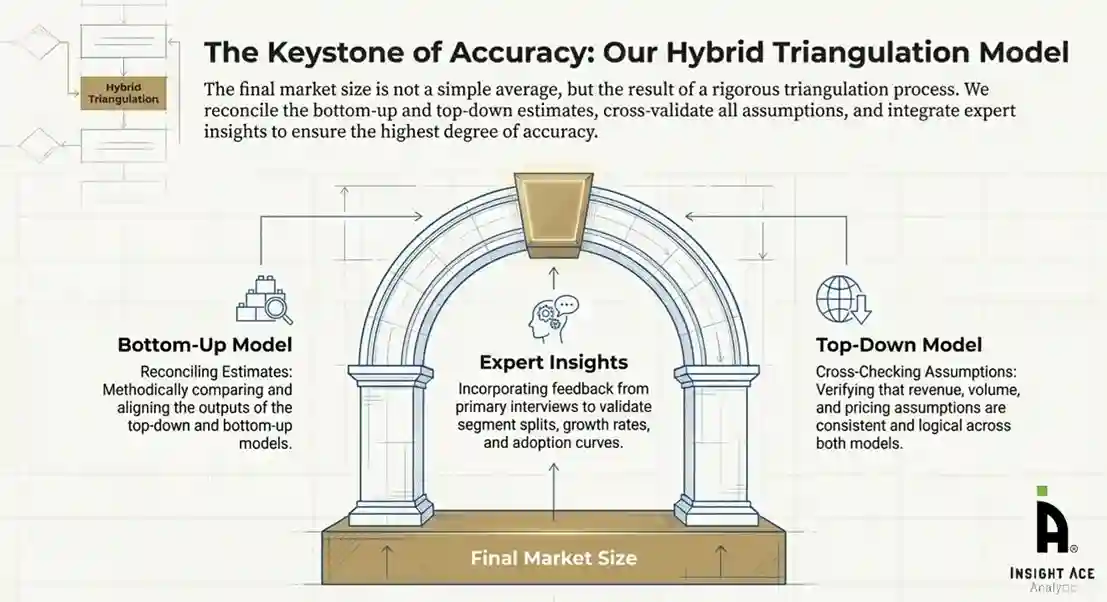
Hybrid Triangulation Approach
To ensure accuracy, a triangulated hybrid model was used. This included:
- Reconciling top-down and bottom-up estimates
- Cross-checking revenues, volumes, and pricing assumptions
- Incorporating expert insights to validate segment splits and adoption rates
This multi-angle validation yielded the final market size.
Forecasting Framework and Scenario Modelling
Market forecasts were developed using a combination of time-series modelling, adoption curve analysis, and driver-based forecasting tools.
Forecasting Methods
- Time-series modelling
- S-curve and diffusion models (for emerging technologies)
- Driver-based forecasting (GDP, disposable income, adoption rates, regulatory changes)
- Price elasticity models
- Market maturity and lifecycle-based projections
Scenario Analysis
Given inherent uncertainties, three scenarios were constructed:
- Base-Case Scenario: Expected trajectory under current conditions
- Optimistic Scenario: High adoption, favourable regulation, strong economic tailwinds
- Conservative Scenario: Slow adoption, regulatory delays, economic constraints
Sensitivity testing was conducted on key variables, including pricing, demand elasticity, and regional adoption.
Request Customization
Add countries, segments, company profiles, or extend forecast — free 10% customization with purchase.
Customize This Report →Enquire Before Buying
Speak with our analyst team about scope, methodology, pricing, or deliverable formats.
Enquire Now →Frequently Asked Questions
Lab-on-Paper Diagnostics Market Size is valued at USD 826.5 Mn in 2025 and is predicted to reach USD 1,390.0 Bn by the year 2035
Lab-on-Paper Diagnostics Market is expected to grow at a 5.6% CAGR during the forecast period for 2026 to 2035
Abionic SA, Diagnostics for All, MicroLIQUID, Nirmidas Biotech, SensDx, Oxia Initiative, InnovaPrep, PaperLab, and Others.
Lab-on-Paper Diagnostics Market is Segmenetd in Type (Paper-based Microfluidic Devices, Lateral Flow Assays (Next-gen formats), Colorimetric/Optical Paper Sensors, Electrochemical Paper Sensors, and Others), Application (Infectious Disease Diagnostics, Point-of-Care Clinical Testing, Environmental & Food Safety Testing, Research & Educational Applications, and Veterinary & Agricultural Diagnostics), End-user (Hospitals & Clinics, Diagnostic Laboratories, Home/Remote Testing Users, and Academic & Research Institutes) and Other.
North America region is leading the Lab-on-Paper Diagnostics Market.