Cardiac Cannula Market Size and Scope 2026 to 2035
What is Cardiac Cannula Market Size?
Cardiac Cannula Market Size is valued at USD 268.10 Mn in 2025 and is predicted to reach USD 501.32 Mn by the year 2035 at a 6.5% CAGR during the forecast period for 2026 to 2035.
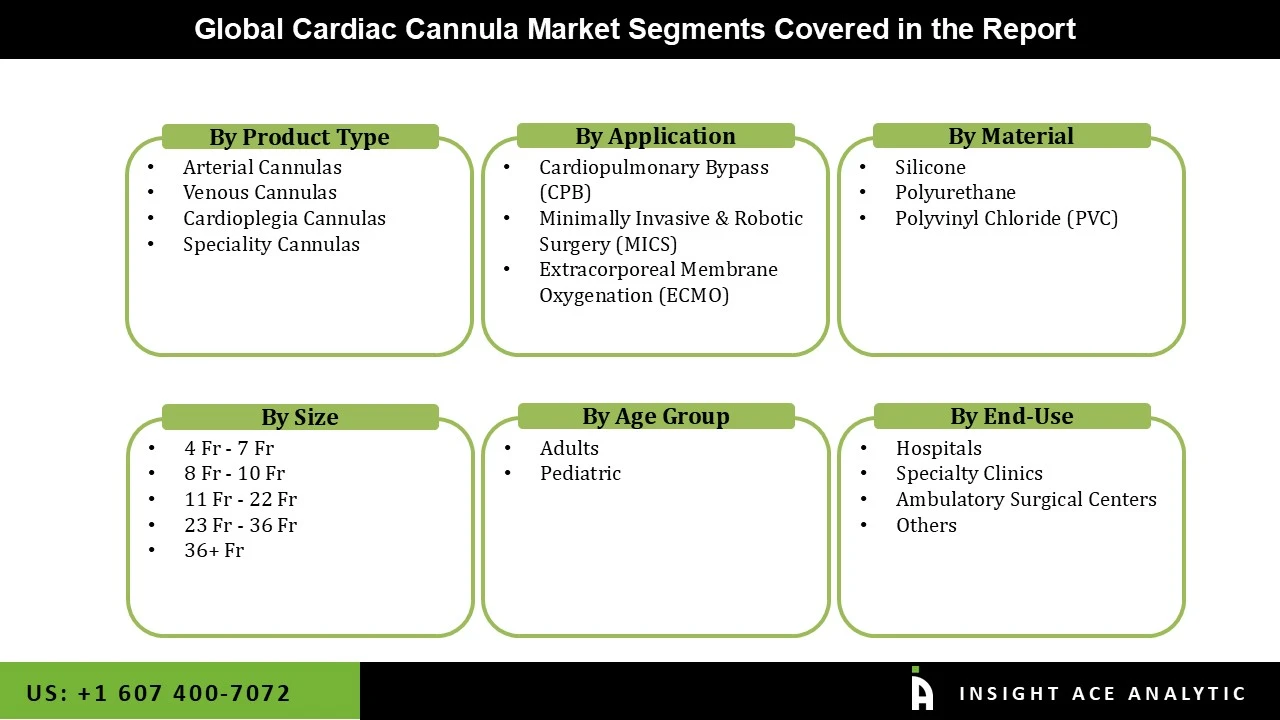
Cardiac Cannula Market Size, Share & Trends Analysis Distribution by Product Type (Cardioplegia Cannulas, Arterial Cannulas, Venous Cannulas, and Specialty Cannulas), Age Group (Pediatric and Adults), Size (4 Fr - 7 Fr, 8 Fr - 10 Fr, 11 Fr - 22 Fr, 23 Fr - 36 Fr, and 36+ Fr), Material (Silicone, Polyvinyl Chloride (PVC), and Polyurethane), Application (Minimally Invasive & Robotic Surgery (MICS), Cardiopulmonary Bypass (CPB), and Extracorporeal Membrane Oxygenation (ECMO)), End-user (Hospitals, Specialty Clinics, Ambulatory Surgical Centers, and Others), and Segment Forecasts, 2026 to 2035
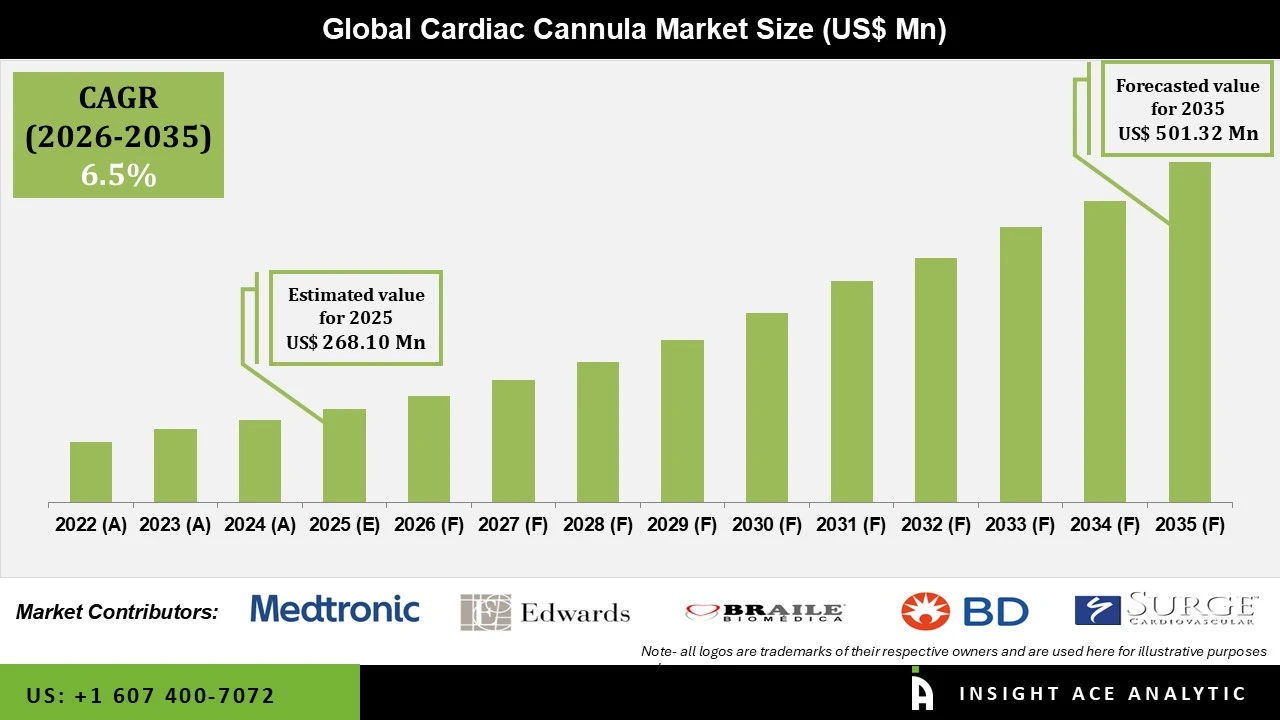
Cardiac Cannula Market Key Takeaways:
|
A cardiac cannula is a thin, flexible tube that is used to allow the passage of blood or fluids into the heart or main blood arteries during cardiac surgery or critical care treatments. It is frequently utilized in open-heart procedures, particularly when a patient is put on a heart-lung machine (cardiopulmonary bypass), when the cannula assists in rerouting blood from the heart to an external device that oxygenates and returns it to the body.
Depending on the surgical need, cardiac cannulas can be positioned in the aorta, vena cava, or various heart chambers. The rising incidence of cardiovascular illnesses, improvements in medical technology, and the expanding need for less invasive surgical treatments are the main factors propelling the cardiac cannula market's expansion.
The primary cause of the increasing demand for cardiopulmonary cannulas is the rise in cardiac disease incidence. Therefore, it promotes the cardiac cannula market expansion. Heart failure, coronary artery disease, and congenital heart defects are a few of the prevalent illnesses that are included in this category of cardiac ailments. These are conditions where surgical interventions cause interference.
The market is expected to increase as a result of the increasing demand for sophisticated cardiac cannulas and the constant search by medical professionals for a workable solution to these problems. Additionally, a significant portion of the cardiac cannula market comes from the world's aging population. The growing number of elderly people puts the general population vulnerable to cardiovascular diseases, which typically necessitate surgical assistance.
In addition, the market is expanding as a result of healthcare professionals' increased understanding of the value of employing cutting-edge cardiac cannulas to enhance surgical results. In order to acquaint medical personnel with the newest methods and technologies in cardiac surgery, educational initiatives and training programs have become essential. As a result, cardiac cannulas are more commonly used in a variety of medical contexts.
Furthermore, the use of high-quality medical equipment, such as cardiac cannulas, is being facilitated by government initiatives in several countries to enhance healthcare infrastructure and services. However, a major obstacle to the market's expansion is the high cost of sophisticated cardiac cannulas, which may prevent their widespread use, especially in areas with tight healthcare budgets.
Competitive Landscape
Which are the Leading Players in Cardiac Cannula Market?
• Medtronic
• BD (Becton, Dickinson & Corporation)
• Surge Cardiovascular
• Edwards Lifesciences Corporation
• Braile Biomédica
• LivaNova PLC
• Smartcanula LLC
• Getinge
• EUROSETS
• INVAMED
• Cardinal Health
• Andocor
• Cormed Medizintechnik GmbH & Co. KG
• Xenios AG (Fresenius Medical Care)
• Changzhou KangXin Medical Instruments Co., Ltd.
• NIPRO
• MERA (Senko Medical Instrument Mfg. Co., Ltd.)
• Prymax Healthcare LLP
• Vitalcor, Inc.
• Spectrum Medical
Market Dynamics
Driver
Increasing Prevalence of Cardiovascular Disorders
The increasing prevalence of cardiovascular disorders worldwide is a major driver of growth in the cardiac cannula market. The World Health Organization (WHO) estimates that cardiovascular illnesses account for 17.9 million deaths annually, making them the top cause of mortality globally. The demand for cardiac operations and procedures has increased due to the growing burden of these disorders, which has increased the demand for cardiac cannulas.
The prevalence of heart-related conditions such as coronary artery disease and heart failure has significantly increased due to dietary changes, stress, and lifestyle modifications. This has increased demand for heart surgery, which in turn has increased demand for heart cannulas. Another crucial element is the world's aging population, since heart disease is more common in older people and requires surgery more frequently. Furthermore, improvements in surgical methods, especially minimally invasive procedures that call for specialized cannulas, have accelerated the cardiac cannula market expansion. Moreover, the effectiveness and safety of cardiac cannulation operations have been greatly improved by medical technology advancements, which have further fueled market expansion.
Restrain/Challenge
High Cost of Advanced Cardiac Cannula Devices
The high cost of sophisticated cardiac cannula devices and the associated surgical procedures is one of the main factors limiting the market's expansion and accessibility. Many healthcare facilities, particularly those in low- and middle-income areas, find cardiac cannulas with contemporary features—such as biocompatible materials, specialized coatings to prevent clotting, or integrated monitoring capabilities—to be costly when compared to standard devices.
In addition to raising the total cost of cardiac procedures, this high cost puts hospitals with tight budgets and patients who might not have sufficient insurance coverage or reimbursement support at a financial disadvantage. As a result, advanced cannula technology adoption rates may be limited, especially in developing nations with limited healthcare budgets. This might hinder access to cutting-edge cardiac care solutions and slow down the growth of the cardiac cannula market over the forecast period.
Arterial Cannulas Segment is Expected to Drive the Cardiac Cannula Market
The Arterial Cannulas category held the largest share in the Cardiac Cannula market in 2025. In order to guarantee that oxygenated blood reaches the body's organs and tissues efficiently, arterial cannulas are frequently utilized in cardiac surgeries and procedures. These cannulas are crucial for a variety of cardiac procedures since they are made to endure high-pressure settings. The demand for arterial cannulas is anticipated to rise sharply due to the rising number of cardiac procedures performed worldwide. Furthermore, improvements in the design of artery cannulas, such as the creation of biocompatible and flexible materials, are probably going to increase their uptake. Additionally, some sophisticated arterial cannulas now have sensors integrated into them that continuously check oxygen levels, pressure, and flow. This advancement aids medical professionals in increasing treatment precision during life-threatening operations such as ECMO.
Extracorporeal Membrane Oxygenation (ECMO) Segment is Growing at the Highest Rate in the Cardiac Cannula Market
In 2025, the Extracorporeal Membrane Oxygenation (ECMO) category dominated the Cardiac Cannula market. The increasing number of patients in need of extended cardiac and respiratory support, especially in situations involving severe heart failure, acute respiratory distress, and cardiac surgery, is attributed to this dominance. Additionally, long-lasting and effective cardiac cannulas that guarantee steady perfusion and a lower risk of problems are crucial to ECMO treatments. Their widespread use has also been aided by advancements in cardiac cannula design that promote improved flow dynamics and simplicity of insertion. Furthermore, the extracorporeal membrane oxygenation (ECMO) segment continues to lead in terms of clinical relevance and revenue contribution as ECMO is being used in both elective and emergency clinical scenarios.
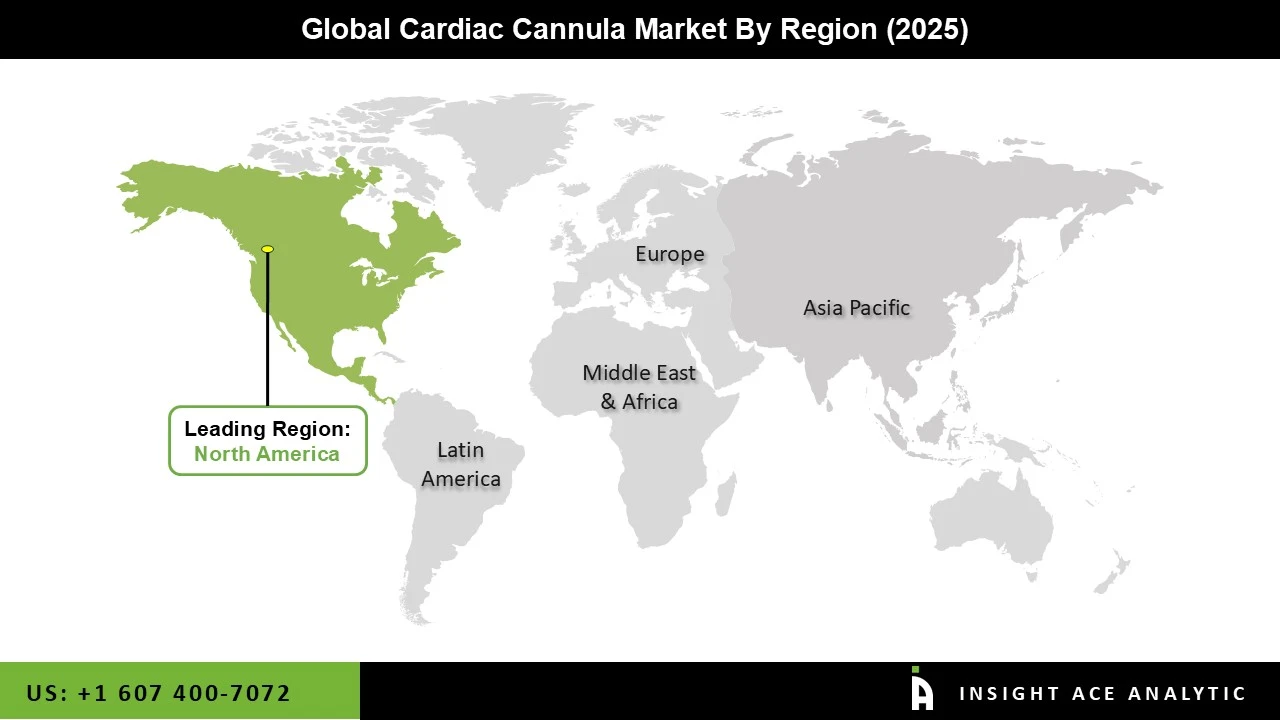
Why North America Led the Cardiac Cannula Market?
The Cardiac Cannula market was dominated by North America region in 2025 due to the region's high incidence of cardiovascular disorders, sophisticated healthcare system, and substantial investments in medical research and development. Due to its well-established healthcare system and high frequency of heart procedures, the United States, in particular, plays a significant role in the expansion of the North American market. The cardiac cannula market expansion in this area is anticipated to be fueled by the existence of reputable medical device manufacturers and a strong emphasis on research and development initiatives.
Cardiac Cannula Market Report Scope:
| Report Attribute | Specifications |
| Market size value in 2025 | USD 268.10 Mn |
| Revenue forecast in 2035 | USD 501.32 Mn |
| Growth Rate CAGR | CAGR of 6.5% from 2026 to 2035 |
| Quantitative Units | Representation of revenue in US$ Mn and CAGR from 2026 to 2035 |
| Historic Year | 2022 to 2025 |
| Forecast Year | 2026-2035 |
| Report Coverage | The forecast of revenue, the position of the company, the competitive market structure, growth prospects, and trends |
| Segments Covered | Product Type, Age Group, Size, Material, Application, End-user, and By Region |
| Regional Scope | North America; Europe; Asia Pacific; Latin America; Middle East & Africa |
| Country Scope | U.S.; Canada; U.K.; Germany; China; India; Japan; Brazil; Mexico; The UK; France; Italy; Spain; China; Japan; India; South Korea; Southeast Asia; South Korea; Southeast Asia |
| Competitive Landscape | Medtronic, BD (Becton, Dickinson & Corporation), Surge Cardiovascular, Edwards Lifesciences Corporation, Braile Biomédica, LivaNova PLC, Smartcanula LLC, Getinge, EUROSETS, INVAMED, Cardinal Health, Andocor, Cormed Medizintechnik GmbH & Co. KG, Xenios AG (Fresenius Medical Care), Changzhou KangXin Medical Instruments Co., Ltd., NIPRO, MERA (Senko Medical Instrument Mfg. Co., Ltd.), Prymax Healthcare LLP, Vitalcor, Inc., and Spectrum Medical. |
| Customization Scope | Free customization report with the procurement of the report, Modifications to the regional and segment scope. Geographic competitive landscape. |
| Pricing and Available Payment Methods | Explore pricing alternatives that are customized to your particular study requirements. |
Market Segmentation:
Cardiac Cannula Market by Product Type-
- Cardioplegia Cannulas
- Arterial Cannulas
- Specialty Cannulas
- Venous Cannulas
Cardiac Cannula Market by Age Group-
- Pediatric
- Adults
Cardiac Cannula Market by Size-
- 4 Fr - 7 Fr
- 8 Fr - 10 Fr
- 11 Fr - 22 Fr
- 23 Fr - 36 Fr
- 36+ Fr
Cardiac Cannula Market by Material-
- Silicone
- Polyvinyl Chloride (PVC)
- Polyurethane
Cardiac Cannula Market by Application-
- Minimally Invasive & Robotic Surgery (MICS)
- Cardiopulmonary Bypass (CPB)
- Extracorporeal Membrane Oxygenation (ECMO)
Cardiac Cannula Market by End-user-
- Hospitals
- Specialty Clinics
- Ambulatory Surgical Centers
- Others
Research Design and Approach
This study employed a multi-step, mixed-method research approach that integrates:
- Secondary research
- Primary research
- Data triangulation
- Hybrid top-down and bottom-up modelling
- Forecasting and scenario analysis
This approach ensures a balanced and validated understanding of both macro- and micro-level market factors influencing the market.
Secondary Research
Secondary research for this study involved the collection, review, and analysis of publicly available and paid data sources to build the initial fact base, understand historical market behaviour, identify data gaps, and refine the hypotheses for primary research.
Sources Consulted
Secondary data for the market study was gathered from multiple credible sources, including:
- Government databases, regulatory bodies, and public institutions
- International organizations (WHO, OECD, IMF, World Bank, etc.)
- Commercial and paid databases
- Industry associations, trade publications, and technical journals
- Company annual reports, investor presentations, press releases, and SEC filings
- Academic research papers, patents, and scientific literature
- Previous market research publications and syndicated reports
These sources were used to compile historical data, market volumes/prices, industry trends, technological developments, and competitive insights.

Primary Research
Primary research was conducted to validate secondary data, understand real-time market dynamics, capture price points and adoption trends, and verify the assumptions used in the market modelling.
Stakeholders Interviewed
Primary interviews for this study involved:
- Manufacturers and suppliers in the market value chain
- Distributors, channel partners, and integrators
- End-users / customers (e.g., hospitals, labs, enterprises, consumers, etc., depending on the market)
- Industry experts, technology specialists, consultants, and regulatory professionals
- Senior executives (CEOs, CTOs, VPs, Directors) and product managers
Interview Process
Interviews were conducted via:
- Structured and semi-structured questionnaires
- Telephonic and video interactions
- Email correspondences
- Expert consultation sessions
Primary insights were incorporated into demand modelling, pricing analysis, technology evaluation, and market share estimation.
Data Processing, Normalization, and Validation
All collected data were processed and normalized to ensure consistency and comparability across regions and time frames.
The data validation process included:
- Standardization of units (currency conversions, volume units, inflation adjustments)
- Cross-verification of data points across multiple secondary sources
- Normalization of inconsistent datasets
- Identification and resolution of data gaps
- Outlier detection and removal through algorithmic and manual checks
- Plausibility and coherence checks across segments and geographies
This ensured that the dataset used for modelling was clean, robust, and reliable.
Market Size Estimation and Data Triangulation
Bottom-Up Approach
The bottom-up approach involved aggregating segment-level data, such as:
- Company revenues
- Product-level sales
- Installed base/usage volumes
- Adoption and penetration rates
- Pricing analysis
This method was primarily used when detailed micro-level market data were available.

Top-Down Approach
The top-down approach used macro-level indicators:
- Parent market benchmarks
- Global/regional industry trends
- Economic indicators (GDP, demographics, spending patterns)
- Penetration and usage ratios
This approach was used for segments where granular data were limited or inconsistent.
Hybrid Triangulation Approach
To ensure accuracy, a triangulated hybrid model was used. This included:
- Reconciling top-down and bottom-up estimates
- Cross-checking revenues, volumes, and pricing assumptions
- Incorporating expert insights to validate segment splits and adoption rates
This multi-angle validation yielded the final market size.
Forecasting Framework and Scenario Modelling
Market forecasts were developed using a combination of time-series modelling, adoption curve analysis, and driver-based forecasting tools.
Forecasting Methods
- Time-series modelling
- S-curve and diffusion models (for emerging technologies)
- Driver-based forecasting (GDP, disposable income, adoption rates, regulatory changes)
- Price elasticity models
- Market maturity and lifecycle-based projections
Scenario Analysis
Given inherent uncertainties, three scenarios were constructed:
- Base-Case Scenario: Expected trajectory under current conditions
- Optimistic Scenario: High adoption, favourable regulation, strong economic tailwinds
- Conservative Scenario: Slow adoption, regulatory delays, economic constraints
Sensitivity testing was conducted on key variables, including pricing, demand elasticity, and regional adoption.
Request Customization
Add countries, segments, company profiles, or extend forecast — free 10% customization with purchase.
Customize This Report →Enquire Before Buying
Speak with our analyst team about scope, methodology, pricing, or deliverable formats.
Enquire Now →Frequently Asked Questions
Cardiac Cannula Market Size is valued at USD 268.10 Mn in 2025 and is predicted to reach USD 501.32 Mn by the year 2035
Cardiac Cannula Market is expected to grow at a 6.5% CAGR during the forecast period for 2026 to 2035.
Medtronic, BD (Becton, Dickinson & Corporation), Surge Cardiovascular, Edwards Lifesciences Corporation, Braile Biomédica, LivaNova PLC, Smartcanula LLC, Getinge, EUROSETS, INVAMED, Cardinal Health, Andocor, Cormed Medizintechnik GmbH & Co. KG, Xenios AG (Fresenius Medical Care), Changzhou KangXin Medical Instruments Co., Ltd., NIPRO, MERA (Senko Medical Instrument Mfg. Co., Ltd.), Prymax Healthcare LLP, Vitalcor, Inc., and Spectrum Medical.
Cardiac Cannula Market is segmented into Product Type, Age Group, Size, Material, Application, End-user, and By Region
North America region is leading the Cardiac Cannula Market