Hemodialysis and Peritoneal Dialysis Market Current Trends Analysis 2026 to 2035
What is Hemodialysis and Peritoneal Dialysis Market Size?
Global Hemodialysis and Peritoneal Dialysis Market Size is valued at USD 117.30 Mn in 2025 and is predicted to reach USD 281.30 Mn by the year 2035 at a 9.4% CAGR during the forecast period for 2026 to 2035.
Hemodialysis and Peritoneal Dialysis Market Size, Share & Trends Analysis Distribution by Type (Hemodialysis [Short Daily Hemodialysis, Conventional Hemodialysis, Nocturnal Hemodialysis] and Peritoneal Dialysis [Automated Peritoneal Dialysis (APD), Continuous Ambulatory Peritoneal Dialysis (CAPD)]), Product (Devices [Dialyzer, Machine, Water Treatment System, Others] and Consumables [Bloodline, Catheters, Concentrates, Others]), End-user (Home-based and Hospital-based), and Segment Forecasts, 2026 to 2035.
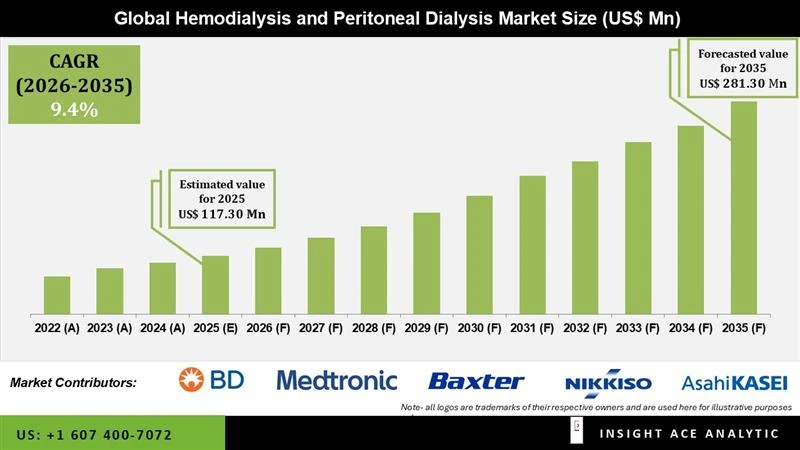
Hemodialysis and Peritoneal Dialysis Market Key Takeaways:
|
Renal replacement treatments for end-stage kidney disease include hemodialysis and peritoneal dialysis. During hemodialysis, a device known as a dialyzer filters the blood to eliminate waste materials and extra fluid. The dialyser cleans the patient's blood before it is reintroduced into the body during hemodialysis. The patient's peritoneal membrane, on the other hand, acts as a natural filter during peritoneal dialysis. Dialysate is a specific fluid that is injected into the abdominal cavity and uses osmosis to absorb waste materials and extra fluid from the circulation. The hemodialysis and peritoneal dialysis market is expanding due to a number of factors, one of which is the increased incidence of end-stage renal disease (ESRD) and chronic kidney disease (CKD) globally.
Additionally, due to the rising prevalence of diabetes and hypertension, renal disease and renal failure are becoming more prevalent in the general population. Diabetic nephropathy, which results from damage to the kidney's blood artery clusters that support the body's waste elimination mechanism and ultimately cause renal impairment, is a common consequence of both type 1 and type 2 diabetes. Furthermore, according to the American Kidney Fund, Inc., over 562,000 individuals in the United States undergo dialysis. Kidney transplants are currently performed on over 245,000 Americans. This is expected to accelerate the hemodialysis and peritoneal dialysis market expansion in the near future.
In addition, the need for dialysis treatments is being fueled by the ageing population, which is increasingly vulnerable to kidney-related illnesses. Improved dialysis methods and technological developments in dialysis equipment have also fueled hemodialysis and peritoneal dialysis market expansion. Additionally, government programs to improve access to dialysis services, advantageous reimbursement rules, and rising healthcare costs have all contributed to the market's growth. Dialysis procedures are in greater demand as a result of increased awareness of the advantages of early detection and treatment of renal illnesses. Furthermore, the hemodialysis and peritoneal dialysis market expansion in this sector is being driven by the desire for home-based dialysis therapies, including peritoneal dialysis, because of its affordability and convenience.
Competitive Landscape
Which are the Leading Players in the hemodialysis and peritoneal Dialysis market?
- Braun Melsungen AG
- Medtronic
- Fresenius Medical Care AG
- Baxter
- Asahi Kasei Medical Co., Ltd.
- BD
- Nikkiso Co., Ltd.
- Cantel Medical
- Nipro Corp.
- DaVita
- Other Prominent Players
Market Dynamics
Driver
Increasing Prevalence of End-stage Renal Disease and Chronic Kidney Disease
The key driver of the hemodialysis and peritoneal dialysis market expansion is the increasing prevalence of end-stage renal illness and chronic kidney disease worldwide, which is mostly fueled by the rise in diabetes and hypertension. There is an inevitable and ongoing need for life-sustaining renal replacement therapy because lifestyle-dependent disorders hasten the advancement of renal failure, especially in the elderly population. Additionally, patients with chronic kidney disease (CKD) who develop end-stage renal disease (ESRD) need life-sustaining treatments like dialysis. This trend is particularly noticeable in emerging economies where access to disease management and preventive healthcare is limited, which increases the need for kidney replacement therapies like dialysis therapy. Dialysis networks must have strong operational capabilities to handle the growing patient volume as a result of this demographic shift.
Restrain/Challenge
Severe Lack of Qualified Medical Personnel
One major obstacle impeding the growth of the global hemodialysis and peritoneal dialysis market is the severe lack of qualified medical personnel. Even if the need for renal replacement treatments is growing as a result of changing demographics, dialysis facilities operating capacity is usually limited by a shortage of skilled personnel rather than a shortage of equipment. Furthermore, establishing new facilities and decreasing patient turnover in already-existing clinics are both directly hampered by this staffing shortage, which essentially stops income creation in high-demand locations. As a result, the growth of manufacturers and service providers is constrained because the acceptance of their technology is largely dependent on the availability of qualified healthcare professionals.
The hemodialysis segment is expected to drive the Hemodialysis and Peritoneal Dialysis Market
The hemodialysis category held the largest share in the Hemodialysis and Peritoneal Dialysis market in 2025. Hemodialysis is a popular and well-recognized renal replacement treatment technique. It is regarded as the accepted treatment for end-stage renal disease (ESRD) in many areas and has a lengthy history of positive results. It also provides some benefits, namely the capacity to quickly stabilise patients in critical situations and the effective elimination of waste materials and extra fluid. Additionally, the hemodialysis segment's position has been reinforced by better dialysis membranes, improved monitoring systems, and technological developments in hemodialysis machines. The prevalence of hemodialysis as the recommended alternative for renal replacement therapy is attributed to the presence of qualified medical personnel and the availability of specialized hemodialysis facilities.
Hospital-based Segment is Growing at the Highest Rate in the Hemodialysis and Peritoneal Dialysis Market
In 2025, the hospital-based category dominated the Hemodialysis and Peritoneal Dialysis market due to the institutions' considerable supply of highly skilled and knowledgeable medical staff. In medical facilities like hospitals and dialysis centers, having a skilled and knowledgeable renal care staff guarantees the best possible care and improved dialysis outcomes. Additionally, some of the variables anticipated to propel industry expansion are the increasing emphasis of companies on developing independent dialysis facilities and the high patient adoption rate for in-centre dialysis treatment. Furthermore, companies are concentrating on creating specialized hemodialysis equipment with a range of interventions. The end-user experience will probably be impacted by this.
Why North America Led the Hemodialysis and Peritoneal Dialysis Market?
The Hemodialysis and Peritoneal Dialysis market was dominated by the North America region in 2025. This is due to the fact that government agencies and major industry participants are funding the creation of cutting-edge medical equipment. Additionally, governments are providing advantageous reimbursement, which is a major factor in the hemodialysis and peritoneal dialysis market's growth.
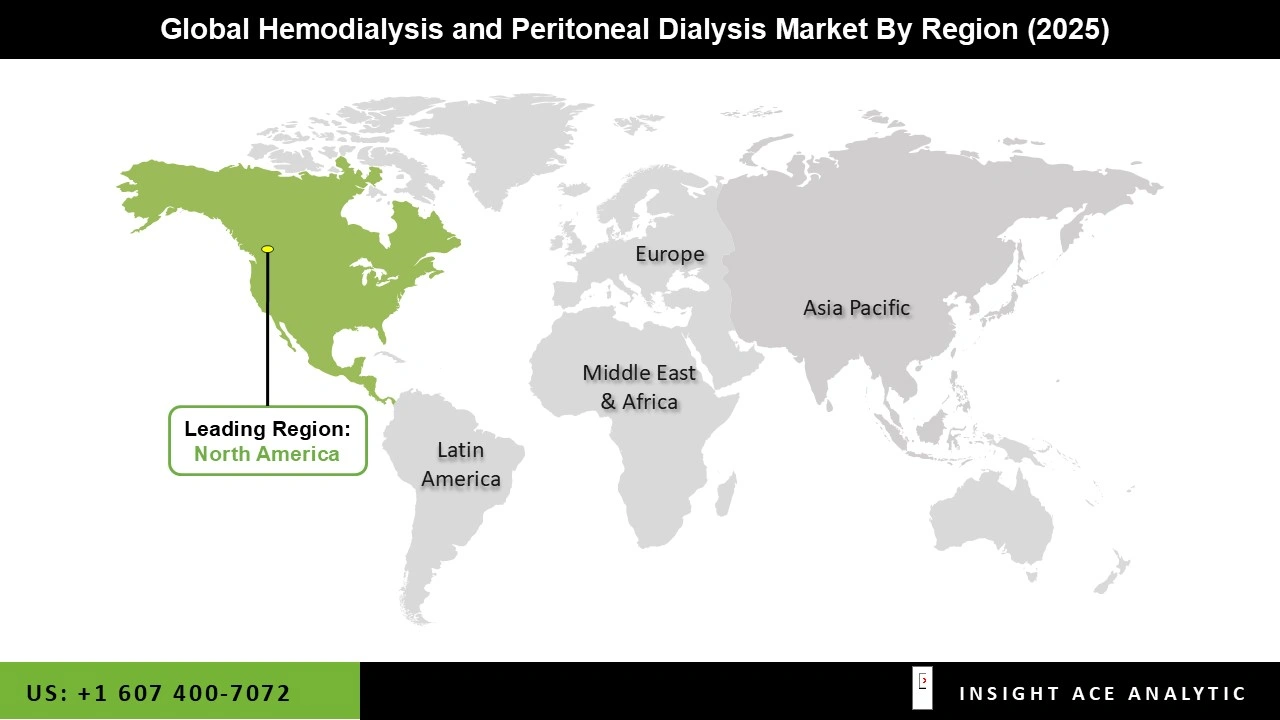
Furthermore, the frequency of chronic renal illnesses and kidney failures is driving up the need for dialysis. Government initiatives, growing disposable income, and rising medical costs are some of the key factors driving market expansion. Moreover, the hemodialysis and peritoneal dialysis market is growing due to the rise in kidney problems brought on by the rising rates of diabetes and obesity.
Key Development
• In February 2024, Fresenius Medical Care declared that its 5008X Hemodialysis System had received 510(k) approval from the US FDA. The company was able to bring its high-volume hemodiafiltration therapy, which was previously extensively used in Europe, to the US market due to this approval. By eliminating extra water and pollutants more efficiently than conventional techniques, the device was created to enhance outcomes for people with kidney disease.
Hemodialysis and Peritoneal Dialysis Market Report Scope:
| Report Attribute | Specifications |
| Market size value in 2025 | USD 117.30 Mn |
| Revenue forecast in 2035 | USD 281.30 Mn |
| Growth Rate CAGR | CAGR of 9.4% from 2026 to 2035 |
| Quantitative Units | Representation of revenue in US$ Mn and CAGR from 2026 to 2035 |
| Historic Year | 2022 to 2025 |
| Forecast Year | 2026-2035 |
| Report Coverage | The forecast of revenue, the position of the company, the competitive market structure, growth prospects, and trends |
| Segments Covered | Type, Product, End-user, and By Region |
| Regional Scope | North America; Europe; Asia Pacific; Latin America; Middle East & Africa |
| Country Scope | U.S.; Canada; U.K.; Germany; China; India; Japan; Brazil; Mexico; The UK; France; Italy; Spain; China; Japan; India; South Korea; Southeast Asia; South Korea; Southeast Asia |
| Competitive Landscape | B. Braun Melsungen AG, Medtronic, Fresenius Medical Care AG, Baxter, Asahi Kasei Medical Co., Ltd., BD, Nikkiso Co., Ltd., Cantel Medical, Nipro Corp., and DaVita |
| Customization Scope | Free customization report with the procurement of the report, Modifications to the regional and segment scope. Geographic competitive landscape. |
| Pricing and Available Payment Methods | Explore pricing alternatives that are customized to your particular study requirements. |
Segmentation of Hemodialysis and Peritoneal Dialysis Market :
Hemodialysis and Peritoneal Dialysis Market by Type-
- Hemodialysis
- Short Daily Hemodialysis
- Conventional Hemodialysis
- Nocturnal Hemodialysis
- Peritoneal Dialysis
- Automated Peritoneal Dialysis (APD)
- Continuous Ambulatory Peritoneal Dialysis (CAPD)
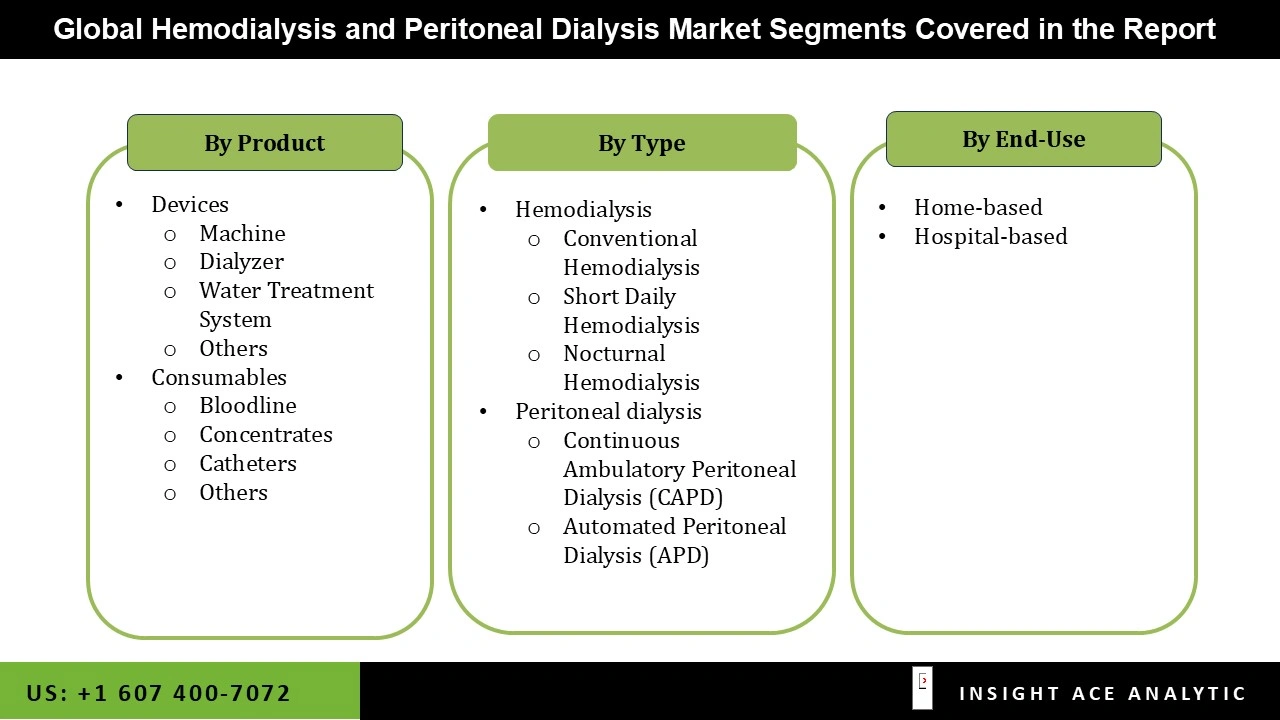
Hemodialysis and Peritoneal Dialysis Market by Product-
- Devices
- Dialyzer
- Machine
- Water Treatment System
- Others
- Consumables
- Bloodline
- Catheters
- Concentrates
- Others
Hemodialysis and Peritoneal Dialysis Market, by End-user-
- Home-based
- Hospital-based
Hemodialysis and Peritoneal Dialysis Market, by Region-
- North America-
- The US
- Canada
- Europe-
- Germany
- The UK
- France
- Italy
- Spain
- Rest of Europe
- Asia-Pacific-
- China
- Japan
- India
- South Korea
- South East Asia
- Rest of Asia Pacific
- Latin America-
- Brazil
- Argentina
- Mexico
- Rest of Latin America
- Middle East & Africa-
- GCC Countries
- South Africa
- Rest of Middle East and Africa
Research Design and Approach
This study employed a multi-step, mixed-method research approach that integrates:
- Secondary research
- Primary research
- Data triangulation
- Hybrid top-down and bottom-up modelling
- Forecasting and scenario analysis
This approach ensures a balanced and validated understanding of both macro- and micro-level market factors influencing the market.
Secondary Research
Secondary research for this study involved the collection, review, and analysis of publicly available and paid data sources to build the initial fact base, understand historical market behaviour, identify data gaps, and refine the hypotheses for primary research.
Sources Consulted
Secondary data for the market study was gathered from multiple credible sources, including:
- Government databases, regulatory bodies, and public institutions
- International organizations (WHO, OECD, IMF, World Bank, etc.)
- Commercial and paid databases
- Industry associations, trade publications, and technical journals
- Company annual reports, investor presentations, press releases, and SEC filings
- Academic research papers, patents, and scientific literature
- Previous market research publications and syndicated reports
These sources were used to compile historical data, market volumes/prices, industry trends, technological developments, and competitive insights.
Primary Research
Primary research was conducted to validate secondary data, understand real-time market dynamics, capture price points and adoption trends, and verify the assumptions used in the market modelling.
Stakeholders Interviewed
Primary interviews for this study involved:
- Manufacturers and suppliers in the market value chain
- Distributors, channel partners, and integrators
- End-users / customers (e.g., hospitals, labs, enterprises, consumers, etc., depending on the market)
- Industry experts, technology specialists, consultants, and regulatory professionals
- Senior executives (CEOs, CTOs, VPs, Directors) and product managers
Interview Process
Interviews were conducted via:
- Structured and semi-structured questionnaires
- Telephonic and video interactions
- Email correspondences
- Expert consultation sessions
Primary insights were incorporated into demand modelling, pricing analysis, technology evaluation, and market share estimation.
Data Processing, Normalization, and Validation
All collected data were processed and normalized to ensure consistency and comparability across regions and time frames.
The data validation process included:
- Standardization of units (currency conversions, volume units, inflation adjustments)
- Cross-verification of data points across multiple secondary sources
- Normalization of inconsistent datasets
- Identification and resolution of data gaps
- Outlier detection and removal through algorithmic and manual checks
- Plausibility and coherence checks across segments and geographies
This ensured that the dataset used for modelling was clean, robust, and reliable.
Market Size Estimation and Data Triangulation
Bottom-Up Approach
The bottom-up approach involved aggregating segment-level data, such as:
- Company revenues
- Product-level sales
- Installed base/usage volumes
- Adoption and penetration rates
- Pricing analysis
This method was primarily used when detailed micro-level market data were available.
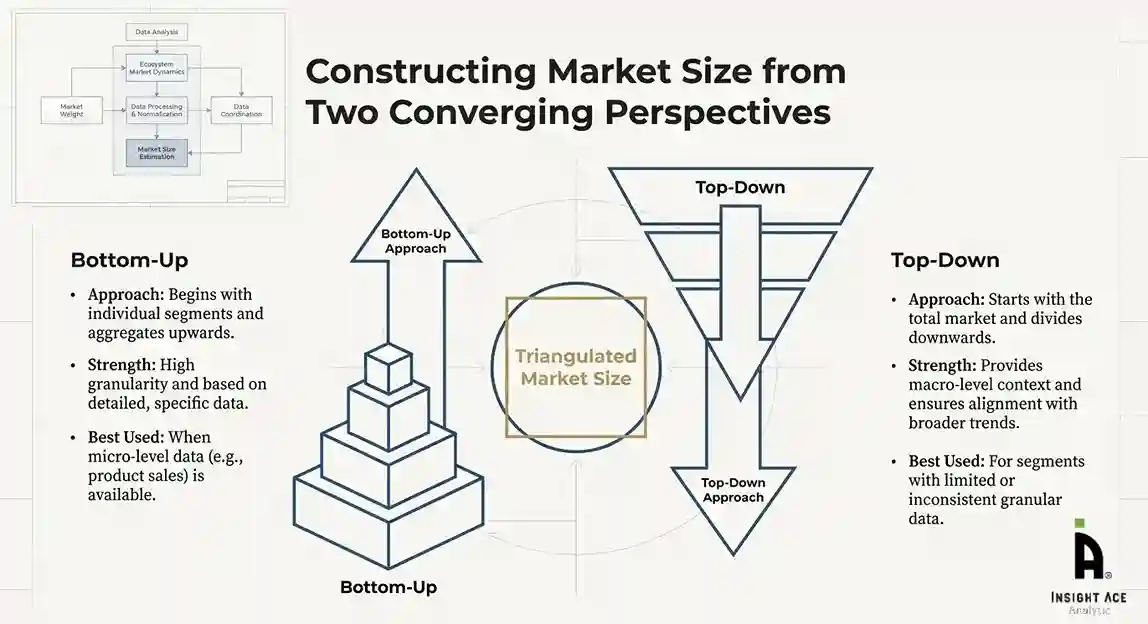
Top-Down Approach
The top-down approach used macro-level indicators:
- Parent market benchmarks
- Global/regional industry trends
- Economic indicators (GDP, demographics, spending patterns)
- Penetration and usage ratios
This approach was used for segments where granular data were limited or inconsistent.
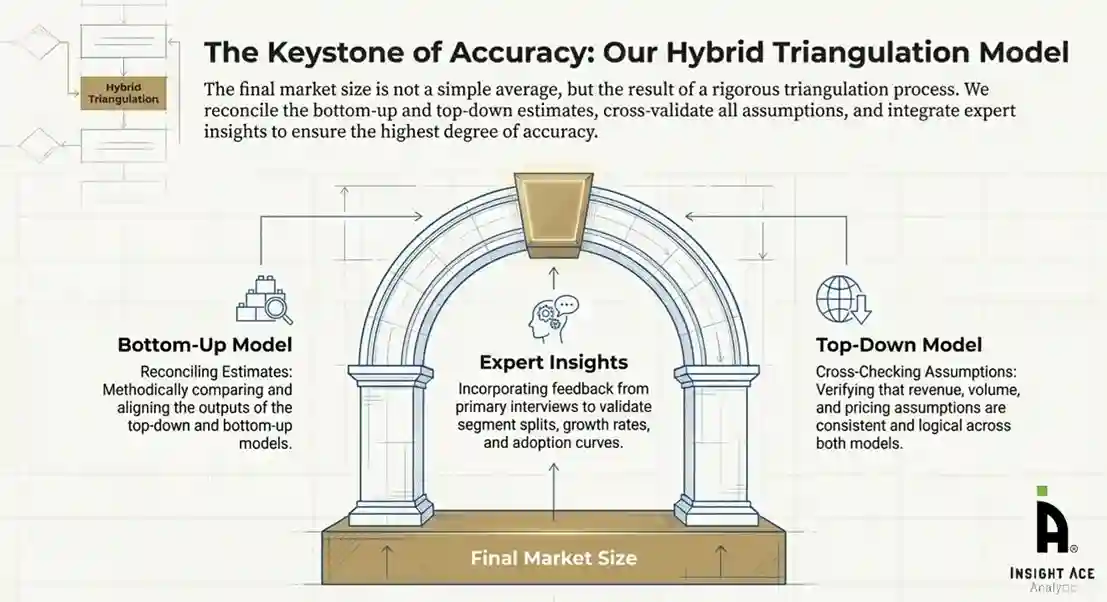
Hybrid Triangulation Approach
To ensure accuracy, a triangulated hybrid model was used. This included:
- Reconciling top-down and bottom-up estimates
- Cross-checking revenues, volumes, and pricing assumptions
- Incorporating expert insights to validate segment splits and adoption rates
This multi-angle validation yielded the final market size.
Forecasting Framework and Scenario Modelling
Market forecasts were developed using a combination of time-series modelling, adoption curve analysis, and driver-based forecasting tools.
Forecasting Methods
- Time-series modelling
- S-curve and diffusion models (for emerging technologies)
- Driver-based forecasting (GDP, disposable income, adoption rates, regulatory changes)
- Price elasticity models
- Market maturity and lifecycle-based projections
Scenario Analysis
Given inherent uncertainties, three scenarios were constructed:
- Base-Case Scenario: Expected trajectory under current conditions
- Optimistic Scenario: High adoption, favourable regulation, strong economic tailwinds
- Conservative Scenario: Slow adoption, regulatory delays, economic constraints
Sensitivity testing was conducted on key variables, including pricing, demand elasticity, and regional adoption.
Request Customization
Add countries, segments, company profiles, or extend forecast — free 10% customization with purchase.
Customize This Report →Enquire Before Buying
Speak with our analyst team about scope, methodology, pricing, or deliverable formats.
Enquire Now →Frequently Asked Questions
Hemodialysis and Peritoneal Dialysis Market Size is valued at USD 117.30 Mn in 2025 and is predicted to reach USD 281.30 Mn by the year 2035 .
Hemodialysis and Peritoneal Dialysis Market is expected to grow at a 9.4% CAGR during the forecast period for 2026 to 2035
B. Braun Melsungen AG, Medtronic, Fresenius Medical Care AG, Baxter, Asahi Kasei Medical Co., Ltd., BD, Nikkiso Co., Ltd., Cantel Medical, Nipro Corp., DaVita and Others.
Healthcare Interoperability Solutions Market is segmented into by Type (Hemodialysis [Short Daily Hemodialysis, Conventional Hemodialysis, Nocturnal Hemodialysis] and Peritoneal Dialysis [Automated Peritoneal Dialysis (APD), Continuous Ambulatory Peritoneal Dialysis (CAPD)]), Product (Devices [Dialyzer, Machine, Water Treatment System, Others] and Consumables [Bloodline, Catheters, Concentrates, Others]), End-user (Home-based and Hospital-based), and Other.
North America region is leading the Hemodialysis and Peritoneal Dialysis Market.