Gut Health Focused Drinks Market Size, Share, Scope Report 2026 to 2035
What is Gut Health Focused Drinks Market Size?
Global Gut Health Focused Drinks Market Size is predicted to grow at a 7.5 % CAGR during the forecast period for 2026 to 2035.
Gut Health Focused Drinks Market, Share & Trends Analysis Report, By Product Types (Probiotic Drinks, Prebiotic Drinks, Kombucha, Fiber-Enriched Drinks, Food Enzyme-Based Drinks, Others), By Ingredient (Probiotics, Prebiotics, Dietary Fibers, Food Enzymes, Other Ingredients), By Distribution Channel, By Region, and Segment Forecasts, 2026 to 2035.

Gut Health Focused Drinks Market Key Takeaways:
|
Gut health-focused drinks are beverages designed to support and improve the balance of beneficial bacteria in the digestive system. These drinks typically contain probiotics (live beneficial bacteria), prebiotics (non-digestible fibers that feed these bacteria), or a combination of both. Regular consumption can aid digestion, enhance immunity, and reduce bloating. Common examples include fermented dairy or plant-based beverages rich in live cultures, such as yogurt drinks, which may help reduce minor digestive discomfort.
Kefir, a fermented milk drink more potent in probiotics than yogurt, supports digestion and may help reduce inflammation. Traditional Indian yogurt-based drinks like lassi, often flavored with spices like cardamom, are also beneficial for gut health, especially for those with lactose intolerance. These drinks promote the absorption of nutrients such as calcium, magnesium, and certain vitamins. Moreover, emerging research highlights a strong connection between gut health and mental well-being, with drinks like kombucha and kefir showing potential to reduce stress, anxiety, and depressive symptoms by positively influencing gut flora.
Growing customer demand for functional, healthful beverages and increased awareness of the benefits of probiotics for gut health are major factors driving the expansion of the kombucha industry. Health-conscious consumer trends, along with the rising preference for natural, organic, and low-sugar products, are further contributing to market growth. The introduction of novel flavors and unique formulations has broadened kombucha’s appeal, attracting a more diverse consumer base. Additionally, strategic marketing efforts and the expansion of distribution channels such as retail partnerships and e-commerce platforms have enhanced product accessibility, supporting rapid market growth and global reach. As consumers become more aware of the importance of gut health for overall well-being, education around the gut-brain axis, immunity, and digestion continues to fuel the demand for functional beverages like kombucha.
Competitive Landscape
Some of the Major Key Players in the Gut Health Focused Drinks Market are:
Probiotic Drinks
- Yakult
- Actimel (Danone)
- Lifeway Kefir
- GoodBelly (Nestlé)
- Bio-K+
- Chobani Probiotic
- Amul Probiotic
- Health-Ade Kombucha
- GT's Living Foods
- KeVita (PepsiCo)
- Farmhouse Culture
- Cocobella
- Forager Project
Prebiotic Drinks
- Olipop
- Poppi
- Sunwink
- Rebbl
- Wonder Drink
- Dandy Blend
Fermented Beverages (Non-Kombucha)
- Ochakovo (Kvass)
- Unity Vibration (Jun)
- Rise Brewing (Water Kefir)
- Marukome (Miso Broth)
Digestive Teas
- Traditional Medicinals
- Yogi Tea
- Pukka Herbs
- Celestial Seasonings
- Himalaya Herbal
Functional Juices & Shots
- Suja
- Pressed Juicery
- Bragg
- Tonik
- Lily of the Desert
Bone Broth & Collagen Drinks
- Ancient Nutrition
- LonoLife
- Bare Bones
- Vital Proteins
- Bulletproof
Synbiotic Drinks
- Pendulum
- Probi
Emerging Startups
- Wildwonder
- Rowdy Mermaid
- Humm Kombucha
- Jüsta
- Remedy Kombucha
Big Corporations (Own Gut Health Brands)
- PepsiCo (KeVita)
- Coca-Cola (Topo Chico Kombucha)
- Nestlé (GoodBelly)
- Danone (Actimel)
- Unilever (Equilibrium)
Market Segmentation
The gut health-focused drinks market is segmented based on product types, ingredients, and distribution channels. Based on product types, the market is segmented into probiotic drinks, prebiotic drinks, kombucha, fiber-enriched drinks, food enzyme-based drinks, and others. Based on the ingredient, the market is divided into probiotics, prebiotics, dietary fibers, food enzymes, and other ingredients. Based on the distribution channel, the market is divided into online, offline.
The Probiotic Drinks Segment is Expected to Have the Highest Growth Rate During the Forecast Period
Based on product types, the market is segmented into probiotic drinks, prebiotic drinks, kombucha, fiber-enriched drinks, food enzyme-based drinks, and others. Among these, the probiotic drinks segment is expected to have the highest growth rate during the forecast period. Probiotic drinks, containing live beneficial bacteria like Lactobacillus and Bifidobacteria, are widely recognized for improving digestion, boosting immunity, and supporting overall gut health. Clinical studies, such as those cited in market reports, link probiotics to reduced bloating, better nutrient absorption, and even mental health benefits via the gut-brain axis. This scientific validation drives consumer trust and adoption.
The Prebiotics Segment Dominates the Market
Based on the ingredient, the market is divided into probiotics, prebiotics, dietary fibers, food enzymes, and other ingredients. Among these, the prebiotics segment dominates the market. Prebiotics, such as inulin, fructooligosaccharides (FOS), and galactooligosaccharides (GOS), are increasingly recognized for their role in feeding beneficial gut bacteria, enhancing digestion, and supporting immunity. Prebiotics cater to the growing demand for functional beverages that support gut health, immunity, and overall wellness. Their low-calorie, plant-based, and often vegan-friendly formulations align with consumer preferences for clean-label and sustainable products.
Asia-Pacific Has the Largest Market Share During the Forecast Period.
The Asia-Pacific region, particularly the United States, holds the largest share of the Gut Health Focused Drinks Market during the forecast period. Increasing awareness of gut health benefits, particularly among younger consumers in countries like China, India, and Japan, fuels demand for probiotic and prebiotic drinks. Rapid urbanization and rising disposable incomes in Asia-Pacific, especially in China and India, enable consumers to invest in functional beverages like kombucha, kefir, and prebiotic sodas. The region’s large, health-conscious youth population and urban fitness trends drive demand for convenient, gut-friendly beverages, such as probiotic shots and functional waters.
Recent Developments:
- In May 2024, GT's Living Food, the maker of the first bottled kombucha sSYNERGY Pomelo Pink Lemonade Raw Kombucha, the company's first fan-created product, was introduced in the US. Fans submitted over 17,000 flavor suggestions in a social media contest, and three finalists—Tropical Colada, Cherry Hibiscus, and Pomelo Pink Lemonade—were selected to create the new flavor. Out of the more than 25,000 votes cast, Pomelo Pink Lemonade was selected as the winner.
- In November 2023, Nestlé introduced N3 milk, a nutritional innovation first. It has more than 15% fewer calories and improves intestinal health by incorporating prebiotic fibers and decreased lactose. Designed to meet a variety of nutritional requirements, N3 promotes immunity, muscle growth, and bone health.
Gut Health Focused Drinks Market Report Scope:
| Report Attribute | Specifications |
| Growth Rate CAGR | CAGR of 7.5% from 2026 to 2035 |
| Quantitative Units | Representation of revenue in US$ Mn and CAGR from 2026 to 2035 |
| Historic Year | 2022 to 2025 |
| Forecast Year | 2026-2035 |
| Report Coverage | The forecast of revenue, the position of the company, the competitive market structure, growth prospects, and trends |
| Segments Covered | By Product Types, Ingredient, Distribution Channel |
| Regional Scope | North America; Europe; Asia Pacific; Latin America; Middle East & Africa |
| Country Scope | U.S.; Canada; U.K.; Germany; China; India; Japan; Brazil; Mexico; The UK; France; Italy; Spain; China; Japan; India; South Korea; Southeast Asia; South Korea; South East Asia |
| Competitive Landscape | Alba Health, Arla Foods Ingredients Group, Biogaia AB, Bio-K Plus International Inc, BioMed Technology Holdings, Buchi Kombucha, Cell - Nique Corporation, Chobani, LLC, Chr. Hansen Holding A/S, Clevr Blends, CosMix Wellness, Danone S.A, Drinkable Digestive Health, DuPont de Nemours, Inc., Equinox Kombucha, Fermentis Life Sciences, Fix8 Kombucha, Flying Embers, Fonterra Co-operative Group, General Mills Inc., Good Culture, GoodBelly, Probiotics, Groupe Lactalis, GT’s Living Foods, GUTsy Captain, Gutzy, Hain, Celestial Group, Heal Probiotics, Health-Ade LLC, HIGH COUNTRY, Humm Kombucha, Kerry Group PLC,Kevita, Inc., Kombucha Me Pty Ltd., Kombucha Wonder Drink, Kosmic Kombucha, Leucine Rich Bio, Lifechart, Lifeway Foods, Inc., Live Soda Kombucha, Local Roots Kombucha, Makana Beverages Inc., Nesalla Kombucha, Nestlé S.A.,Olipop, Otsuka Holdings Co., Ltd,Peping, PepsiCo, Inc., Perkii, PiQi, Poppi, Probi AB, Reed’s Inc. |
| Customization Scope | Free customization report with the procurement of the report and modifications to the regional and segment scope. Particular Geographic competitive landscape. |
| Pricing and Available Payment Methods | Explore pricing alternatives that are customized to your particular study requirements. |
Segmentation of Gut Health Focused Drinks Market
Global Gut Health Focused Drinks Market - By Product Types
- Probiotic Drinks
- Dairy-based
- Non-dairy
- Plant-based Probiotic Shots
- Prebiotic Drinks
- Prebiotic Sodas
- Functional Wellness Drinks
- Fermented Beverages
- Kombucha
- Kvass
- Jun
- Digestive Teas
- Peppermint/ginger/fennel Teas
- Slippery elm/marshmallow Root Teas
- Functional Juices & Shots
- Aloe Vera Juice
- Wheatgrass/celery juice
- ACV Tonics
- Collagen & Bone Broth Drinks
- Bone Broth Protein Drinks
- Collagen-infused Coffee/tea
- Synbiotic Drinks (Probiotic + Prebiotic)
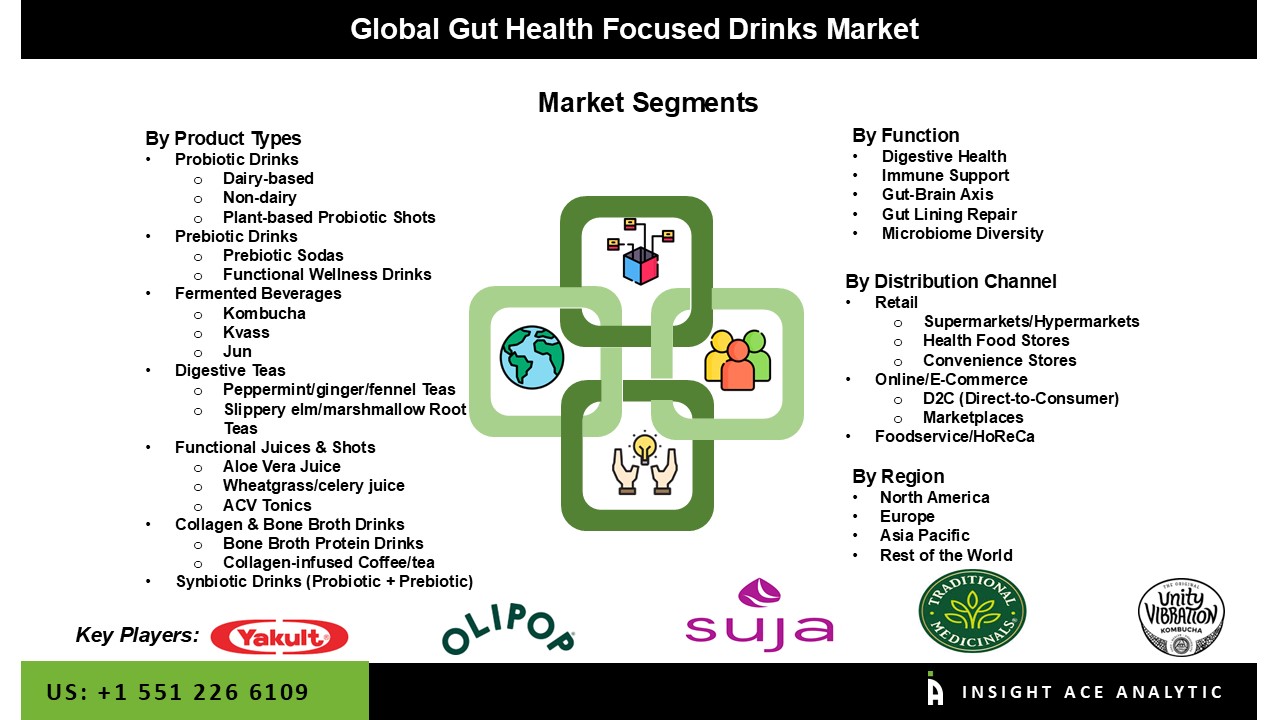
Global Gut Health Focused Drinks Market – By Function
- Digestive Health
- Immune Support
- Gut-Brain Axis
- Gut Lining Repair
- Microbiome Diversity
Global Gut Health Focused Drinks Market – By Distribution Channel
- Retail
- Supermarkets/Hypermarkets
- Health Food Stores
- Convenience Stores
- Online/E-Commerce
- D2C (Direct-to-Consumer)
- Marketplaces
- Foodservice/HoReCa
Global Gut Health Focused Drinks Market – By Region
North America-
- The US
- Canada
Europe-
- Germany
- The UK
- France
- Italy
- Spain
- Rest of Europe
Asia-Pacific-
- China
- Japan
- India
- South Korea
- Southeast Asia
- Rest of Asia Pacific
Latin America-
- Brazil
- Argentina
- Mexico
- Rest of Latin America
Middle East & Africa-
- GCC Countries
- South Africa
- Rest of the Middle East and Africa
Research Design and Approach
This study employed a multi-step, mixed-method research approach that integrates:
- Secondary research
- Primary research
- Data triangulation
- Hybrid top-down and bottom-up modelling
- Forecasting and scenario analysis
This approach ensures a balanced and validated understanding of both macro- and micro-level market factors influencing the market.
Secondary Research
Secondary research for this study involved the collection, review, and analysis of publicly available and paid data sources to build the initial fact base, understand historical market behaviour, identify data gaps, and refine the hypotheses for primary research.
Sources Consulted
Secondary data for the market study was gathered from multiple credible sources, including:
- Government databases, regulatory bodies, and public institutions
- International organizations (WHO, OECD, IMF, World Bank, etc.)
- Commercial and paid databases
- Industry associations, trade publications, and technical journals
- Company annual reports, investor presentations, press releases, and SEC filings
- Academic research papers, patents, and scientific literature
- Previous market research publications and syndicated reports
These sources were used to compile historical data, market volumes/prices, industry trends, technological developments, and competitive insights.

Primary Research
Primary research was conducted to validate secondary data, understand real-time market dynamics, capture price points and adoption trends, and verify the assumptions used in the market modelling.
Stakeholders Interviewed
Primary interviews for this study involved:
- Manufacturers and suppliers in the market value chain
- Distributors, channel partners, and integrators
- End-users / customers (e.g., hospitals, labs, enterprises, consumers, etc., depending on the market)
- Industry experts, technology specialists, consultants, and regulatory professionals
- Senior executives (CEOs, CTOs, VPs, Directors) and product managers
Interview Process
Interviews were conducted via:
- Structured and semi-structured questionnaires
- Telephonic and video interactions
- Email correspondences
- Expert consultation sessions
Primary insights were incorporated into demand modelling, pricing analysis, technology evaluation, and market share estimation.
Data Processing, Normalization, and Validation
All collected data were processed and normalized to ensure consistency and comparability across regions and time frames.
The data validation process included:
- Standardization of units (currency conversions, volume units, inflation adjustments)
- Cross-verification of data points across multiple secondary sources
- Normalization of inconsistent datasets
- Identification and resolution of data gaps
- Outlier detection and removal through algorithmic and manual checks
- Plausibility and coherence checks across segments and geographies
This ensured that the dataset used for modelling was clean, robust, and reliable.
Market Size Estimation and Data Triangulation
Bottom-Up Approach
The bottom-up approach involved aggregating segment-level data, such as:
- Company revenues
- Product-level sales
- Installed base/usage volumes
- Adoption and penetration rates
- Pricing analysis
This method was primarily used when detailed micro-level market data were available.

Top-Down Approach
The top-down approach used macro-level indicators:
- Parent market benchmarks
- Global/regional industry trends
- Economic indicators (GDP, demographics, spending patterns)
- Penetration and usage ratios
This approach was used for segments where granular data were limited or inconsistent.
Hybrid Triangulation Approach
To ensure accuracy, a triangulated hybrid model was used. This included:
- Reconciling top-down and bottom-up estimates
- Cross-checking revenues, volumes, and pricing assumptions
- Incorporating expert insights to validate segment splits and adoption rates
This multi-angle validation yielded the final market size.
Forecasting Framework and Scenario Modelling
Market forecasts were developed using a combination of time-series modelling, adoption curve analysis, and driver-based forecasting tools.
Forecasting Methods
- Time-series modelling
- S-curve and diffusion models (for emerging technologies)
- Driver-based forecasting (GDP, disposable income, adoption rates, regulatory changes)
- Price elasticity models
- Market maturity and lifecycle-based projections
Scenario Analysis
Given inherent uncertainties, three scenarios were constructed:
- Base-Case Scenario: Expected trajectory under current conditions
- Optimistic Scenario: High adoption, favourable regulation, strong economic tailwinds
- Conservative Scenario: Slow adoption, regulatory delays, economic constraints
Sensitivity testing was conducted on key variables, including pricing, demand elasticity, and regional adoption.
Request Customization
Add countries, segments, company profiles, or extend forecast — free 10% customization with purchase.
Customize This Report →Enquire Before Buying
Speak with our analyst team about scope, methodology, pricing, or deliverable formats.
Enquire Now →Frequently Asked Questions
Gut Health Focused Drinks Market Size is predicted to grow at a 7.5% CAGR during the forecast period for 2026-2035
Alba Health, Arla Foods Ingredients Group, Biogaia AB, Bio-K Plus International Inc, BioMed Technology Holdings, Buchi Kombucha, Cell - Nique Corporat
Gut health-focused drinks market is segmented based on product types, ingredients, and distribution channels.
North America region is leading the Gut Health Focused Drinks Market.