Gas Water Tube Industrial Boiler Market Size, Trend, Forecast Report 2026 to 2035
What is Gas Water Tube Industrial Boiler Market Size?
Gas Water Tube Industrial Boiler Market Size is valued at USD 36.85 Bn in 2025 and is predicted to reach USD 54.05 Bn by the year 2035 at a 4.1% CAGR during the forecast period for 2026 to 2035.
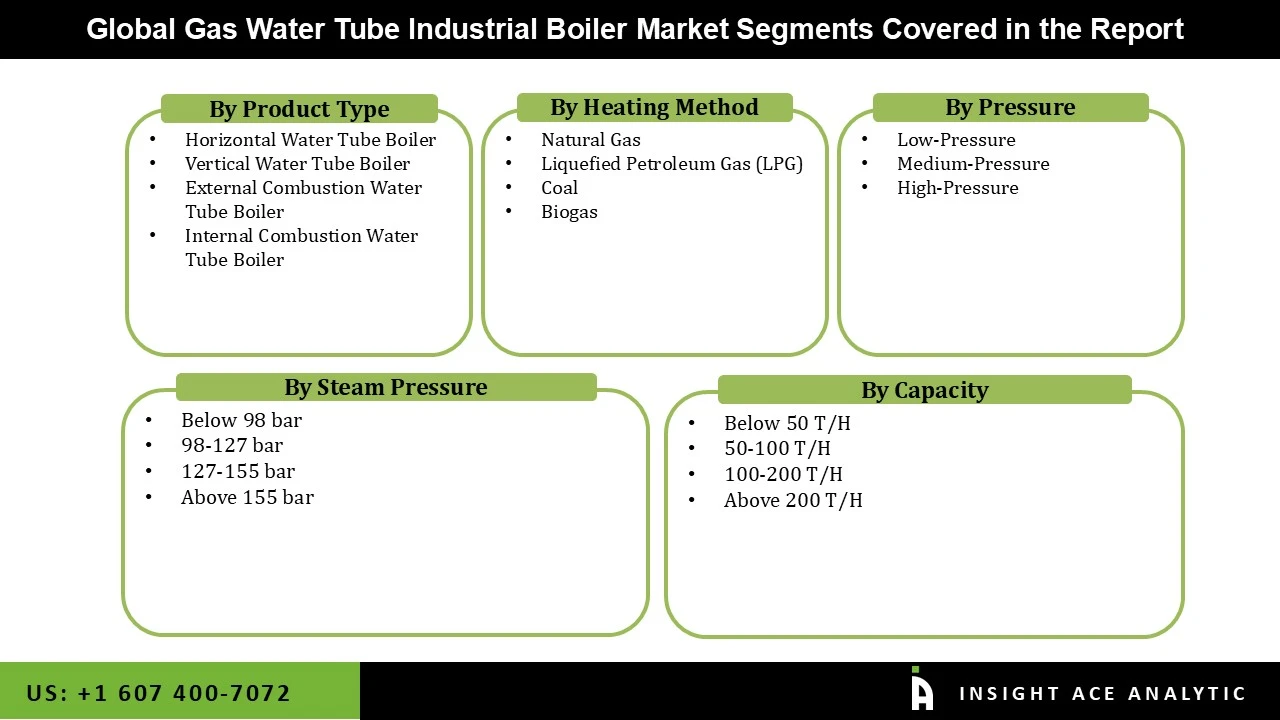
Gas Water Tube Industrial Boiler Market Size, Share & Trends Analysis Distribution by Product Type (Horizontal Water Tube Boiler, Vertical Water Tube Boiler, External Combustion Water Tube Boiler, Internal Combustion Water Tube Boiler), by Heating Method (Natural Gas, Liquefied Petroleum Gas (LPG), Coal, Biogas), by Pressure (Low-Pressure, Medium-Pressure, High-Pressure), by Steam Pressure (Below 98 bar, 98–127 bar, 127–155 bar, Above 155 bar), by Capacity (Below 50 T/H, 50–100 T/H, 100–200 T/H, Above 200 T/H) and Segment Forecasts, 2026 to 2035
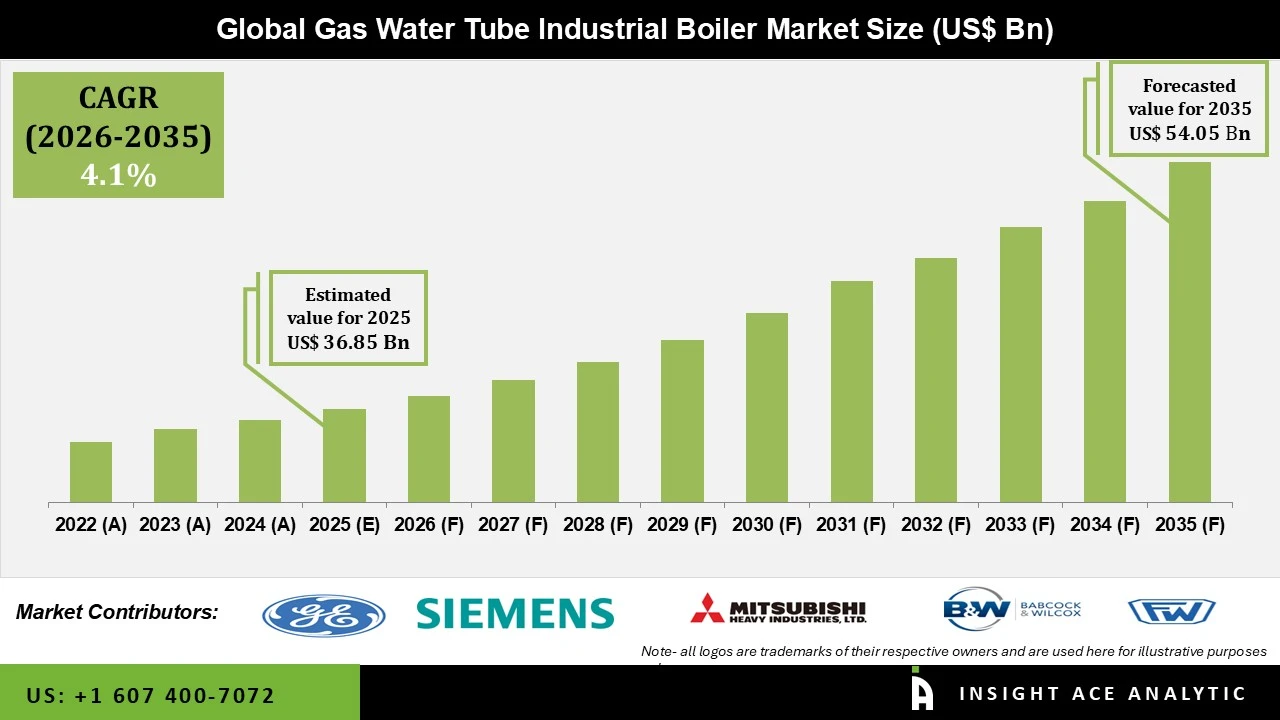
Gas water tube industrial boilers are high-capacity steam generation systems designed to produce steam by circulating water through tubes heated by gas-fired combustion. These boilers are widely used in industries that require reliable high-pressure steam, including power generation, chemicals, refineries, food and beverage processing, pharmaceuticals, pulp and paper, textiles, and heavy manufacturing. Their ability to handle high steam pressure, large load variations, and continuous industrial operations makes them an important part of modern process heating and power infrastructure.
The market is gaining momentum as industries upgrade older steam systems to improve energy efficiency, reduce fuel consumption, and meet stricter emissions standards. Gas-fired water tube boilers are increasingly preferred because they offer efficient combustion, faster steam generation, lower particulate emissions, and better operational flexibility compared with many older solid-fuel systems. The shift toward natural gas, LPG, biogas, hydrogen blends, and other lower-emission gaseous fuels is supporting investment in advanced boiler technologies.
Technological advancement is also improving market adoption. Manufacturers are integrating low-NOx burners, advanced combustion controls, digital monitoring, automation, remote diagnostics, predictive maintenance, and safety systems into modern boiler designs. These features help operators improve efficiency, reduce downtime, monitor performance in real time, and comply with environmental and safety requirements.
Higher raw material costs, fluctuating fuel prices, and stricter environmental regulations can affect purchasing decisions and project schedules. Companies also have to balance efficiency, compliance, and long-term reliability. Still, the long-term outlook for the gas water tube industrial boiler market is positive. Ongoing industrial growth, rising demand for efficient steam systems, greater use of cleaner fuels, and new technologies should keep the market growing. As industries focus on energy efficiency, reliability, and sustainability, gas water tube boilers will remain important for modern industrial operations worldwide.
Competitive Landscape
Which are the Leading Players in the Gas Water Tube Industrial Boiler Market?
• General Electric
• Siemens
• Mitsubishi Heavy Industries
• Babcock & Wilcox
• Foster Wheeler
• Alstom
• Doosan Heavy Industries & Construction
• Thermax
• Zhengzhou Boiler Group
Market Dynamics
Driver
Growing Demand for Energy-Efficient and Low-Emission Industrial Steam Systems
A key factor behind the growth of the gas water tube industrial boiler market is the rising need for energy-efficient and eco-friendly steam systems. Industries like power generation, chemicals, oil and gas, food processing, pharmaceuticals, pulp and paper, and manufacturing all depend on a steady supply of high-pressure steam. As governments set stricter emissions rules and companies aim to cut their carbon footprints, many are switching from older boilers to modern gas-fired water tube models. These newer boilers are more efficient, use less fuel, produce fewer emissions, and are more reliable. The shift to cleaner fuels such as natural gas and biogas, along with investments in modernizing factories and improving energy use, is also driving market growth. New technologies like automation, digital monitoring, and smart combustion systems help companies boost efficiency and lower costs.
Restrain/Challenge
High Initial Investment and Stringent Environmental Compliance
Even with strong growth potential, the market has some challenges. Setting up gas water tube industrial boilers needs a large upfront investment for equipment, installation, infrastructure, and safety. Companies also need skilled workers to run and maintain these high-pressure systems. Meeting stricter rules on emissions, fuel use, and safety can add to project costs. Changes in natural gas prices, regular maintenance, and unexpected breakdowns can also raise operating expenses. For smaller manufacturers, these costs and challenges may slow down their plans to invest in new boiler systems.
Natural Gas Segment is Expected to Drive the Gas Water Tube Industrial Boiler Market
The Natural Gas segment is expected to lead the market in the coming years. Natural gas is now the top choice for industrial boilers because it burns cleaner than other fuels and offers high efficiency and reliable performance. It produces less sulfur oxides, nitrogen oxides, and particulate matter, which helps companies meet environmental standards. More natural gas pipelines, steady fuel supplies in many areas, and increased government support for cleaner energy are encouraging industries to use natural gas-fired water tube boilers. As more factories switch to cleaner energy, this segment should stay ahead in the market.
High-Pressure Segment is Expected to Drive the Gas Water Tube Industrial Boiler Market
The High-Pressure segment is expected to account for a large share of the market because many industries require a steady supply of high-pressure steam. Sectors such as power generation, petrochemicals, refineries, fertilisers, chemicals, and heavy manufacturing rely on high-pressure boilers to improve efficiency and increase output. Water tube boilers are a good fit for these tough jobs because they can safely handle high pressures while still performing well. As industries grow and invest in larger factories, demand for high-pressure water tube boilers should continue to rise.
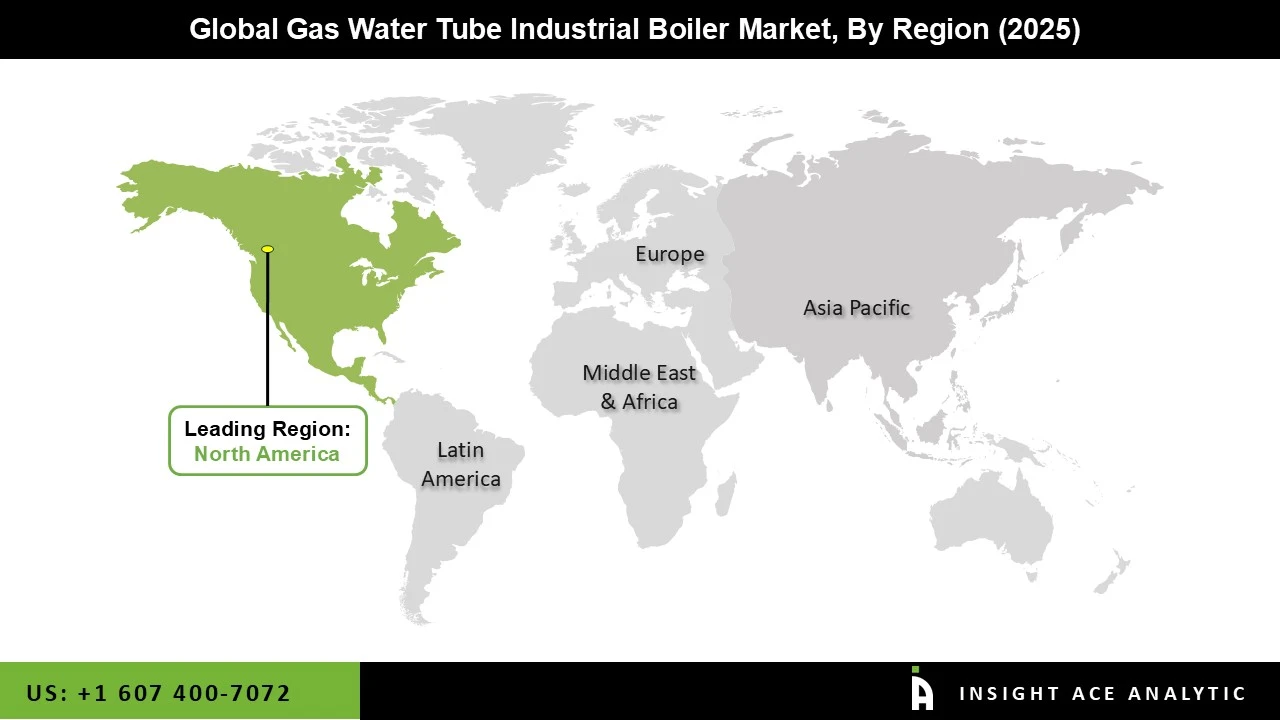
Why North America Leads the Gas Water Tube Industrial Boiler Market?
North America leads the gas water tube industrial boiler market due to its strong industrial base, strict environmental rules, and steady investment in energy-saving technology. Companies in the US and Canada are replacing old boilers with advanced gas-fired systems that are more efficient, safer, and produce fewer emissions. The region has many power plants, chemical manufacturers, food processors, oil and gas operations, and pharmaceutical firms, all of which need reliable high-pressure steam. Supportive government policies and easy access to natural gas also help the market grow. Investments in smart technology, automation, and predictive maintenance are helping companies get the most out of their boilers and cut costs. As industries modernise and focus more on sustainability, North America is likely to stay ahead in the global market.
Gas Water Tube Industrial Boiler Market Report Scope:
| Report Attribute | Specifications |
| Market size value in 2025 | USD 36.85 Bn |
| Revenue forecast in 2035 | USD 54.05 Bn |
| Growth Rate CAGR | CAGR of 4.1% from 2026 to 2035 |
| Quantitative Units | Representation of revenue in US$ Bn and CAGR from 2026 to 2035 |
| Historic Year | 2021 to 2025 |
| Forecast Year | 2026-2035 |
| Report Coverage | The forecast of revenue, the position of the company, the competitive market structure, growth prospects, and trends |
| Segments Covered | By Product, Heating Method, Pressure, Steam Pressure, Capacity and By Region |
| Regional Scope | North America; Europe; Asia Pacific; Latin America; Middle East & Africa |
| Country Scope | U.S.; Canada; U.K.; Germany; China; India; Japan; Brazil; Mexico; The UK; France; Italy; Spain; China; Japan; India; South Korea; Southeast Asia; South Korea; Southeast Asia |
| Competitive Landscape | General Electric (US), Siemens (DE), Mitsubishi Heavy Industries (JP), Babcock & Wilcox (US), Foster Wheeler (US), Alstom (FR), Doosan Heavy Industries & Construction (KR), Thermax (IN), Zhengzhou Boiler Group (CN) |
| Customization Scope | Free customization report with the procurement of the report, Modifications to the regional and segment scope. Geographic competitive landscape. |
| Pricing and Available Payment Methods | Explore pricing alternatives that are customized to your particular study requirements. |
Market Segmentation:
Gas Water Tube Industrial Boiler Market by Product Type-
• Horizontal Water Tube Boiler
• Vertical Water Tube Boiler
• External Combustion Water Tube Boiler
• Internal Combustion Water Tube Boiler
Gas Water Tube Industrial Boiler Market by Heating Method-
• Natural Gas
• Liquefied Petroleum Gas (LPG)
• Coal
• Biogas
Gas Water Tube Industrial Boiler Market by Pressure-
• Low-Pressure
• Medium-Pressure
• High-Pressure
Gas Water Tube Industrial Boiler Market by Steam Pressure-
• Below 98 bar
• 98-127 bar
• 127-155 bar
• Above 155 bar
Gas Water Tube Industrial Boiler Market by Capacity-
• Below 50 T/H
• 50-100 T/H
• 100-200 T/H
• Above 200 T/H
Gas Water Tube Industrial Boiler Market by Region-
North America-
• The US
• Canada
Europe-
• Germany
• UK
• France
• Nordics
• Netherlands
• Switzerland
• Spain
• Italy
• Benelux
• Rest of Europe
Asia-Pacific-
• China
• Japan
• South Korea
• Australia
• India
• Rest of APAC
Latin America-
• Brazil
• Mexico
• Chile
• Rest of LatAm
Middle East & Africa-
• GCC
• South Africa
• Rest of MEA
Research Design and Approach
This study employed a multi-step, mixed-method research approach that integrates:
- Secondary research
- Primary research
- Data triangulation
- Hybrid top-down and bottom-up modelling
- Forecasting and scenario analysis
This approach ensures a balanced and validated understanding of both macro- and micro-level market factors influencing the market.
Secondary Research
Secondary research for this study involved the collection, review, and analysis of publicly available and paid data sources to build the initial fact base, understand historical market behaviour, identify data gaps, and refine the hypotheses for primary research.
Sources Consulted
Secondary data for the market study was gathered from multiple credible sources, including:
- Government databases, regulatory bodies, and public institutions
- International organizations (WHO, OECD, IMF, World Bank, etc.)
- Commercial and paid databases
- Industry associations, trade publications, and technical journals
- Company annual reports, investor presentations, press releases, and SEC filings
- Academic research papers, patents, and scientific literature
- Previous market research publications and syndicated reports
These sources were used to compile historical data, market volumes/prices, industry trends, technological developments, and competitive insights.

Primary Research
Primary research was conducted to validate secondary data, understand real-time market dynamics, capture price points and adoption trends, and verify the assumptions used in the market modelling.
Stakeholders Interviewed
Primary interviews for this study involved:
- Manufacturers and suppliers in the market value chain
- Distributors, channel partners, and integrators
- End-users / customers (e.g., hospitals, labs, enterprises, consumers, etc., depending on the market)
- Industry experts, technology specialists, consultants, and regulatory professionals
- Senior executives (CEOs, CTOs, VPs, Directors) and product managers
Interview Process
Interviews were conducted via:
- Structured and semi-structured questionnaires
- Telephonic and video interactions
- Email correspondences
- Expert consultation sessions
Primary insights were incorporated into demand modelling, pricing analysis, technology evaluation, and market share estimation.
Data Processing, Normalization, and Validation
All collected data were processed and normalized to ensure consistency and comparability across regions and time frames.
The data validation process included:
- Standardization of units (currency conversions, volume units, inflation adjustments)
- Cross-verification of data points across multiple secondary sources
- Normalization of inconsistent datasets
- Identification and resolution of data gaps
- Outlier detection and removal through algorithmic and manual checks
- Plausibility and coherence checks across segments and geographies
This ensured that the dataset used for modelling was clean, robust, and reliable.
Market Size Estimation and Data Triangulation
Bottom-Up Approach
The bottom-up approach involved aggregating segment-level data, such as:
- Company revenues
- Product-level sales
- Installed base/usage volumes
- Adoption and penetration rates
- Pricing analysis
This method was primarily used when detailed micro-level market data were available.

Top-Down Approach
The top-down approach used macro-level indicators:
- Parent market benchmarks
- Global/regional industry trends
- Economic indicators (GDP, demographics, spending patterns)
- Penetration and usage ratios
This approach was used for segments where granular data were limited or inconsistent.
Hybrid Triangulation Approach
To ensure accuracy, a triangulated hybrid model was used. This included:
- Reconciling top-down and bottom-up estimates
- Cross-checking revenues, volumes, and pricing assumptions
- Incorporating expert insights to validate segment splits and adoption rates
This multi-angle validation yielded the final market size.
Forecasting Framework and Scenario Modelling
Market forecasts were developed using a combination of time-series modelling, adoption curve analysis, and driver-based forecasting tools.
Forecasting Methods
- Time-series modelling
- S-curve and diffusion models (for emerging technologies)
- Driver-based forecasting (GDP, disposable income, adoption rates, regulatory changes)
- Price elasticity models
- Market maturity and lifecycle-based projections
Scenario Analysis
Given inherent uncertainties, three scenarios were constructed:
- Base-Case Scenario: Expected trajectory under current conditions
- Optimistic Scenario: High adoption, favourable regulation, strong economic tailwinds
- Conservative Scenario: Slow adoption, regulatory delays, economic constraints
Sensitivity testing was conducted on key variables, including pricing, demand elasticity, and regional adoption.
Request Customization
Add countries, segments, company profiles, or extend forecast — free 10% customization with purchase.
Customize This Report →Enquire Before Buying
Speak with our analyst team about scope, methodology, pricing, or deliverable formats.
Enquire Now →Frequently Asked Questions
Gas Water Tube Industrial Boiler Market Size is valued at USD 36.85 Bn in 2025 and is predicted to reach USD 54.05 Bn by the year 2035
Gas Water Tube Industrial Boiler Market is expected to grow at a 4.1% CAGR during the forecast period for 2026 to 2035.
General Electric (US), Siemens (DE), Mitsubishi Heavy Industries (JP), Babcock & Wilcox (US), Foster Wheeler (US), Alstom (FR), Doosan Heavy Industries & Construction (KR), Thermax (IN), Zhengzhou Boiler Group (CN)
Gas Water Tube Industrial Boiler Market is segmented into By Product, Heating Method, Pressure, Steam Pressure, Capacity and By Region
North America region is leading the Gas Water Tube Industrial Boiler Market.