FR PP Compounds for Automotive Market Size, Share and Growth Analysis 2026 to 2035
What is FR PP Compounds for Automotive Market Size?
Global FR PP Compounds for Automotive Market Size is valued at USD 1.91 Bn in 2025 and is predicted to reach USD 4.31 Bn by the year 2035 at a 8.9% CAGR during the forecast period for 2026 to 2035.
FR PP Compounds for Automotive Market Size, Share & Trends Analysis Distribution by Product Type (Glass Fiber Reinforced Polypropylene Compounds, Flame Retardant Polypropylene Compounds, and Others), By Region and Segment Forecasts, 2026 to 2035.
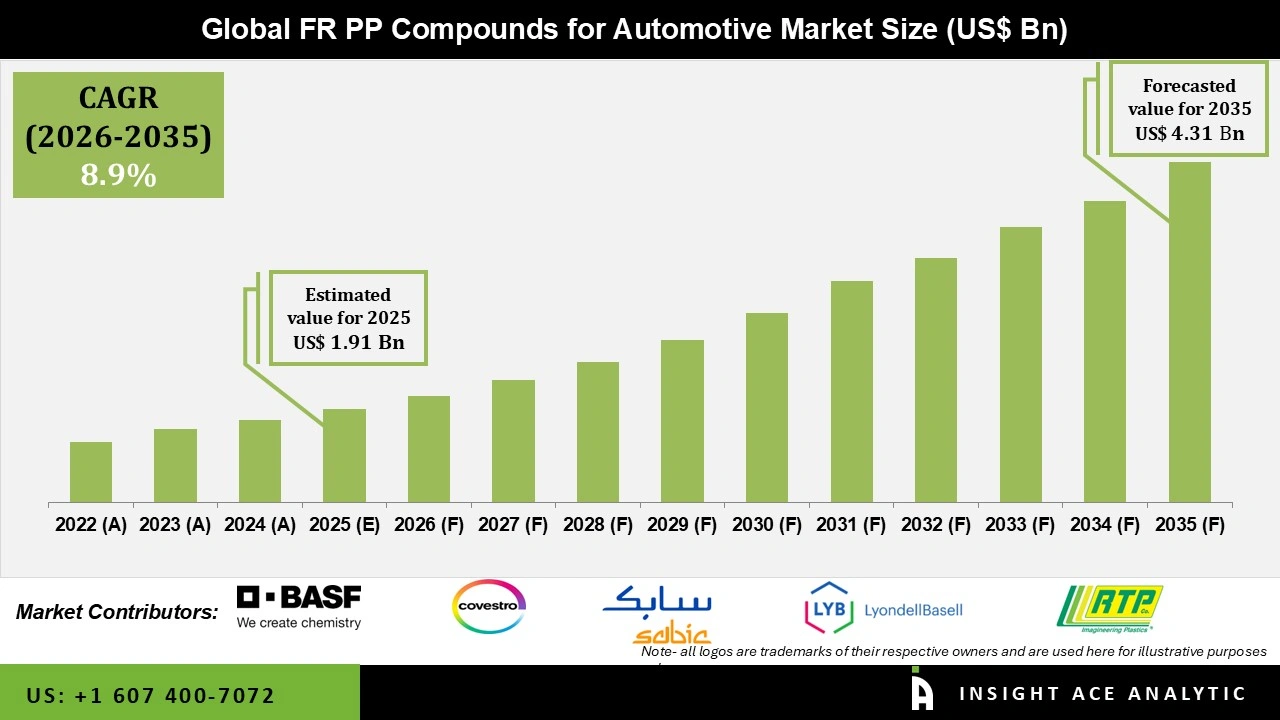
FR PP Compounds for Automotive Market Key Takeaways:
|
Flame-retardant polypropylene (FR PP) compounds are specially formulated thermoplastic materials that combine polypropylene resin with flame-retardant additives, synergists, fillers, and modifiers to achieve self-extinguishing or low-flammability properties while preserving the excellent mechanical, thermal, and processing characteristics of standard PP. These compounds are widely adopted in the automotive industry for interior and under-hood components that must meet stringent fire safety standards. Typical applications include dashboards, door panels, pillar trims, air ducts, battery housings, wiring connectors, HVAC systems, and engine compartment parts. FR PP offers a lightweight, cost-effective alternative to higher-cost engineering plastics (PC/ABS, PA) while delivering reliable flame resistance, reduced smoke generation, and lower toxic gas emissions during combustion. The increasing use of FR PP in vehicles is driven by global safety regulations, weight-reduction targets for fuel efficiency and electric vehicle range, and the automotive industry's shift toward halogen-free, low-smoke, non-toxic flame-retardant systems to address environmental and health concerns.
The stricter rules mandating stronger flame retardancy in auto parts are driving the automotive industry's increased emphasis on enhanced performance and safety, which is driving the growth of the FR PP compounds for automotive market. The development of halogen-free alternatives and other advancements in FR PP compound compositions are also driving market adoption by meeting manufacturer expectations for environmentally and health-conscious materials. Additionally, the FR PP compounds for automotive market is supported by the automobile industry's ongoing emphasis on lightweighting and cost-effectiveness. In addition, the FR PP compounds for automotive market is heavily concentrated on important advancements in lightweighting and flame retardancy. Due to strict environmental restrictions and consumer demand for sustainable materials, manufacturers are making significant investments in research and development to create halogen-free products.
The growing use of electric vehicles (EVs) call for specific FR materials for battery pack safety and thermal management, is one of the major FR PP compounds for automotive market. The creation of complex FR PP compounds with improved mechanical, thermal, and processability features is made possible by advances in polymer chemistry, expanding the range of applications for these compounds beyond conventional automobile interiors. However, the price fluctuations of polypropylene raw materials and flame retardant chemicals, which affect manufacturing costs, are possible obstacles of FR PP compounds for automotive market. Other obstacles include the availability of substitute flame-retardant materials and the requirement for retooling or process modifications for the integration of new compounds. Nonetheless, it is projected that the FR PP compounds for automotive market will continue to expand and innovate due to the continued emphasis on safety, technical advancements, and rising global automobile production, especially in emerging nations.
Competitive Landscape
Which are the Leading Players in FR PP Compounds for Automotive Market?
- Mitsubishi Chemical Corporation
- INEOS Group Limited
- BASF SE
- LyondellBasell Industries N.V.
- RTP Company
- Celanese Corporation
- SABIC
- Covestro AG
- DuPont de Nemours, Inc.
- Solvay S.A.
- Other Prominant Players
Market Dynamics
Driver
Growing Adoption of Electric Vehicles (EVs)
The growing popularity of electric vehicles is one of the main factors propelling the FR PP compounds for automotive market. In comparison to traditional cars, electric vehicles (EVs) have high-voltage battery packs, power electronics, inverters, and extensive wire systems that produce heat and raise the risk of fire. As a result, automakers need materials that are low in weight while offering thermal stability, flame resistance, and electrical insulation. Additionally, since FR PP compounds combine cost-effectiveness, moldability, and lightweight characteristics with adherence to interior flammability regulations, they are perfect. Connectors, fuse boxes, busbar covers, battery housings, and cable management parts are using them more and more. Furthermore, the need for flame-retardant polypropylene materials is directly rising as a result of governments throughout the world encouraging electrification through pollution restrictions and incentives, which in turn is raising EV production volumes.
Restrain/Challenge
Increased Formulation Costs and Performance Constraints
A significant barrier to the FR PP compounds for automotive market is the increased expense and technical difficulty of flame-retardant compositions. Compared to regular polypropylene, the use of flame-retardant additives, particularly halogen-free or low-smoke systems, greatly raises the cost of raw materials and compounding. Furthermore, certain flame-retardant fillers may adversely impact surface quality, processability, mechanical strength, and impact resistance, necessitating additional reinforcement or modification. Because automotive OEMs are very cost conscious and require materials that strike a compromise between durability, safety, and aesthetics, qualifying procedures are drawn out and rigorous. Engineering plastics like polyamide or PBT may still perform better in terms of thermal resistance than FR PP in some high-temperature under-the-hood applications. These constraints prevent broader use, especially in applications that demand extremely high heat performance and in automotive sectors with competitive prices.
Glass Fiber Reinforced Polypropylene Compounds Segment is Expected to Drive the FR PP Compounds for Automotive Market
The glass fiber reinforced polypropylene compounds category held the largest share in the FR PP Compounds for Automotive market in 2025. Because of their improved mechanical qualities and lightweight nature, glass fiber reinforced materials are being used more and more in the automobile industry, which is supporting the FR PP compounds for automotive market growth. The expansion of this market is also being driven by the need for high-performance materials in electric vehicles. Additionally, consumer behavior has an impact on the demand for FR PP compounds, as manufacturers are looking for materials that balance sustainability, safety, and performance. Furthermore, the automobile sector is moving toward the utilization of cutting-edge materials that may satisfy changing consumer demands for efficiency, safety, and environmental responsibility.
Why North America Led the FR PP Compounds for Automotive Market?
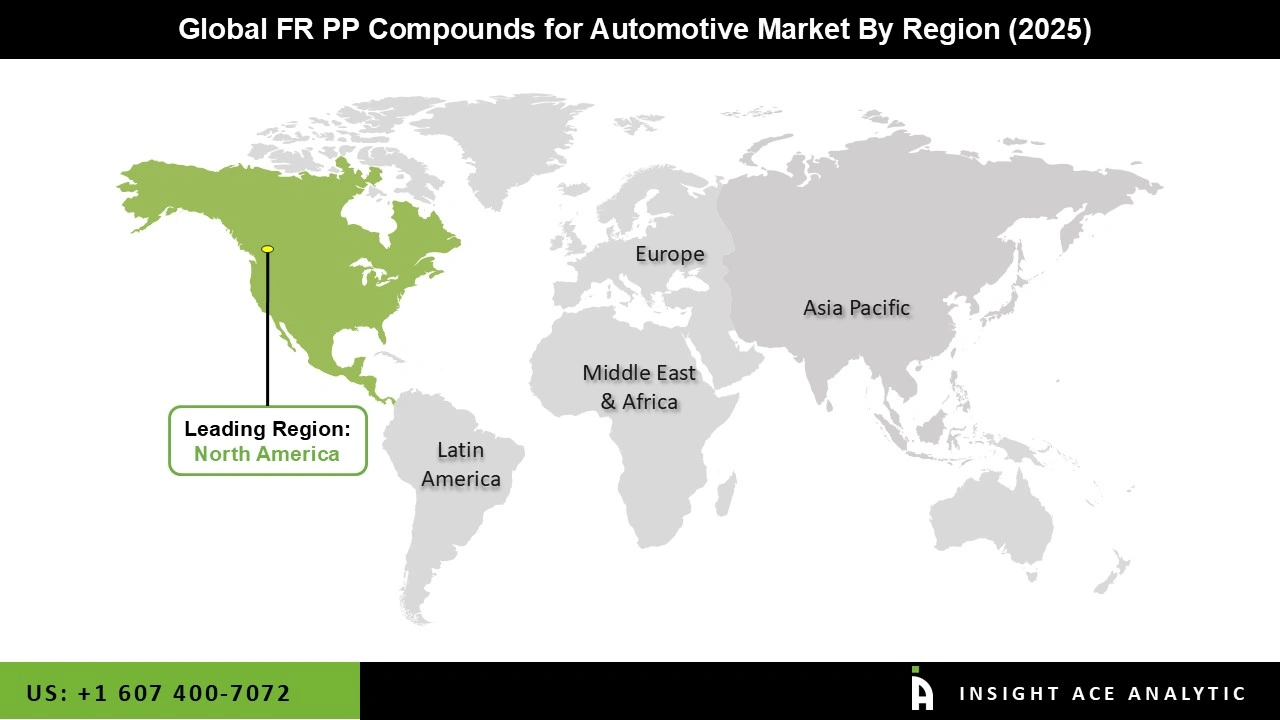
The FR PP Compounds for Automotive market was dominated by North America region in 2025 as a result of strict laws governing vehicle safety and flammability as well as the quick growth of EV manufacturing in the US and Canada. The automakers are being urged to use flame-retardant polymers in battery enclosures, connections, wire harness systems, and under-the-hood components by regulatory criteria pertaining to electrical safety and interior material fire performance.
Additionally, the region's automakers are putting a lot of effort into making vehicles lighter in order to achieve emission and fuel efficiency requirements, which is leading to a greater use of FR PP composites in favor of metal and heavier technical plastics. The market is also expanding due to the presence of significant OEMs, increased investment in EV battery production facilities, and growing demand for SUVs and pickup trucks, which have larger interior plastic components and a higher electrical content.
Key Development
June 2025: The production capacity of LyondellBasell Industries' FR PP compounds facility in North America has been expanded. In order to meet the region's increasing demand, it is anticipated that this development will expand the supply of high-performance materials for automotive applications.
FR PP Compounds for Automotive Market Report Scope:
| Report Attribute | Specifications |
| Market size value in 2025 | USD 1.91 Bn |
| Revenue forecast in 2035 | USD 4.31 Bn |
| Growth Rate CAGR | CAGR of 8.9% from 2026 to 2035 |
| Quantitative Units | Representation of revenue in US$ Bn and CAGR from 2026 to 2035 |
| Historic Year | 2022 to 2025 |
| Forecast Year | 2026-2035 |
| Report Coverage | The forecast of revenue, the position of the company, the competitive market structure, growth prospects, and trends |
| Segments Covered | Product Type and By Region |
| Regional Scope | North America; Europe; Asia Pacific; Latin America; Middle East & Africa |
| Country Scope | U.S.; Canada; U.K.; Germany; China; India; Japan; Brazil; Mexico; The UK; France; Italy; Spain; China; Japan; India; South Korea; Southeast Asia; South Korea; Southeast Asia |
| Competitive Landscape | Mitsubishi Chemical Corporation, INEOS Group Limited, BASF SE, LyondellBasell Industries N.V., RTP Company, Celanese Corporation, SABIC, Covestro AG, DuPont de Nemours, Inc., and Solvay S.A. |
| Customization Scope | Free customization report with the procurement of the report, Modifications to the regional and segment scope. Geographic competitive landscape. |
| Pricing and Available Payment Methods | Explore pricing alternatives that are customized to your particular study requirements. |
Segmentation of FR PP Compounds for Automotive Market :
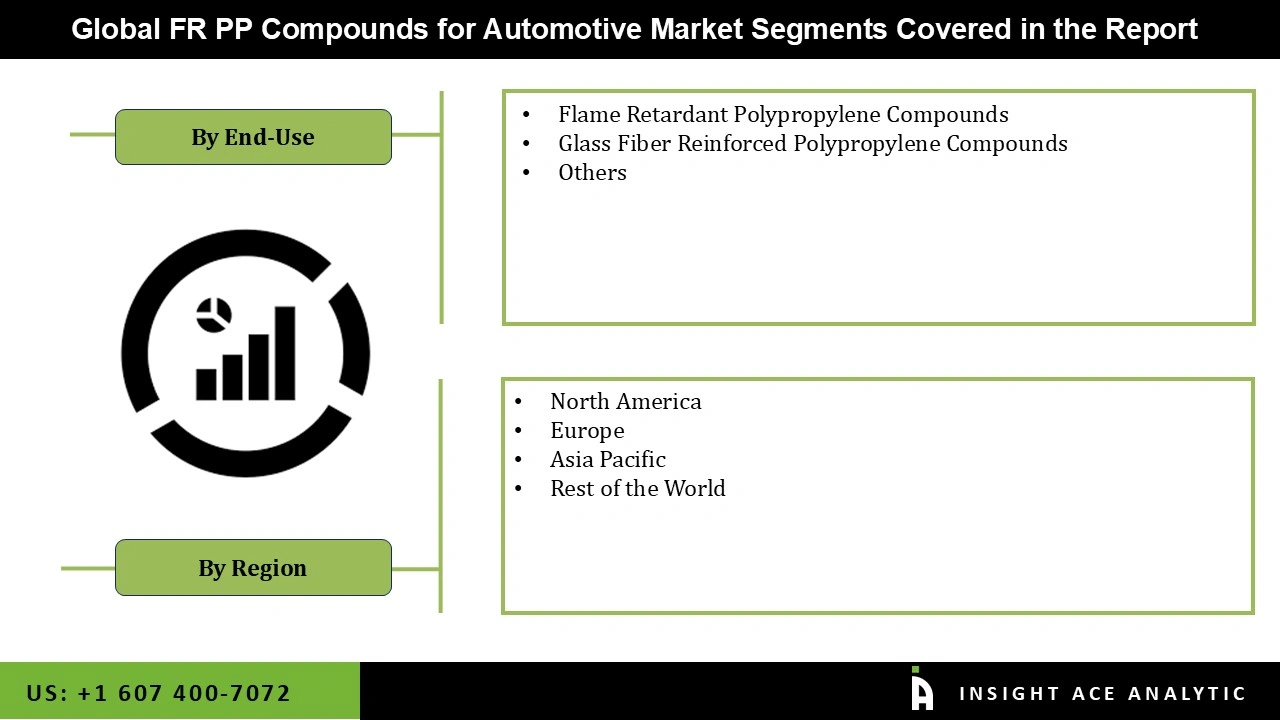
FR PP Compounds for Automotive Market, by Product Type-
- Glass Fiber Reinforced Polypropylene Compounds
- Flame Retardant Polypropylene Compounds
- Others
FR PP Compounds for Automotive Market, by Region-
- North America-
- The US
- Canada
- Europe-
- Germany
- The UK
- France
- Italy
- Spain
- Rest of Europe
- Asia-Pacific-
- China
- Japan
- India
- South Korea
- South East Asia
- Rest of Asia Pacific
- Latin America-
- Brazil
- Argentina
- Mexico
- Rest of Latin America
- Middle East & Africa-
- GCC Countries
- South Africa
- Rest of Middle East and Africa
Research Design and Approach
This study employed a multi-step, mixed-method research approach that integrates:
- Secondary research
- Primary research
- Data triangulation
- Hybrid top-down and bottom-up modelling
- Forecasting and scenario analysis
This approach ensures a balanced and validated understanding of both macro- and micro-level market factors influencing the market.
Secondary Research
Secondary research for this study involved the collection, review, and analysis of publicly available and paid data sources to build the initial fact base, understand historical market behaviour, identify data gaps, and refine the hypotheses for primary research.
Sources Consulted
Secondary data for the market study was gathered from multiple credible sources, including:
- Government databases, regulatory bodies, and public institutions
- International organizations (WHO, OECD, IMF, World Bank, etc.)
- Commercial and paid databases
- Industry associations, trade publications, and technical journals
- Company annual reports, investor presentations, press releases, and SEC filings
- Academic research papers, patents, and scientific literature
- Previous market research publications and syndicated reports
These sources were used to compile historical data, market volumes/prices, industry trends, technological developments, and competitive insights.

Primary Research
Primary research was conducted to validate secondary data, understand real-time market dynamics, capture price points and adoption trends, and verify the assumptions used in the market modelling.
Stakeholders Interviewed
Primary interviews for this study involved:
- Manufacturers and suppliers in the market value chain
- Distributors, channel partners, and integrators
- End-users / customers (e.g., hospitals, labs, enterprises, consumers, etc., depending on the market)
- Industry experts, technology specialists, consultants, and regulatory professionals
- Senior executives (CEOs, CTOs, VPs, Directors) and product managers
Interview Process
Interviews were conducted via:
- Structured and semi-structured questionnaires
- Telephonic and video interactions
- Email correspondences
- Expert consultation sessions
Primary insights were incorporated into demand modelling, pricing analysis, technology evaluation, and market share estimation.
Data Processing, Normalization, and Validation
All collected data were processed and normalized to ensure consistency and comparability across regions and time frames.
The data validation process included:
- Standardization of units (currency conversions, volume units, inflation adjustments)
- Cross-verification of data points across multiple secondary sources
- Normalization of inconsistent datasets
- Identification and resolution of data gaps
- Outlier detection and removal through algorithmic and manual checks
- Plausibility and coherence checks across segments and geographies
This ensured that the dataset used for modelling was clean, robust, and reliable.
Market Size Estimation and Data Triangulation
Bottom-Up Approach
The bottom-up approach involved aggregating segment-level data, such as:
- Company revenues
- Product-level sales
- Installed base/usage volumes
- Adoption and penetration rates
- Pricing analysis
This method was primarily used when detailed micro-level market data were available.

Top-Down Approach
The top-down approach used macro-level indicators:
- Parent market benchmarks
- Global/regional industry trends
- Economic indicators (GDP, demographics, spending patterns)
- Penetration and usage ratios
This approach was used for segments where granular data were limited or inconsistent.
Hybrid Triangulation Approach
To ensure accuracy, a triangulated hybrid model was used. This included:
- Reconciling top-down and bottom-up estimates
- Cross-checking revenues, volumes, and pricing assumptions
- Incorporating expert insights to validate segment splits and adoption rates
This multi-angle validation yielded the final market size.
Forecasting Framework and Scenario Modelling
Market forecasts were developed using a combination of time-series modelling, adoption curve analysis, and driver-based forecasting tools.
Forecasting Methods
- Time-series modelling
- S-curve and diffusion models (for emerging technologies)
- Driver-based forecasting (GDP, disposable income, adoption rates, regulatory changes)
- Price elasticity models
- Market maturity and lifecycle-based projections
Scenario Analysis
Given inherent uncertainties, three scenarios were constructed:
- Base-Case Scenario: Expected trajectory under current conditions
- Optimistic Scenario: High adoption, favourable regulation, strong economic tailwinds
- Conservative Scenario: Slow adoption, regulatory delays, economic constraints
Sensitivity testing was conducted on key variables, including pricing, demand elasticity, and regional adoption.
Request Customization
Add countries, segments, company profiles, or extend forecast — free 10% customization with purchase.
Customize This Report →Enquire Before Buying
Speak with our analyst team about scope, methodology, pricing, or deliverable formats.
Enquire Now →Frequently Asked Questions
FR PP Compounds for Automotive Market Size is valued at USD 1.91 Bn in 2025 and is predicted to reach USD 4.31 Bn by the year 2035
FR PP Compounds for Automotive Market is expected to grow at a 8.9% CAGR during the forecast period for 2026 to 2035
Mitsubishi Chemical Corporation, INEOS Group Limited, BASF SE, LyondellBasell Industries N.V., RTP Company, Celanese Corporation, SABIC, Covestro AG, DuPont de Nemours, Inc., and Solvay S.A.
FR PP Compounds for Automotive Market is segmented into Product Type (Glass Fiber Reinforced Polypropylene Compounds, Flame Retardant Polypropylene Compounds, and Others), and other.
North America region is leading the FR PP Compounds for Automotive Market.