EV Charging Management Software Platform Market Current Trends Analysis 2026 to 2035
What is EV Charging Management Software Platform Market Size?
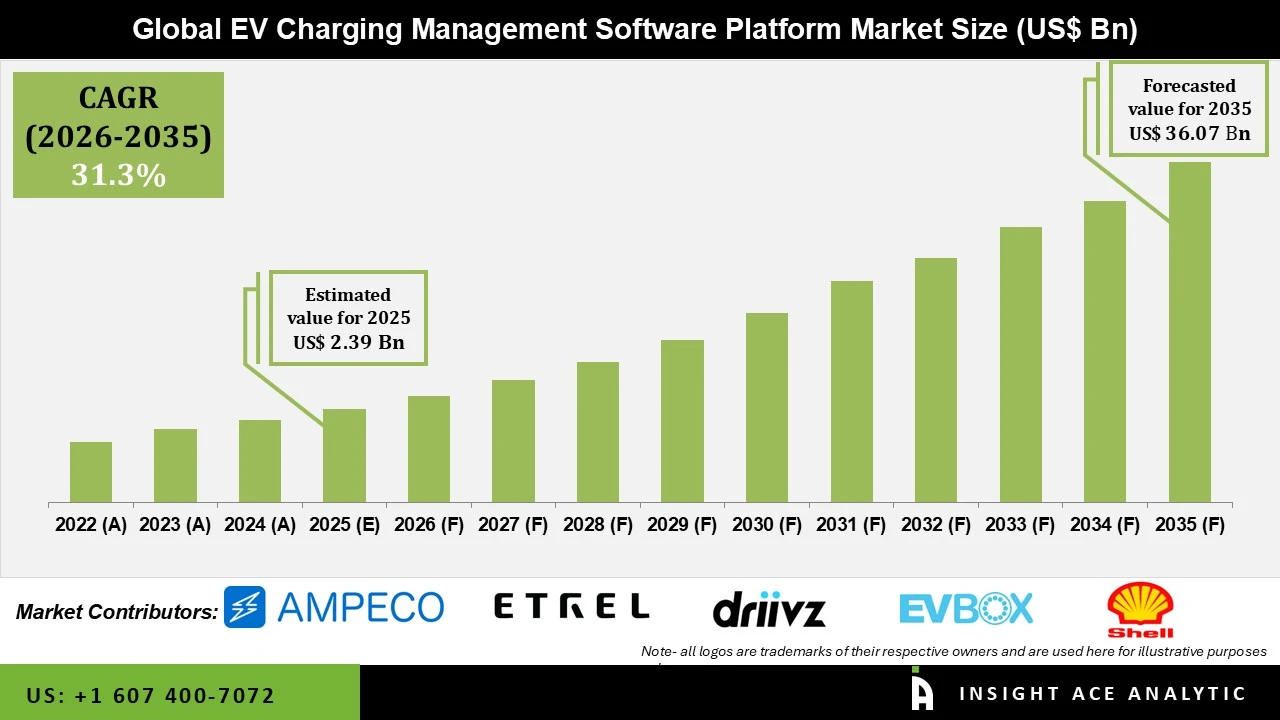
EV Charging Management Software Platform Market Size is valued at USD 2.39 Bn in 2025 and is predicted to reach USD 36.07 Bn by the year 2035 at a 31.3% CAGR during the forecast period for 2026 to 2035.
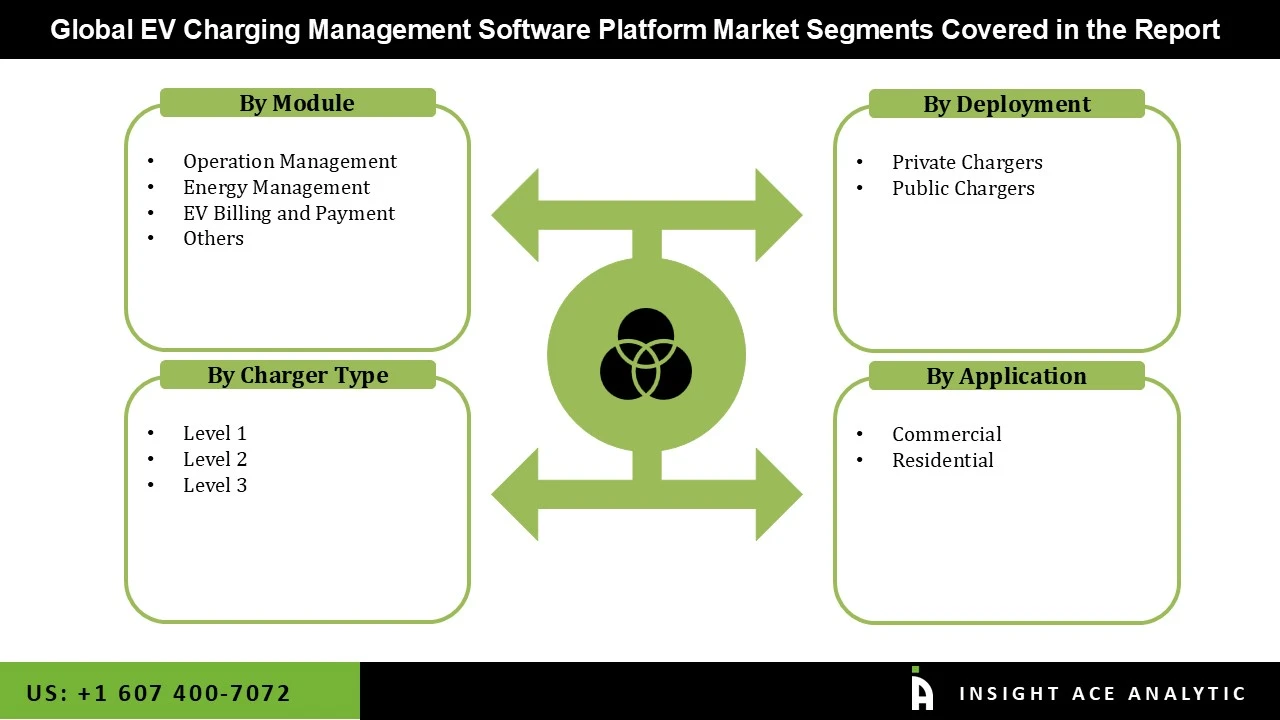
EV Charging Management Software Platform Market Size, Share & Trends Analysis Distribution by Charger Type (Level 1, Level 2, and Level 3), Deployment Mode (Public Chargers and Private Chargers), Module (Energy Management, Operation Management, EV Billing and Payment, Others), Application (Residential and Commercial), and Segment Forecasts, 2026 to 2035
EV Charging Management Software Platform Market Key Takeaways:
|
A computerized system known as an EV charging management software platform is made to optimize, track, and oversee the charging of electric vehicles at different charging stations. EV charging management software also provides a range of features, such as energy management, EV charging bill management, operations management, and cross-platform compatibility across online and app platforms. The EV charging software improves user ease by integrating payment, reservations, and real-time updates.
Additionally, it prevents grid overload and optimizes energy distribution, which lowers operating expenses. The global EV charging management software platform market is expected to grow rapidly due to the rising sales and usage of electric vehicles (EVs), government initiatives to promote a pollution-free environment, and widespread use of smartphone applications and handy software.
The primary factor propelling the global EV charging management software platform market is the increasing use of electric vehicles (EVs), which is fueled by decarbonization objectives and environmental legislation.
Additionally, rising EV infrastructure investment and smart grid technology developments promote market growth. The demand is also being stimulated by the increasing requirement for energy optimization, real-time monitoring, and frictionless payment options. Furthermore, software innovation is being enhanced by government subsidies, advantageous laws, and partnerships between the technology and automobile sectors. In addition, continuous technological developments like artificial intelligence (AI) and Internet of Things (IoT)-enabled platforms improve operational efficiency and promote broad adoption among consumers, utilities, and enterprises, which is driving the EV charging management software platform market expansion.
Furthermore, the EV charging management software platform market is expected to rise as more charging stations are installed, and significant government investments and incentives for the construction of charging infrastructure in important economies are speeding up the adoption of related software solutions. Another significant driver in the EV charging management software platform market is the electrification of commercial fleets by corporations, ride-sharing services, and logistics firms. These organizations need specialized software to handle large-scale charging operations, optimize energy usage, and regulate costs. However, the high initial investment cost of sophisticated software solutions, cybersecurity issues with connected charging infrastructure, and the continuous difficulty of guaranteeing interoperability across various hardware and software ecosystems are possible barriers to the EV charging management software platform market's significant growth.
Competitive Landscape
Which are the Leading Players in EV Charging Management Software Platform Market?
• Ampeco Ltd
• EVBox
• Chargepoint
• Virta
• Shell
• Evconnect
• Chargelab
• Etrel
• Driivz
• Touch GmbH
Market Dynamics
Driver
Incorporation of Smart Energy Management Systems
In order to maximize grid use and charging efficiency, the global EV charging management software platform market is adopting smart energy management systems. These platforms are progressively integrating cutting-edge technology like artificial intelligence (AI), the Internet of Things (IoT), and machine learning to facilitate energy cost savings, dynamic load control, and the integration of renewable energy sources. Furthermore, smart energy systems are becoming a big trend due to the increasing EV adoption rates and the regulatory emphasis on sustainability. In addition to promoting grid stability, these systems enable operators to lower operating and peaking load costs.
Restrain/Challenge
High Startup Costs and Challenging Implementation
The significant upfront costs associated with software integration and infrastructure development are one of the primary barriers preventing the broad use of EV charging management software platforms. In order to assure connectivity and dependability, deploying such platforms requires not only purchasing and installing physical charging stations but also making investments in networking hardware and suitable software. For governments, small and mid-sized enterprises, and other organizations, this initial cost load can be intimidating and create a barrier to admission. Additionally, coordinating with several parties, including hardware manufacturers, software vendors, and utility companies, can make the implementation process complicated. There may be delays, unexpected expenses, or restricted functionality of current systems as a result of compatibility and interoperability problems.
Level 2 Segment is Expected to Drive the EV Charging Management Software Platform Market
The level 2 category held the largest share in the EV Charging Management Software Platform market in 2025 because of its accessibility and speed balance, which makes it ideal for a range of environments, including homes, offices, and some public spaces.Although Level 2 chargers are faster than Level 1 chargers, they don't need the same energy and infrastructure requirements as Level 3 chargers, which makes them a flexible and affordable choice for a lot of customers and organizations.The growing infrastructure of electric vehicles and the demand for a faster, more effective charging solution that is simple to incorporate into current electrical systems are driving the Level 2 Charging segment's growth. Furthermore, the need for Level 2 charging solutions is anticipated to increase as the market for electric vehicles expands, not just in residential and commercial settings but also in new construction like community charging hubs and multi-unit housing.
Operation Management Segment is Growing at the Highest Rate in the EV Charging Management Software Platform Market
In 2025, the Operation Management category dominated the EV Charging Management Software Platform market. The segment's expansion can be ascribed to its vital role in efficiently maximizing the efficiency of EV charging infrastructure. In addition to remote control and diagnostics, the operation management software solution offers demand forecasting, predictive maintenance, energy management, reporting, and real-time monitoring of charging stations and networks. This platform facilitates smooth and user-friendly electric vehicle charging experiences by enabling efficient operation, maintenance, and user administration, while ensuring sustainability, scalability, and reliability. Additionally, it provides features for remote problem solving and automatic diagnosis, which enhances network stability and availability. To improve operations, advanced features include insight-driven dashboards that continuously gather, show, and analyze operational data.
Why North America Led the EV Charging Management Software Platform Market?
The EV Charging Management Software Platform market was dominated by North America region in 2025 as a result of strict emissions laws and initiatives. Energy-intensive businesses, renewable energy, energy storage, industrial carbon management, net-zero mobility, and buildings are among the areas that are covered by the programs. Additionally, the need for centralized management systems is being driven by the expansion of e-mobility fleets and electrified public transportation. In order to establish a cohesive EV ecosystem, governments, automakers, and technology companies are working together extensively to promote the North American market.

EV Charging Management Software Platform Market Report Scope:
| Report Attribute | Specifications |
| Market size value in 2025 | USD 2.39 Bn |
| Revenue forecast in 2035 | USD 36.07 Bn |
| Growth Rate CAGR | CAGR of 31.3% from 2026 to 2035 |
| Quantitative Units | Representation of revenue in US$ Bn and CAGR from 2026 to 2035 |
| Historic Year | 2022 to 2025 |
| Forecast Year | 2026-2035 |
| Report Coverage | The forecast of revenue, the position of the company, the competitive market structure, growth prospects, and trends |
| Segments Covered | Charger Type, Deployment Mode, Module, Application, and By Region |
| Regional Scope | North America; Europe; Asia Pacific; Latin America; Middle East & Africa |
| Country Scope | U.S.; Canada; U.K.; Germany; China; India; Japan; Brazil; Mexico; The UK; France; Italy; Spain; China; Japan; India; South Korea; Southeast Asia; South Korea; Southeast Asia |
| Competitive Landscape | Ampeco Ltd, EVBox, Chargepoint, Virta, Shell, Evconnect, Chargelab, Etrel, Driivz, and Touch GmbH |
| Customization Scope | Free customization report with the procurement of the report, Modifications to the regional and segment scope. Geographic competitive landscape. |
| Pricing and Available Payment Methods | Explore pricing alternatives that are customized to your particular study requirements. |
Market Segmentation:
EV Charging Management Software Platform Market by Charger Type-
• Level 1
• Level 2
• Level 3
EV Charging Management Software Platform Market by Deployment Mode-
• Public Chargers
• Private Chargers
EV Charging Management Software Platform Market by Module-
• Energy Management
• Operation Management
• EV Billing and Payment
• Others
EV Charging Management Software Platform Market by Application-
• Residential
• Commercial
EV Charging Management Software Platform Market By Region-
North America-
• The US
• Canada
Europe-
• Germany
• The UK
• France
• Italy
• Spain
• Rest of Europe
Asia-Pacific-
• China
• Japan
• India
• South Korea
• South East Asia
• Rest of Asia Pacific
Latin America-
• Brazil
• Argentina
• Mexico
• Rest of Latin America
Middle East & Africa-
• GCC Countries
• South Africa
• Rest of Middle East and Africa
Research Design and Approach
This study employed a multi-step, mixed-method research approach that integrates:
- Secondary research
- Primary research
- Data triangulation
- Hybrid top-down and bottom-up modelling
- Forecasting and scenario analysis
This approach ensures a balanced and validated understanding of both macro- and micro-level market factors influencing the market.
Secondary Research
Secondary research for this study involved the collection, review, and analysis of publicly available and paid data sources to build the initial fact base, understand historical market behaviour, identify data gaps, and refine the hypotheses for primary research.
Sources Consulted
Secondary data for the market study was gathered from multiple credible sources, including:
- Government databases, regulatory bodies, and public institutions
- International organizations (WHO, OECD, IMF, World Bank, etc.)
- Commercial and paid databases
- Industry associations, trade publications, and technical journals
- Company annual reports, investor presentations, press releases, and SEC filings
- Academic research papers, patents, and scientific literature
- Previous market research publications and syndicated reports
These sources were used to compile historical data, market volumes/prices, industry trends, technological developments, and competitive insights.

Primary Research
Primary research was conducted to validate secondary data, understand real-time market dynamics, capture price points and adoption trends, and verify the assumptions used in the market modelling.
Stakeholders Interviewed
Primary interviews for this study involved:
- Manufacturers and suppliers in the market value chain
- Distributors, channel partners, and integrators
- End-users / customers (e.g., hospitals, labs, enterprises, consumers, etc., depending on the market)
- Industry experts, technology specialists, consultants, and regulatory professionals
- Senior executives (CEOs, CTOs, VPs, Directors) and product managers
Interview Process
Interviews were conducted via:
- Structured and semi-structured questionnaires
- Telephonic and video interactions
- Email correspondences
- Expert consultation sessions
Primary insights were incorporated into demand modelling, pricing analysis, technology evaluation, and market share estimation.
Data Processing, Normalization, and Validation
All collected data were processed and normalized to ensure consistency and comparability across regions and time frames.
The data validation process included:
- Standardization of units (currency conversions, volume units, inflation adjustments)
- Cross-verification of data points across multiple secondary sources
- Normalization of inconsistent datasets
- Identification and resolution of data gaps
- Outlier detection and removal through algorithmic and manual checks
- Plausibility and coherence checks across segments and geographies
This ensured that the dataset used for modelling was clean, robust, and reliable.
Market Size Estimation and Data Triangulation
Bottom-Up Approach
The bottom-up approach involved aggregating segment-level data, such as:
- Company revenues
- Product-level sales
- Installed base/usage volumes
- Adoption and penetration rates
- Pricing analysis
This method was primarily used when detailed micro-level market data were available.

Top-Down Approach
The top-down approach used macro-level indicators:
- Parent market benchmarks
- Global/regional industry trends
- Economic indicators (GDP, demographics, spending patterns)
- Penetration and usage ratios
This approach was used for segments where granular data were limited or inconsistent.
Hybrid Triangulation Approach
To ensure accuracy, a triangulated hybrid model was used. This included:
- Reconciling top-down and bottom-up estimates
- Cross-checking revenues, volumes, and pricing assumptions
- Incorporating expert insights to validate segment splits and adoption rates
This multi-angle validation yielded the final market size.
Forecasting Framework and Scenario Modelling
Market forecasts were developed using a combination of time-series modelling, adoption curve analysis, and driver-based forecasting tools.
Forecasting Methods
- Time-series modelling
- S-curve and diffusion models (for emerging technologies)
- Driver-based forecasting (GDP, disposable income, adoption rates, regulatory changes)
- Price elasticity models
- Market maturity and lifecycle-based projections
Scenario Analysis
Given inherent uncertainties, three scenarios were constructed:
- Base-Case Scenario: Expected trajectory under current conditions
- Optimistic Scenario: High adoption, favourable regulation, strong economic tailwinds
- Conservative Scenario: Slow adoption, regulatory delays, economic constraints
Sensitivity testing was conducted on key variables, including pricing, demand elasticity, and regional adoption.
Request Customization
Add countries, segments, company profiles, or extend forecast — free 10% customization with purchase.
Customize This Report →Enquire Before Buying
Speak with our analyst team about scope, methodology, pricing, or deliverable formats.
Enquire Now →Frequently Asked Questions
EV Charging Management Software Platform Market Size is valued at USD 2.39 Bn in 2025 and is predicted to reach USD 36.07 Bn by the year 2035
EV Charging Management Software Platform Market is expected to grow at a 31.3% CAGR during the forecast period for 2026 to 2035.
Ampeco Ltd, EVBox, Chargepoint, Virta, Shell, Evconnect, Chargelab, Etrel, Driivz, and Touch GmbH
EV Charging Management Software Platform Market is segmented into by Charger Type, Deployment Mode, Module, Application, and By Region
North America region is leading the EV Charging Management Software Platform Market.