Biobanking Cold Storage Equipment Market Size, Share, Revenue Report 2026 to 2035
What is Biobanking Cold Storage Equipment Market Size?
Biobanking Cold Storage Equipment Market Size is valued at USD 1,579.55 Mn in 2025 and is predicted to reach USD 3,569.33 Mn by the year 2035 at a 8.7% CAGR during the forecast period for 2026 to 2035.
Biobanking Cold Storage Equipment Market Size, Share & Trends Analysis Distribution by Offering (Accessories and Consumables, Equipment, Service, and Software), End-user (Hospitals and Biobanks, Pharmaceutical and Biotechnology Companies, Academic and Research Institutions, Others), and Segment Forecasts, 2026 to 2035
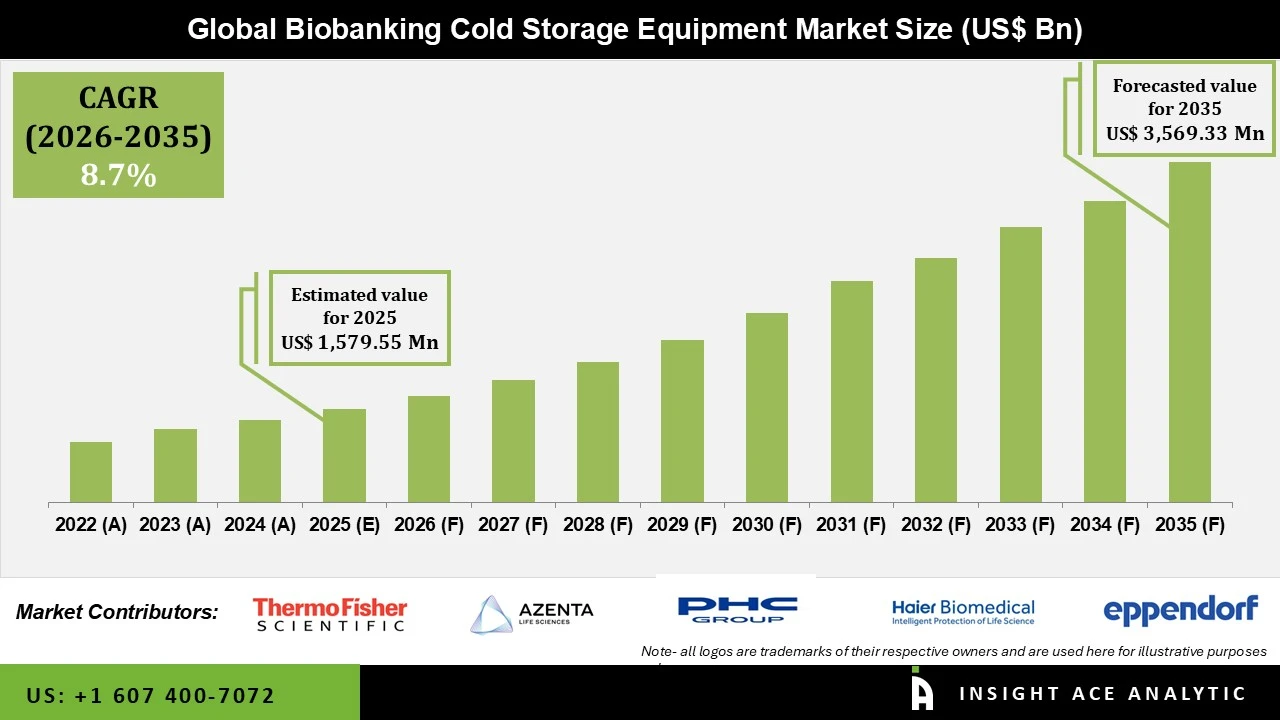
The biobanking cold storage equipment is a specialized freezing and refrigeration systems intended to maintain biological samples—such as blood, tissues, DNA, RNA, vaccines, and other biomaterials—under tightly regulated temperature settings for long-term storage and research purposes. These systems usually consist of laboratory refrigerators, cryogenic storage tanks using liquid nitrogen (−196°C), ultra-low temperature (ULT) freezers ( −40°C to −86°C), and automated storage units with temperature monitoring, backup power, and alarm systems to guarantee sample integrity. The growing need for the long-term preservation of biological samples, including human tissues, blood, and DNA, is driving the strong growth of the global biobanking cold storage equipment market.
The need for sophisticated storage systems that can sustain extremely low and cryogenic temperatures is being driven by the quick development of genomics, customized medicine, and regenerative therapies. The biobanking cold storage equipment market is also rising as a result of the growing incidence of chronic illnesses and the expansion of clinical studies. As more focus is placed on precision medicine and data-driven treatments by healthcare systems and research institutes, this trend is anticipated to continue. Furthermore, cold storage equipment is a crucial part of the global healthcare infrastructure, particularly in emerging nations, as it is necessary for pharmaceutical research and vaccine preservation. Additionally, ongoing technological developments and an increasing emphasis on sustainability and energy efficiency are shaping the biobanking cold storage equipment market landscape.
In addition, the innovations that improve operating efficiency and lower sample loss concerns include smart temperature tracking, automated monitoring systems, and environmentally friendly refrigeration technology. The adoption of high-performance and compliant biobanking cold storage technology is also being encouraged by regulatory frameworks that prioritize quality standards and sample safety. Additionally, the biobanking cold storage equipment market is moving toward specialized and flexible storage solutions that are suited to particular clinical and research requirements, suggesting a movement toward high-value products and customization. However, the availability of alternate preservation techniques, high capital and operating costs, and logistical difficulties in maintaining reliable cold chain infrastructure limit the biobanking cold storage equipment market expansion.
Competitive Landscape
Which are the Leading Players in Biobanking Cold Storage Equipment Market?
• Thermo Fisher Scientific, Inc.
• Azenta, Inc.
• PHC Holding Corporation
• Haier Biomedical
• Eppendorf SE
• Trane Technologies plc
• MGI Tech Co., Ltd.
• Arctiko
• Labcold
• Esco Micro Pte. Ltd.
• Avantor, Inc.
• BioLife Solutions, Inc.
• Hamilton Company
• IC Biomedical, LLC
Market Dynamics
Driver
Growing Demand for Personalized Treatment
The biobanking cold storage equipment market is anticipated to increase in the future due to the growing demand for personalized treatment. The increasing use of personalized medicine is fueled by developments in data analytics and genome sequencing technology, which allow medical professionals to create more accurate diagnostic tools and tailored treatments for specific patients. Additionally, by effectively storing and arranging biological samples containing vital genetic and molecular information, biobank technology supports personalized medicine by allowing researchers to analyze individual differences, identify biomarkers, and develop patient-specific treatments. For instance, the FDA authorized 16 novel personalized treatments for patients with rare diseases in 2023, up from six in 2022, according to the Personalized Medicine Coalition, a US-based hospital and health care organization, in February 2024. Thus, the biobanking cold storage equipment market is expanding due to the growing need for personalized medicine.
Restrain/Challenge
High Operating and Capital Expenses
Small biobanks and research centers will be unable to purchase the latest equipment because of the capital costs associated with purchasing cryogenic storage, specialized freezers, and inventory management systems. Additionally, there are ongoing costs associated with maintaining this energy-intensive machinery and hiring competent personnel to run it. They will consequently experience financial strain and eventually experience delays in their capacity to switch to more advanced technological solutions. Moreover, these expenses may also hinder the biobanking cold storage equipment market penetration of more recent technologies, cause the market to adopt new technologies more slowly, or encourage the maintenance of older technological systems or processes for longer than is necessary, which would ultimately limit the total investment in growing a marketplace.
Equipment Segment is Expected to Drive the Biobanking Cold Storage Equipment Market
The equipment category held the largest share in the Biobanking Cold Storage Equipment market in 2025 driven by the capital-intensive nature of biorepository infrastructure, where automated robotic sample-handling platforms, liquid nitrogen tanks, cryogenic storage systems, and ultra-low temperature freezers are one-time high-value acquisitions necessary for every operational biobank. This segment's ongoing revenue domination is supported by the steady first-purchase demand for specialized equipment created by the ongoing creation of new biobanks across national genomics initiatives, pharmaceutical corporations, and academic medical institutes. For instance, in April 2024, Thermo Fisher Scientific, Inc. unveiled the TSX Universal Series ENERGY STAR-certified ultra-low temperature freezers, which are designed to provide improved energy efficiency, faster thermal recovery times, and tighter temperature control in a variety of laboratory and biorepository workflows.
Pharmaceutical and Biotechnology Companies Segment is Growing at the Highest Rate in the Biobanking Cold Storage Equipment Market
In 2025, the pharmaceutical and biotechnology companies category dominated the Biobanking Cold Storage Equipment market. This is mostly because of their deep participation in personalized medicine, drug development, and discovery. To find new drug targets, validate biomarkers, and carry out preclinical and clinical research, these businesses mostly depend on having access to a variety of well-characterized biological samples. Their capacity to quicken medicinal development has been reinforced by growing investments in biobanking cold storage equipment partnerships and collaborations. Furthermore, the need for high-quality biospecimens has increased due to the increased emphasis on precision medicine and sophisticated therapeutics, making pharmaceutical and biotech companies the biobanking cold storage equipment market's biggest end customers.
Why North America Led the Biobanking Cold Storage Equipment Market?
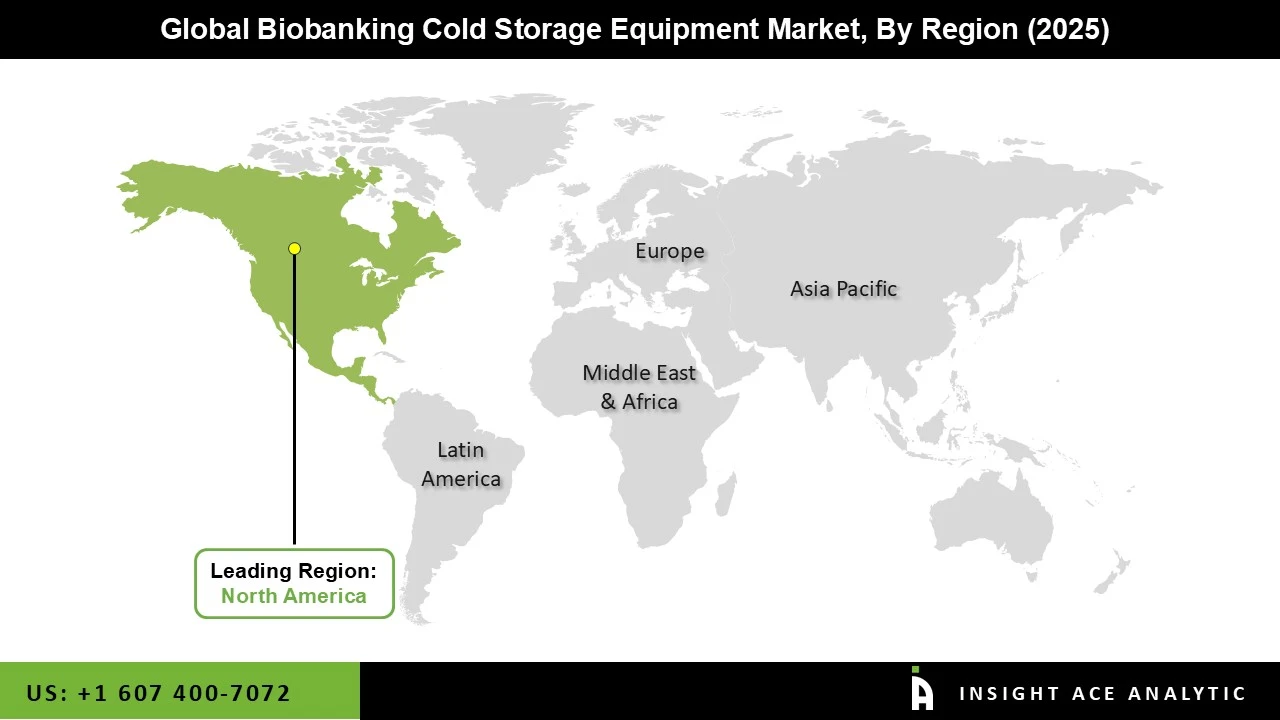
The Biobanking Cold Storage Equipment market was dominated by North America region in 2025 because of substantial financing for the biological sciences, a vast amount of research, and sophisticated healthcare infrastructure. With well-established biobanks, growing precision medicine acceptance, and a robust presence of pharmaceutical and biotechnology businesses, the United States and Canada are at the forefront of the region. The need for dependable cold storage solutions is being further increased by growing investments in clinical trials, genomics, and cancer research. Furthermore, the employment of cutting-edge, compatible equipment is encouraged by stringent regulatory standards and quality criteria. Moreover, the innovations in energy-efficient ultra-low temperature freezers and the increasing emphasis on vaccine storage promote the biobanking cold storage equipment market growth.
Key Development
• May 2025: Haier Biomedical unveiled its Ultra Eco next-generation ultra-low temperature freezer, which has improved IoT connection, low-GWP refrigerants and insulation materials, and a daily energy consumption of 4.16 kWh. Haier marketed the product to labs and biobanks that require long-term, low-cost cold storage with robust sample protection capabilities.
Biobanking Cold Storage Equipment Market Report Scope:
| Report Attribute | Specifications |
| Market size value in 2025 | USD 1,579.55 Mn |
| Revenue forecast in 2035 | USD 3,569.33 Mn |
| Growth Rate CAGR | CAGR of 8.7% from 2026 to 2035 |
| Quantitative Units | Representation of revenue in US$ Bn and CAGR from 2026 to 2035 |
| Historic Year | 2022 to 2025 |
| Forecast Year | 2026-2035 |
| Report Coverage | The forecast of revenue, the position of the company, the competitive market structure, growth prospects, and trends |
| Segments Covered | Offering, End-user, and By Region |
| Regional Scope | North America; Europe; Asia Pacific; Latin America; Middle East & Africa |
| Country Scope | U.S.; Canada; U.K.; Germany; China; India; Japan; Brazil; Mexico; The UK; France; Italy; Spain; China; Japan; India; South Korea; Southeast Asia; South Korea; Southeast Asia |
| Competitive Landscape | Thermo Fisher Scientific, Inc., Azenta, Inc., PHC Holding Corporation, Haier Biomedical, Eppendorf SE, Trane Technologies plc, MGI Tech Co., Ltd., Arctiko, Labcold, Esco Micro Pte. Ltd., Avantor, Inc., BioLife Solutions, Inc., Hamilton Company, and IC Biomedical, LLC |
| Customization Scope | Free customization report with the procurement of the report, Modifications to the regional and segment scope. Geographic competitive landscape. |
| Pricing and Available Payment Methods | Explore pricing alternatives that are customized to your particular study requirements. |
Market Segmentation:
Biobanking Cold Storage Equipment Market by Offering-
• Accessories and Consumables
• Equipment
• Service
• Software
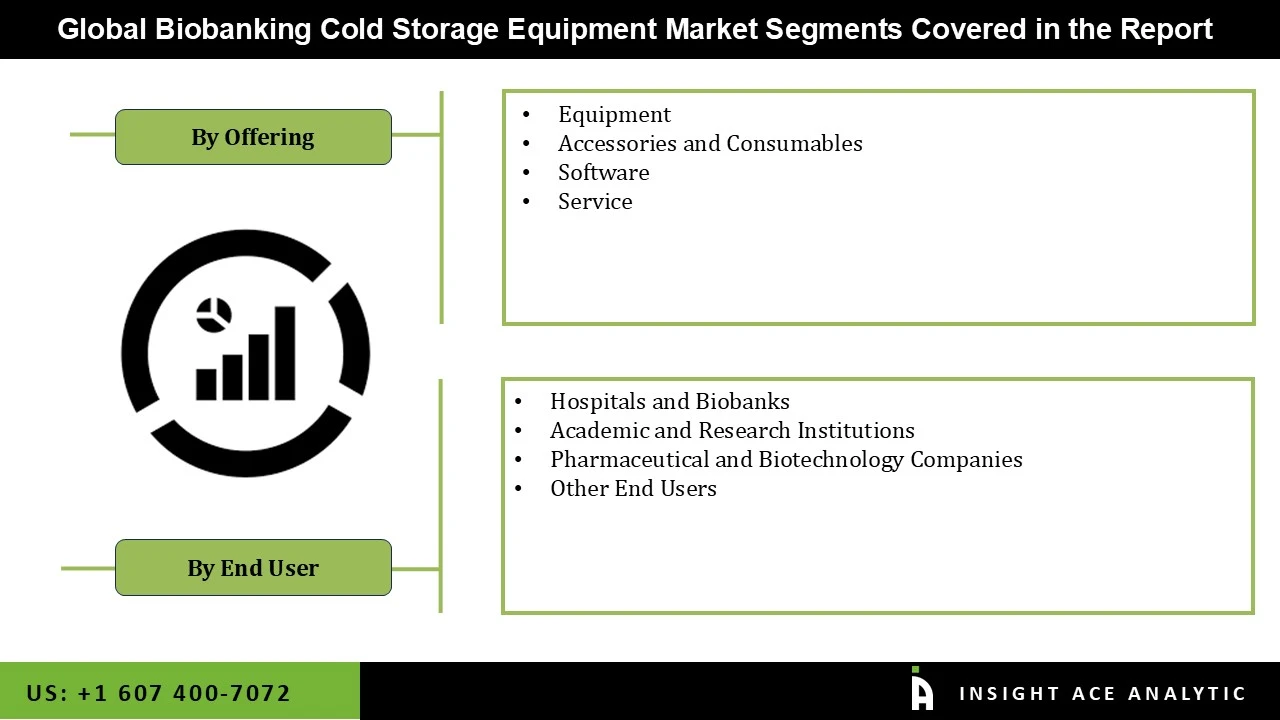
Biobanking Cold Storage Equipment Market by End-user-
• Hospitals and Biobanks
• Pharmaceutical and Biotechnology Companies
• Academic and Research Institutions
• Others
Biobanking Cold Storage Equipment Market By Region-
North America-
• The US
• Canada
Europe-
• Germany
• The UK
• France
• Italy
• Spain
• Rest of Europe
Asia-Pacific-
• China
• Japan
• India
• South Korea
• South East Asia
• Rest of Asia Pacific
Latin America-
• Brazil
• Argentina
• Mexico
• Rest of Latin America
Middle East & Africa-
• GCC Countries
• South Africa
• Rest of Middle East and Africa
Research Design and Approach
This study employed a multi-step, mixed-method research approach that integrates:
- Secondary research
- Primary research
- Data triangulation
- Hybrid top-down and bottom-up modelling
- Forecasting and scenario analysis
This approach ensures a balanced and validated understanding of both macro- and micro-level market factors influencing the market.
Secondary Research
Secondary research for this study involved the collection, review, and analysis of publicly available and paid data sources to build the initial fact base, understand historical market behaviour, identify data gaps, and refine the hypotheses for primary research.
Sources Consulted
Secondary data for the market study was gathered from multiple credible sources, including:
- Government databases, regulatory bodies, and public institutions
- International organizations (WHO, OECD, IMF, World Bank, etc.)
- Commercial and paid databases
- Industry associations, trade publications, and technical journals
- Company annual reports, investor presentations, press releases, and SEC filings
- Academic research papers, patents, and scientific literature
- Previous market research publications and syndicated reports
These sources were used to compile historical data, market volumes/prices, industry trends, technological developments, and competitive insights.

Primary Research
Primary research was conducted to validate secondary data, understand real-time market dynamics, capture price points and adoption trends, and verify the assumptions used in the market modelling.
Stakeholders Interviewed
Primary interviews for this study involved:
- Manufacturers and suppliers in the market value chain
- Distributors, channel partners, and integrators
- End-users / customers (e.g., hospitals, labs, enterprises, consumers, etc., depending on the market)
- Industry experts, technology specialists, consultants, and regulatory professionals
- Senior executives (CEOs, CTOs, VPs, Directors) and product managers
Interview Process
Interviews were conducted via:
- Structured and semi-structured questionnaires
- Telephonic and video interactions
- Email correspondences
- Expert consultation sessions
Primary insights were incorporated into demand modelling, pricing analysis, technology evaluation, and market share estimation.
Data Processing, Normalization, and Validation
All collected data were processed and normalized to ensure consistency and comparability across regions and time frames.
The data validation process included:
- Standardization of units (currency conversions, volume units, inflation adjustments)
- Cross-verification of data points across multiple secondary sources
- Normalization of inconsistent datasets
- Identification and resolution of data gaps
- Outlier detection and removal through algorithmic and manual checks
- Plausibility and coherence checks across segments and geographies
This ensured that the dataset used for modelling was clean, robust, and reliable.
Market Size Estimation and Data Triangulation
Bottom-Up Approach
The bottom-up approach involved aggregating segment-level data, such as:
- Company revenues
- Product-level sales
- Installed base/usage volumes
- Adoption and penetration rates
- Pricing analysis
This method was primarily used when detailed micro-level market data were available.

Top-Down Approach
The top-down approach used macro-level indicators:
- Parent market benchmarks
- Global/regional industry trends
- Economic indicators (GDP, demographics, spending patterns)
- Penetration and usage ratios
This approach was used for segments where granular data were limited or inconsistent.
Hybrid Triangulation Approach
To ensure accuracy, a triangulated hybrid model was used. This included:
- Reconciling top-down and bottom-up estimates
- Cross-checking revenues, volumes, and pricing assumptions
- Incorporating expert insights to validate segment splits and adoption rates
This multi-angle validation yielded the final market size.
Forecasting Framework and Scenario Modelling
Market forecasts were developed using a combination of time-series modelling, adoption curve analysis, and driver-based forecasting tools.
Forecasting Methods
- Time-series modelling
- S-curve and diffusion models (for emerging technologies)
- Driver-based forecasting (GDP, disposable income, adoption rates, regulatory changes)
- Price elasticity models
- Market maturity and lifecycle-based projections
Scenario Analysis
Given inherent uncertainties, three scenarios were constructed:
- Base-Case Scenario: Expected trajectory under current conditions
- Optimistic Scenario: High adoption, favourable regulation, strong economic tailwinds
- Conservative Scenario: Slow adoption, regulatory delays, economic constraints
Sensitivity testing was conducted on key variables, including pricing, demand elasticity, and regional adoption.
Request Customization
Add countries, segments, company profiles, or extend forecast — free 10% customization with purchase.
Customize This Report →Enquire Before Buying
Speak with our analyst team about scope, methodology, pricing, or deliverable formats.
Enquire Now →Frequently Asked Questions
Biobanking Cold Storage Equipment Market Size is valued at USD 1,579.55 Mn in 2025 and is predicted to reach USD 3,569.33 Mn by the year 2035
Biobanking Cold Storage Equipment Market Size is predicted to grow at a 8.7% CAGR during the forecast period for 2026 to 2035.
Thermo Fisher Scientific, Inc., Azenta, Inc., PHC Holding Corporation, Haier Biomedical, Eppendorf SE, Trane Technologies plc, MGI Tech Co., Ltd., Arctiko, Labcold, Esco Micro Pte. Ltd., Avantor, Inc., BioLife Solutions, Inc., Hamilton Company, and IC Biomedical, LLC
Biobanking Cold Storage Equipment Market is segmented into Offering, End-user, and By Region.
North America region is leading the Biobanking Cold Storage Equipment Market.