Atrophic Vaginitis Market Research Report with Forecast 2026 to 2035
Global Atrophic Vaginitis Market is likely to grow at a 3.2% CAGR during the forecast period for 2026 to 2035.
Atrophic Vaginitis Market Size, Share & Trends Analysis Distribution by By Treatment Type (Hormone Therapies (Estrogen Therapy, Combination Therapy), Non-Hormonal Therapies (Vaginal Moisturizers, Lubricants), Others), By Distribution Channel (Hospital pharmacies, Retail pharmacies, Online pharmacies), By Application (Vaginal Dryness, Vaginal Burning, Others), By End-User (Hospitals, Clinics, Home care settings), and Segment Forecasts, 2026 to 2035
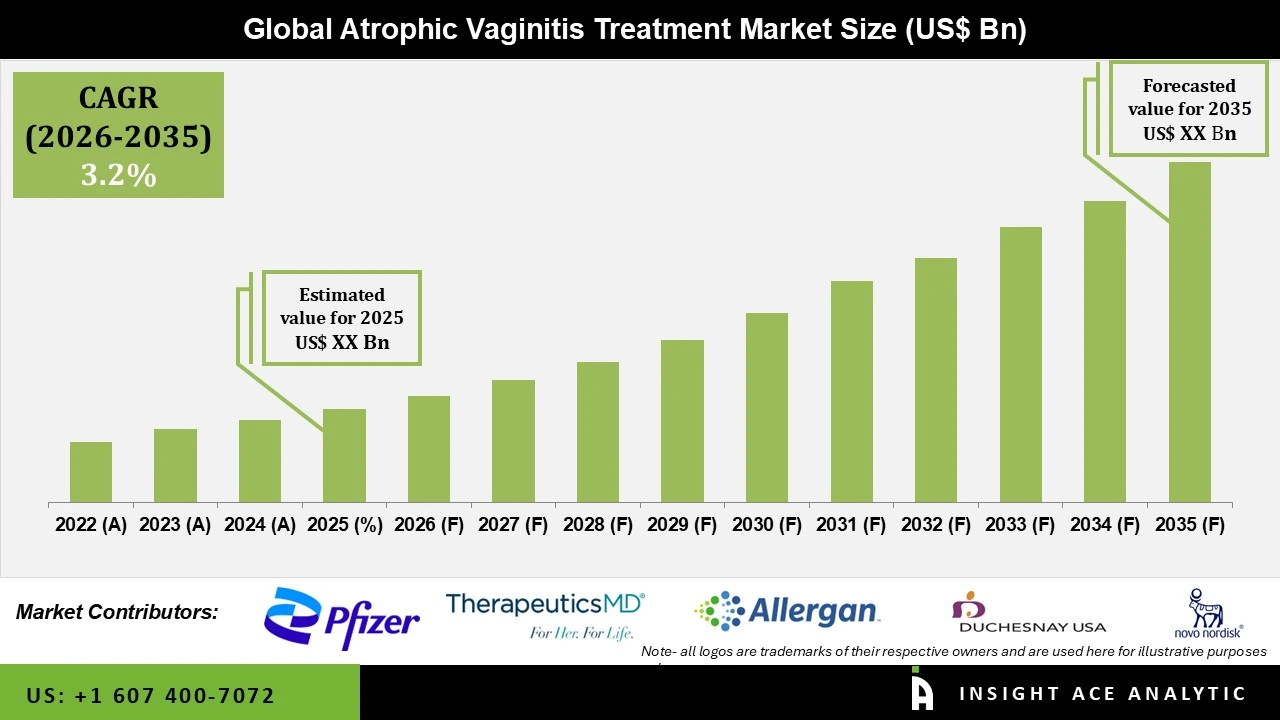
Atrophic vaginitis, or genitourinary syndrome of menopause (GSM), is characterized by a reduction in estrogen levels that causes the vaginal walls to weaken, dry up, and become inflamed. It usually affects postmenopausal women, although it can also happen to women after giving birth, while nursing, or after receiving medical therapies that lower estrogen levels, such as chemotherapy or oophorectomy. If left untreated, atrophic vaginitis is a chronic and progressive condition that can be effectively controlled using non-hormonal moisturizers, lubricants, local estrogen therapy, and other targeted treatments meant to improve quality of life and restore vaginal health. In the upcoming years, the global atrophic vaginitis market is anticipated to grow due to factors such as rising rates of menopause and related disorders and improvements in healthcare technology.
Additionally, another major factor propelling the market's expansion is women's increased awareness of their reproductive health and potential treatments. Higher use of therapeutic items and medical consultations is supported by the fact that women are more inclined to seek medical attention for symptoms such as vaginal dryness, irritation, and painful sexual activity. Furthermore, improved vaginal moisturizers and targeted hormone replacement therapies are only two examples of the new and more potent treatments that are being introduced as a result of advancements in pharmaceutical research and development. The atrophic vaginitis market is also expanding as a result of these medicines being more widely available through various distribution channels, including hospital pharmacies, internet sites, and retail stores.
In addition, the key companies frequently engage in mergers, strategic alliances, and acquisitions in an effort to improve their market position and further research into cutting-edge therapeutic approaches. The future growth and the competitive dynamics in the global atrophic vaginitis market are anticipated to be shaped by increased investments in R&D and customized medicine techniques. Moreover, the atrophic vaginitis market is seeing an increase in the desire for targeted and localized treatments over systemic hormone replacement therapy (HRT), especially among women who have systemic adverse effect concerns or contraindications. However, the market for atrophic vaginitis has a strong growth trajectory, but due to high pricing, access to treatment is a concern. The market penetration may be impacted by patient reluctance to seek treatment due to stigma surrounding gynecological problems and resistance to hormone therapy
Competitive Landscape
Which are the Leading Players in the Atrophic Vaginitis Market?
- Bausch Health Companies Inc.,
- Pfizer Inc.,
- TherapeuticsMD Inc.,
- Mylan N.V.,
- Allergan plc (AbbVie Inc.),
- Duchesnay USA,
- Novo Nordisk A/S,
- Merck & Co., Inc.,
- Endoceutics Inc.,
- Teva Pharmaceutical Industries Ltd.
Market Dynamics
Driver
Rising Awareness of Atrophic Vaginitis and an Increase in the Prevalence of Menopause
In postmenopausal women, vaginal atrophy is more prevalent. A better knowledge of menopause health encourages women to seek out medical solutions to improve their quality of life and ease discomfort. The market for atrophic vaginitis is growing since more women are going through menopause. Additionally, the market for atrophic vaginitis is expanding significantly as a result of population shifts and rising health consciousness. Women are becoming more conscious of the symptoms and long-term effects of atrophic vaginitis, which motivates them to see a doctor right away. Furthermore, health campaigns and educational programs that emphasize the importance of treatment lessen the stigma attached to discussing vaginal health. As a result, the market is anticipated to develop over the course of the forecast period as more people become aware of the increased acceptance of both hormonal and non-hormonal treatments for atrophic vaginitis.
Restrain/Challenge
Growing Embarrassment and Social Stigma
Women frequently feel uncomfortable talking to medical professionals about private health concerns. This discomfort delays diagnosis and treatment. The lack of awareness caused by societal taboos lowers patients' desire for treatments. Furthermore, the marketing and educational initiatives are less successful when stigma and embarrassment are present. The therapy adoption rates are directly impacted by the reluctance to seek medical attention. Additionally, the clinic visits and follow-up are further decreased by embarrassment, cultural taboos around sexual health, and a lack of knowledge about the existence of viable medical and non-hormonal alternatives. The treatment uptake is further discouraged by the fear of being prescribed hormone-based therapy, which is frequently exacerbated by false beliefs about cancer or systemic side effects. As a result, growing embarrassment and social stigma among patients are limiting the atrophic vaginitis market growth.
Hormone Therapy Segment is Growing at the Highest Rate in the Atrophic Vaginitis Market
The hormone therapy category is growing at the highest rate in the Atrophic Vaginitis market because of its lengthy history of usage and proven effectiveness in treating atrophic vaginitis. Hormonal therapies, especially localized estrogen therapy, have been demonstrated to offer quick symptom relief, which is why patients and healthcare professionals like them. Furthermore, the growing body of clinical research demonstrating the efficacy and safety of hormonal treatments is strengthening their place in the market. Additionally, the significant effectiveness of hormonal therapy in reducing atrophic vaginitis symptoms is driving this segment's growth. Because it successfully restores vaginal moisture and suppleness, estrogen therapy in particular has been prescribed extensively.
Why North America Led the Atrophic Vaginitis Market?
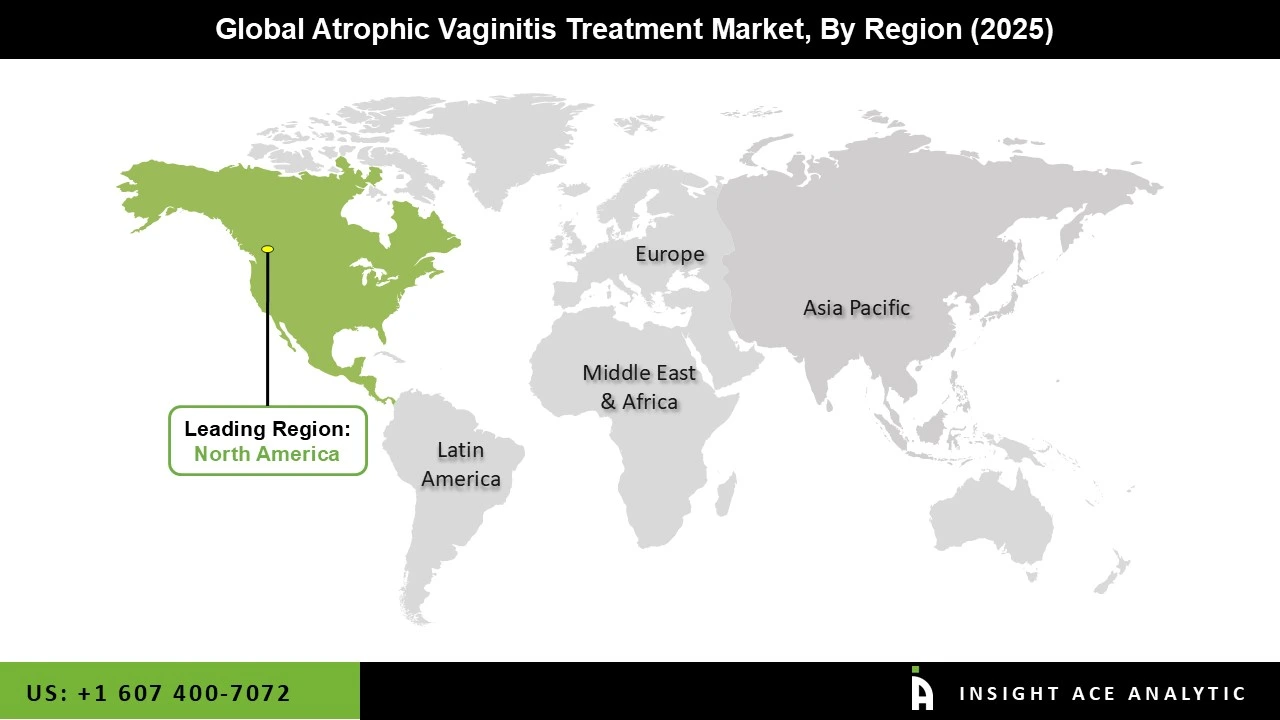
The Atrophic Vaginitis market was dominated by the North America region in 2025. The high incidence of atrophic vaginitis among postmenopausal women, along with sophisticated healthcare facilities and heightened awareness of women's health issues, are the main drivers of the region's expansion.
With large investments in research and development for cutting-edge treatment alternatives, the United States is a major market participant. Furthermore, the U.S. Department of Health and Human Services has started programs to enhance women's health, which will help the atrophic vaginitis market expand even more.
Atrophic Vaginitis Market Report Scope :
| Report Attribute | Specifications |
| Market size value in 2025 | USD xx Bn |
| Revenue forecast in 2035 | USD xx Bn |
| Growth Rate CAGR | CAGR of xx% from 2026 to 2035 |
| Quantitative Units | Representation of revenue in US$ Bn and CAGR from 2025 to 2035 |
| Historic Year | 2022 to 2025 |
| Forecast Year | 2026-2035 |
| Report Coverage | The forecast of revenue, the position of the company, the competitive market structure, growth prospects, and trends |
| Segments Covered | Treatment Type, Distribution Channel, Application, End-User and By Region |
| Regional Scope | North America; Europe; Asia Pacific; Latin America; Middle East & Africa |
| Country Scope | U.S.; Canada; U.K.; Germany; China; India; Japan; Brazil; Mexico; The UK; France; Italy; Spain; China; Japan; India; South Korea; Southeast Asia; South Korea; Southeast Asia |
| Competitive Landscape | Bausch Health Companies Inc., Pfizer Inc., TherapeuticsMD Inc., Mylan N.V., Allergan plc (AbbVie Inc.), Duchesnay USA, Novo Nordisk A/S, Merck & Co., Inc., Endoceutics Inc., Teva Pharmaceutical Industries Ltd. |
| Customization Scope | Free customization report with the procurement of the report, Modifications to the regional and segment scope. Geographic competitive landscape. |
| Pricing and Available Payment Methods | Explore pricing alternatives that are customized to your particular study requirements. |
Segmentation of Atrophic Vaginitis Market:
Atrophic Vaginitis Market By Treatment Type -
- Hormone Therapies
- Estrogen Therapy
- Combination Therapy
- Non-Hormonal Therapies
- Vaginal Moisturizers
- Lubricants
- Others
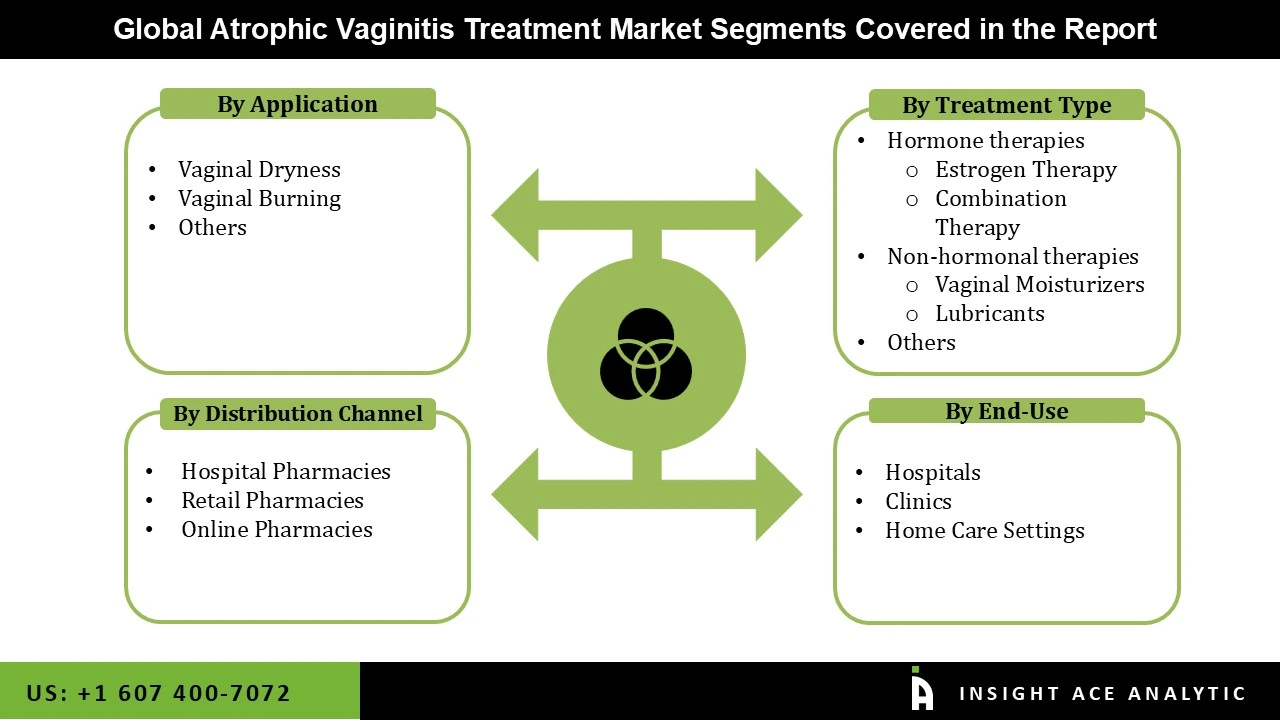
Atrophic Vaginitis Market By Distribution Channel -
- Hospital pharmacies
- Retail pharmacies
- Online pharmacies
Atrophic Vaginitis Market By Application -
- Vaginal Dryness
- Vaginal Burning
- Others
Atrophic Vaginitis Market By End-User -
- Hospitals
- Clinics
- Home care settings
Atrophic Vaginitis Market By Region-
- North America-
- The US
- Canada
- Europe-
- Germany
- The UK
- France
- Italy
- Spain
- Rest of Europe
- Asia-Pacific-
- China
- Japan
- India
- South Korea
- South East Asia
- Rest of Asia Pacific
- Latin America-
- Brazil
- Argentina
- Mexico
- Rest of Latin America
- Middle East & Africa-
- GCC Countries
- South Africa
- Rest of Middle East and Africa
Research Design and Approach
This study employed a multi-step, mixed-method research approach that integrates:
- Secondary research
- Primary research
- Data triangulation
- Hybrid top-down and bottom-up modelling
- Forecasting and scenario analysis
This approach ensures a balanced and validated understanding of both macro- and micro-level market factors influencing the market.
Secondary Research
Secondary research for this study involved the collection, review, and analysis of publicly available and paid data sources to build the initial fact base, understand historical market behaviour, identify data gaps, and refine the hypotheses for primary research.
Sources Consulted
Secondary data for the market study was gathered from multiple credible sources, including:
- Government databases, regulatory bodies, and public institutions
- International organizations (WHO, OECD, IMF, World Bank, etc.)
- Commercial and paid databases
- Industry associations, trade publications, and technical journals
- Company annual reports, investor presentations, press releases, and SEC filings
- Academic research papers, patents, and scientific literature
- Previous market research publications and syndicated reports
These sources were used to compile historical data, market volumes/prices, industry trends, technological developments, and competitive insights.

Primary Research
Primary research was conducted to validate secondary data, understand real-time market dynamics, capture price points and adoption trends, and verify the assumptions used in the market modelling.
Stakeholders Interviewed
Primary interviews for this study involved:
- Manufacturers and suppliers in the market value chain
- Distributors, channel partners, and integrators
- End-users / customers (e.g., hospitals, labs, enterprises, consumers, etc., depending on the market)
- Industry experts, technology specialists, consultants, and regulatory professionals
- Senior executives (CEOs, CTOs, VPs, Directors) and product managers
Interview Process
Interviews were conducted via:
- Structured and semi-structured questionnaires
- Telephonic and video interactions
- Email correspondences
- Expert consultation sessions
Primary insights were incorporated into demand modelling, pricing analysis, technology evaluation, and market share estimation.
Data Processing, Normalization, and Validation
All collected data were processed and normalized to ensure consistency and comparability across regions and time frames.
The data validation process included:
- Standardization of units (currency conversions, volume units, inflation adjustments)
- Cross-verification of data points across multiple secondary sources
- Normalization of inconsistent datasets
- Identification and resolution of data gaps
- Outlier detection and removal through algorithmic and manual checks
- Plausibility and coherence checks across segments and geographies
This ensured that the dataset used for modelling was clean, robust, and reliable.
Market Size Estimation and Data Triangulation
Bottom-Up Approach
The bottom-up approach involved aggregating segment-level data, such as:
- Company revenues
- Product-level sales
- Installed base/usage volumes
- Adoption and penetration rates
- Pricing analysis
This method was primarily used when detailed micro-level market data were available.

Top-Down Approach
The top-down approach used macro-level indicators:
- Parent market benchmarks
- Global/regional industry trends
- Economic indicators (GDP, demographics, spending patterns)
- Penetration and usage ratios
This approach was used for segments where granular data were limited or inconsistent.
Hybrid Triangulation Approach
To ensure accuracy, a triangulated hybrid model was used. This included:
- Reconciling top-down and bottom-up estimates
- Cross-checking revenues, volumes, and pricing assumptions
- Incorporating expert insights to validate segment splits and adoption rates
This multi-angle validation yielded the final market size.
Forecasting Framework and Scenario Modelling
Market forecasts were developed using a combination of time-series modelling, adoption curve analysis, and driver-based forecasting tools.
Forecasting Methods
- Time-series modelling
- S-curve and diffusion models (for emerging technologies)
- Driver-based forecasting (GDP, disposable income, adoption rates, regulatory changes)
- Price elasticity models
- Market maturity and lifecycle-based projections
Scenario Analysis
Given inherent uncertainties, three scenarios were constructed:
- Base-Case Scenario: Expected trajectory under current conditions
- Optimistic Scenario: High adoption, favourable regulation, strong economic tailwinds
- Conservative Scenario: Slow adoption, regulatory delays, economic constraints
Sensitivity testing was conducted on key variables, including pricing, demand elasticity, and regional adoption.
Request Customization
Add countries, segments, company profiles, or extend forecast — free 10% customization with purchase.
Customize This Report →Enquire Before Buying
Speak with our analyst team about scope, methodology, pricing, or deliverable formats.
Enquire Now →Frequently Asked Questions
Global Atrophic Vaginitis Market is likely to grow at a 3.2% CAGR during the forecast period for 2026 to 2035.
Bausch Health Companies Inc., Pfizer Inc., TherapeuticsMD Inc., Mylan N.V., Allergan plc (AbbVie Inc.), Duchesnay USA, Novo Nordisk A/S, Merck & Co., Inc., Endoceutics Inc., Teva Pharmaceutical Industries Ltd. and Others
Treatment Type, Distribution Channel, Application and End-User are the key segments of the Atrophic Vaginitis Market.
North America region is leading the Atrophic Vaginitis Market.