Where Data Meets the Deep: The Future of Precision Aquaculture
Precision aquaculture combines IoT sensors and predictive analytics to give fish farmers real-time visibility into water quality, feeding patterns, and stock health. Instead of relying on manual checks and guesswork, operators can now make informed decisions based on accurate, continuous data. Smart sensors monitor key parameters such as temperature, oxygen levels, pH, and salinity, while predictive analytics turn this information into actionable insights.
This allows farms to anticipate potential issues, optimize feed usage, reduce losses, and improve overall yield. The result is healthier aquatic life, lower operational costs, and more sustainable farming practices.
In this blog, we will explore the rise of precision aquaculture, highlighting the role of IoT sensors, predictive analytics, and real-time monitoring systems, while discussing the benefits for fish farmers, challenges for technology adoption, and the future outlook of data-driven, sustainable, and efficient aquaculture practices.
Introduction to IoT Sensors & Predictive Analytics for Precision Aquaculture Market
The precision aquaculture market is undergoing a major transformation with the integration of IoT sensors, predictive analytics, and artificial intelligence (AI). These technologies enable real-time monitoring of water quality, feeding patterns, and stock health, helping fish farmers make smarter decisions, optimize yields, and reduce operational costs. AI enhances predictive analytics by identifying patterns, forecasting potential risks, and automating key farm operations, ensuring efficiency and sustainability. As global demand for seafood rises, AI-driven, IoT-enabled solutions are becoming essential for modern aquaculture, driving innovation, profitability, and environmentally responsible fish farming practices.
How is AI Revolutionizing Precision Aquaculture?
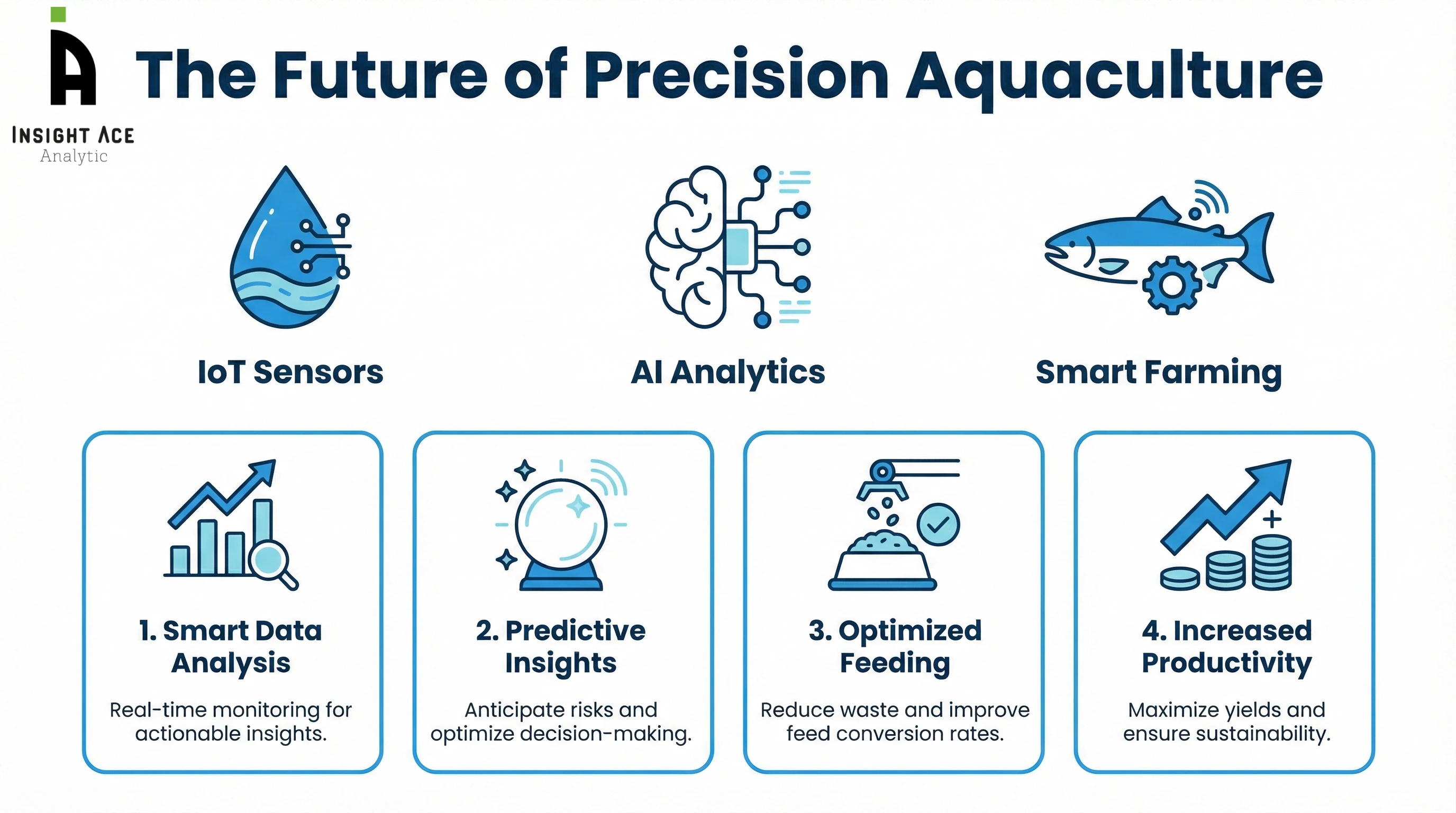
- Smart Data Analysis: AI processes massive data from IoT sensors, including water temperature, oxygen levels, pH, salinity, and fish behavior.
- Predictive Insights: It forecasts potential risks like disease outbreaks and environmental changes before they impact fish health.
- Optimized Feeding: AI helps determine the right feeding schedules and quantities, reducing waste and improving growth rates.
- Increased Productivity: By turning raw data into actionable intelligence, AI enhances overall farm efficiency and yield.
Benefits of IoT Sensors & Predictive Analytics in Precision Aquaculture
- Real-Time Monitoring: Tracks water quality, fish behavior, and feeding patterns continuously.
- Predictive Risk Management: Anticipates disease outbreaks, environmental changes, and other potential issues before they affect stock.
- Optimized Feeding: Ensures the right feed amount at the right time, reducing waste and improving growth.
- Enhanced Productivity: Data-driven insights help increase yield and maintain consistent quality.
- Resource Efficiency: Minimizes water, energy, and feed usage, promoting cost-effective operations.
- Sustainability: Supports environmentally responsible aquaculture by reducing waste and ecological impact.
- Profitability Boost: Healthier fish, higher yields, and optimized operations lead to improved financial performance.
Challenges in Precision Aquaculture with IoT & Predictive Analytics
- High Initial Investment: Setting up IoT devices and analytics systems can be costly.
- Technical Complexity: Installation, calibration, and maintenance of sensors require expertise.
- Data Management: Handling and analyzing large volumes of real-time data can be challenging.
- Connectivity Issues: Remote or offshore farms may face network and real-time monitoring problems.
- Skilled Workforce Requirement: Operating and interpreting advanced analytics needs trained personnel.
Leading Players for IoT Sensors & Predictive Analytics for Precision Aquaculture
- AKVA group ASA—smart feeding systems, sensors, underwater cameras, biomass estimation, and aquaculture management software.
- ScaleAQ AS – Precision feeding, biomass measurement, lice detection cameras, and digital farm control systems.
- Innovasea Systems, Inc. – IoT sensors, water-quality monitoring, underwater cameras, and real-time aquaculture analytics.
- Aquabyte, Inc. – AI-based biomass estimation, sea-lice detection, and predictive analytics platforms.
- Eruvaka Technologies Pvt. Ltd.—IoT pond sensors, automated feeders, shrimp analytics, and farm management platforms.
- TerraConnect, Inc. – Smart aquaculture sensors, telemetry systems, and cloud-based predictive analytics.
- Libelium Comunicaciones Distribuidas S.L.—Industrial IoT sensor hardware and wireless monitoring platforms for aquaculture.
- Ellenex—AI-enabled aquaculture monitoring sensors and data analytics solutions.
- XpertSea Solutions Inc. – Computer-vision biomass estimation and digital aquaculture management software.
- CageEye AS – Underwater camera-based biomass estimation and feeding optimization systems.
Future Outlook:
- Advanced Insights & Connectivity: Future analytics platforms, combined with innovations in LPWAN, 5G, and satellite communications, will provide deeper, actionable insights and enable real-time monitoring even in remote or offshore farms, helping farmers anticipate risks, optimize feeding, and boost yields.
- North America leads in precision aquaculture due to advanced digital infrastructure, strong investments, and a skilled workforce. High consumer demand for sustainable seafood and supportive innovation-friendly policies further drive the adoption of IoT sensors and predictive analytics in the region.
Conclusion:
The IoT sensors and predictive analytics industry is reshaping aquaculture by enabling proactive farm management and early detection of potential issues. These technologies help optimize feed usage, maintain ideal water conditions, and improve fish health, reducing losses and operational costs. As adoption expands globally, precision aquaculture is set to become more scalable, resilient, and environmentally responsible, creating smarter farms and a sustainable seafood supply for the future.