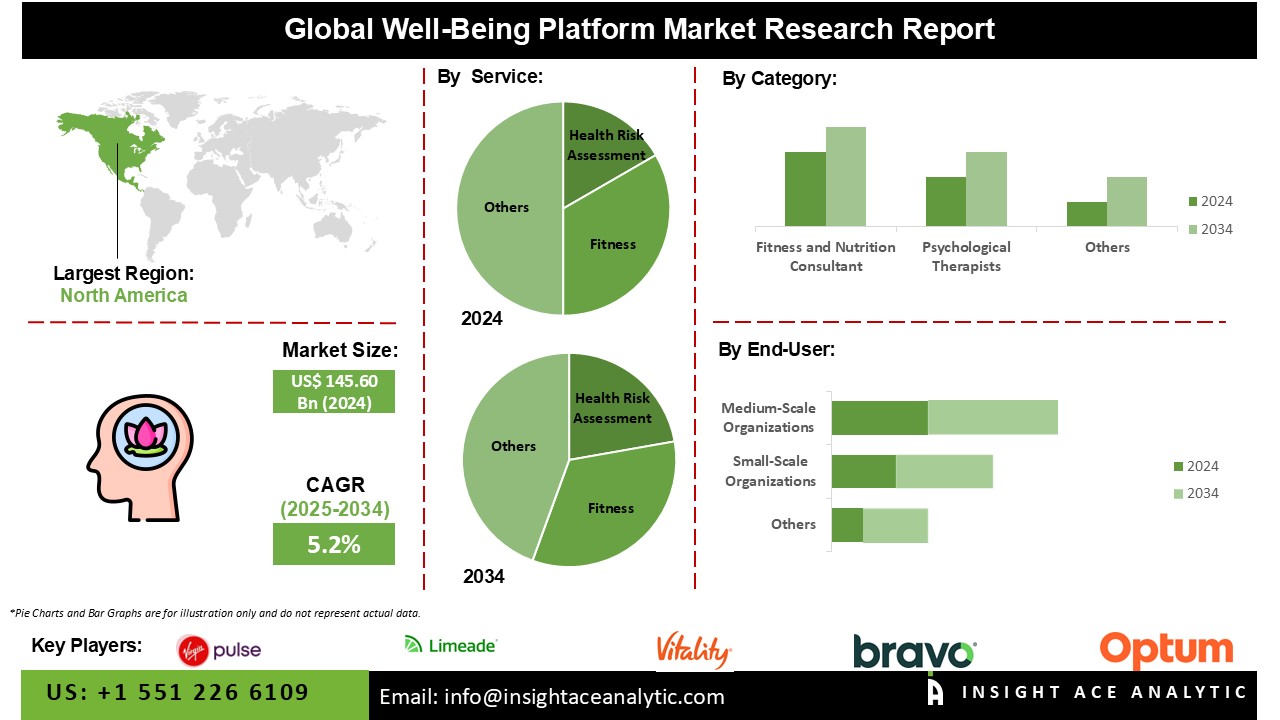
Well-Being Platform Market Size is valued at USD 145.60 Bn in 2024 and is predicted to reach USD 239.40 Bn by the year 2034 at a 5.2% CAGR during the forecast period for 2025-2034.
A well-being platform is often an online or digital platform that provides a variety of tools, resources, and services targeted at improving and promoting overall well-being and mental health. These platforms frequently include a variety of information and services designed to assist users in improving their physical health, mental health, emotional well-being, and lifestyle habits.
Growing education of mental health and well-being has prompted individuals and organizations to seek answers to mental health issues. This trend has increased the demand for well-being platforms, including stress management, anxiety reduction, and overall mental wellness information and tools.
However, the pandemic had a detrimental economic impact, producing financial difficulties for many people and negatively impacting their mental health. To address mental health issues, employee healthcare providers used virtual approaches to give services such as counselling sessions with health coaches and psychologists.
Competitive Landscape:
Some Major Key Players In The Well-Being Platform Market:
- Virgin Pulse Inc
- Limeade Inc
- Optum Inc
- Vitality Group International Inc
- Bravo Wellness LLC
- Sonic Boom Wellness LLC
- WebMD Health Services Group Inc
- Fitbit LLC
- Asset Health Inc
- Healthcheck360
- Marquee Health LLC
- Wellright Inc
- Wellworks for You
- Wellable LLC
- Wellness 360 Technologies Inc
- com LLC
- CHC Well-being Inc.
Market Segmentation:
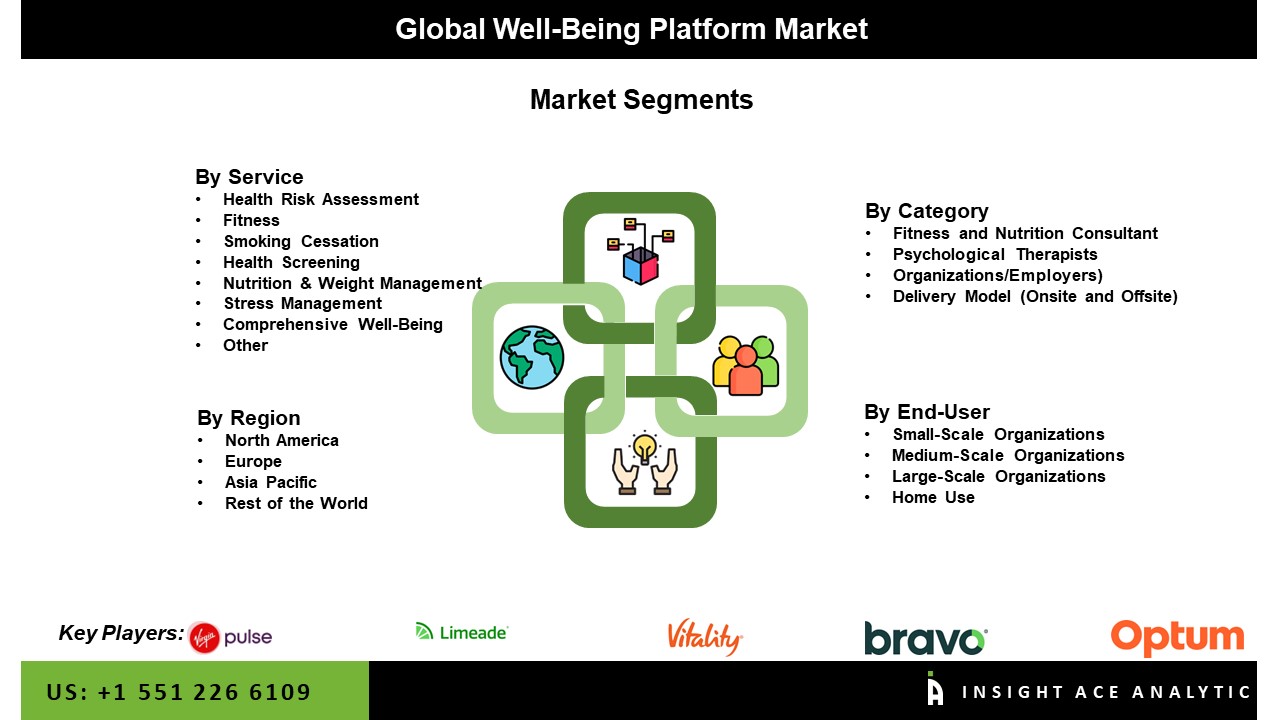
The Well-Being Platform Market is segmented on the basis of service, category, delivery mode, and end-user. Based on service, the market is segmented as health risk assessment, fitness, smoking cessation, health screening, nutrition & weight management, stress management, comprehensive well-being, and others. The category segment includes fitness & nutrition consultants, psychological therapists, and organizations/employers. According to delivery mode, the market is segmented into on-site and off-site. The end-user segment includes small-scale organizations, medium-scale organizations, large-scale organizations, and home care.
Based On Service, The Comprehensive Well-Being Segment Is Accounted As A Major Contributor In The Well-Being Platform Market
The comprehensive well-being category is expected to hold a major share of the global Well-Being Platform Market in 2022. A comprehensive wellness program is an organized and integrated method used by organizations to boost their employees' physical, mental, and emotional health. Such initiatives foster a positive work atmosphere, which boosts productivity, job satisfaction, and employee engagement. Comprehensive wellness programs assist employees in achieving comprehensive well-being by addressing all components of wellness rather than focusing on one or two.
This comprehensive strategy results in higher employee engagement and more effective wellness programs. Comprehensive corporate wellness programs are becoming more common as businesses recognize the importance of investing in their employees' health and happiness. They strive to enhance productivity, retain employees, minimize absenteeism, and establish a positive organizational culture, all of which contribute to a successful work environment by increasing employee well-being.
Organizations/Employers Segment To Witness Growth At A Rapid Rate
The organizations/employers segment is projected to grow at a rapid rate in the global Well-Being Platform Market. The service providers provide both in-house and outsourced health management services to large and small businesses. Employees with unhealthy behaviours contribute to the illness burden, resulting in lost productivity and absenteeism, forcing employers to pay additional health insurance rates for them. Employers implement wellness programs to decrease the financial burden imposed by sick employees' health difficulties.
In The Region, The North American Well-Being Platform Market Holds A Significant Revenue Share
The North American Well-Being Platform Market is expected to register the maximum market share in revenue in the near future. The increasing prevalence of chronic diseases, long working hours, and other factors are driving the growth of the well-being platform market in North America. Furthermore, the implementation of an effective corporate wellness program at the workplace by employers is projected to provide growth prospects for the region's well-being platform market. Employers with a larger staff provide more complex wellness plans.
Furthermore, the significant dominance of the office culture influences the region's business owners to incorporate such services to support their employees' health. During the projection period, Asia Pacific is expected to grow at a rapid pace. Corporate employee health programs are essential in the region because of the growing working population and increased awareness of employee health management.
Well-Being Platform Market Report Scope:
|
Report Attribute
|
Specifications
|
|
Market size value in 2024
|
USD 145.60 Bn
|
|
Revenue forecast in 2034
|
USD 239.40 Bn
|
|
Growth rate CAGR
|
CAGR of 5.2% from 2025 to 2034
|
|
Quantitative units
|
Representation of revenue in US$ Bn and CAGR from 2025 to 2034
|
|
Historic Year
|
2021 to 2024
|
|
Forecast Year
|
2025-2034
|
|
Report coverage
|
The forecast of revenue, the position of the company, the competitive market structure, growth prospects, and trends
|
|
Segments covered
|
By Service, Category, Delivery Mode, End-User
|
|
Regional scope
|
North America; Europe; Asia Pacific; Latin America; Middle East & Africa
|
|
Country scope
|
U.S.; Canada; U.K.; Germany; China; India; Japan; Brazil; Mexico ;The UK; France; Italy; Spain; South Korea; South East Asia
|
|
Competitive Landscape
|
Virgin Pulse Inc., Limeade Inc., Optum Inc., Vitality Group International Inc., Bravo Wellness LLC, Sonic Boom Wellness LLC, WebMD Health Services Group Inc., Fitbit LLC, Asset Health Inc, Healthcheck360, Marquee Health LLC, Wellright Inc, Wellworks for You, Wellable LLC, Wellness 360 Technologies Inc, WellSteps.com LLC, and CHC Wellbeing Inc.
|
|
Customization scope
|
Free customization report with the procurement of the report, Modifications to the regional and segment scope. Particular Geographic competitive landscape.
|
|
Pricing and available payment methods
|
Explore pricing alternatives that are customized to your particular study requirements.
|
Segmentation of Well-Being Platform Market-
Well-Being Platform Market By Service-
- Health Risk Assessment
- Fitness
- Smoking Cessation
- Health Screening
- Nutrition & Weight Management
- Stress management
- Comprehensive Well-being
- Others
Well-Being Platform Market By Category-
- Fitness & Nutrition Consultant
- Psychological Therapist
- Organizations/Employers
Well-Being Platform Market By Delivery Mode-
Well-Being Platform Market By End-User-
- Small Scale Organizations
- Medium Scale Organizations
- Large Scale Organizations
- Home Care
By Region-
North America-
Europe-
- Germany
- The UK
- France
- Italy
- Spain
- Rest of Europe
Asia-Pacific-
- China
- Japan
- India
- South Korea
- South East Asia
- Rest of Asia Pacific
Latin America-
- Brazil
- Argentina
- Mexico
- Rest of Latin America
Middle East & Africa-
- GCC Countries
- South Africa
- Rest of Middle East and Africa