Global Virtual Reality Exposure Therapy Market is expected to grow at a 34.0% CAGR during the forecast period for 2025-2034.
Virtual reality exposure (VRE) therapy is a newer and more immersive type of exposure treatment in which stimuli are provided to the patient via a computer-based display. VRE is a therapist-assisted controlled form of human-computer interaction that allows the participant to actively participate in a three-dimensional computer environment via a head-mounted show that includes video screens, earphones, and a head-tracking device.
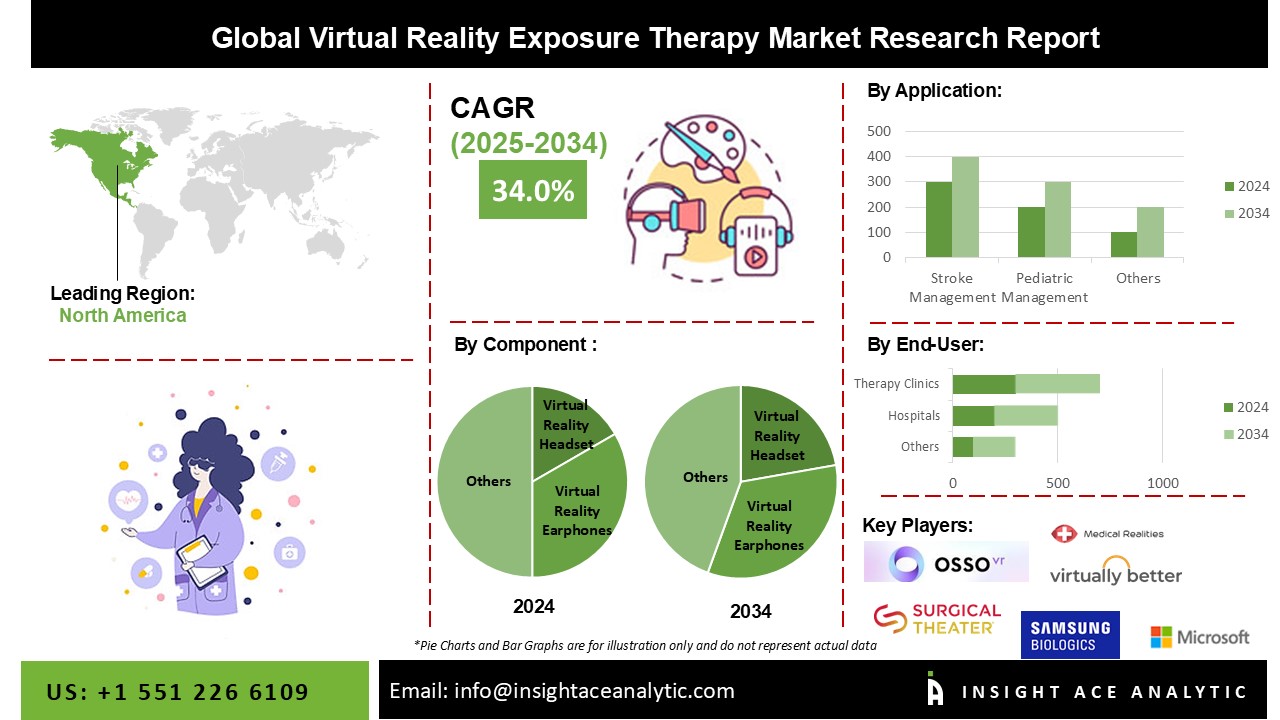
A virtual environment is built for the patient to visualize moving graphics and objects using hardware and software components. Such methods are carried out for various types of therapies. Such technology has been discovered to be beneficial in the treatment of psychiatric diseases, addiction therapy, post-cardiac stroke therapy, surgery, and so on. As a result, the rising prevalence of mental problems, cardiac surgery, and stroke will drive the market to a large extent. However, during the anticipated period, expansion in this market is anticipated to be constrained by elements like high costs and a lack of funding in underdeveloped nations. Lack of understanding of digital diabetes management in underdeveloped nations is impeding market expansion.
Market Segmentation:
The Virtual Reality Exposure Therapy market is segmented on the basis of components, Applications and end-users. Based on Components, the market is segmented into Virtual Reality Headset, Virtual Reality Earphones, Virtual Reality Software & Modules, Virtual Reality Workstation, Virtual Reality Position Tracker/ Sensors, Biofeedback Monitor and Other Components. Based on Application, the market is categorized into Mental Disorder & Addiction Management, Stroke Management, Pediatric Management, Education & Medical Training and Other Application. Based on End-use, the market is segmented into Hospitals, Therapy Clinics, & Surgical Centers, Research & Training Organizations and Other End Users.
Based On Components, The Virtual Reality Headset Segment Is Accounted As A Significant Contributor In The Virtual Reality Exposure Therapy Market.
The market is divided into components such as Virtual Reality Headset, Virtual Reality Earphones, Virtual Reality Software & Modules, Virtual Reality Workstation, Virtual Reality Position Tracker/ Sensors, Biofeedback Monitor and Other Components. The virtual reality headset will have the biggest market share and will be the fastest expanding market segment. VR headsets are an important aspect of therapy because they provide a realistic experience using computerized technology in three dimensions (3D). The introduction of advanced, low-cost, and wireless VR headsets will increase demand for VR headsets in the near future. Furthermore, enhancing the interoperability and convenience of the use of VR headsets with smartphone apps for severe mental disease therapy will aid market expansion.
The Mental Disorder & Addiction Management Segment Witnessed Growth At A Rapid Rate.
The virtual reality exposure therapy market is divided into several applications, including Mental Disorder & Addiction Management, Stroke Management, Pediatric Management, Education & Medical Training and Other Application. The mental disorder and addiction management category will have the most significant market share and will also be the fastest expanding. Several research investigations on the use of VR therapy for mental health have revealed that certain disorders such as phobias and PTSD will be more effective than standard drug administration treatment. Furthermore, the rising frequency of mental health illnesses among the young population will drive market expansion in this area. There are 44 million people worldwide who suffer from some form of mental illness.
The North America Virtual Reality Exposure Therapy Market Holds A Significant Revenue Share In The Region.
The North America Virtual Reality Exposure Therapy market is expected to grow significantly, with Canada and the United States contributing the most. The key reason for this market's domination is patient and healthcare staff's knowledge of the benefits of virtual reality treatment for mental illnesses and other disorders.
The Increased Government Investment In Healthcare Infrastructure Is Another Primary Driver Of Market Development In This Area.
Substantial investments are being made in the region to incorporate new technologies, such as immersive technology, into medical treatments. This is anticipated to spur market expansion across the area. Similarly, increased healthcare R&D spending will boost the regional market growth.
Competitive Landscape
Some major key players in the Virtual Reality Exposure Therapy Market:
- Google,
- Proprio,
- Psious,
- Microsoft,
- Mindmaze,
- Samsung Electronics,
- ImmersiveTouch,
- Virtually Better,
- Accelerated Care Plus Corporation,
- Imotions,
- Firsthand Technology,
- Atheer, Medical Realities,
- Oculus VR, Echopixel,
- Osso VR,
- Surgical Theatre,
- Augmedic, and Truevision among others.
Other companies include:
- Vicarious Surgical,
- Health Scholars,
- Oxford VR,
- Limbix,
- KineQuantum,
- Vivid Vision,
- Karuna Labs,
- Fundamentalvar,
- Sentiar,
- Augmented Intelligence,
- Reducept,
- Neuro Rehab VR,
- JOGO Health,
- Oncomfort,
- Virtualis,
- Simx VR,
- FeelsGood,
- Meta Medical VR
The Virtual Reality Exposure Therapy Market Report Scope
|
Report Attribute
|
Specifications
|
|
Growth Rate CAGR
|
CAGR of 34.0% from 2025 to 2034
|
|
Quantitative Units
|
Representation of revenue in US$ Mn,and CAGR from 2025 to 2034
|
|
Historic Year
|
2021 to 2024
|
|
Forecast Year
|
2025-2034
|
|
Report Coverage
|
The forecast of revenue, the position of the company, the competitive market structure, growth prospects, and trends
|
|
Segments Covered
|
By Components, By Application, By End-User
|
|
Regional Scope
|
North America; Europe; Asia Pacific; Latin America; Middle East & Africa
|
|
Country Scope
|
U.S.; Canada; U.K.; Germany; China; India; Japan; Brazil; Mexico ;The UK; France; Italy; Spain; China; Japan; India; South Korea; South East Asia; South Korea; South East Asia
|
|
Competitive Landscape
|
Google, Proprio, Psious, Microsoft, Mindmaze, Samsung Electronics, ImmersiveTouch, Virtually Better, Accelerated Care Plus Corporation, Imotions, Firsthand Technology, Atheer, Medical Realities, Oculus VR, Echopixel, Osso VR, Surgical Theatre, Augmedic, and Truevision among others. (Other companies include: Vicarious Surgical, Health Scholars, Oxford VR, Limbix, KineQuantum, Vivid Vision, Karuna Labs, Fundamentalvar, Sentiar, Augmented Intelligence, Reducept, Neuro Rehab VR, JOGO Health, Oncomfort, Virtualis, Simx VR, FeelsGood, and Meta Medical VR)
|
|
Customization Scope
|
Free customization report with the procurement of the report, Modifications to the regional and segment scope. Particular Geographic competitive landscape.
|
|
Pricing And Available Payment Methods
|
Explore pricing alternatives that are customized to your particular study requirements.
|
Segmentation of Virtual Reality Exposure Therapy Market-
By Components
- Virtual Reality Headset
- Virtual Reality Earphones
- Virtual Reality Software & Modules
- Virtual Reality Workstation
- Virtual Reality Position Tracker/ Sensors
- Biofeedback Monitor
- Other Components
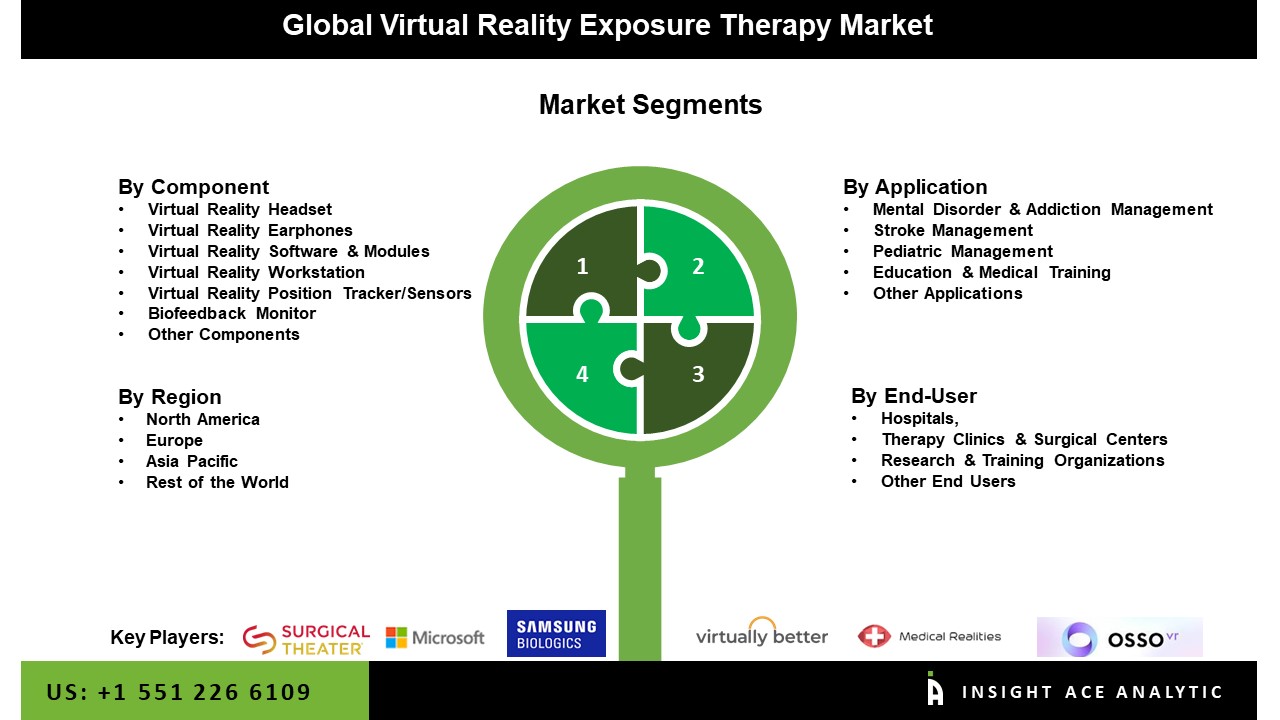
By Application
- Mental Disorder & Addiction Management
- Stroke Management
- Pediatric Management
- Education & Medical Training
- Other Applications
By End User
- Hospitals
- Therapy Clinics & Surgical Centers
- Research & Training Organizations
- Other End Users
By Region-
North America-
Europe-
- Germany
- The UK
- France
- Italy
- Spain
- Rest of Europe
Asia-Pacific-
- China
- Japan
- India
- South Korea
- South East Asia
- Rest of Asia Pacific
Latin America-
- Brazil
- Mexico
- Argentina
- Rest of Latin America
Middle East & Africa-
- GCC Countries
- South Africa
- Rest of Middle East and Africa