The Solid Organ Transplantation (SOT) Market Size is predicted to grow at a 6.91% CAGR during the forecast period for 2024-2031.

The solid organ transplantation (SOT) market encompasses all aspects related to organ transplants, from surgeries and immunosuppressive medications to medical devices and healthcare services. Solid organ transplantation works with an advantage for patients suffering from end-stage kidney, pancreas, small intestine, heart, liver, and lung diseases. Although it is not a process that improves survival, certain quality-of-life improvements are realized with vascular composite allograft and uterus transplantation.
The Solid Organ Transplantation (SOT) market focuses on the development and commercialization of treatments and diagnostics to prevent and manage organ rejection in transplant patients. Driven by increasing transplantation procedures, advancements in immunosuppressive therapies, and rising awareness about organ donation, the market is witnessing substantial growth. Key players are investing in research and development to introduce innovative solutions that enhance graft survival and improve patient outcomes. Stringent regulatory frameworks and the need for personalized medicine approaches also influence the market. Continuous advancements in biotechnology and collaboration between healthcare providers and pharmaceutical companies are expected to drive future growth in the SOT market.
However, COVID-19 has also caused a drop in organ transplant surgery enrollment globally. The reduction in the number of transplantation and organ donation procedures is mostly because of factors such as engaged surgeons, unavailability of resources, lockdown, and travel restrictions. Patients having positive reports for COVID-19 were restricted from donating organs because of the possibility of infection. Additionally, another major concern prompting transplantation operations was the possibility of immunosuppressant drug interactions with COVID-19 therapy agents, which had led to a substantial number of organ failures from graft donors.
Competitive Landscape
Some Major Key Players In The Solid Organ Transplantation (SOT) Market:
- Teva Pharmaceutical Industries Ltd.
- Mylan N.V
- Johnsons & Johnsons Services Inc.
- Hoffman-La Roche Ltd.
- Lilly
- Merck & Co., Inc.
- Aurobindo Pharma
- Bristol-Myers Squibb Company
- GSK plc
- Ascendis Pharma A/S
- LEO Pharma A/S
- Genentech, Inc.
- Celltrion Inc.
- CAREDX
- Glycorex Transplantation AB
- DaVita Inc.
- Other Market Players
Market Segmentation:
The Solid Organ Transplantation (SOT) Market is segmented on the basis of organ, treatment, and end users. Based on organs, the market is segmented into renal, liver, heart, lung, pancreatic, and intestinal transplantation. By treatment, the market is segmented into Immunosuppressive, Monoclonal Antibodies, and Other treatments. On the basis of end users, the segmentation includes hospitals, home care, special transplant centres, and others.
Based On Treatment, The Immunosuppressive Segment Is A Major Contributor To The Solid Organ Transplantation (SOT) Market.
The immunosuppressive segment of the Solid Organ Transplantation (SOT) market is crucial for preventing and managing organ rejection. This segment includes a variety of drugs, such as calcineurin inhibitors, mTOR inhibitors, antiproliferative agents, and corticosteroids, which help suppress the immune system to prevent it from attacking the transplanted organ. With the increasing number of transplant procedures and advancements in drug formulations, this segment is experiencing significant growth. Innovations aimed at reducing side effects and improving long-term outcomes are propelling market expansion. Additionally, ongoing research as well as development efforts are focused on creating more effective and targeted immunosuppressive therapies.
Hospitals & Transplant Centres Segment Witness Growth At A Rapid Rate.
Hospitals play an important role in organ transplantation. They provide the necessary infrastructure and medical expertise to perform transplant surgeries. Transplantation requires specialized units within hospitals, referred to as transplant centres. These centres have dedicated healthcare professionals who work together to provide instant care to transplant patients. These centres often have specific expertise in various types of transplants, such as heart, liver, kidney, lung, or pancreas.
In The Region, The North American Solid Organ Transplantation (SOT) Market Holds A Significant Revenue Share.
The North American Solid Organ Transplantation (SOT) Market is estimated to have seen the highest market share in the near future, attributed to the higher disease prevalence, advanced healthcare infrastructure, and increased research funding. Growing awareness, early diagnosis, and the availability of innovative therapies are also propelling market growth, ensuring better patient care and outcomes. Moreover, the region has a well-established network of hospitals, research institutions, and pharmaceutical companies that contribute to advancements in diagnosis and treatment with a strong healthcare infrastructure, advanced treatment options, and a high prevalence of transplant cases. Asia Pacific is estimated to have rapid growth in the global Solid Organ Transplantation (SOT) Market due to growing concerns about rapid industrialization, government initiatives, and increasing funding in various industries.
Recent Developments:
- In July 2021, The U.S. Food and Drug Administration has granted approval for a novel application of Prograf (tacrolimus) based on non-interventional research that offers real-world proof of its effectiveness. The FDA has authorized the use of Prograf, in conjunction with other immunosuppressant medications, to prevent the rejection of transplanted lungs in both adult and pediatric patients.
Solid Organ Transplantation (SOT) Market Report Scope
|
Report Attribute
|
Specifications
|
|
Growth Rate CAGR
|
CAGR of 6.91% from 2024 to 2031
|
|
Quantitative Units
|
Representation of revenue in US$ Bn and CAGR from 2024 to 2031
|
|
Historic Year
|
2019 to 2023
|
|
Forecast Year
|
2024-2031
|
|
Report Coverage
|
The forecast of revenue, the position of the company, the competitive market structure, growth prospects, and trends
|
|
Segments Covered
|
By Organ, Treatment, End-User
|
|
Regional Scope
|
North America; Europe; Asia Pacific; Latin America; Middle East & Africa
|
|
Country Scope
|
U.S.; Canada; U.K.; Germany; China; India; Japan; Brazil; Mexico; France; Italy; Spain; South East Asia; South Korea
|
|
Competitive Landscape
|
Teva Pharmaceutical Industries Ltd, Mylan N.V, Johnsons & Johnsons Services Inc, F. Hoffman-La Roche Ltd., Lilly, Merck & Co., Inc., Aurobindo Pharma, Bristol-Myers Squibb Company, GSK plc, Ascendis Pharma A/S, LEO Pharma A/S, Genentech, Inc, Celltrion Inc and Other Market Players
|
|
Customization Scope
|
Free customization report with the procurement of the report and modifications to the regional and segment scope. Particular Geographic competitive landscape.
|
|
Pricing And Available Payment Methods
|
Explore pricing alternatives that are customized to your particular study requirements.
|
Segmentation of Solid Organ Transplantation (SOT) Market-
Solid Organ Transplantation (SOT) MarketBy Organ-
- Renal
- Liver
- Heart
- Lung
- Pancreatic
- Intestinal Transplantation
- Others
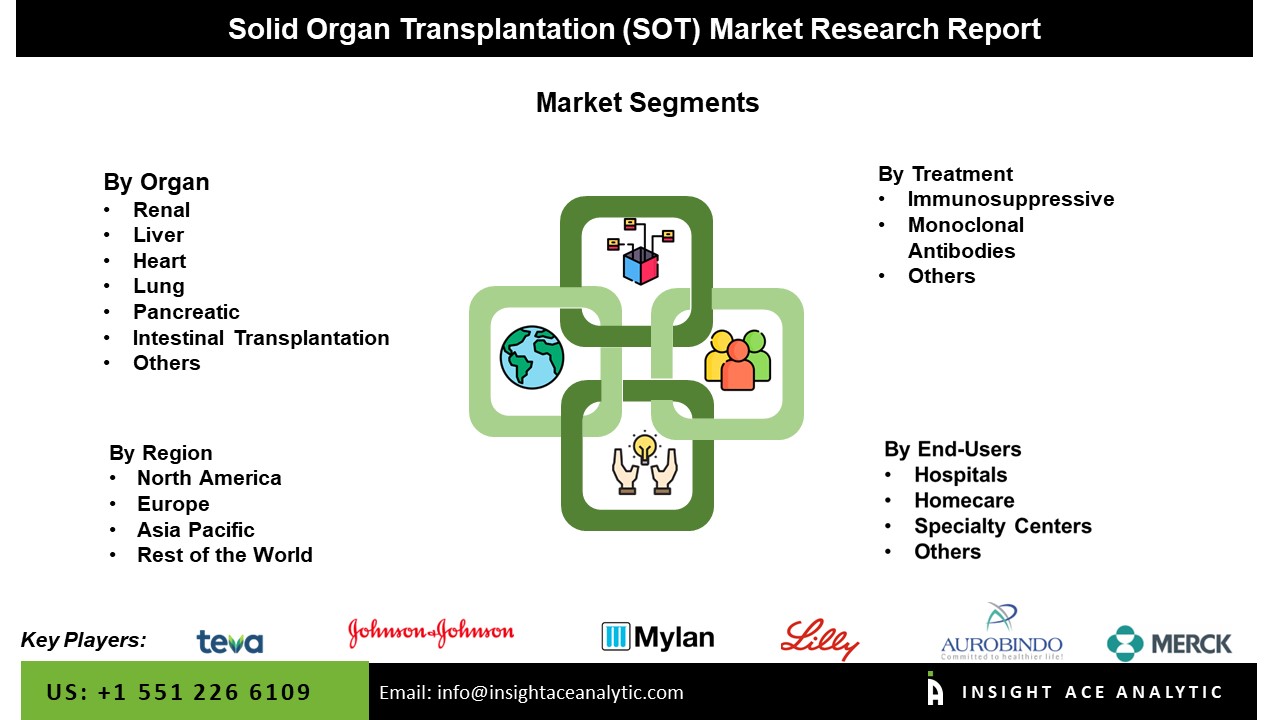
Solid Organ Transplantation (SOT) MarketBy Treatment-
- Immunosuppressive
- Monoclonal Antibodies
- Others
Solid Organ Transplantation (SOT) MarketBy End User-
- Hospitals
- Special Transplant Centers
- Homecare
- Others
Solid Organ Transplantation (SOT) MarketBy Region-
North America-
Europe-
- Germany
- The UK
- France
- Italy
- Spain
- Rest of Europe
Asia-Pacific-
- China
- Japan
- India
- South Korea
- South East Asia
- Rest of Asia Pacific
Latin America-
- Brazil
- Argentina
- Rest of Latin America
Middle East & Africa-
- GCC Countries
- South Africa
- Rest of Middle East and Africa