Global Smart Vineyard Management Market Size is valued at USD 1.5 Bn in 2024 and is predicted to reach USD 4.0 Bn by the year 2034 at a 10.1% CAGR during the forecast period for 2025-2034.
Viniculturists can efficiently monitor various vineyard operations, such as vineyard layout, grape harvesting, and plantation upkeep, by using software created exclusively for vineyard management. This is achieved by keeping track of tasks, including mowing, insect control, weed control, and more. Notable trends in the sector are having a direct impact on its dynamics. One of the key factors contributing to the growth of the smart vineyard management market is the rising demand for and adoption of software as a Service (SaaS)-based solutions.

Moreover, major players in the industry are investing in research and development to enhance their technological capabilities, fostering innovation in food technology and creating lucrative growth opportunities for the smart vineyard management market. Additionally, the overall expansion of the food technology industry fuels the demand for smart vineyard management, especially when advanced IT solutions are integrated into this sector.
Competitive Landscape:
Some of the Smart Vineyard Management market players are:
- PrecisionHawk, Inc
- SureHarvest Services, LLC
- TracMap Limited
- YANMAR HOLDINGS CO., LTD.
- Trimble Inc.
- AGRIVI Ltd.
- AHA Viticulture
- VineView
- TeeJet Technologies
- Elmibit d.o.o.
Market Segmentation:
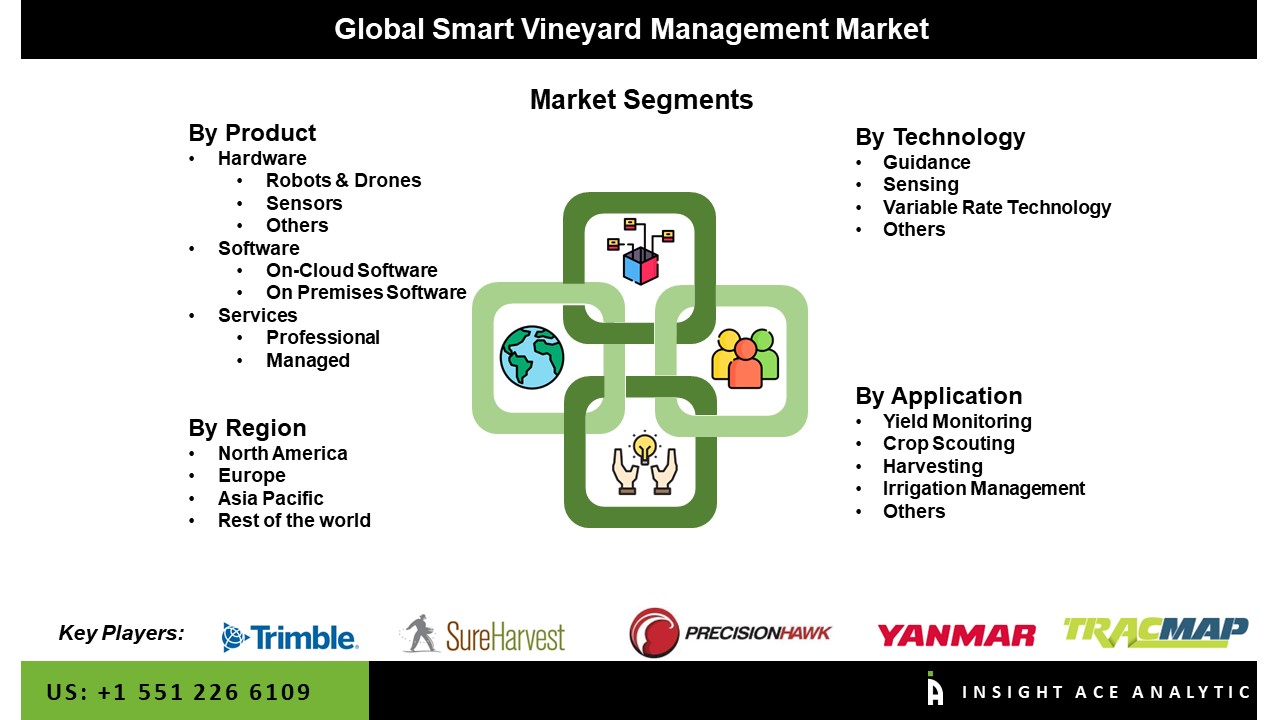
The smart vineyard management market is segmented based on product, technology and application. Based on product, the smart vineyard management market is divided into hardware, software and services. By technology, the market is segmented into guidance, sensing, variable rate technology and others. By application, the market is segmented into yield monitoring, crop scouting, harvesting, irrigation management, etc.
Based On Product, The Hardware Segment Is A Major Contributor To The Smart Vineyard Management Market
The hardware category will hold a major share of the global smart vineyard management market in 2022. Hardware products are essential for enabling automated and effective vineyard operations. These gadgets gather and examine weather information like temperature, humidity, precipitation, and wind speed. Weather stations offer useful data for vineyard management, enabling growers to decide when to irrigate their vineyards, avoid disease, and harvest their crops. This ecosystem of hardware and software technologies, known as "Smart Vineyard Management," enables viticulturists to optimize vineyard operations and raise output and quality standards generally.
Sensing Segment Witness Growth At A Rapid Rate
The sensing segment is projected to grow rapidly in the global smart vineyard management market. Sensing technology is essential to the Smart Vineyard Management market because it offers insightful data that helps to maximize vineyard operations.
The vineyard has remote sensors to gather information on various environmental factors. Temperature, humidity, solar radiation, wind speed, and rainfall are just a few of the variables that these sensors can monitor. These sensors find and monitor illnesses and pests that could harm vineyard health. Pheromone traps, insect traps, and disease-specific sensors are a few examples. The growth of diseases or the presence of pests can be continuously monitored by viticulturists, who can then take prompt, focused action to avoid or reduce vineyard damage.
The North America Smart Vineyard Management Market Holds A Significant Regional Revenue Share
The North America smart vineyard management market is expected to register the highest market share and has a significant concentration of leading industry competitors. Due to the rising need for better vineyard productivity, quality, and sustainability, the industry is experiencing continuous expansion. In the agriculture industry, particularly vineyard management, North America is a center of technological innovation.
Startups, digital firms, and academic institutions in the area are constantly creating and implementing new technologies to enhance vineyard operations and efficiency. These technologies include AI-driven analytics, drone-based monitoring, robots, and automation systems. In addition, the Asia Pacific is projected to grow rapidly in the global smart vineyard management market.
The Asia Pacific region has a significant presence in the global wine industry, with countries such as China, Australia, and New Zealand being major wine producers. This creates a conducive environment for adopting smart vineyard management solutions to enhance wine production productivity, quality, and sustainability. The awareness and adoption of smart vineyard management technologies are steadily increasing in Asia. Vineyard owners recognize the benefits of digital solutions in optimizing vineyard operations, improving yield, and ensuring efficient resource management.
Smart Vineyard Management Market Report Scope:
|
Report Attribute
|
Specifications
|
|
Market Size Value In 2024
|
USD 1.5 Bn
|
|
Revenue Forecast In 2034
|
USD 4.0 Bn
|
|
Growth Rate CAGR
|
CAGR of 10.1% from 2025 to 2034
|
|
Quantitative Units
|
Representation of revenue in US$ Bn and CAGR from 2025 to 2034
|
|
Historic Year
|
2021 to 2024
|
|
Forecast Year
|
2025-2034
|
|
Report Coverage
|
The forecast of revenue, the position of the company, the competitive market structure, growth prospects, and trends
|
|
Segments Covered
|
Product, Technology And Application
|
|
Regional Scope
|
North America; Europe; Asia Pacific; Latin America; Middle East & Africa
|
|
Country Scope
|
U.S.; Canada; U.K.; Germany; China; India; Japan; Brazil; Mexico; The UK; France; Italy; Spain; China; Japan; India; South Korea; Southeast Asia; South Korea; South East Asia
|
|
Competitive Landscape
|
PrecisionHawk, Inc., SureHarvest Services, LLC, TracMap Limited, YANMAR HOLDINGS CO., LTD., Trimble Inc., AGRIVI Ltd., AHA Viticulture, VineView, TeeJet Technologies, Elmibit d.o.o.
|
|
Customization Scope
|
Free customization report with the procurement of the report, Modifications to the regional and segment scope. Particular Geographic competitive landscape.
|
|
Pricing and Available Payment Methods
|
Explore pricing alternatives that are customized to your particular study requirements.
|
Segmentation of Smart Vineyard Management Market-
Smart Vineyard Management Market By Product:
- Hardware
- Robots & Drones
- Sensors
- Others
- Software
- On-Cloud Software
- On Premises Software
- Services
Smart Vineyard Management Market By Services
Smart Vineyard Management Market By Technology:
- Guidance
- Sensing
- Variable Rate Technology
- Others
Smart Vineyard Management Market By Application:
- Yield Monitoring
- Crop Scouting
- Harvesting
- Irrigation Management
- Others
Smart Vineyard Management Market By Region-
North America-
Europe-
- Germany
- The UK
- France
- Italy
- Spain
- Rest of Europe
Asia-Pacific-
- China
- Japan
- India
- South Korea
- South East Asia
- Rest of Asia Pacific
Latin America-
- Brazil
- Mexico
- Argentina
- Rest of Latin America
Middle East & Africa-
- GCC Countries
- South Africa
- Rest of Middle East and Africa