Inorganic Phosphorus Detection Kit Market Size, Share & Trends Analysis Distribution by Type (Colorimetric Detection, Electrochemical Detection, Fluorescent Detection, and Spectrophotometric Detection), Product Form (Reagent Kits, Multi-Parameter Analyzers, and Test Strips), Application (Soil Testing, Hydroponics, Wastewater Treatment, and Public Health Monitoring), End-user (Agriculture and Soil Management, Food and Beverage Industry, Environmental Monitoring, Water Quality Testing, Clinical Research and Diagnostics), Distribution Channel (Direct Sales, Pharmaceutical and Laboratory Suppliers, Online Retailers, Distributors and Resellers), and Segment Forecasts, 2025-2034
Global Inorganic Phosphorus Detection Kit Market is predicted to reach at a 8.5% CAGR during the forecast period for 2025-2034.
The content of inorganic phosphate (PO₄³⁻) in biological samples such as blood serum, plasma, and urine, as well as in water, soil extracts, and industrial samples, can be quantitatively measured using an inorganic phosphorus detection kit. The kit usually operates on a colorimetric concept, in which inorganic phosphorus combines with particular reagents to generate a phosphomolybdate complex, which develops a blue color whose intensity is exactly proportionate to the concentration of phosphate.
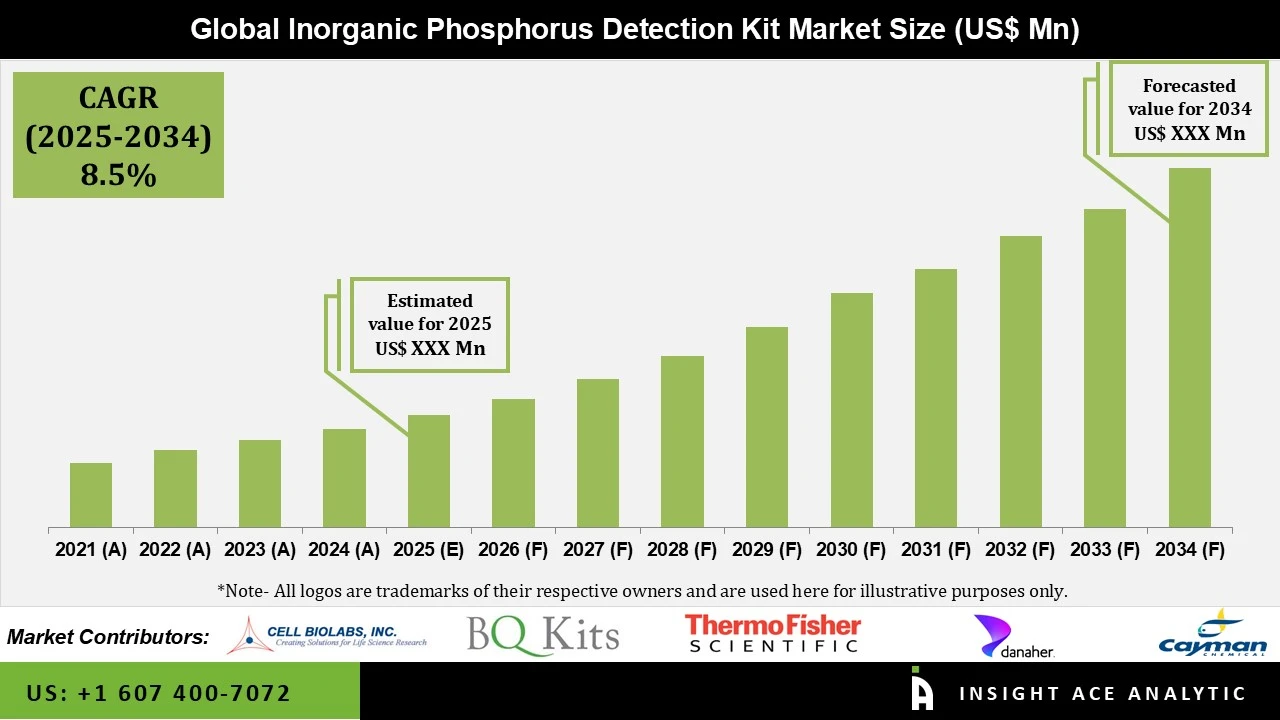
These kits are commonly used in environmental monitoring, agriculture, food testing, biochemical research, and clinical diagnostics to evaluate kidney function, bone metabolism, and parathyroid abnormalities. The inorganic phosphorus detection kit market is expanding due to the growing need for phosphorus testing in medical diagnostics, especially in hospitals and research facilities. The availability of cutting-edge testing technology and government measures to upgrade healthcare infrastructure are also driving the inorganic phosphorus detection kit market growth.
The rising incidence of chronic illnesses like diabetes, bone disorders, and chronic renal disease, which frequently entail imbalances in inorganic phosphorus levels, is another major factor propelling the inorganic phosphorus detection kit market's expansion. This directly drives the need for dependable and effective detection kits in clinical diagnostics by requiring regular and accurate monitoring of phosphorus in biological samples. Furthermore, the other main factor for the market growth is the rising worldwide concern over water pollution, especially eutrophication brought on by too much phosphorus in water bodies. The need for inorganic phosphorus detection kits for efficient environmental monitoring and compliance is rising as governments and environmental organizations impose stricter rules on phosphorus discharge from industrial, agricultural, and urban sources.
The inorganic phosphorus detection kit market is currently seeing rapid growth due to the urgent requirement for precise and effective phosphorus measurement in a variety of industries. These developments are essential for boosting study results, guaranteeing environmental quality, and expanding healthcare diagnostic skills. Additionally, due to the urgent requirement for precise and fast phosphorus quantification in a variety of industries, the inorganic phosphorus detection kit market provides substantial strategic growth possibilities across numerous important applications. The inorganic phosphorus detection kit market is being significantly impacted by the strategic growth prospects, which are focusing expenditures on its most important and rapidly expanding applications.
Competitive Landscape
Which are the Leading Players in the Inorganic Phosphorus Detection Kit Market?
- Danaher
- Thermo Fisher Scientific
- Formosa Biomedical Technology Corporation
- Cell Biolabs Inc
- BQ Kits Inc
- Junzheng Group
- Cayman Chemical Company
Market Dynamics
Driver
Growing Attention to Nutritional Monitoring
The need for inorganic phosphorus detection kits has been driven by a growing understanding of nutrition and how it directly affects health. Monitoring is crucial for people, especially those on special diets or receiving particular medical treatments, as adequate phosphorus levels are necessary for bone health and energy metabolism. The market potential is increased as more nutritionists and dieticians incorporate phosphorus evaluation into their evaluations. Further driving the inorganic phosphorus detection kit market expansion will be the emergence of customized diet regimens and functional foods designed to sustain ideal phosphorus levels.
Restrain/Challenge
High Cost of these Kits
The price and production costs of inorganic phosphorus detection kits can be major market barriers. Manufacturers may find it difficult to set competitive prices for their goods due to the high expenses of raw materials, R&D, and regulatory compliance. This is especially troublesome in industries that are cost-conscious, such as smaller labs and educational institutions, where a lack of funds may limit their ability to make purchases. Additionally, price concerns brought on by economic swings may push consumers toward less expensive options. The manufacturers find it difficult to strike a balance between cost and quality, which could hinder the expansion of the inorganic phosphorus detection kits market.
Market Segmentation
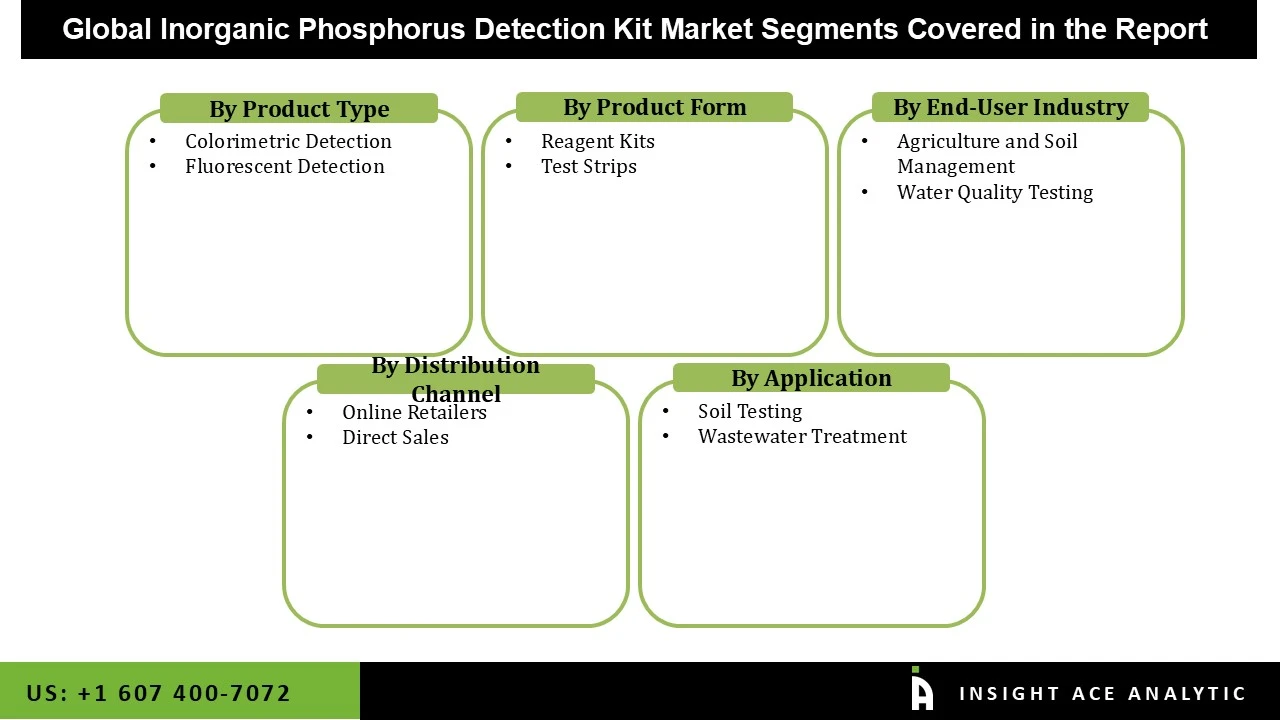
The market is comprehensively segmented across five key dimensions to reflect its diverse technological, product, and commercial structure. The core technology is categorized by Type, including Colorimetric, Electrochemical, Fluorescent, and Spectrophotometric Detection methods. Available Product Forms span Reagent Kits, Multi-Parameter Analyzers, and Test Strips. Key Applications drive demand in areas such as Soil Testing, Hydroponics, Wastewater Treatment, and Public Health Monitoring. The primary End-users comprise sectors like Agriculture and Soil Management, the Food and Beverage Industry, Environmental Monitoring agencies, Water Quality Testing facilities, and Clinical Research and Diagnostics. Finally, products reach these users through various Distribution Channels, including Direct Sales, Pharmaceutical and Laboratory Suppliers, Online Retailers, and a network of Distributors and Resellers.
Colorimetric Detection Segment is Expected to Drive the Inorganic Phosphorus Detection Kit Market
The colorimetric detection category held the largest share in the Inorganic Phosphorus Detection Kit market in 2024. Colorimetric kits, which use a color shift proportionate to the amount of inorganic phosphorus in a sample, are widely used due to their ease of use and affordability. In order to assess intensity using spectrophotometric methods, these kits usually use chemicals that react with phosphorus to form a colorful product. Because it is simple to use and can evaluate numerous samples at once, this approach is frequently used in laboratories for both field and research purposes.
Soil Testing Segment is Growing at the Highest Rate in the Inorganic Phosphorus Detection Kit Market
In 2024, the soil testing category dominated the Inorganic Phosphorus Detection Kit market due to the growing emphasis on sustainable agriculture and efficient fertilizer use worldwide. The significance of precision fertilizer management to increase crop output while avoiding soil degradation and phosphorus runoff is becoming more recognized by farmers and agronomists. The need for trustworthy inorganic phosphorus testing kits is further supported by government programs that support balanced fertilizer application, precision farming, and soil health cards. Additionally, the market expansion is also being accelerated by the growing usage of soil testing services in developing economies, the expansion of commercial agriculture, and the growing acceptance of modern farming practices.
Why North America Led the Inorganic Phosphorus Detection Kit Market?
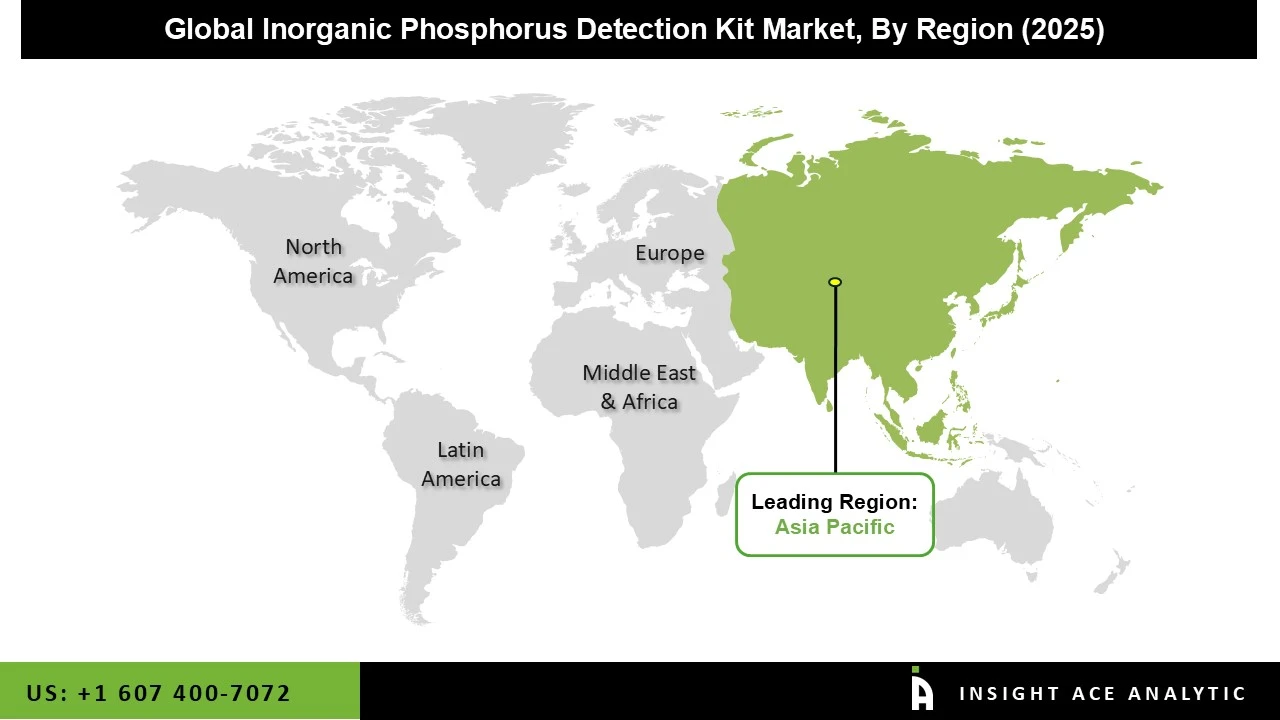
The Inorganic Phosphorus Detection Kits market was dominated by North America region in 2024 driven mostly by strict environmental rules implemented by organizations like the EPA on wastewater discharge, drinking water quality requirements, and nutrient monitoring for lakes and rivers. In order to adhere to these regulations and stay out of trouble, utilities, environmental testing facilities, and businesses involved in industries including chemicals, fertilizers, food and beverage production, and power generation are investing more in phosphorus monitoring.
Strong R&D and academic funding for oceanography, ecological studies, and water quality also sustain demand from research institutes and universities. Additionally, because phosphorus testing is utilized in some biochemical and clinical assays, the region's sophisticated healthcare and clinical diagnostics infrastructure also plays a role.
Inorganic Phosphorus Detection Kit Market Report Scope:
| Report Attribute | Specifications |
| Growth Rate CAGR | CAGR of 8.5% from 2025 to 2034 |
| Quantitative Units | Representation of revenue in US$ Bn and CAGR from 2024 to 2034 |
| Historic Year | 2021 to 2023 |
| Forecast Year | 2024-2034 |
| Report Coverage | The forecast of revenue, the position of the company, the competitive market structure, growth prospects, and trends |
| Segments Covered | Type, Product Form, Application, End-user, Distribution Channel, and By Region |
| Regional Scope | North America; Europe; Asia Pacific; Latin America; Middle East & Africa |
| Country Scope | U.S.; Canada; U.K.; Germany; China; India; Japan; Brazil; Mexico; The UK; France; Italy; Spain; China; Japan; India; South Korea; Southeast Asia; South Korea; Southeast Asia |
| Competitive Landscape | Danaher, Thermo Fisher Scientific, Formosa Biomedical Technology Corporation, Cell Biolabs Inc, BQ Kits Inc, Junzheng Group, and Cayman Chemical Company. |
| Customization Scope | Free customization report with the procurement of the report, Modifications to the regional and segment scope. Geographic competitive landscape. |
| Pricing and Available Payment Methods | Explore pricing alternatives that are customized to your particular study requirements. |
Segmentation of Inorganic Phosphorus Detection Kit Market:
Inorganic Phosphorus Detection Kit Market by Type-
- Colorimetric Detection
- Electrochemical Detection
- Fluorescent Detection
- Spectrophotometric Detection
Inorganic Phosphorus Detection Kit Market by Product Form-
- Reagent Kits
- Multi-Parameter Analyzers
- Test Strips
Inorganic Phosphorus Detection Kit Market by Application-
- Soil Testing
- Hydroponics
- Wastewater Treatment
- Public Health Monitoring
Inorganic Phosphorus Detection Kit Market by End-user-
- Agriculture and Soil Management
- Food and Beverage Industry
- Environmental Monitoring
- Water Quality Testing
- Clinical Research and Diagnostics
Inorganic Phosphorus Detection Kit Market by Distribution Channel-
- Direct Sales
- Pharmaceutical and Laboratory Suppliers
- Online Retailers
- Distributors and Resellers
Inorganic Phosphorus Detection Kit Market By Region-
- North America-
- The US
- Canada
- Europe-
- Germany
- The UK
- France
- Italy
- Spain
- Rest of Europe
- Asia-Pacific-
- China
- Japan
- India
- South Korea
- South East Asia
- Rest of Asia Pacific
- Latin America-
- Brazil
- Argentina
- Mexico
- Rest of Latin America
- Middle East & Africa-
- GCC Countries
- South Africa
- Rest of Middle East and Africa
Research Design and Approach
This study employed a multi-step, mixed-method research approach that integrates:
- Secondary research
- Primary research
- Data triangulation
- Hybrid top-down and bottom-up modelling
- Forecasting and scenario analysis
This approach ensures a balanced and validated understanding of both macro- and micro-level market factors influencing the market.
Secondary Research
Secondary research for this study involved the collection, review, and analysis of publicly available and paid data sources to build the initial fact base, understand historical market behaviour, identify data gaps, and refine the hypotheses for primary research.
Sources Consulted
Secondary data for the market study was gathered from multiple credible sources, including:
- Government databases, regulatory bodies, and public institutions
- International organizations (WHO, OECD, IMF, World Bank, etc.)
- Commercial and paid databases
- Industry associations, trade publications, and technical journals
- Company annual reports, investor presentations, press releases, and SEC filings
- Academic research papers, patents, and scientific literature
- Previous market research publications and syndicated reports
These sources were used to compile historical data, market volumes/prices, industry trends, technological developments, and competitive insights.

Primary Research
Primary research was conducted to validate secondary data, understand real-time market dynamics, capture price points and adoption trends, and verify the assumptions used in the market modelling.
Stakeholders Interviewed
Primary interviews for this study involved:
- Manufacturers and suppliers in the market value chain
- Distributors, channel partners, and integrators
- End-users / customers (e.g., hospitals, labs, enterprises, consumers, etc., depending on the market)
- Industry experts, technology specialists, consultants, and regulatory professionals
- Senior executives (CEOs, CTOs, VPs, Directors) and product managers
Interview Process
Interviews were conducted via:
- Structured and semi-structured questionnaires
- Telephonic and video interactions
- Email correspondences
- Expert consultation sessions
Primary insights were incorporated into demand modelling, pricing analysis, technology evaluation, and market share estimation.
Data Processing, Normalization, and Validation
All collected data were processed and normalized to ensure consistency and comparability across regions and time frames.
The data validation process included:
- Standardization of units (currency conversions, volume units, inflation adjustments)
- Cross-verification of data points across multiple secondary sources
- Normalization of inconsistent datasets
- Identification and resolution of data gaps
- Outlier detection and removal through algorithmic and manual checks
- Plausibility and coherence checks across segments and geographies
This ensured that the dataset used for modelling was clean, robust, and reliable.
Market Size Estimation and Data Triangulation
Bottom-Up Approach
The bottom-up approach involved aggregating segment-level data, such as:
- Company revenues
- Product-level sales
- Installed base/usage volumes
- Adoption and penetration rates
- Pricing analysis
This method was primarily used when detailed micro-level market data were available.

Top-Down Approach
The top-down approach used macro-level indicators:
- Parent market benchmarks
- Global/regional industry trends
- Economic indicators (GDP, demographics, spending patterns)
- Penetration and usage ratios
This approach was used for segments where granular data were limited or inconsistent.
Hybrid Triangulation Approach
To ensure accuracy, a triangulated hybrid model was used. This included:
- Reconciling top-down and bottom-up estimates
- Cross-checking revenues, volumes, and pricing assumptions
- Incorporating expert insights to validate segment splits and adoption rates
This multi-angle validation yielded the final market size.
Forecasting Framework and Scenario Modelling
Market forecasts were developed using a combination of time-series modelling, adoption curve analysis, and driver-based forecasting tools.
Forecasting Methods
- Time-series modelling
- S-curve and diffusion models (for emerging technologies)
- Driver-based forecasting (GDP, disposable income, adoption rates, regulatory changes)
- Price elasticity models
- Market maturity and lifecycle-based projections
Scenario Analysis
Given inherent uncertainties, three scenarios were constructed:
- Base-Case Scenario: Expected trajectory under current conditions
- Optimistic Scenario: High adoption, favourable regulation, strong economic tailwinds
- Conservative Scenario: Slow adoption, regulatory delays, economic constraints
Sensitivity testing was conducted on key variables, including pricing, demand elasticity, and regional adoption.
Request Customization
Add countries, segments, company profiles, or extend forecast — free 10% customization with purchase.
Customize This Report →Enquire Before Buying
Speak with our analyst team about scope, methodology, pricing, or deliverable formats.
Enquire Now →Frequently Asked Questions
Inorganic Phosphorus Detection Kit Market is predicted to reach at a 8.5% CAGR during the forecast period for 2025-2034.
Danaher, Thermo Fisher Scientific, Formosa Biomedical Technology Corporation, Cell Biolabs Inc, BQ Kits Inc, Junzheng Group, and Cayman Chemical Company.
Type, Product Form, Application, End-user, Distribution Channel, and Region are the key segments of the Inorganic Phosphorus Detection Kit Market.
Asia Pacific Region is leading the Inorganic Phosphorus Detection Kit Market.