Skin Virome Profiling Market Size, Share, Scope, Forecast Report 2026 to 2035
What is Skin Virome Profiling Market Size?
Skin Virome Profiling Market Size is valued at USD 382.49 Mn in 2025 and is predicted to reach USD 1,291.21 Mn by the year 2035 at a 13.2% CAGR during the forecast period for 2026 to 2035.
Skin Virome Profiling Market Size, Share & Trends Analysis by Technology (Next-Generation Sequencing, PCR-Based Methods, Microarray, Others), by Application (Clinical Diagnostics, Research, Personalized Medicine, Others), by End-User (Hospitals & Clinics, Research Institutes, Diagnostic Laboratories, Others), by Sample Type (Swab, Biopsy, Others), and Segment Forecasts, 2026 to 2035
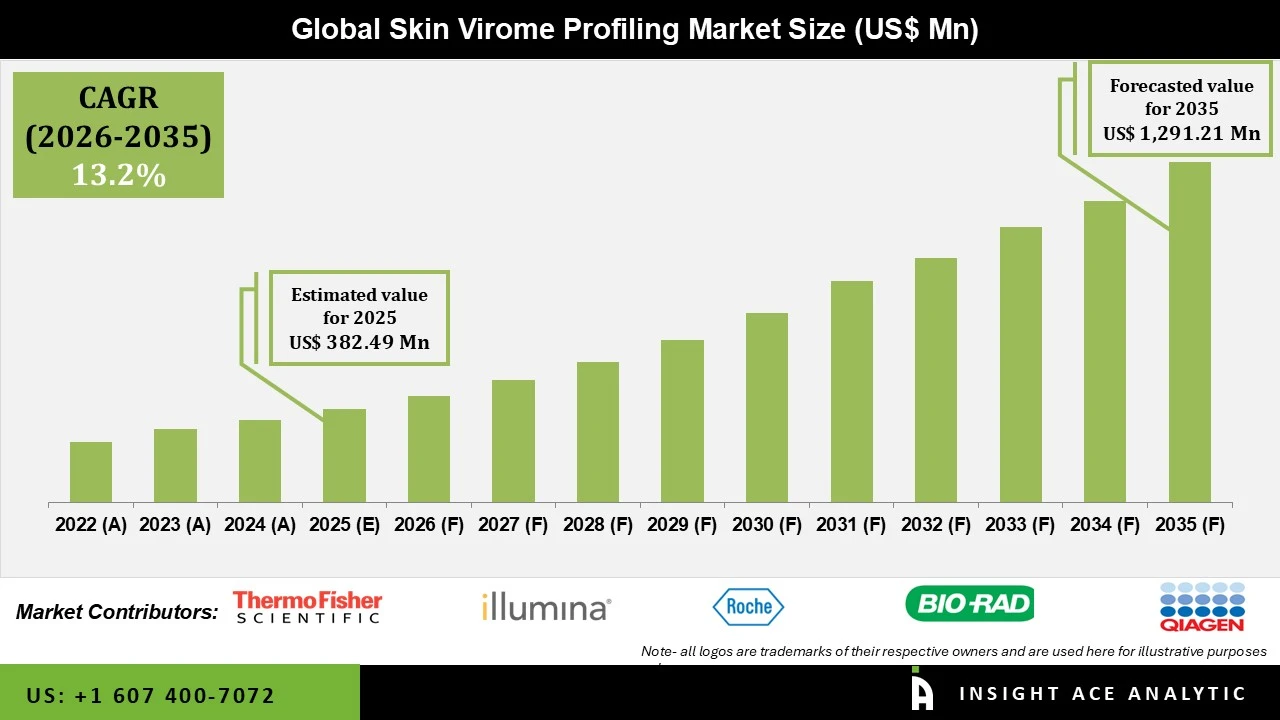
Skin virome profiling is the process of characterizing and analyzing viruses living in human skin by applying next-generation sequencing (NGS), metagenomics, PCR, and bioinformatics methods. These viruses include bacteriophages, eukaryotic viruses, and others that contribute greatly to the skin health, immune system, and disease development processes. By profiling these communities, scientists and clinicians may get a better insight on how the skin microbiome interacts with various diseases such as eczema, psoriasis, acne, atopic dermatitis, chronic wounds, and skin infections.
One of the major drivers behind the expansion of the skin virome profiling market is the increasing interest in the studies of microbiomes. While most of them are still centered around bacteria and their microbiomes, many researchers begin to consider the contribution of viruses into the health of skin tissues and its diseases. Moreover, technological innovations in sequencing and computational biology make the analysis faster, accurate, and affordable. At the same time, investments into precision medicine and personalized dermatology inspire medical professionals to use the information about the microbiome in patient care.
Additionally, pharmaceutical and biotech firms are now employing skin virome profiling in their drug discovery and biomarker identification processes. The cosmetics industry too is embracing virome profiling as they try to come up with microbiome-friendly cosmetic products that ensure good skin health without disturbing its microbial balance. Increased knowledge of microbiome therapy, increased clinical activity, and investment in microbiome research are some of the factors that will contribute to future market growth.
Competitive Landscape
Which are the Leading Players in Skin Virome Profiling Market?
• Illumina Inc.
• QIAGEN N.V.
• Thermo Fisher Scientific Inc.
• Oxford Nanopore Technologies plc
• Pacific Biosciences (PacBio)
• CosmosID
• BaseClear B.V.
• Microba Life Sciences
• Zymo Research Corporation
• CD Genomics
• Charles River Laboratories
• Eurofins Scientific
• Novogene Co., Ltd.
• F. Hoffmann-La Roche Ltd.
• bioMérieux SA
• Seegene Inc.
• BGI Genomics
• CosmosID
• Second Genome
• Diversigen (OraSure Technologies)
• Viome Life Sciences
• DNA Genotek
• Integrated DNA Technologies (IDT)
• GENEWIZ (Azenta Life Sciences)
• Metagenopolis
• Eagle Genomics
• uBiome Technologies (Historical)
• Biotia
• CoreBiome
• Resphera Biosciences
Market Dynamics
Driver
Rising Adoption of Microbiome-Based Precision Medicine
Rising adoption of precision medicine is anticipated to propel the skin virome profiling market growth over the forecast period. The shift towards individualized therapy based on patient-specific biology is being pursued by healthcare professionals. Skin virome profiling enables detection of virus-host interactions affecting immune response and disease progression enabling doctors to take an effective course of action. It is especially useful in treating chronic skin diseases like psoriasis, eczema, and atopic dermatitis due to the involvement of the skin microbiome in these conditions. With the development of next-generation sequencing technology, there has been significant progress in reducing the cost of sequencing while improving accuracy and speed of data processing. Coupled with artificial intelligence and bioinformatics platforms, this makes it easier to understand complex viral communities. With the continued interest of the pharmaceutical industry in the microbiome therapeutics and biomarker discovery, demand for virome profiling is likely to grow over the forecast period.
Restrain/Challenge
High Cost of Sequencing and Lack of Standardized Analytical Methods
Although there have been great advances in technology, the skin virome profiling market still encounters a number of difficulties. The main problem that hinders the development of the skin virome market is the high price of new sequencing technology and bioinformatic analysis. The full profiling of the virome requires complex equipment, qualified personnel and technical capabilities, which raises costs significantly for many healthcare facilities and research laboratories. Moreover, the lack of standardized procedures for the collection of samples, their sequencing, analysis of the obtained results and the presentation of the research results leads to the inconsistency between various studies. Also, the lack of information about the biological role of the skin virome and lack of clinical trials are limiting factors in the adoption of this technique.
Dermatological Disease Diagnosis Segment is Expected to Drive the Skin Virome Profiling Market
The dermatological disease diagnosis market was led by the dermatological disease diagnosis segment, which held the highest share in 2025. Increasing prevalence of chronic inflammatory skin conditions, growing awareness about microbiome diagnostics, and adoption of molecular diagnostic techniques have contributed to segment growth. With skin virome profiling, doctors are able to detect viral markers that cause progression of the disease and help diagnose the condition with proper treatment plan.
Metagenomic Sequencing Segment is Growing at the Highest Rate in the Skin Virome Profiling Market
The metagenomics sequencing category held the largest share in the market in 2025 owing to its capability to identify both known and novel viruses in an extensive manner, irrespective of prior target selection. This is because the technique facilitates the identification of biomarkers along with enabling microbiome studies and also ensures high-resolution characterization of microbial viruses.
Why North America Led the Skin Virome Profiling Market?
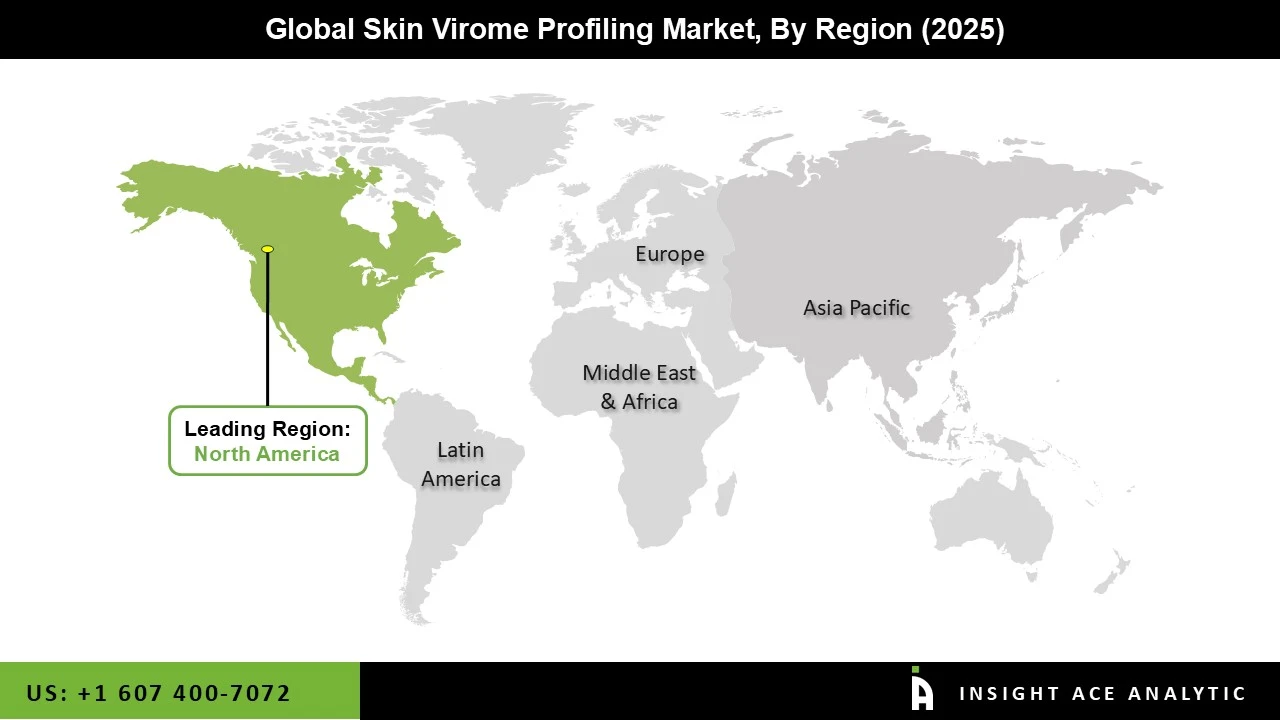
North America was the dominant player of the global skin virome profiling market in 2025. The region features an efficient biotech ecosystem, large investments in microbiome research, state-of-the-art infrastructure for genomic sequencing, and high healthcare spending. Availability of major sequencing technology players, pharmaceutical players, and academic research institutes has facilitated innovation in the field of microbiome profiling. The US remains a dominant country for microbiome research through large-scale government funding, collaboration between research institutes and biotechnology organizations, and growing adoption of genomic techniques in clinical settings. Growing awareness about personalized medicine along with research related to microbial therapy are some of the drivers contributing to regional market growth.
Key Development
• In May 2025, Oxford Nanopore Technologies announced technology updates at London Calling 2025, highlighting advances in real-time sequencing, distributed sequencing, high-output workflows, and multiomics discovery, which support broader use of long-read sequencing in metagenomics and virome research.
Skin Virome Profiling Market Report Scope:
| Report Attribute | Specifications |
| Market size value in 2025 | USD 382.49 Mn |
| Revenue forecast in 2035 | USD 1,291.21 Mn |
| Growth Rate CAGR | CAGR of 13.2% from 2026 to 2035 |
| Quantitative Units | Representation of revenue in US$ Bn and CAGR from 2026 to 2035 |
| Historic Year | 2022 to 2025 |
| Forecast Year | 2026-2035 |
| Report Coverage | The forecast of revenue, the position of the company, the competitive market structure, growth prospects, and trends |
| Segments Covered | Technology, Application, End-user, Sample Type and By Region |
| Regional Scope | North America; Europe; Asia Pacific; Latin America; Middle East & Africa |
| Country Scope | U.S.; Canada; U.K.; Germany; China; India; Japan; Brazil; Mexico; The UK; France; Italy; Spain; China; Japan; India; South Korea; Southeast Asia; South Korea; Southeast Asia |
| Competitive Landscape | Illumina Inc., Thermo Fisher Scientific Inc., QIAGEN N.V., Oxford Nanopore Technologies plc, Pacific Biosciences, CosmosID, BaseClear B.V., Microba Life Sciences, Zymo Research Corporation, Charles River Laboratories, Eurofins Scientific, Novogene Co., Ltd., F. Hoffmann-La Roche Ltd., bioMérieux SA, Seegene Inc., BGI Genomics, Diversigen (OraSure Technologies), Viome Life Sciences, DNA Genotek, GENEWIZ (Azenta Life Sciences), Eagle Genomics, Biotia, CoreBiome, Resphera Biosciences, CD Genomics, and Second Genome. |
| Customization Scope | Free customization report with the procurement of the report, Modifications to the regional and segment scope. Geographic competitive landscape. |
| Pricing and Available Payment Methods | Explore pricing alternatives that are customized to your particular study requirements. |
Market Segmentation:
Skin Virome Profiling Market by Technology-
• Metagenomic Sequencing
• Targeted Sequencing
• Polymerase Chain Reaction (PCR)-based Profiling
• Bioinformatics & Data Analytics
• Others
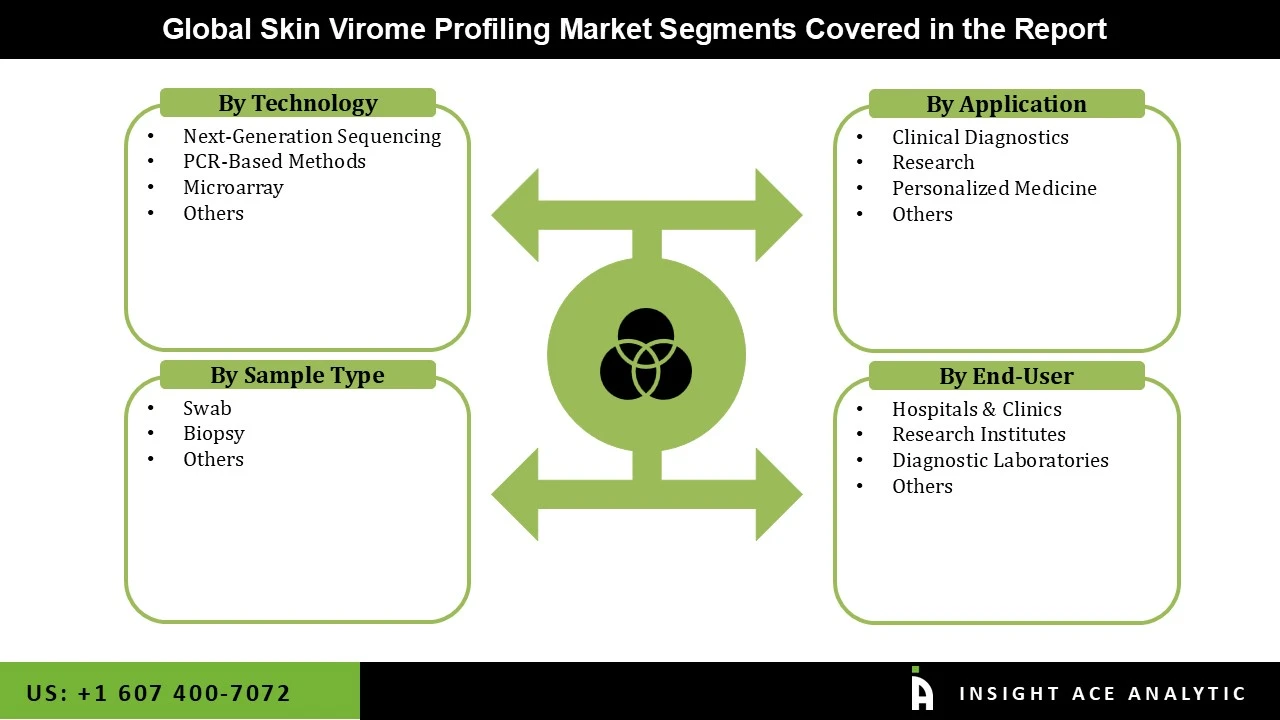
Skin Virome Profiling Market by Sample Type-
• Skin Swabs
• Skin Biopsy
• Tape Strips
• Skin Scrapings
• Others
Skin Virome Profiling Market by Application-
• Dermatological Disease Diagnosis
• Cosmetic & Skincare Research
• Drug Discovery & Development
• Personalized Medicine
• Microbiome Research
• Biomarker Discovery
• Others
Skin Virome Profiling Market by End-user-
• Hospitals & Clinics
• Diagnostic Laboratories
• Pharmaceutical & Biotechnology Companies
• Academic & Research Institutes
• Cosmetic & Personal Care Companies
• Contract Research Organizations (CROs)
Skin Virome Profiling Market By Region-
North America-
• The US
• Canada
Europe-
• Germany
• The UK
• France
• Italy
• Spain
• Rest of Europe
Asia-Pacific-
• China
• Japan
• India
• South Korea
• South East Asia
• Rest of Asia Pacific
Latin America-
• Brazil
• Argentina
• Mexico
• Rest of Latin America
Middle East & Africa-
• GCC Countries
• South Africa
• Rest of Middle East and Africa
Research Design and Approach
This study employed a multi-step, mixed-method research approach that integrates:
- Secondary research
- Primary research
- Data triangulation
- Hybrid top-down and bottom-up modelling
- Forecasting and scenario analysis
This approach ensures a balanced and validated understanding of both macro- and micro-level market factors influencing the market.
Secondary Research
Secondary research for this study involved the collection, review, and analysis of publicly available and paid data sources to build the initial fact base, understand historical market behaviour, identify data gaps, and refine the hypotheses for primary research.
Sources Consulted
Secondary data for the market study was gathered from multiple credible sources, including:
- Government databases, regulatory bodies, and public institutions
- International organizations (WHO, OECD, IMF, World Bank, etc.)
- Commercial and paid databases
- Industry associations, trade publications, and technical journals
- Company annual reports, investor presentations, press releases, and SEC filings
- Academic research papers, patents, and scientific literature
- Previous market research publications and syndicated reports
These sources were used to compile historical data, market volumes/prices, industry trends, technological developments, and competitive insights.

Primary Research
Primary research was conducted to validate secondary data, understand real-time market dynamics, capture price points and adoption trends, and verify the assumptions used in the market modelling.
Stakeholders Interviewed
Primary interviews for this study involved:
- Manufacturers and suppliers in the market value chain
- Distributors, channel partners, and integrators
- End-users / customers (e.g., hospitals, labs, enterprises, consumers, etc., depending on the market)
- Industry experts, technology specialists, consultants, and regulatory professionals
- Senior executives (CEOs, CTOs, VPs, Directors) and product managers
Interview Process
Interviews were conducted via:
- Structured and semi-structured questionnaires
- Telephonic and video interactions
- Email correspondences
- Expert consultation sessions
Primary insights were incorporated into demand modelling, pricing analysis, technology evaluation, and market share estimation.
Data Processing, Normalization, and Validation
All collected data were processed and normalized to ensure consistency and comparability across regions and time frames.
The data validation process included:
- Standardization of units (currency conversions, volume units, inflation adjustments)
- Cross-verification of data points across multiple secondary sources
- Normalization of inconsistent datasets
- Identification and resolution of data gaps
- Outlier detection and removal through algorithmic and manual checks
- Plausibility and coherence checks across segments and geographies
This ensured that the dataset used for modelling was clean, robust, and reliable.
Market Size Estimation and Data Triangulation
Bottom-Up Approach
The bottom-up approach involved aggregating segment-level data, such as:
- Company revenues
- Product-level sales
- Installed base/usage volumes
- Adoption and penetration rates
- Pricing analysis
This method was primarily used when detailed micro-level market data were available.

Top-Down Approach
The top-down approach used macro-level indicators:
- Parent market benchmarks
- Global/regional industry trends
- Economic indicators (GDP, demographics, spending patterns)
- Penetration and usage ratios
This approach was used for segments where granular data were limited or inconsistent.
Hybrid Triangulation Approach
To ensure accuracy, a triangulated hybrid model was used. This included:
- Reconciling top-down and bottom-up estimates
- Cross-checking revenues, volumes, and pricing assumptions
- Incorporating expert insights to validate segment splits and adoption rates
This multi-angle validation yielded the final market size.
Forecasting Framework and Scenario Modelling
Market forecasts were developed using a combination of time-series modelling, adoption curve analysis, and driver-based forecasting tools.
Forecasting Methods
- Time-series modelling
- S-curve and diffusion models (for emerging technologies)
- Driver-based forecasting (GDP, disposable income, adoption rates, regulatory changes)
- Price elasticity models
- Market maturity and lifecycle-based projections
Scenario Analysis
Given inherent uncertainties, three scenarios were constructed:
- Base-Case Scenario: Expected trajectory under current conditions
- Optimistic Scenario: High adoption, favourable regulation, strong economic tailwinds
- Conservative Scenario: Slow adoption, regulatory delays, economic constraints
Sensitivity testing was conducted on key variables, including pricing, demand elasticity, and regional adoption.
Request Customization
Add countries, segments, company profiles, or extend forecast — free 10% customization with purchase.
Customize This Report →Enquire Before Buying
Speak with our analyst team about scope, methodology, pricing, or deliverable formats.
Enquire Now →Frequently Asked Questions
Skin Virome Profiling Market Size is valued at USD 382.49 Mn in 2025 and is predicted to reach USD 1,291.21 Mn by the year 2035
Skin Virome Profiling Market is expected to grow at a 13.2% CAGR during the forecast period for 2026 to 2035.
Illumina Inc., Thermo Fisher Scientific Inc., QIAGEN N.V., Oxford Nanopore Technologies plc, Pacific Biosciences, CosmosID, BaseClear B.V., Microba Life Sciences, Zymo Research Corporation, Charles River Laboratories, Eurofins Scientific, Novogene Co., Ltd., F. Hoffmann-La Roche Ltd., bioMérieux SA, Seegene Inc., BGI Genomics, Diversigen (OraSure Technologies), Viome Life Sciences, DNA Genotek, GENEWIZ (Azenta Life Sciences), Eagle Genomics, Biotia, CoreBiome, Resphera Biosciences, CD Genomics, and Second Genome.
Skin Virome Profiling Market is segmented into Technology, Application, End-user, Sample Type and By Region
North America region is leading the Skin Virome Profiling Market.