Salmon Vaccines Sea Lice and Integrated Parasite Control Solutions Market Size, Share and Growth Analysis 2026 to 2035
Warning: Trying to access array offset on value of type null in /home/z8nbkwptb7pj/public_html/report-details.php on line 219
Salmon Vaccines, Sea-Lice and Integrated Parasite Control Solutions Market Size is predicted to develop a 11.2% CAGR during the forecast period for 2026 to 2035.
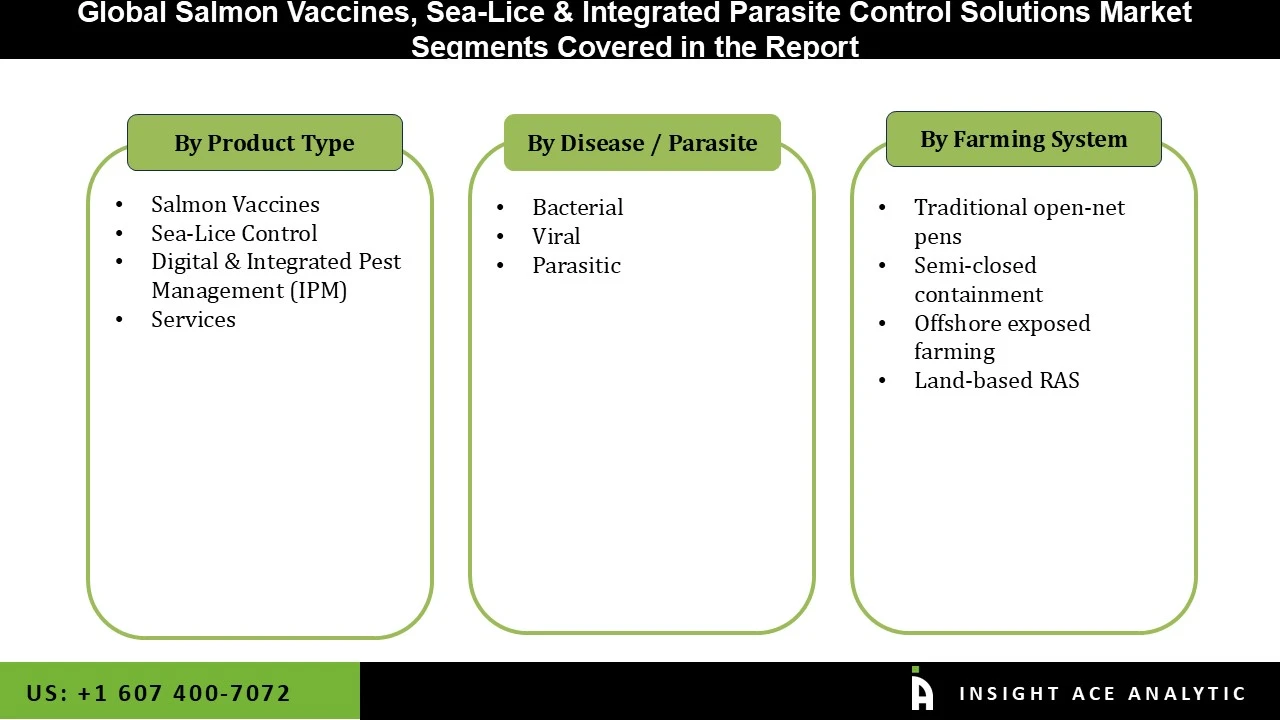
Salmon Vaccines, Sea-Lice & Integrated Parasite Control Solutions Market Size, Share & Trends Analysis Distribution by Product Type (Salmon Vaccines (Inactivated Vaccine, Attenuated Live Vaccine, Others), Sea-Lice Control(Chemical, Mechanical / Physical, Biological / Ecological Control, Preventive Barriers & Engineering Controls, Functional Feeds) Digital & Integrated Pest Management (IPM), (AI lice-counting systems, Behavioural sensors / biomass cameras, Environmental monitoring, Predictive analytics, Others), Services) By Disease / Parasite (Bacterial, Viral, Parasitic), By Farming System (Traditional open-net pens, Semi-closed containment, Offshore exposed farming, Land-based RAS) and Segment Forecasts, 2026 to 2035
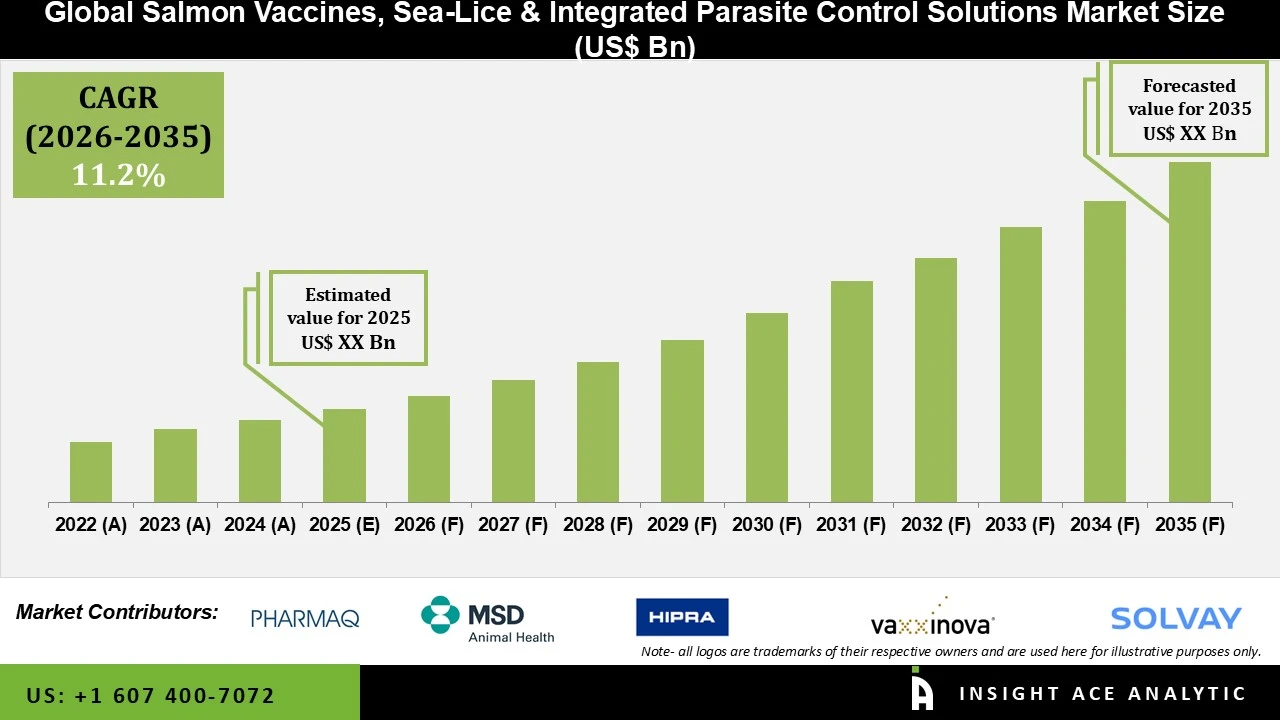
Salmon Vaccines, Sea-Lice & Integrated Parasite Control Solutions refer to the full range of health products, tools, and strategies used to protect farmed salmon (mainly Atlantic salmon) from diseases and parasites. The market covers vaccines that build immunity against bacteria (e.g., furunculosis, piscirickettsiosis), viruses (e.g., ISA, PD), and some parasites; sea-lice control methods including chemical baths, mechanical delousing (brushes, lasers, water jets), biological controls with cleaner fish (lumpfish, wrasse), and emerging options like lice vaccines or RNAi products; and Integrated Parasite Management (IPM) programs that combine vaccines, cleaner fish, mechanical tools, improved farm practices, and selective breeding for sustainable, low-chemical control. These solutions are critical because sea lice and diseases cause major financial losses, reduce fish welfare, and create environmental issues in one of the world’s most valuable aquaculture industries.
These solutions are widely employed to prevent disease, enhance survival rates, minimize reliance on therapeutic methods of treatment, and maintain fish welfare and farm productivity. Market development is fueled by the rapid growth of global salmon aquaculture due to increasing consumption of seafood products, as well as tightening standards for food safety, sustainability, and fish welfare. But at the same time, the market was hampered by the high expense of advanced control systems, which are predominantly mechanical and integrated systems based on high capital expenditure, such as in small-scale enterprises. Furthermore, tougher region-specific regulations regarding approvals of vaccines and parasite control agents are hampering industries associated with veterinary care.
Competitive Landscape
Which are the Leading Players in the Salmon Vaccines, Sea-Lice & Integrated Parasite Control Solutions Market?
Medical & Pharmaceutical-Grade Inhalation Companies
• Pharmaq (Zoetis)
• Zoetis
• MSD Animal Health
• HIPRA
• Vaxxinova / Kyoto Biken
• Tecnovax / Providean
• Solvay
• Aqua Pharma
• ScaleAQ
• Optimar
• Skamik
• Flatsetsund Engineering (FLS)
• Ace Aquatec
• Stingray Marine Solutions
• Bluegrove (CageEye)
• Blue Lice
• Harbor AS
• BioMar
• Alltech (Aqua)
• BioSort
• Others
Market Dynamics
Driver
Rising Prevalence and Economic Impact of Sea-Lice Infestations and Infectious Diseases
The major driver for the Salmon Vaccines, Sea-Lice & Integrated Parasite Control Solutions Market has been the rising prevalence and economic impact of sea-lice infestations and infectious diseases in intensive salmon aquaculture. As global salmon farming expanded to meet growing seafood demand, higher stocking densities increased disease transmission and parasite pressure, particularly from sea lice, which directly affect fish survival, growth rates, and feed conversion efficiency. The significant financial losses associated with mortality, reduced harvest weights, and treatment costs have compelled producers to adopt preventive vaccines and integrated, sustainable parasite control solutions to protect productivity, comply with more stringent animal welfare and environmental regulations, and ensure long-term operational viability.
Restrain/Challenge
High Cost and Operational Complexity
The main restraint for the Salmon Vaccines, Sea-Lice & Integrated Parasite Control Solutions Market has been the high cost and operational complexity of advanced parasite control and vaccination solutions. In fact, most of the latest sea-lice control methods available on the market today, such as mechanical systems for sea lice removal, bio-control solutions for sea lice, & overall parasite management systems, tend to involve significant capital expenditure, sophisticated infrastructure, & trained personnel. All these have thus far detersized small & medium-scale fish farmers from using such sea-lice control methods.
Sea-Lice Control Segment is Expected to Drive the Salmon Vaccines, Sea-Lice & Integrated Parasite Control Solutions Market
The Sea-Lice Control segment was expected to drive the Salmon Vaccines, Sea-Lice & Integrated Parasite Control Solutions Market. The leading demand share of sea-lice control in the market was attributed to persistent and widespread sea-lice infestation issues among major salmon-producing countries, where the infestation caused direct economic loss due to reduced growth, higher mortality, and increased treatment costs. Salmon producers increasingly invested in solutions to control sea-lice through chemical, mechanical, biological, and technological means in order to stay within the strict regulatory limits on parasite levels and to protect fish welfare. Salmon vaccines remained an essential factor in preventing diseases, and Digital & IPM solutions that are sustainable and hence driven by data, while holding the largest share, continue to be the biggest revenue generative segment and drive overall market growth for sea-lice control solutions.
land-based Recirculating Aquaculture Systems (RAS) Segment is Growing at the Highest Rate in the Salmon Vaccines, Sea-Lice & Integrated Parasite Control Solutions Market
The land-based Recirculating Aquaculture Systems (RAS) segment was growing at the highest rate among farming systems.Growth in land-based RAS accelerated due to its ability to eliminate sea-lice exposure, significantly reduce disease risk, and provide full environmental control, aligning with increasingly strict biosecurity, sustainability, and regulatory requirements. While traditional open-net pens continued to dominate production volume and semi-closed containment and offshore exposed farming gained traction for reducing environmental impact, RAS systems attracted the strongest investment momentum as producers sought predictable yields, lower parasite pressure, and compliance with tightening environmental regulations particularly in Europe and North America.
Why Europe Led the Salmon Vaccines, Sea-Lice & Integrated Parasite Control Solutions Market?
Europe was the leading region in the Salmon Vaccines, Sea-Lice & Integrated Parasite Control Solutions Market, primarily due to its large-scale salmon farming industry and stringent regulatory framework. The region that included Norway, then Scotland and Ireland is a major contributor to the world’s farmed salmon production.
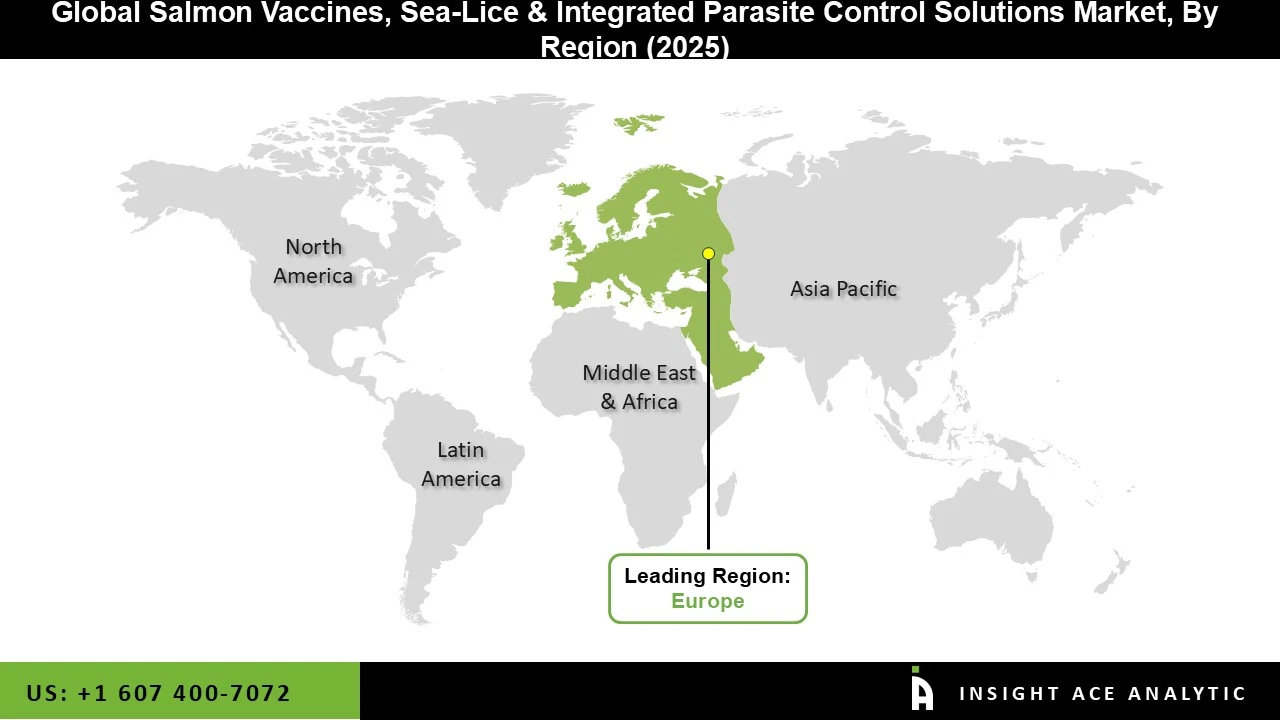
It was persistently challenged due to issues of sea-lice infestations and disease outbreaks. Stringent norms for the environment and the welfare of the aquatic animals along with the control of sea lice made way for the adoption of cutting-edge vaccines, sea-lice control solutions that are not chemical based, and comprehensive parasite control solutions. The presence of major R&D intensive companies along with innovative technology adopters like mechanical delousing and digital IPM contributed to the major market position of Europe.
Key Developments
• In August 2025, MSD Animal Health launched the next-generation FALCON vision technology at the Aqua Nor trade show in Trondheim, Norway. This AI-powered system uses high-resolution stereovision cameras and neural networks to monitor sea lice prevalence, fish wounds, and biomass in salmon farms in near real-time. It provides actionable insights via a cloud dashboard, enabling earlier lice detection, better treatment decisions, and improved fish welfare.
Salmon Vaccines, Sea-Lice & Integrated Parasite Control Solutions Market Report Scope:
| Report Attribute | Specifications |
| Growth Rate CAGR | CAGR of 11.2% from 2026 to 2035 |
| Quantitative Units | Representation of revenue in US$ Bn and CAGR from 2026 to 2035 |
| Historic Year | 2022 to 2024 |
| Forecast Year | 2026-2035 |
| Report Coverage | The forecast of revenue, the position of the company, the competitive market structure, growth prospects, and trends |
| Segments Covered | Product Type, Disease / Parasite, Farming System and By Region |
| Regional Scope | North America; Europe; Asia Pacific; Latin America; Middle East & Africa |
| Country Scope | U.S.; Canada; U.K.; Germany; China; India; Japan; Brazil; Mexico; The UK; France; Italy; Spain; China; Japan; India; South Korea; Southeast Asia; South Korea; Southeast Asia |
| Competitive Landscape | Pharmaq (Zoetis), Zoetis, MSD Animal Health, HIPRA, Vaxxinova / Kyoto Biken, Tecnovax / Providean, Solvay, Aqua Pharma, ScaleAQ, Optimar, Skamik, Flatsetsund Engineering (FLS), Ace Aquatec, Stingray Marine Solutions, Bluegrove (CageEye), Blue Lice, Harbor AS, BioMar, Alltech (Aqua).,BioSort |
| Customization Scope | Free customization report with the procurement of the report, Modifications to the regional and segment scope. Geographic competitive landscape. |
| Pricing and Available Payment Methods | Explore pricing alternatives that are customized to your particular study requirements. |
Market Segmentation:
Salmon Vaccines, Sea-Lice & Integrated Parasite Control Solutions Market by Product Type -
• Salmon Vaccines
o Inactivated Vaccine
o Attenuated Live Vaccine
o Others
• Sea-Lice Control
o Chemical
Bath insecticides
In-feed therapeutics
Hydrogen peroxide treatments
o Mechanical / Physical
Thermolicers
Hydrolicers
Skamik, Skala jet systems
Wellboat-integrated delousing systems
Others
o Biological / Ecological Control
o Preventive Barriers & Engineering Controls
Lice skirts / barrier nets
Snorkel cages
Submerged & deep cages
Others
o Functional Feeds
Immunostimulant feeds
Skin strengthening diets
Anti-parasite functional diets
• Digital & Integrated Pest Management (IPM)
o AI lice-counting systems
o Behavioural sensors / biomass cameras
o Environmental monitoring
o Predictive analytics
o Others
• Services
Salmon Vaccines, Sea-Lice & Integrated Parasite Control Solutions Market by Disease / Parasite -
• Bacterial
• Viral
• Parasitic
Salmon Vaccines, Sea-Lice & Integrated Parasite Control Solutions Market by Farming System -
• Traditional open-net pens
• Semi-closed containment
• Offshore exposed farming
• Land-based RAS
Salmon Vaccines, Sea-Lice & Integrated Parasite Control Solutions Market by Region-
North America-
• The US
• Canada
Europe-
• Norway
• Greece
• Spain
• UK
• RoE
Asia-Pacific-
• China
• Indonesia
• Vietnam
• Japan
• Korea
• RoAPAC
Latin America-
• Chile
• Brazil
• Mexico
• Central America
• RoLATAM
Middle East & Africa-
• Egypt
• Turkey
• GCC countries
• RoMEA
Research Design and Approach
This study employed a multi-step, mixed-method research approach that integrates:
- Secondary research
- Primary research
- Data triangulation
- Hybrid top-down and bottom-up modelling
- Forecasting and scenario analysis
This approach ensures a balanced and validated understanding of both macro- and micro-level market factors influencing the market.
Secondary Research
Secondary research for this study involved the collection, review, and analysis of publicly available and paid data sources to build the initial fact base, understand historical market behaviour, identify data gaps, and refine the hypotheses for primary research.
Sources Consulted
Secondary data for the market study was gathered from multiple credible sources, including:
- Government databases, regulatory bodies, and public institutions
- International organizations (WHO, OECD, IMF, World Bank, etc.)
- Commercial and paid databases
- Industry associations, trade publications, and technical journals
- Company annual reports, investor presentations, press releases, and SEC filings
- Academic research papers, patents, and scientific literature
- Previous market research publications and syndicated reports
These sources were used to compile historical data, market volumes/prices, industry trends, technological developments, and competitive insights.

Primary Research
Primary research was conducted to validate secondary data, understand real-time market dynamics, capture price points and adoption trends, and verify the assumptions used in the market modelling.
Stakeholders Interviewed
Primary interviews for this study involved:
- Manufacturers and suppliers in the market value chain
- Distributors, channel partners, and integrators
- End-users / customers (e.g., hospitals, labs, enterprises, consumers, etc., depending on the market)
- Industry experts, technology specialists, consultants, and regulatory professionals
- Senior executives (CEOs, CTOs, VPs, Directors) and product managers
Interview Process
Interviews were conducted via:
- Structured and semi-structured questionnaires
- Telephonic and video interactions
- Email correspondences
- Expert consultation sessions
Primary insights were incorporated into demand modelling, pricing analysis, technology evaluation, and market share estimation.
Data Processing, Normalization, and Validation
All collected data were processed and normalized to ensure consistency and comparability across regions and time frames.
The data validation process included:
- Standardization of units (currency conversions, volume units, inflation adjustments)
- Cross-verification of data points across multiple secondary sources
- Normalization of inconsistent datasets
- Identification and resolution of data gaps
- Outlier detection and removal through algorithmic and manual checks
- Plausibility and coherence checks across segments and geographies
This ensured that the dataset used for modelling was clean, robust, and reliable.
Market Size Estimation and Data Triangulation
Bottom-Up Approach
The bottom-up approach involved aggregating segment-level data, such as:
- Company revenues
- Product-level sales
- Installed base/usage volumes
- Adoption and penetration rates
- Pricing analysis
This method was primarily used when detailed micro-level market data were available.

Top-Down Approach
The top-down approach used macro-level indicators:
- Parent market benchmarks
- Global/regional industry trends
- Economic indicators (GDP, demographics, spending patterns)
- Penetration and usage ratios
This approach was used for segments where granular data were limited or inconsistent.
Hybrid Triangulation Approach
To ensure accuracy, a triangulated hybrid model was used. This included:
- Reconciling top-down and bottom-up estimates
- Cross-checking revenues, volumes, and pricing assumptions
- Incorporating expert insights to validate segment splits and adoption rates
This multi-angle validation yielded the final market size.
Forecasting Framework and Scenario Modelling
Market forecasts were developed using a combination of time-series modelling, adoption curve analysis, and driver-based forecasting tools.
Forecasting Methods
- Time-series modelling
- S-curve and diffusion models (for emerging technologies)
- Driver-based forecasting (GDP, disposable income, adoption rates, regulatory changes)
- Price elasticity models
- Market maturity and lifecycle-based projections
Scenario Analysis
Given inherent uncertainties, three scenarios were constructed:
- Base-Case Scenario: Expected trajectory under current conditions
- Optimistic Scenario: High adoption, favourable regulation, strong economic tailwinds
- Conservative Scenario: Slow adoption, regulatory delays, economic constraints
Sensitivity testing was conducted on key variables, including pricing, demand elasticity, and regional adoption.
Request Customization
Add countries, segments, company profiles, or extend forecast — free 10% customization with purchase.
Customize This Report →Enquire Before Buying
Speak with our analyst team about scope, methodology, pricing, or deliverable formats.
Enquire Now →Frequently Asked Questions
Salmon Vaccines, Sea-Lice and Integrated Parasite Control Solutions Market Size is predicted to develop a 11.2% CAGR during the forecast period for 2026 to 2035.
Pharmaq (Zoetis), Zoetis, MSD Animal Health, HIPRA, Vaxxinova / Kyoto Biken, Tecnovax / Providean, Solvay, Aqua Pharma, ScaleAQ, Optimar, Skamik, Flatsetsund Engineering (FLS), Ace Aquatec, Stingray Marine Solutions, Bluegrove (CageEye), Blue Lice, Harbor AS, BioMar, Alltech (Aqua).,BioSort
Salmon Vaccines, Sea-Lice and Integrated Parasite Control Solutions Market segmentation by Product Type, Disease / Parasite, Farming System and By Region
Europe region is leading the Salmon Vaccines, Sea-Lice and Integrated Parasite Control Solutions Market.