Protein Degrader Therapeutics (PROTACs and Molecular Glues) Market Size, Share, Scope Report 2026 to 2035
What is Protein Degrader Therapeutics (PROTACs and Molecular Glues) Market Size?
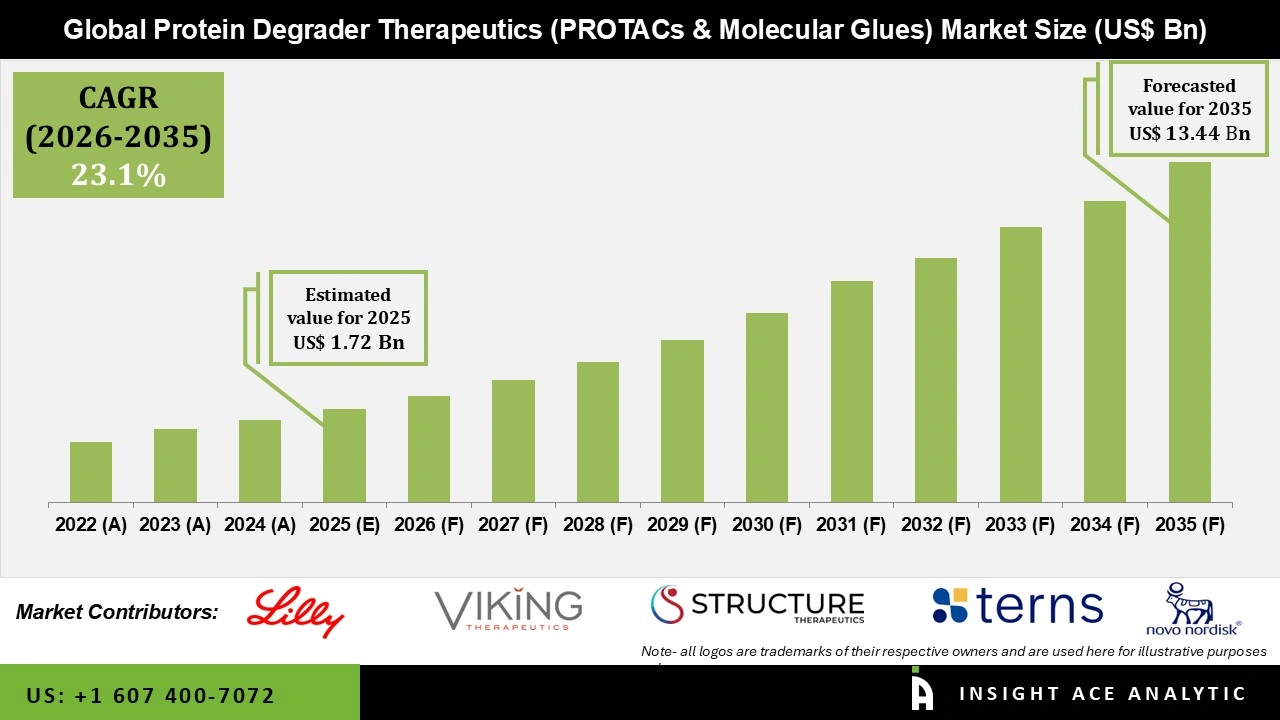
Global Protein Degrader Therapeutics (PROTACs and Molecular Glues) Market Size is valued at USD 1.72 Bn in 2025 and is predicted to reach USD 13.44 Bn by the year 2035 at a 23.1% CAGR during the forecast period for 2026 to 2035.
Protein Degrader Therapeutics (PROTACs and Molecular Glues) Market Size, Share & Trends Analysis by Type (PROTACs (Proteolysis-Targeting Chimeras), Molecular Glue Degraders, LYTACs (Lysosome-Targeting Chimeras), Bi-functional Heterobifunctional Degraders), by Application (Oncology (Solid Tumors & Hematologic), Neurodegeneration, Autoimmune & Inflammatory Diseases, Virology & Infectious Disease), by End User (Oncology Clinics & Cancer Centers, Academic Medical Research Institutes, Pharmaceutical R&D Divisions, Specialty Hospitals), and Segment Forecasts, 2026 to 2035.
Protein degrader therapeutics are an emerging class of targeted medicines that selectively eliminate disease-causing proteins by hijacking the cell’s natural ubiquitin-proteasome system. Unlike conventional drugs that inhibit protein function, degraders — such as Proteolysis Targeting Chimeras (PROTACs) and molecular glues induce the ubiquitination and subsequent proteasomal degradation of specific target proteins. This event-driven mechanism enables the complete removal of proteins, including those previously considered “undruggable,” offering a more profound and durable therapeutic effect.
By addressing the root cause of disease at the protein level, this modality holds significant promise across multiple therapeutic areas, including oncology, neurodegenerative diseases, immunology, and rare genetic disorders. The field has advanced rapidly due to breakthroughs in structural biology, E3 ligase biology, and medicinal chemistry, attracting substantial investment from both pharmaceutical companies and biotechnology firms. Protein degraders are increasingly viewed as a next-generation therapeutic platform with the potential to transform treatment paradigms for complex diseases.
Competitive Landscape
Which are the Leading Players in Protein Degrader Therapeutics (PROTACs and Molecular Glues) Market?
- Arvinas Inc.
- C4 Therapeutics
- Kymera Therapeutics
- Monte Rosa Therapeutics
- Nurix Therapeutics
- Bristol Myers Squibb
- Amgen Inc.
- F. Hoffmann-La Roche Ltd.
- Novartis AG
- Pfizer Inc.
- Merck & Co., Inc.
- Boehringer Ingelheim
- Genentech
- AbbVie Inc.
- GSK plc
- Evotec SE
- BioTheryX
- Amphista Therapeutics
- Captor Therapeutics
- Ranok Therapeutics
- Frontier Medicines
- Degron Therapeutics
- Cullgen Inc.
- Vividion Therapeutics
- Bayer AG
Market Dynamics
Driver
Increasing Focus on Precision Medicine and Targeted Therapies
The trend toward increased importance being placed on precision medicines is predicted to be a key factor influencing the market growth for protein degrader therapeutics over the forecast period. Small molecules, which are traditional medicines, have certain limitations in their ability to act against complex proteins responsible for causing diseases. Dealing with such proteins through protein degradation is an innovative solution to overcome the limitations of conventional small molecule drugs since protein degradation involves complete destruction of harmful proteins in the cells.
Restrain/Challenge
Complex Drug Development and Regulatory Uncertainty
Despite the promising potential of protein degrader therapeutics, the market faces challenges related to complex drug development processes and regulatory uncertainties. Designing molecules capable of selectively degrading target proteins while maintaining favorable pharmacokinetic properties remains technically demanding. Additionally, long development timelines, high research costs, and limited regulatory precedents for this emerging therapeutic class may hinder market growth. Manufacturing complexities and safety concerns associated with off-target protein degradation also present significant barriers for developers.
Oncology Segment is Expected to Drive the Protein Degrader Therapeutics Market
In terms of revenue, the oncology segment was the leading one in the protein degrader therapeutic drugs market during the year 2025. The protein degradation therapies' applications have mostly concentrated on cancer since there is a need to introduce new methods for treating proteins that are not responding to conventional treatment procedures. The most promising results of degrading these oncogenic proteins are shown for breast cancer, prostate cancer, leukemia, lymphoma, and lung cancers using PROTACs and molecular glues.
Molecular Glues Segment is Growing at the Highest Rate in the Protein Degrader Therapeutics Market
The segment of molecular glues will have the highest CAGR over the forecast period. The term refers to small molecules that promote the interaction between a targeted protein and an E3 ligase, thereby leading to selective degradation of the proteins. The simplicity in their structure and pharmacological advantages, along with various potential applications in research, have led to considerable interest from pharmaceutical companies. There will be ample growth prospects for this segment due to recent findings.
Why North America Led the Protein Degrader Therapeutics (PROTACs & Molecular Glues) Market?
North America accounted for the majority share of the protein degrader therapeutics market owing to the existence of biotech firms, highly developed research facilities, and investments made in drug discovery initiatives. The U.S. is one of the top innovators in the field of protein degradation technologies and has been supported through renowned universities and venture capitals.
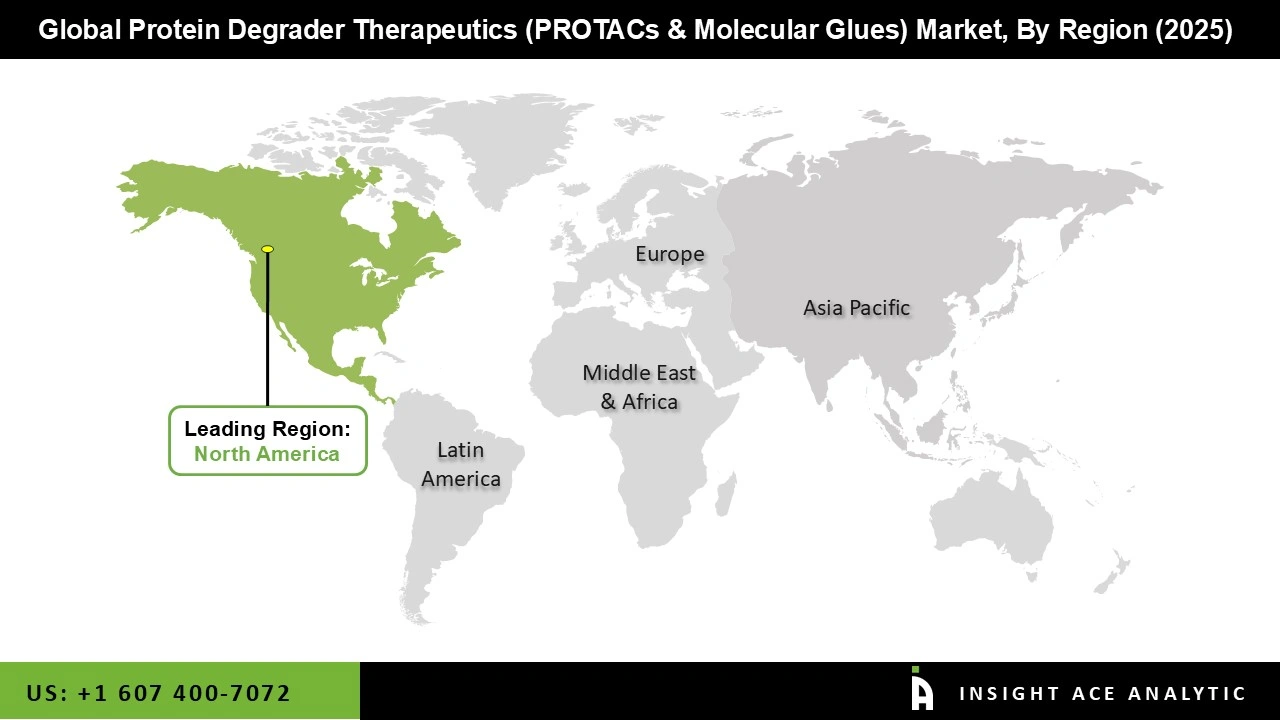
Moreover, favorable government regulations, increased clinical trials, and collaborations between pharmaceutical and research firms in the region have been crucial factors contributing to the growth of the market.
Protein Degrader Therapeutics (PROTACs and Molecular Glues) Market Report Scope:
| Report Attribute | Specifications |
| Market size value in 2025 | USD 1.72 Bn |
| Revenue forecast in 2035 | USD 13.44 Bn |
| Growth Rate CAGR | CAGR of 23.1% from 2026 to 2035 |
| Quantitative Units | Representation of revenue in US$ Bn and CAGR from 2026 to 2035 |
| Historic Year | 2022 to 2025 |
| Forecast Year | 2026-2035 |
| Report Coverage | The forecast of revenue, the position of the company, the competitive market structure, growth prospects, and trends |
| Segments Covered | Type, Application, End-User, and By Region |
| Regional Scope | North America; Europe; Asia Pacific; Latin America; Middle East & Africa |
| Country Scope | U.S.; Canada; U.K.; Germany; China; India; Japan; Brazil; Mexico; The UK; France; Italy; Spain; China; Japan; India; South Korea; Southeast Asia; South Korea; Southeast Asia |
| Competitive Landscape | Arvinas Inc., C4 Therapeutics, Kymera Therapeutics, Monte Rosa Therapeutics, Nurix Therapeutics, Bristol Myers Squibb, Amgen Inc., Roche, Novartis AG, Pfizer Inc., Merck & Co., Boehringer Ingelheim, Genentech, AbbVie Inc., GSK plc, Evotec SE, BioTheryX, Amphista Therapeutics, Captor Therapeutics, Ranok Therapeutics, Frontier Medicines, Degron Therapeutics, Cullgen Inc., Vividion Therapeutics, and Bayer AG. |
| Customization Scope | Free customization report with the procurement of the report, Modifications to the regional and segment scope. Geographic competitive landscape. |
| Pricing and Available Payment Methods | Explore pricing alternatives that are customized to your particular study requirements. |
Segmentations of Protein Degrader Therapeutics (PROTACs & Molecular Glues) Market :
Protein Degrader Therapeutics (PROTACs & Molecular Glues) Market by Type-
- PROTACs (Proteolysis-Targeting Chimeras)
- Molecular Glue Degraders
- LYTACs (Lysosome-Targeting Chimeras)
- Bi-functional Heterobifunctional Degraders
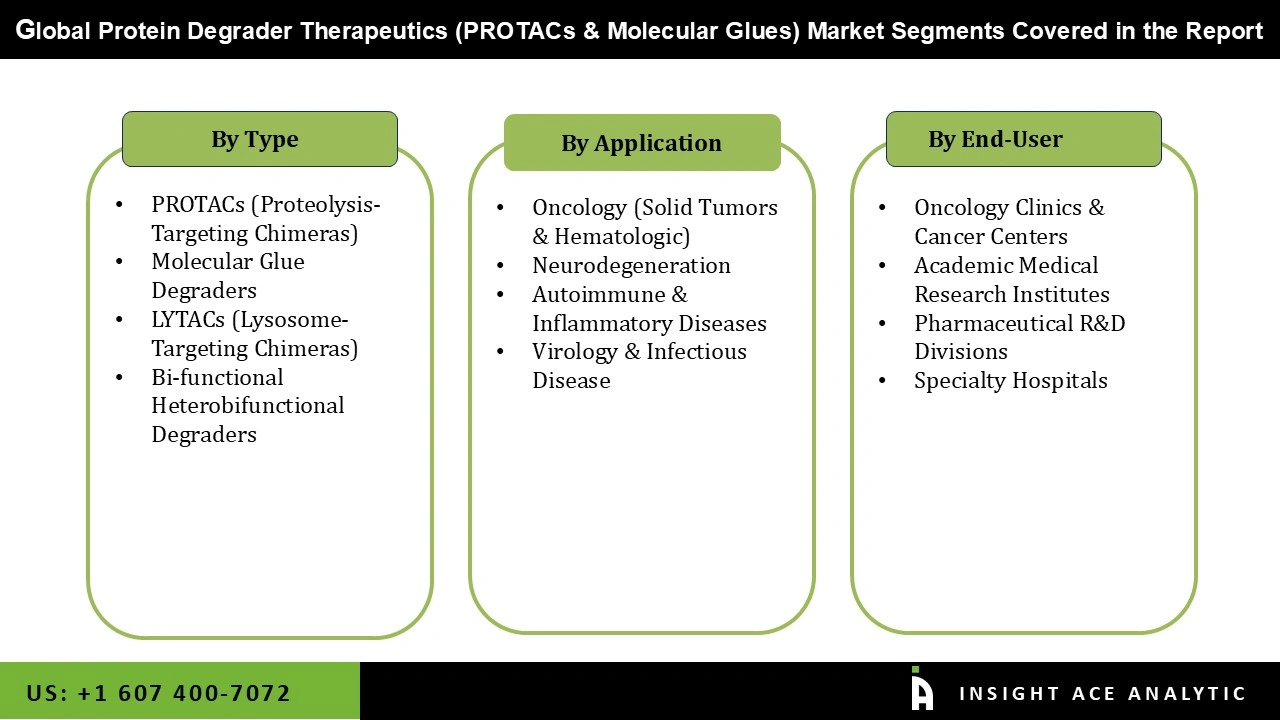
Protein Degrader Therapeutics (PROTACs & Molecular Glues) Market by Application-
- Oncology (Solid Tumors & Hematologic)
- Neurodegeneration
- Autoimmune & Inflammatory Diseases
- Virology & Infectious Disease
Protein Degrader Therapeutics (PROTACs & Molecular Glues) Market by End-user -
- Oncology Clinics & Cancer Centers
- Academic Medical Research Institutes
- Pharmaceutical R&D Divisions
- Specialty Hospitals
Protein Degrader Therapeutics (PROTACs & Molecular Glues) Market by Region-
- North America-
- The US
- Canada
- Europe-
- Germany
- The UK
- France
- Italy
- Spain
- Rest of Europe
- Asia-Pacific-
- China
- Japan
- India
- South Korea
- South East Asia
- Rest of Asia Pacific
- Latin America-
- Brazil
- Argentina
- Mexico
- Rest of Latin America
- Middle East and Africa-
- GCC Countries
- South Africa
- Rest of Middle East and Africa
Research Design and Approach
This study employed a multi-step, mixed-method research approach that integrates:
- Secondary research
- Primary research
- Data triangulation
- Hybrid top-down and bottom-up modelling
- Forecasting and scenario analysis
This approach ensures a balanced and validated understanding of both macro- and micro-level market factors influencing the market.
Secondary Research
Secondary research for this study involved the collection, review, and analysis of publicly available and paid data sources to build the initial fact base, understand historical market behaviour, identify data gaps, and refine the hypotheses for primary research.
Sources Consulted
Secondary data for the market study was gathered from multiple credible sources, including:
- Government databases, regulatory bodies, and public institutions
- International organizations (WHO, OECD, IMF, World Bank, etc.)
- Commercial and paid databases
- Industry associations, trade publications, and technical journals
- Company annual reports, investor presentations, press releases, and SEC filings
- Academic research papers, patents, and scientific literature
- Previous market research publications and syndicated reports
These sources were used to compile historical data, market volumes/prices, industry trends, technological developments, and competitive insights.

Primary Research
Primary research was conducted to validate secondary data, understand real-time market dynamics, capture price points and adoption trends, and verify the assumptions used in the market modelling.
Stakeholders Interviewed
Primary interviews for this study involved:
- Manufacturers and suppliers in the market value chain
- Distributors, channel partners, and integrators
- End-users / customers (e.g., hospitals, labs, enterprises, consumers, etc., depending on the market)
- Industry experts, technology specialists, consultants, and regulatory professionals
- Senior executives (CEOs, CTOs, VPs, Directors) and product managers
Interview Process
Interviews were conducted via:
- Structured and semi-structured questionnaires
- Telephonic and video interactions
- Email correspondences
- Expert consultation sessions
Primary insights were incorporated into demand modelling, pricing analysis, technology evaluation, and market share estimation.
Data Processing, Normalization, and Validation
All collected data were processed and normalized to ensure consistency and comparability across regions and time frames.
The data validation process included:
- Standardization of units (currency conversions, volume units, inflation adjustments)
- Cross-verification of data points across multiple secondary sources
- Normalization of inconsistent datasets
- Identification and resolution of data gaps
- Outlier detection and removal through algorithmic and manual checks
- Plausibility and coherence checks across segments and geographies
This ensured that the dataset used for modelling was clean, robust, and reliable.
Market Size Estimation and Data Triangulation
Bottom-Up Approach
The bottom-up approach involved aggregating segment-level data, such as:
- Company revenues
- Product-level sales
- Installed base/usage volumes
- Adoption and penetration rates
- Pricing analysis
This method was primarily used when detailed micro-level market data were available.

Top-Down Approach
The top-down approach used macro-level indicators:
- Parent market benchmarks
- Global/regional industry trends
- Economic indicators (GDP, demographics, spending patterns)
- Penetration and usage ratios
This approach was used for segments where granular data were limited or inconsistent.
Hybrid Triangulation Approach
To ensure accuracy, a triangulated hybrid model was used. This included:
- Reconciling top-down and bottom-up estimates
- Cross-checking revenues, volumes, and pricing assumptions
- Incorporating expert insights to validate segment splits and adoption rates
This multi-angle validation yielded the final market size.
Forecasting Framework and Scenario Modelling
Market forecasts were developed using a combination of time-series modelling, adoption curve analysis, and driver-based forecasting tools.
Forecasting Methods
- Time-series modelling
- S-curve and diffusion models (for emerging technologies)
- Driver-based forecasting (GDP, disposable income, adoption rates, regulatory changes)
- Price elasticity models
- Market maturity and lifecycle-based projections
Scenario Analysis
Given inherent uncertainties, three scenarios were constructed:
- Base-Case Scenario: Expected trajectory under current conditions
- Optimistic Scenario: High adoption, favourable regulation, strong economic tailwinds
- Conservative Scenario: Slow adoption, regulatory delays, economic constraints
Sensitivity testing was conducted on key variables, including pricing, demand elasticity, and regional adoption.
Request Customization
Add countries, segments, company profiles, or extend forecast — free 10% customization with purchase.
Customize This Report →Enquire Before Buying
Speak with our analyst team about scope, methodology, pricing, or deliverable formats.
Enquire Now →Frequently Asked Questions
Protein Degrader Therapeutics (PROTACs and Molecular Glues) Market Size is valued at USD 1.72 Bn in 2025 and is predicted to reach USD 13.44 Bn by the year 2035
The Protein Degrader Therapeutics (PROTACs and Molecular Glues)Market is expected to grow at a 23.1 % CAGR during the forecast period for 2026 to 2035
Arvinas Inc., C4 Therapeutics, Kymera Therapeutics, Monte Rosa Therapeutics, Nurix Therapeutics, Bristol Myers Squibb, Amgen Inc., Roche, Novartis AG, Pfizer Inc., Merck & Co., Boehringer Ingelheim, Genentech, AbbVie Inc., GSK plc, Evotec SE, BioTheryX, Amphista Therapeutics, Captor Therapeutics, Ranok Therapeutics, Frontier Medicines, Degron Therapeutics, Cullgen Inc., Vividion Therapeutics, Bayer AG. and Others.
Protein Degrader Therapeutics (PROTACs and Molecular Glues) Market is segmented into Type, Application, End-User and Others.
North America region is leading the Protein Degrader Therapeutics (PROTACs and Molecular Glues) Market.