Pet Proactive Wellness Market Share & Trends Analysis Report, By Type (Product Type, Service Type), By Pet Type (Dogs, Cats, Other Pets), By Distribution Channel (Veterinary Clinics & Hospitals, Pet Specialty Stores, Online Retailers, Direct-to-Consumer (DTC) Brands, Pet Care & Wellness Centers), By Region, and Segment Forecasts, 2025-2034
Pet Proactive Wellness Market Size is predicted to develop with a 8.5% CAGR during the forecast period for 2025-2034.
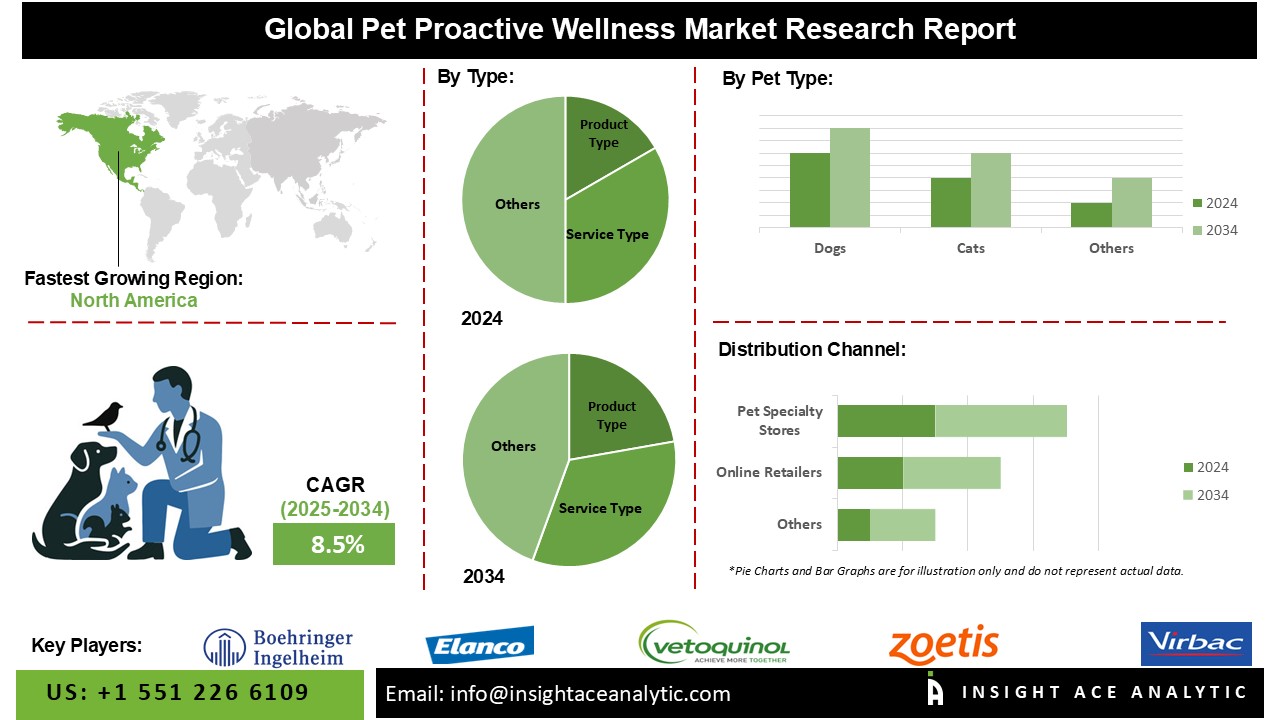
Proactive pet care aims to maintain an animal's health and well-being by taking preventive measures before any issues arise. This strategy places more emphasis on the continuous promotion of general well-being through routine checkups, a balanced diet, and regular exercise than it does on responding to sickness. One of the key benefits of proactive care is the early detection of conditions like diabetes, dental disease, and arthritis through routine screenings, which allows for more effective and less invasive treatment. Addressing health concerns early helps pets stay active, pain-free, and enthusiastic, ultimately extending their lifespan and enhancing their quality of life. By preventing or delaying the onset of diseases that can cause discomfort, proactive care not only improves a pet’s health outcomes but also reduces the need for emergency interventions.
The market for proactive pet wellness, driven by the growing trend of pet humanization and increased knowledge of preventative healthcare, depends heavily on nutritional supplements and vitamins. The pet owners' growing emphasis on improving lifespan and quality of life, these items aid in addressing nutritional deficiencies, promoting general well-being, and addressing particular medical issues. At the same time, health monitoring gadgets are turning into indispensable instruments for proactive pet care, enabling early identification of possible problems and individualized treatment through cutting-edge technology. When taken as a whole, these developments show how pet health management is moving toward more knowledgeable, preventative, and data-driven strategies. Pet owners are increasingly investing in wellness products and services as a result of growing understanding of the advantages of proactive treatment, such as early detection and prevention of chronic illnesses, including obesity, arthritis, and dental disease.
Competitive Landscape
Some of the major key players in the pet proactive wellness market are
- Nestlé Purina PetCare
- Hill's Pet Nutrition (a division of Colgate-Palmolive)
- Zoetis Inc.
- Bayer Animal Health (Bayer AG)
- Boehringer Ingelheim Vetmedica
- Virbac
- Elanco Animal Health
- Royal Canin (Mars Petcare)
- Pet Naturals of Vermont
- Vetoquinol
- FURminator (Part of Spectrum Brands)
- Swanson Pet
- Zesty Paws (Holistic Pet Nutrition)
- Vet’s Best
- Harrisons Pet Nutrition
- Nutramax Laboratories (maker of Dasuquin, GlycoFlex)
- Zymox (an Elanco brand)
- PetPro Supplements
- PetLab Co.
- NaturVet
- Vibrant Pets
- PetWellness Co.
- Petcurean
- The Honest Kitchen
- PetRemedy
- PetHonesty
- Gutzy Pets
Market Segmentation
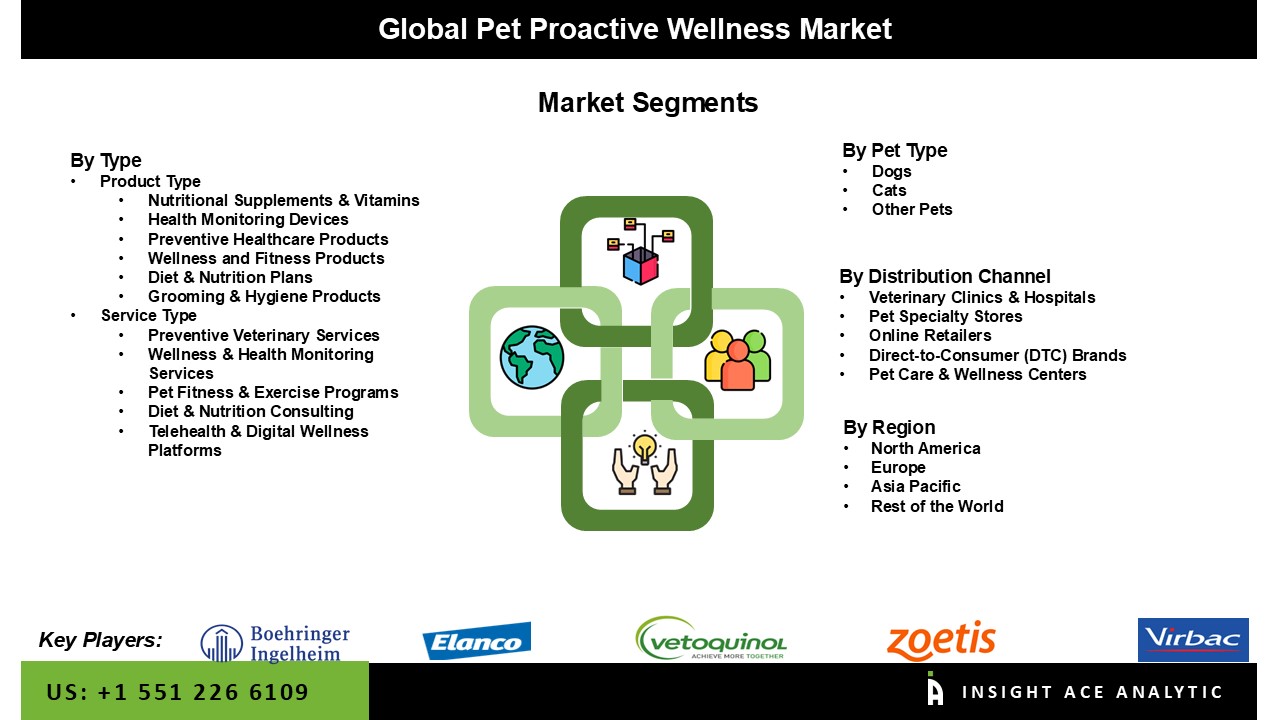
The pet proactive wellness market is segmented into type, pet type, and distribution channel. Based on type, the market is segmented into product type and service type. Based on the pet type, the market is divided into dogs, cats, and other pets. Based on the distribution channel, the market is divided into machine learning, deep learning, generative AI, natural language processing, and reinforcement learning. Based on the end-user, the market is divided into veterinary clinics & hospitals, pet specialty stores, online retailers, direct-to-consumer (DTC) brands, and pet care & wellness centers.
The Product Type Segment is Expected to Have the Highest Growth
Products like supplements, functional treats, flea and tick preventives, dental chews, and grooming items are widely available through retail stores, e-commerce platforms, and veterinary clinics, making them easily accessible to pet owners. Unlike services, these products can be mass-produced and distributed globally, allowing for broader market reach. Product types dominate the proactive pet wellness market because they offer scalability, convenience, and recurring revenue opportunities through repeat purchases. Their ease of use and availability support consistent preventive care at home, while growing trends in personalized nutrition, wellness-focused formulations, and direct-to-consumer sales further drive demand and market expansion.
The Oncology Segment Dominates the Market
Dogs require more frequent preventive interventions such as vaccinations, parasite control, dental care, and joint supplements, which significantly drive spending on proactive wellness products and services. Their active lifestyles also make them prime candidates for dog-specific fitness solutions like treadmills, agility training, and physiotherapy, further expanding the market. As a result, dogs dominate the proactive pet wellness market in terms of total share, fueled by their large population, higher healthcare and maintenance needs, greater economic investment by owners, and focused innovation in dog-targeted products and services.
North America Has the Largest Market Share During the Forecast Period.
North America has the largest market share, in the United States leads the pet proactive wellness market due to several key factors. With over 66–70% of households owning pets, the country exhibits high pet ownership rates that significantly fuel market demand. Pet owners are also willing to invest heavily in premium offerings, including advanced nutrition, supplements, insurance, diagnostics, and wellness plans. This is supported by a robust veterinary infrastructure and a strong culture of proactive pet care, enabling widespread use of preventive services. Additionally, the U.S. serves as an innovation hub, with early adoption of pet technologies such as wearables, at-home diagnostics, telemedicine, and direct-to-consumer (DTC) models, further accelerating market growth.
Recent Developments:
- In May 2025, Pro Plan Veterinary Supplements presented Skin Care, a novel supplement designed to help dogs with sensitive skin proactively. Skin Care is a specially formulated multi-active blend created by Purina researchers and veterinarians to support dogs with sensitive skin, especially those with seasonal allergies. Pro Plan Veterinary Supplements Skin Care is a prescription-free product that supports skin health by combining collagen, EPA + DHA, vitamin E, and zinc. Additionally, it contains zinc and vitamin E to support a robust immune system, as well as omega 6 and omega-3 fatty acids to support dogs with sensitive skin by preserving the skin's natural protective barrier. For dogs, the mixture helps keep their skin hydrated.
- In June 2024, Virbac declared that it would be partnering with the Association for Pet Obesity Prevention (APOP) to address the growing health risk of pet obesity in the US. The two organizations acknowledge the critical need to address the hormonal and metabolic changes that follow the spay or neuter procedure, which predispose pets to obesity and obesity-related illness and health complications, given that an alarming 56% of dogs and 60% of cats are classified as overweight or obese, according to veterinary experts. By working together with APOP, Virbac hopes to create teaching materials and instruments for pet owners and veterinary clinics that highlight the value of customized diets in preserving the metabolic health of animals after spaying or neutering.
Pet Proactive Wellness Market Report Scope
| Report Attribute | Specifications |
| Growth Rate CAGR | CAGR of 8.5% from 2025 to 2034 |
| Quantitative Units | Representation of revenue in US$ Mn and CAGR from 2025 to 2034 |
| Historic Year | 2021 to 2024 |
| Forecast Year | 2025-2034 |
| Report Coverage | The forecast of revenue, the position of the company, the competitive market structure, growth prospects, and trends |
| Segments Covered | By Type, Pet Type, Distribution Channel |
| Regional Scope | North America; Europe; Asia Pacific; Latin America; Middle East & Africa |
| Country Scope | U.S.; Canada; U.K.; Germany; China; India; Japan; Brazil; Mexico; The UK; France; Italy; Spain; China; Japan; India; South Korea; Southeast Asia; South Korea; South East Asia |
| Competitive Landscape | Nestlé Purina PetCare, Hill's Pet Nutrition (a division of Colgate-Palmolive), Zoetis Inc, Bayer Animal Health (Bayer AG), Boehringer Ingelheim Vetmedica, Virbac, Elanco Animal Health, Royal Canin (Mars Petcare), Pet Naturals of Vermont, Vetoquinol, FURminator (Part of Spectrum Brands), Swanson Pet, Zesty Paws (Holistic Pet Nutrition), Vet’s Best, Harrisons Pet Nutrition, Nutramax Laboratories (maker of Dasuquin, GlycoFlex), Zymox (an Elanco brand), PetPro Supplements, PetLab Co, NaturVet, Vibrant Pets, PetWellness Co, Petcurean, The Honest Kitchen, PetRemedy, PetHonesty, Gutzy Pets |
| Customization Scope | Free customization report with the procurement of the report and modifications to the regional and segment scope. Particular Geographic competitive landscape. |
| Pricing and Available Payment Methods | Explore pricing alternatives that are customized to your particular study requirements. |
Segmentation of the Pet Proactive Wellness Market
Global Pet Proactive Wellness Market - By Type
- Product Type
- Nutritional Supplements & Vitamins
- Health Monitoring Devices
- Preventive Healthcare Products
- Wellness and Fitness Products
- Diet & Nutrition Plans
- Grooming & Hygiene Products
- Service Type
- Preventive Veterinary Services
- Wellness & Health Monitoring Services
- Pet Fitness & Exercise Programs
- Diet & Nutrition Consulting
- Telehealth & Digital Wellness Platforms
Global Pet Proactive Wellness Market – By Pet Type
- Dogs
- Cats
- Other Pets
Global Pet Proactive Wellness Market – By Distribution Channel
- Veterinary Clinics & Hospitals
- Pet Specialty Stores
- Online Retailers
- Direct-to-Consumer (DTC) Brands
- Pet Care & Wellness Centers
Global Pet Proactive Wellness Market – By Region
North America-
- The US
- Canada
Europe-
- Germany
- The UK
- France
- Italy
- Spain
- Rest of Europe
Asia-Pacific-
- China
- Japan
- India
- South Korea
- Southeast Asia
- Rest of Asia Pacific
Latin America-
- Brazil
- Argentina
- Mexico
- Rest of Latin America
Middle East & Africa-
- GCC Countries
- South Africa
- Rest of the Middle East and Africa
Research Design and Approach
This study employed a multi-step, mixed-method research approach that integrates:
- Secondary research
- Primary research
- Data triangulation
- Hybrid top-down and bottom-up modelling
- Forecasting and scenario analysis
This approach ensures a balanced and validated understanding of both macro- and micro-level market factors influencing the market.
Secondary Research
Secondary research for this study involved the collection, review, and analysis of publicly available and paid data sources to build the initial fact base, understand historical market behaviour, identify data gaps, and refine the hypotheses for primary research.
Sources Consulted
Secondary data for the market study was gathered from multiple credible sources, including:
- Government databases, regulatory bodies, and public institutions
- International organizations (WHO, OECD, IMF, World Bank, etc.)
- Commercial and paid databases
- Industry associations, trade publications, and technical journals
- Company annual reports, investor presentations, press releases, and SEC filings
- Academic research papers, patents, and scientific literature
- Previous market research publications and syndicated reports
These sources were used to compile historical data, market volumes/prices, industry trends, technological developments, and competitive insights.

Primary Research
Primary research was conducted to validate secondary data, understand real-time market dynamics, capture price points and adoption trends, and verify the assumptions used in the market modelling.
Stakeholders Interviewed
Primary interviews for this study involved:
- Manufacturers and suppliers in the market value chain
- Distributors, channel partners, and integrators
- End-users / customers (e.g., hospitals, labs, enterprises, consumers, etc., depending on the market)
- Industry experts, technology specialists, consultants, and regulatory professionals
- Senior executives (CEOs, CTOs, VPs, Directors) and product managers
Interview Process
Interviews were conducted via:
- Structured and semi-structured questionnaires
- Telephonic and video interactions
- Email correspondences
- Expert consultation sessions
Primary insights were incorporated into demand modelling, pricing analysis, technology evaluation, and market share estimation.
Data Processing, Normalization, and Validation
All collected data were processed and normalized to ensure consistency and comparability across regions and time frames.
The data validation process included:
- Standardization of units (currency conversions, volume units, inflation adjustments)
- Cross-verification of data points across multiple secondary sources
- Normalization of inconsistent datasets
- Identification and resolution of data gaps
- Outlier detection and removal through algorithmic and manual checks
- Plausibility and coherence checks across segments and geographies
This ensured that the dataset used for modelling was clean, robust, and reliable.
Market Size Estimation and Data Triangulation
Bottom-Up Approach
The bottom-up approach involved aggregating segment-level data, such as:
- Company revenues
- Product-level sales
- Installed base/usage volumes
- Adoption and penetration rates
- Pricing analysis
This method was primarily used when detailed micro-level market data were available.

Top-Down Approach
The top-down approach used macro-level indicators:
- Parent market benchmarks
- Global/regional industry trends
- Economic indicators (GDP, demographics, spending patterns)
- Penetration and usage ratios
This approach was used for segments where granular data were limited or inconsistent.
Hybrid Triangulation Approach
To ensure accuracy, a triangulated hybrid model was used. This included:
- Reconciling top-down and bottom-up estimates
- Cross-checking revenues, volumes, and pricing assumptions
- Incorporating expert insights to validate segment splits and adoption rates
This multi-angle validation yielded the final market size.
Forecasting Framework and Scenario Modelling
Market forecasts were developed using a combination of time-series modelling, adoption curve analysis, and driver-based forecasting tools.
Forecasting Methods
- Time-series modelling
- S-curve and diffusion models (for emerging technologies)
- Driver-based forecasting (GDP, disposable income, adoption rates, regulatory changes)
- Price elasticity models
- Market maturity and lifecycle-based projections
Scenario Analysis
Given inherent uncertainties, three scenarios were constructed:
- Base-Case Scenario: Expected trajectory under current conditions
- Optimistic Scenario: High adoption, favourable regulation, strong economic tailwinds
- Conservative Scenario: Slow adoption, regulatory delays, economic constraints
Sensitivity testing was conducted on key variables, including pricing, demand elasticity, and regional adoption.
Request Customization
Add countries, segments, company profiles, or extend forecast — free 10% customization with purchase.
Customize This Report →Enquire Before Buying
Speak with our analyst team about scope, methodology, pricing, or deliverable formats.
Enquire Now →Frequently Asked Questions
Pet Proactive Wellness Market Size is predicted to develop with a 8.5% CAGR during the forecast period for 2025-2034.
Nestlé Purina PetCare, Hill's Pet Nutrition (a division of Colgate-Palmolive), Zoetis Inc, Bayer Animal Health (Bayer AG), Boehringer Ingelheim Vetmed
Pet proactive wellness market is segmented into type, pet type, and distribution channel.
North America region is leading the Pet Proactive Wellness Market.