Global Patient Support Programs (PSP) Market Size is valued at USD 21.8 Billion in 2024 and is predicted to reach USD 104.7 Billion by the year 2034 at a 17.1% CAGR during the forecast period for 2025-2034.

The patient support programs (PSP) market is a rapidly expanding segment of the healthcare and pharmaceutical industries, driven by an increased emphasis on patient-centric care and the desire to improve treatment outcomes. PSPs are in high demand as healthcare becomes more patient-centred. Patients want more than just medication; they want information, support, and resources to manage their health issues effectively. PSPs are particularly common in treating chronic diseases such as diabetes, cancer, and autoimmune disorders.
These programs assist patients in adhering to treatment plans, dealing with side effects, and improving their overall quality of life. The rising frequency of chronic diseases, increased patient demand for comprehensive care, and the use of technology for remote monitoring and participation. Pharmaceutical companies see PSPs as improving patient outcomes while building brand loyalty. PSP providers face regulatory compliance and patient data privacy problems. It can be difficult to secure patient information while navigating complex healthcare legislation.
The PSP market has significant room for expansion, particularly in emerging economies. Digital health technology advancements and growing engagement with healthcare providers present the potential for further innovation and expansion. PSPs can improve patient adherence, overall health outcomes, and healthcare experience, making them an important part of modern healthcare delivery.
Competitive Landscape
Some Major Key Players In The Patient Support Programs (PSP) Market:
- Allscripts Healthcare, LLC
- Orion Health
- Cerner Corporation
- McKesson Corporation
- athenahealth, Inc.
- IBM
- Medecision
- GetWellNetwork, Inc.
- MEDHOST
- Lincor
- IQVIA
- Wolters Kluwer N.V.
- Force Therapeutics LLC
- Quil
- Greenway Health, LLC
- Mytonomy
- Klara Technologies, Inc.
- Solutionreach, Inc.
- CureMD Healthcare
- Patient point LLC
- Vivify Health
- Nuance Communications, Inc.
- Others
Market Segmentation:
The Patient Support Programs (PSP) market is segmented based on Functionality, Therapeutic area, Application, and End User. As per the Functionality, the market is segmented as communication, health tracking & insights, billing & payments, administrative support, and patient education. By Therapeutic area, the market is segmented into Health & Wellness and Chronic Disease Management, and other therapeutic area. The market is segmented by application into Population Health Management, Outpatient Health Management, In-patient Health Management, and others. By end user, the market is segmented into payers, providers, and others.
Based On Functionality, The Health Tracking & Insights Segment Is A Major Contributor In The Patient Support Programs (PSP) Market.
The health tracking & insights category will hold a major share of the global Patient Support Programs (PSP) market 2024. Frequently integrated into digital health solutions, these technologies provide real-time monitoring and data collecting, allowing for individualized care and patient interaction. Data-driven health insights enable healthcare professionals and pharmaceutical businesses to personalize support packages to particular patient needs. This not only improves medication adherence and overall health outcomes, but it also increases the efficacy of PSPs. As a result, including Health Tracking and insights into PSPs is becoming increasingly important, contributing to market growth by offering more targeted and efficient patient support.
The Population Health Management Segment Witnessed Growth At A Rapid Rate.
The population health management segment is estimated to grow rapidly in the global Patient Support Programs (PSP) market PHM techniques are designed to improve the health of entire patient groups, making them an excellent complement to PSPs. PHM enables healthcare providers and payers to identify at-risk individuals and design PSPs to their specific requirements by leveraging data analytics, care coordination, and patient engagement strategies. This proactive strategy improves patient outcomes while simultaneously lowering healthcare expenses. As more healthcare systems embrace PHM, the synergy between PHM and PSPs propels market expansion by providing more efficient, cost-effective, patient-centered care.
The North America Patient Support Programs (PSP) Market Owns A Major Revenue Share In The Region.
The North America Patient Support Programs (PSP) market is leading region. The region is known for its high prevalence of chronic diseases, aging population, and advanced healthcare infrastructure. Furthermore, North American pharmaceutical companies and healthcare providers are rapidly realizing the importance of PSPs in enhancing patient outcomes and satisfaction. Regulatory frameworks and reimbursement mechanisms also aid the adoption of such solutions. North America continues to drive the expansion of the PSP industry, ultimately resulting in better healthcare delivery and patient experiences, with a strong emphasis on patient-centric care, combined with the region's technology prowess and financial investment capability.
In addition, Asia Pacific is projected to grow rapidly in the global Patient Support Programs (PSP) market. Because of the expanding frequency of chronic diseases, increased healthcare investment, and the adoption of patient-centered care, there are prospects for PSP expansion in the region.
Recent Developments:
- In Sept 2023, Orion Health and Pieces Technologies, Inc. jointly declared an innovative strategic alliance. By combining the capabilities of Orion Health's Orchestral Health Intelligence Platform (HIP) and Pieces' cutting-edge AI technology, also known as "Pieces," the partnership enabled clinicians and caregivers to utilize a dependable AI solution tuned to locally sourced, comprehensive data.
Patient Support Programs (PSP) Market Report Scope
|
Report Attribute
|
Specifications
|
|
Market Size Value In 2024
|
USD 21.8 Billion
|
|
Revenue Forecast In 2034
|
USD 104.7 Billion
|
|
Growth Rate CAGR
|
CAGR of 17.1% from 2025 to 2034
|
|
Quantitative Units
|
Representation of revenue in US$ Bn and CAGR from 2025 to 2034
|
|
Historic Year
|
2021 to 2024
|
|
Forecast Year
|
2025-2034
|
|
Report Coverage
|
The forecast of revenue, the position of the company, the competitive market structure, growth prospects, and trends
|
|
Segments Covered
|
By Functionality, Therapeutic Area, Application and End-User
|
|
Regional Scope
|
North America; Europe; Asia Pacific; Latin America; Middle East & Africa
|
|
Country Scope
|
U.S.; Canada; U.K.; Germany; China; India; Japan; Brazil; Mexico ;The UK; France; Italy; Spain; China; Japan; India; South Korea; South East Asia; South Korea; South East Asia
|
|
Competitive Landscape
|
Allscripts Healthcare, LLC; Orion Health; Cerner Corporation; McKesson Corporation; athenahealth, Inc.; IBM; Medecision; GetWellNetwork, Inc.; MEDHOST; Lincor; IQVIA; Wolters Kluwer N.V.; Force Therapeutics LLC; Quil; Greenway Health, LLC; Mytonomy; Klara Technologies, Inc.; Solutionreach, Inc.; CureMD Healthcare; Patient point LLC; Vivify Health; Nuance Communications, Inc. and others
|
|
Customization Scope
|
Free customization report with the procurement of the report and modifications to the regional and segment scope. Particular Geographic competitive landscape.
|
|
Pricing And Available Payment Methods
|
Explore pricing alternatives that are customized to your particular study requirements.
|
Segmentation of Patient Support Programs (PSP) Market-
Patient Support Programs (PSP) Market By Functionality-
- Communication
- Health Tracking & Insights
- Billing & Payments
- Administrative
- Patient Education
- Others
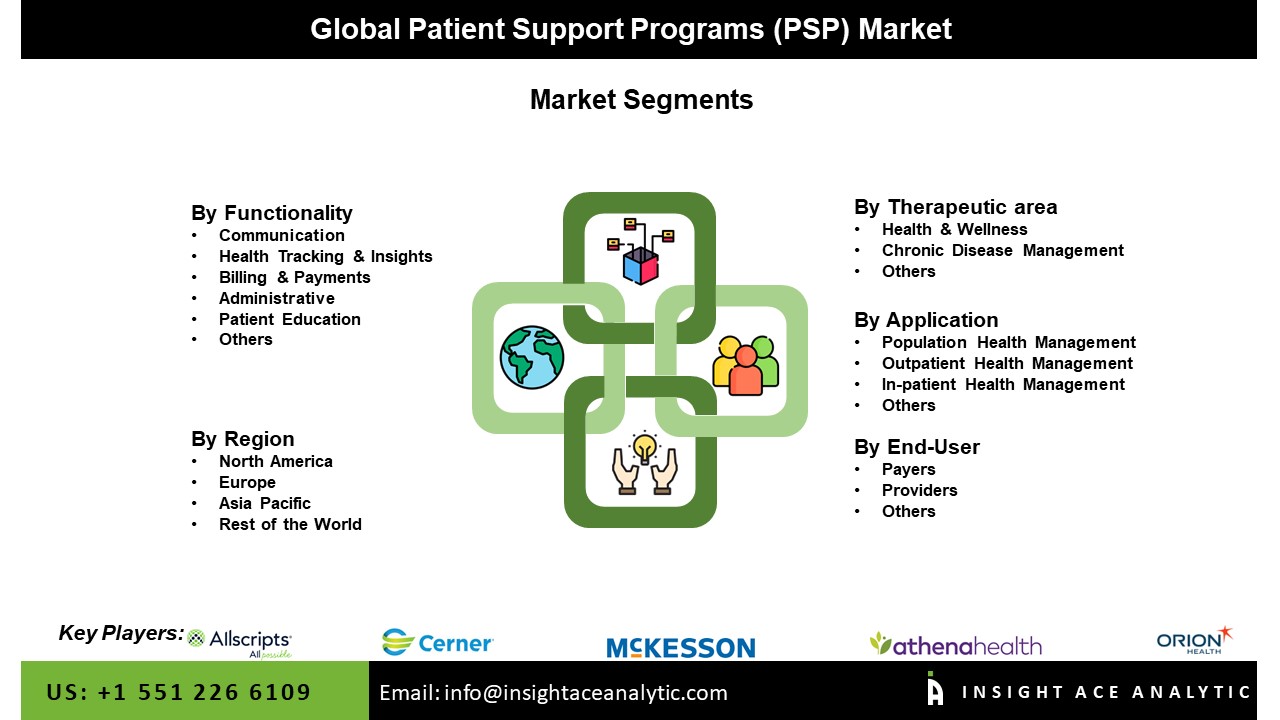
Patient Support Programs (PSP) Market By Therapeutic area-
- Health & Wellness
- Chronic Disease Management
- Others
Patient Support Programs (PSP) Market By Application-
- Population Health Management
- Outpatient Health Management
- In-patient Health Management
- Others
Patient Support Programs (PSP) Market By End-user-
Patient Support Programs (PSP) Market By Region-
North America-
Europe-
- Germany
- The UK
- France
- Italy
- Spain
- Rest of Europe
Asia-Pacific-
- China
- Japan
- India
- South Korea
- South East Asia
- Rest of Asia Pacific
Latin America-
- Brazil
- Argentina
- Rest of Latin America
Middle East & Africa-
- GCC Countries
- South Africa
- Rest of Middle East and Africa