Next Generation Bioelectronic Medicine Device Market Size, Trend, Forecast Report 2026 to 2035
What is Next Generation Bioelectronic Medicine Device Market Size?
Next Generation Bioelectronic Medicine Device Market Size is valued at USD 3.39 Bn in 2025 and is predicted to reach USD 12.72 Bn by the year 2035 at a 13.4% CAGR during the forecast period for 2026 to 2035.
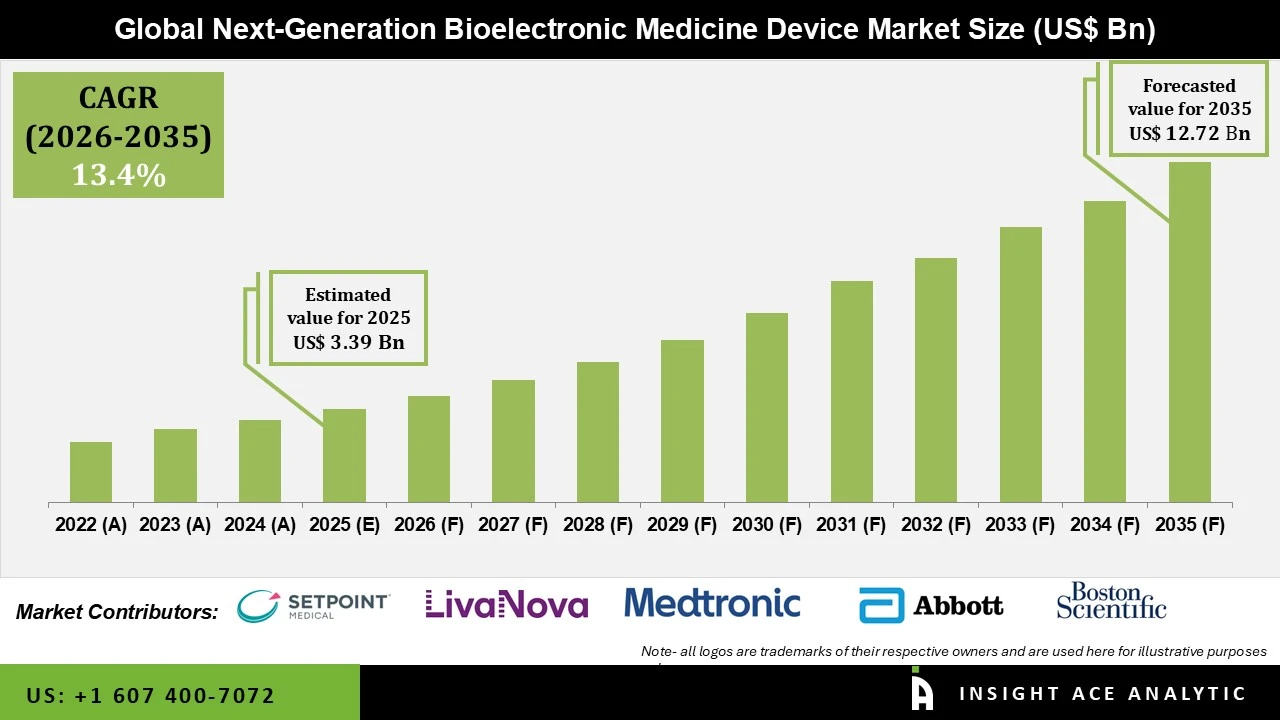
Next Generation Bioelectronic Medicine Device Market Size, Share & Trends Analysis by Device Type (Vagus Nerve Stimulator, Spinal Cord Neuromodulation, Closed-Loop Implantable Device, Transcutaneous Bioelectronic Patch), by Therapeutic Application (Rheumatoid Arthritis, Inflammatory Bowel Disease, Epilepsy, Chronic Pain Management, Heart Failure), by Technology (Miniaturized Implant, Wireless Power & Data Transfer, AI-Adaptive Stimulation, Biodegradable Substrate), and Segment Forecasts, 2026 to 2035
Next-Generation bioelectronic medicine devices represent a transformative approach in modern healthcare that uses targeted electrical stimulation to modulate the body’s nervous system and restore healthy physiological function. Instead of relying on traditional pharmaceuticals, these devices deliver precise electrical impulses to specific nerves or organs to treat chronic conditions such as inflammatory diseases, neurological disorders, cardiovascular conditions, and metabolic diseases. By directly interfacing with the body’s neural circuits, bioelectronic medicine offers a drug-free alternative that can provide real-time, adaptive therapy with potentially fewer side effects and greater personalization.
This rapidly evolving field lies at the intersection of neuroscience, biomedical engineering, and digital health. Recent breakthroughs in miniaturized electronics, wireless power and communication, artificial intelligence, and advanced neuromodulation have enabled the development of smaller, smarter, and more sophisticated implantable and wearable devices. These innovations are shifting treatment paradigms from chemical-based interventions to electroceutical solutions, opening new possibilities for managing complex chronic diseases more effectively and sustainably.
The field sits at the intersection of neuroscience, biomedical engineering, and digital health technologies.
Recent advancements in miniaturized electronics, wireless communication, artificial intelligence, and advanced neuromodulation techniques have enabled the development of smaller, smarter, and more effective implantable and wearable devices. These innovations allow for closed-loop systems that can monitor physiological signals and deliver personalized stimulation in real time. As the prevalence of chronic diseases continues to rise and limitations of conventional drug therapies — such as side effects, tolerance, and reduced efficacy — become more apparent, bioelectronic medicine is gaining significant attention as a promising new therapeutic paradigm. Increased research investments, strategic collaborations between medtech companies and healthcare providers, and growing regulatory support for digital and device-based therapies are expected to accelerate market growth in the coming years.
Competitive Landscape
Which are the Leading Players in Next generation bioelectronic medicine device market?
• Medtronic plc
• Abbott Laboratories
• Boston Scientific Corporation
• LivaNova PLC
• SetPoint Medical Corporation
• ElectroCore Inc.
• Nevro Corp.
• Biotronik SE & Co. KG
• Synapse Biomedical Inc.
• Cala Health Inc.
• NeuroPace Inc.
• Axonics Inc.
• Saluda Medical Pty Ltd.
• Mainstay Medical Holdings plc
• Galvani Bioelectronics
• Nalu Medical Inc.
• Cognito Therapeutics Inc.
• Cirtec Medical Corporation
• Inspire Medical Systems Inc.
• Bioinduction Ltd.
Market Dynamics
Driver
Growing Demand for Non-Pharmacological Treatment Approaches
The market for bioelectronic medicine devices is projected to grow considerably owing to rising demand for non-pharmaceutical treatment methods. Health care service providers are increasingly looking for novel treatment methods which not only decrease their reliance on medication but also increase the effectiveness of treatment outcomes. Moreover, technological improvements in neuromodulation techniques and clinical proof regarding bioelectronic medicines are expected to drive market growth in the coming years. Rising prevalence rates of various nervous system diseases, chronic pain-related illnesses, and heart ailments will also fuel market growth. Furthermore, as health care service providers focus on delivering personalized treatment methodologies, the market is forecast to witness significant growth.
Restrain/Challenge
High Development Costs and Regulatory Complexities
One of the main issues in the global next generation bioelectronic medicine devices market is the expensive nature of the research, development, and commercialization processes involved. It takes a lot of money and efforts to develop implantable and wearable devices with advanced technology and capabilities. Besides, gathering extensive clinical data to prove safety and efficiency will further add time to the overall development process. Invasive surgical procedures involved in the implantation process, limitations on reimbursements, and uncertainty in device reliability may be other factors that could impact the industry's progress.
Neurological Disorders Segment is Expected to Drive the Next generation Bioelectronic Medicine Device Market
Segment-wise, the neurological disorders market held the highest revenue share in 2025. The rising incidence of various ailments like epilepsy, Parkinson's disease, essential tremors, and depression has been fueling the demand for innovative neuromodulation treatment options. The use of bioelectronic medical equipment helps stimulate the nerve impulses in a focused manner, thus contributing to better symptoms and overall well-being. Moreover, the consistent progress being made in technologies such as brain-computer interfaces and neurostimulation will promote the implementation of bioelectronic treatments for neurological conditions.
Implantable Devices Segment is Growing at the Highest Rate in the Next generation Bioelectronic Medicine Device Market
The implantable devices market segment was led in 2025 by the capability of providing uninterrupted and highly accurate therapy stimulation. The use of implantable bioelectronic devices is common in the treatment of chronic pain, neurological disorders, and cardiovascular problems. The advantage of using such devices lies in their ability to offer long-term therapeutic benefits as well as allowing personal adjustment depending on individual requirements. The improvement in battery life and the development of technology associated with wireless and remote monitoring increases the efficiency of these devices.
Why North America Led the Next generation bioelectronic medicine device market?
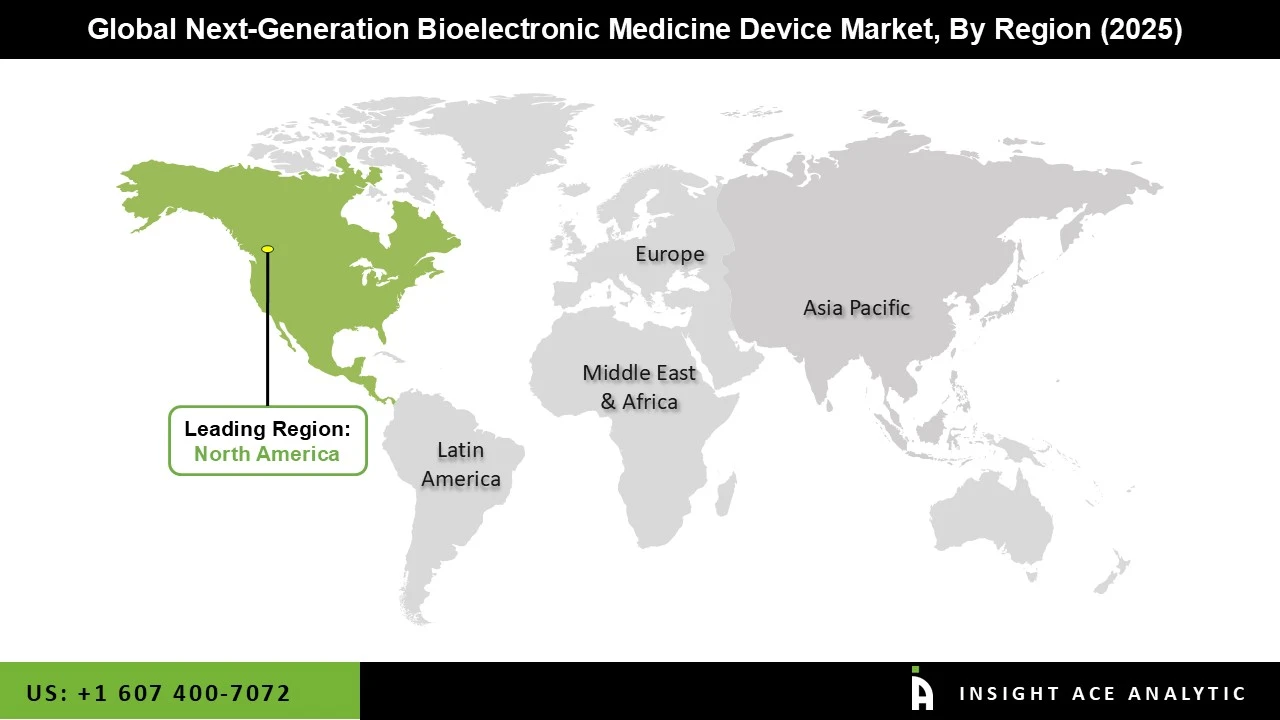
North America is expected to dominate the next generation bioelectronic medicine devices market in 2025 because of its developed healthcare sector, presence of robust research facilities, and early adaptation to advanced medical technologies. Furthermore, favorable policies, increased investment in health care services, and awareness about alternative treatment methods are boosting the adoption rate. The US leads innovation in the fields of neuromodulation and bioelectronics medicine, giving an additional boost to the regional market share
Next generation bioelectronic medicine device market Report Scope:
| Report Attribute | Specifications |
| Market size value in 2025 | USD 3.39 Bn |
| Revenue forecast in 2035 | USD 12.72 Bn |
| Growth Rate CAGR | CAGR of 13.4% from 2026 to 2035 |
| Quantitative Units | Representation of revenue in US$ Bn and CAGR from 2026 to 2035 |
| Historic Year | 2022 to 2025 |
| Forecast Year | 2026-2035 |
| Report Coverage | The forecast of revenue, the position of the company, the competitive market structure, growth prospects, and trends |
| Segments Covered | Device Type, Therapeutic Application, Technology, and By Region |
| Regional Scope | North America; Europe; Asia Pacific; Latin America; Middle East & Africa |
| Country Scope | U.S.; Canada; U.K.; Germany; China; India; Japan; Brazil; Mexico; The UK; France; Italy; Spain; China; Japan; India; South Korea; Southeast Asia; South Korea; Southeast Asia |
| Competitive Landscape | Medtronic plc, Abbott Laboratories, Boston Scientific Corporation, LivaNova PLC, SetPoint Medical Corporation, ElectroCore Inc., Nevro Corp., Biotronik SE & Co. KG, Synapse Biomedical Inc., Cala Health Inc., NeuroPace Inc., Axonics Inc., Saluda Medical Pty Ltd., Mainstay Medical Holdings plc, Galvani Bioelectronics, Nalu Medical Inc., Cognito Therapeutics Inc., Cirtec Medical Corporation, Inspire Medical Systems Inc., and Bioinduction Ltd. |
| Customization Scope | Free customization report with the procurement of the report, Modifications to the regional and segment scope. Geographic competitive landscape. |
| Pricing and Available Payment Methods | Explore pricing alternatives that are customized to your particular study requirements. |
Market Segmentation:
Next-generation bioelectronic medicine device market by Device Type-
• Vagus Nerve Stimulator
• Spinal Cord Neuromodulation
• Closed-Loop Implantable Device
• Transcutaneous Bioelectronic Patch
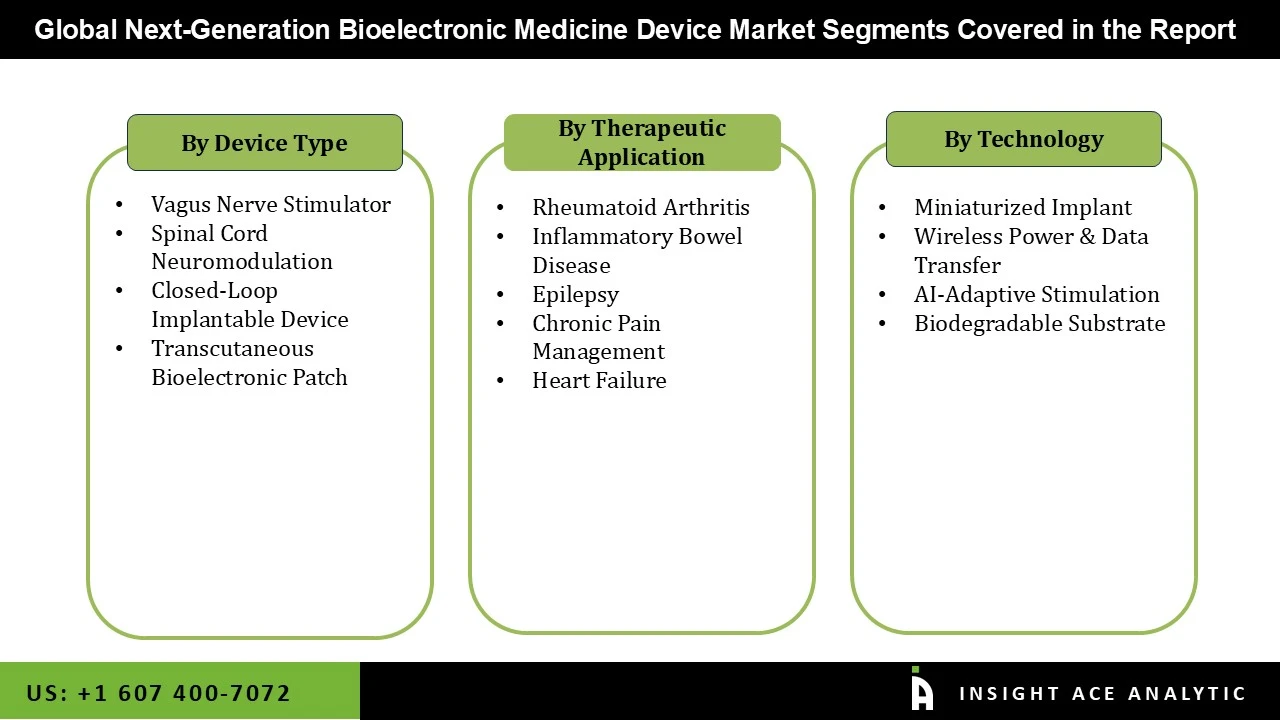
Next-generation bioelectronic medicine device market by Therapeutic Application -
• Rheumatoid Arthritis
• Inflammatory Bowel Disease
• Epilepsy
• Chronic Pain Management
• Heart Failure
Next-generation bioelectronic medicine device market by Technology -
• Miniaturized Implant
• Wireless Power & Data Transfer
• AI-Adaptive Stimulation
• Biodegradable Substrate
Research Design and Approach
This study employed a multi-step, mixed-method research approach that integrates:
- Secondary research
- Primary research
- Data triangulation
- Hybrid top-down and bottom-up modelling
- Forecasting and scenario analysis
This approach ensures a balanced and validated understanding of both macro- and micro-level market factors influencing the market.
Secondary Research
Secondary research for this study involved the collection, review, and analysis of publicly available and paid data sources to build the initial fact base, understand historical market behaviour, identify data gaps, and refine the hypotheses for primary research.
Sources Consulted
Secondary data for the market study was gathered from multiple credible sources, including:
- Government databases, regulatory bodies, and public institutions
- International organizations (WHO, OECD, IMF, World Bank, etc.)
- Commercial and paid databases
- Industry associations, trade publications, and technical journals
- Company annual reports, investor presentations, press releases, and SEC filings
- Academic research papers, patents, and scientific literature
- Previous market research publications and syndicated reports
These sources were used to compile historical data, market volumes/prices, industry trends, technological developments, and competitive insights.

Primary Research
Primary research was conducted to validate secondary data, understand real-time market dynamics, capture price points and adoption trends, and verify the assumptions used in the market modelling.
Stakeholders Interviewed
Primary interviews for this study involved:
- Manufacturers and suppliers in the market value chain
- Distributors, channel partners, and integrators
- End-users / customers (e.g., hospitals, labs, enterprises, consumers, etc., depending on the market)
- Industry experts, technology specialists, consultants, and regulatory professionals
- Senior executives (CEOs, CTOs, VPs, Directors) and product managers
Interview Process
Interviews were conducted via:
- Structured and semi-structured questionnaires
- Telephonic and video interactions
- Email correspondences
- Expert consultation sessions
Primary insights were incorporated into demand modelling, pricing analysis, technology evaluation, and market share estimation.
Data Processing, Normalization, and Validation
All collected data were processed and normalized to ensure consistency and comparability across regions and time frames.
The data validation process included:
- Standardization of units (currency conversions, volume units, inflation adjustments)
- Cross-verification of data points across multiple secondary sources
- Normalization of inconsistent datasets
- Identification and resolution of data gaps
- Outlier detection and removal through algorithmic and manual checks
- Plausibility and coherence checks across segments and geographies
This ensured that the dataset used for modelling was clean, robust, and reliable.
Market Size Estimation and Data Triangulation
Bottom-Up Approach
The bottom-up approach involved aggregating segment-level data, such as:
- Company revenues
- Product-level sales
- Installed base/usage volumes
- Adoption and penetration rates
- Pricing analysis
This method was primarily used when detailed micro-level market data were available.

Top-Down Approach
The top-down approach used macro-level indicators:
- Parent market benchmarks
- Global/regional industry trends
- Economic indicators (GDP, demographics, spending patterns)
- Penetration and usage ratios
This approach was used for segments where granular data were limited or inconsistent.
Hybrid Triangulation Approach
To ensure accuracy, a triangulated hybrid model was used. This included:
- Reconciling top-down and bottom-up estimates
- Cross-checking revenues, volumes, and pricing assumptions
- Incorporating expert insights to validate segment splits and adoption rates
This multi-angle validation yielded the final market size.
Forecasting Framework and Scenario Modelling
Market forecasts were developed using a combination of time-series modelling, adoption curve analysis, and driver-based forecasting tools.
Forecasting Methods
- Time-series modelling
- S-curve and diffusion models (for emerging technologies)
- Driver-based forecasting (GDP, disposable income, adoption rates, regulatory changes)
- Price elasticity models
- Market maturity and lifecycle-based projections
Scenario Analysis
Given inherent uncertainties, three scenarios were constructed:
- Base-Case Scenario: Expected trajectory under current conditions
- Optimistic Scenario: High adoption, favourable regulation, strong economic tailwinds
- Conservative Scenario: Slow adoption, regulatory delays, economic constraints
Sensitivity testing was conducted on key variables, including pricing, demand elasticity, and regional adoption.
Request Customization
Add countries, segments, company profiles, or extend forecast — free 10% customization with purchase.
Customize This Report →Enquire Before Buying
Speak with our analyst team about scope, methodology, pricing, or deliverable formats.
Enquire Now →Frequently Asked Questions
Next Generation Bioelectronic Medicine Device Market Size is valued at USD 3.39 Bn in 2025 and is predicted to reach USD 12.72 Bn by the year 2035
Next Generation Bioelectronic Medicine Device Market Size is predicted to grow at a 13.4% CAGR during the forecast period for 2026 to 2035.
Medtronic plc, Abbott Laboratories, Boston Scientific Corporation, LivaNova PLC, SetPoint Medical Corporation, ElectroCore Inc., Nevro Corp., Biotronik SE & Co. KG, Synapse Biomedical Inc., Cala Health Inc., NeuroPace Inc., Axonics Inc., Saluda Medical Pty Ltd., Mainstay Medical Holdings plc, Galvani Bioelectronics, Nalu Medical Inc., Cognito Therapeutics Inc., Cirtec Medical Corporation, Inspire Medical Systems Inc., and Bioinduction Ltd.
Next Generation Bioelectronic Medicine Device Market is segmented into Device Type, Therapeutic Application, Technology, and By Region
North America region is leading the Next Generation Bioelectronic Medicine Device Market.