Meal Replacement Market Size, Trend, Forecast Report 2026 to 2035
What is Meal Replacement Market Size?
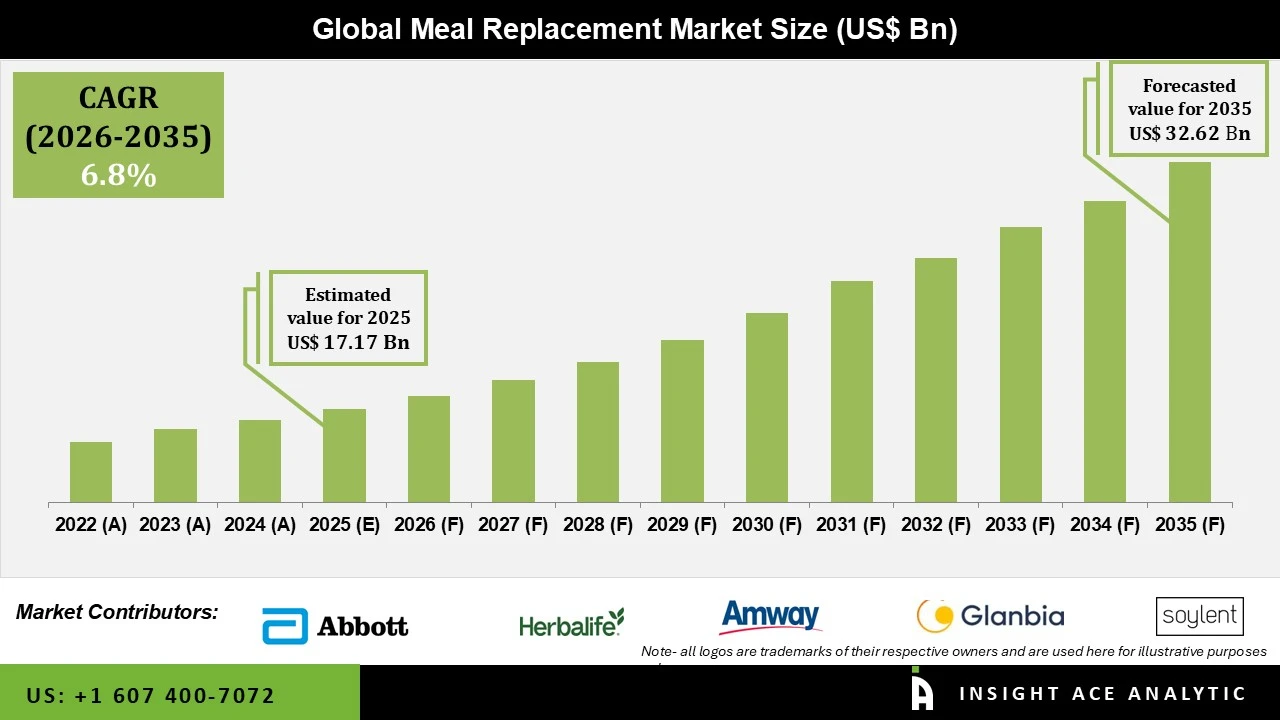
Meal Replacement Market Size is valued at USD 17.17 Bn in 2025 and is predicted to reach USD 32.62 Bn by the year 2035 at a 6.8% CAGR during the forecast period for 2026 to 2035.
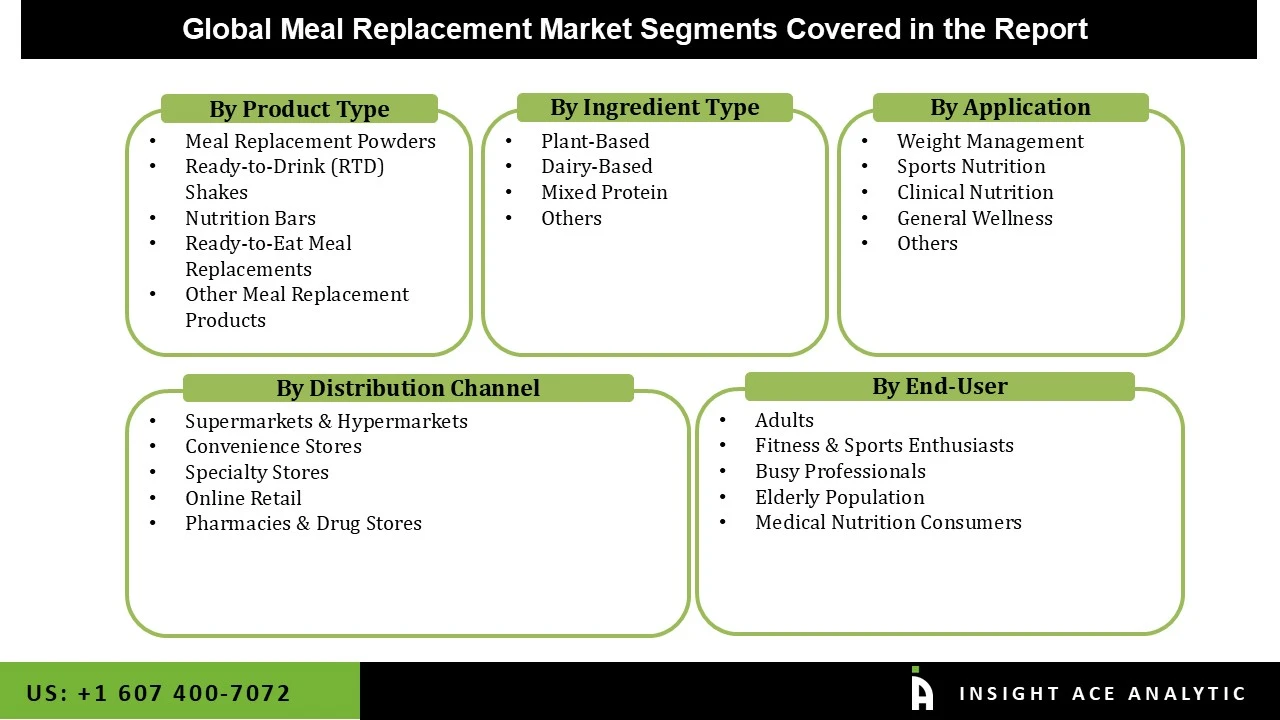
Meal Replacement Market Size, Share & Trends Analysis Distribution by Product Type (Meal Replacement Powders, Ready-to-Drink (RTD) Shakes, Nutrition Bars, Ready-to-Eat Meal Replacements, Other Meal Replacement Products), By Ingredient Type (Plant-Based, Dairy-Based, Mixed Protein, Others), By Application (Weight Management, Sports Nutrition, Clinical Nutrition, General Wellness, Others), By Distribution Channel (Supermarkets & Hypermarkets, Convenience Stores, Specialty Stores, Online Retail, Pharmacies & Drug Stores), By End User (Adults, Fitness & Sports Enthusiasts, Busy Professionals, Elderly Population, Medical Nutrition Consumers) and Segment Forecasts, 2026 to 2035
The meal replacement category includes balanced food and drink products designed to replace one or more regular meals. They deliver essential macronutrients and micronutrients in controlled portions. These products provide proteins, carbohydrates, healthy fats, dietary fiber, vitamins, and minerals in convenient formats, making them ideal for people who want balanced nutrition without the time it takes to prepare regular meals. Meal replacement products come as powders, ready-to-drink shakes, nutrition bars, and ready-to-eat meals, catering to various dietary preferences and nutritional needs.
Modern meal replacement options have moved beyond basic calorie replacement. Now, they include high-protein, plant-based, low-sugar, gluten-free, lactose-free, and options with functional ingredients. Manufacturers are increasingly adding ingredients like probiotics, prebiotics, adaptogens, omega-3 fatty acids, and botanical extracts to improve nutritional value and support specific health goals. Product innovation is also focused on enhancing taste, texture, ingredient transparency, and clean-label formulations. Advances in food processing and packaging technologies have improved product stability, shelf life, and portability.
The global meal replacement market involves developing, manufacturing, and selling meal replacement products for purposes like weight management, sports nutrition, clinical nutrition, and general wellness. The market features a variety of products from multinational food and nutrition companies, specialized health brands, and medical nutrition providers. These are available through supermarkets, specialty stores, pharmacies, convenience stores, and online platforms. Ongoing product innovation, a growing premium nutrition lineup, personalized nutrition solutions, and the rising integration of digital and direct-to-consumer sales channels are pushing the market forward. Manufacturers focus on convenience, nutritional quality, and sustainability to meet changing consumer preferences.
Competitive Landscape
Which are the Leading Players in the Meal Replacement Market?
• Abbott
• Herbalife International of America, Inc.
• Amway
• Glanbia plc
• Atkins Nutritionals, Inc.
• Soylent
• Unilever
• Nestlé S.A.
• General Mills, Inc.
• BellRing Brands, Inc. (BRBR)
• Orgain, Inc.
• Huel Limited
• Arla Foods amba
• Kate Farms, Inc.
• Truefit Nutrition
• Saturo Foods GmbH
• Garden of Life LLC
• Premier Nutrition Company LLC
• Cie Gervais Danone
Market Dynamics
Driver
Increasing Demand for Convenient and Nutritionally Balanced On-the-Go Nutrition
Modern consumers want quick, convenient, and nutritious meal solutions. This demand arises from busy lifestyles, urban living, and limited time. Meal replacement products offer a practical choice to traditional meals by providing balanced nutrition in easy-to-carry formats like ready-to-drink shakes, powders, and nutrition bars. More working professionals, students, fitness fans, and health-conscious people are using these products, which has driven up demand. Moreover, the increase in high-protein, plant-based, clean-label, and functional meal replacement options has expanded their appeal. Convenience paired with balanced nutrition is now the main reason for growth in the market.
Restrain/Challenge
Consumer Perception and Preference for Whole Foods
A major challenge for the meal replacement market is the belief that these products are worse than fresh, whole foods for nutrition, taste, and long-term health benefits. Many consumers choose natural, minimally processed meals and are hesitant to rely on packaged nutrition products as regular meal substitutes. Concerns about artificial ingredients, preservatives, added sugars, and the level of processing can affect acceptance, especially among health-conscious consumers. This belief creates an obstacle for manufacturers. They need to keep investing in clean-label formulations, natural ingredients, clear labeling, and better taste and texture to gain consumer trust.
Ready-to-Drink (RTD) Shakes Segment is Expected to Drive the Meal Replacement Market
The ready-to-drink (RTD) shakes segment is driving the global meal replacement market because of its unmatched convenience, portability, and ready-to-consume format. This makes it very popular among busy professionals, fitness fans, students, and health-conscious consumers. These products offer balanced nutrition without the need for preparation. They are also increasingly available in high-protein, low-sugar, plant-based, and functional options that meet various dietary needs. Their widespread presence in supermarkets, convenience stores, pharmacies, gyms, and online retailers, along with ongoing product innovation and strong offerings from top brands like Abbott, Herbalife, Huel, Soylent, Orgain, and Premier Protein, has further boosted the adoption of RTD meal replacement shakes around the world.
Plant-Based Segment is Growing at the Highest Rate in the Meal Replacement Market
The plant-based segment is expected to grow the most in the meal replacement market. This is due to more people choosing vegan, vegetarian, and flexitarian diets, along with greater awareness of sustainability and clean-label nutrition. Consumers are looking for meal replacement products that use plant proteins like pea, soy, oat, rice, and hemp. Their choices are influenced by concerns about lactose intolerance, dairy allergies, and environmental effects. Manufacturers are adding high-protein, plant-based meal replacement shakes, powders, and bars that offer better taste, texture, and nutrition. The rising interest in allergen-friendly, minimally processed, and sustainable nutrition products, along with ongoing innovation in plant protein ingredients, will likely make the Plant-Based segment the fastest-growing category during the forecast period.
Why North America Led the Meal Replacement Market?
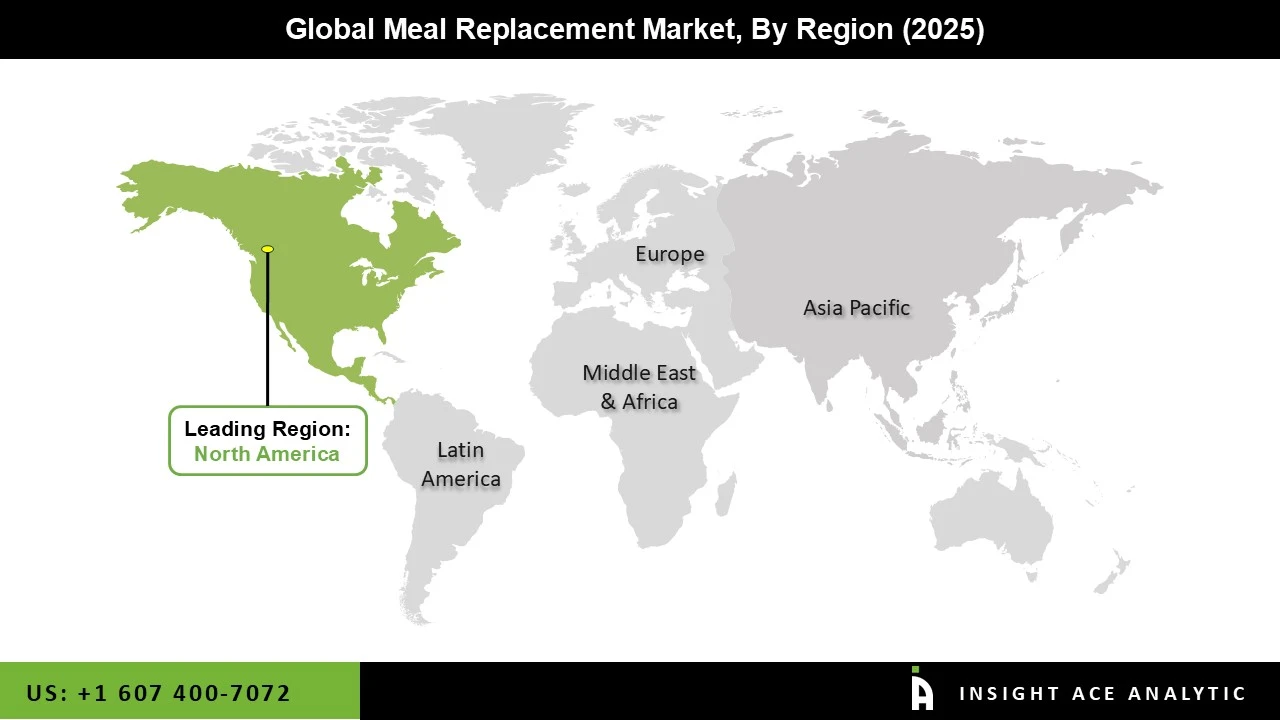
North America is the leading region in the global meal replacement market. This is due to high consumer awareness of health and nutrition, the widespread use of convenient on-the-go food products, and a strong sports nutrition and weight management industry. Major market players like Abbott, Herbalife, BellRing Brands, Orgain, Soylent, Kate Farms, and Premier Nutrition are prominent in the area. They regularly introduce new meal replacement products that meet changing consumer preferences. The rising demand for high-protein, plant-based, and functional nutrition products, along with wide distribution through supermarkets, pharmacies, specialty stores, and e-commerce platforms, has also improved market presence. High disposable incomes, busy lifestyles, and the growing use of meal replacements for wellness, fitness, and clinical nutrition needs further establish North America as the top regional market.
Key Development
May 2026: Abbott launched Ensure® Strength Pro, a scientifically formulated nutritional supplement designed to support seven key aspects of health—muscle strength, bone health, heart health, immunity, metabolism, blood cell formation, and nervous system function. The product addresses age-related nutritional needs and helps promote strength and overall well-being in adults.
Meal Replacement Market Report Scope:
| Report Attribute | Specifications |
| Market size value in 2025 | USD 17.17 Bn |
| Revenue forecast in 2035 | USD 32.62 Bn |
| Growth Rate CAGR | CAGR of 6.8% from 2026 to 2035 |
| Quantitative Units | Representation of revenue in US$ Bn and CAGR from 2026 to 2035 |
| Historic Year | 2022 to 2025 |
| Forecast Year | 2026-2035 |
| Report Coverage | The forecast of revenue, the position of the company, the competitive market structure, growth prospects, and trends |
| Segments Covered | Product Type, Ingredient Type, Application, Distribution Channel, End User and By Region |
| Regional Scope | North America; Europe; Asia Pacific; Latin America; Middle East & Africa |
| Country Scope | U.S.; Canada; U.K.; Germany; China; India; Japan; Brazil; Mexico; The UK; France; Italy; Spain; China; Japan; India; South Korea; Southeast Asia; South Korea; Southeast Asia |
| Competitive Landscape | Abbott, Herbalife International of America, Inc., Amway, Glanbia plc, Atkins Nutritionals, Inc., Soylent, Unilever, Nestlé S.A., General Mills, Inc., BellRing Brands, Inc. (BRBR) |
| Customization Scope | Free customization report with the procurement of the report, Modifications to the regional and segment scope. Geographic competitive landscape. |
| Pricing and Available Payment Methods | Explore pricing alternatives that are customized to your particular study requirements. |
Market Segmentation:
Meal Replacement Market by Product Type -
• Meal Replacement Powders
• Ready-to-Drink (RTD) Shakes
• Nutrition Bars
• Ready-to-Eat Meal Replacements
• Other Meal Replacement Products
Meal Replacement Market by Ingredient Type -
• Plant-Based
• Dairy-Based
• Mixed Protein
• Others
Meal Replacement Market by Application -
• Weight Management
• Sports Nutrition
• Clinical Nutrition
• General Wellness
• Others
Meal Replacement Market by Distribution Channel -
• Supermarkets & Hypermarkets
• Convenience Stores
• Specialty Stores
• Online Retail
• Pharmacies & Drug Stores
Meal Replacement Market by End User -
• Adults
• Fitness & Sports Enthusiasts
• Busy Professionals
• Elderly Population
• Medical Nutrition Consumers
Meal Replacement Market by Region-
North America-
• The US
• Canada
• Mexico
Europe-
• Germany
• The UK
• France
• Italy
• Spain
• Rest of Europe
Asia-Pacific-
• China
• Japan
• India
• South Korea
• South East Asia
• Rest of Asia Pacific
Latin America-
• Brazil
• Argentina
• Rest of Latin America
Middle East & Africa-
• GCC Countries
• South Africa
• Rest of Middle East and Africa
Research Design and Approach
This study employed a multi-step, mixed-method research approach that integrates:
- Secondary research
- Primary research
- Data triangulation
- Hybrid top-down and bottom-up modelling
- Forecasting and scenario analysis
This approach ensures a balanced and validated understanding of both macro- and micro-level market factors influencing the market.
Secondary Research
Secondary research for this study involved the collection, review, and analysis of publicly available and paid data sources to build the initial fact base, understand historical market behaviour, identify data gaps, and refine the hypotheses for primary research.
Sources Consulted
Secondary data for the market study was gathered from multiple credible sources, including:
- Government databases, regulatory bodies, and public institutions
- International organizations (WHO, OECD, IMF, World Bank, etc.)
- Commercial and paid databases
- Industry associations, trade publications, and technical journals
- Company annual reports, investor presentations, press releases, and SEC filings
- Academic research papers, patents, and scientific literature
- Previous market research publications and syndicated reports
These sources were used to compile historical data, market volumes/prices, industry trends, technological developments, and competitive insights.

Primary Research
Primary research was conducted to validate secondary data, understand real-time market dynamics, capture price points and adoption trends, and verify the assumptions used in the market modelling.
Stakeholders Interviewed
Primary interviews for this study involved:
- Manufacturers and suppliers in the market value chain
- Distributors, channel partners, and integrators
- End-users / customers (e.g., hospitals, labs, enterprises, consumers, etc., depending on the market)
- Industry experts, technology specialists, consultants, and regulatory professionals
- Senior executives (CEOs, CTOs, VPs, Directors) and product managers
Interview Process
Interviews were conducted via:
- Structured and semi-structured questionnaires
- Telephonic and video interactions
- Email correspondences
- Expert consultation sessions
Primary insights were incorporated into demand modelling, pricing analysis, technology evaluation, and market share estimation.
Data Processing, Normalization, and Validation
All collected data were processed and normalized to ensure consistency and comparability across regions and time frames.
The data validation process included:
- Standardization of units (currency conversions, volume units, inflation adjustments)
- Cross-verification of data points across multiple secondary sources
- Normalization of inconsistent datasets
- Identification and resolution of data gaps
- Outlier detection and removal through algorithmic and manual checks
- Plausibility and coherence checks across segments and geographies
This ensured that the dataset used for modelling was clean, robust, and reliable.
Market Size Estimation and Data Triangulation
Bottom-Up Approach
The bottom-up approach involved aggregating segment-level data, such as:
- Company revenues
- Product-level sales
- Installed base/usage volumes
- Adoption and penetration rates
- Pricing analysis
This method was primarily used when detailed micro-level market data were available.

Top-Down Approach
The top-down approach used macro-level indicators:
- Parent market benchmarks
- Global/regional industry trends
- Economic indicators (GDP, demographics, spending patterns)
- Penetration and usage ratios
This approach was used for segments where granular data were limited or inconsistent.
Hybrid Triangulation Approach
To ensure accuracy, a triangulated hybrid model was used. This included:
- Reconciling top-down and bottom-up estimates
- Cross-checking revenues, volumes, and pricing assumptions
- Incorporating expert insights to validate segment splits and adoption rates
This multi-angle validation yielded the final market size.
Forecasting Framework and Scenario Modelling
Market forecasts were developed using a combination of time-series modelling, adoption curve analysis, and driver-based forecasting tools.
Forecasting Methods
- Time-series modelling
- S-curve and diffusion models (for emerging technologies)
- Driver-based forecasting (GDP, disposable income, adoption rates, regulatory changes)
- Price elasticity models
- Market maturity and lifecycle-based projections
Scenario Analysis
Given inherent uncertainties, three scenarios were constructed:
- Base-Case Scenario: Expected trajectory under current conditions
- Optimistic Scenario: High adoption, favourable regulation, strong economic tailwinds
- Conservative Scenario: Slow adoption, regulatory delays, economic constraints
Sensitivity testing was conducted on key variables, including pricing, demand elasticity, and regional adoption.
Request Customization
Add countries, segments, company profiles, or extend forecast — free 10% customization with purchase.
Customize This Report →Enquire Before Buying
Speak with our analyst team about scope, methodology, pricing, or deliverable formats.
Enquire Now →Frequently Asked Questions
Meal Replacement Market Size is valued at USD 17.17 Bn in 2025 and is predicted to reach USD 32.62 Bn by the year 2035
Meal Replacement Market is expected to grow at a 6.8% CAGR during the forecast period for 2026 to 2035.
Abbott, Herbalife International of America, Inc., Amway, Glanbia plc, Atkins Nutritionals, Inc., Soylent, Unilever, Nestlé S.A., General Mills, Inc., BellRing Brands, Inc. (BRBR)
Meal Replacement Market is segmented into Product Type, Ingredient Type, Application, Distribution Channel, End User and By Region
North America region is leading the Meal Replacement Market.