Gardasil Market Research Report with Forecast 2025 to 2034
Global Gardasil Market Size is valued at USD 5.2 Bn in 2025 and is predicted to reach USD 12.9 Bn by the year 2034 at a 10.5% CAGR during the forecast period for 2025 to 2034.
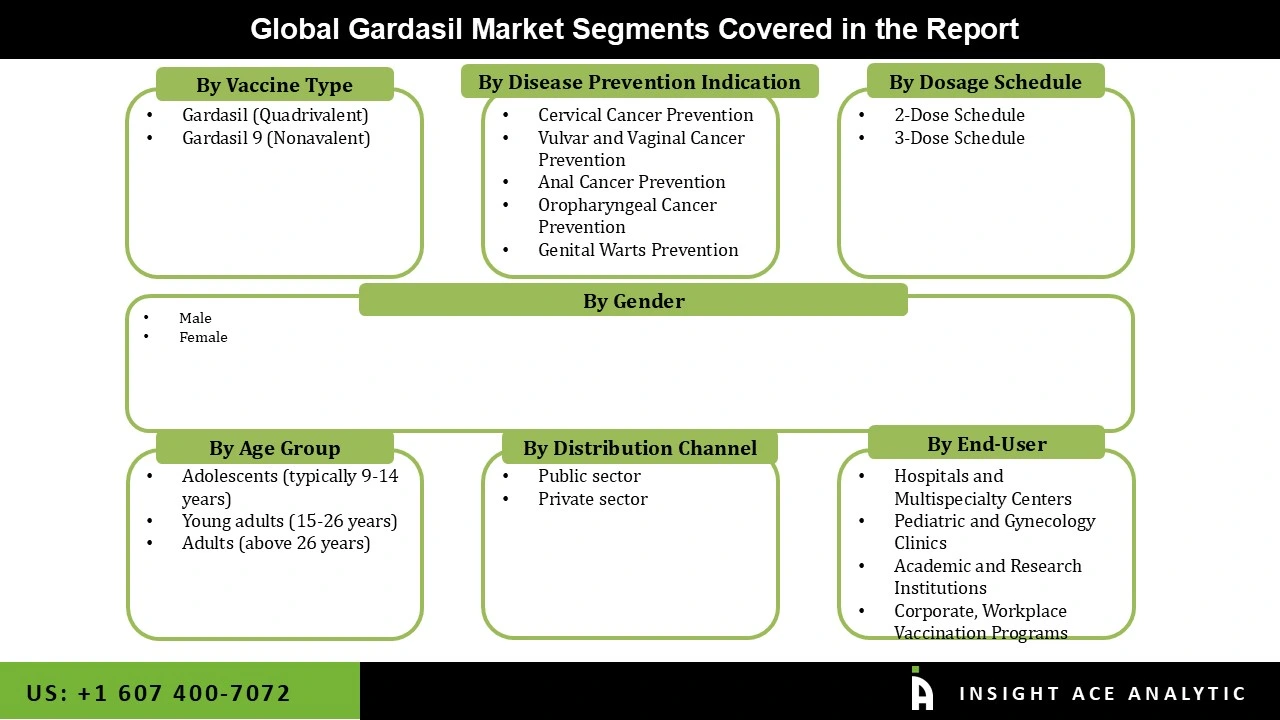
Gardasil Market Size, Share & Trends Analysis Distribution By Disease Prevention Indication (Cervical Cancer Prevention, Anal Cancer Prevention, Vulvar and Vaginal Cancer Prevention, Oropharyngeal Cancer Prevention, and Genital Warts Prevention), By Vaccine Type (Gardasil (Quadrivalent) and Gardasil 9 (Nonavalent)), By Gender (Male and Female), By Age Group (Adolescents (Typically 9-14 Years), Young Adults (15-26 Years), and Adults (Above 26 Years)), By Dosage Schedule (2-Dose Schedule and 3-Dose Schedule), By End-user, By Distribution Channel, and Segment Forecasts, 2025 to 2034
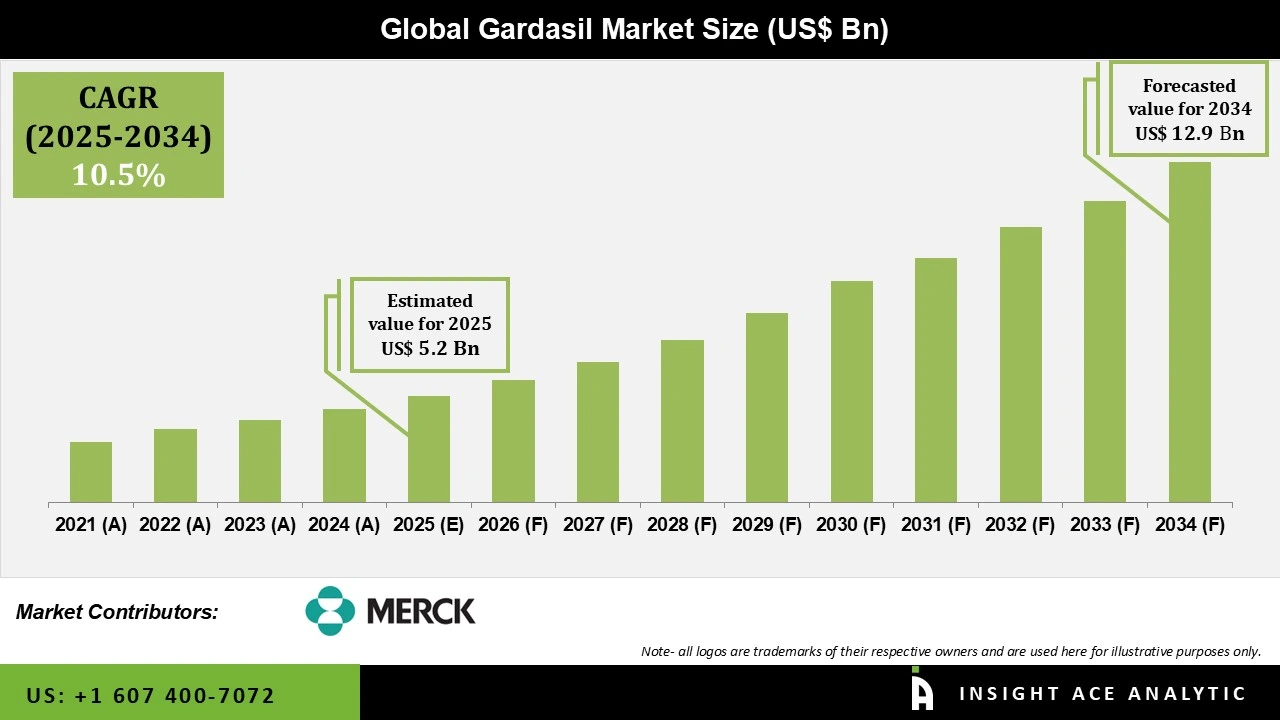
Gardasil is a vaccine that guards against illnesses brought on by specific strains of the human papillomavirus (HPV), one of the most prevalent STDs in the world. By focusing on certain high-risk and low-risk HPV varieties, it helps prevent genital warts, cervical cancer, and other anogenital cancers such as anal, vulvar, vaginal, and penile cancers. Gardasil works by encouraging the production of antibodies against HPV by the body's immune system, which stops further infection. The growing government immunization programs, increased knowledge of human papillomavirus (HPV) infections, and an increased focus on cervical cancer prevention have all contributed to the recent strong rise of the global gardasil market.
The gardasil market's growth has been greatly aided by the vaccine's extensive use in immunization programs, particularly those that target teenagers and young adults. Growing government programs encouraging HPV vaccination, advantageous reimbursement practices, and improved healthcare infrastructure throughout emerging nations are some of the main drivers of this expansion. Furthermore, the increased demand for gardasil is supported by rising HPV infection rates and growing public acceptance of preventive healthcare. The vaccination is frequently given in clinical and community healthcare settings, highlighting its significance in public health initiatives. Moreover, the Gardasil market is expanding as a result of technological developments in vaccination research and development. Gardasil is now more appealing to individuals and healthcare professionals due to the emergence of next-generation vaccines that are more effective and offer wider protection against different strains of HPV.
Additionally, additional drivers for the gardasil market expansion are probably going to arise from current research and clinical trials targeted at broadening the indications for HPV vaccinations, such as their potential use in preventing various types of cancer. Despite the optimistic prognosis, there are a number of obstacles facing the gardasil market that could slow its expansion. The high vaccination costs continue to be a major obstacle in environments with limited resources, where out-of-pocket costs prevent universal immunization. Furthermore, operational difficulties are brought on by the logistical difficulties associated with cold chain distribution and storage at geographically remote locations. However, it is anticipated that continued advancements in vaccination formulations—such as increased coverage of HPV strains and better delivery systems—will spur further investment and market growth in gardasil.
Competitive Landscape
Which are the Leading Players in Gardasil Market?
- Merck & Co., Inc.
Market Dynamics
Driver
Increasing Awareness of HPV and the Dangers It Poses
The growing global population's awareness of HPV and the risks connected with it is one of the major growth factors for the gardasil market. Public health campaigns and educational initiatives have been crucial in raising awareness of the significance of HPV vaccination. The adoption rate of gardasil vaccines has increased as a result of people becoming more aware of the importance of adopting preventive measures due to the abundance of information available through numerous channels. Additionally, social media sites and online health forums have helped dispel misconceptions about HPV vaccination and raise awareness, which has accelerated the gardasil market expansion.
Restrain/Challenge
Restricted Access to the Vaccine
A significant growth-limiting factor for the global gardasil market is anticipated to be the inability to provide patients with the vaccine at the appropriate time. Additionally, HPV patients of all ages cannot be cured by gardasil vaccinations. For instance, gardasil is used to help prevent cervical cancer in females aged 9 to 26. Furthermore, creating vaccinations is a costly undertaking. Between $800 million and $1 billion is spent during the development period, which spans 10 to 20 years from in vitro research to commercialization. All of these elements will limit the gardasil market expansion.
Cervical Cancer Prevention Segment is Expected to Drive the Gardasil Market
The cervical cancer prevention segment held the largest share in the gardasil market in 2024, driven by the growing focus on preventative healthcare and the increased incidence of cervical cancer linked to the human papillomavirus (HPV) worldwide. The vaccine adoption has been greatly increased by widespread government-led immunization programs, school-based vaccination campaigns, and the addition of HPV vaccinations to national immunization schedules in both industrialized and emerging economies. Additionally, suggestions from organizations like the WHO to eradicate cervical cancer as a public health issue, as well as increased knowledge among women and healthcare professionals regarding the significance of the
HPV vaccine in preventing cervical cancer, boost the gardasil market expansion.
Adolescents (Typically 9-14 Years) Segment is Growing at the Highest Rate in the Gardasil Market
In 2024, the adolescents (Typically 9-14 Years) segment dominated the gardasil market because the vaccine's effectiveness in preventing HPV infections depends heavily on immunizing people before they engage in sexual activity. This age group is the focus of national immunization initiatives in many nations, which results in high adolescent vaccination rates. Additionally, school-based immunization programs support gardasil's acceptance in this population, which is a major factor in the market's expansion.
Why North America Led the Gardasil Market?
The gardasil market was dominated by the North America region in 2024, driven by significant government funding for immunization programs, a strong healthcare system, and a high vaccination rate. Particularly in the United States, there are widespread HPV vaccination programs aimed at adults and adolescents, which have led to a notable increase in the market.
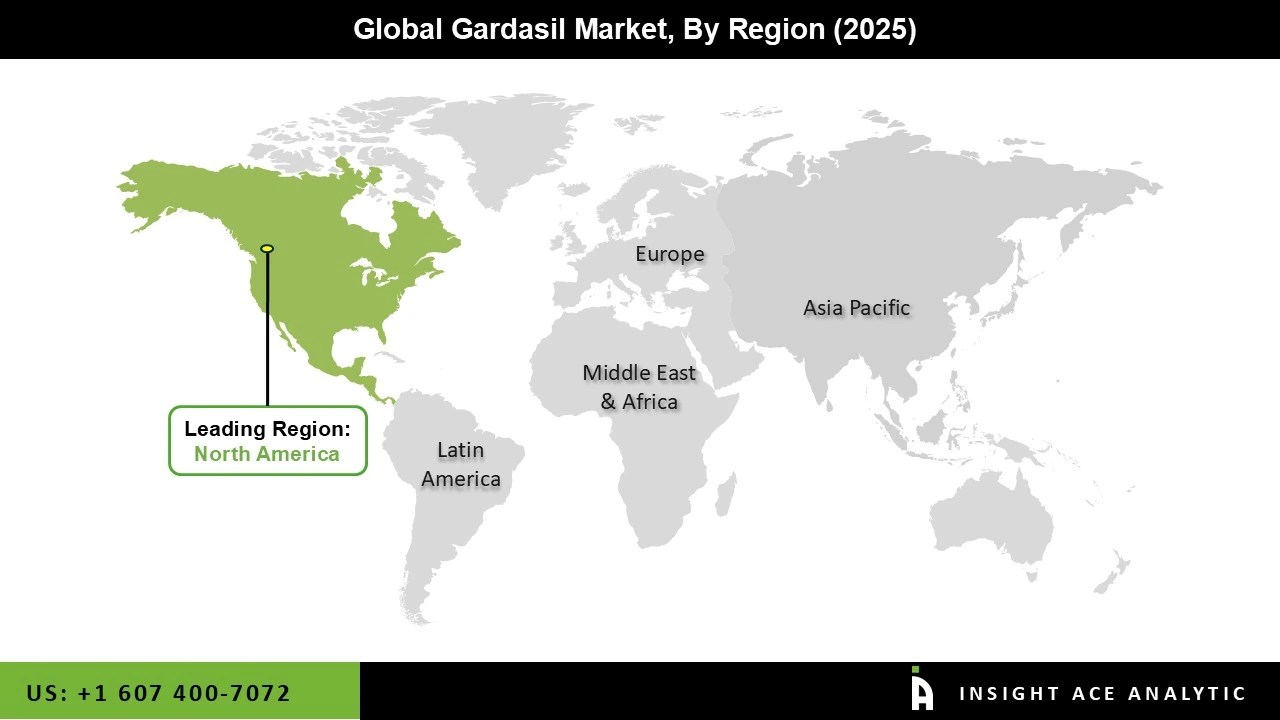
The North American market is further supported by the existence of top pharmaceutical firms and continuous research and development initiatives. Furthermore, the region's emphasis on public health initiatives and preventive healthcare is essential to sustaining high immunization rates and boosting demand for gardasil vaccines.
Key Development :
- May 2025: Merck & Co., Inc. confirmed that unless additional clinical evidence justifies modifications, the current 2- and 3-dose regimens for GARDASIL9 should be maintained. Cancers caused by HPV types 16, 18, 31, 33, 45, 52, and 58 are prevented by the vaccination, which is licensed for use in people aged 9 to 45. Merck stressed the need for reliable evidence to support single-dose regimens, especially when it comes to men's efficacy.
- March 2024: Merck, which is known as MSD outside of the US and Canada, revealed plans to start clinical development of a novel experimental multi-valent HPV vaccine at the EUROGIN 2024 HPV Congress. This vaccine is designed to provide broader protection against different strains of HPV. To evaluate the safety and efficacy of GARDASIL®9 (Human Papillomavirus 9-valent, recombinant) as a single dosage in contrast to the approved three-dose regimen, the company also plans to conduct clinical trials in both males and females.
Gardasil Market Report Scope :
| Report Attribute | Specifications |
| Market size value in 2025 | USD 5.2 Bn |
| Revenue forecast in 2034 | USD 12.9 Bn |
| Growth Rate CAGR | CAGR of 10.5% from 2025 to 2034 |
| Quantitative Units | Representation of revenue in US$ Bn and CAGR from 2025 to 2034 |
| Historic Year | 2021 to 2023 |
| Forecast Year | 2025-2034 |
| Report Coverage | The forecast of revenue, the position of the company, the competitive market structure, growth prospects, and trends |
| Segments Covered | By Disease Prevention Indication, By Vaccine Type, By Gender, By Age Group, By Dosage Schedule, By End-user, By Distribution Channel, and By Region |
| Regional Scope | North America; Europe; Asia Pacific; Latin America; Middle East & Africa |
| Country Scope | U.S.; Canada; U.K.; Germany; China; India; Japan; Brazil; Mexico; The UK; France; Italy; Spain; China; Japan; India; South Korea; Southeast Asia; South Korea; Southeast Asia |
| Competitive Landscape | Merck & Co., Inc. |
| Customization Scope | Free customization report with the procurement of the report, Modifications to the regional and segment scope. Geographic competitive landscape. |
| Pricing and Available Payment Methods | Explore pricing alternatives that are customized to your particular study requirements. |
Segmentation of Gardasil Market:
Gardasil Market by Disease Prevention Indication
- Cervical Cancer Prevention
- Anal Cancer Prevention
- Vulvar and Vaginal Cancer Prevention
- Oropharyngeal Cancer Prevention
- Genital Warts Prevention
Gardasil Market by Vaccine Type
- Gardasil (Quadrivalent)
- Gardasil 9 (Nonavalent)
- Gardasil Market by Gender
- Male
- Female
Gardasil Market by Age Group
- Adolescents (Typically 9-14 Years)
- Young Adults (15-26 Years)
- Adults (Above 26 Years)
Gardasil Market by Dosage Schedule
- 2-Dose Schedule
- 3-Dose Schedule
Gardasil Market by End-user
- Hospitals and Multispecialty Centers
- Academic and Research Institutions
- Pediatric and Gynecology Clinics
- Corporate, Workplace Vaccination Programs
Gardasil Market by Distribution Channel
- Public Sector
- Private Sector
Gardasil Market-By Region
- North America-
- The US
- Canada
- Europe-
- Germany
- The UK
- France
- Italy
- Spain
- Rest of Europe
- Asia-Pacific-
- China
- Japan
- India
- South Korea
- South East Asia
- Rest of Asia Pacific
- Latin America-
- Brazil
- Argentina
- Mexico
- Rest of Latin America
- Middle East & Africa-
- GCC Countries
- South Africa
- Rest of Middle East and Africa
Research Design and Approach
This study employed a multi-step, mixed-method research approach that integrates:
- Secondary research
- Primary research
- Data triangulation
- Hybrid top-down and bottom-up modelling
- Forecasting and scenario analysis
This approach ensures a balanced and validated understanding of both macro- and micro-level market factors influencing the market.
Secondary Research
Secondary research for this study involved the collection, review, and analysis of publicly available and paid data sources to build the initial fact base, understand historical market behaviour, identify data gaps, and refine the hypotheses for primary research.
Sources Consulted
Secondary data for the market study was gathered from multiple credible sources, including:
- Government databases, regulatory bodies, and public institutions
- International organizations (WHO, OECD, IMF, World Bank, etc.)
- Commercial and paid databases
- Industry associations, trade publications, and technical journals
- Company annual reports, investor presentations, press releases, and SEC filings
- Academic research papers, patents, and scientific literature
- Previous market research publications and syndicated reports
These sources were used to compile historical data, market volumes/prices, industry trends, technological developments, and competitive insights.

Primary Research
Primary research was conducted to validate secondary data, understand real-time market dynamics, capture price points and adoption trends, and verify the assumptions used in the market modelling.
Stakeholders Interviewed
Primary interviews for this study involved:
- Manufacturers and suppliers in the market value chain
- Distributors, channel partners, and integrators
- End-users / customers (e.g., hospitals, labs, enterprises, consumers, etc., depending on the market)
- Industry experts, technology specialists, consultants, and regulatory professionals
- Senior executives (CEOs, CTOs, VPs, Directors) and product managers
Interview Process
Interviews were conducted via:
- Structured and semi-structured questionnaires
- Telephonic and video interactions
- Email correspondences
- Expert consultation sessions
Primary insights were incorporated into demand modelling, pricing analysis, technology evaluation, and market share estimation.
Data Processing, Normalization, and Validation
All collected data were processed and normalized to ensure consistency and comparability across regions and time frames.
The data validation process included:
- Standardization of units (currency conversions, volume units, inflation adjustments)
- Cross-verification of data points across multiple secondary sources
- Normalization of inconsistent datasets
- Identification and resolution of data gaps
- Outlier detection and removal through algorithmic and manual checks
- Plausibility and coherence checks across segments and geographies
This ensured that the dataset used for modelling was clean, robust, and reliable.
Market Size Estimation and Data Triangulation
Bottom-Up Approach
The bottom-up approach involved aggregating segment-level data, such as:
- Company revenues
- Product-level sales
- Installed base/usage volumes
- Adoption and penetration rates
- Pricing analysis
This method was primarily used when detailed micro-level market data were available.

Top-Down Approach
The top-down approach used macro-level indicators:
- Parent market benchmarks
- Global/regional industry trends
- Economic indicators (GDP, demographics, spending patterns)
- Penetration and usage ratios
This approach was used for segments where granular data were limited or inconsistent.
Hybrid Triangulation Approach
To ensure accuracy, a triangulated hybrid model was used. This included:
- Reconciling top-down and bottom-up estimates
- Cross-checking revenues, volumes, and pricing assumptions
- Incorporating expert insights to validate segment splits and adoption rates
This multi-angle validation yielded the final market size.
Forecasting Framework and Scenario Modelling
Market forecasts were developed using a combination of time-series modelling, adoption curve analysis, and driver-based forecasting tools.
Forecasting Methods
- Time-series modelling
- S-curve and diffusion models (for emerging technologies)
- Driver-based forecasting (GDP, disposable income, adoption rates, regulatory changes)
- Price elasticity models
- Market maturity and lifecycle-based projections
Scenario Analysis
Given inherent uncertainties, three scenarios were constructed:
- Base-Case Scenario: Expected trajectory under current conditions
- Optimistic Scenario: High adoption, favourable regulation, strong economic tailwinds
- Conservative Scenario: Slow adoption, regulatory delays, economic constraints
Sensitivity testing was conducted on key variables, including pricing, demand elasticity, and regional adoption.
Request Customization
Add countries, segments, company profiles, or extend forecast — free 10% customization with purchase.
Customize This Report →Enquire Before Buying
Speak with our analyst team about scope, methodology, pricing, or deliverable formats.
Enquire Now →Frequently Asked Questions
Gardasil Market Size is valued at USD 5.2 Bn in 2025 and is predicted to reach USD 12.9 Bn by the year 2034
Gardasil Market is expected to grow at a 10.5% CAGR during the forecast period for 2025 to 2034.
Merck & Co., Inc. and Others
Disease Prevention Indication, Vaccine Type, Gender, Age Group, Dosage Schedule, End-user and Distribution Channel are the key segments of the Gardasil Market.
North America region is leading the Gardasil Market.