Electrochemical Water Treatment Market Size, Share, Revenue Report 2026 to 2035
What is Electrochemical Water Treatment Market Size?
Electrochemical Water Treatment Market Size is predicted to witness a 10.2% CAGR during the forecast period for 2026 to 2035.
Electrochemical Water Treatment Market Size, Share & Trends Analysis Distribution by Type of Water Treated (Industrial Wastewater, Ground Water, Brackish Water, Seawater, Municipal Wastewater, Process Water, Storm Water, and Others), By Application (Desalination, Oil & Grease Separation, Drinking Water Treatment, Wastewater Treatment, Industrial Process Water, Groundwater Remediation, Cooling Water Treatment, Heavy Metal Removal, and Others), By Technology Type (Electrooxidation, Electrodialysis, Electrocoagulation, Electrochemical Sedimentation, Electroflotation, Electrochemical Disinfection, and Others), and Segment Forecasts, 2026 to 2035
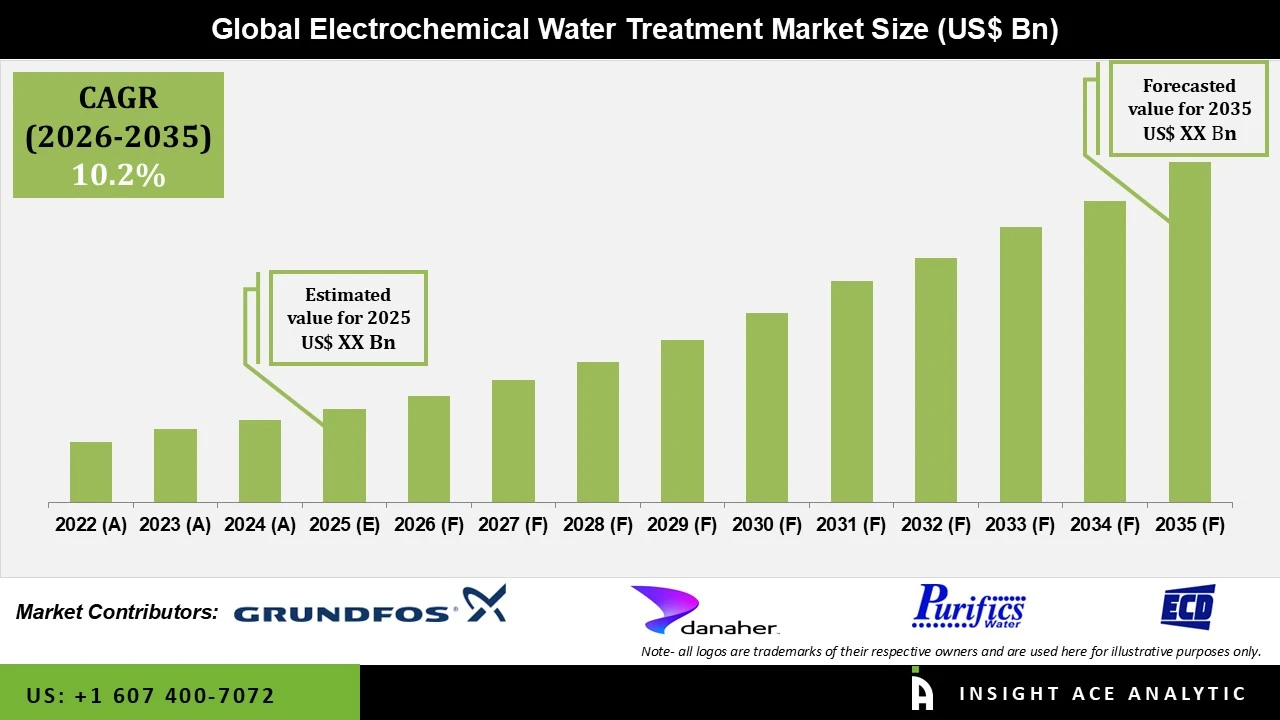
An advanced purification technique called electrochemical water treatment employs electrical energy to create electrochemical processes that eliminate impurities from water. Without the need for significant amounts of additional chemicals, these reactions aid in the destabilization and aggregation of suspended particles, the breakdown of organic contaminants, and the eradication of infections. Because of its effectiveness, small size, and capacity to handle a variety of pollutants, such as heavy metals and hazardous substances, the method is frequently used in desalination systems, municipal water purification, and industrial wastewater treatment. The electrochemical water treatment market is anticipated to increase because of the growing need for sustainable solutions brought on by the growing scarcity of water.
The electrochemical water treatment market is being driven by the growing need for sustainable and effective water purification solutions, as businesses and governments look for cutting-edge technologies to eliminate pollutants with the least amount of chemical use. The use of electrochemical methods like electrocoagulation and electrooxidation for the efficient treatment of heavy metals, organic contaminants, and pathogens has increased as a result of increased wastewater volumes brought on by growing industrialization and urbanization. Additionally, enterprises are being encouraged to adopt cleaner and more dependable water treatment techniques by tougher environmental legislation and discharge standards in different regions, which is driving market expansion. The need for electrochemical systems is being driven, especially in water-stressed areas, by growing awareness of water shortage and the necessity of water reuse.
Furthermore, the competitive environment of the electrochemical water treatment market is being shaped by ongoing technological developments in electrode materials, energy efficiency, and system design. To improve operational performance and lower maintenance needs, businesses are concentrating on creating affordable, small, and energy-efficient solutions. The decentralized and modular treatment systems, which provide flexibility and scalability for a variety of applications, are also becoming more popular in the market. Additionally, it is anticipated that investments in wastewater infrastructure and government programs supporting sustainable water management would generate new economic prospects. The electrochemical water treatment market is expected to grow steadily in the upcoming years as enterprises place a greater emphasis on resource recovery and environmental compliance.
Competitive Landscape
Which are the Leading Players in Electrochemical Water Treatment Market?
• De Nora
• Voltea
• REDstack
• BioIonix
• Axine Water
• OLI Systems
• WaterTectonics
• New Sky Energy
• Veolia
• Thermax
• Ion Exchange (India)
• SUEZ
• INDRA Water
• Membrion
• HydroNovation
• Xylem
• Evoqua Water Technologies
• Ecolab
• Pall (Danaher)
• Kurita
• Others
Market Dynamics
Driver
Growing Emphasis on Sustainable and Chemical-free Water Purification
One of the main factors propelling the electrochemical water treatment market is the growing emphasis on sustainable and chemical-free water purification on a global scale. There is increasing pressure on industries, including food processing, textiles, and pharmaceuticals, to adhere to stringent environmental standards concerning wastewater disposal. By reducing the need for additional chemicals and successfully eliminating pathogens, organic pollutants, and heavy metals, electrochemical technologies—such as electrocoagulation and electrooxidation offer a practical alternative. Additionally, the demand has also increased due to the increased use of water recycling and reuse systems brought on by the growing shortage of freshwater supplies. These systems are ideal for contemporary industrial and municipal applications since they are small, energy-efficient, and able to handle complex effluent streams.
Restrain/Challenge
High Operating and Initial Capital Expenses
The electrochemical water treatment market has difficulties despite its benefits because of the comparatively high startup and ongoing expenditures. For small and medium-sized businesses, the increased upfront capital investment associated with the need for specialized electrodes, power supply systems, and sophisticated control units may be a hurdle. Additionally, the ongoing maintenance and replacement expenses are also influenced by electrode deterioration and energy usage during continuous operations. Furthermore, the operational viability of these systems becomes a problem in areas with poor access to dependable electricity or high energy costs. These financial obstacles could prevent widespread adoption, especially in emerging nations with tight budgets.
Ground Water Segment is Expected to Drive the Electrochemical Water Treatment Market
The ground water segement held the largest share in the electrochemical water treatment market in 2025 because of the growing pollution of subterranean water sources brought on by urban garbage infiltration, agricultural runoff, and industrial discharge. Since groundwater is a major supply of drinking water in many areas, particularly in developing nations, effective filtration techniques are needed to get rid of impurities, including microorganisms, heavy metals, nitrates, and arsenic. Additionally, electrochemical treatment techniques are becoming more popular because they effectively remove dissolved contaminants without requiring high chemical dosages. Groundwater treatment and reuse are also being encouraged by growing worries about water scarcity and the depletion of clean freshwater reserves, which is driving segment expansion.
Electrocoagulation Segment is Growing at the Highest Rate in the Electrochemical Water Treatment Market
In 2025, the electrocoagulation segment dominated the electrochemical water treatment market because of its efficiency in eliminating a variety of pollutants, such as organic pollutants, heavy metals, suspended particles, and oils. This approach reduces sludge generation and does away with the requirement for external chemical additives by producing coagulants in situ through the dissolving of sacrificial electrodes. Its broad use is fueled by its capacity to handle complex industrial effluent from industries like mining, food processing, textiles, and oil and gas. Furthermore, compared to traditional techniques, electrocoagulation systems are easier to use, take up less space, and provide quicker treatment times.
Why North America Led the Electrochemical Water Treatment Market?
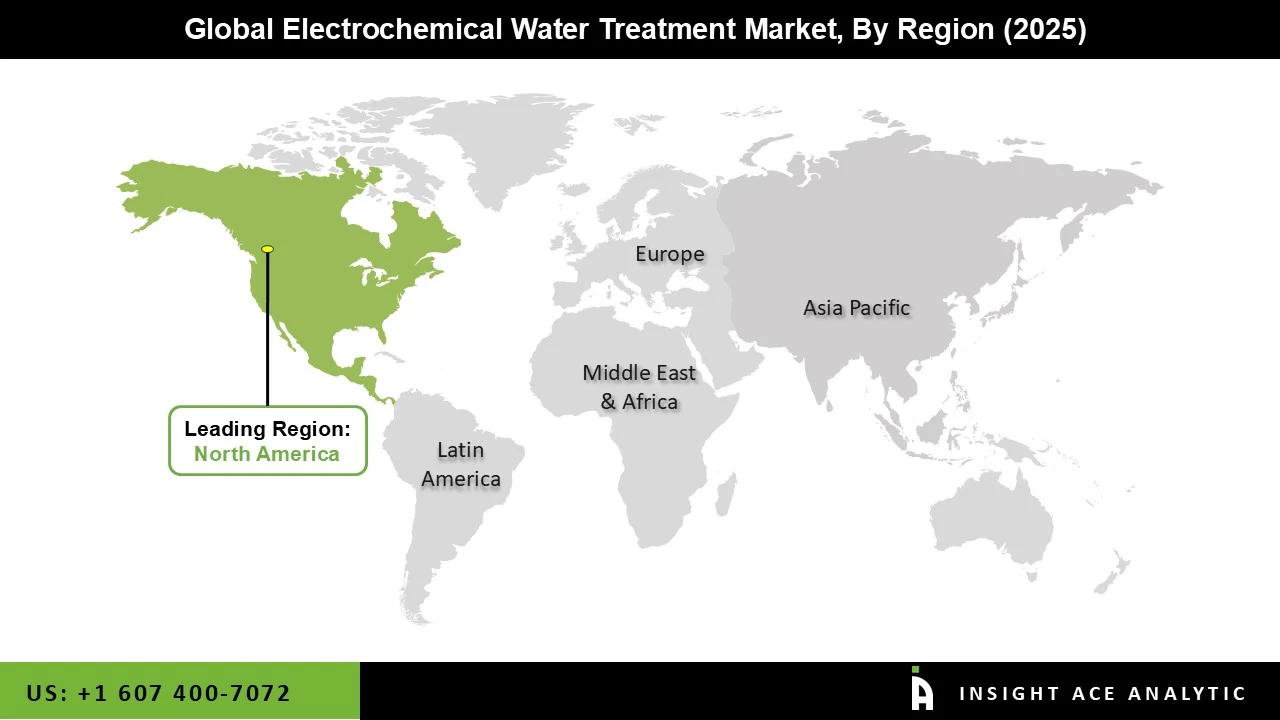
The electrochemical water treatment market was dominated by North America region in 2025 because of robust legal frameworks, cutting-edge infrastructure, and a high level of knowledge about sustainability and water quality. In order to compel businesses and municipalities to use cutting-edge treatment technologies, governments and organizations like the U.S. Environmental Protection Agency are implementing strict drinking water and wastewater discharge regulations. Furthermore, innovative solutions are being adopted more quickly due to large expenditures in water infrastructure, such as long-term funding initiatives for drinking water and wastewater systems. Additionally, growing worries about water scarcity, deteriorating water infrastructure, and the requirement for water reuse are propelling the electrochemical water treatment market growth.
Electrochemical Water Treatment Market Report Scope:
| Report Attribute | Specifications |
| Growth Rate CAGR | CAGR of 10.2% from 2026 to 2035 |
| Quantitative Units | Representation of revenue in US$ Bn and CAGR from 2026 to 2035 |
| Historic Year | 2022 to 2025 |
| Forecast Year | 2026-2035 |
| Report Coverage | The forecast of revenue, the position of the company, the competitive market structure, growth prospects, and trends |
| Segments Covered | Type of Water Treated, Application, Technology Type, and By Region |
| Regional Scope | North America; Europe; Asia Pacific; Latin America; Middle East & Africa |
| Country Scope | U.S.; Canada; U.K.; Germany; China; India; Japan; Brazil; Mexico; The UK; France; Italy; Spain; China; Japan; India; South Korea; Southeast Asia; South Korea; Southeast Asia |
| Competitive Landscape | De Nora, Voltea, REDstack, BioIonix, Axine Water, OLI Systems, WaterTectonics, New Sky Energy, Veolia, Thermax, Ion Exchange (India), SUEZ, INDRA Water, Membrion, HydroNovation, Xylem, Evoqua Water Technologies, Ecolab, Pall (Danaher), Kurita, and Others |
| Customization Scope | Free customization report with the procurement of the report, Modifications to the regional and segment scope. Geographic competitive landscape. |
| Pricing and Available Payment Methods | Explore pricing alternatives that are customized to your particular study requirements. |
Electrochemical Water Treatment Market Segmentation:
Electrochemical Water Treatment Market by Type of Water Treated-
• Industrial Wastewater
• Ground Water
• Brackish Water
• Seawater
• Municipal Wastewater
• Process Water
• Storm Water
• Others
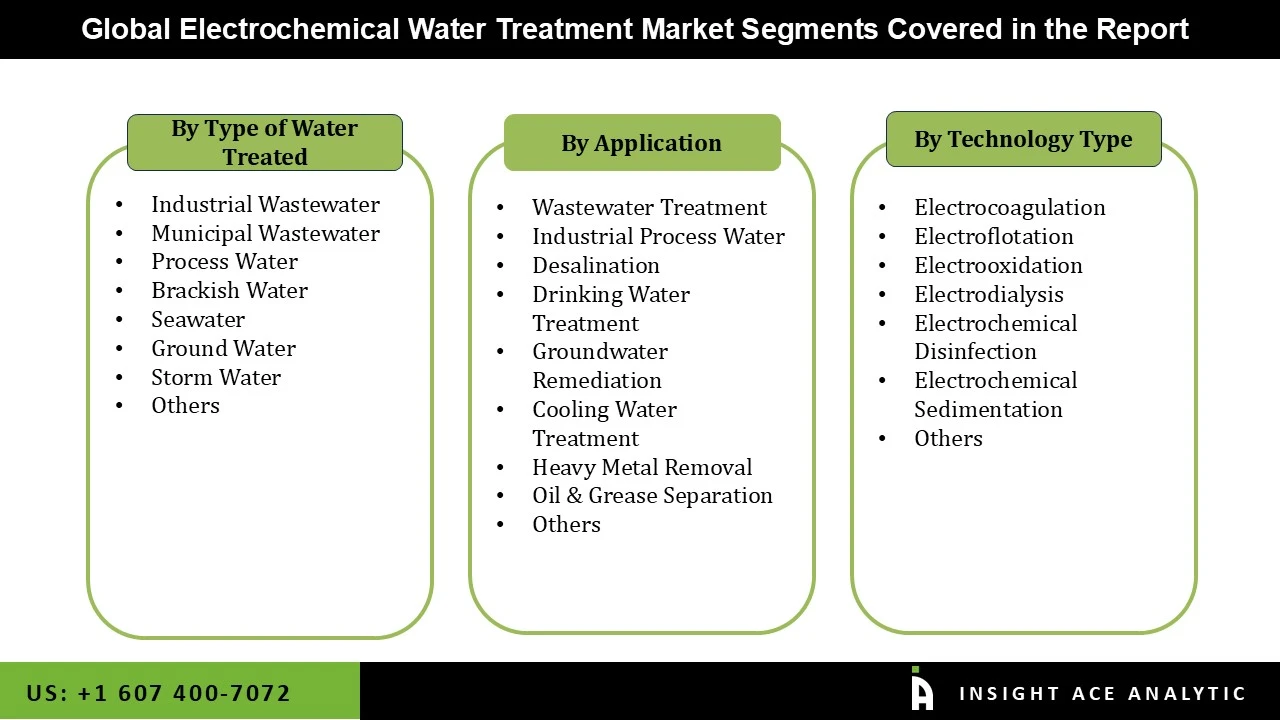
Electrochemical Water Treatment Market by Application-
• Desalination
• Oil & Grease Separation
• Drinking Water Treatment
• Wastewater Treatment
• Industrial Process Water
• Groundwater Remediation
• Cooling Water Treatment
• Heavy Metal Removal
• Others
Electrochemical Water Treatment Market by Technology Type-
• Electrooxidation
• Electrodialysis
• Electrocoagulation
• Electrochemical Sedimentation
• Electroflotation
• Electrochemical Disinfection
• Others
Electrochemical Water Treatment Market- By Region
North America-
• The US
• Canada
Europe-
• Germany
• The UK
• France
• Italy
• Spain
• Rest of Europe
Asia-Pacific-
• China
• Japan
• India
• South Korea
• South East Asia
• Rest of Asia Pacific
Latin America-
• Brazil
• Argentina
• Mexico
• Rest of Latin America
Middle East & Africa-
• GCC Countries
• South Africa
• Rest of Middle East and Africa
Research Design and Approach
This study employed a multi-step, mixed-method research approach that integrates:
- Secondary research
- Primary research
- Data triangulation
- Hybrid top-down and bottom-up modelling
- Forecasting and scenario analysis
This approach ensures a balanced and validated understanding of both macro- and micro-level market factors influencing the market.
Secondary Research
Secondary research for this study involved the collection, review, and analysis of publicly available and paid data sources to build the initial fact base, understand historical market behaviour, identify data gaps, and refine the hypotheses for primary research.
Sources Consulted
Secondary data for the market study was gathered from multiple credible sources, including:
- Government databases, regulatory bodies, and public institutions
- International organizations (WHO, OECD, IMF, World Bank, etc.)
- Commercial and paid databases
- Industry associations, trade publications, and technical journals
- Company annual reports, investor presentations, press releases, and SEC filings
- Academic research papers, patents, and scientific literature
- Previous market research publications and syndicated reports
These sources were used to compile historical data, market volumes/prices, industry trends, technological developments, and competitive insights.

Primary Research
Primary research was conducted to validate secondary data, understand real-time market dynamics, capture price points and adoption trends, and verify the assumptions used in the market modelling.
Stakeholders Interviewed
Primary interviews for this study involved:
- Manufacturers and suppliers in the market value chain
- Distributors, channel partners, and integrators
- End-users / customers (e.g., hospitals, labs, enterprises, consumers, etc., depending on the market)
- Industry experts, technology specialists, consultants, and regulatory professionals
- Senior executives (CEOs, CTOs, VPs, Directors) and product managers
Interview Process
Interviews were conducted via:
- Structured and semi-structured questionnaires
- Telephonic and video interactions
- Email correspondences
- Expert consultation sessions
Primary insights were incorporated into demand modelling, pricing analysis, technology evaluation, and market share estimation.
Data Processing, Normalization, and Validation
All collected data were processed and normalized to ensure consistency and comparability across regions and time frames.
The data validation process included:
- Standardization of units (currency conversions, volume units, inflation adjustments)
- Cross-verification of data points across multiple secondary sources
- Normalization of inconsistent datasets
- Identification and resolution of data gaps
- Outlier detection and removal through algorithmic and manual checks
- Plausibility and coherence checks across segments and geographies
This ensured that the dataset used for modelling was clean, robust, and reliable.
Market Size Estimation and Data Triangulation
Bottom-Up Approach
The bottom-up approach involved aggregating segment-level data, such as:
- Company revenues
- Product-level sales
- Installed base/usage volumes
- Adoption and penetration rates
- Pricing analysis
This method was primarily used when detailed micro-level market data were available.

Top-Down Approach
The top-down approach used macro-level indicators:
- Parent market benchmarks
- Global/regional industry trends
- Economic indicators (GDP, demographics, spending patterns)
- Penetration and usage ratios
This approach was used for segments where granular data were limited or inconsistent.
Hybrid Triangulation Approach
To ensure accuracy, a triangulated hybrid model was used. This included:
- Reconciling top-down and bottom-up estimates
- Cross-checking revenues, volumes, and pricing assumptions
- Incorporating expert insights to validate segment splits and adoption rates
This multi-angle validation yielded the final market size.
Forecasting Framework and Scenario Modelling
Market forecasts were developed using a combination of time-series modelling, adoption curve analysis, and driver-based forecasting tools.
Forecasting Methods
- Time-series modelling
- S-curve and diffusion models (for emerging technologies)
- Driver-based forecasting (GDP, disposable income, adoption rates, regulatory changes)
- Price elasticity models
- Market maturity and lifecycle-based projections
Scenario Analysis
Given inherent uncertainties, three scenarios were constructed:
- Base-Case Scenario: Expected trajectory under current conditions
- Optimistic Scenario: High adoption, favourable regulation, strong economic tailwinds
- Conservative Scenario: Slow adoption, regulatory delays, economic constraints
Sensitivity testing was conducted on key variables, including pricing, demand elasticity, and regional adoption.
Request Customization
Add countries, segments, company profiles, or extend forecast — free 10% customization with purchase.
Customize This Report →Enquire Before Buying
Speak with our analyst team about scope, methodology, pricing, or deliverable formats.
Enquire Now →Frequently Asked Questions
Electrochemical Water Treatment Market Growth is predicted to witness a 10.2% CAGR during the forecast period for 2026 to 2035.
De Nora, Voltea, REDstack, BioIonix, Axine Water, OLI Systems, WaterTectonics, New Sky Energy, Veolia, Thermax, Ion Exchange (India), SUEZ, INDRA Water, Membrion, HydroNovation, Xylem, Evoqua Water Technologies, Ecolab, Pall (Danaher), Kurita, and Others
Electrochemical Water Treatment Market is segmented into Type of Water Treated, Application, Technology Type, and By Region
North America region is leading the Electrochemical Water Treatment Market.