Data Center Transfer Switches and Switchgears Market Size, Trend, Forecast Report 2026 to 2035
What is Data Center Transfer Switches and Switchgears Market Size?
Data Center Transfer Switches and Switchgears Market Size is valued at USD 4.88 Bn in 2025 and is predicted to reach USD 11.86 Bn by the year 2035 at a 9.50% CAGR during the forecast period for 2026 to 2035.
Data Center Transfer Switches and Switchgears Market Size, Share & Trends Analysis Distribution by Type (Automatic Transfer Switch, Static Transfer Switch), by Application (Low Voltage, Medium Voltage) and Segment Forecasts, 2026 to 2035
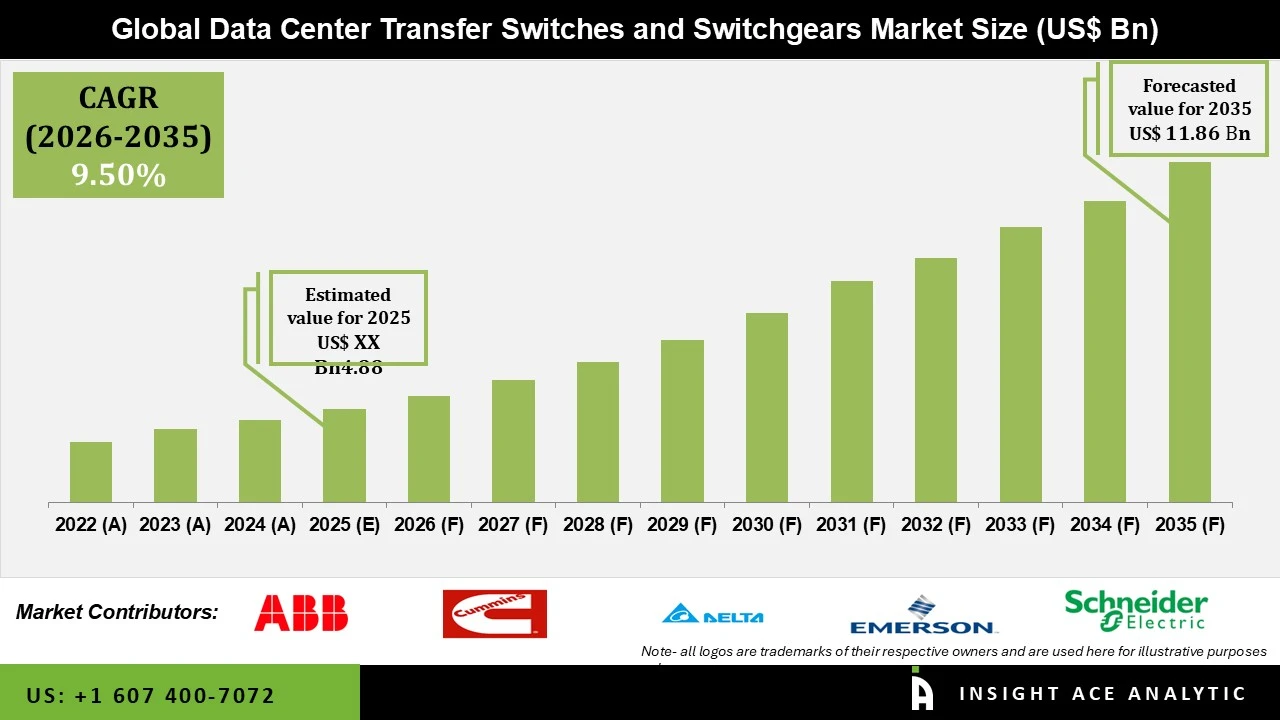
The data center transfer switches and switchgear market covers systems that help data centers keep their power supply steady and reliable. These systems safely move electrical loads between power sources, protect important equipment from faults, and keep operations running during maintenance or outages. Main products include automatic transfer switches (ATS), static transfer switches (STS), and low- and medium-voltage switchgear. These solutions are used in enterprise data centers, colocation sites, hyperscale campuses, cloud providers, and edge data centers. As digital infrastructure becomes more important for businesses, transfer switches and switchgear are now essential for reliable power, equipment protection, and smooth operations. The market is growing as more data centers are needed for cloud computing, AI, edge computing, big data, and digital transformation. Companies are investing in modern data center infrastructure that supports high-performance computing and reduces downtime.
Even brief power outages can cause big financial losses and service problems, so operators are turning to advanced transfer switches and switchgear for fast, reliable, and automated power management. The growth of hyperscale and colocation data centers, along with more investment in digital infrastructure by governments and businesses, is pushing the market forward. More demand for reliable backup power and greater focus on business continuity are also leading to wider use of these technologies.
New technology is making the market stronger. Manufacturers are launching smart transfer switches and digital switchgear with real-time monitoring, predictive maintenance, remote diagnostics, and IoT controls. These solutions help operators track power use, spot problems quickly, save energy, and lower maintenance costs. Using automation, digital monitoring, and AI analytics helps data centers stay online and manage power better. At the same time, more investment in renewable energy, energy-efficient infrastructure, and sustainable data center designs is opening up new opportunities for advanced switching and protection solutions. Partnerships among equipment makers, data center builders, utility companies, and tech firms are speeding up innovation and bringing these products to more facilities.
Even with a positive outlook, the market has some challenges. Advanced transfer switches and switchgear need a large upfront investment, especially for big hyperscale sites and high-capacity setups. Adding new equipment to existing power systems can be complex and needs careful planning to avoid disruptions. Manufacturers also have to keep up with changing safety standards, improve reliability, boost cybersecurity for connected systems, and meet higher customer expectations for energy efficiency and sustainability. Still, as businesses grow their digital operations and want almost no downtime, the long-term outlook for this market is strong. Ongoing growth in cloud services, AI, edge computing, and new data centers is expected to keep demand high for advanced power switching and protection, making these solutions a key part of modern digital infrastructure.
Competitive Landscape
Which are the Leading Players in the Data Center Transfer Switches and Switchgears Market ?
• ABB
• Caterpillar
• Cummins
• Delta Electronics
• Eaton
• Emerson Electric
• ASCO Power Technologies
• Schneider Electric
Market Dynamics
Driver
Growing Investments in Data Centres and the Need for Reliable Power Infrastructure
The data center transfer switches and switchgear market is growing steadily as organizations invest in new data centers to support cloud computing, artificial intelligence (AI), edge computing, and digital transformation. Data centres require uninterrupted power to keep critical applications and services running, making reliable power switching and distribution systems essential. Automatic transfer switches (ATS), static transfer switches (STS), and switchgear help ensure continuous operations by quickly transferring loads between power sources and protecting equipment during electrical faults or outages. As hyperscale, colocation, and enterprise data centers continue to expand, operators are increasingly investing in advanced power infrastructure that improves uptime, operational efficiency, and business continuity. Growing demand for high-availability facilities and increasing investments in digital infrastructure are key factors driving market growth.
Restrain/Challenge
High Installation Costs and Complex Power Infrastructure Integration
Despite strong market growth, the industry faces several challenges. Advanced transfer switches and switchgear systems involve significant capital investment, particularly for large-scale and hyperscale data centers. Installing these systems often requires careful planning, specialized engineering expertise, and integration with existing electrical infrastructure, which can increase project complexity and costs. Data center operators must also comply with strict electrical safety standards, maintain system reliability, and ensure compatibility with backup generators, UPS systems, and renewable energy sources. In addition, ongoing maintenance, equipment upgrades, and the shortage of skilled technical professionals can increase operating costs and slow adoption, particularly for smaller facilities.
Automatic Transfer Switch Segment is Expected to Drive the Data Center Transfer Switches and Switchgear Market
The Automatic Transfer Switch (ATS) segment is expected to account for a significant share of the market during the forecast period. ATS systems automatically switch electrical loads from the primary power source to backup generators during a power interruption, helping maintain uninterrupted operations. Their ability to provide fast, reliable, and automatic power transfer makes them widely used across hyperscale, enterprise, and colocation data centers. As businesses place greater emphasis on minimizing downtime and improving operational resilience, demand for automatic transfer switches is expected to continue rising.
Low Voltage Segment is Expected to Drive the Data Center Transfer Switches and Switchgear Market
The Low Voltage segment is expected to hold a leading position in the market due to its widespread use in power distribution within modern data centers. Low-voltage switchgear and transfer switches provide safe, efficient, and reliable power management for servers, networking equipment, storage systems, and other critical IT infrastructure. As more organizations expand edge facilities and enterprise data centers, the demand for efficient low-voltage power distribution systems is expected to remain strong.
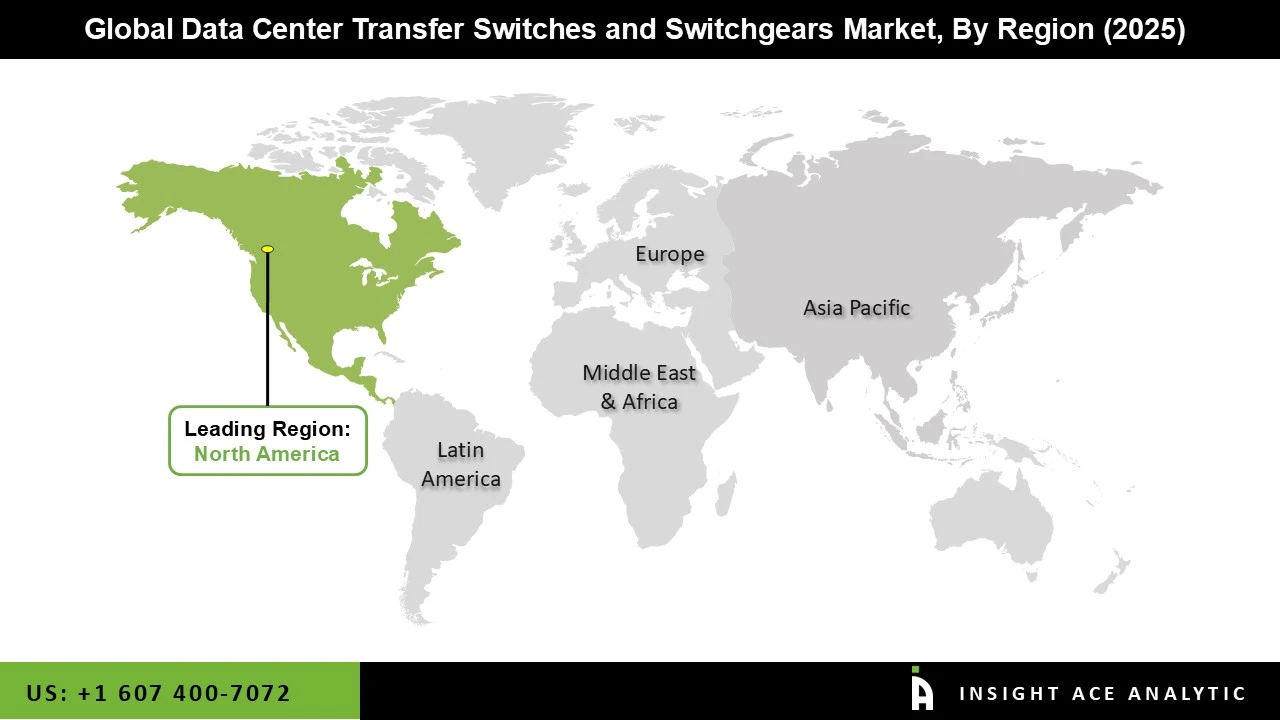
Why North America Leads the Data Center Transfer Switches and Switchgear Market?
North America holds a leading position in the data center transfer switches and switchgear market because of its large concentration of hyperscale, colocation, and enterprise data centers, particularly in the United States. The region continues to see significant investments from cloud service providers, technology companies, and digital infrastructure operators that require highly reliable power systems. Strong adoption of AI, cloud computing, and edge data centers, combined with advanced electrical infrastructure and strict uptime requirements, continues to support market growth.
Key Developments-
• In February 2025, Schneider Electric strengthened its data center power distribution business by enhancing its low- and medium-voltage switchgear and automatic transfer switch solutions, focusing on greater energy efficiency, real-time monitoring, remote asset management, and seamless integration with intelligent data center infrastructure management (DCIM) platforms.
Data Centre Transfer Switches and Switchgear Market Report Scope:
| Report Attribute | Specifications |
| Market size value in 2025 | USD 4.88 Bn |
| Revenue forecast in 2035 | USD 11.86 Bn |
| Growth Rate CAGR | CAGR of 9.50% from 2026 to 2035 |
| Quantitative Units | Representation of revenue in US$ Bn and CAGR from 2026 to 2035 |
| Historic Year | 2021 to 2025 |
| Forecast Year | 2026-2035 |
| Report Coverage | The forecast of revenue, the position of the company, the competitive market structure, growth prospects, and trends |
| Segments Covered | By Application, Type, and By Region |
| Regional Scope | North America; Europe; Asia Pacific; Latin America; Middle East & Africa |
| Country Scope | U.S.; Canada; U.K.; Germany; China; India; Japan; Brazil; Mexico; The UK; France; Italy; Spain; China; Japan; India; South Korea; Southeast Asia; South Korea; Southeast Asia |
| Competitive Landscape | ABB, Caterpillar, Cummins, Delta Electronics, Eaton, Emerson Electric, ASCO Power Technologies, Schneider Electric |
| Customization Scope | Free customisation report with the procurement of the report, Modifications to the regional and segment scope. Geographic competitive landscape. |
| Pricing and Available Payment Methods | Explore pricing alternatives that are customized to your particular study requirements. |
Market Segmentation:
Data Center Transfer Switches and Switchgears Market by Type-
• Automatic Transfer Switch
• Static Transfer Switch
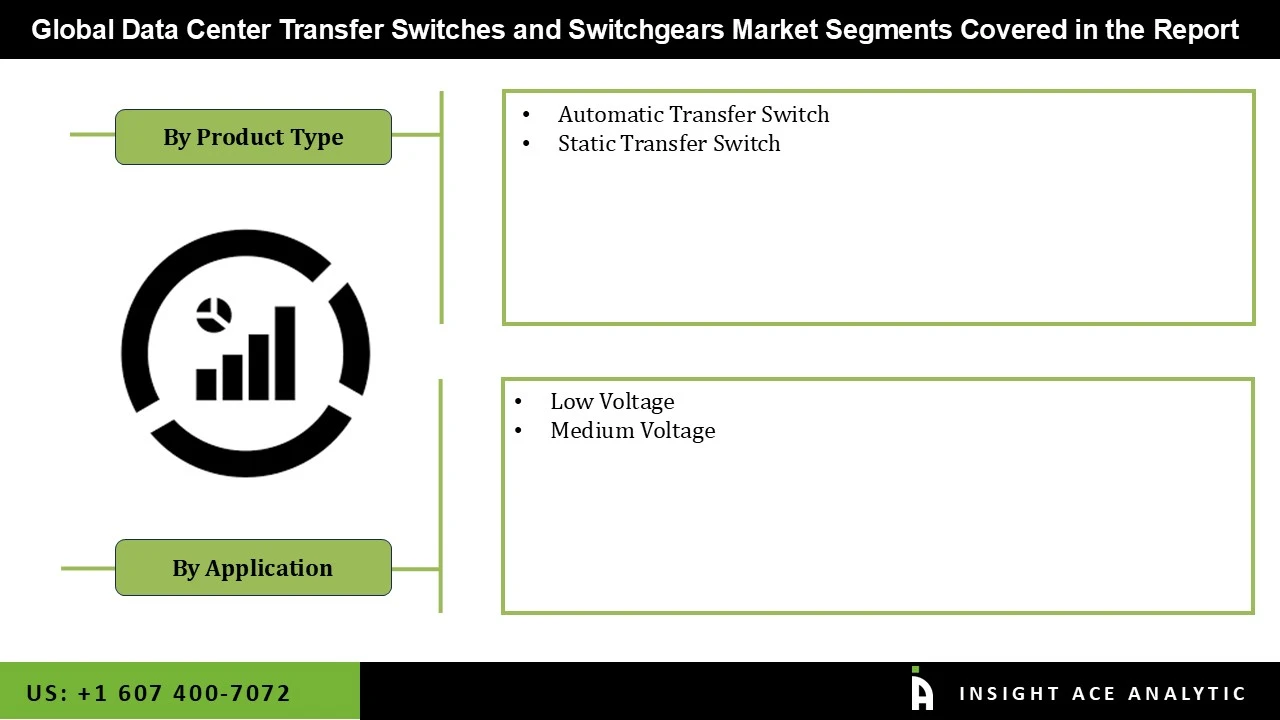
Data Center Transfer Switches and Switchgears Market by Application-
• Low Voltage
• Medium Voltage
Data Center Transfer Switches and Switchgears Market by Region-
North America-
• The US
• Canada
Europe-
• Germany
• UK
• France
• Nordics
• Netherlands
• Switzerland
• Spain
• Italy
• Benelux
• Rest of Europe
Asia-Pacific-
• China
• Japan
• South Korea
• Australia
• India
• Rest of APAC
Latin America-
• Brazil
• Mexico
• Chile
• Rest of LatAm
Middle East & Africa-
• GCC
• South Africa
• Rest of MEA
Research Design and Approach
This study employed a multi-step, mixed-method research approach that integrates:
- Secondary research
- Primary research
- Data triangulation
- Hybrid top-down and bottom-up modelling
- Forecasting and scenario analysis
This approach ensures a balanced and validated understanding of both macro- and micro-level market factors influencing the market.
Secondary Research
Secondary research for this study involved the collection, review, and analysis of publicly available and paid data sources to build the initial fact base, understand historical market behaviour, identify data gaps, and refine the hypotheses for primary research.
Sources Consulted
Secondary data for the market study was gathered from multiple credible sources, including:
- Government databases, regulatory bodies, and public institutions
- International organizations (WHO, OECD, IMF, World Bank, etc.)
- Commercial and paid databases
- Industry associations, trade publications, and technical journals
- Company annual reports, investor presentations, press releases, and SEC filings
- Academic research papers, patents, and scientific literature
- Previous market research publications and syndicated reports
These sources were used to compile historical data, market volumes/prices, industry trends, technological developments, and competitive insights.

Primary Research
Primary research was conducted to validate secondary data, understand real-time market dynamics, capture price points and adoption trends, and verify the assumptions used in the market modelling.
Stakeholders Interviewed
Primary interviews for this study involved:
- Manufacturers and suppliers in the market value chain
- Distributors, channel partners, and integrators
- End-users / customers (e.g., hospitals, labs, enterprises, consumers, etc., depending on the market)
- Industry experts, technology specialists, consultants, and regulatory professionals
- Senior executives (CEOs, CTOs, VPs, Directors) and product managers
Interview Process
Interviews were conducted via:
- Structured and semi-structured questionnaires
- Telephonic and video interactions
- Email correspondences
- Expert consultation sessions
Primary insights were incorporated into demand modelling, pricing analysis, technology evaluation, and market share estimation.
Data Processing, Normalization, and Validation
All collected data were processed and normalized to ensure consistency and comparability across regions and time frames.
The data validation process included:
- Standardization of units (currency conversions, volume units, inflation adjustments)
- Cross-verification of data points across multiple secondary sources
- Normalization of inconsistent datasets
- Identification and resolution of data gaps
- Outlier detection and removal through algorithmic and manual checks
- Plausibility and coherence checks across segments and geographies
This ensured that the dataset used for modelling was clean, robust, and reliable.
Market Size Estimation and Data Triangulation
Bottom-Up Approach
The bottom-up approach involved aggregating segment-level data, such as:
- Company revenues
- Product-level sales
- Installed base/usage volumes
- Adoption and penetration rates
- Pricing analysis
This method was primarily used when detailed micro-level market data were available.

Top-Down Approach
The top-down approach used macro-level indicators:
- Parent market benchmarks
- Global/regional industry trends
- Economic indicators (GDP, demographics, spending patterns)
- Penetration and usage ratios
This approach was used for segments where granular data were limited or inconsistent.
Hybrid Triangulation Approach
To ensure accuracy, a triangulated hybrid model was used. This included:
- Reconciling top-down and bottom-up estimates
- Cross-checking revenues, volumes, and pricing assumptions
- Incorporating expert insights to validate segment splits and adoption rates
This multi-angle validation yielded the final market size.
Forecasting Framework and Scenario Modelling
Market forecasts were developed using a combination of time-series modelling, adoption curve analysis, and driver-based forecasting tools.
Forecasting Methods
- Time-series modelling
- S-curve and diffusion models (for emerging technologies)
- Driver-based forecasting (GDP, disposable income, adoption rates, regulatory changes)
- Price elasticity models
- Market maturity and lifecycle-based projections
Scenario Analysis
Given inherent uncertainties, three scenarios were constructed:
- Base-Case Scenario: Expected trajectory under current conditions
- Optimistic Scenario: High adoption, favourable regulation, strong economic tailwinds
- Conservative Scenario: Slow adoption, regulatory delays, economic constraints
Sensitivity testing was conducted on key variables, including pricing, demand elasticity, and regional adoption.
Request Customization
Add countries, segments, company profiles, or extend forecast — free 10% customization with purchase.
Customize This Report →Enquire Before Buying
Speak with our analyst team about scope, methodology, pricing, or deliverable formats.
Enquire Now →Frequently Asked Questions
Data Center Transfer Switches and Switchgears Market Size is valued at USD 4.88 Bn in 2025 and is predicted to reach USD 11.86 Bn by the year 2035
Data Center Transfer Switches and Switchgears Market is expected to grow at a 9.50% CAGR during the forecast period for 2026 to 2035.
Data Center Transfer Switches and Switchgears Market is segmented into By Application, Type, and By Region
ABB, Caterpillar, Cummins, Delta Electronics, Eaton, Emerson Electric, ASCO Power Technologies, Schneider Electric
North America region is leading the Data Center Transfer Switches and Switchgears Market.