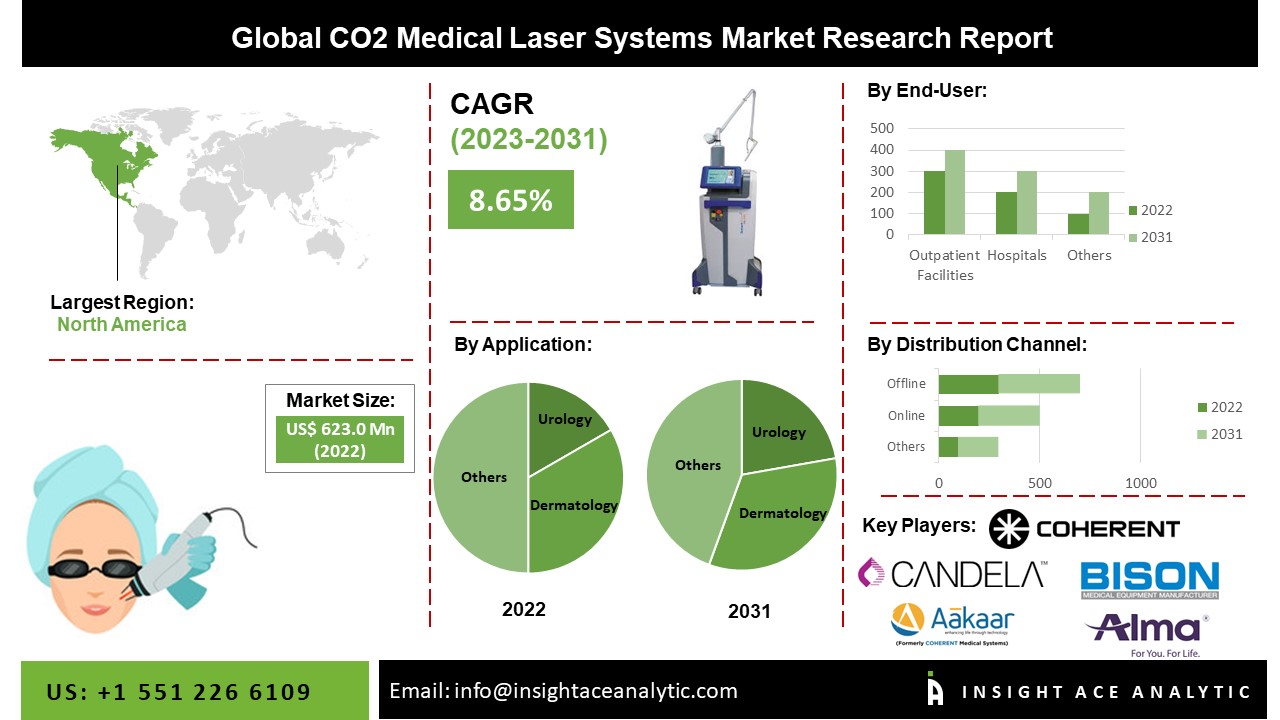
The Global CO2 Medical Laser Systems Market Size is valued at 623.0 million in 2022 and is predicted to reach 1296.2 million by the year 2031 at a 8.65% CAGR during the forecast period for 2023-2031.
CO2 medical laser systems are a type of laser technology that can be found in various medical applications. These systems use a CO2 laser as the energy source to deliver accurate and regulated laser beams for various medical procedures.
The CO2 laser operates in the infrared band at a wavelength of 10,600 nanometers. Various factors influence the CO2 medical laser systems market dynamics, including technical improvements, rising demand for minimally invasive operations, an increase in the prevalence of medical illnesses needing laser treatments, and an increase in aesthetic and cosmetic procedures.
Laser technology improvements have resulted in the development of more efficient and precise CO2 medical laser systems. These innovations include advances in laser power, beam delivery systems, and control mechanisms, which allow for better surgical outcomes and patient safety.
However, Global supply chains and manufacturing processes have been interrupted as a result of the pandemic. This has created difficulties in the development, marketing, and availability of CO2 medical laser systems. Manufacturers have experienced delays and component shortages, affecting the supply and delivery of these systems.
Competitive Landscape:
Some of the CO2 Medical Laser Systems Market Players are:
- Aakar Enhancing Life Through Technology
- Alma Lasers
- Bison Medical
- Candela Medical
- Coherent, Inc.
- Cutera
- Cutting Edge Laser Technologies
- Cynosure
- DEKA M.E.L.A. srl
- Herdeks
- IDS
- LightScalpel
- Limmer Laser GmbH
- Lumenis Be Ltd. (Boston Scientific Corp.)
- Lutronic
- Lynton Laser Ltd.
- Quanta System
- UNICORN
Market Segmentation:
The CO2 Medical Laser Systems Market is segmented on the basis of application, end-user and distribution channel. Application segment includes urology, ophthalmology, dermatology, gynecology, veterinary, dentistry, ENT, cardiovascular, and others. The end-user segment includes outpatient facilities, specialty clinics, ambulatory surgical centers, hospitals, research & manufacturing, research institutes, and academic institutes. Distribution channel segment includes online and offline.
Based On Application, The Dermatology Segment Is Accounted As A Major Contributor In The CO2 Medical Laser Systems Market
The dermatology category is expected to hold a major share of the global CO2 Medical Laser Systems Market in 2022. Due to the increased demand for aesthetic products and treatments, this segment leads the market. Rising individual awareness, increased adoption of noninvasive and minimally invasive procedures, and increased demand for aesthetic operations such as skin rejuvenation, skin tightening, and contouring are expected to be major market drivers. Furthermore, the rising incidence of skin disorders such as dermatitis, acne, psoriasis, moles, skin warts, and lesions, as well as the rising prevalence of skin cancer, is expected to drive the CO2 medical laser system market in the future years, particularly in emerging nations.
The Outpatient Facilities Segment Witnessed Growth At A Rapid Rate
The outpatient facilities segment is projected to grow at a rapid rate in the global CO2 Medical Laser Systems Market. Growing R&D investments and the rising prevalence of chronic diseases will boost segment growth. Furthermore, the increased demand for lasers and their low-cost production are expected to propel the industry even further. Furthermore, these stand-alone practices offer specific healthcare packages to their staff, promoting category growth. The increase in the number of specialist clinics performing cosmetic procedures is primarily responsible for the segment's growth. Surgical procedures in these clinics take less time than in hospitals. Clinics provide therapy or medical care without the need for overnight stays.
In The Region, The North American CO2 Medical Laser Systems Market Holds A Significant Revenue Share
The North American CO2 Medical Laser Systems Market is expected to register the most increased market share in terms of revenue in the near future. The growing needs for minimally invasive medical operations in the United States, as well as the increasing popularity of aesthetic surgery and a strong desire for modern technologies, are all important parts of the region's dominance.
The Europe region is predicted to keep a significant market share while developing at a slow pace in the global CO2 laser market. The APAC region is expected to increase significantly throughout the projection period, owing to the increasing development of healthcare infrastructure and the rise of laser centers. The rising demand for hair removal operations and cosmetic lasers is also driving market expansion in APAC.
CO2 Medical Laser Systems Market Report Scope:
|
Report Attribute
|
Specifications
|
|
Market Size Value In 2022
|
USD 623.0 Mn
|
|
Revenue Forecast In 2031
|
USD 1296.2 Mn
|
|
Growth Rate CAGR
|
CAGR of 8.65 % from 2023 to 2031
|
|
Quantitative Units
|
Representation of revenue in US$ Bn and CAGR from 2023 to 2031
|
|
Historic Year
|
2019 to 2022
|
|
Forecast Year
|
2023-2031
|
|
Report Coverage
|
The forecast of revenue, the position of the company, the competitive market structure, growth prospects, and trends
|
|
Segments Covered
|
Application, End-User And Distribution Channel
|
|
Regional Scope
|
North America; Europe; Asia Pacific; Latin America; Middle East & Africa
|
|
Country Scope
|
U.S.; Canada; U.K.; Germany; China; India; Japan; Brazil; Mexico; The UK; France; Italy; Spain; China; Japan; India; South Korea; South East Asia; South Korea; South East Asia
|
|
Competitive Landscape
|
Aakar Enhancing Life Through Technology, Alma Lasers, Bison Medical, Candela Medical, Coherent, Inc., Cutera, Cutting Edge Laser Technologies, Cynosure, DEKA MELA srl, Herdeks, IDS, LightScalpel, Limmer Laser GmbH, Lumenis Be Ltd. (Boston Scientific Corp.), Lutronic, Lynton Laser Ltd., Quanta System, and UNICORN
|
|
Customization Scope
|
Free customization report with the procurement of the report, Modifications to the regional and segment scope. Particular Geographic competitive landscape.
|
|
Pricing and Available Payment Methods
|
Explore pricing alternatives that are customized to your particular study requirements.
|
Segmentation of CO2 Medical Laser Systems Market-
By Application-
- Urology
- Ophthalmology
- Dermatology
- Gynecology
- Veterinary
- Dentistry
- ENT
- Cardiovascular
- Others
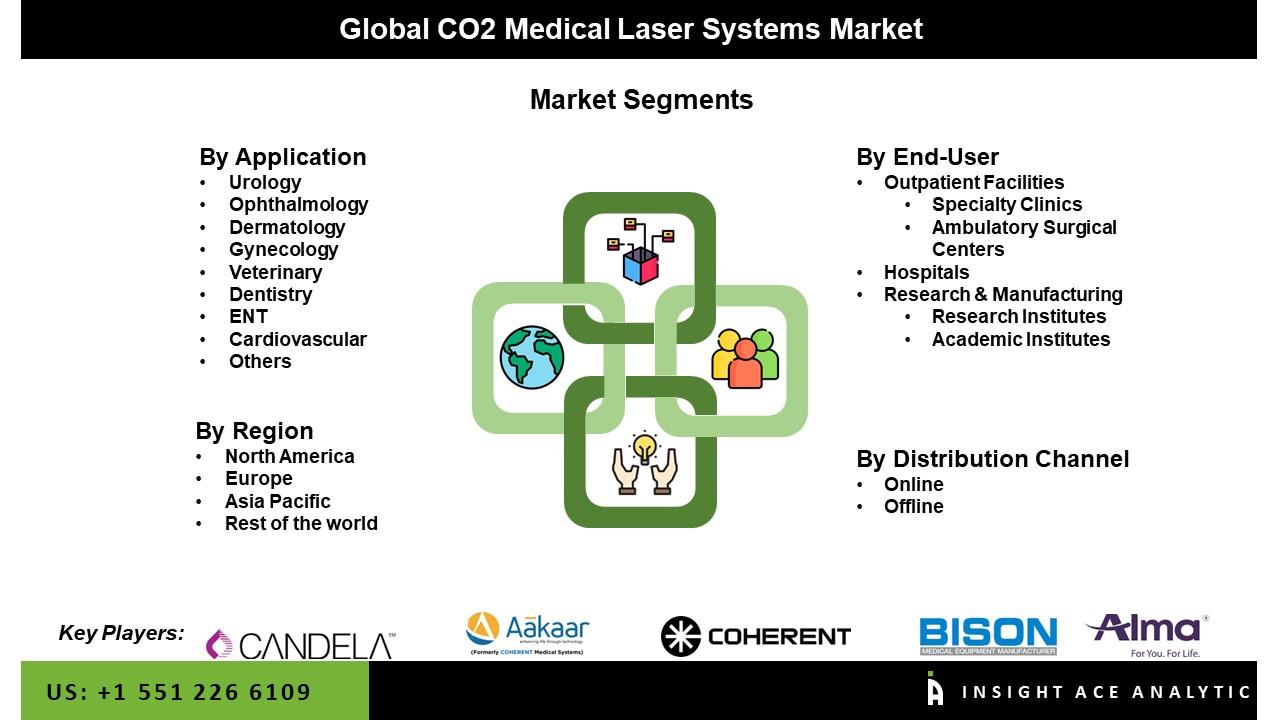
By End-user-
- Outpatient Facilities
- Specialty Clinics
- Ambulatory Surgical Centers
- Hospitals
- Research & Manufacturing
- Research Institutes
- Academic Institutes
By Distribution Channel-
By Region-
North America-
Europe-
- Germany
- The UK
- France
- Italy
- Spain
- Rest of Europe
Asia-Pacific-
- China
- Japan
- India
- South Korea
- South East Asia
- Rest of Asia Pacific
Latin America-
- Brazil
- Argentina
- Rest of Latin America
Middle East & Africa-
- GCC Countries
- South Africa
- Rest of the Middle East and Africa